


About this worksheet
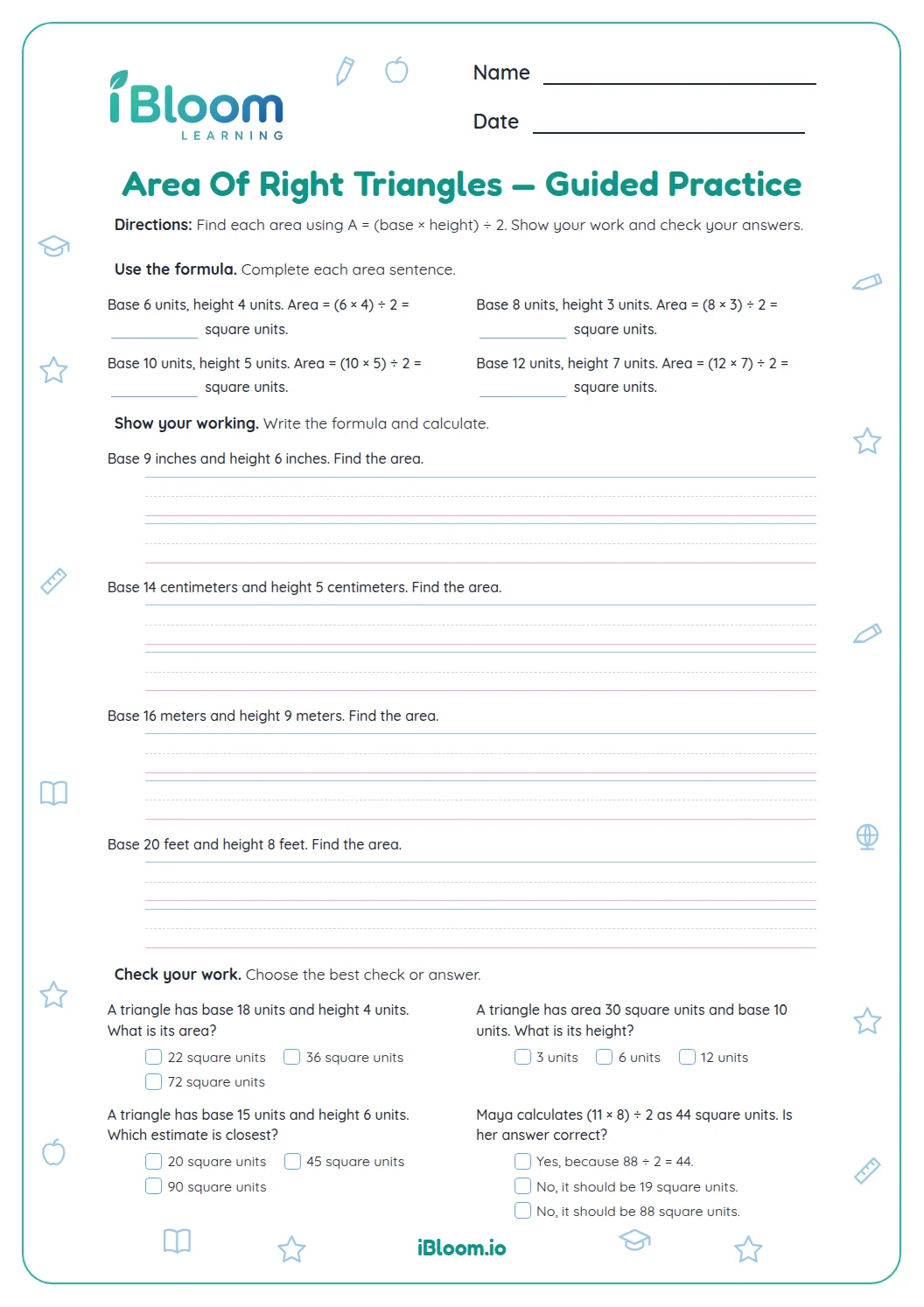
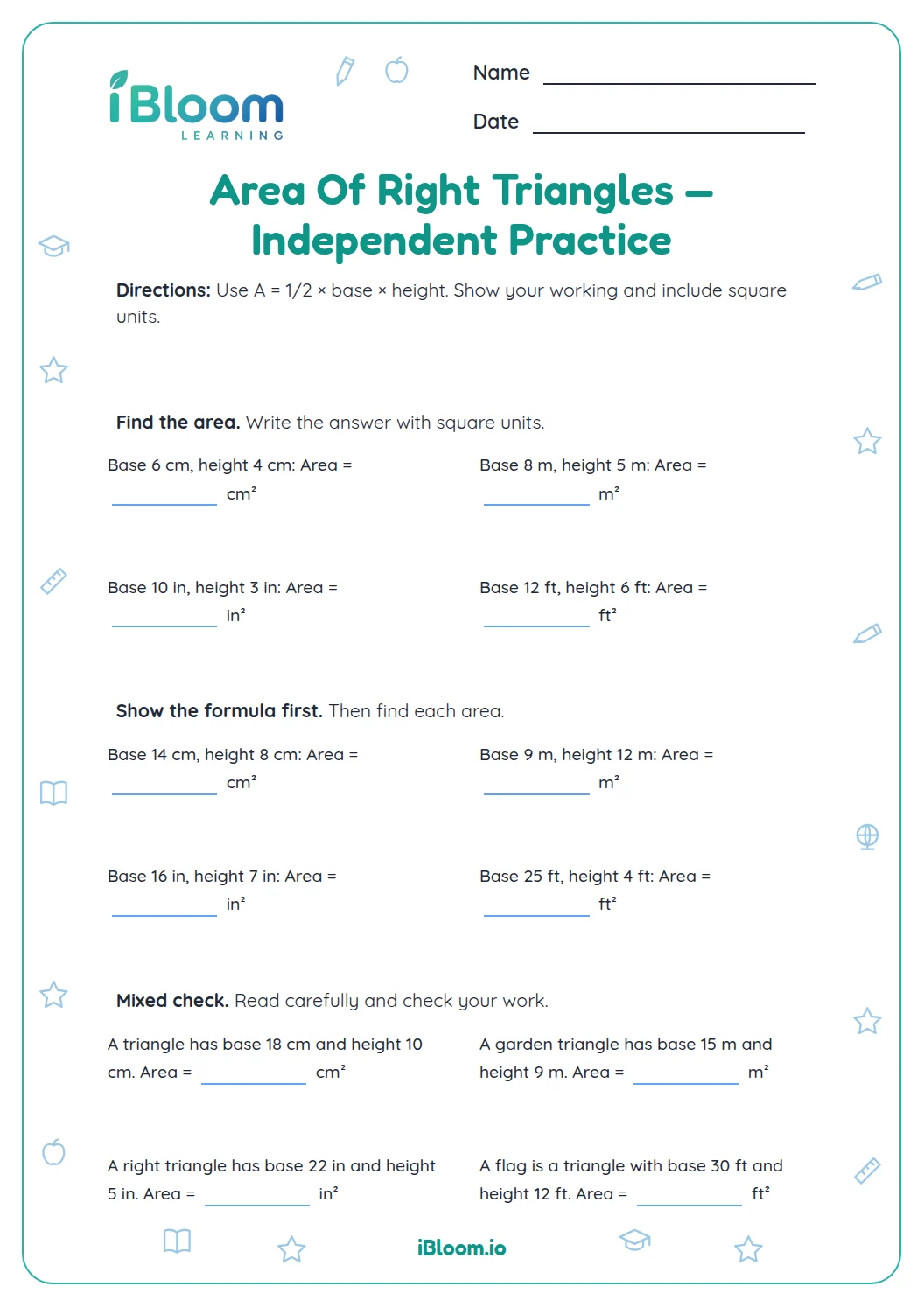
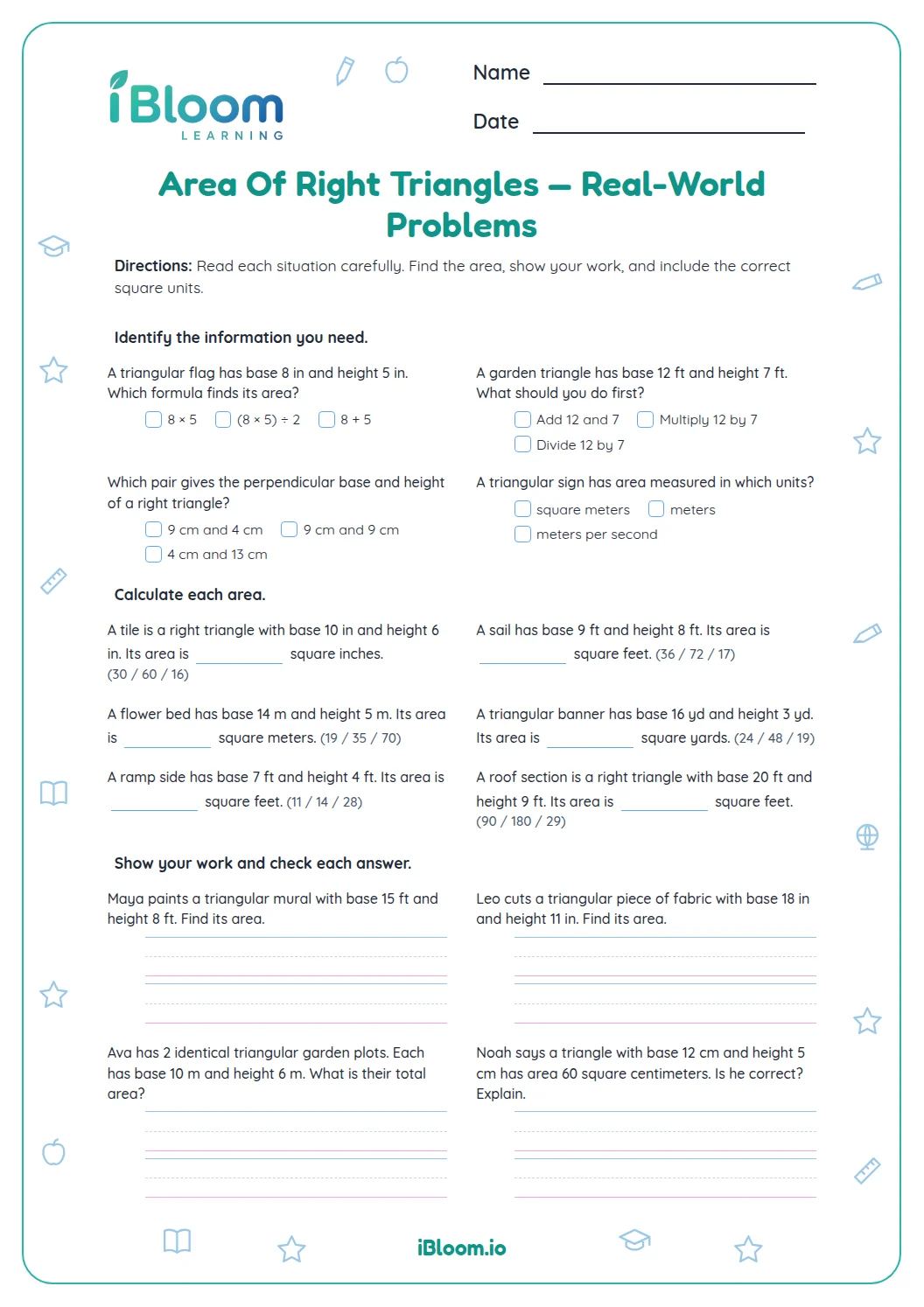
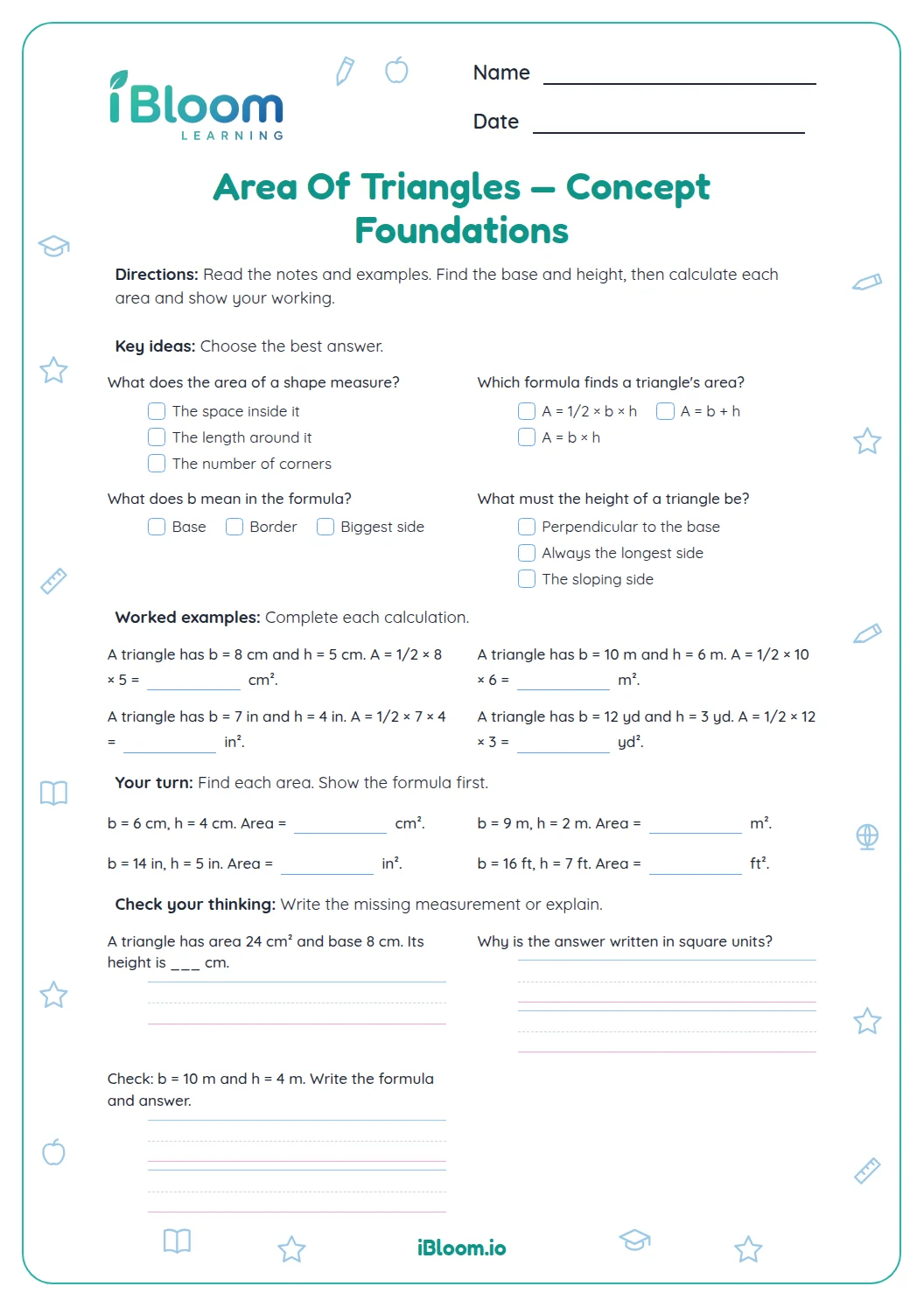
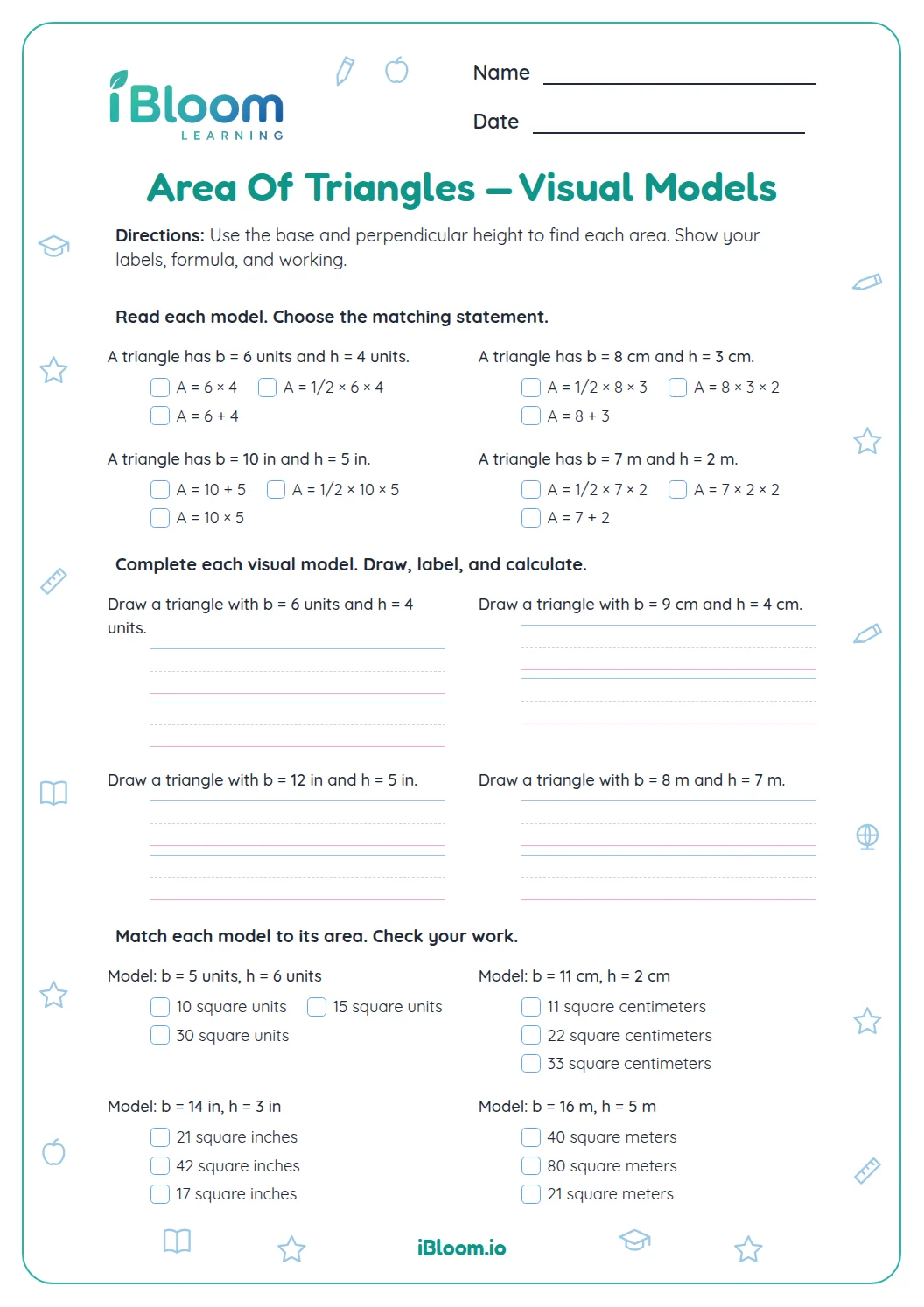
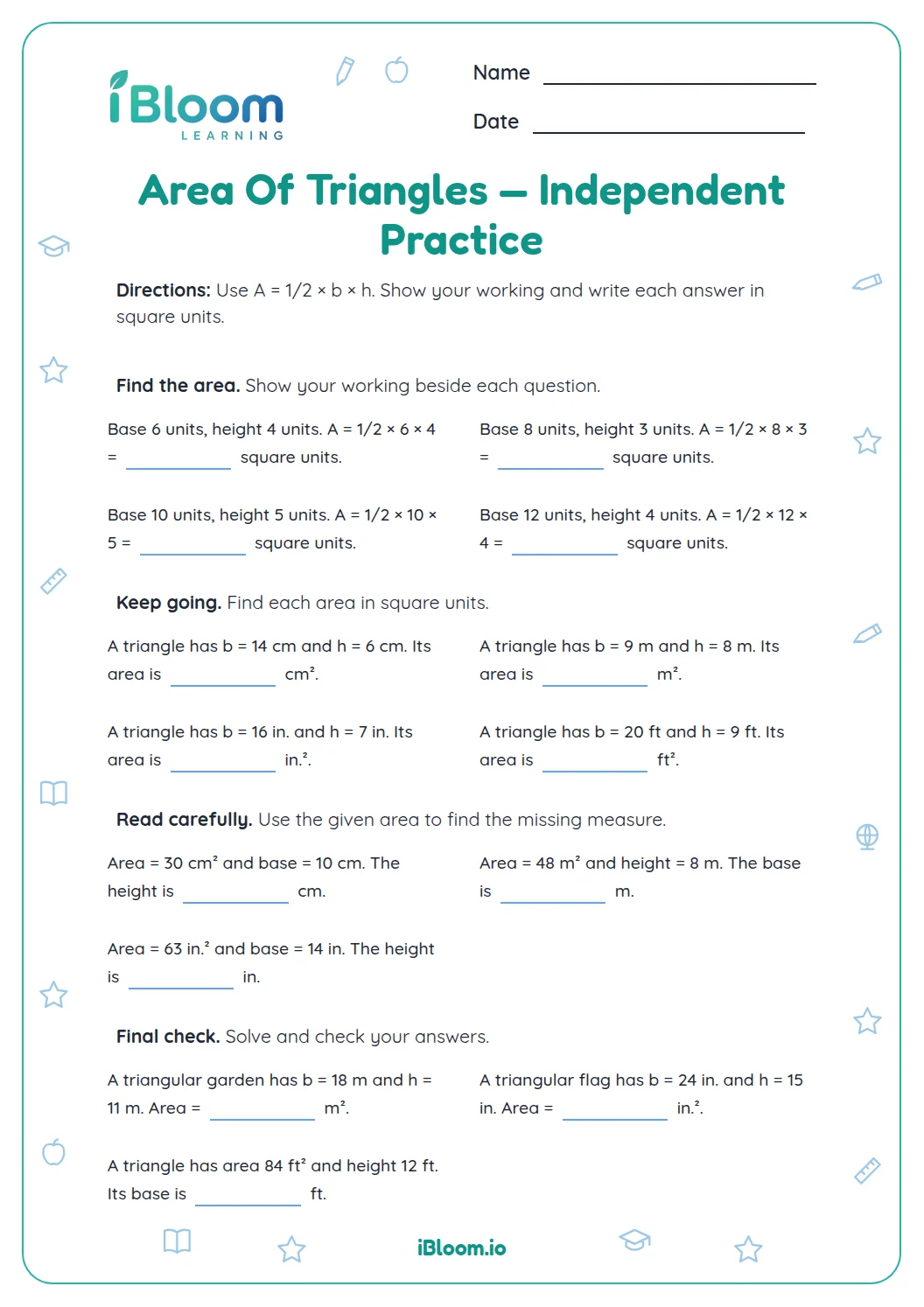
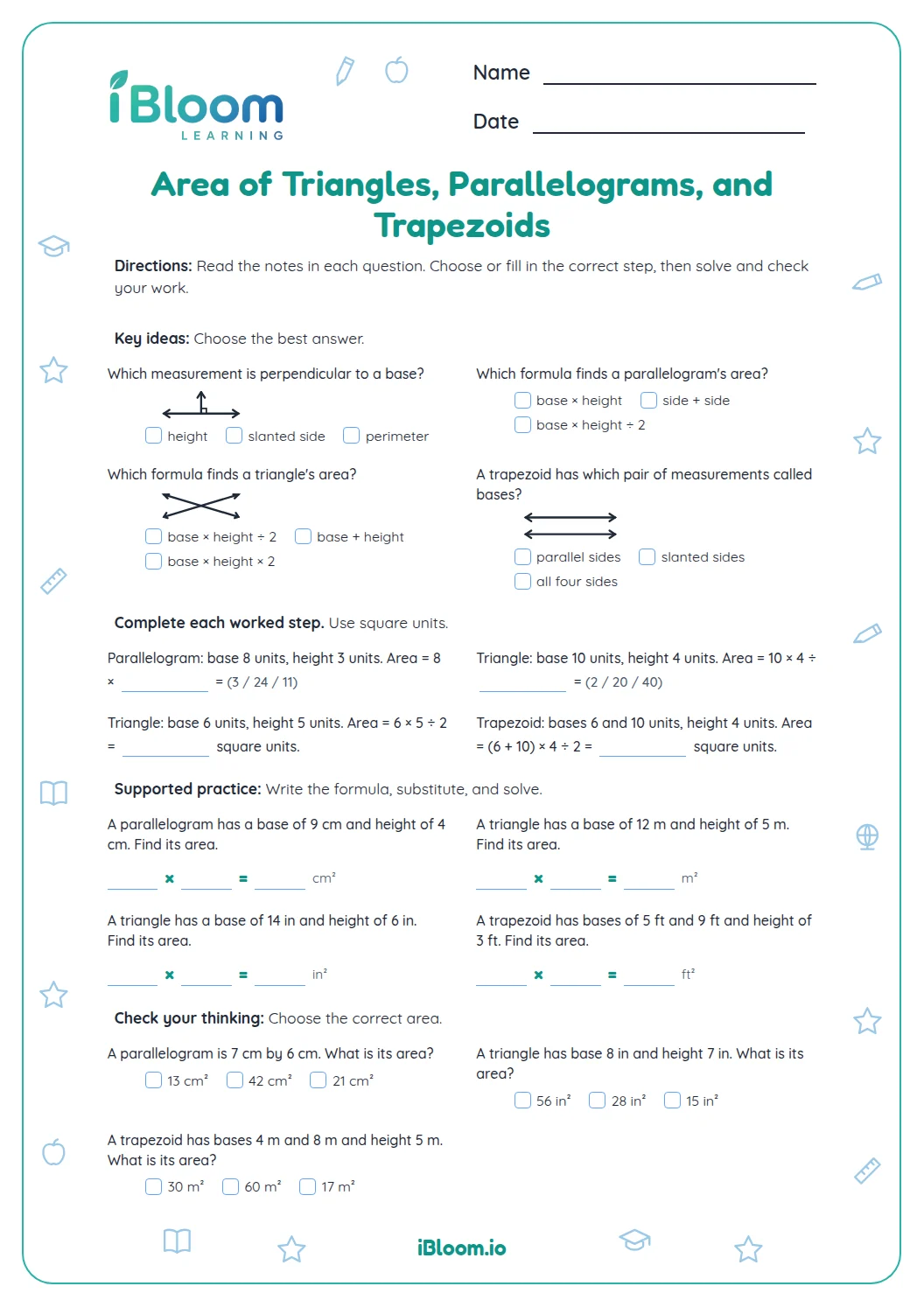
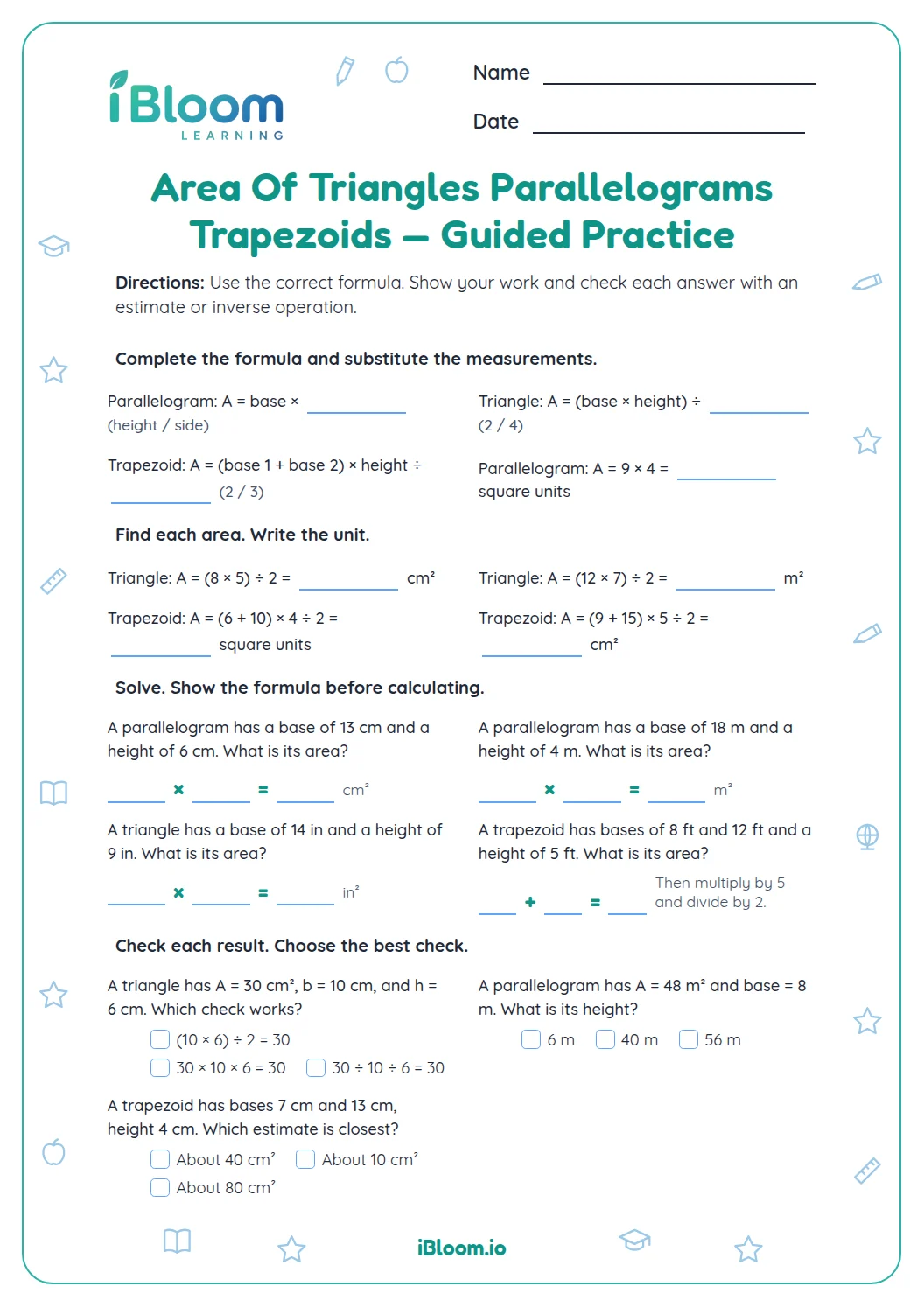
This printable Grade 5 worksheet gives students 14 right-triangle area problems. Each item pairs a right-triangle drawing with its base and perpendicular height, then asks students to find the area using half of base times height. The separate key lists each area in square units.
How do base and height determine triangle area?
A right triangle’s area is half the area of a rectangle with the same base and perpendicular height. Multiply the base by the height, then divide by 2. Keep the answer in square units.
For the first item, a base of 6 units and height of 4 units give 6 × 4 = 24 for the matching rectangle. Half of 24 is 12 square units.
- 1A = 1/2 × 6 × 4
- 2A = 12 square units
How to use this worksheet
- 1Read the direction at the start of each part.
- 2Work through each item and use the provided response space.
- 3For a written response, include the detail named in the prompt.
- 4Check answers with the key and revise any response that misses the task.
Common mistakes and quick fixes
The mistake
Answering before identifying exactly what the prompt asks.
The fix
Underline the key task word, such as quotient, reason, or detail.
The mistake
Giving a choice without checking its supporting evidence.
The fix
Point to the fact or text detail that makes your choice fit.
The mistake
Leaving a written response too general.
The fix
Add the specific number, reason, example, or story detail requested.
What to practice next
Make more practice
Questions parents and teachers ask
How many triangle problems are included?
The worksheet has 14 right-triangle area problems and a separate answer key. Each prompt provides a base and perpendicular height, and each drawing shows a right triangle. Students find the area in square units and can check each result against the key.
What formula should students use?
Use area equals one-half times base times height. Multiply the base by the perpendicular height to find the matching rectangle’s area, then take half. For a base of 6 and height of 4, half of 24 is 12 square units.
What does perpendicular height mean?
The height meets the base at a right angle. In a right triangle, the two sides that meet to form the right angle can serve as the base and perpendicular height. A slanted side is not automatically the height.
Why is triangle area half of base times height?
A matching rectangle can be split into two congruent right triangles along a diagonal. One triangle therefore has half the rectangle’s area. The worksheet uses this relationship with the stated base and perpendicular height for each problem, with answers in square units.
What units belong in the answers?
The prompts ask for area in square units, so answers should include square units. If measurements were in centimeters, the corresponding area unit would be square centimeters. This worksheet keeps the printed measurements in generic units and keys every answer in square units.