



About this worksheet
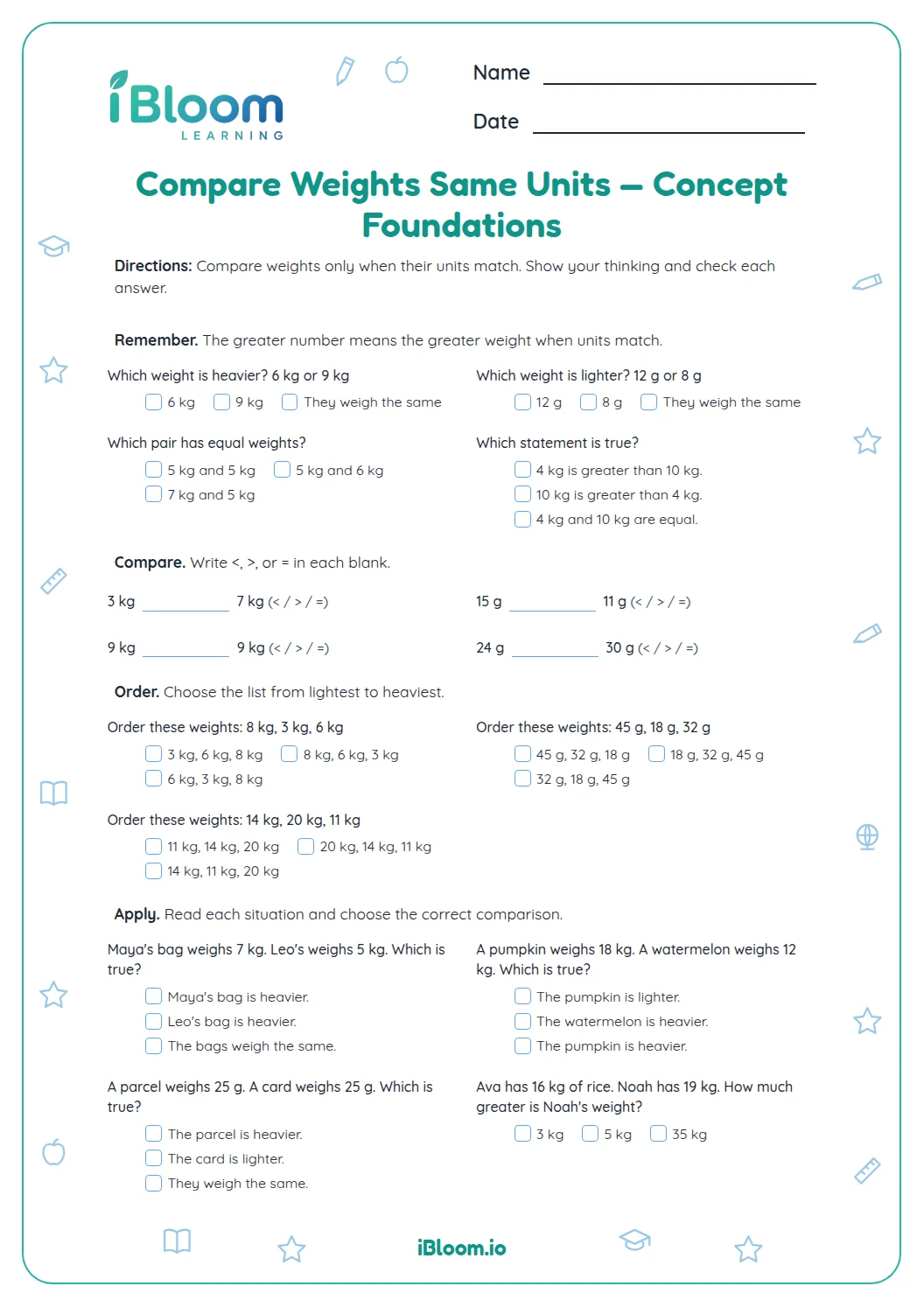
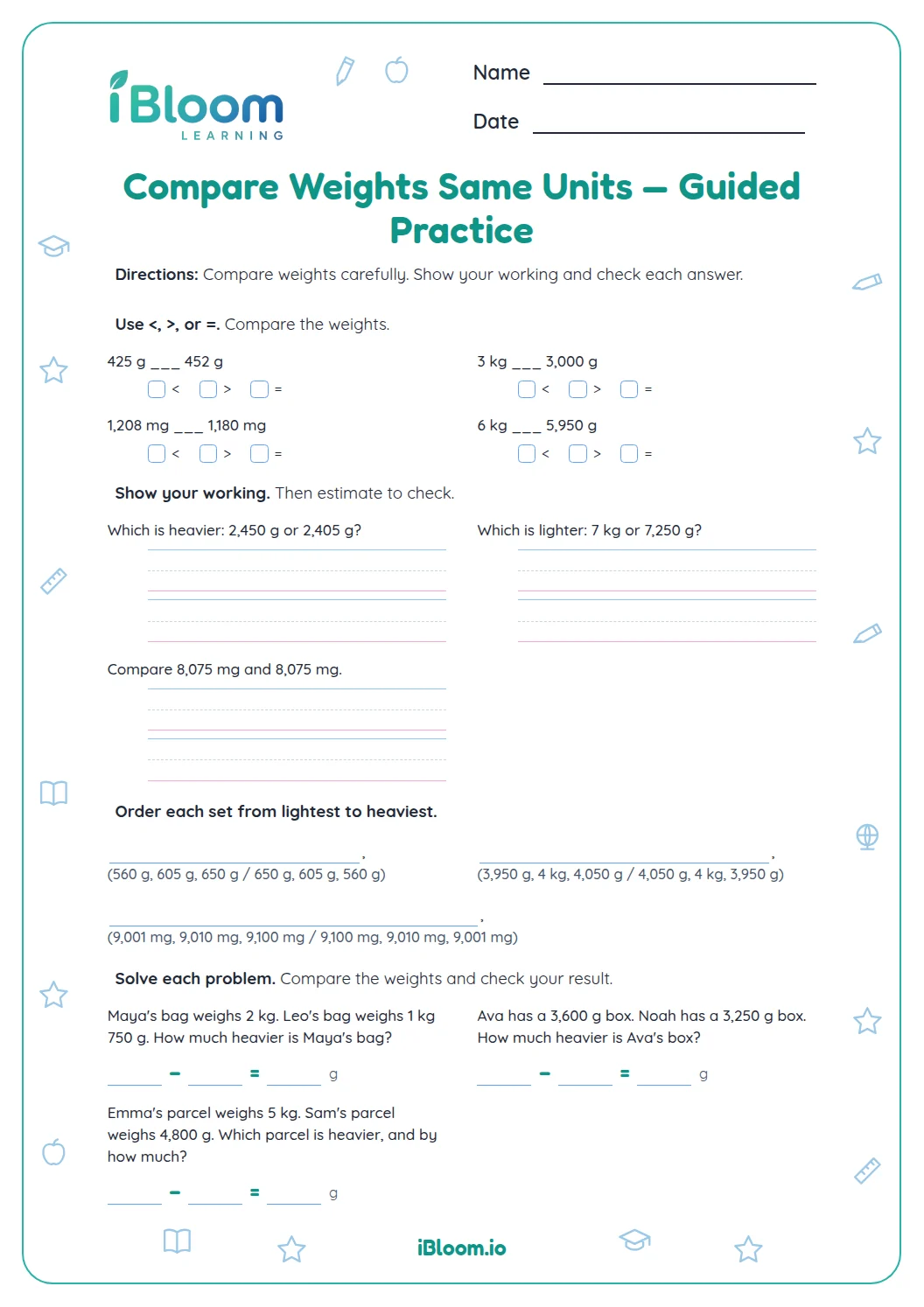
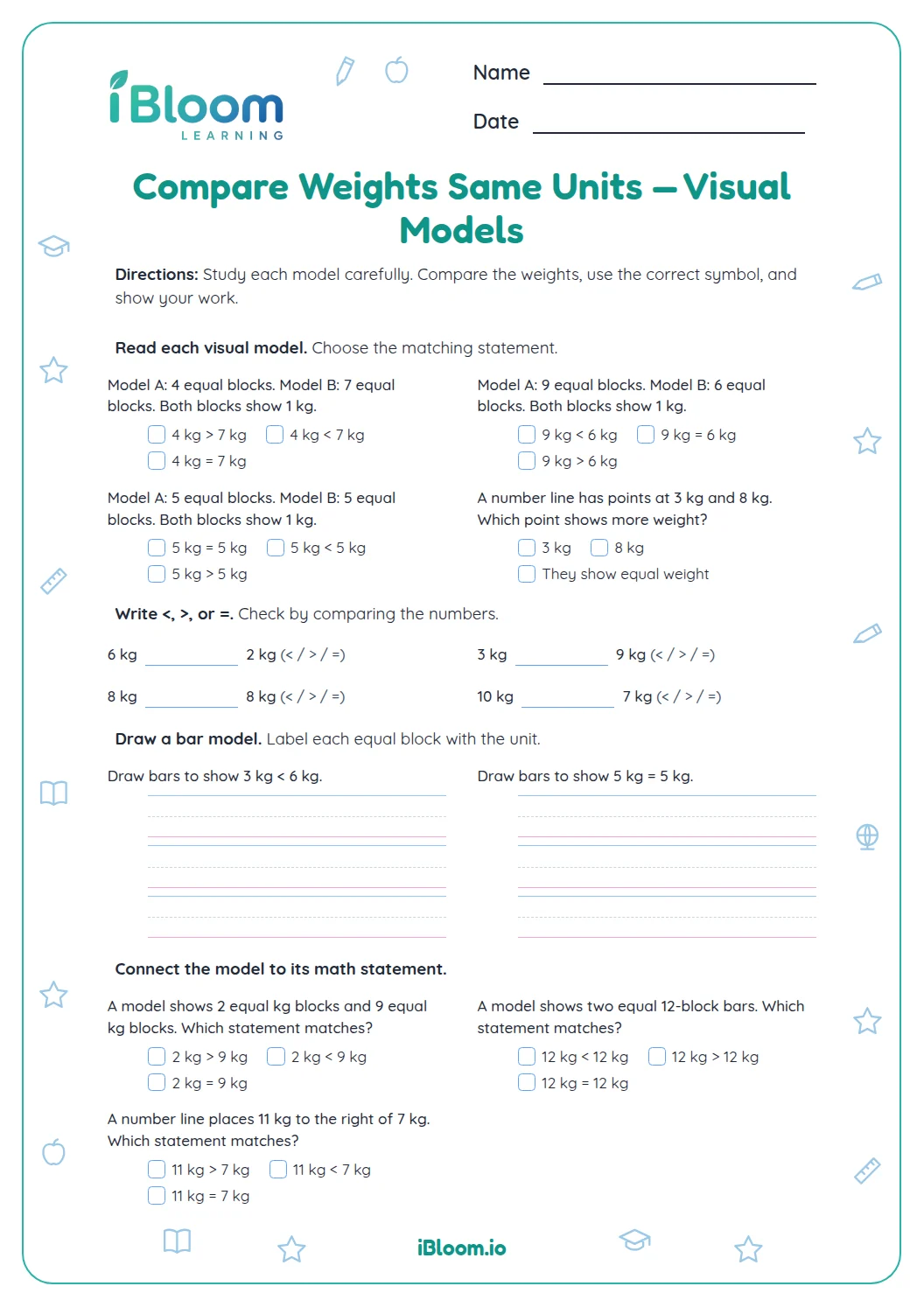
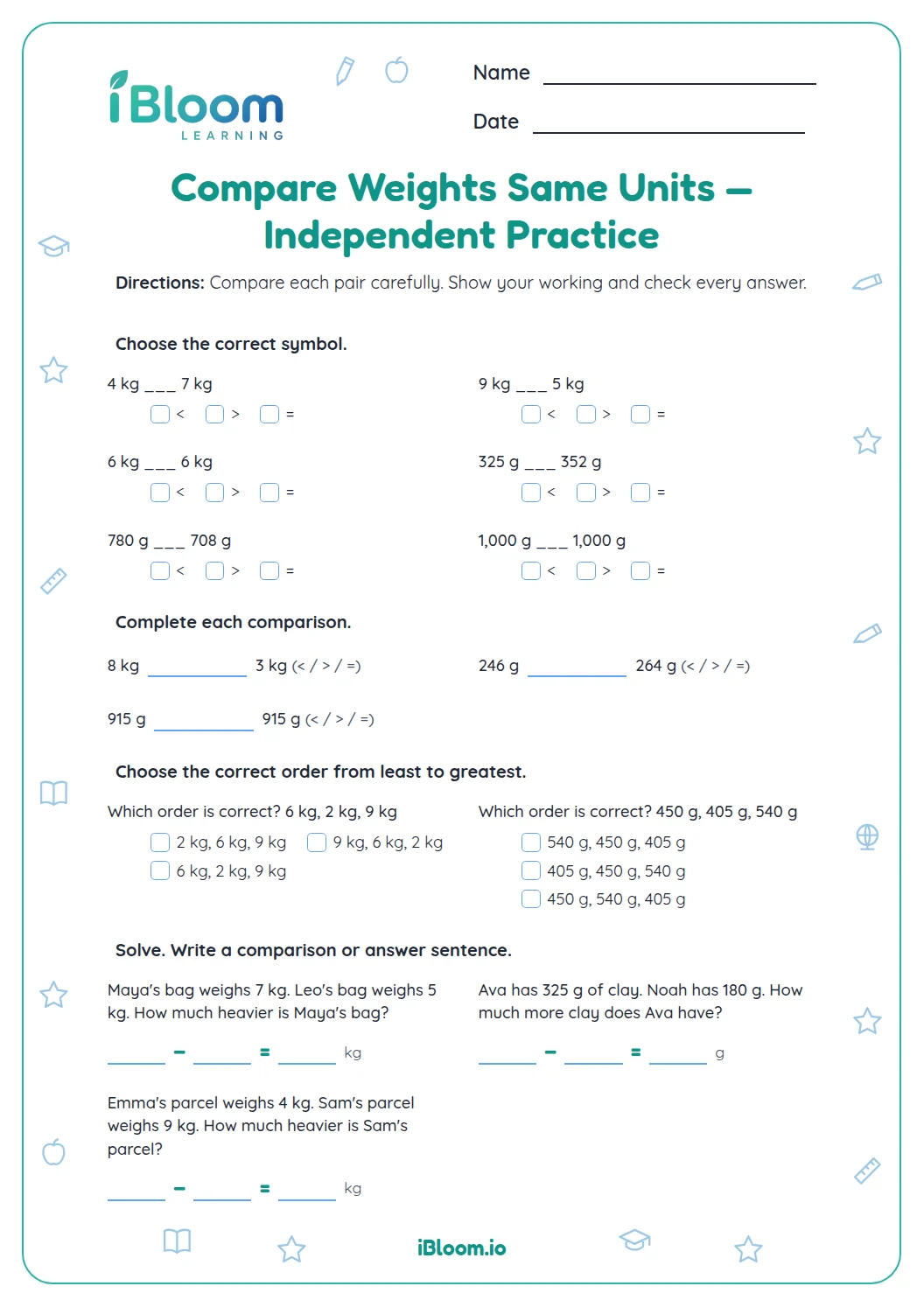
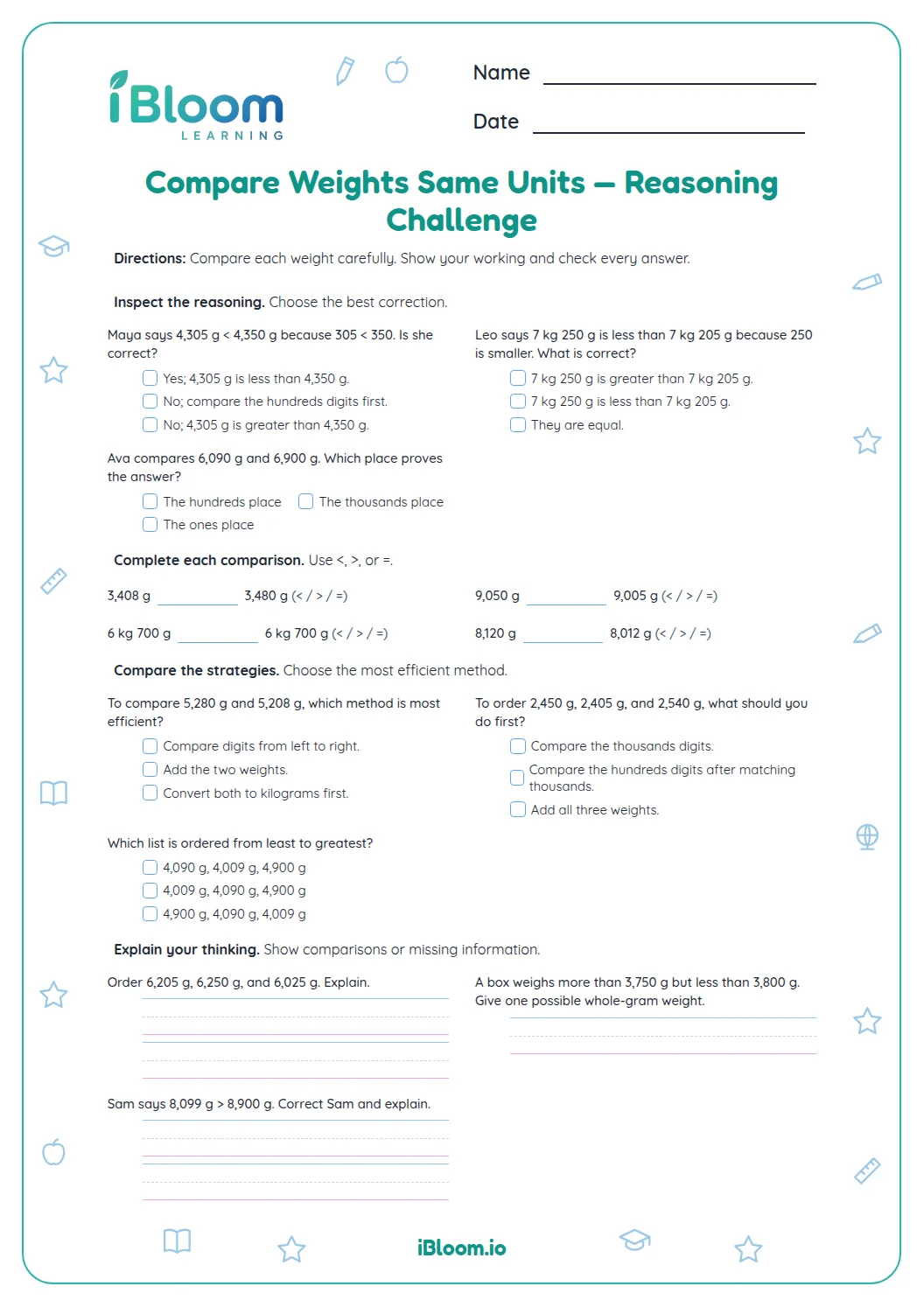
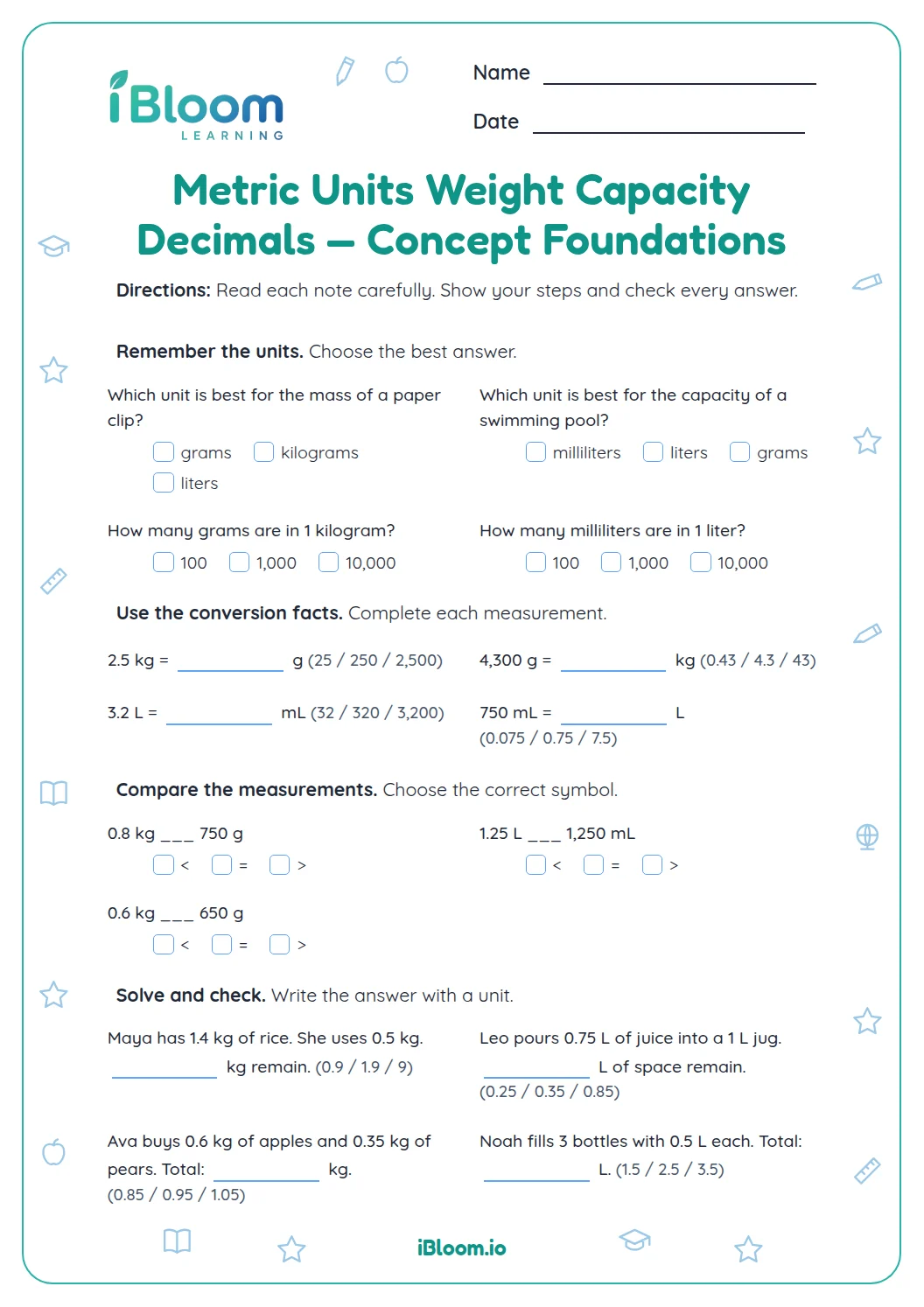
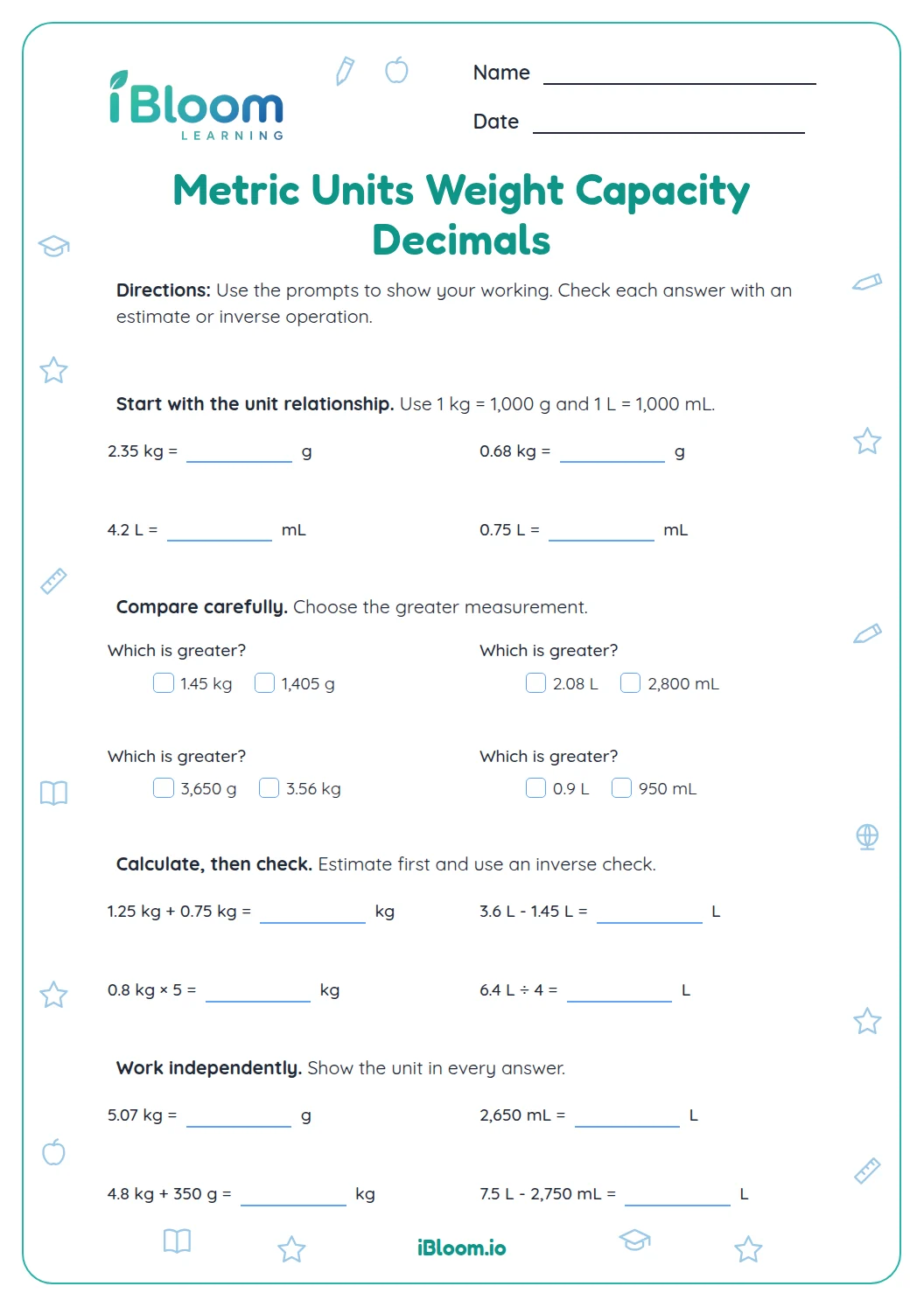
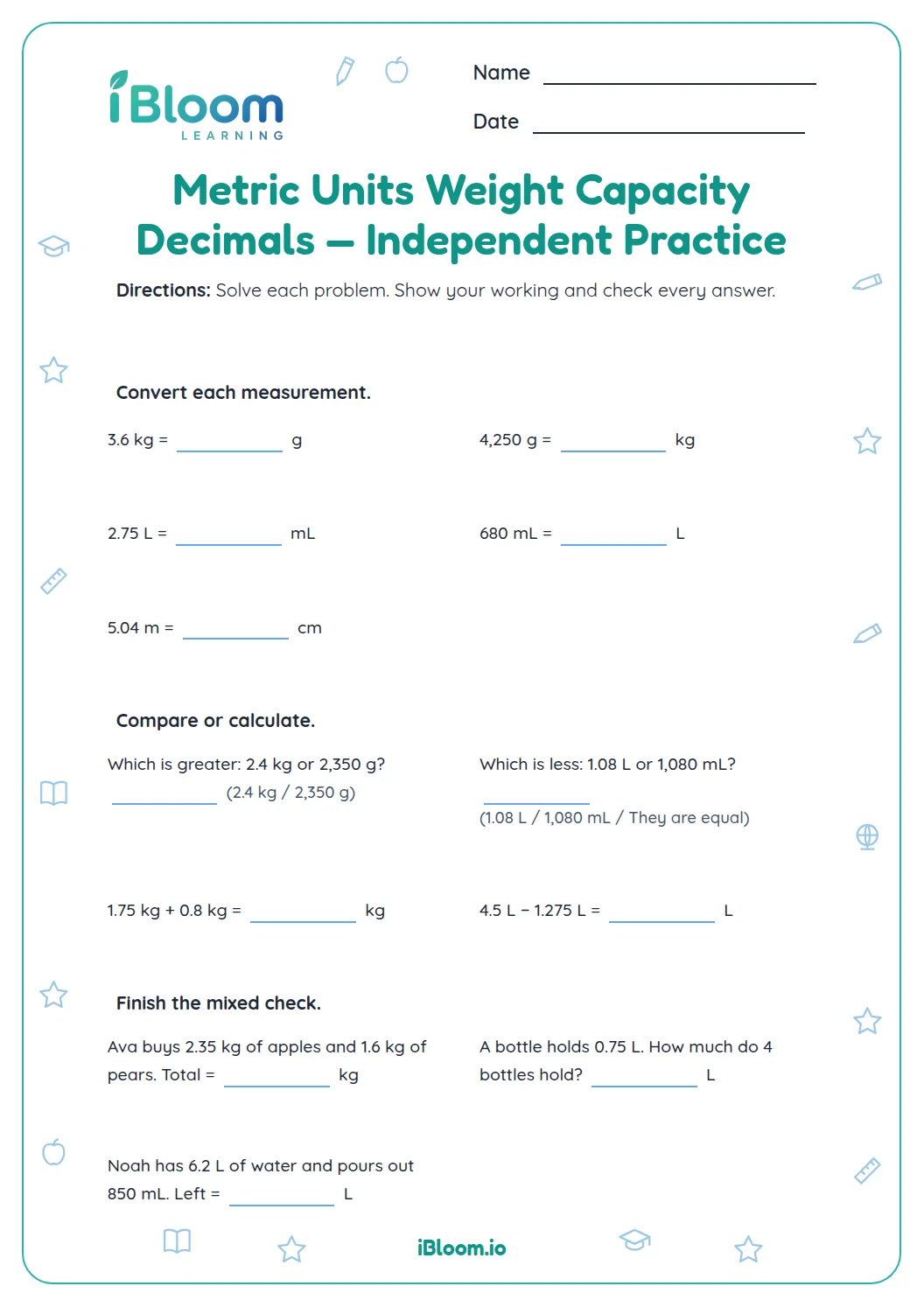
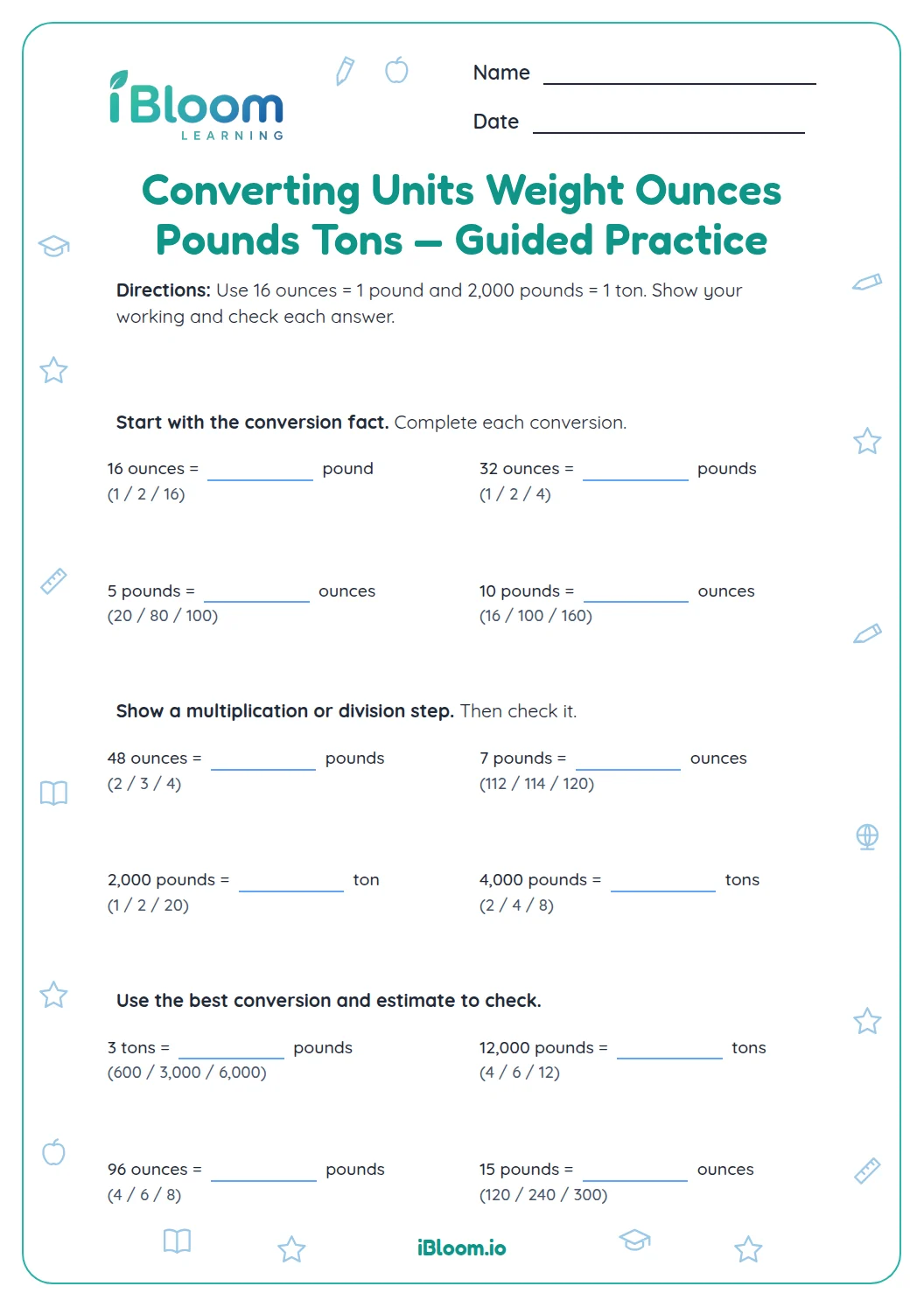
This Grade 5 measurement worksheet uses real-world weights in kilograms to practice comparing decimals and solving addition and subtraction stories. Students compare four pairs, including equal values such as 18.6 kg and 18.60 kg, then solve four problems involving totals, gains, remaining amounts, and differences. Decimal values extend through thousandths, and the written section provides room to show equations and calculations. Every problem keeps the same unit, so learners can focus on place value and the meaning of each situation. The answer key includes units.
How do you compare weights in kilograms?
Line up decimal places and compare from left to right. A zero at the end does not change a value: 18.6 kg and 18.60 kg are equal.
- 112.45 kg and 12.5 kg
- 2Write 12.5 as 12.50. Compare hundredths: 45 < 50.
- 3The pear crate is heavier.
How do you solve a weight story?
Choose the operation from the story: a difference asks how much heavier or lighter, a gain adds, and a remaining amount subtracts. Keep kilograms in the answer.
What will students practice?
The first four questions compare weights; the last four use addition or subtraction to find a difference, a gain, a total, or a remaining amount. All eight use kilograms.
How to use this worksheet
- 1Read the question to decide whether it asks for heavier, lighter, a total, or a difference.
- 2Align decimal points before comparing or calculating.
- 3Add zeros to the right when useful, such as 12.5 = 12.50.
- 4Write an equation that matches the story.
- 5Include kg in each final weight answer and check its size.
Common mistakes and quick fixes
The mistake
Comparing digit strings without aligning decimal places.
The fix
Write equal place values in columns, adding trailing zeros as needed.
The mistake
Treating 18.6 kg and 18.60 kg as different weights.
The fix
Remember that a zero at the end does not change the value.
The mistake
Subtracting in the wrong order for a difference.
The fix
Subtract the smaller weight from the larger weight and check the result is positive.
What to practice next
Make more practice
Questions parents and teachers ask
Do the problems use different units?
No. All weights are given in kilograms, so students can focus on comparing decimal values and solving weight problems without converting units. Kilograms also appear in the keyed results for the four calculation items. The comparison set includes values such as 12.45 kg and 12.5 kg, so decimal place value matters.
How many items are on the sheet?
There are eight items: four multiple-choice comparisons and four word problems with working space. The comparison items include equal weights, while the calculation items ask for a difference, gain, total, or remaining weight. Each comparison asks which weight is heavier, lighter, greater, or equal.
Why does 12.5 equal 12.50?
A zero in the hundredths place adds no weight, so 12.5 kg and 12.50 kg name the same amount. Writing both to the hundredths place makes the comparison with 12.45 kg easier to see. Appending a zero can help line up decimal places, but it does not change the measurement.
Which decimal places appear?
The weights use tenths, hundredths, and thousandths. In the comparison section, line up decimal places and compare from left to right; in the word problems, align decimal points before adding or subtracting. The comparison questions focus on place value; the final four use decimal addition or subtraction.
Should students show their equations?
Yes. The four word problems provide working space and ask students to choose an operation that fits the situation. For a difference, subtract the lighter weight from the heavier weight and keep kilograms in the answer. The examples include a gain, a combined amount, and a remaining amount as well as a difference.
Is an answer key provided?
Yes. A separate key gives the correct comparison choice or the result in kilograms for each word problem. Students can use it to check both the value and the unit after finishing. The key makes it possible to check the kilogram unit as well as the numerical result.