
About this worksheet
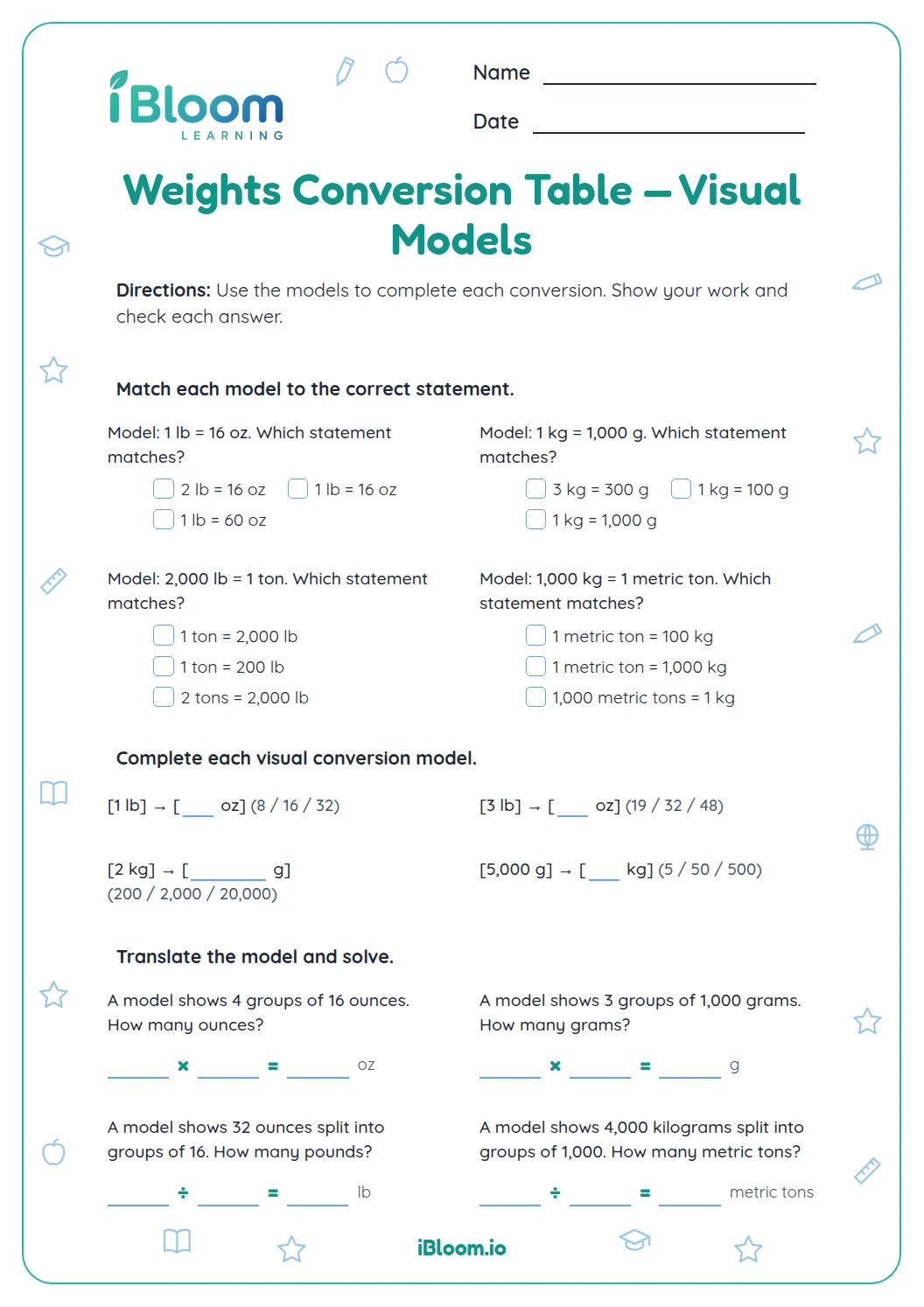
This Grade 5 worksheet starts with direct conversions among ounces, pounds, and tons, then applies those relationships in real-world problems. Students use 16 ounces per pound and 2,000 pounds per ton to change units before solving. The page aligns with CCSS 5.MD.A.1 and includes a separate answer key with units.
Aligned to 5.MD.A.1
How are ounces, pounds, and tons related?
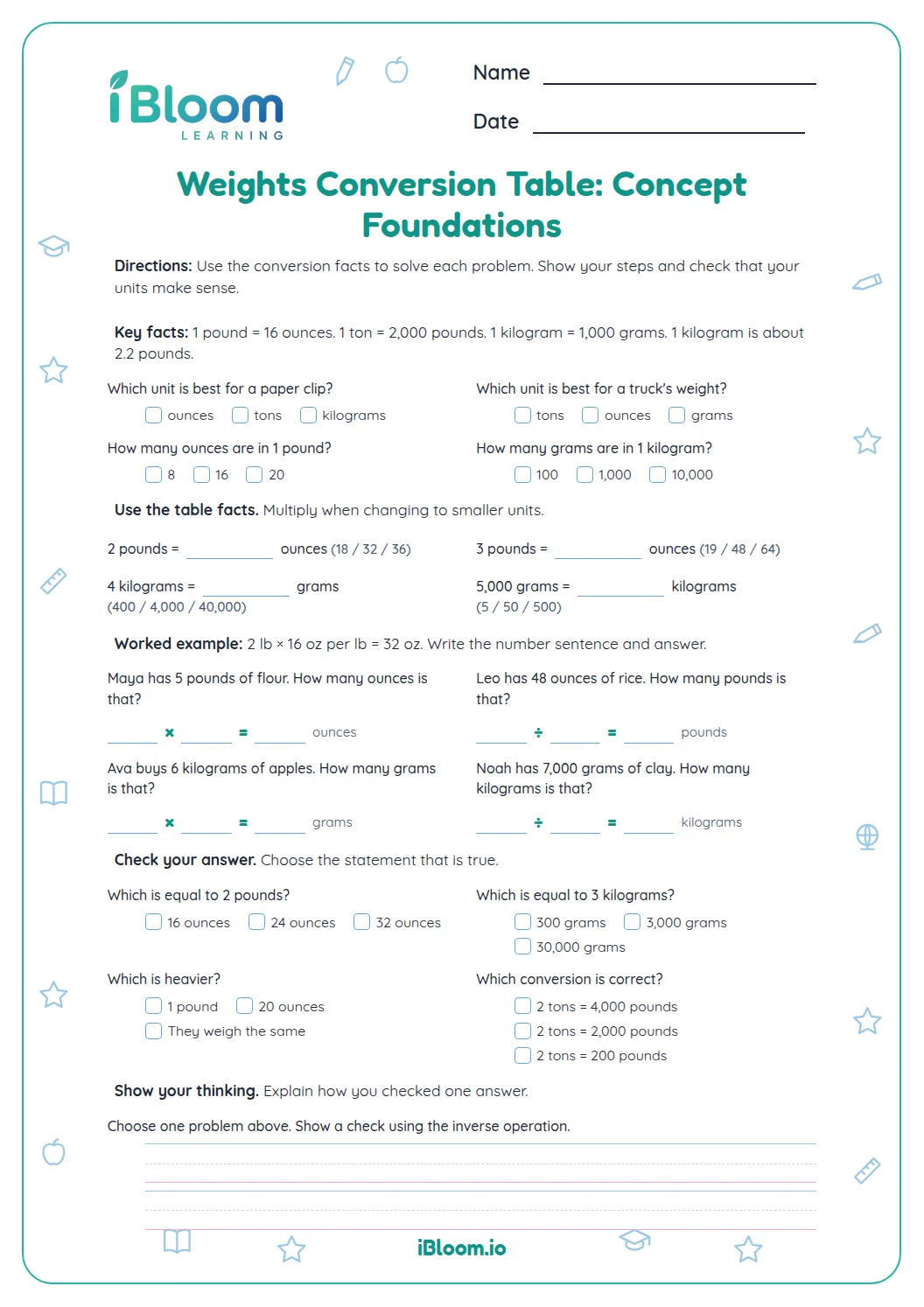
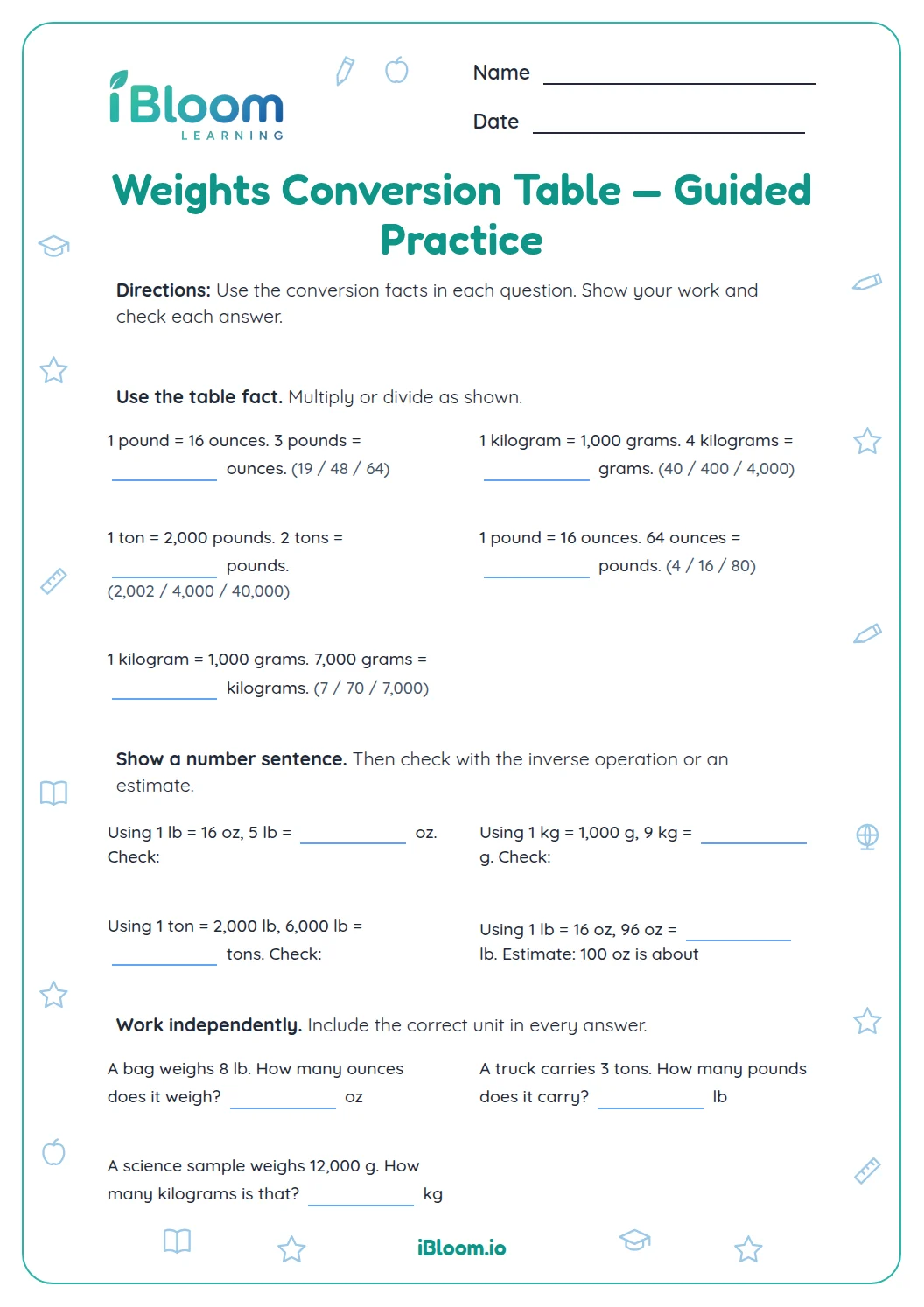
A pound contains 16 ounces, and a US customary ton contains 2,000 pounds. Moving to a smaller unit makes the number larger; moving to a larger unit makes it smaller.
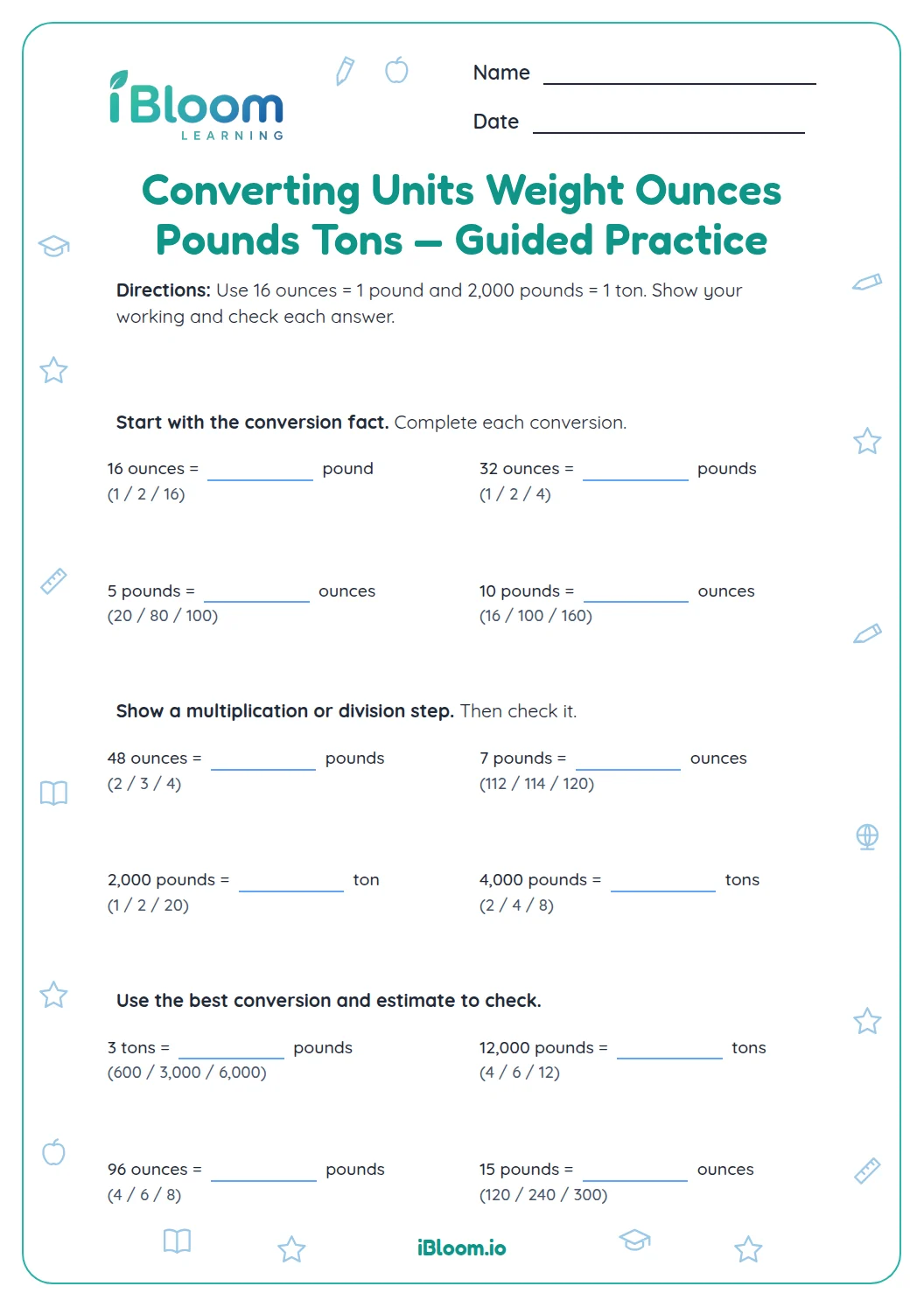
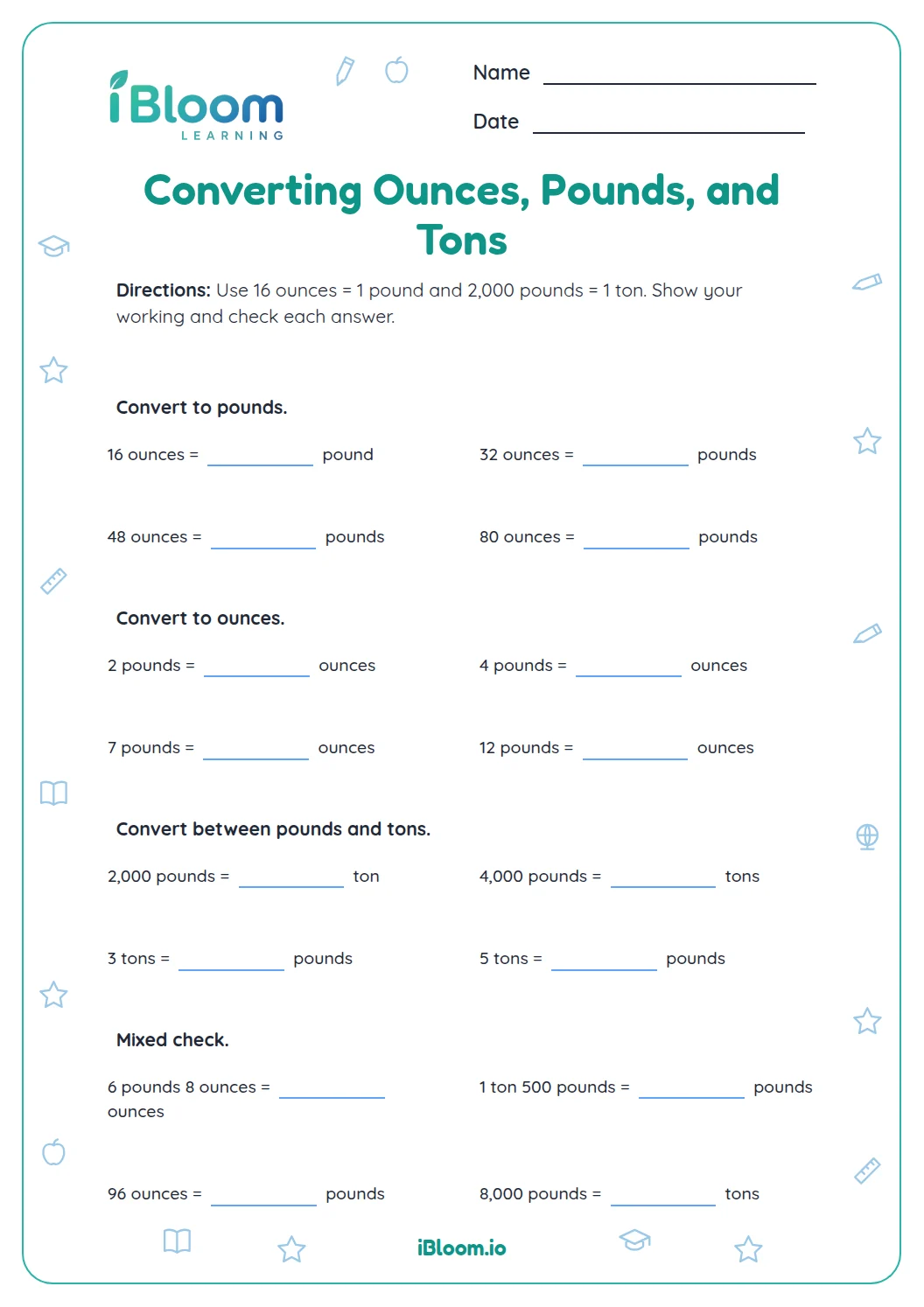
Question 1 converts 3 pounds to ounces: 3 × 16 = 48 ounces.
- 13 lb × 16 oz per lb = 48 oz
How do conversions help solve the story problems?
When a story combines quantities, first express them in the same unit. Then add or subtract, and label the final amount with that unit.
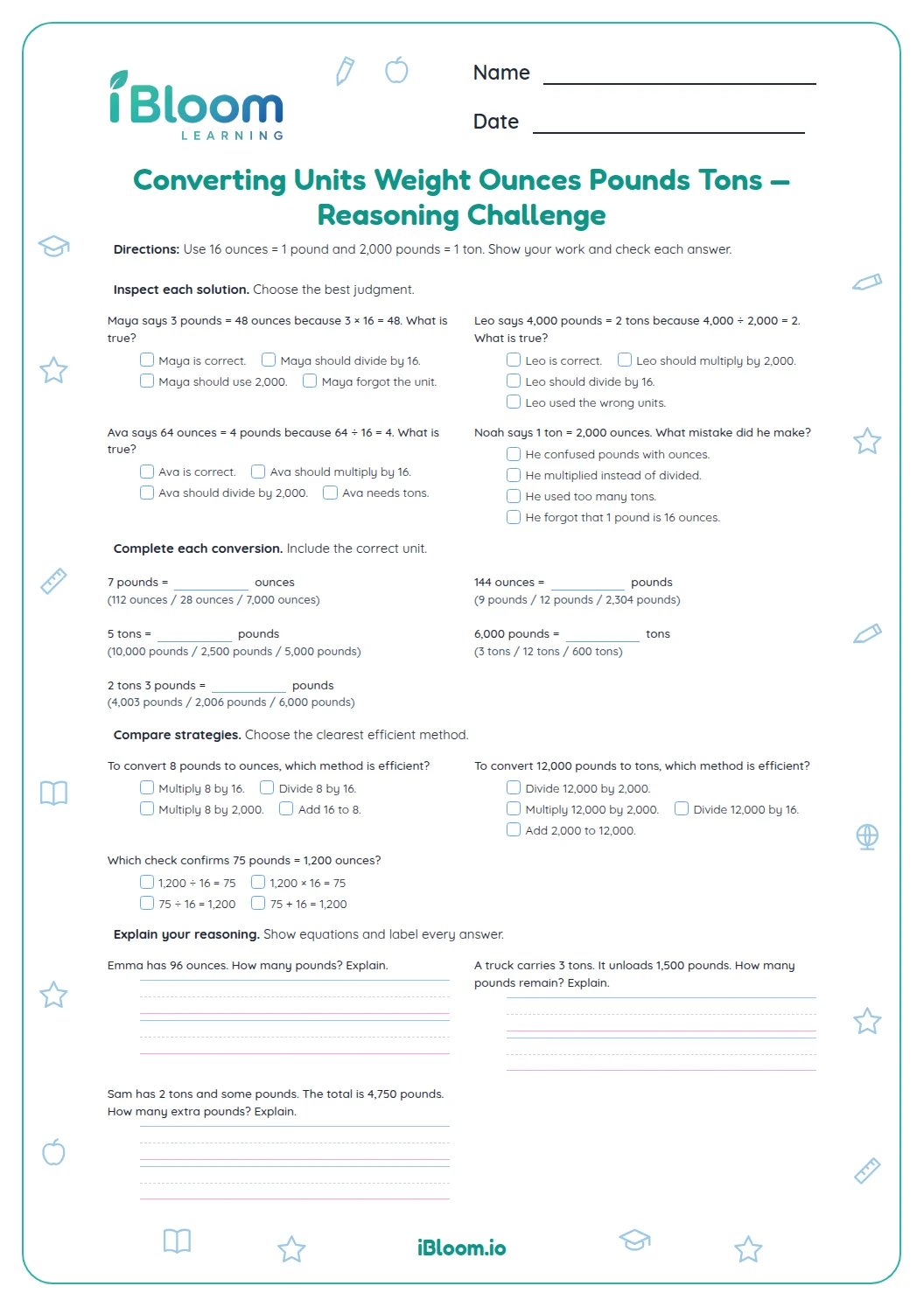
For question 12, convert 2 tons to 4,000 pounds. Remove 1,200 pounds of lumber to find 2,800 pounds remaining.
How can a student check a conversion?
Use the size of the units as a reasonableness check. Pounds should turn into a larger count of ounces; pounds should turn into a smaller count of tons. Multiplication or division by the correct conversion factor should match that direction.
How to use this worksheet
- 1Write the two conversion facts where they are easy to see.
- 2For each direct conversion, choose multiplication or division based on the direction.
- 3For a story, convert quantities so both amounts use the same unit.
- 4Solve the resulting addition or subtraction.
- 5Write the number in the blank and check that its size makes sense.
Conversion slips and fixes
The mistake
Dividing pounds by 16 to get ounces.
The fix
Ounces are smaller, so multiply pounds by 16; the answer count should increase.
The mistake
Adding a number of pounds directly to a number of tons.
The fix
Convert one amount so both quantities use pounds or both use tons before adding.
The mistake
Leaving off the final unit.
The fix
Copy the unit named by the question after the numerical result.
Common Core alignment
The page practices conversions within the customary weight system, including their use in real-world problems.
Convert ounces, pounds, and tons and use those conversions in real-world problems.
On this sheet: Students convert customary weight units and use them to solve multistep stories.
Show the official wordingHide the official wording
Convert among different-sized standard measurement units within a given measurement system (e.g., convert 5 cm to 0.05 m), and use these conversions in solving multi-step, real world problems.
What to practice next
Make more practice
Further reading
Questions parents and teachers ask
Which conversion facts are used?
The page uses 16 ounces in 1 pound and 2,000 pounds in 1 ton. Keep those relationships nearby while working. Part A asks for direct conversions, and Part B uses the same facts in stories. Reread the prompt and use the answer key to check how the clue supports the response.
How do you convert pounds to ounces?
Multiply the number of pounds by 16 because each pound contains 16 ounces. For example, 3 pounds is 3 × 16, or 48 ounces. To convert ounces to pounds, divide by 16. Reread the prompt and use the answer key to check how the clue supports the response.
How do you convert tons to pounds?
Multiply tons by 2,000 because one US customary ton equals 2,000 pounds. If the story uses both tons and pounds, convert one quantity so both amounts use the same unit before adding or subtracting. Reread the prompt and use the answer key to check how the clue supports the response.
Why does Part B ask students to convert before solving?
Addition and subtraction work cleanly when both quantities name the same unit. Convert first, write the matching-unit amounts, solve, then use the unit printed beside the answer blank. Reread the prompt and use the answer key to check how the clue supports the response.
What is a common mistake with ounces and pounds?
A common error is dividing when changing pounds to ounces. Since ounces are smaller units, the number should grow: 4 pounds equals 64 ounces. Multiplying by 16 is a helpful size check. Reread the prompt and use the answer key to check how the clue supports the response.
What should students try next?
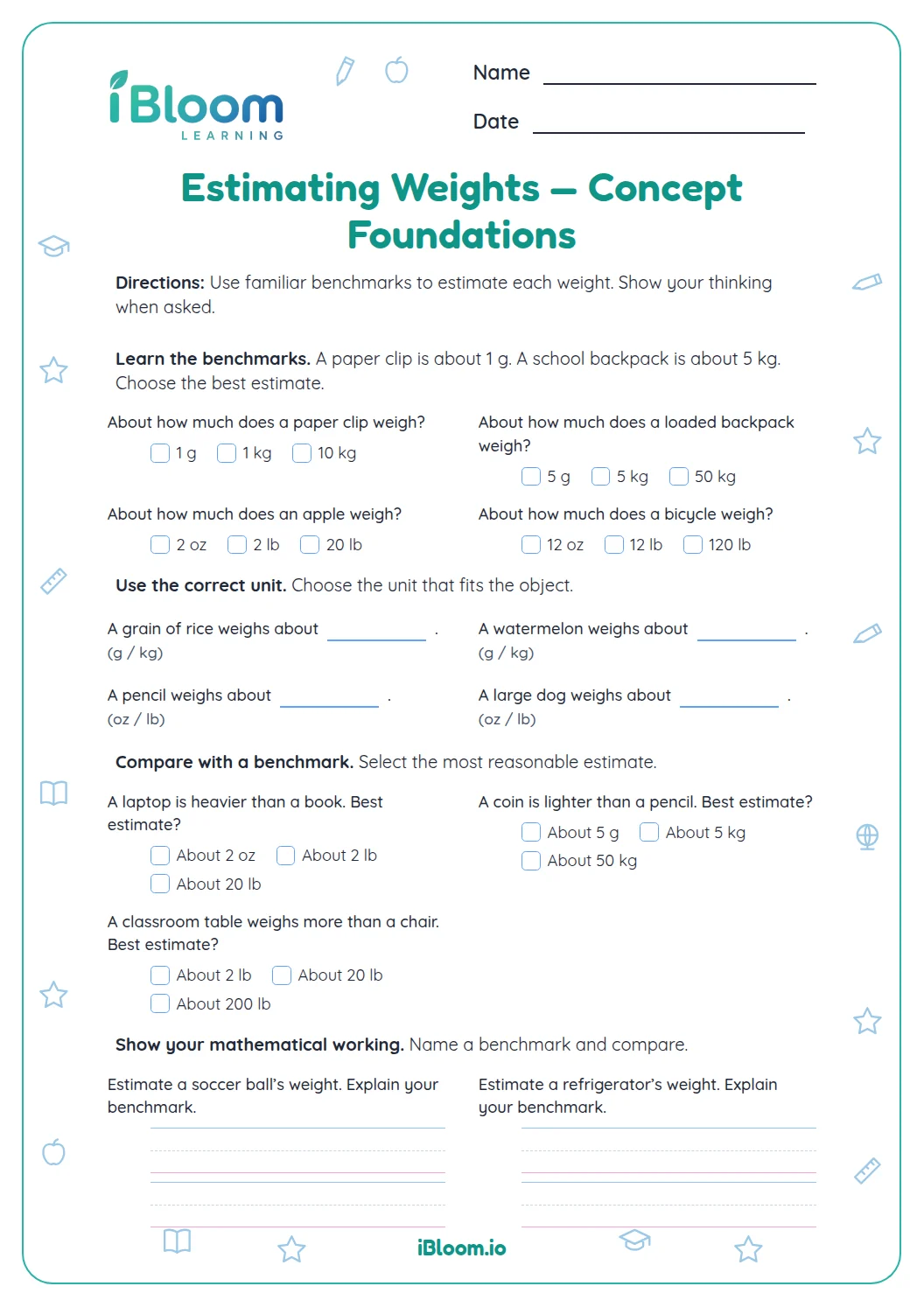
After building fluency with ounces, pounds, and tons, students can compare weights after converting them to the same unit. A conversion table also helps organize several related customary units. Reread the prompt and use the answer key to check how the clue supports the response.