
About this worksheet
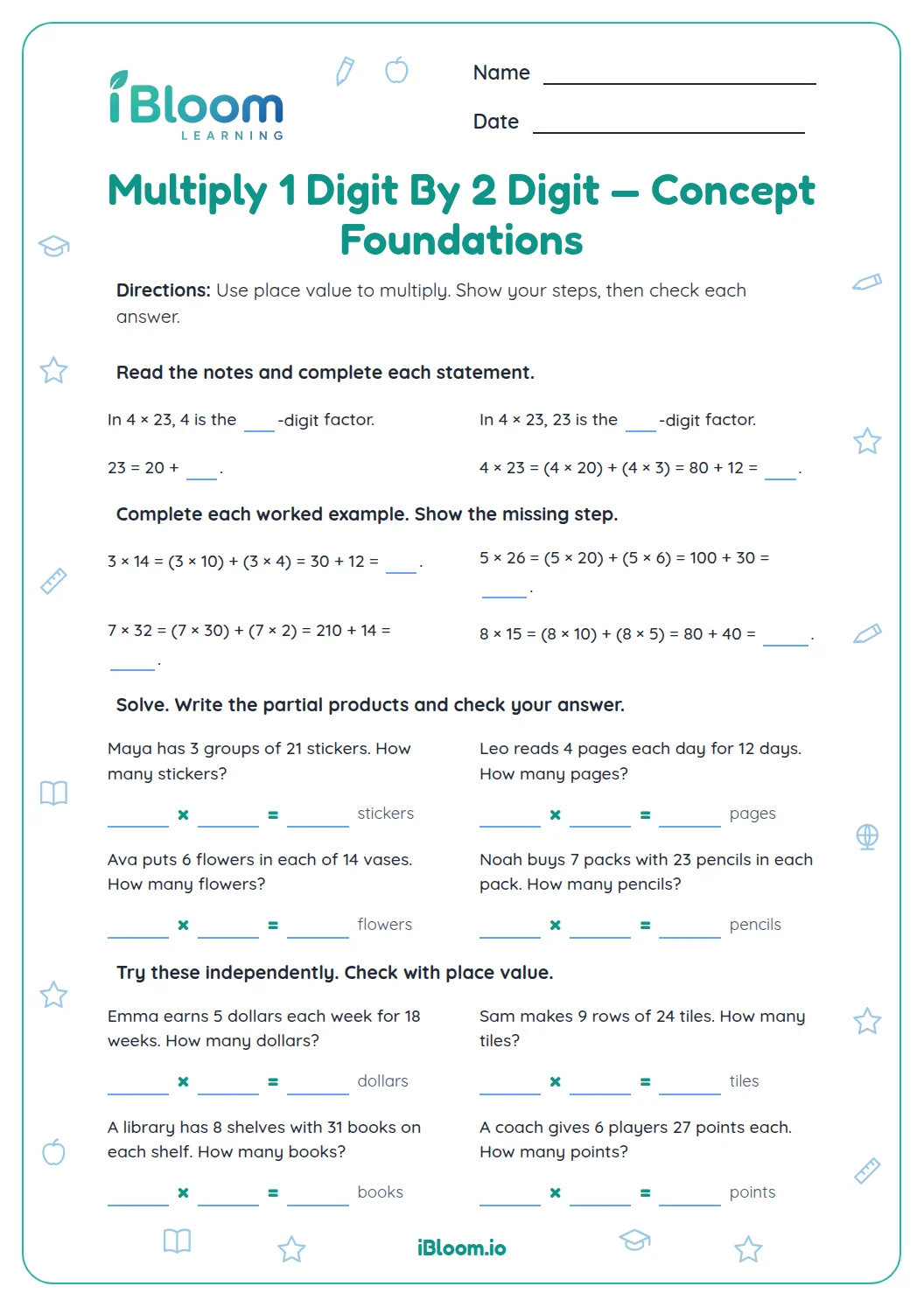
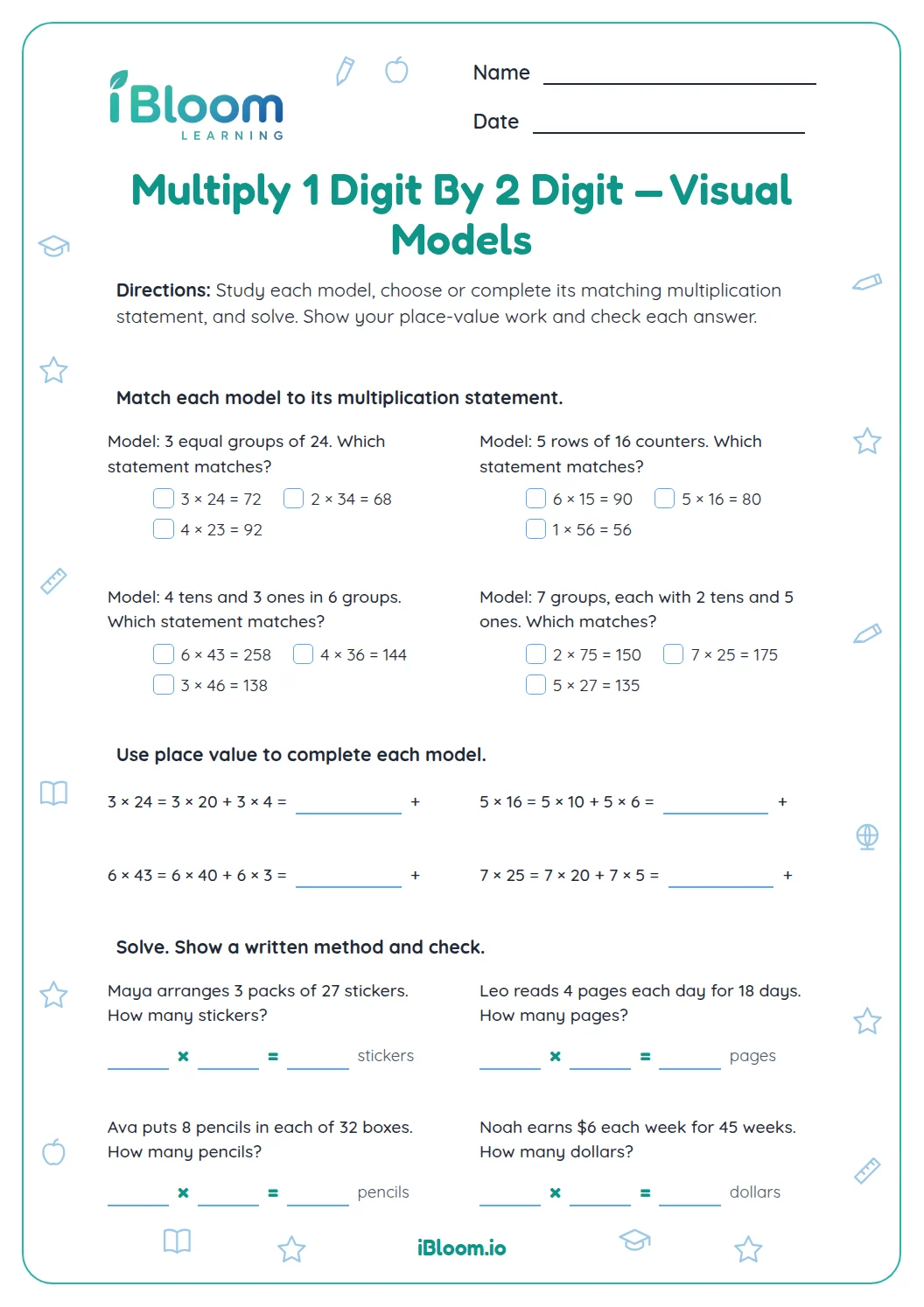
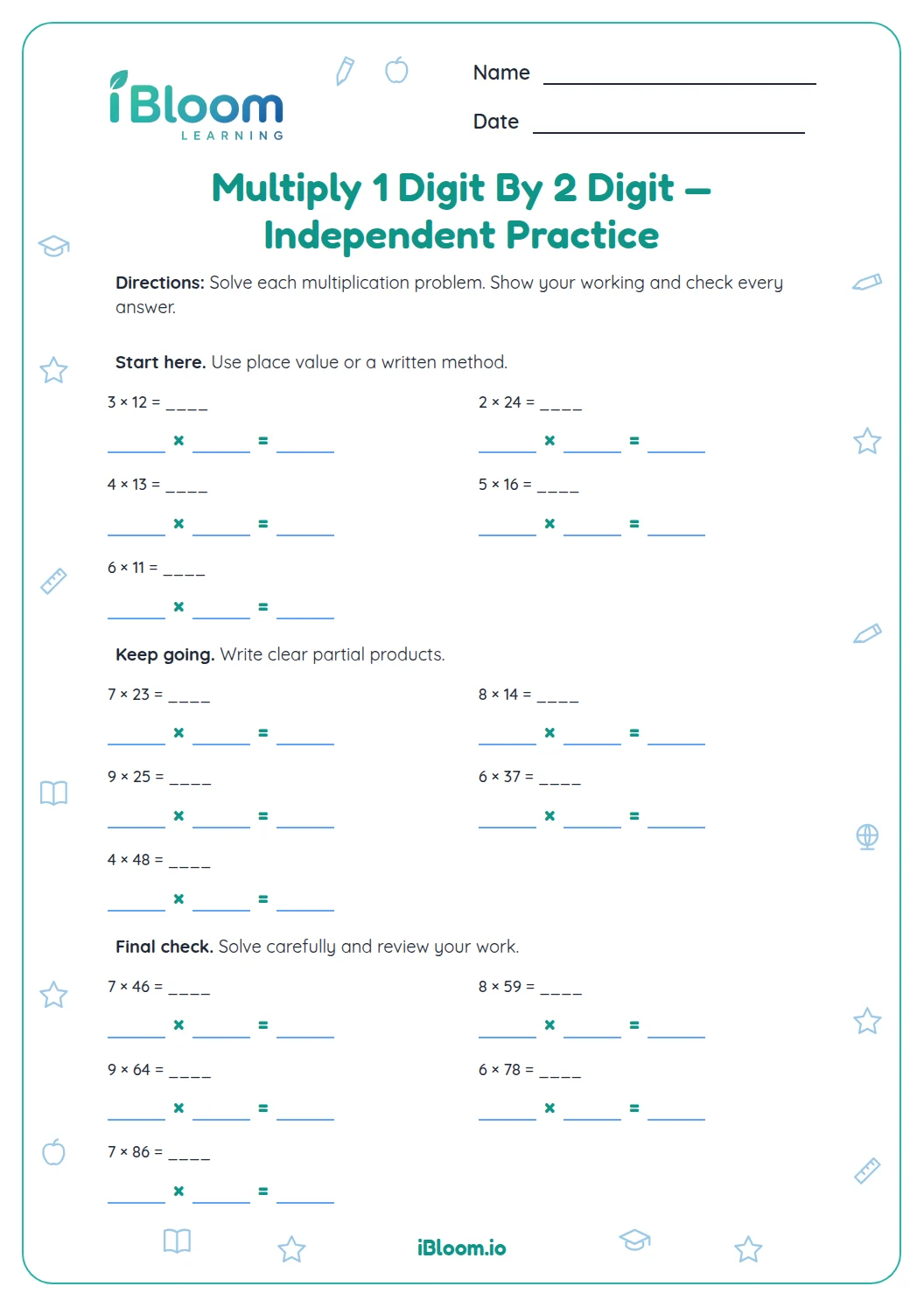
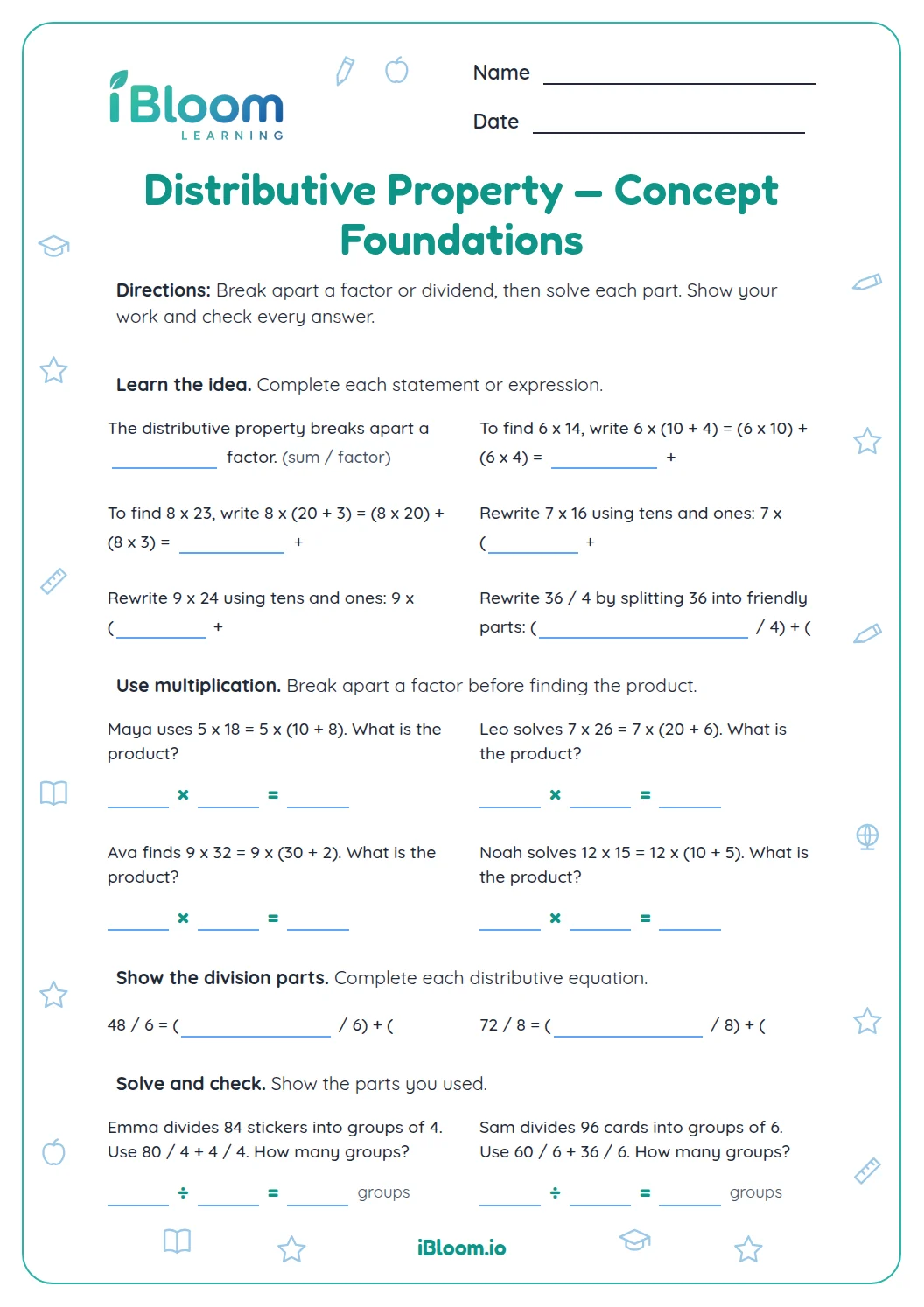
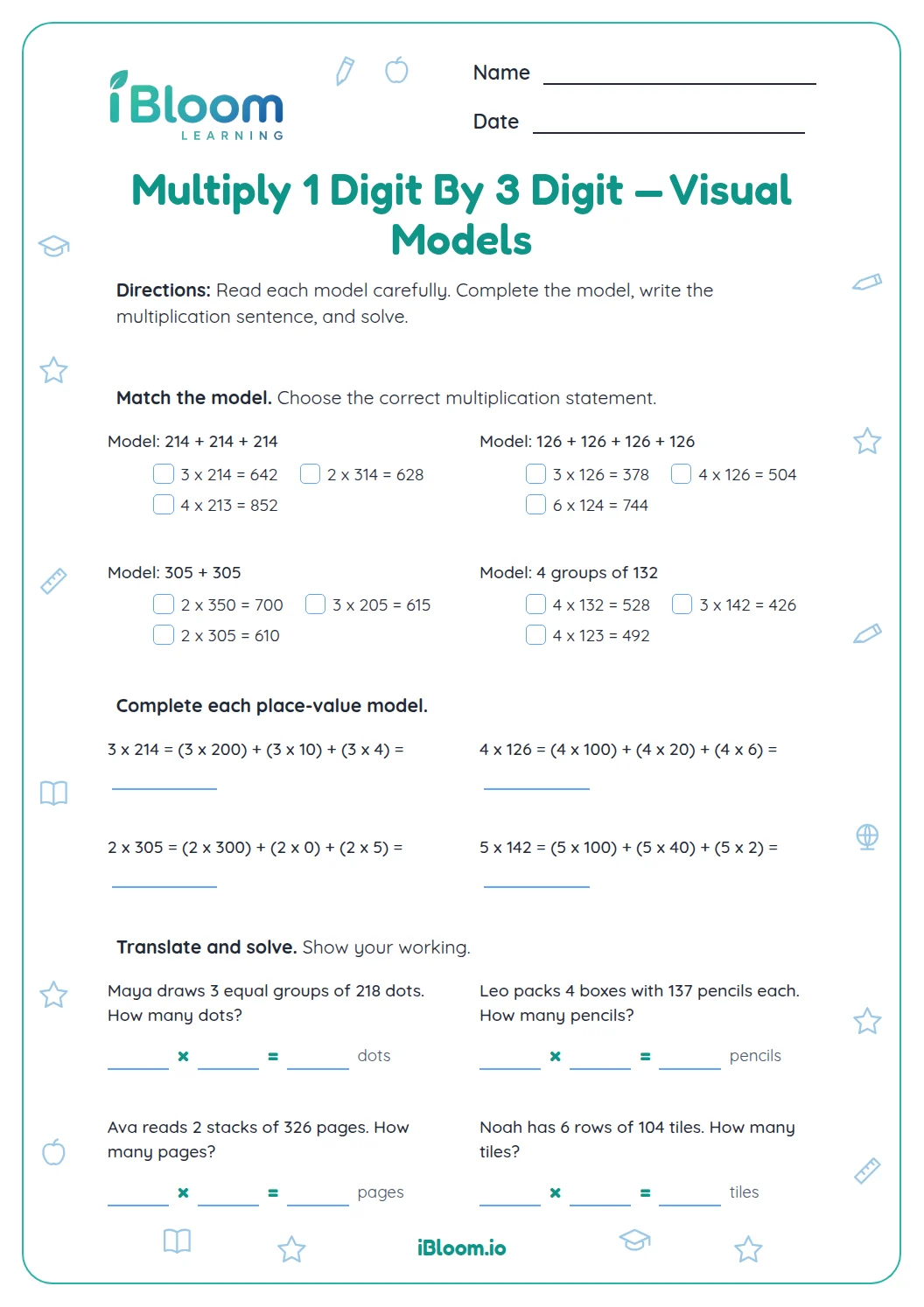
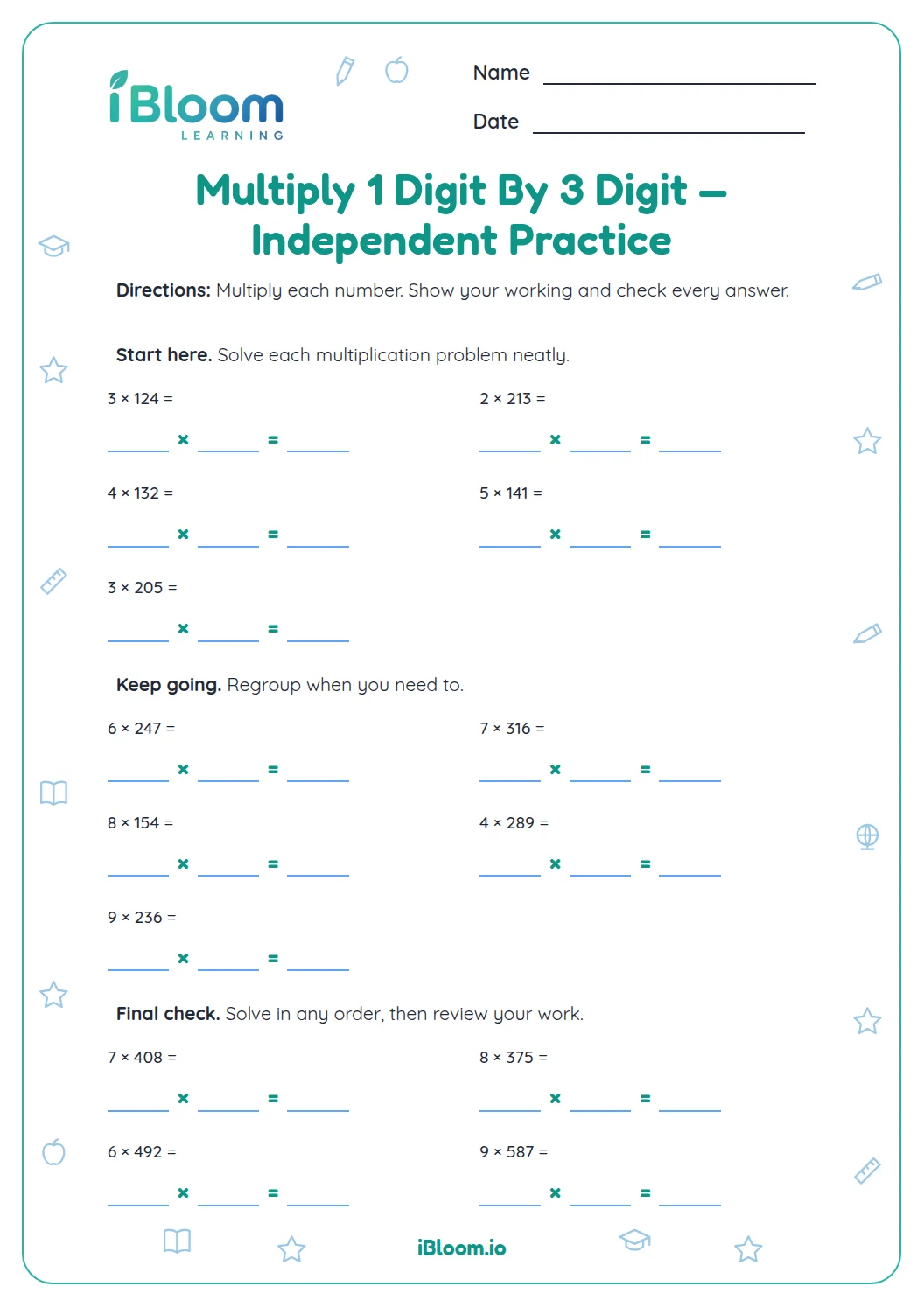
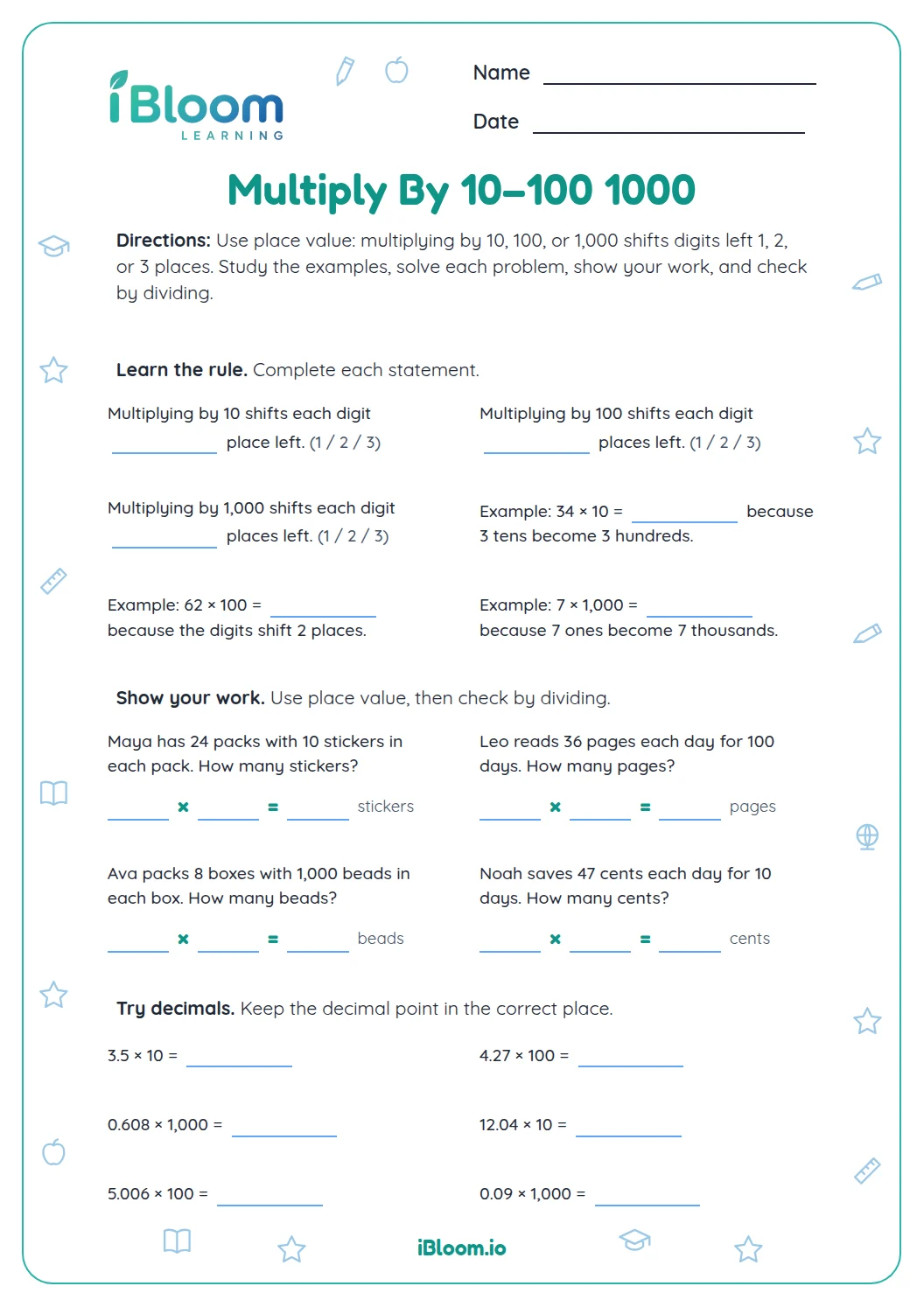
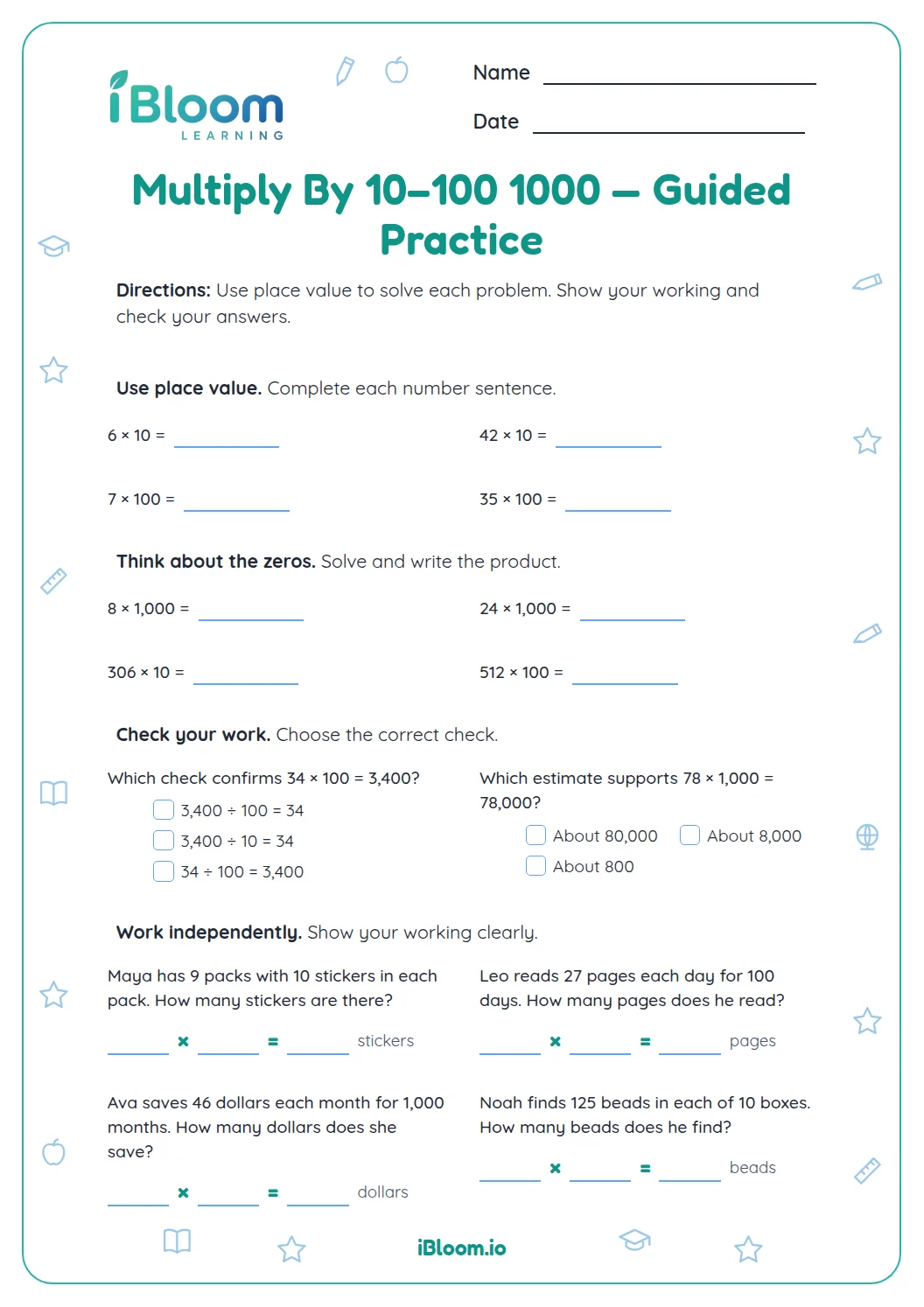
This Grade 5 printable practices multiplying a two-digit whole number by a one-digit factor using place-value strategies from CCSS 4.NBT.B.5. Children calculate products, use place-value reasoning, and solve short situations involving equal groups and arrays. The 14 questions are arranged in three parts across two worksheet pages, with a separate two-page answer key. This keeps the old sheet’s focus on one-digit by two-digit multiplication and its tens-and-ones method while giving the word problems varied contexts.
Aligned to 4.NBT.B.5
How does place value help with multiplication?
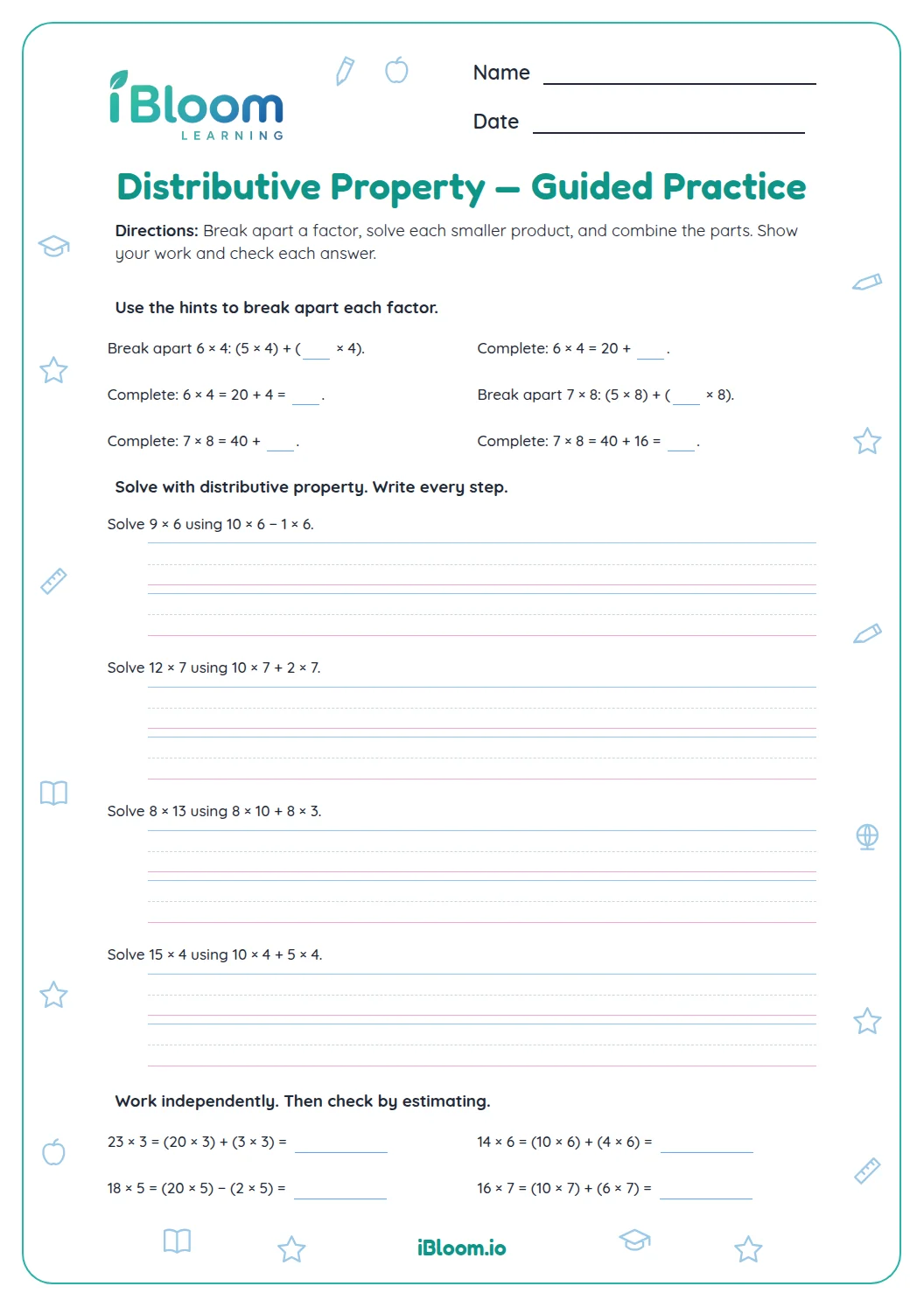
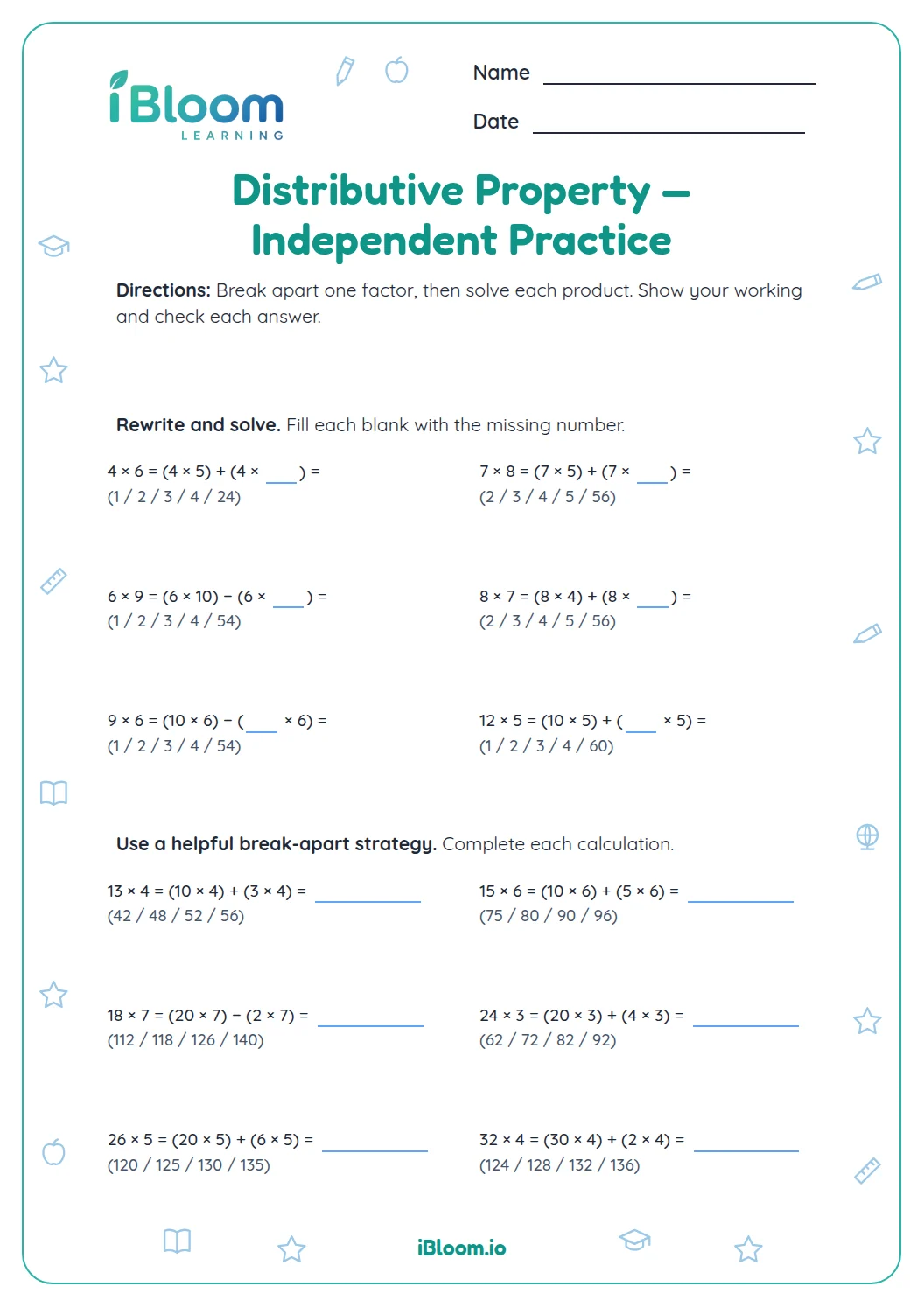
Part A starts with two-digit numbers and one-digit factors. Break each two-digit number into tens and ones, multiply both parts, and combine the partial products. For example, 24 × 3 is 20 × 3 plus 4 × 3. The sheet practices the computation described in CCSS 4.NBT.B.5.
How do you break apart 24 × 3?
The tens part is 20 and the ones part is 4. Multiply each by 3, then add the results.
- 124 × 3 = (20 × 3) + (4 × 3)
- 260 + 12 = 72
How do the word problems use multiplication?
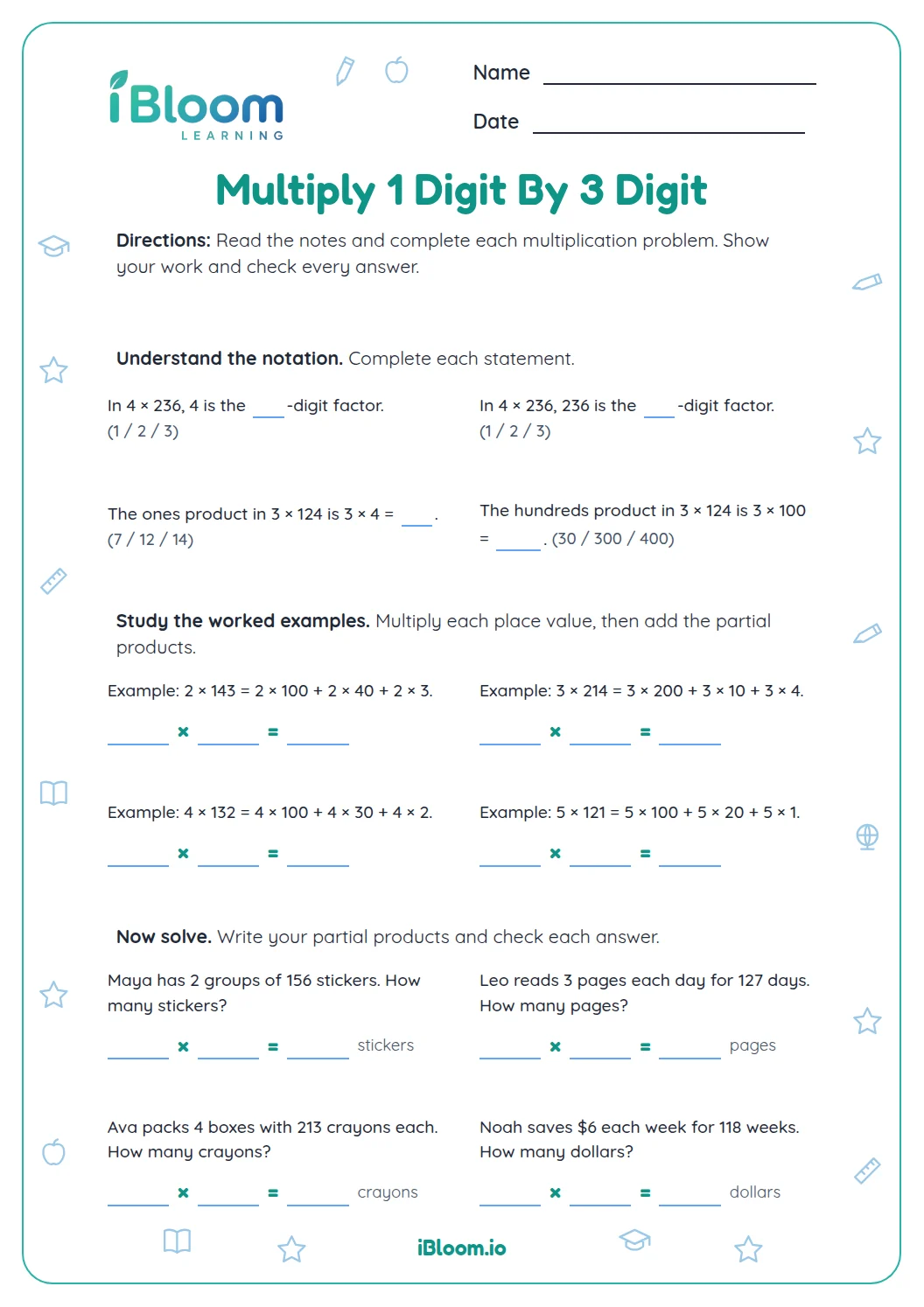
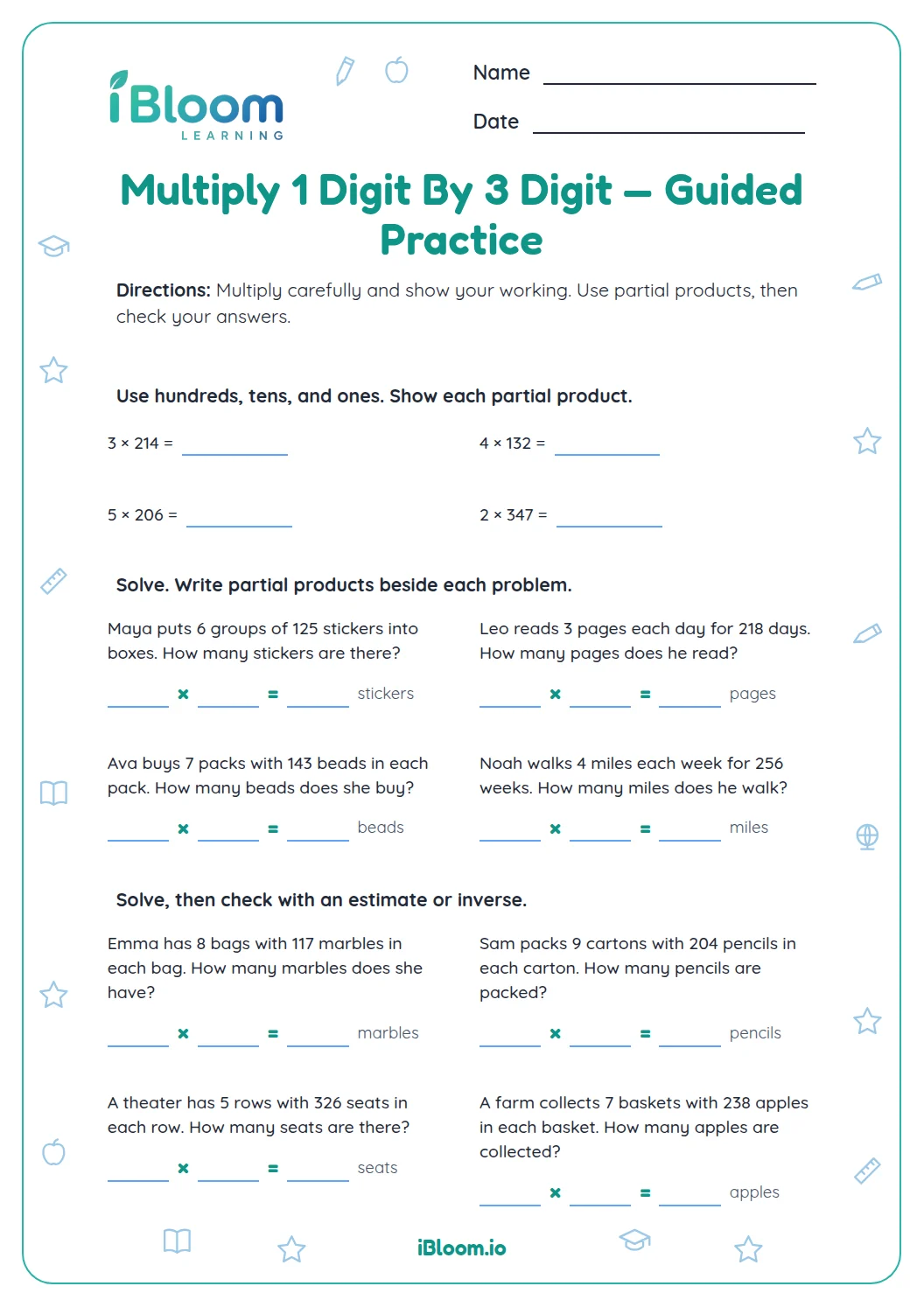
Part C describes equal groups, such as markers in cups or seats in rows. Identify the number of groups and the amount in each group, multiply, and label the product with the item being counted.
How to use this worksheet
- 1Split the two-digit factor into tens and ones.
- 2Multiply each part by the one-digit factor.
- 3Add the partial products to find the product.
- 4For a situation, identify the equal groups before calculating.
- 5Check each result with the separate answer key and include the requested unit.
Common slips and quick fixes
The mistake
Multiplying only the ones digit and forgetting the tens.
The fix
Write both partial products, then add them.
The mistake
Treating 24 as 2 + 4 instead of 20 + 4.
The fix
Use the value of each digit: 2 tens and 4 ones.
The mistake
Adding the factors instead of multiplying equal groups.
The fix
Ask how many groups there are and how many items are in each group.
Common Core alignment
This worksheet practices multiplying a two-digit whole number by a one-digit whole number.
Multiply two-digit whole numbers by one-digit numbers using place-value strategies.
On this sheet: Each item multiplies a two-digit whole number by a one-digit whole number.
Show the official wordingHide the official wording
Multiply a whole number of up to four digits by a one-digit whole number, and multiply two two-digit numbers, using strategies based on place value and the properties of operations. Illustrate and explain the calculation by using equations, rectangular arrays, and/or area models.
What to practice next
Make more practice
Further reading
Questions parents and teachers ask
What is a partial product?
A partial product is the result of multiplying one place-value part of a number. For 24 × 3, the partial products are 20 × 3 = 60 and 4 × 3 = 12; add them to get 72. The worked example uses 24 × 3 to show both partial products clearly.
How many problems are included?
There are 14 questions in three parts: five product questions, five calculations with working space, and four word problems. Each part practices multiplying a two-digit whole number by a one-digit whole number. The questions include both direct products and multiplication in real situations.
Which multiplication method does the sheet practice?
The first part emphasizes tens and ones: split the two-digit number, multiply each part, and combine the results. Later calculation and story problems let students use that method while showing their work. Each calculation uses whole-number factors, with room to show a written method.
Does this worksheet have an answer key?
Yes. A separate two-page answer key follows the two worksheet pages. It lists the products for all 14 questions, including the total number of objects in each equal-group situation. The situations use markers, seats, muffins, and seedlings as countable groups.
Which standard is listed on the page?
The page cites CCSS 4.NBT.B.5, which includes multiplying whole numbers using place-value strategies and illustrating calculations with equations, arrays, or area models. The practice uses place-value decomposition and equations. The answer key also helps check whether the product has the right label.