

About this worksheet
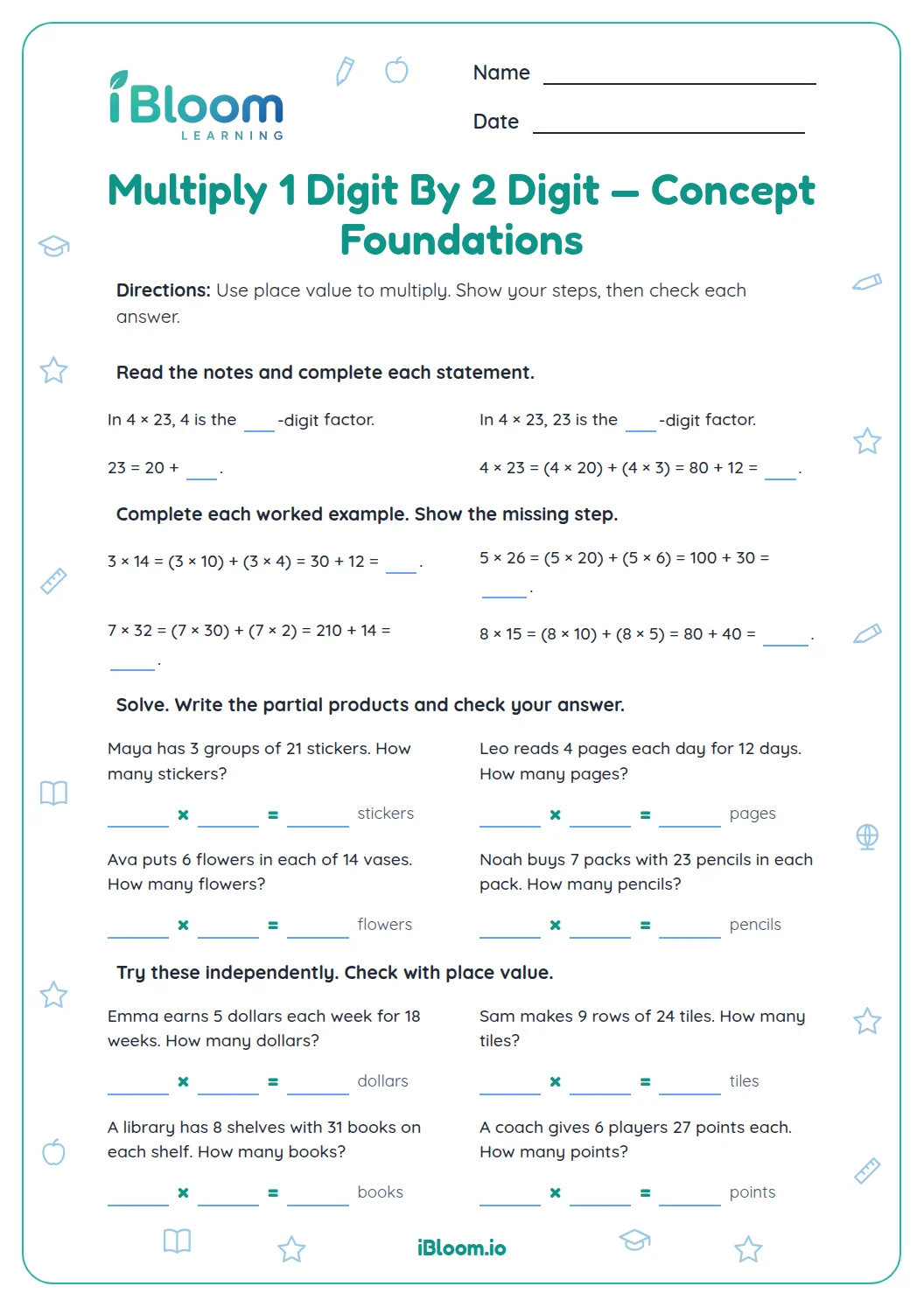
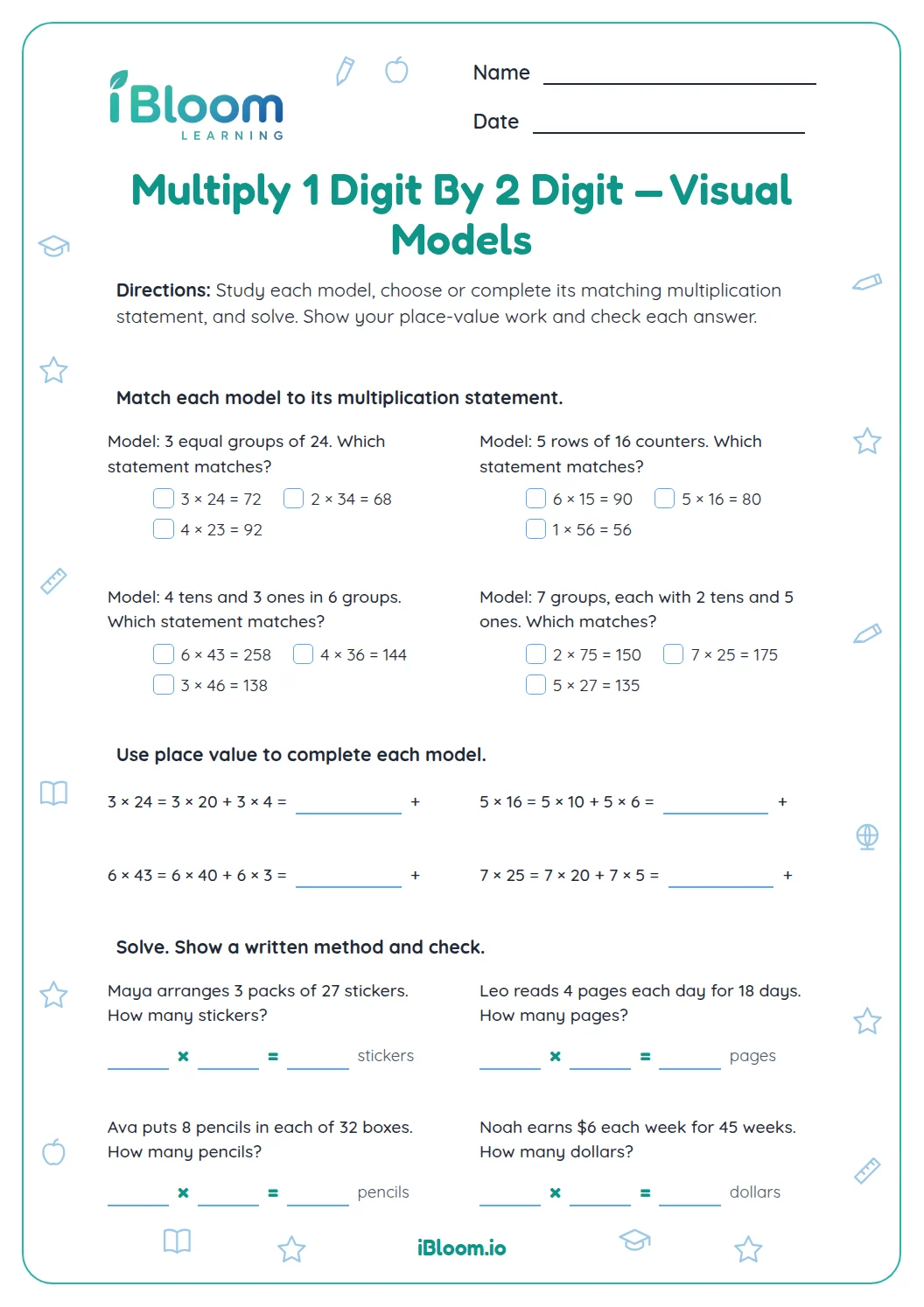
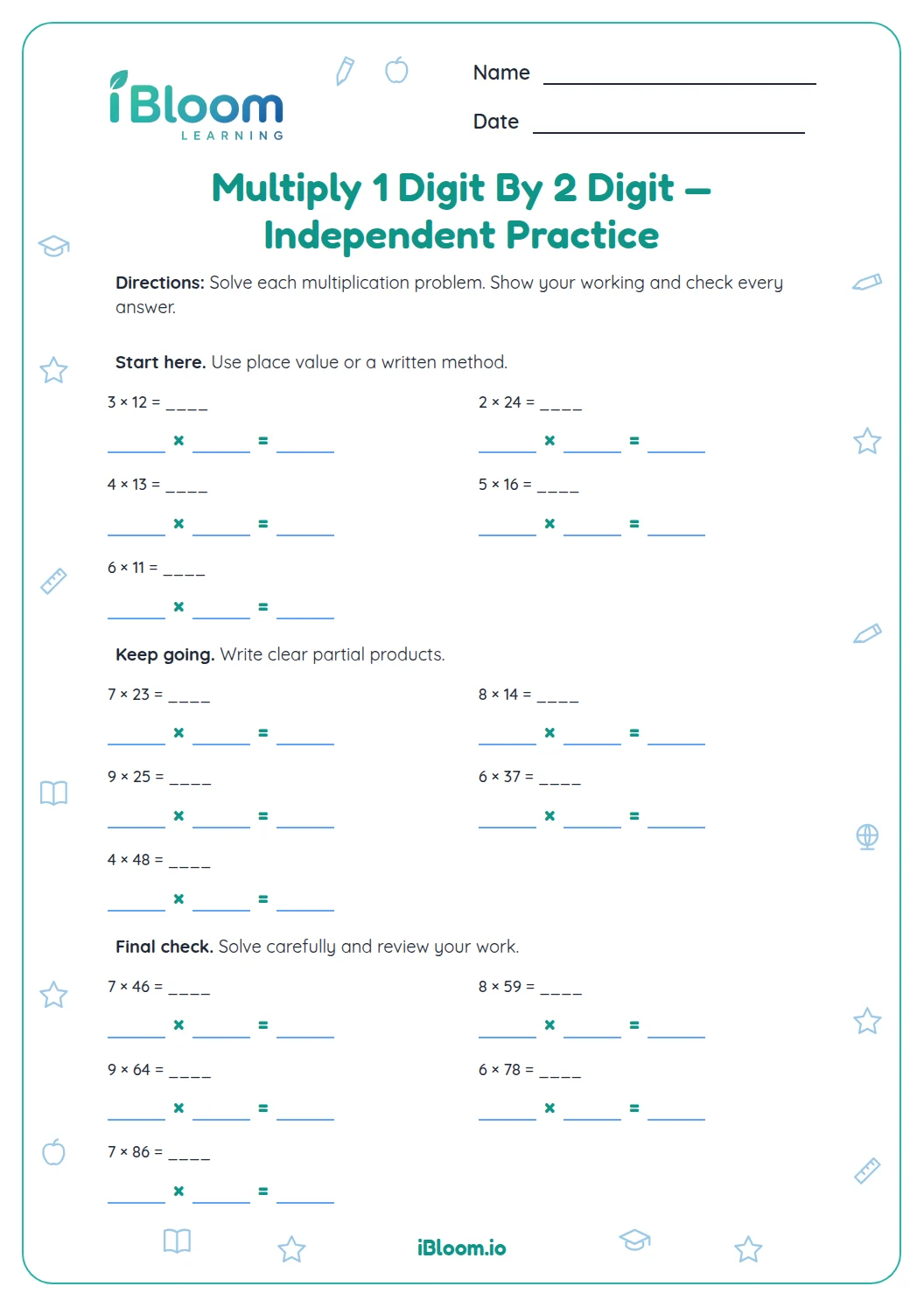
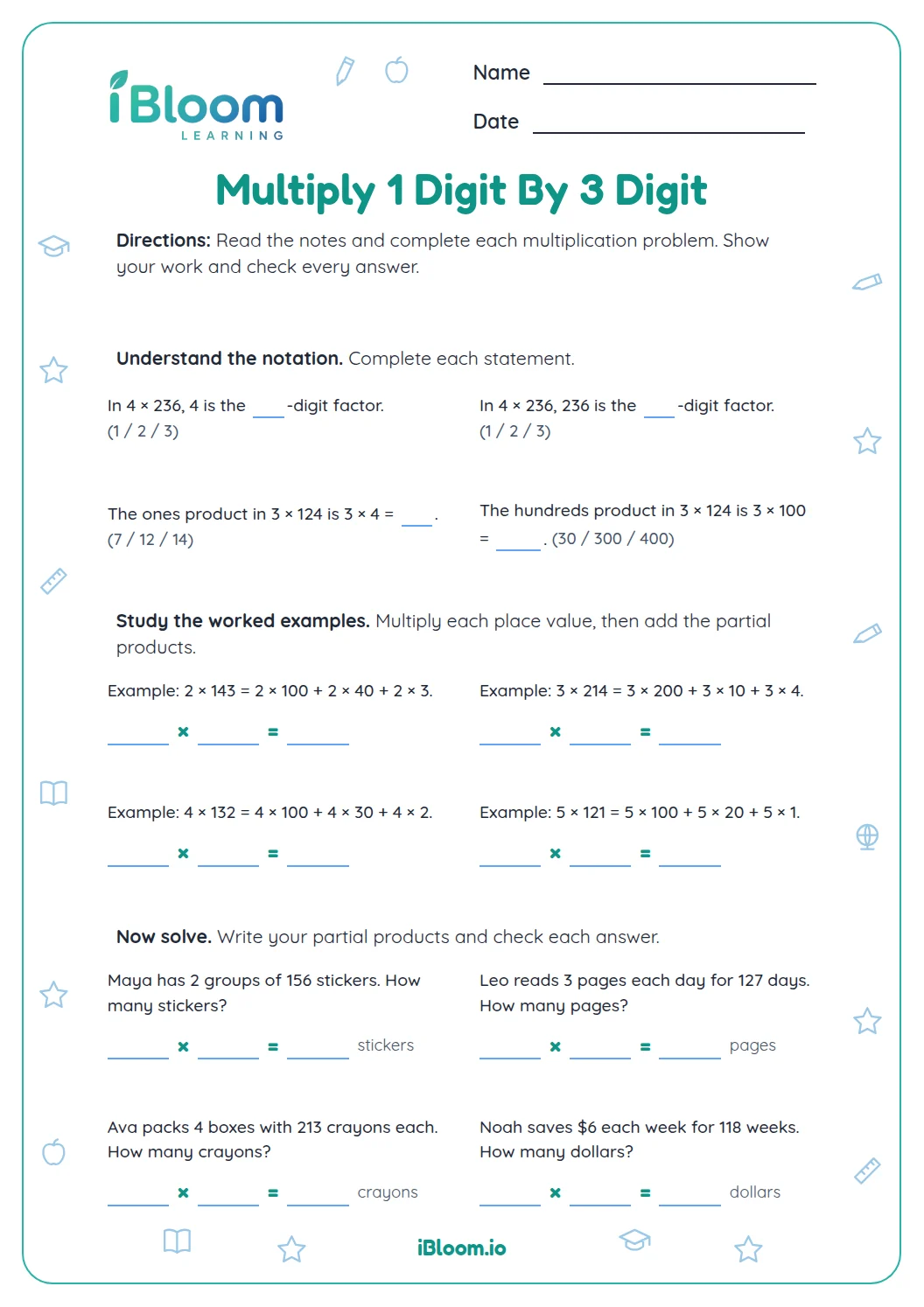
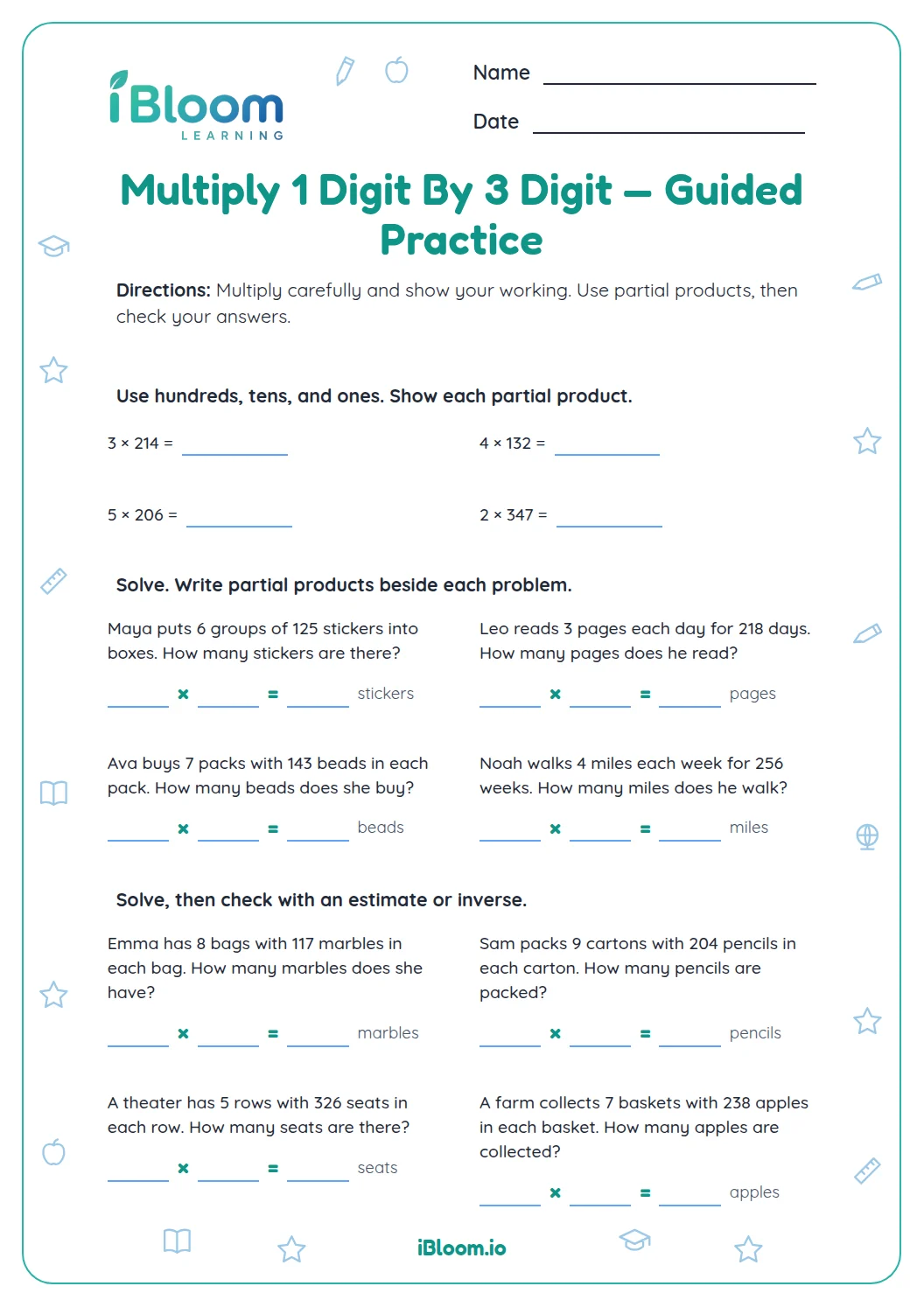
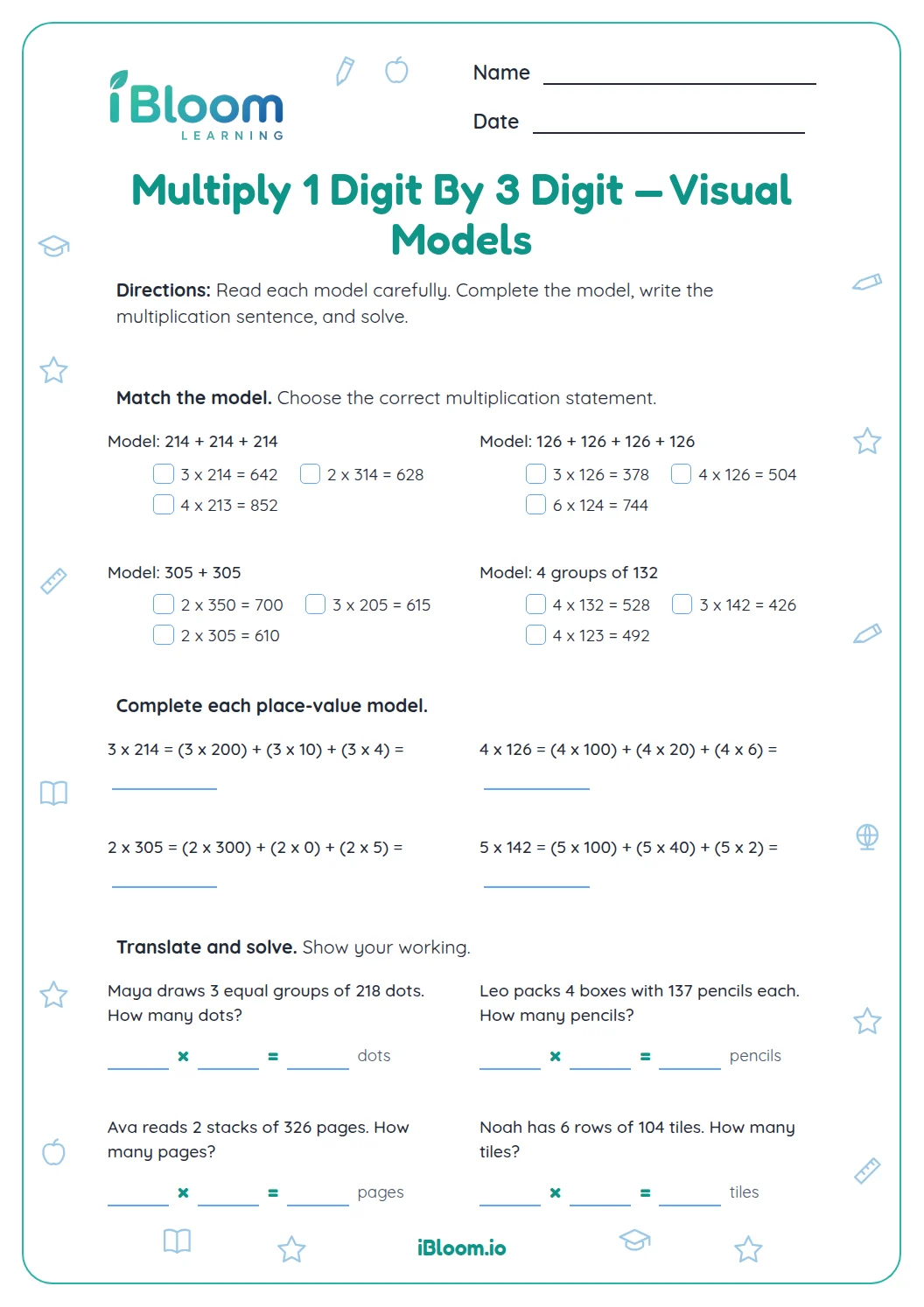
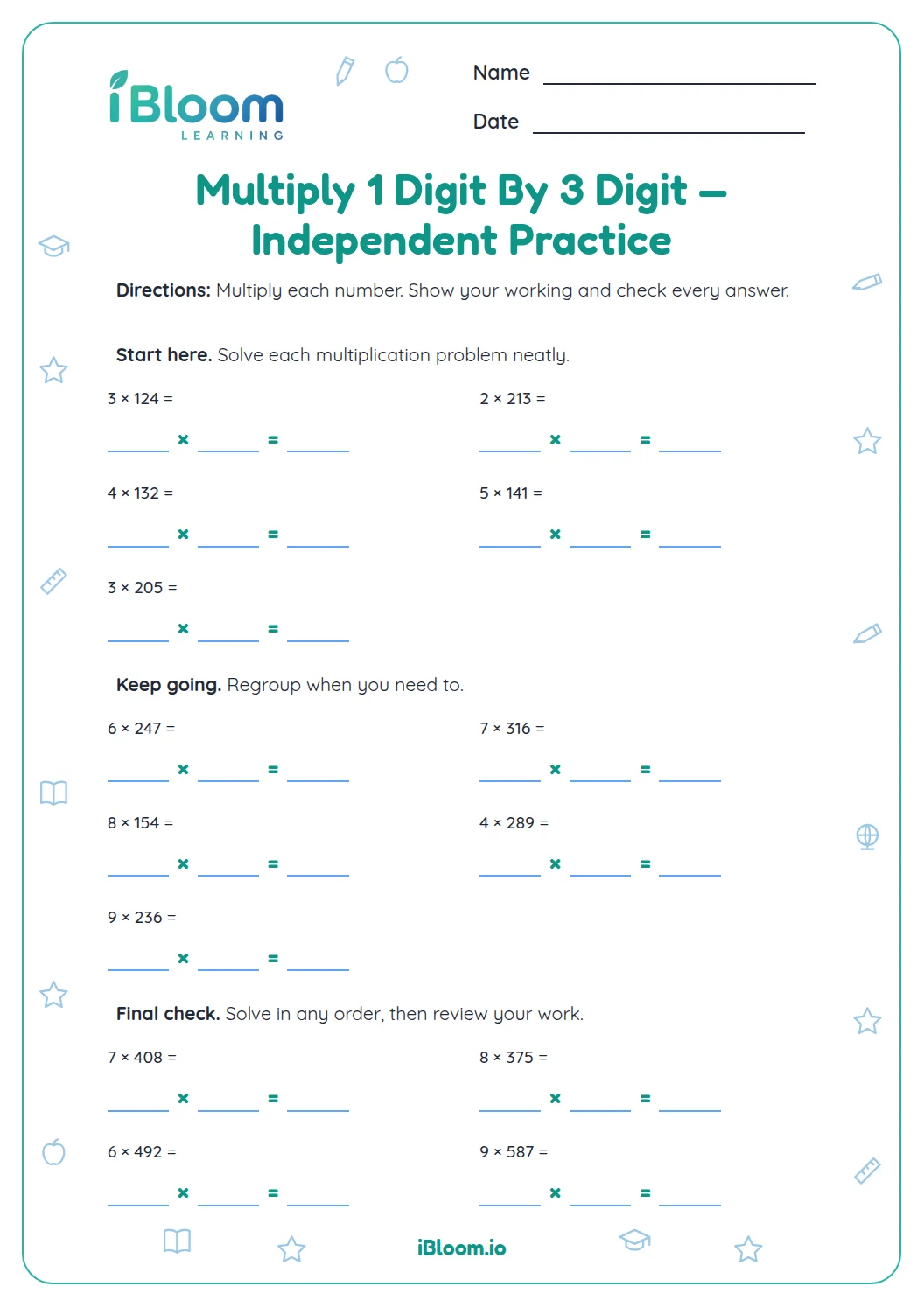
This Grade 5 multiplication worksheet gives children real situations that call for a one-digit factor times a two-digit factor. It starts with choosing the multiplication sentence, then asks students to solve word problems with working space, estimate to check, and name the unit in each answer. The 14 questions replace the old sheet’s shorter set with more varied situations and a clearer practice sequence. It aligns with CCSS 5.NBT.B.5, multiplying multi-digit whole numbers fluently, and includes a separate answer key.
Aligned to 5.NBT.B.5
How do you spot the multiplication?
Look for equal groups. If there are 6 boxes with 14 crayons in each, the total is 6 × 14. In Part A, choose the multiplication sentence that matches the story before calculating.
- 16 boxes, 14 crayons in each
- 26 × 14 = 84
- 3There are 84 crayons.
How can you check a product in a story?
Multiply the group count by the amount in each group and keep the unit. For 4 rows of 27 seeds, 4 × 27 = 108 seeds. A nearby estimate, 4 × 30 = 120, helps check that the product is reasonable. Part B asks for exact products; Part C checks equations, estimates, and units.
- 14 rows of 27 seeds
- 24 × 27 = 108 seeds
- 3About 4 × 30 = 120, so 108 is reasonable.
What kinds of multiplication practice are included?
Part A has three stories where students choose a multiplication equation. Part B has two stories to solve with working space. Part C has three more equation choices, four estimates, and two unit questions. This gives 14 questions across planning, solving, checking, and interpreting products.
How to use this worksheet
- 1Underline the group count and the amount in each group.
- 2Write a multiplication sentence before calculating.
- 3Use a method you know, such as partial products or the standard algorithm.
- 4Estimate with a nearby ten to see whether the product is reasonable.
- 5Write the unit from the story after the number.
- 6Check each item with the answer key and revisit any skipped unit.
Common mistakes and quick fixes
The mistake
Adding the group count and group size instead of multiplying.
The fix
Draw equal groups or write “groups × in each group” before solving.
The mistake
Dropping a place value when multiplying the tens.
The fix
Split 24 into 20 + 4, multiply both parts, then add the partial products.
The mistake
Writing a correct number with the wrong unit.
The fix
Reread the question’s last sentence and copy the unit it asks for.
Curriculum alignment
This sheet practices the skill described in the standard below.
Multiply a two-digit quantity by a one-digit number in situations.
On this sheet: Every word problem uses one-digit by two-digit whole-number multiplication.
Show the official wordingHide the official wording
Fluently multiply multi-digit whole numbers using the standard algorithm.
What to practice next
Make more practice
Further reading
Questions parents and teachers ask
What kinds of problems are on the worksheet?
The 14 questions include six equation choices, two full word problems, four estimates, and two unit questions. Stories mention crayons, seats, apples, books, seeds, markers, muffins, and tickets. The two full problems include working grids so students can record a multiplication method.
What does one-digit by two-digit multiplication mean?
One factor has one digit and the other has two, as in 4 × 27. On this sheet, the factors come from equal groups: four rows with 27 seeds in each row make 108 seeds. Students first identify the groups, then multiply to find the total.
How can a student estimate a product?
Round the two-digit factor to a nearby ten, then multiply by the one-digit factor. For question 10, 4 × 27 is close to 4 × 30 = 120; the exact product is 108. This estimate helps check the answer’s size without replacing the exact calculation.
Should children show their work?
Yes. The two solve questions include graph-paper working areas. Students can split a factor into tens and ones, draw an area model, or use the standard algorithm. The key gives the final product and unit, while the written method can vary as long as it supports the answer.
Why does the worksheet ask for units?
A product needs to say what was counted or paid for. Question 13 asks for 92 crayons, while question 14 asks for 81 dollars. Adding the unit connects the number to the story and helps students catch answers that use the wrong quantity.
Is an answer key included?
Yes. The two-page answer key marks the selected equations, gives both exact products, identifies reasonable estimates, and completes the unit questions. Use it after the student has tried each item so you can check the calculation and whether the answer describes the story.