

About this worksheet
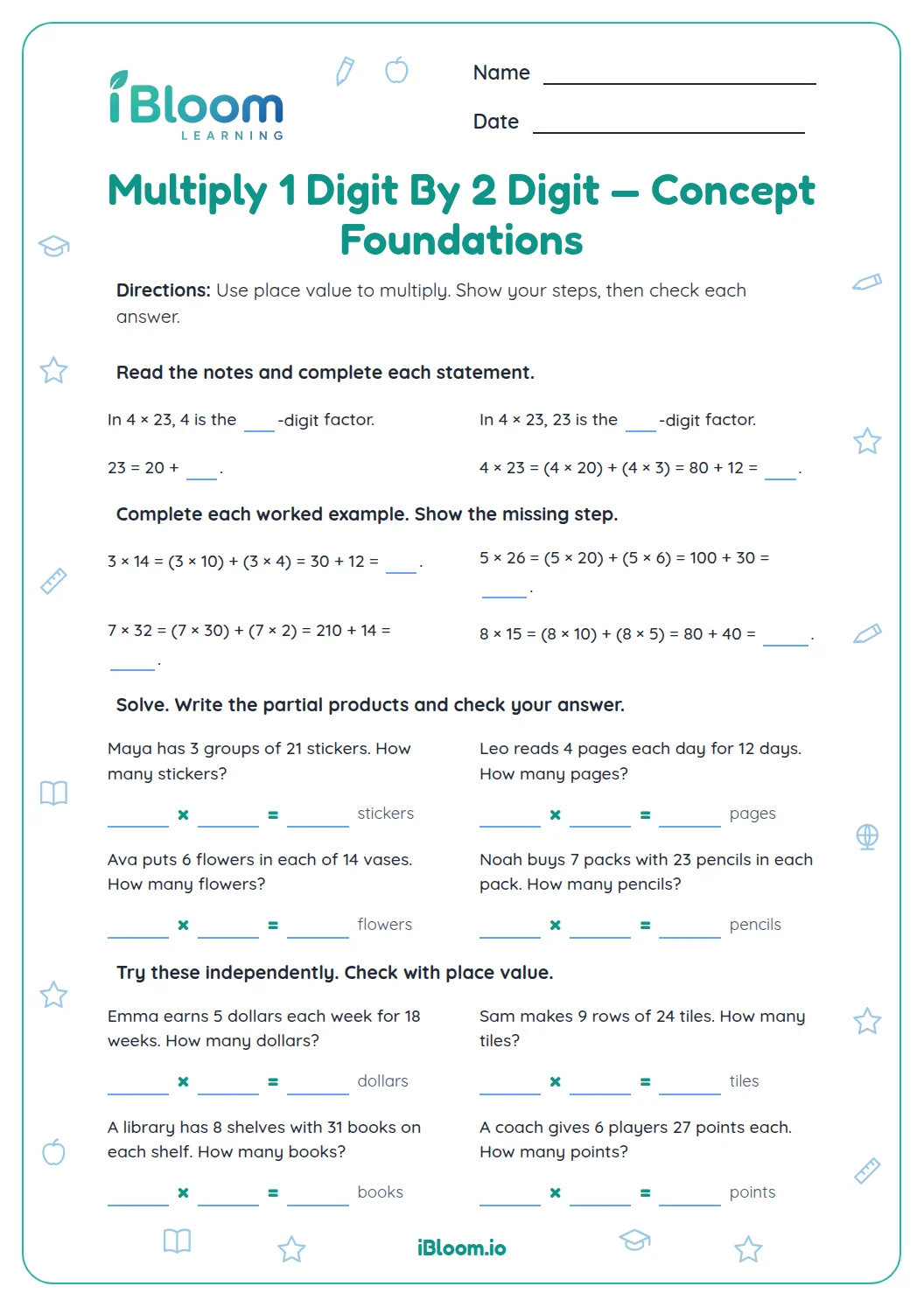
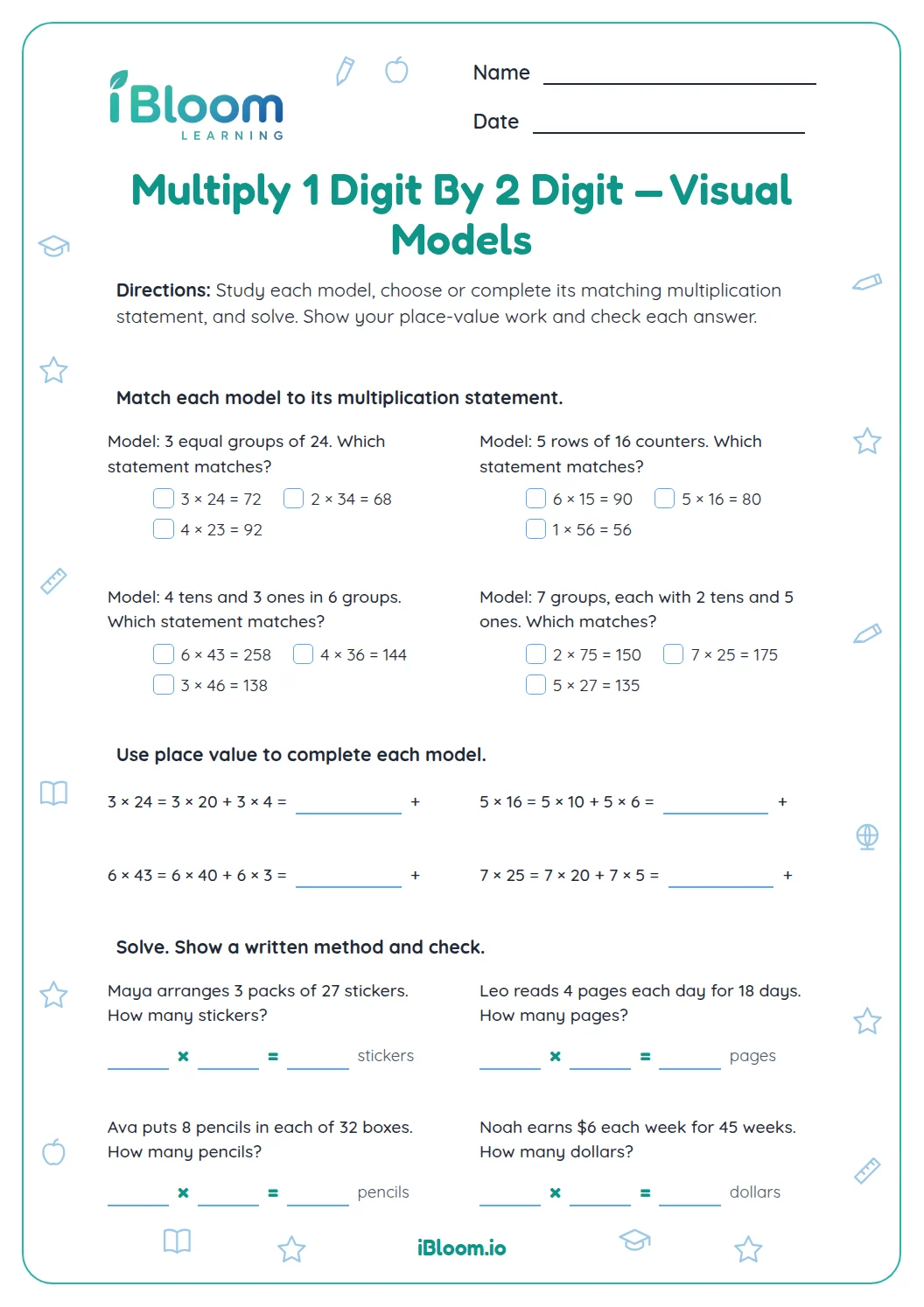
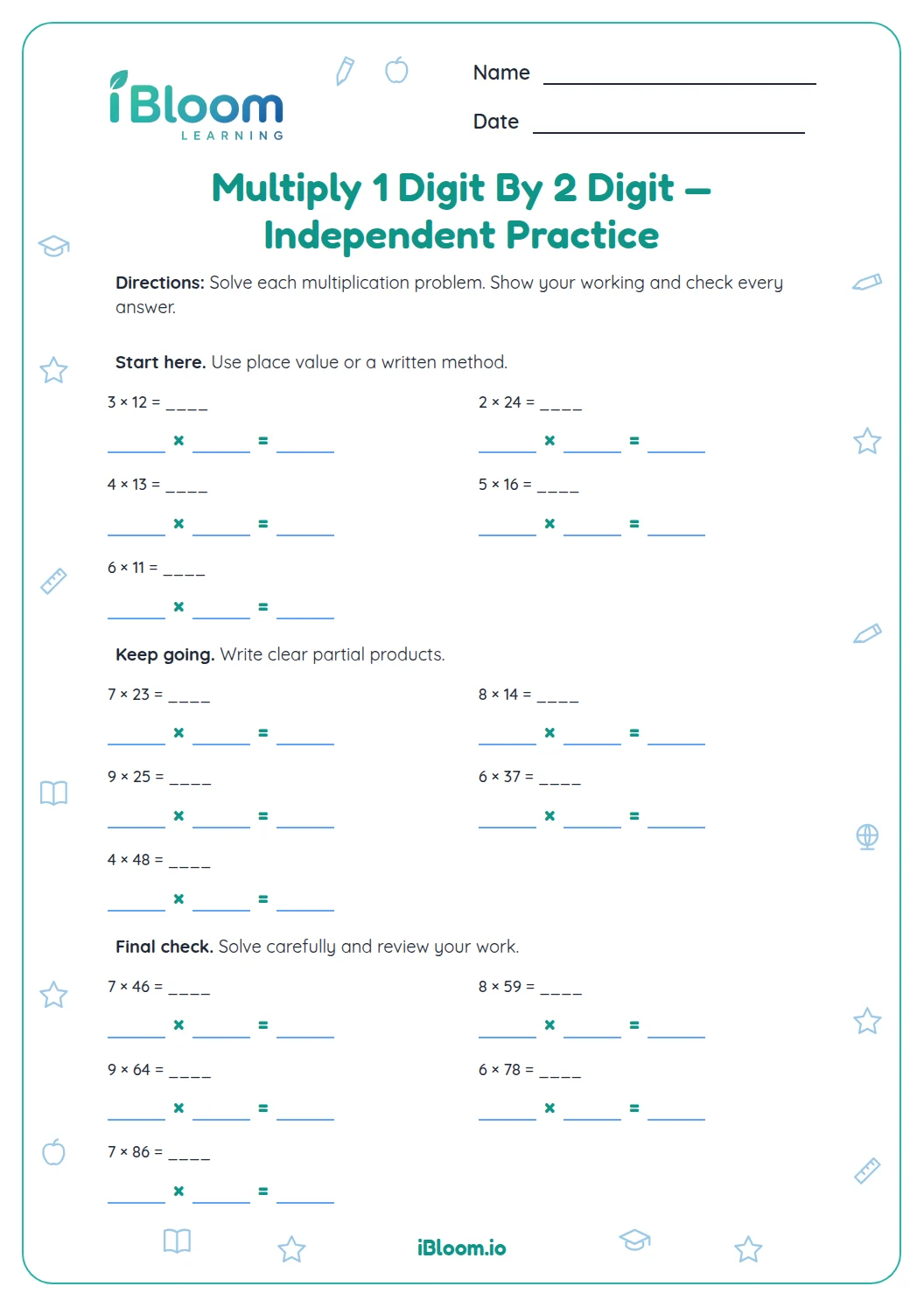
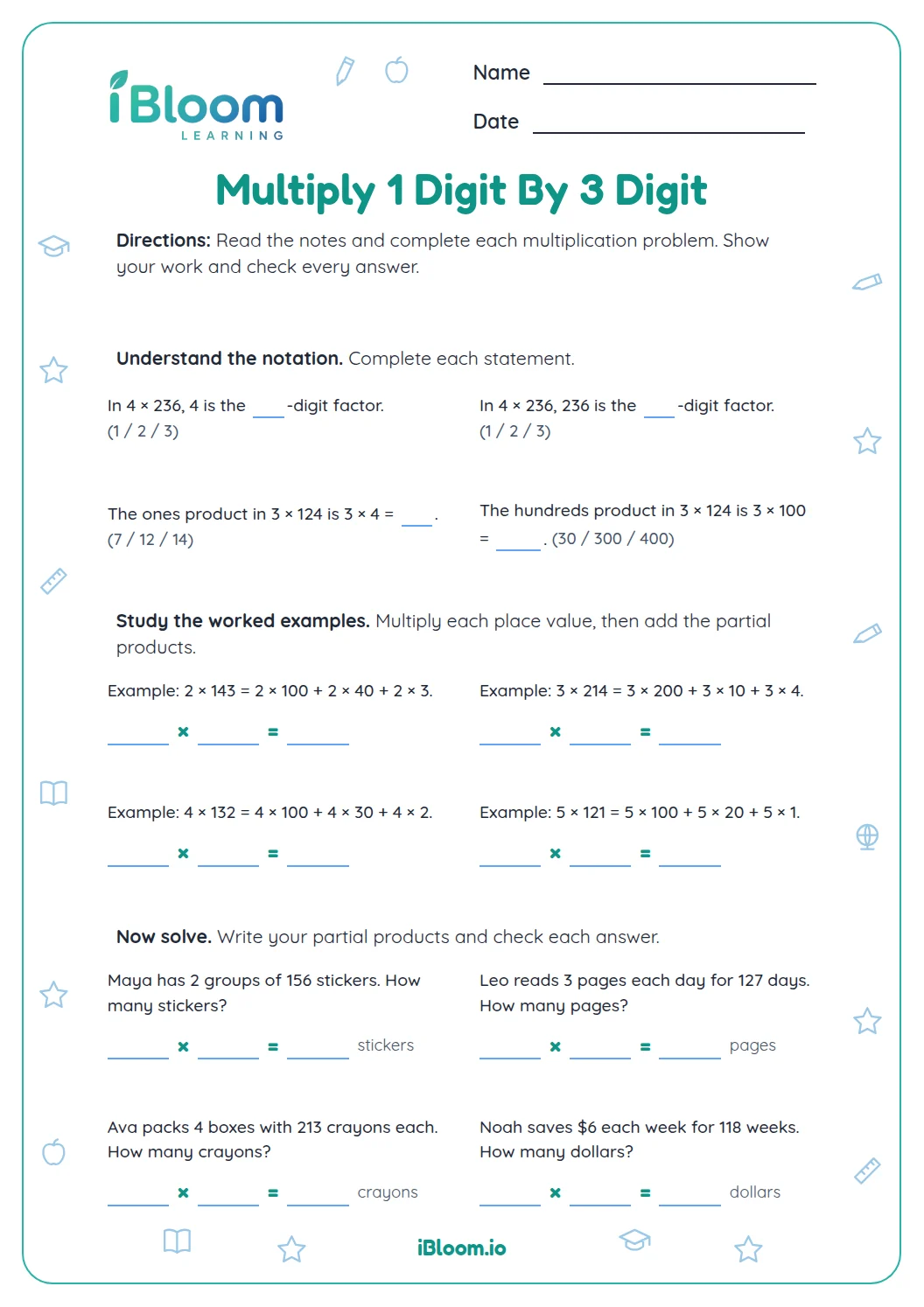
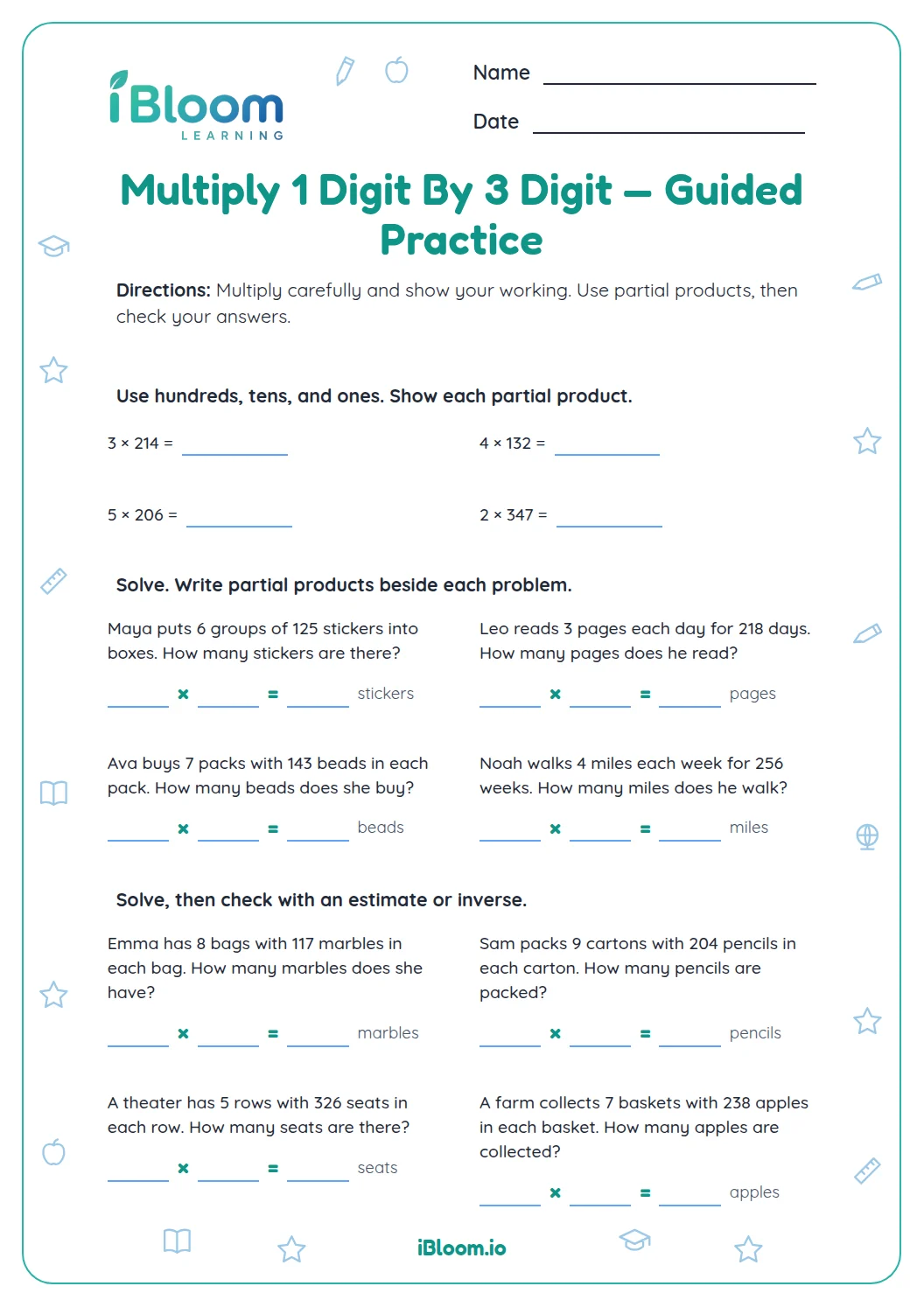
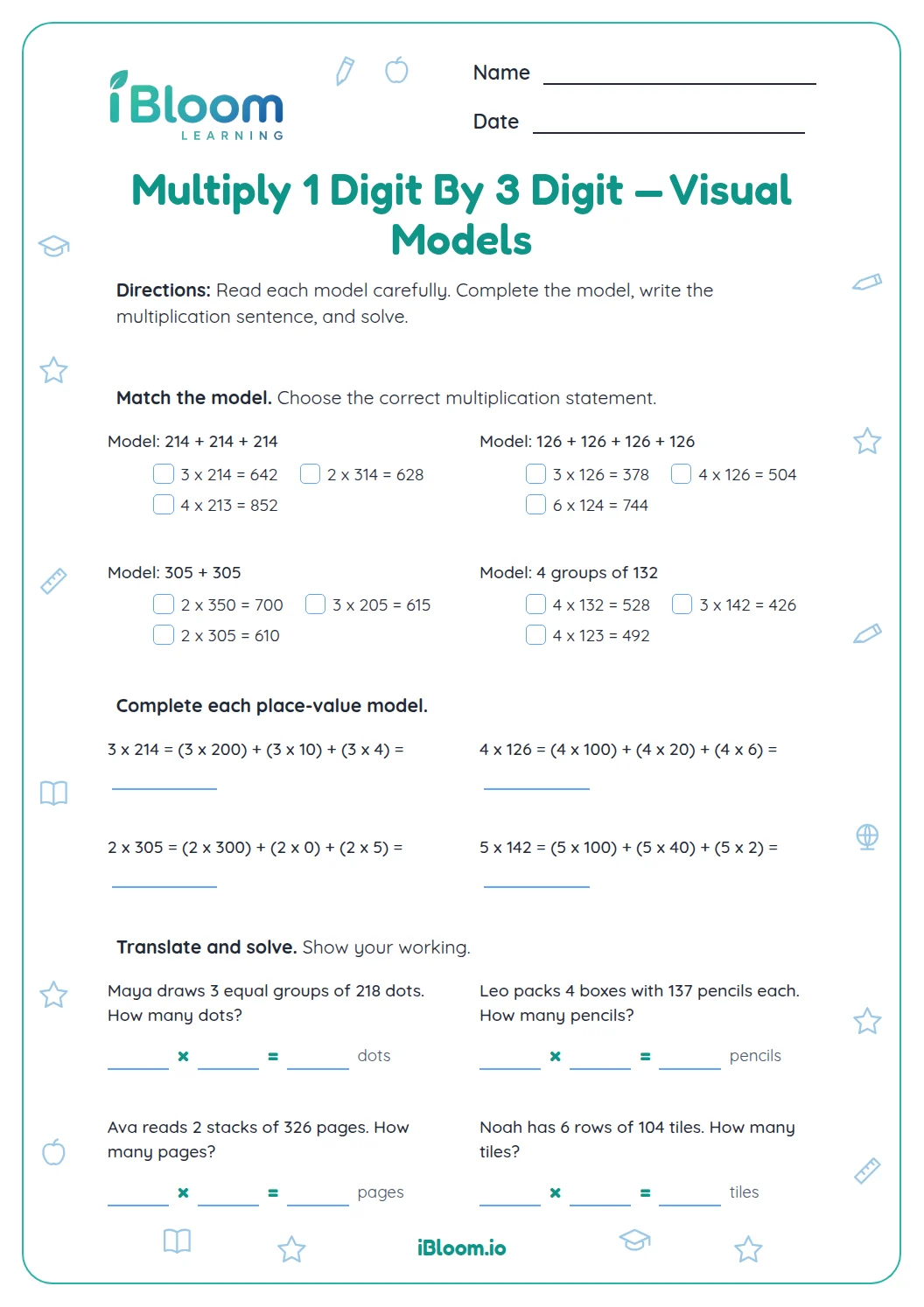
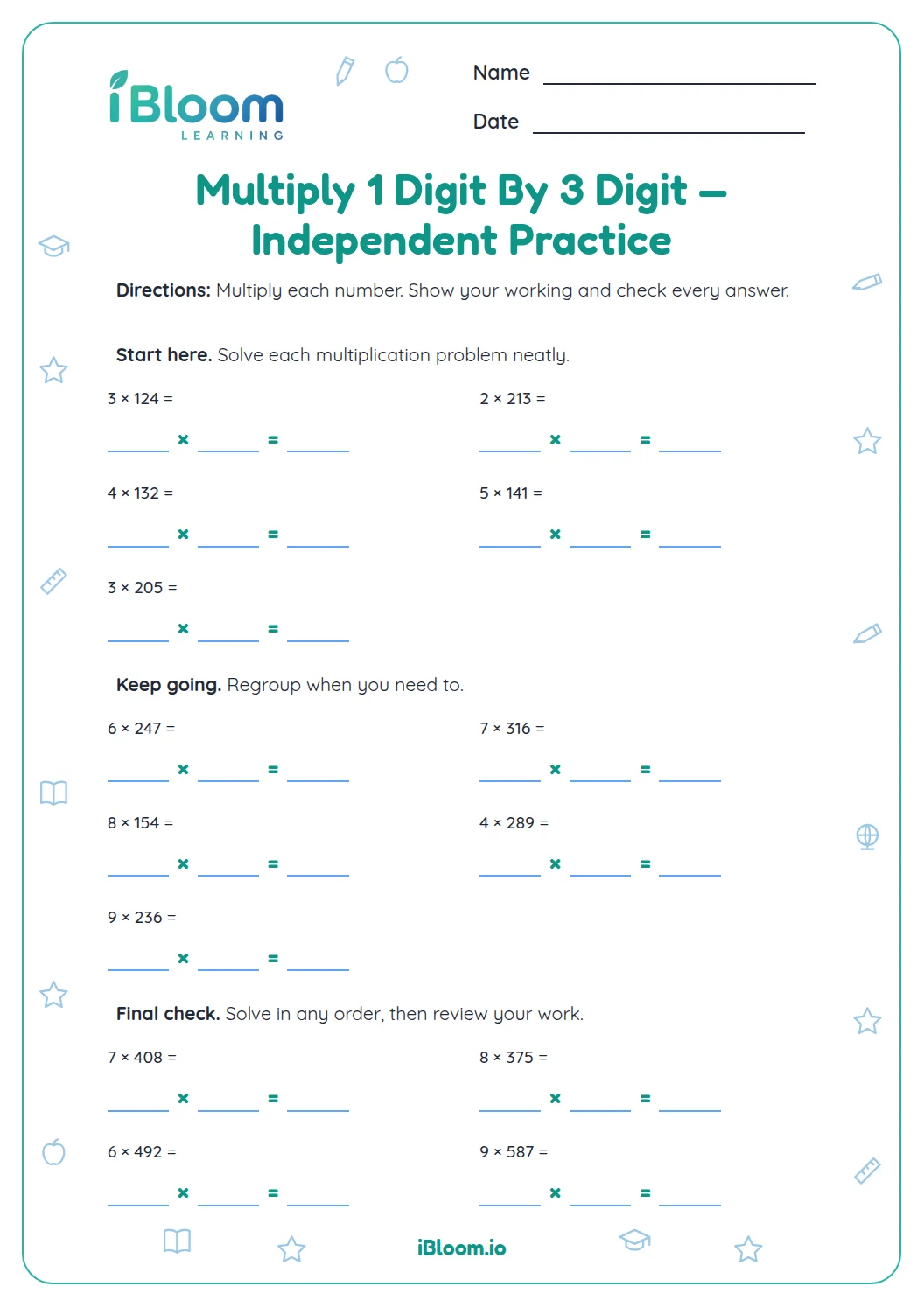
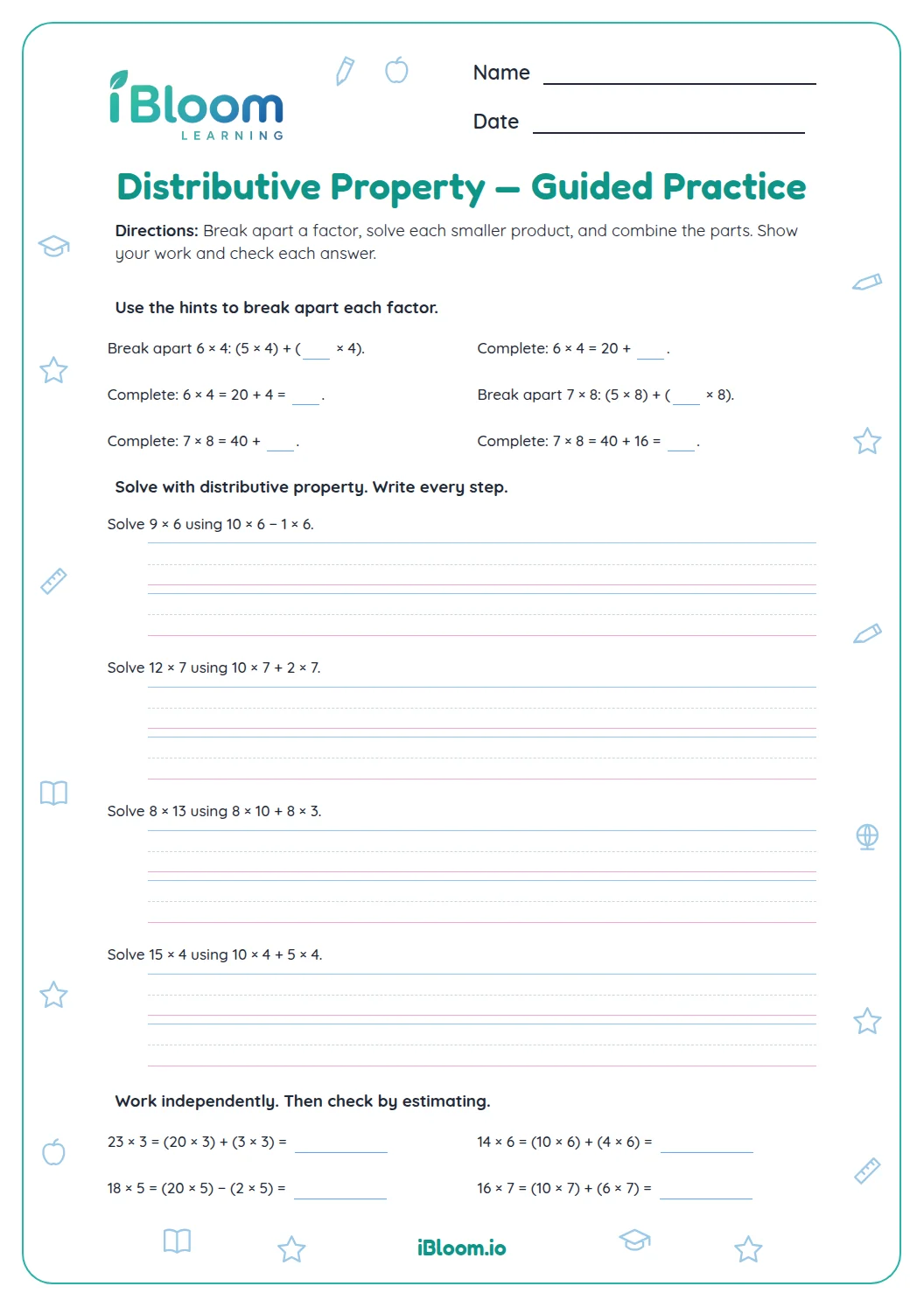
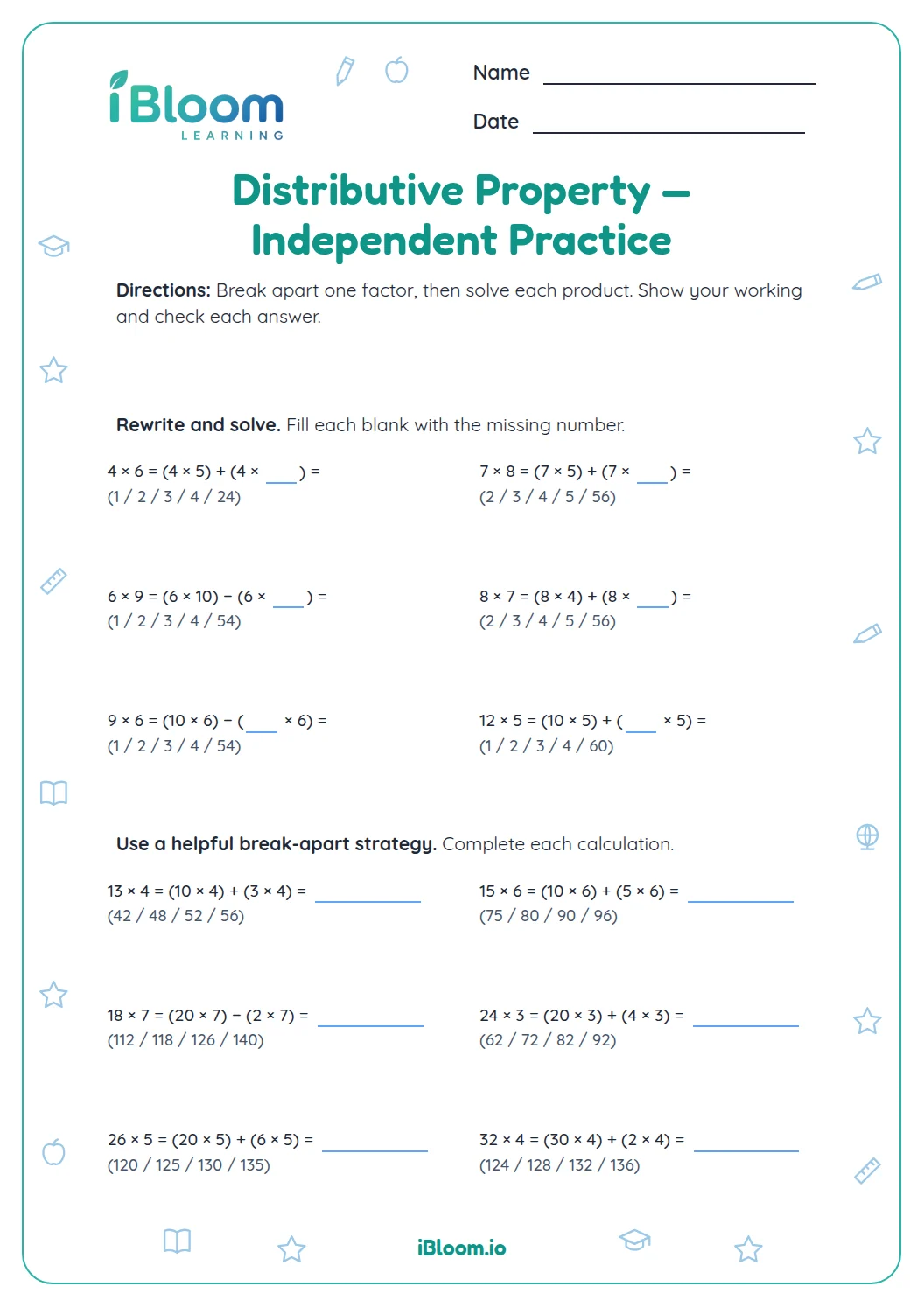
This Grade 5 printable focuses on multiplying a one-digit number by a two-digit number. Across 16 questions, children calculate products, evaluate a student’s claimed answer, and model equal-groups situations with multiplication equations. Breaking the two-digit factor into tens and ones makes the reasoning visible. A separate answer key is included. The practice aligns with Common Core 5.NBT.B.5, fluently multiplying multi-digit whole numbers using the standard algorithm.
Aligned to 5.NBT.B.5
How do partial products work?
Break apart the two-digit factor by place value. Multiply the ones and tens separately, then combine the results.
Question 3 is 7 × 32. Calculate 7 × 30 = 210 and 7 × 2 = 14; 210 + 14 = 224.
- 17 × 32 = (7 × 30) + (7 × 2)
- 2210 + 14 = 224
How can children check an answer?
In Part B, compare the claimed product with the actual product. A misplaced or omitted tens product changes the answer; multiplication can also be checked with division.
What does the worksheet include?
Part A has six products, Part B has four error checks, Part C has four equal-groups stories, and Part D has two more products.
How to use this worksheet
- 1Read both factors carefully.
- 2Split the two-digit factor into tens and ones.
- 3Multiply the one-digit factor by each part.
- 4Add the partial products.
- 5Check the result with estimation or division.
Common mistakes and quick fixes
The mistake
Multiplying only the ones digit
The fix
Break 38 into 30 and 8. Multiply both parts by the one-digit factor, then add.
The mistake
Forgetting the tens partial product
The fix
Label the tens product with its value, such as 7 × 50 = 350.
The mistake
Adding partial products incorrectly
The fix
Add the tens and ones products and check the total with an estimate.
Common Core alignment
This worksheet practices multiplication of multi-digit whole numbers through products and equal-group stories.
Multiply two-digit numbers by one-digit factors in products and stories.
On this sheet: Children calculate products of two-digit and one-digit whole numbers and use multiplication in equal-group stories.
Show the official wordingHide the official wording
Fluently multiply multi-digit whole numbers using the standard algorithm.
What to practice next
Make more practice
Further reading
Questions parents and teachers ask
What does this multiplication worksheet cover?
It has 16 problems multiplying a one-digit number by a two-digit number. Children calculate six products, check four claimed products, solve four equal-group stories, and finish with two products. Each item can be solved by breaking the two-digit factor into tens and ones.
How can partial products help?
Split the two-digit factor into tens and ones, multiply each part, then add. For 7 × 32, calculate 7 × 30 = 210 and 7 × 2 = 14. The partial products total 224, making the tens value visible instead of treating 32 as just 3 and 2.
What is the answer to 8 × 45?
The product is 360. One way is to multiply 8 by 40 to get 320, then multiply 8 by 5 to get 40. Add 320 + 40. The problem appears in the first section, where children can use place value or partial products.
How should a child check a product?
Compare the claimed result with a fresh calculation. For example, 7 × 56 is 7 × 50 plus 7 × 6, or 350 + 42 = 392. The worksheet’s check section asks children to select the correct product when a student’s claim is wrong.
Is the answer key included?
Yes. The separate answer key lists all 16 products, including the notebook totals. After checking, revisit any missed item by expanding the two-digit factor into tens and ones and adding the two partial products. Keep the factor breakdown beside the calculation while checking.