



About this worksheet
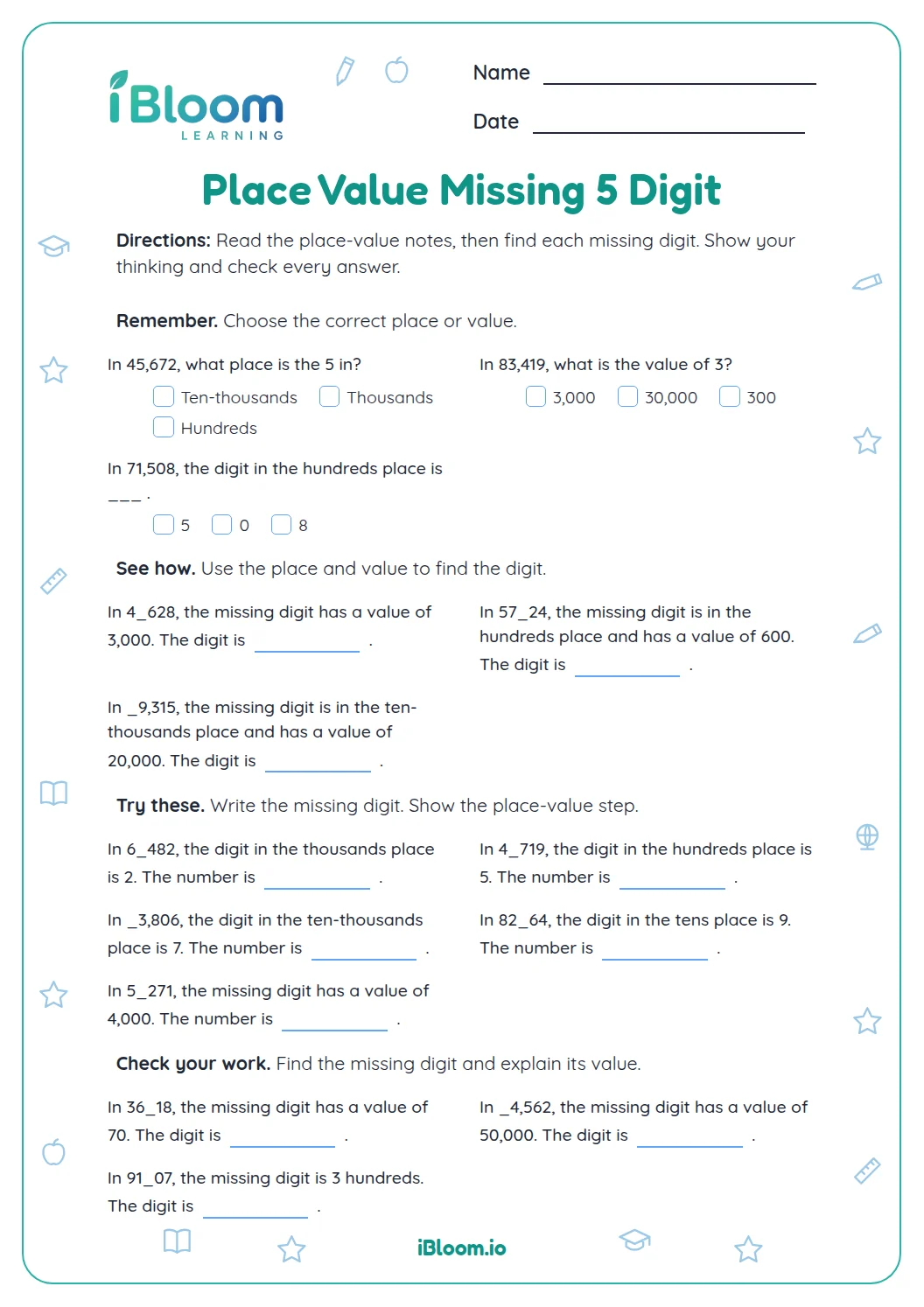
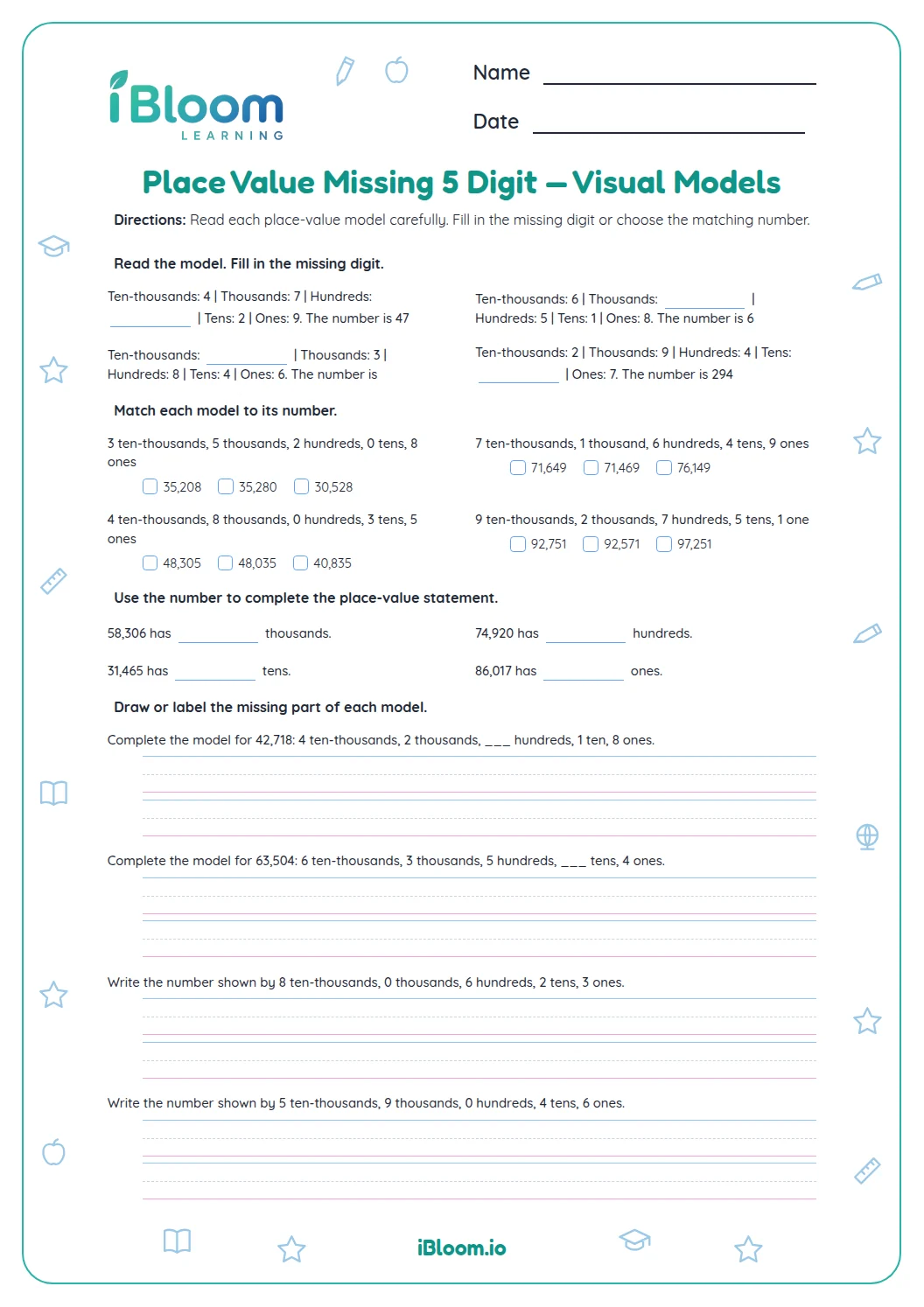
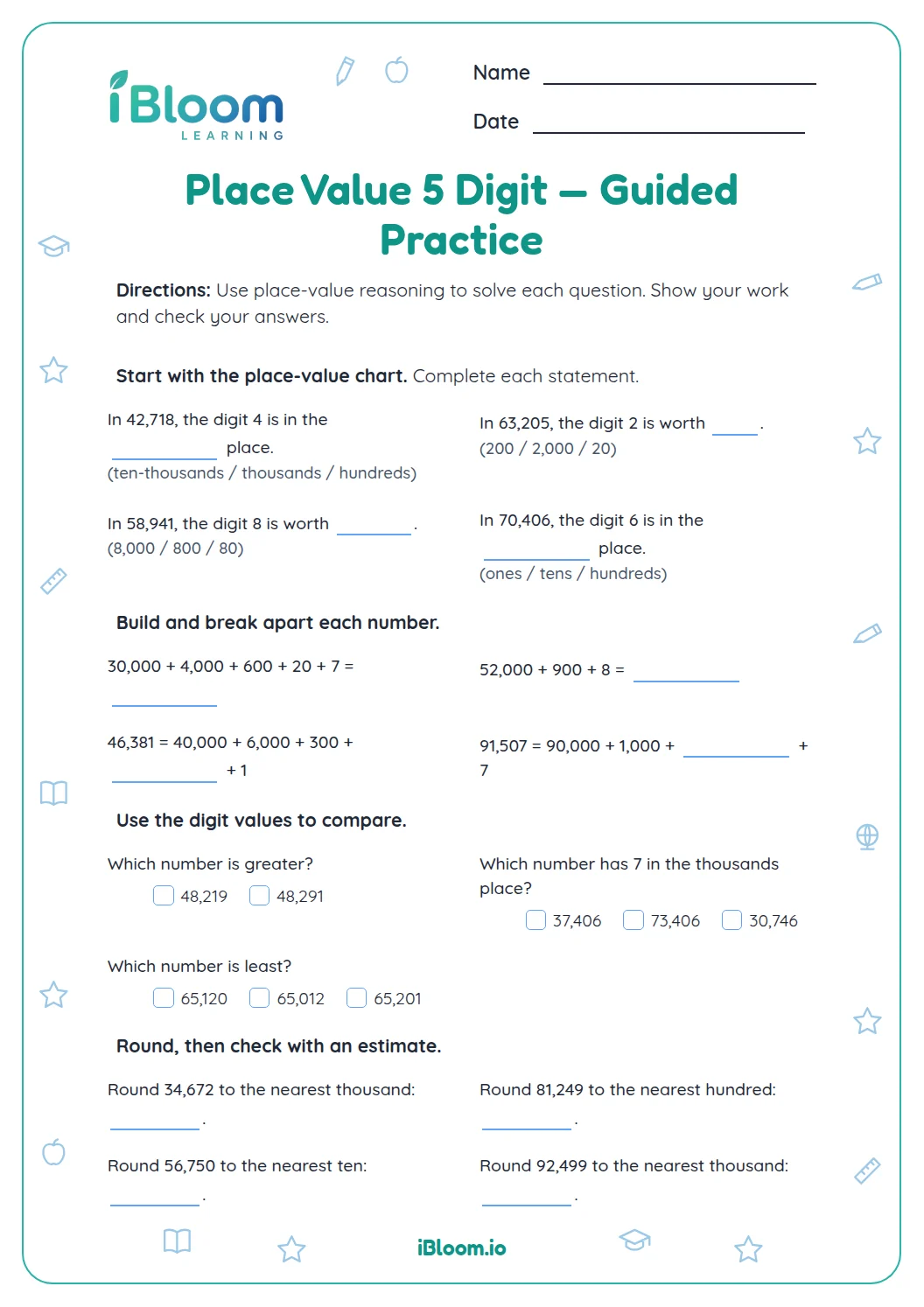
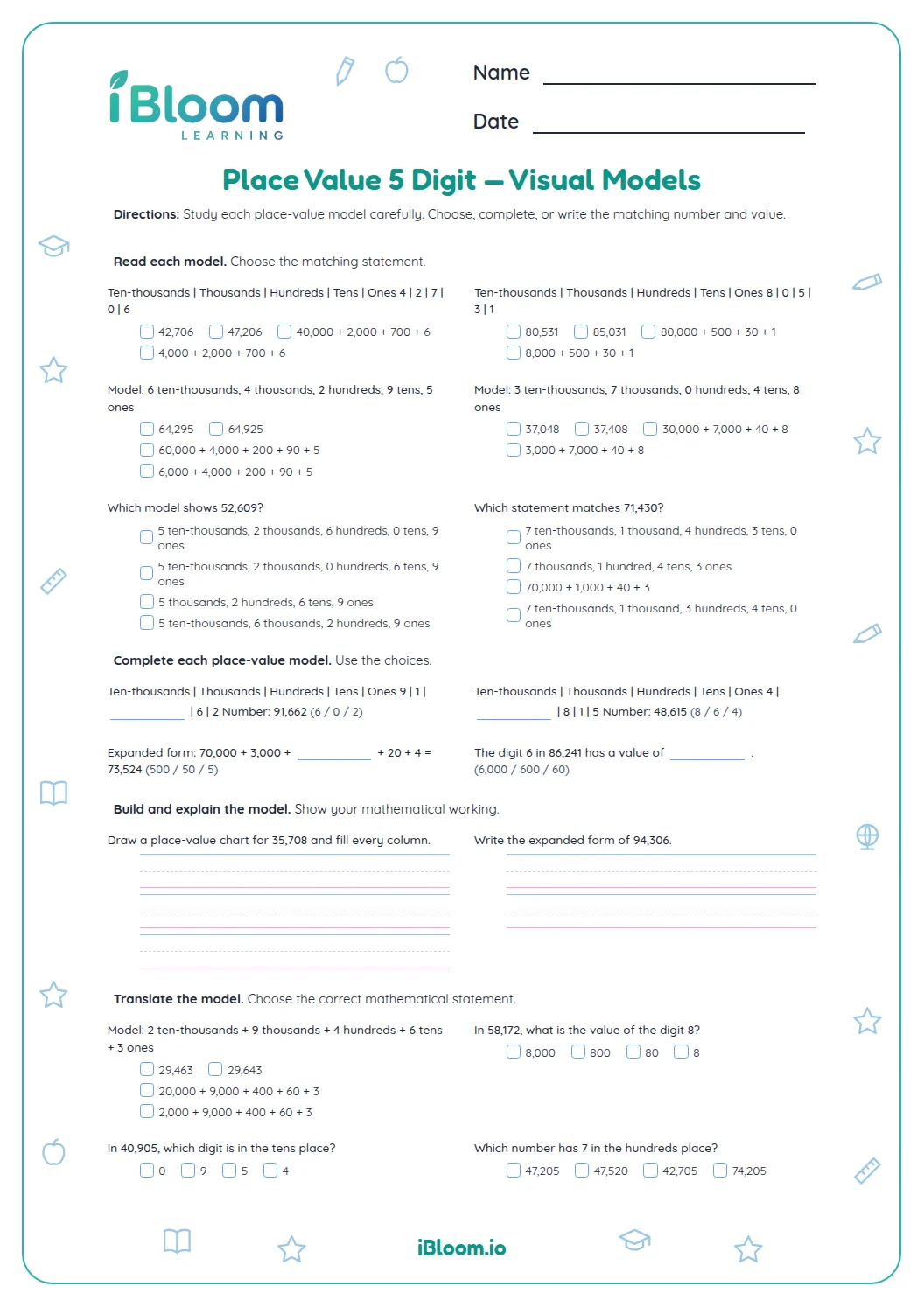
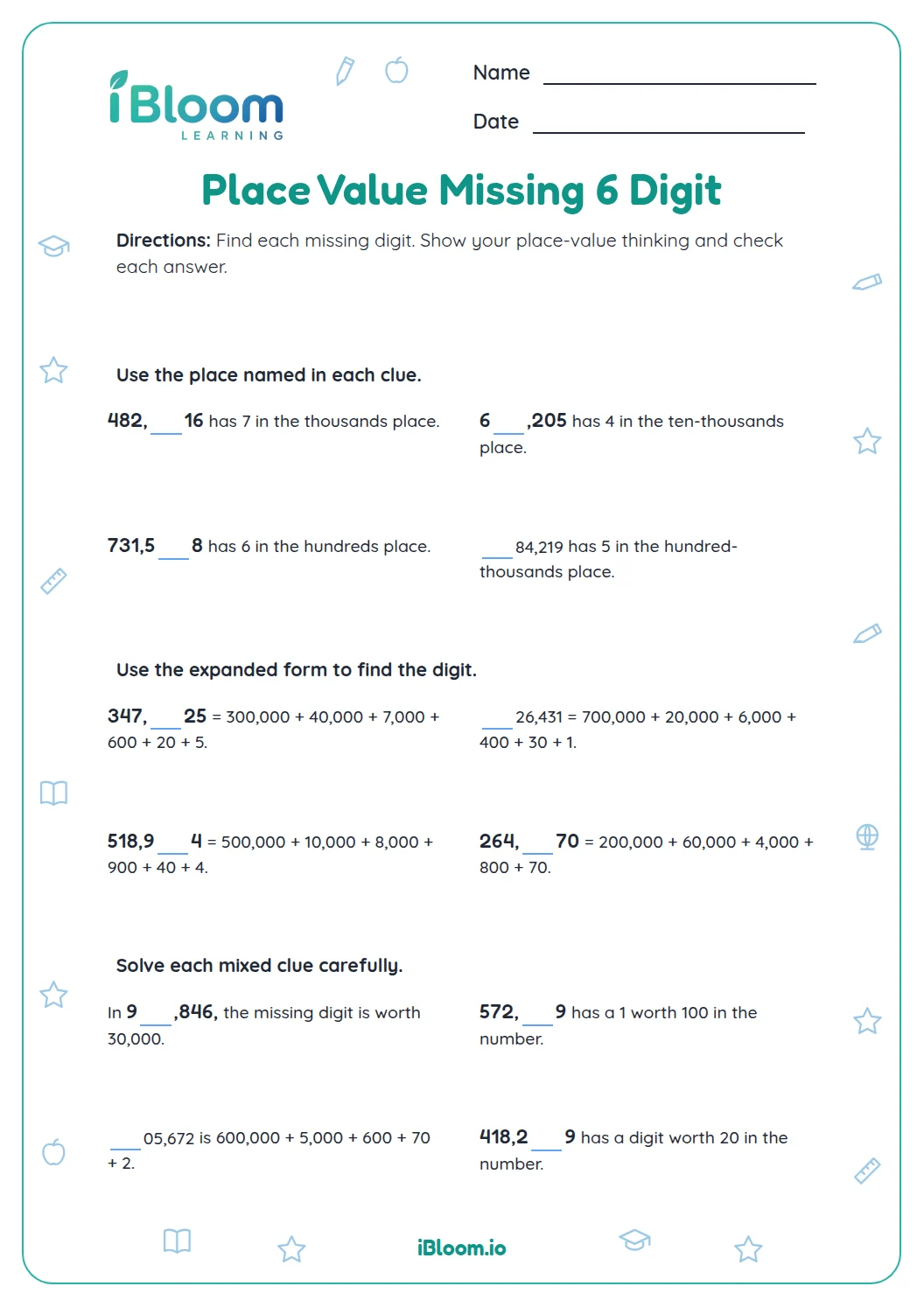
This free Grade 5 worksheet asks students to use place-value clues to complete five-digit numbers. Fourteen questions cover digit positions and values, missing digits, rounding clues, and building numbers from several facts. The compact prompts leave room for students to show their thinking, and a separate answer key is provided.
Aligned to 5.NBT.A.1
How does a digit’s position determine its value?
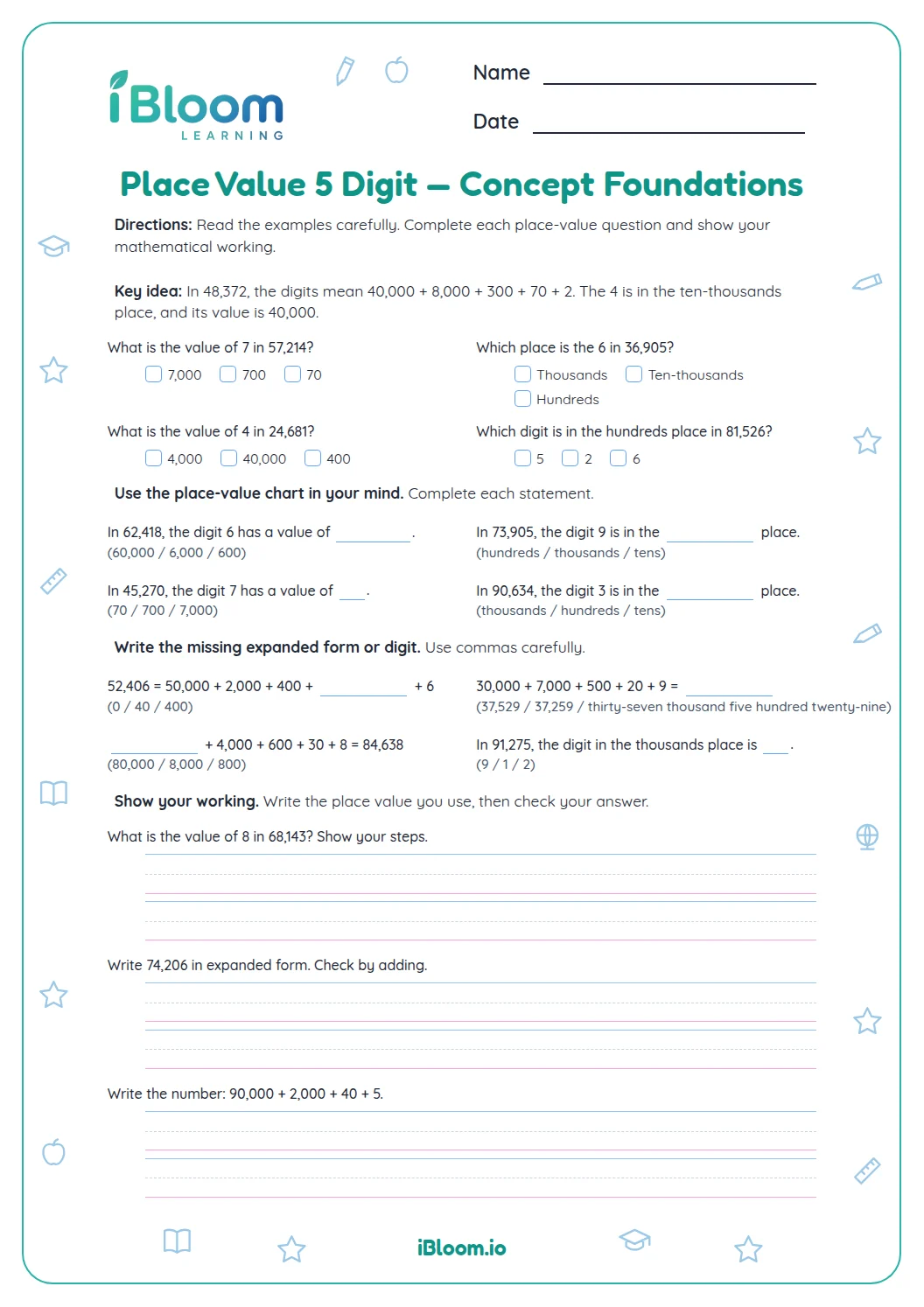
In a five-digit number, the places from left to right are ten-thousands, thousands, hundreds, tens, and ones. Each place is ten times the value of the place to its right. In 47,682, the 7 is in the thousands place, so its value is 7,000.
Question 1 uses this number as a model. The place-value table keeps each digit in its own column.
- 147,682
- 24 ten-thousands; 7 thousands
- 36 hundreds; 8 tens; 2 ones
How can clues reveal a missing digit?
Use the clue to narrow the number. If 3_,415 is above 38,415 and below 40,000, its ten-thousands digit is 3 and the thousands digit must be greater than 8, so it is 9. The completed number is 39,415.
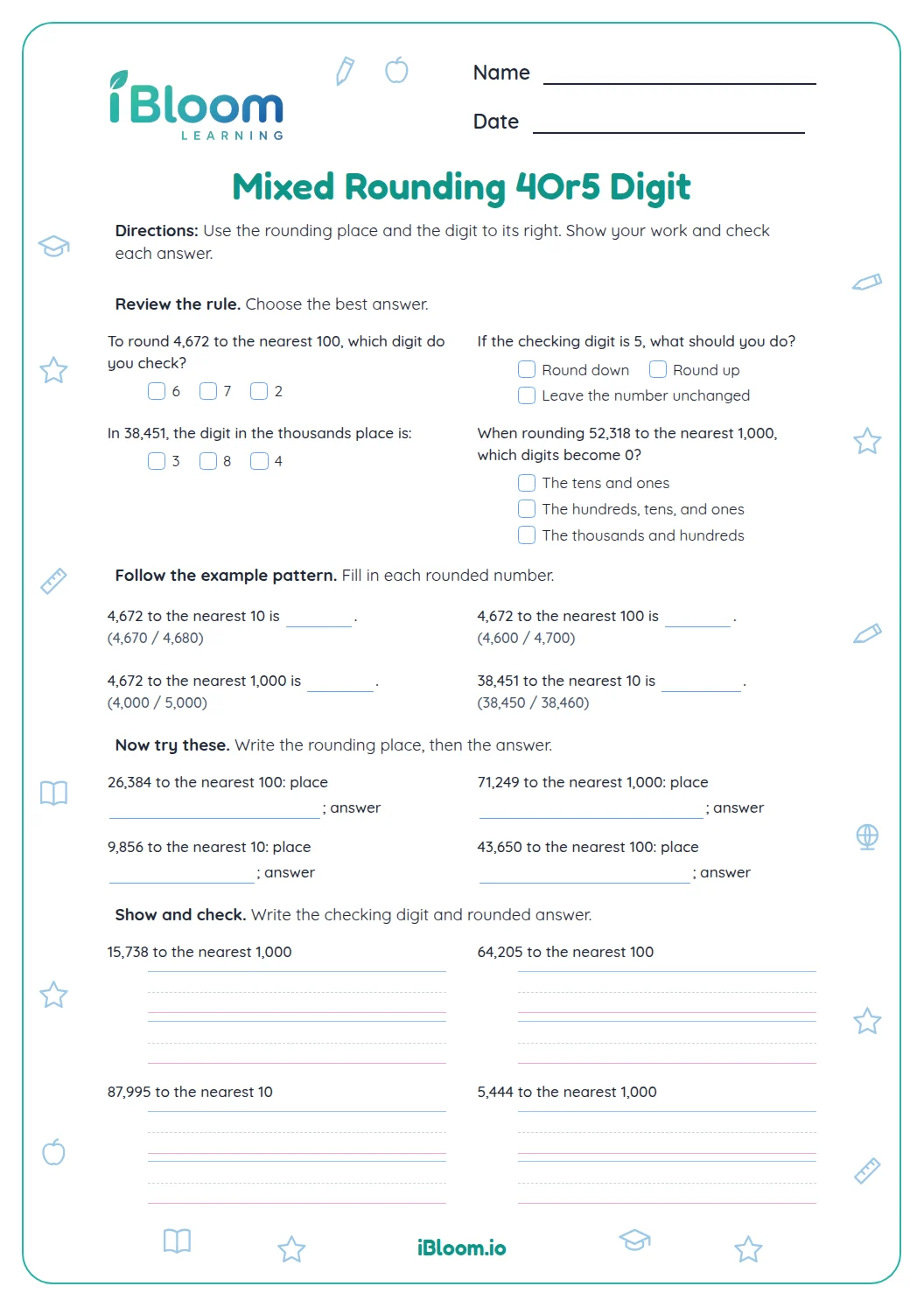
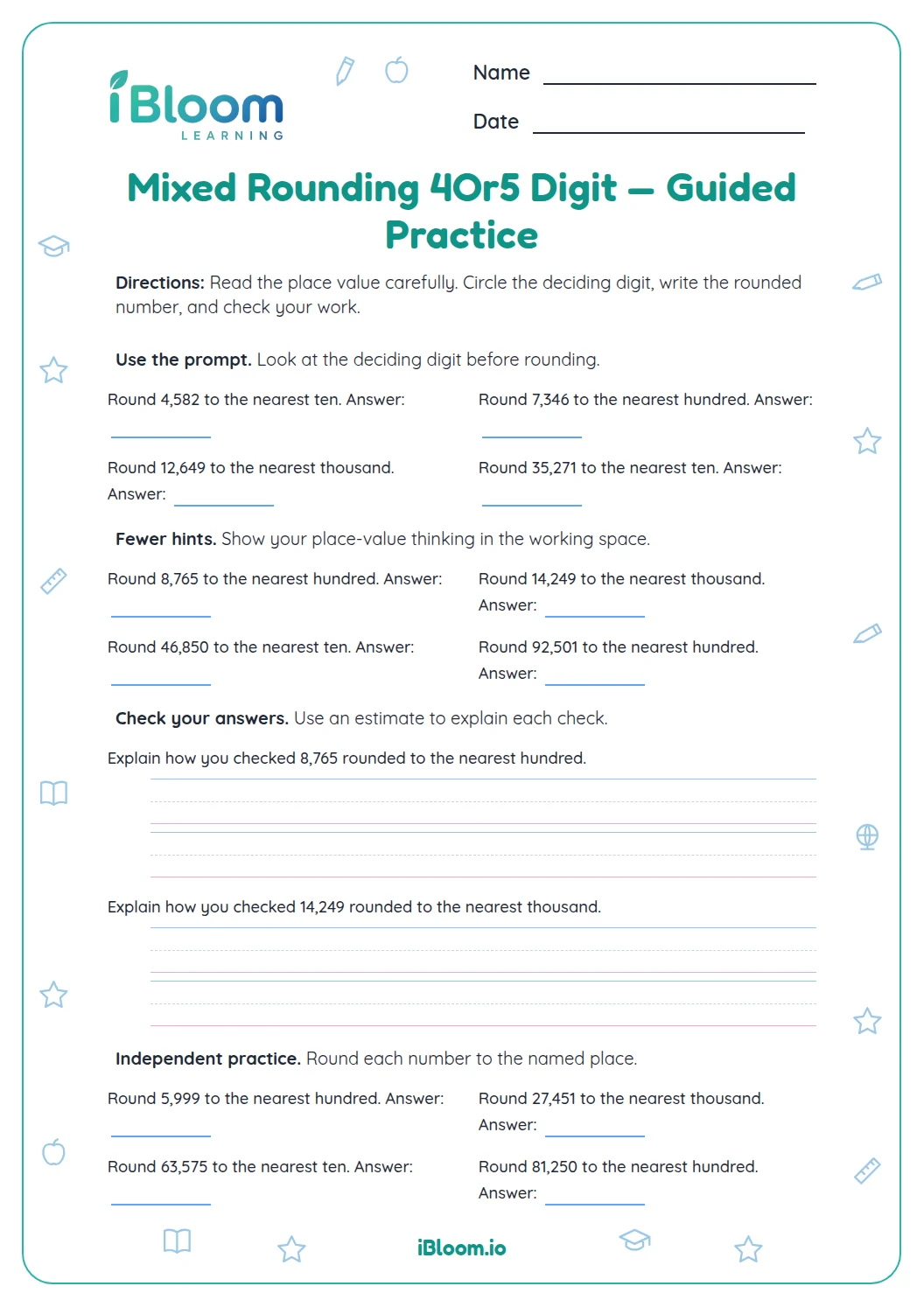
How does rounding help identify a digit?
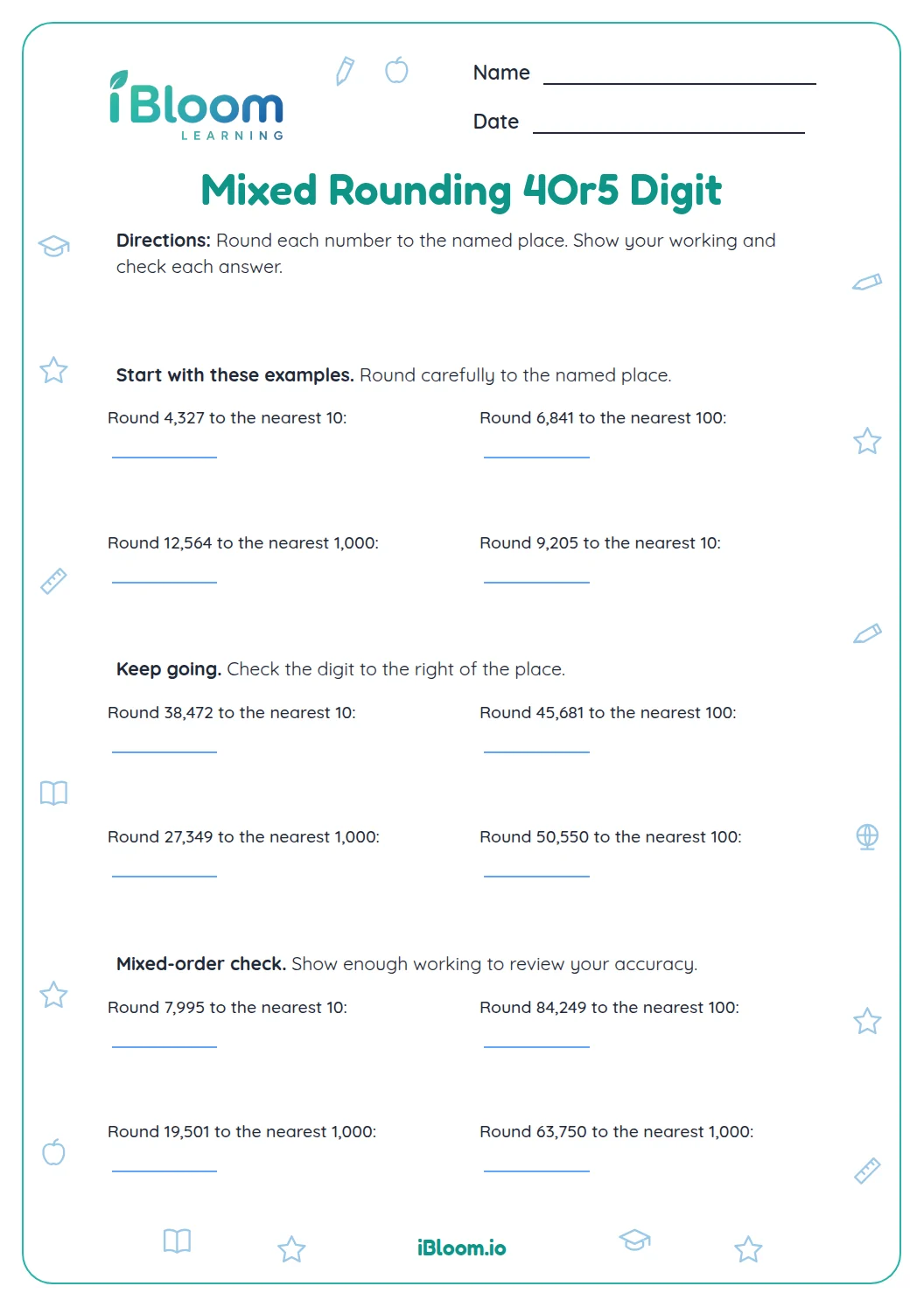
The two-page sheet moves from identifying digit positions to completing number clues and building or rounding five-digit numbers.
What is included in the practice?
The first six questions focus on places and digit values. Questions 7–11 use digit and rounding clues. The last five ask students to build or identify numbers from several facts.
How to use this worksheet
- 1Read the place names from left to right before solving.
- 2Use the place-value table on the first question to anchor the digit positions.
- 3For a missing digit, write the known digits and compare the number with each clue.
- 4For rounding, circle the target place and inspect the digit immediately to its right.
- 5Check the completed number against every part of the clue.
Mistakes to watch for
The mistake
Giving a digit’s face value instead of its value
The fix
Name the place too: the 3 in 63,204 is worth 3,000.
The mistake
Reading digits from right to left by habit
The fix
Start at the right with ones, then tens, hundreds, thousands, and ten-thousands.
The mistake
Rounding by looking at the wrong digit
The fix
For nearest hundred, check tens; for nearest thousand, check hundreds.
Common Core alignment
This sheet emphasizes the base-ten place-value pattern in whole numbers.
Students identify digit positions and use place-value relationships to solve number clues.
On this sheet: The questions interpret digits by place in five-digit whole numbers.
Show the official wordingHide the official wording
Recognize that in a multi-digit number, a digit in one place represents 10 times as much as it represents in the place to its right and 1/10 of what it represents in the place to its left.
What to practice next
Make more practice
Further reading
Questions parents and teachers ask
What are the places in a five-digit number?
From left to right, they are ten-thousands, thousands, hundreds, tens, and ones. In 47,682, for example, the 4 represents 40,000 and the 7 represents 7,000. The first question models these columns. Have the student name the place before deciding what a digit represents or which way to round.
How do you find a digit’s value?
Multiply the digit by the value of its position. A 3 in the thousands place has a value of 3,000; a 3 in the tens place has a value of 30. Read both the digit and its column. Have the student name the place before deciding what a digit represents or which way to round.
How can rounding help with a missing digit?
Use the place being rounded and inspect the digit immediately to its right. For nearest hundred, the tens digit determines whether the hundreds digit stays the same or increases by one. Have the student name the place before deciding what a digit represents or which way to round.
How many questions are on the worksheet?
There are 14 questions. Students identify positions and values, solve missing-digit clues, use rounding information, and combine facts to write or recognize five-digit numbers. The prompts are brief so children can spend their effort reading the place-value clue carefully.
Does the page have a worked model?
Yes. The first problem includes a place-value table with the digits in 47,682 placed in their columns. Students can use the same left-to-right structure for the remaining questions. Have the student name the place before deciding what a digit represents or which way to round.
Is the answer key separate?
Yes. A separate key lists each missing digit, digit value, or completed number. For clue questions, check the full number against all stated conditions, not just one clue. Have the student name the place before deciding what a digit represents or which way to round.