


About this worksheet
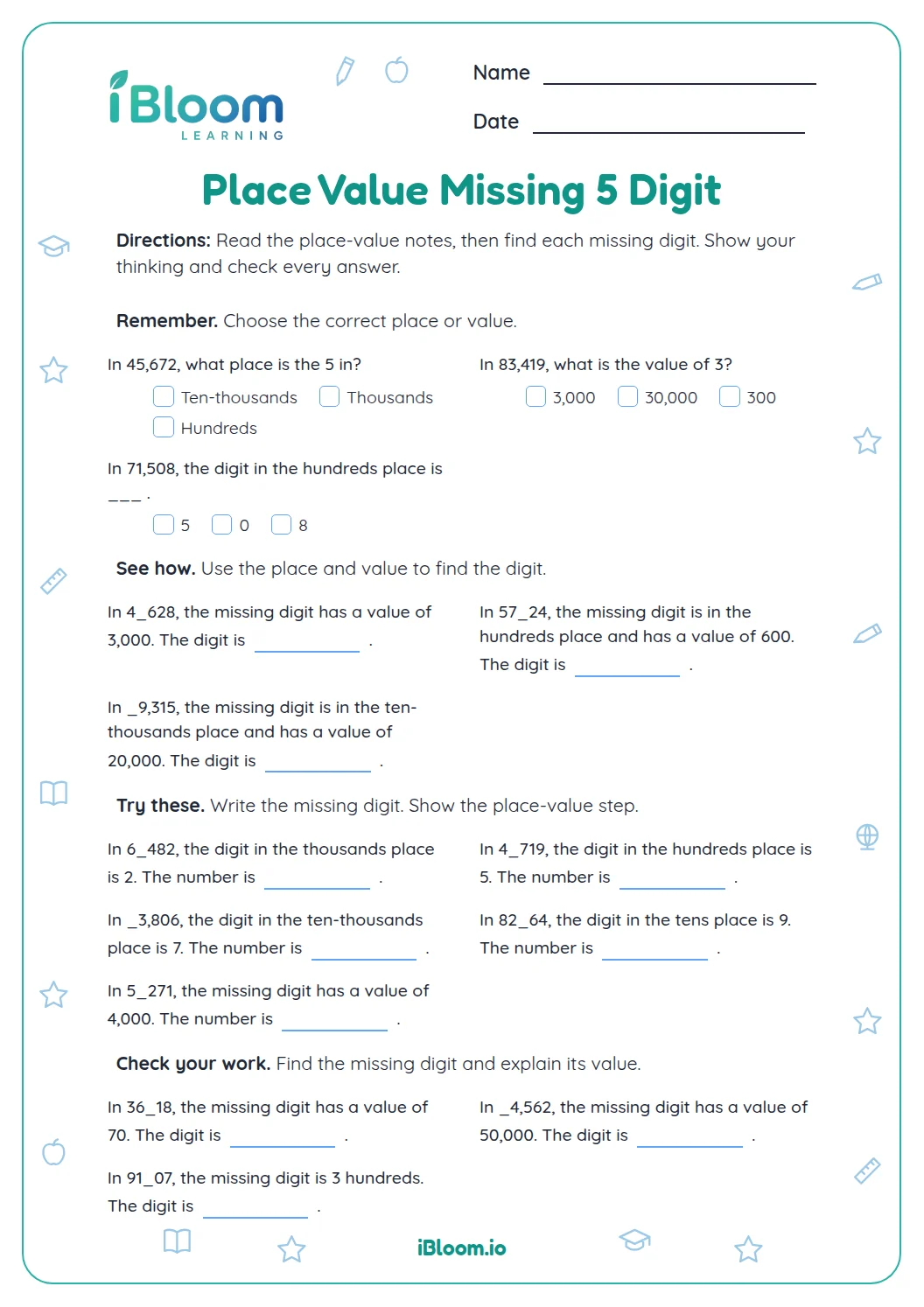
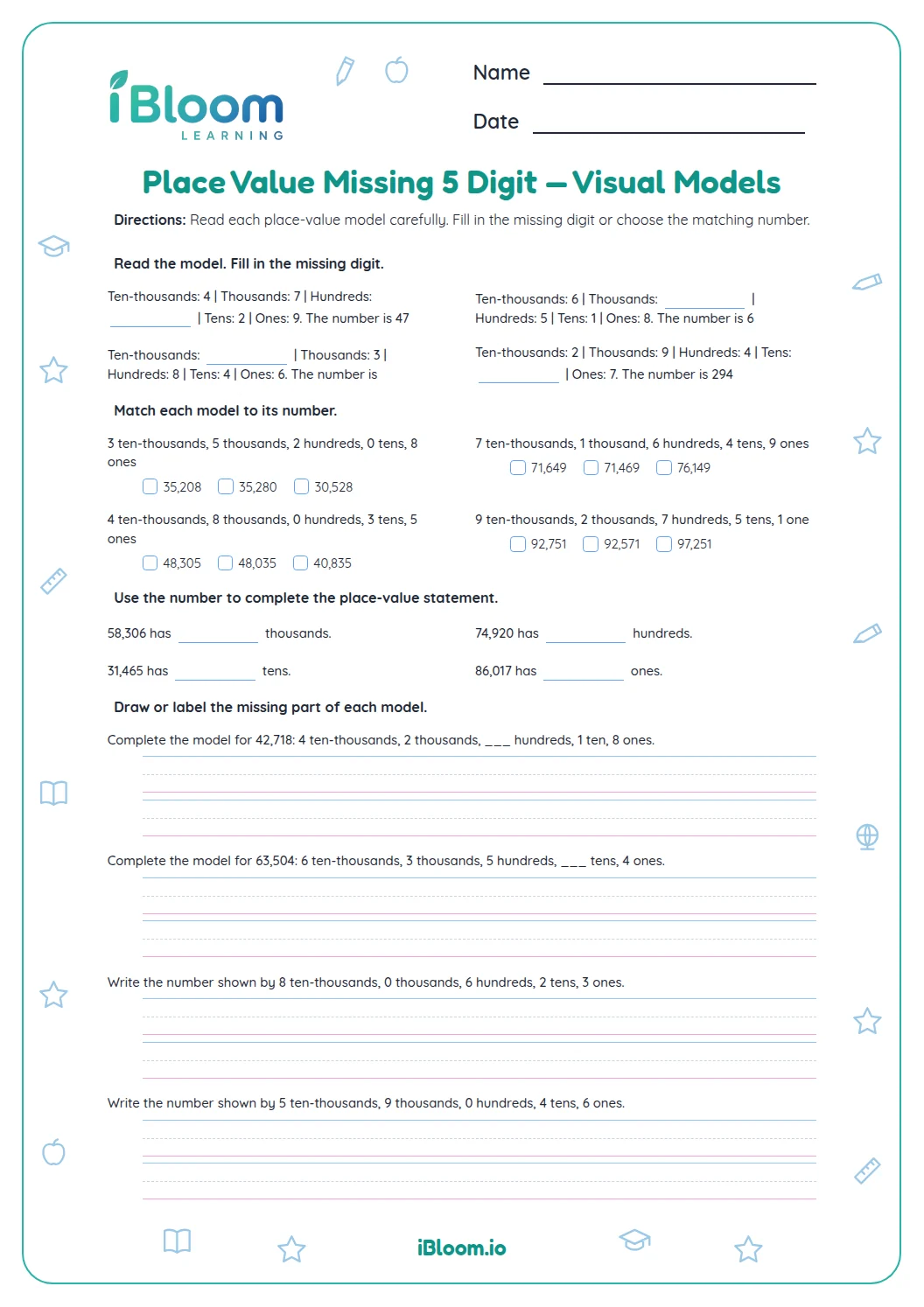
Students reason backward from clues about five-digit numbers. Each blank has a specific place, and the best strategy is to test the place-value condition and then check every other clue.
Aligned to 4.NBT.A.2 and 4.NBT.A.3
What is on this worksheet?
Part A asks for missing digits from direct place-value clues.
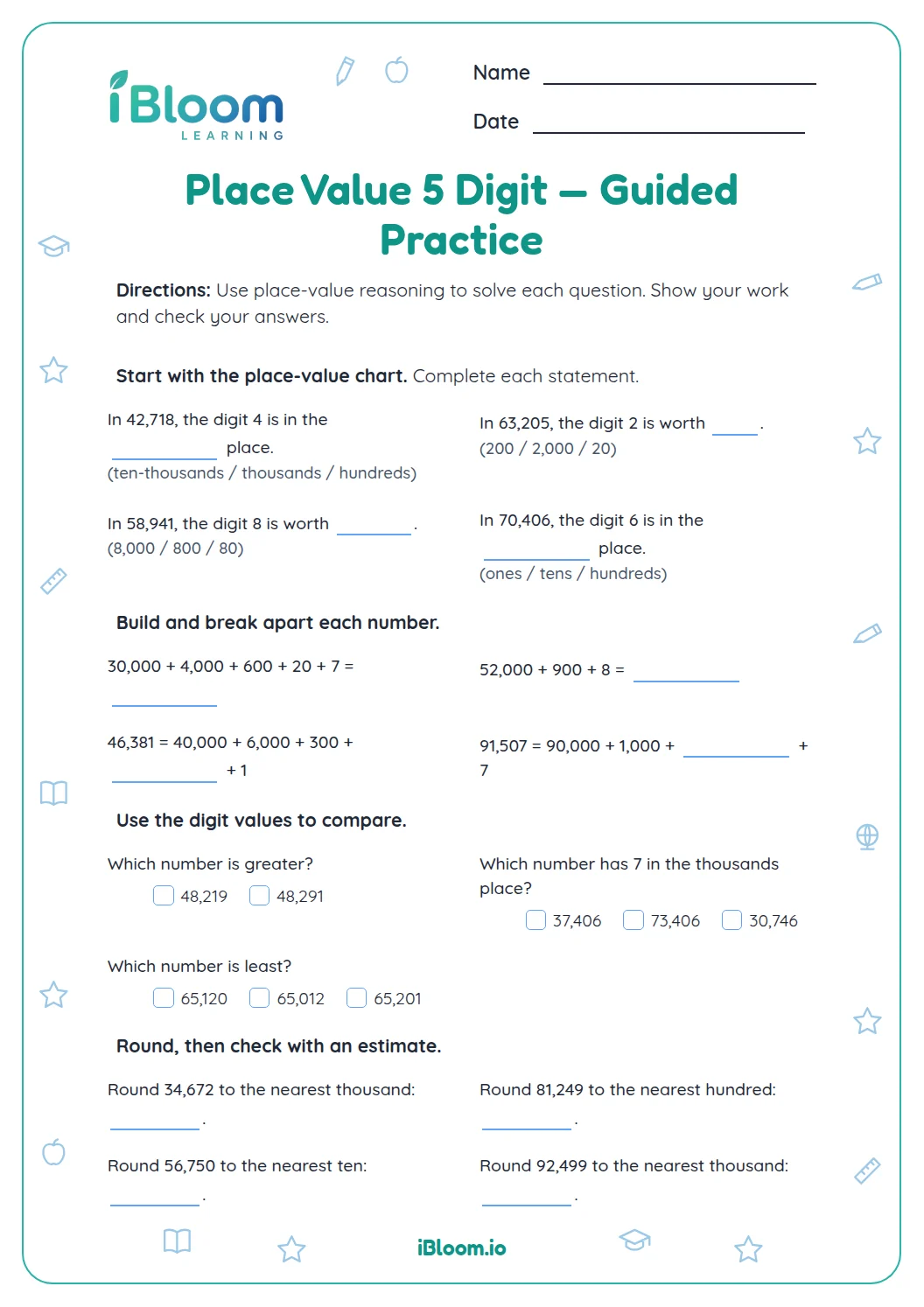
Parts B and C combine two or more conditions, including rounding and inequalities.
- Part A: build accuracy with the first set of questions
- Later parts add explanation and more demanding examples
- Answer key included
How should students approach the harder questions?
A missing digit changes one place by a known amount. For example, changing the hundreds digit in 47,?02 changes the number by hundreds, not ones.
- 1For a number to round to 56,000 to the nearest thousand, it must be from 55,500 through 56,499.
- 2A digit in the thousands place also affects the ten-thousands interval, so check rounding after placing it.
Why practice this skill?
Place-value puzzles ask students to connect the value of one digit with the size and rounded value of the whole number.
How to use this worksheet
- 1Read the direction under each part before beginning.
- 2Work one question at a time and show calculations when a problem asks for them.
- 3Use the answer key to discuss any answer that was difficult to explain.
- 4Ask the student to make one new example using the same skill.
Common mistakes and quick fixes
The mistake
Reading digits as values rather than places.
The fix
Name the place first, then think about the amount that digit contributes.
The mistake
Using only one clue and overlooking another.
The fix
Substitute the digit into the number and check every condition.
Curriculum alignment
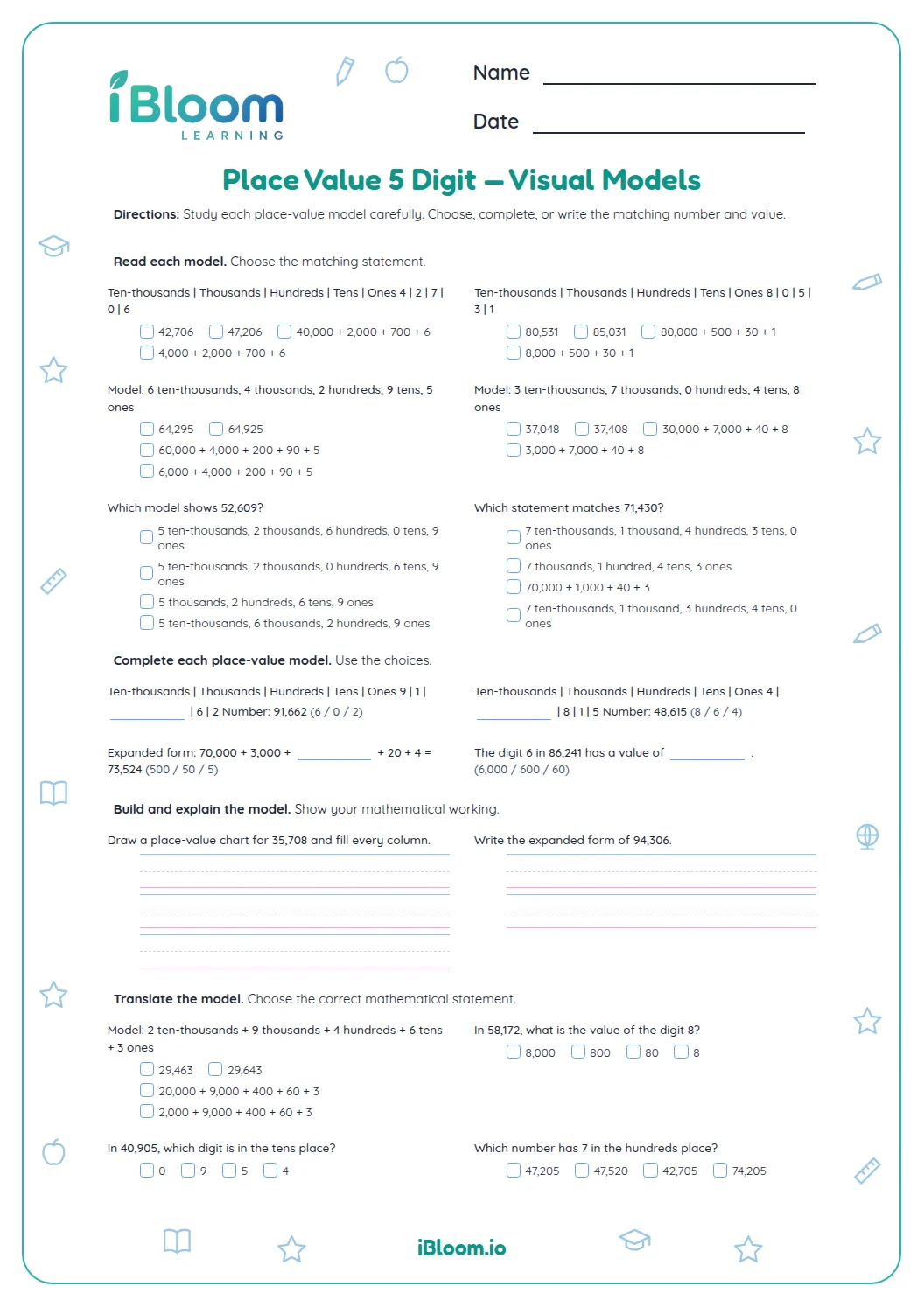
This page practices place value, comparing multi-digit numbers and rounding.
Read, write and compare multi-digit whole numbers.
On this sheet: Questions compare five-digit values and reason about the place of a missing digit.
Show the official wordingHide the official wording
Read and write multi-digit whole numbers using base-ten numerals, number names, and expanded form. Compare two multi-digit numbers based on meanings of the digits in each place, using >, =, and < symbols to record the results of comparisons.
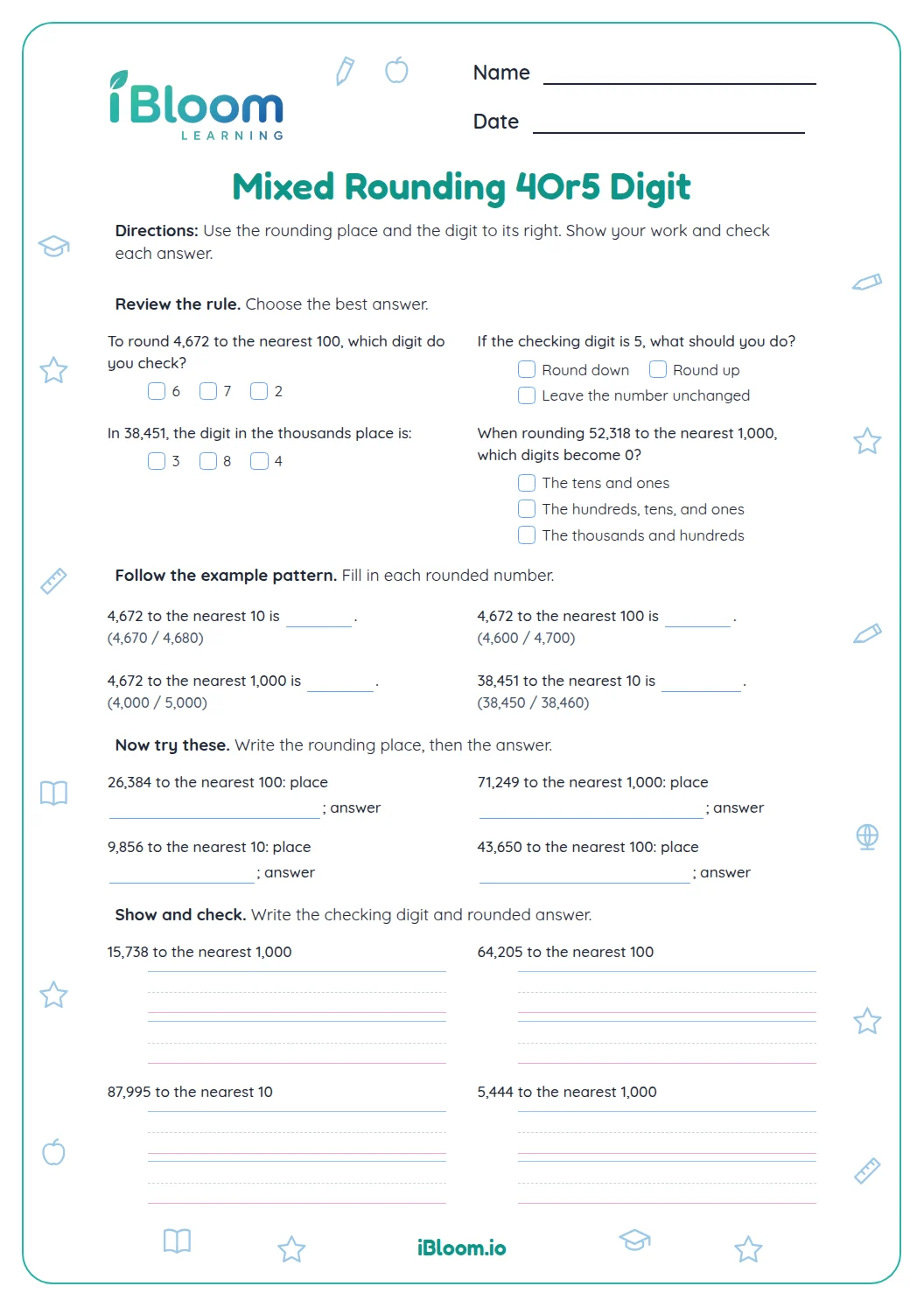
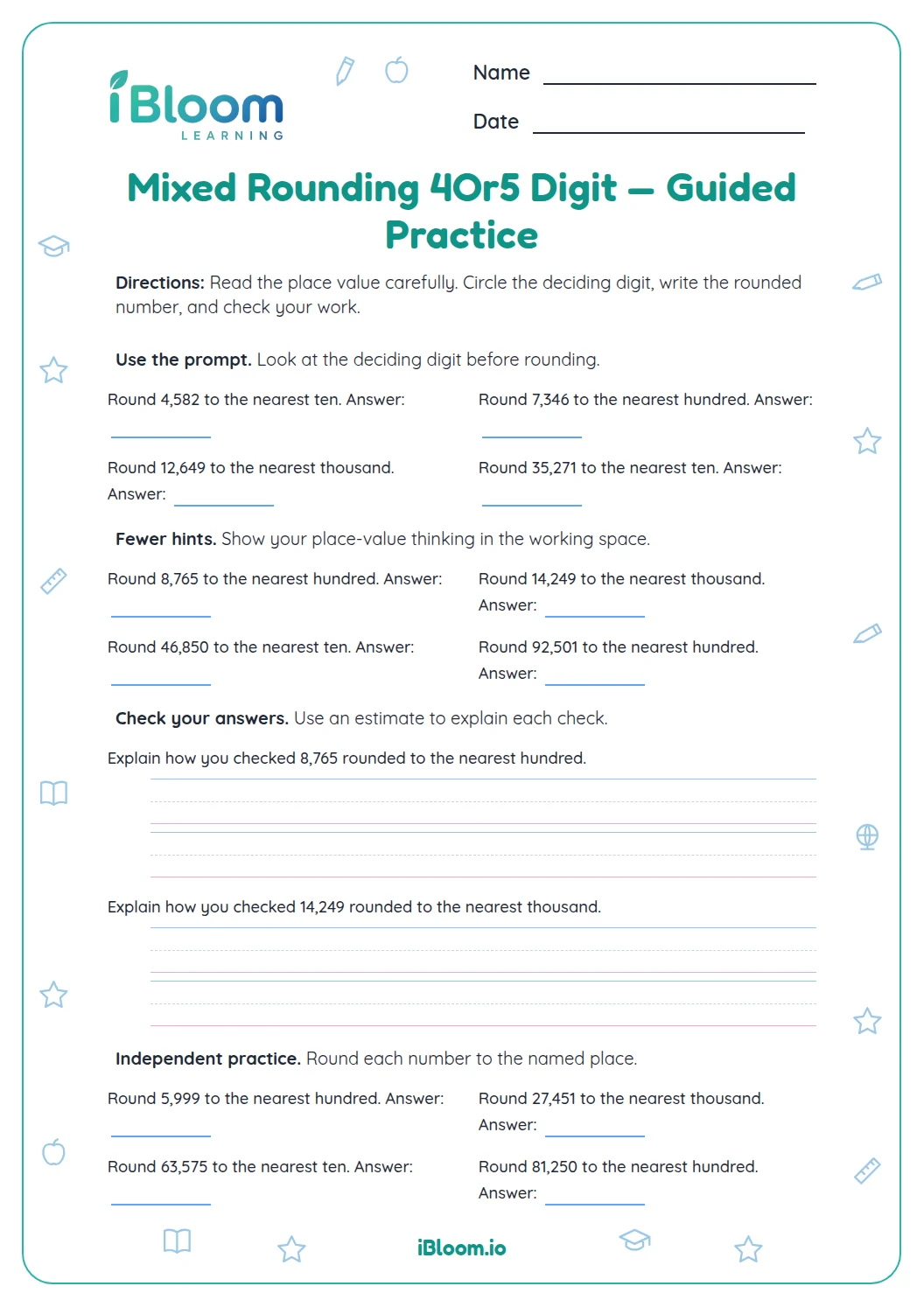
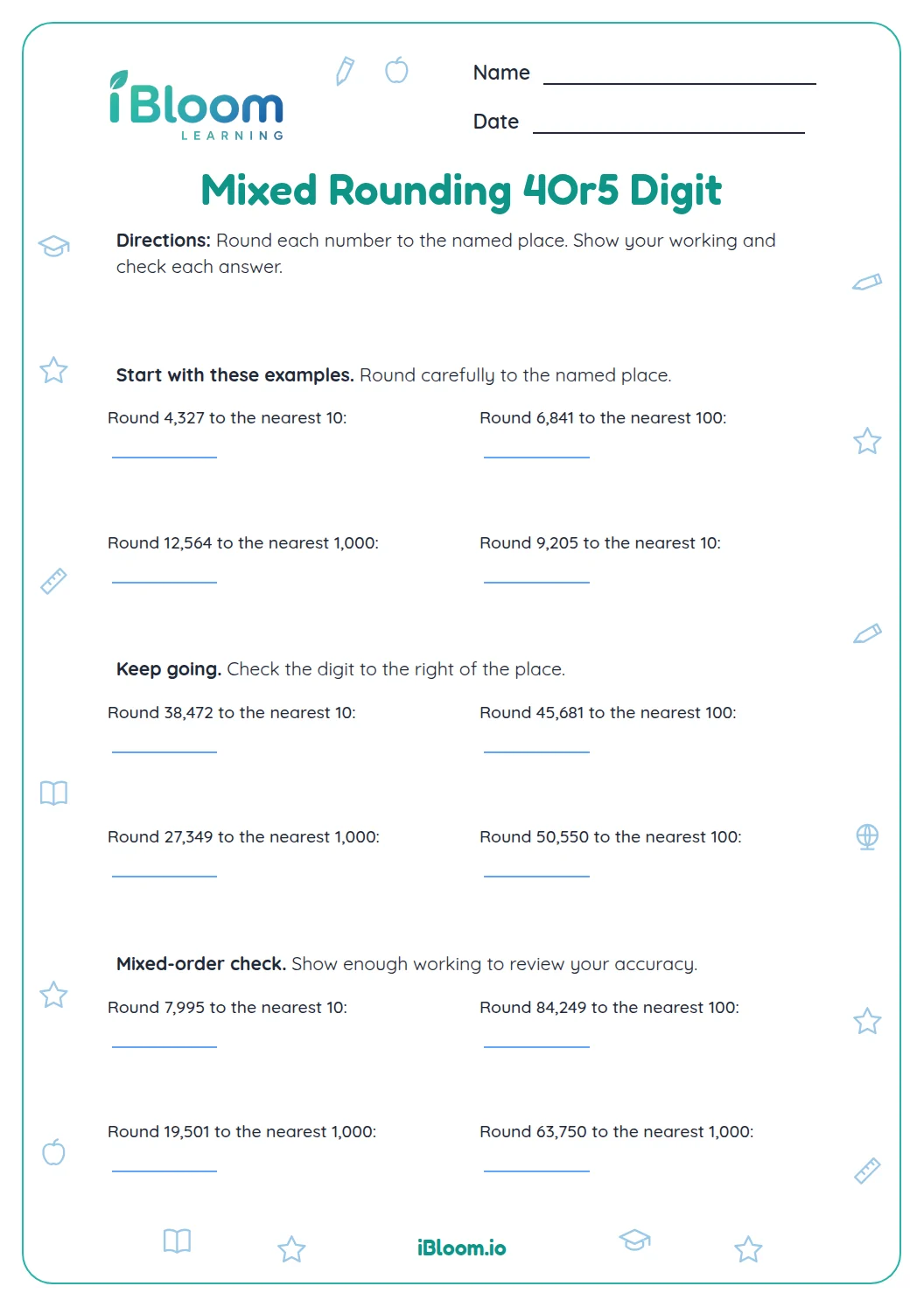
Round multi-digit whole numbers to any place.
On this sheet: Several clues use rounding to identify which missing digits can make a number meet the target.
Show the official wordingHide the official wording
Use place value understanding to round multi-digit whole numbers to any place.
What to practice next
Make more practice
Questions parents and teachers ask
Can a missing digit have more than one answer?
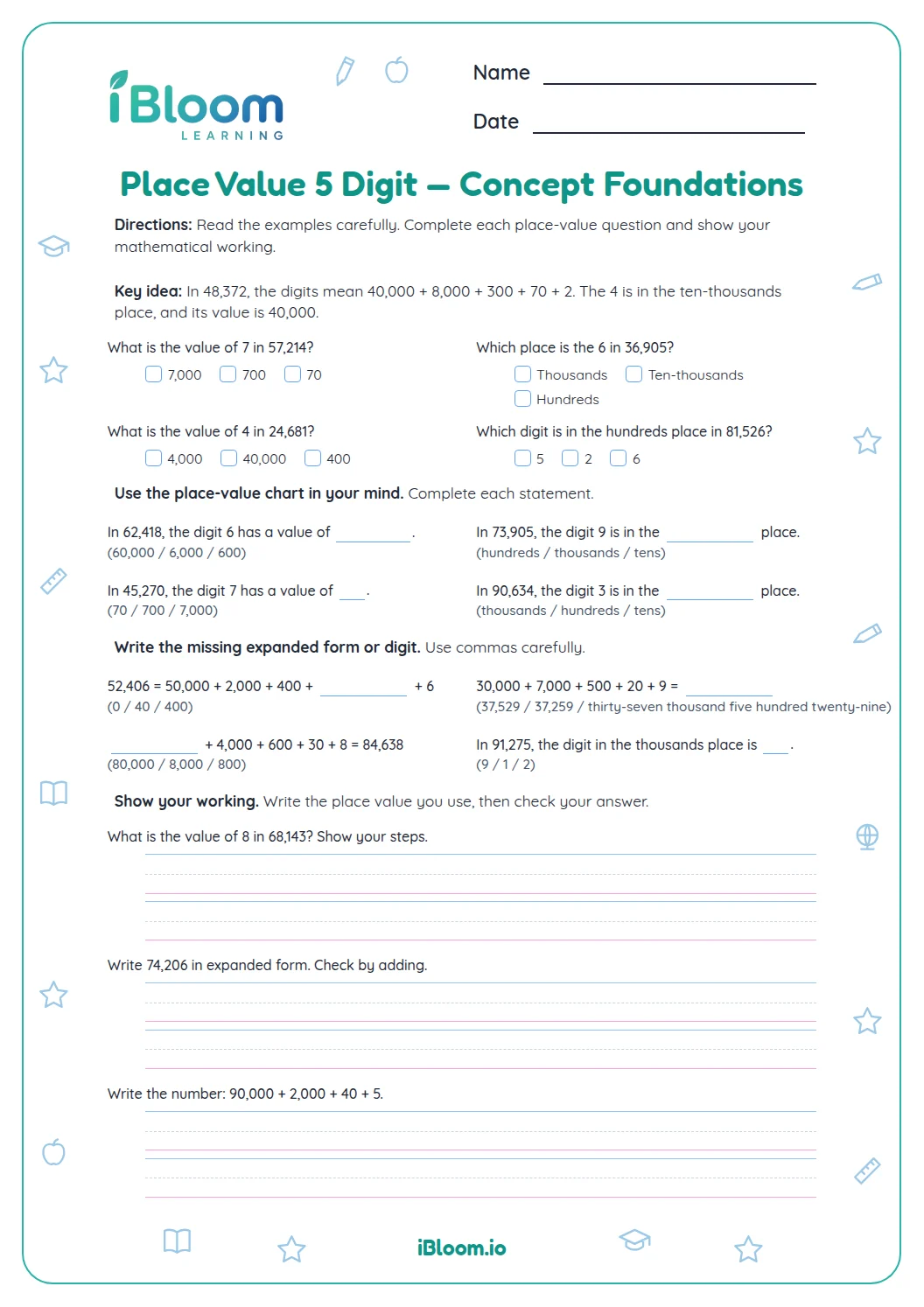
A digit names a symbol, while its place tells the value it represents. In 45,200, for example, the 5 is in the thousands place and has a value of 5,000. Name the place in the clue before deciding what the missing digit can be.
How does rounding help solve a missing-digit puzzle?
A puzzle may include a comparison, a rounding condition and a place-value clue at the same time. A digit that satisfies just one clue may fail another. Substitute your choice into the full number, then test every condition in the prompt one by one.
What is the quickest way to check my answer?
Yes. A clue may allow several digits, especially when it gives a range instead of one exact number. If the question asks for one possible digit, provide one value that satisfies every condition. If it asks for all digits, list the full set.
Why are some prompts open-ended?
Rounding turns a target into a range of numbers that round to it. For example, numbers from 55,500 through 56,499 round to 56,000 to the nearest thousand. Place the missing digit, then check whether the completed number falls inside the correct range.