





About this worksheet
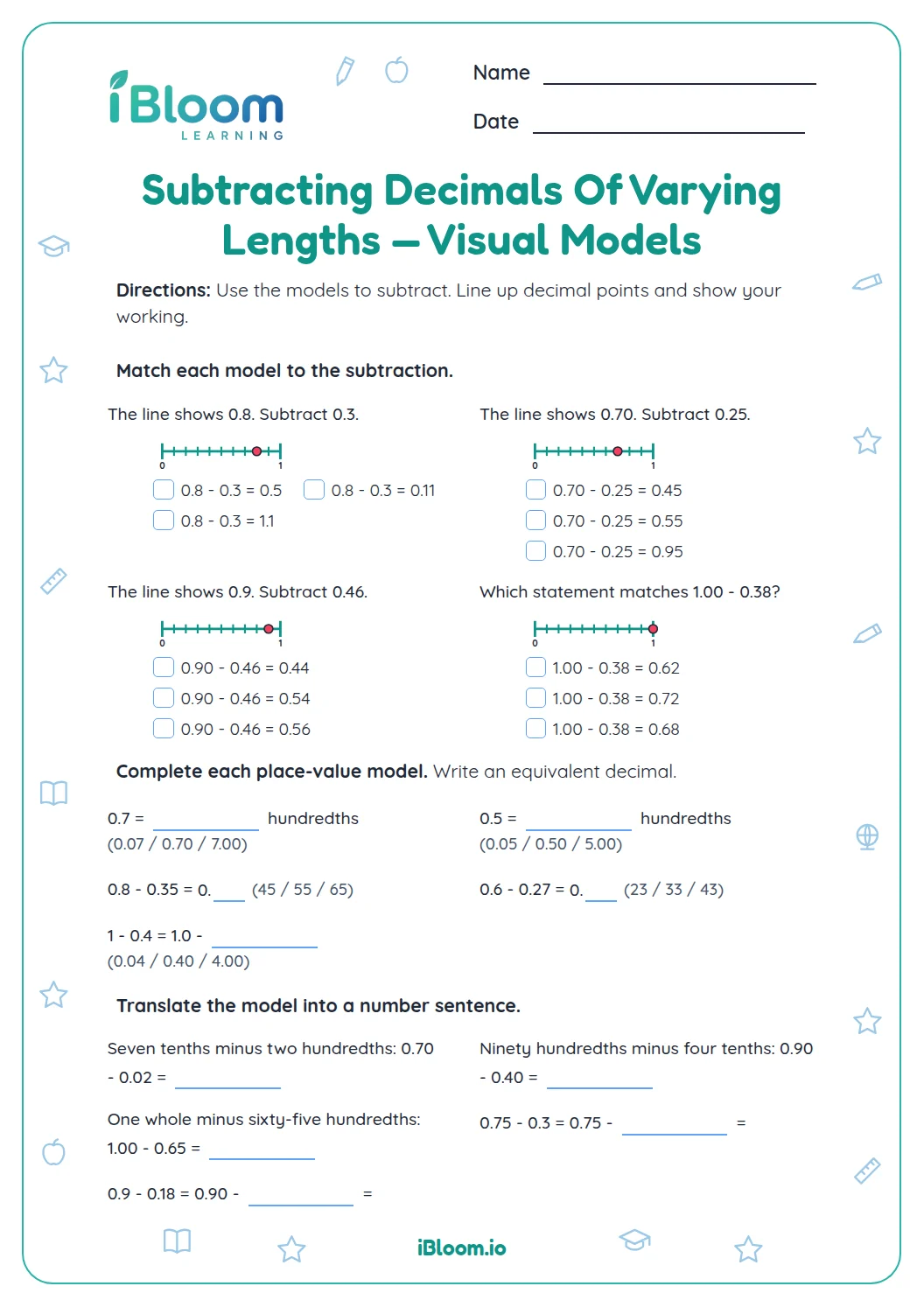
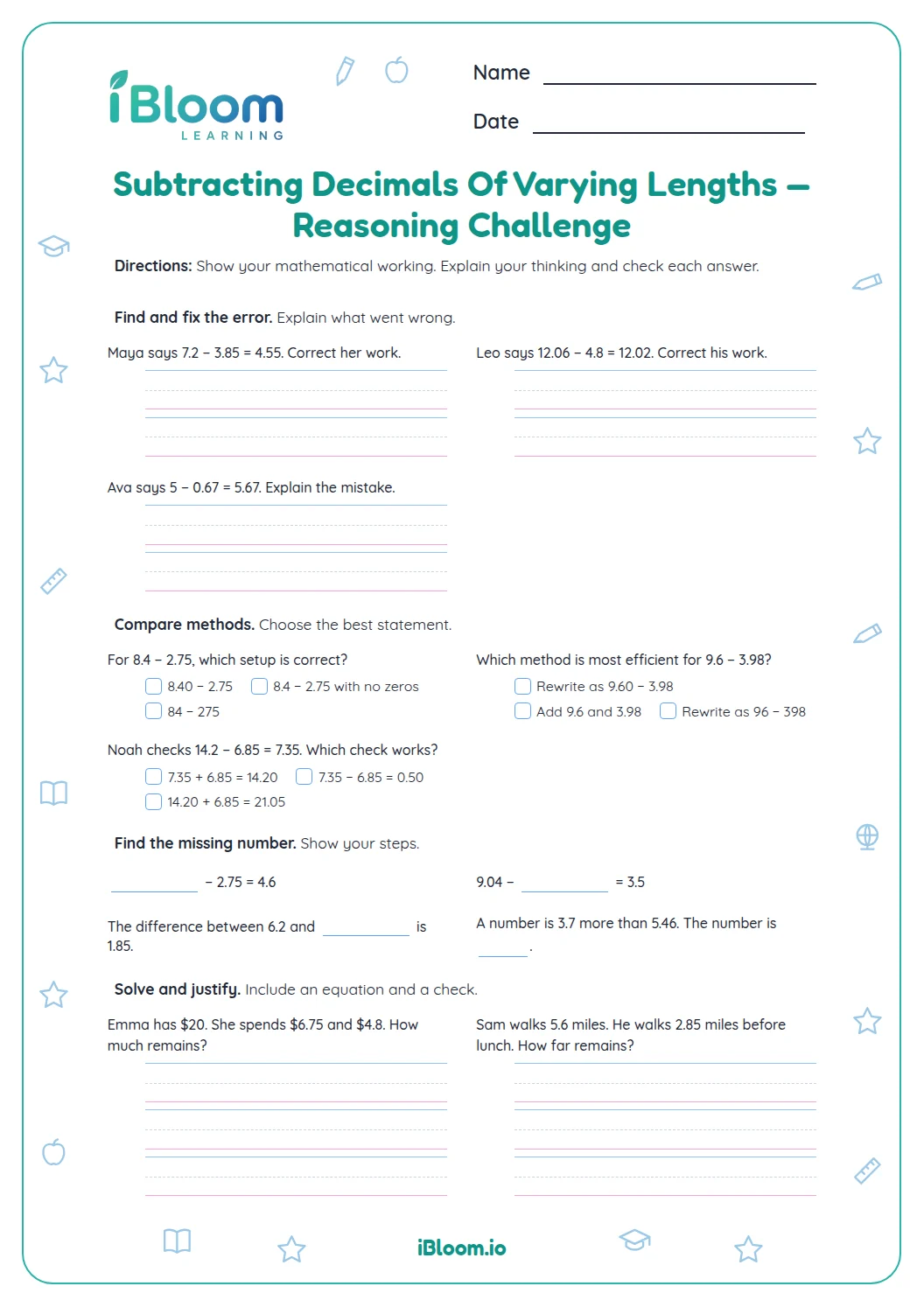
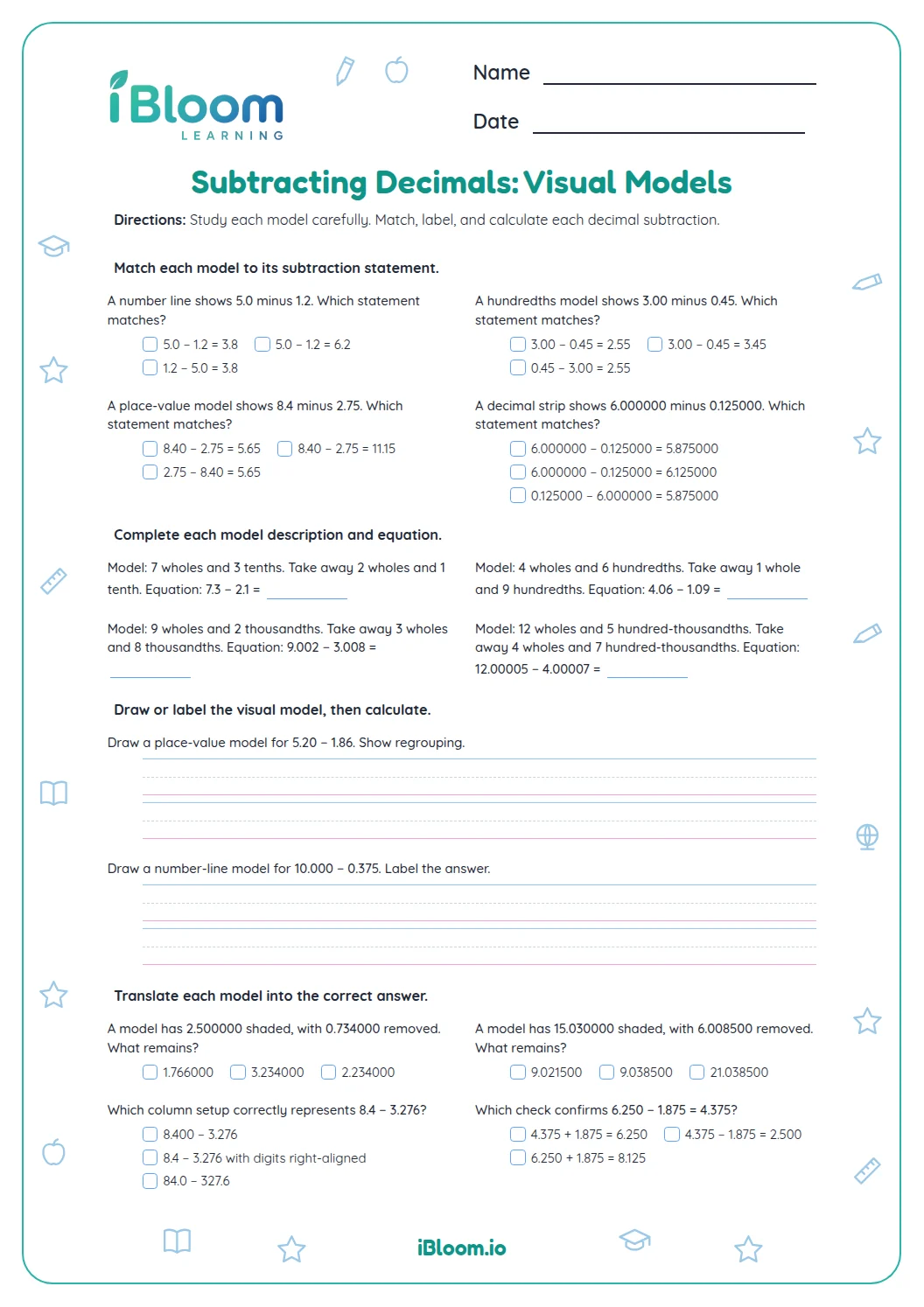
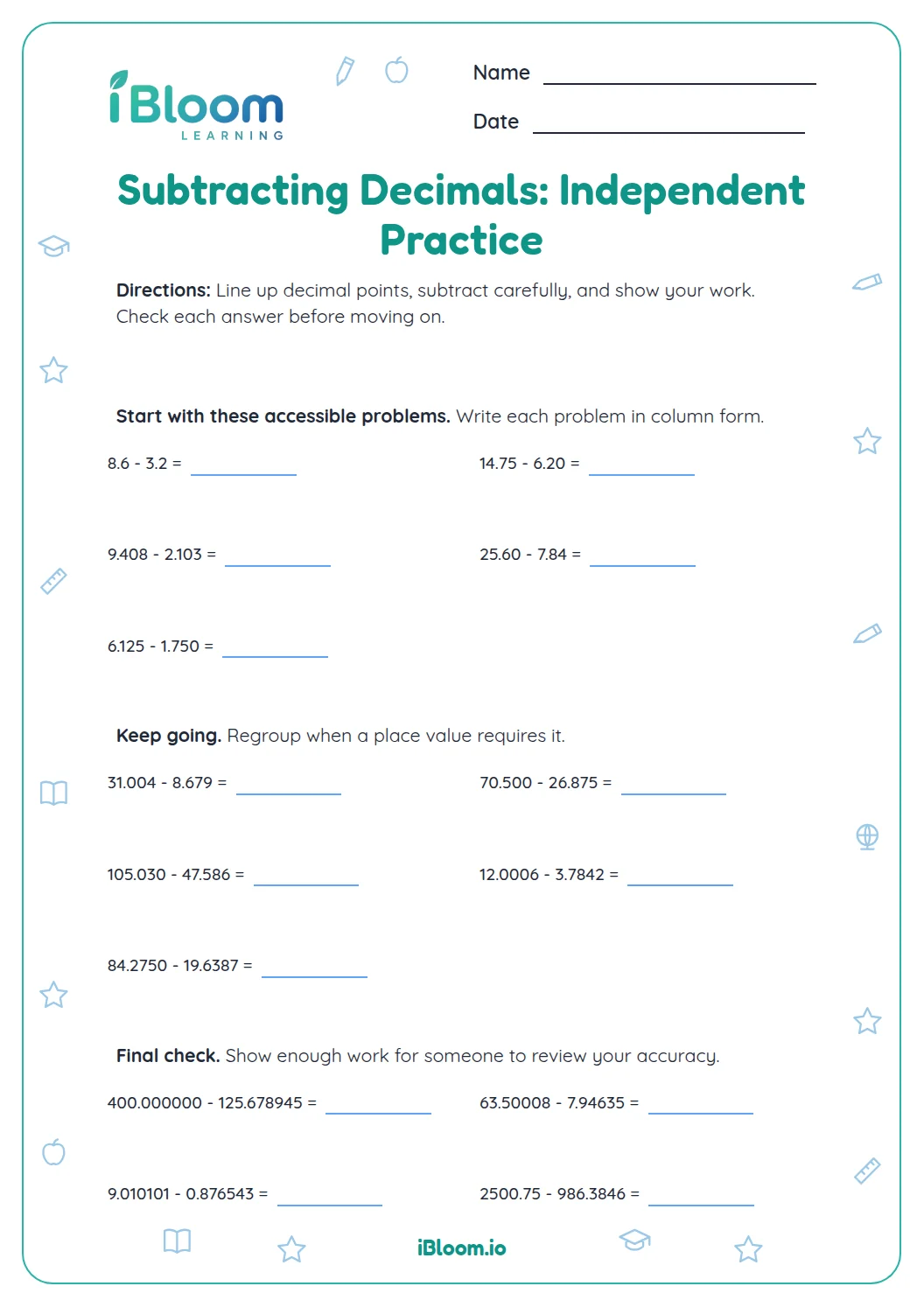
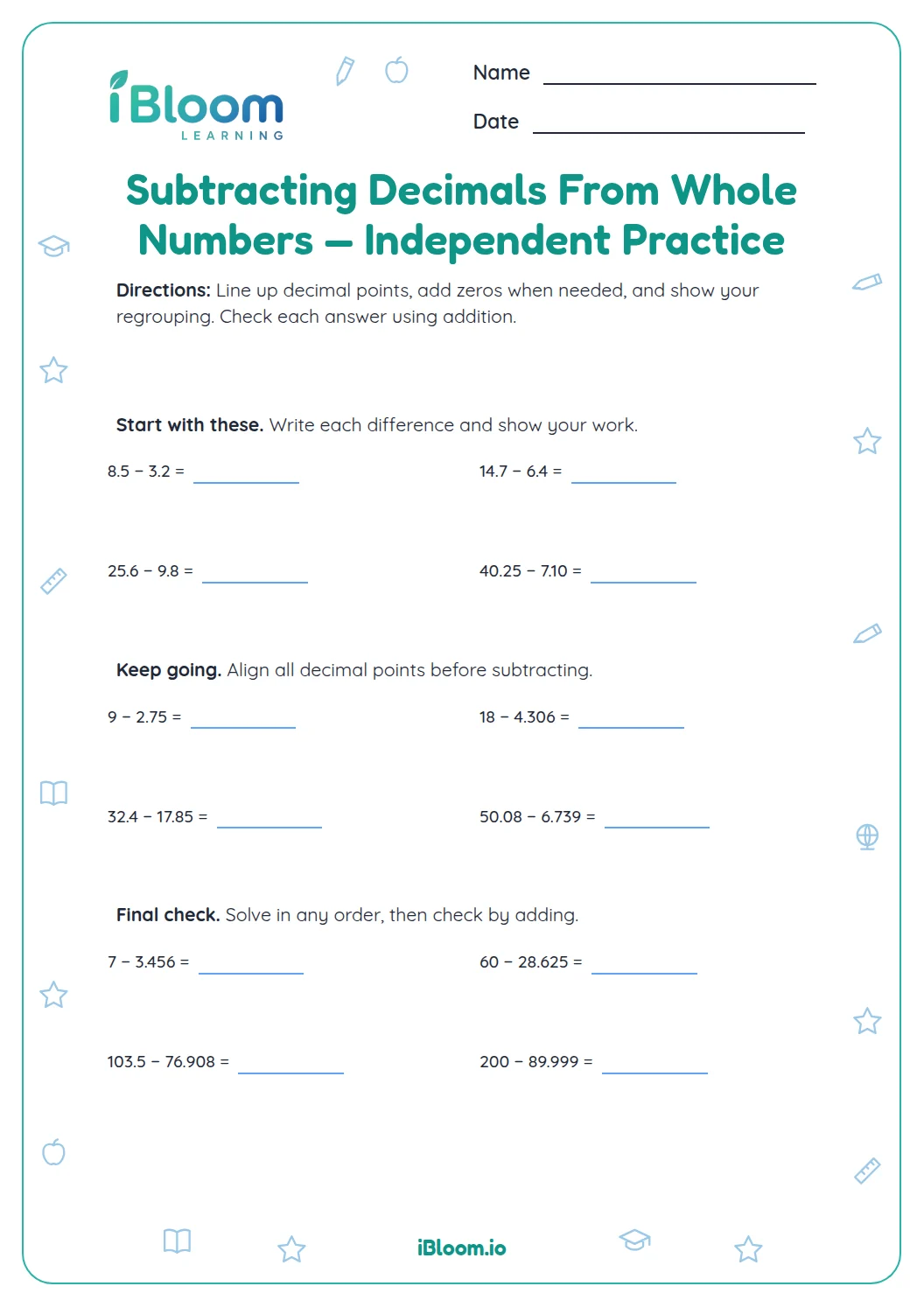
When decimal lengths differ, place-value alignment keeps each digit in its proper column. Writing 8.4 as 8.40 makes 8.40 − 2.17 clear. This guided practice starts with direct subtraction and builds to situations and an unknown subtrahend.
Aligned to 6.NS.B.3
Why line up decimal points?
Each decimal place has a value: tenths line up with tenths, hundredths with hundredths, and thousandths with thousandths. A trailing zero can make the columns easier to see without changing a number.
What is on the guided practice?
The 16 questions begin with direct subtraction, then apply the skill to four measurement and distance situations. One equation asks for a missing subtrahend.
- 18.4 − 2.17
- 2Write 8.4 as 8.40 so place values align.
- 3Subtract: 8.40 − 2.17 = 6.23
- 4Answer: 6.23
How can students check subtraction?
Add the difference to the amount subtracted. The sum should equal the starting amount. Keep units in context answers when the question asks for them.
How to use this worksheet
- 1Write the numbers with decimal points aligned.
- 2Add trailing zeros only where a place is empty.
- 3Subtract by place value, regrouping when needed.
- 4Check by adding the difference to the subtrahend.
Common mistakes and quick fixes
The mistake
Aligning the last digits instead of decimal points.
The fix
Line up the decimal points first; each column then keeps its place value.
The mistake
Treating 8.4 and 8.40 as different amounts.
The fix
A zero at the end of a decimal does not change its value.
The mistake
Dropping a zero placeholder before subtracting.
The fix
Keep each decimal place in its column; a trailing zero can mark an empty place.
Common Core alignment
This page targets the named skill at its stated grade level.
Fluently add, subtract, multiply, and divide multi-digit decimals using the standard algorithm.
On this sheet: All questions practice decimal subtraction with place-value alignment, including whole numbers and unequal decimal lengths.
Show the official wordingHide the official wording
Fluently add, subtract, multiply, and divide multi-digit decimals using the standard algorithm.
What to practice next
Make more practice
Further reading
Questions parents and teachers ask
Why should decimal points line up when subtracting?
Each digit needs to stay in its place-value column. Lining up decimal points puts tenths under tenths and hundredths under hundredths, so the subtraction keeps the values correct. Each column then represents matching tenths, hundredths, or thousandths. Use zeros to show empty places.
Can I add zeros to make decimal lengths match?
Yes. A zero at the end of a decimal does not change its value. For example, 8.4 and 8.40 are equal, and 8.40 is easier to align with 2.17. Write 8.4 as 8.40, then subtract in matching columns. The value stays the same.
How can I check a decimal subtraction answer?
Add the difference to the amount that was subtracted. If the sum equals the starting number, the subtraction is correct. Also check that the decimal point is in a sensible place. This inverse-operation check can catch borrowing and place-value errors.
What does varying decimal lengths mean?
It means the decimals have different numbers of digits after the decimal point. One number might have tenths, while the other has hundredths or thousandths. For instance, 2.5 has tenths while 2.375 has thousandths. Zeros can make their columns line up.
What does the missing-value problem practice?
It asks students to find the subtrahend when the starting number and difference are known. Add the difference to the known result to recover the missing amount, then check the original subtraction. The question uses the same place-value alignment as the other decimal problems.