





About this worksheet
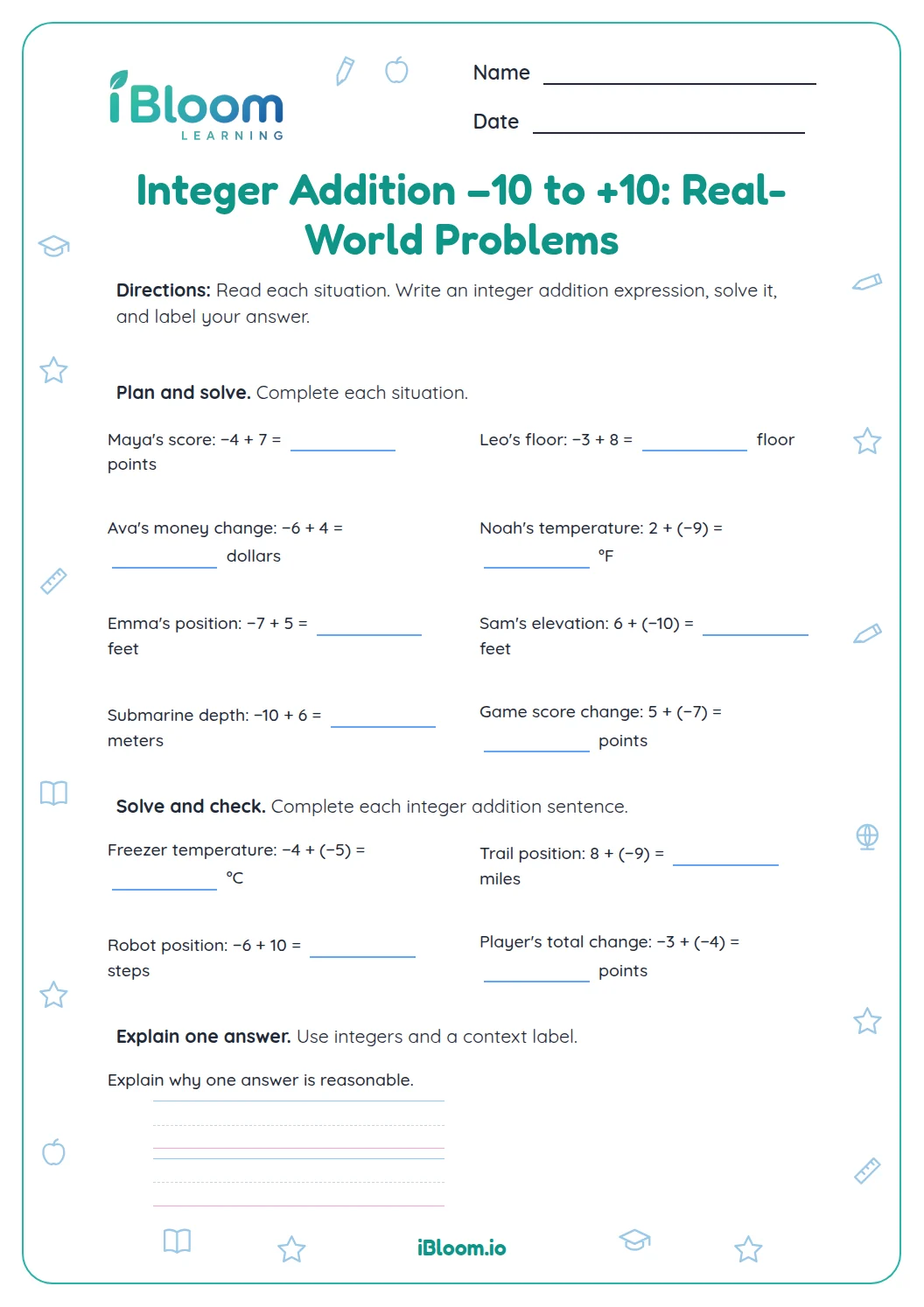
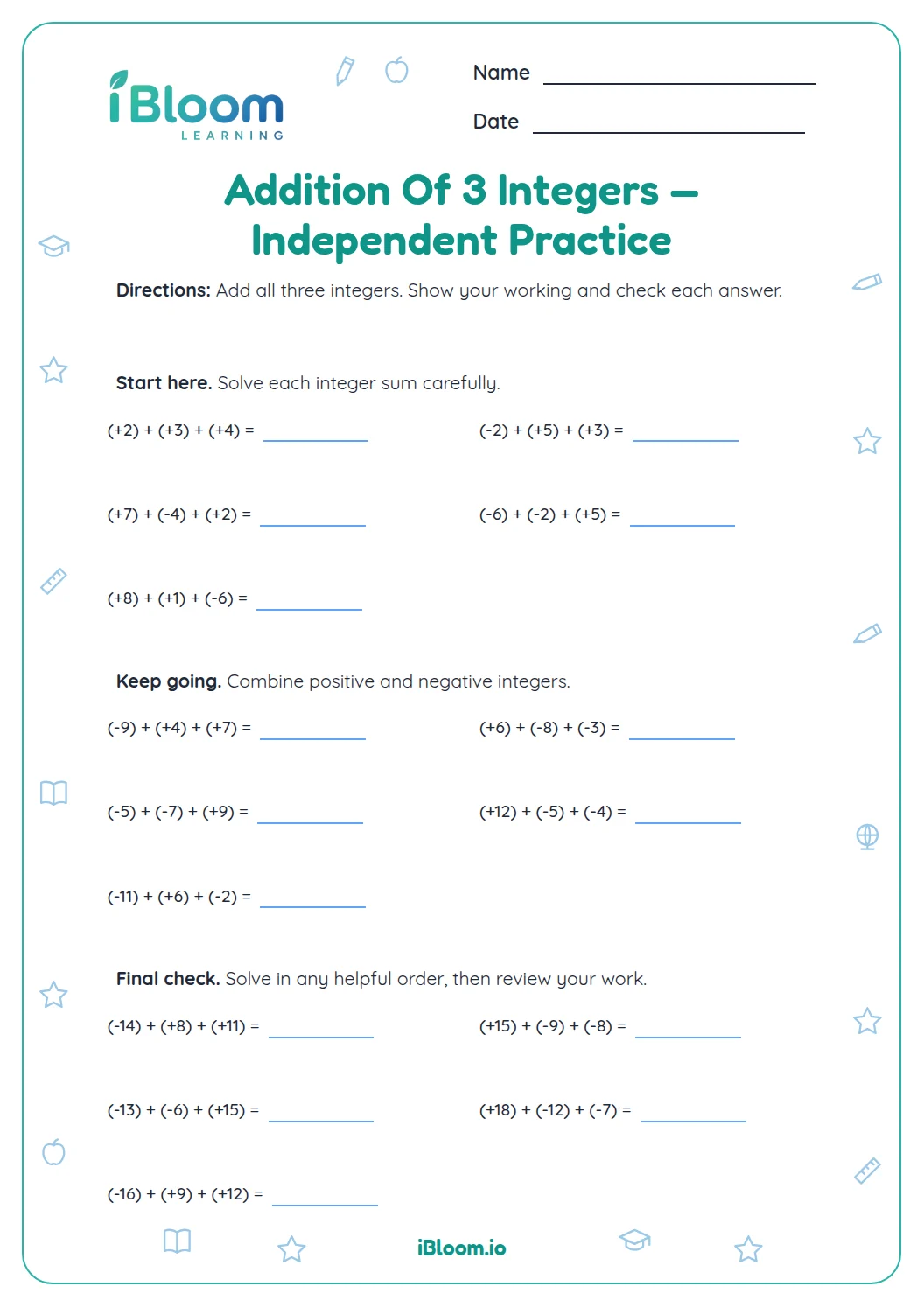
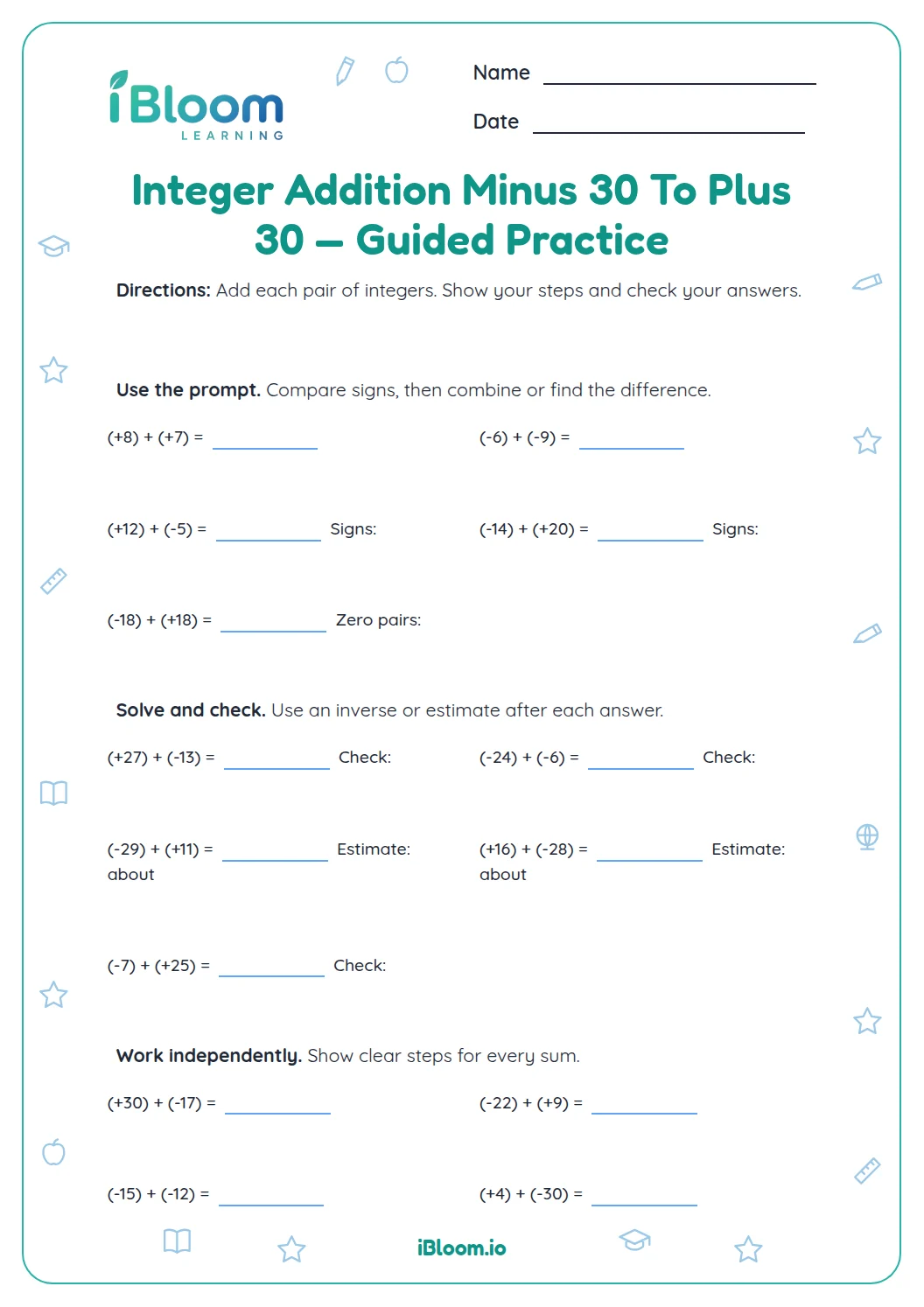
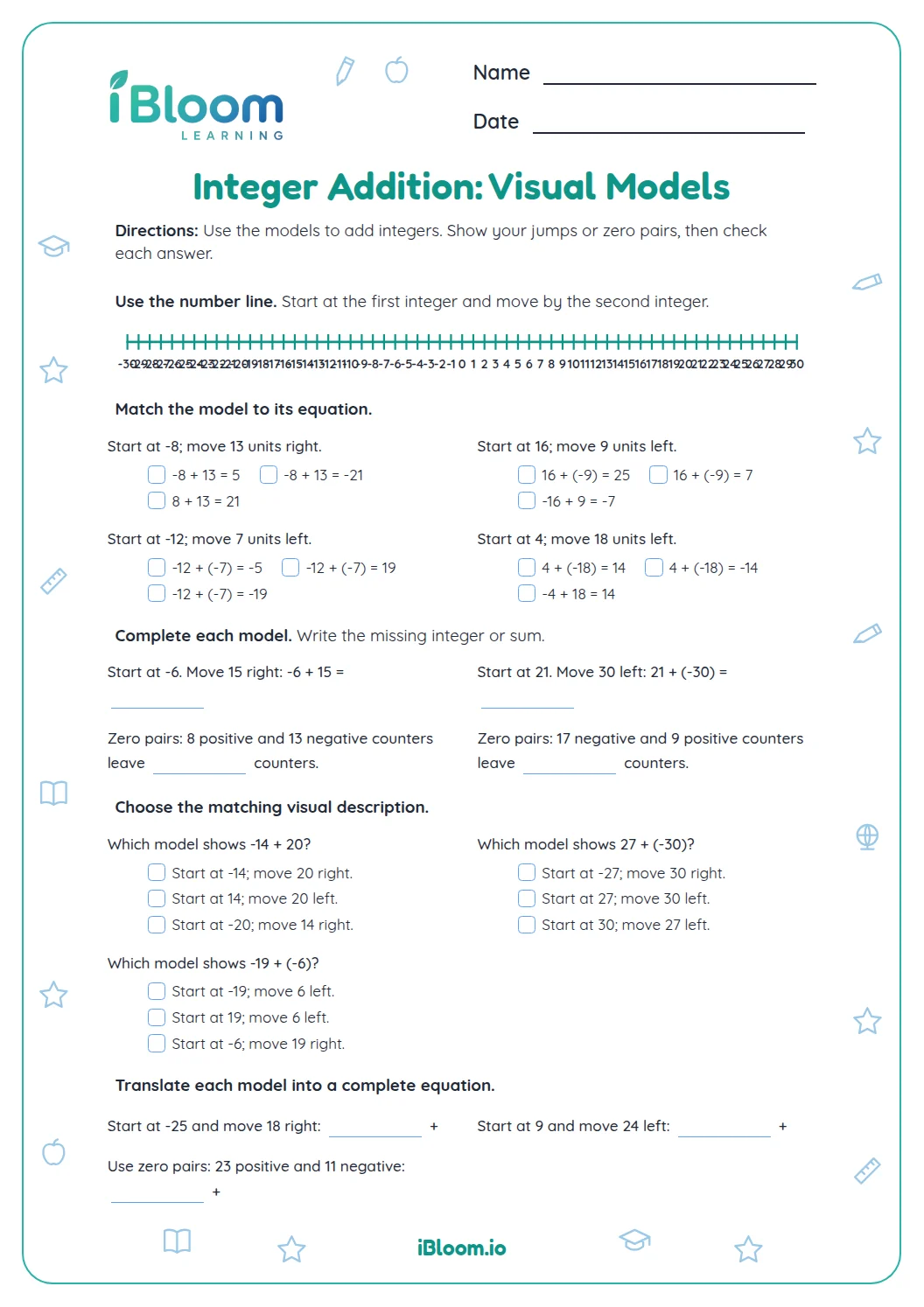
This Grade 6 printable builds integer addition practice from worked contexts to independent sums. Students add positive and negative integers from −10 through 10, use opposite pairs or a number-line strategy, and solve temperature and position stories. For example, −6 + 4 = −2: four steps right from −6 land at −2. A separate key lists each sum and contextual answer.
How does the guided practice build?
Five opening prompts describe integer sums in words. Six number sentences remove some of that context, and four independent items provide a final check. Two real-world questions apply addition to temperature and a diver’s position.
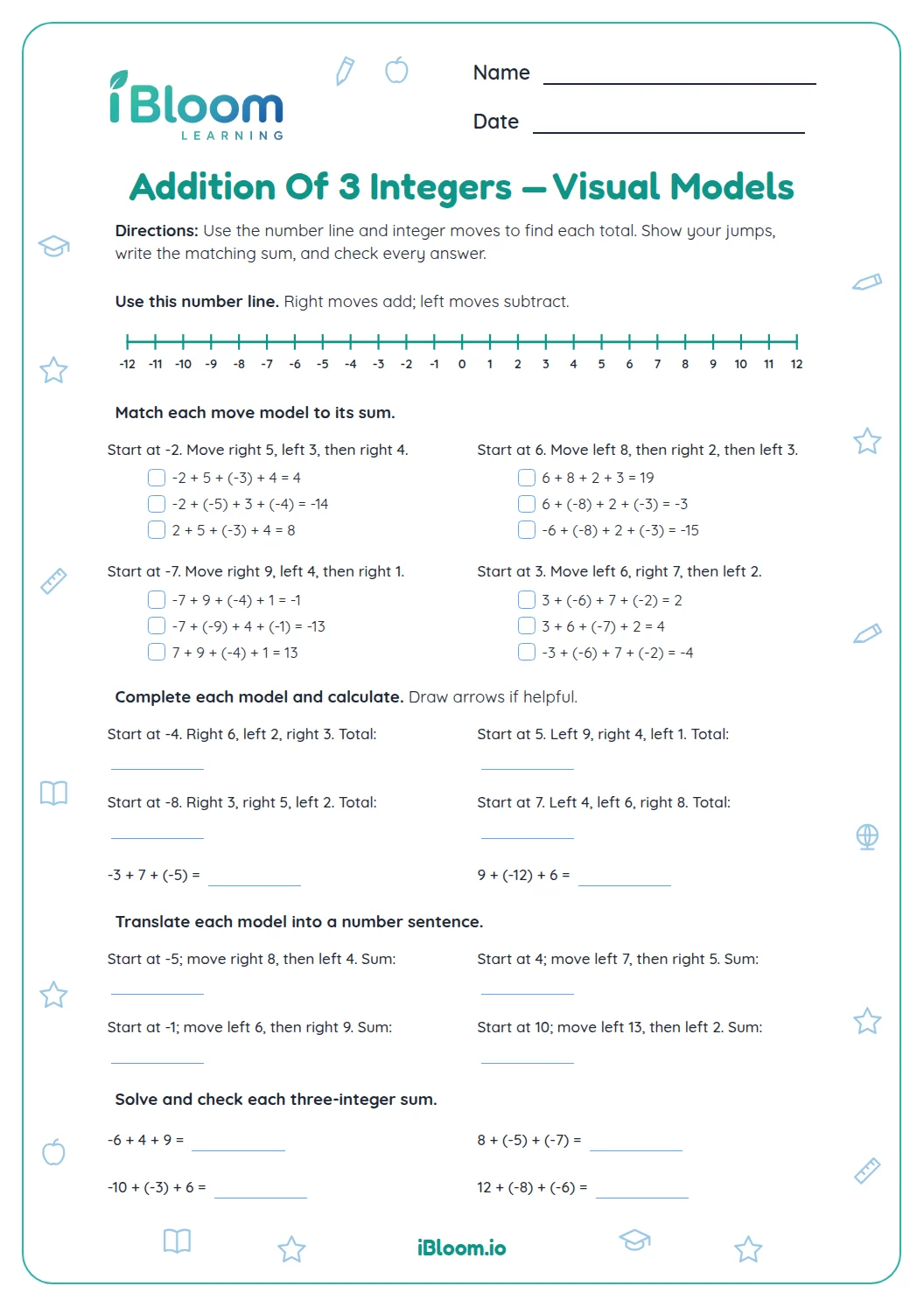
For example, starting at −6 and adding 4 means moving four steps right on a number line: −5, −4, −3, −2.
- Five guided sums
- Ten equations for independent practice
- Two real-world integer stories
How can opposite pairs help?
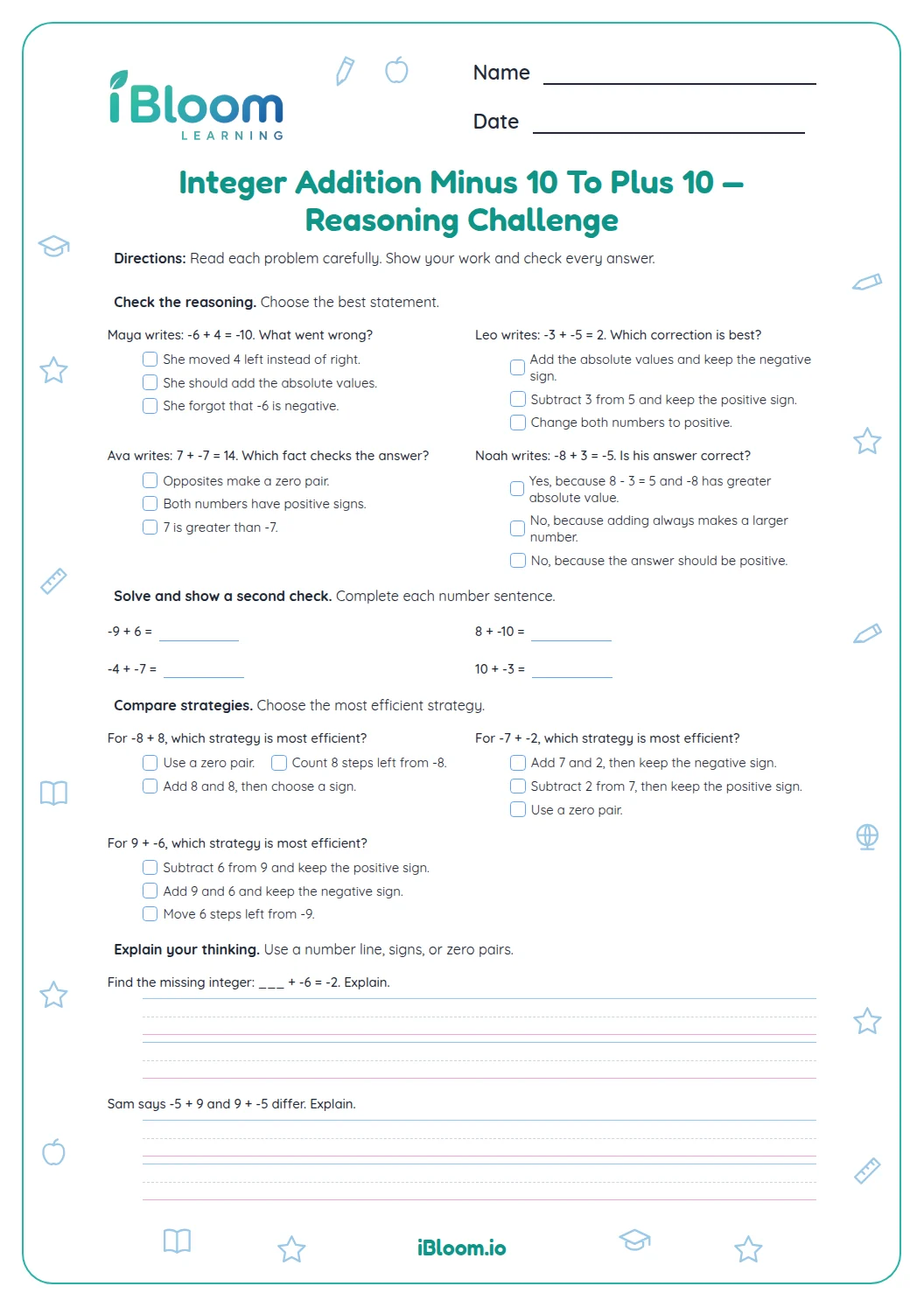
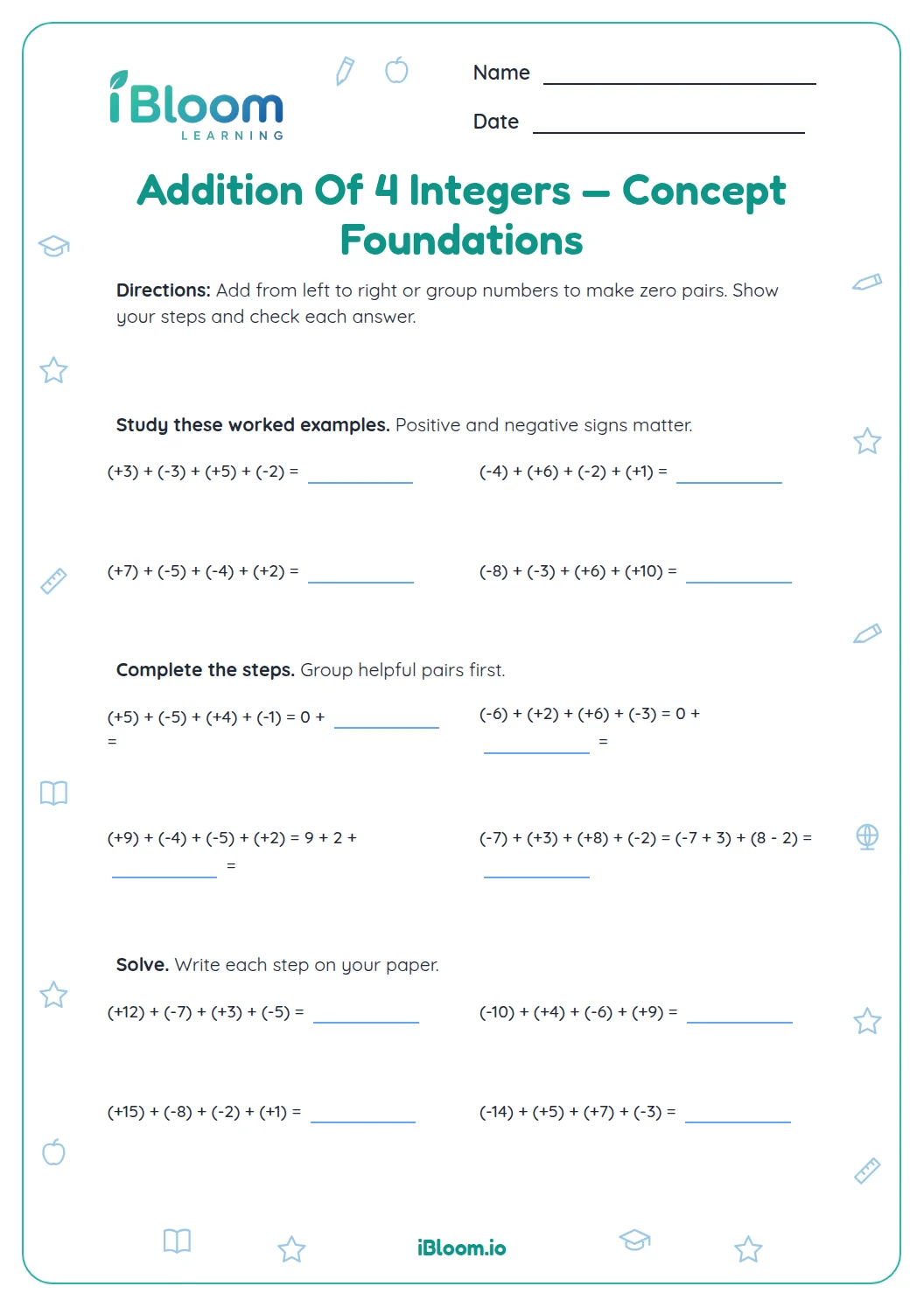
A positive and an equal negative amount cancel to zero. In 9 + (−9), the nine positive units pair with nine negative units, leaving 0. If the amounts differ, the unpaired units determine the sign.
What do the signs mean in the stories?
A negative temperature is below zero, and rising adds a positive change. A diver below the surface has a negative position; rising adds a positive change toward zero. Keep the unit and interpret the resulting signed number.
How to use this worksheet
- 1Read each signed number and its sign.
- 2Use a number-line move or pair opposites.
- 3For unlike signs, subtract the smaller magnitude from the larger.
- 4Keep the sign of the number with the greater magnitude.
- 5Check story answers with their units and context.
Common mistakes and quick fixes
The mistake
Adding the signs instead of the values.
The fix
Pair opposites or compare magnitudes first.
The mistake
Giving the result the wrong sign.
The fix
The larger absolute value determines the sign when signs differ.
The mistake
Treating a rise as a negative change.
The fix
A rise adds a positive amount, even when the starting value is negative.
What to practice next
Make more practice
Questions parents and teachers ask
How do you add integers with different signs?
Pair positive and negative units that cancel. Then subtract the smaller absolute value from the larger and keep the sign of the number with the greater absolute value. For example, −6 + 4 leaves two negative units, so the sum is −2.
What does zero mean in an integer story?
Zero is the reference point in a context such as sea level or the temperature scale. A positive or negative value tells which side of zero the quantity is on. The story questions use below-zero temperature and a diver’s position to connect signs with meaning.
How many problems are included?
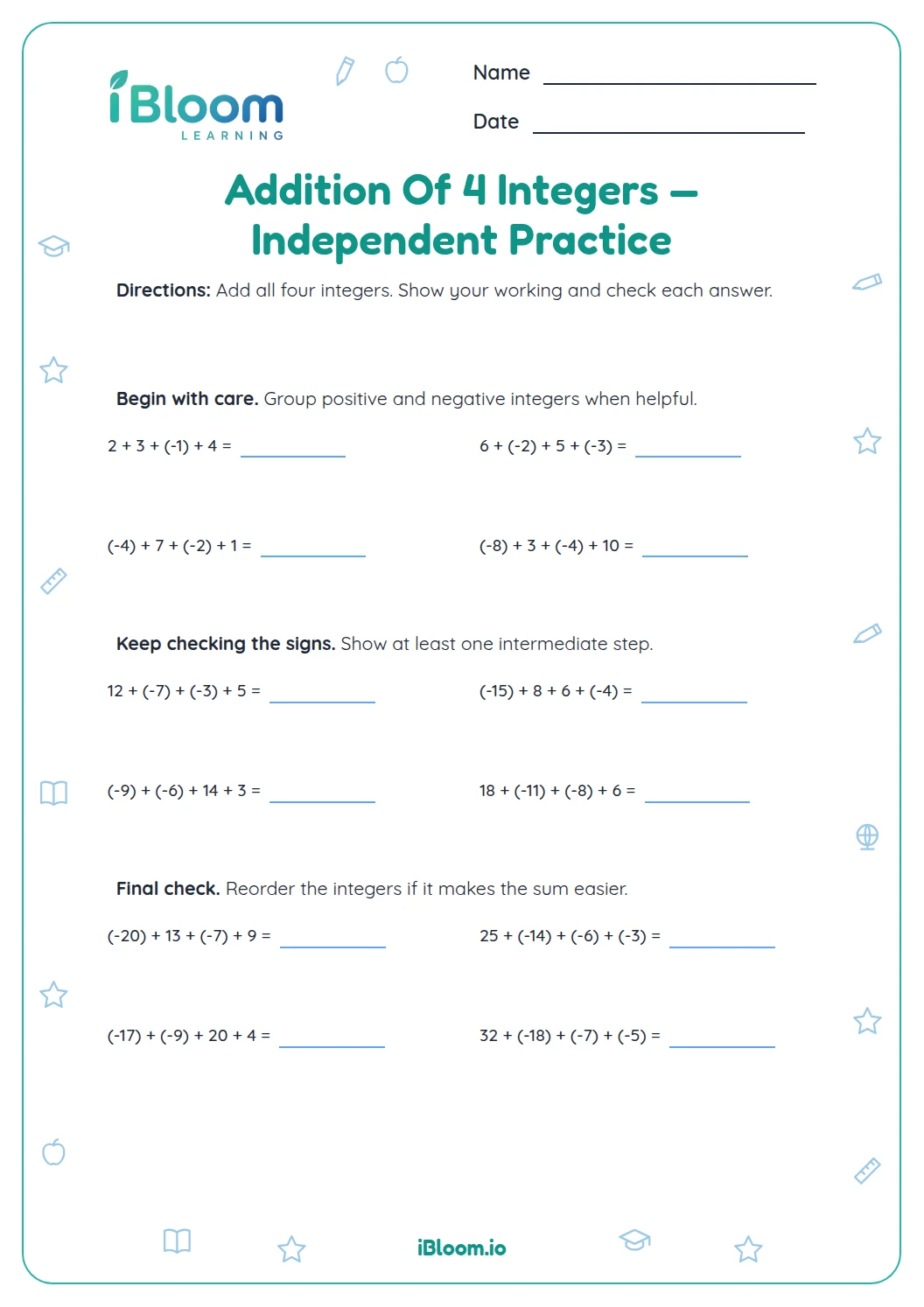
There are 17 questions in four parts: five guided sums, six number sentences, four independent checks, and two real-world stories. The addends stay between −10 and 10, though a sum can fall outside that interval. The answer key includes the sums and story units.
How can a number line show integer addition?
Start at the first addend. Move right for a positive addend and left for a negative addend. For −6 + 4, four rightward steps end at −2. A student can also use opposite pairs when the addends have different signs.
When do opposite pairs make zero?
One positive unit and one negative unit cancel because they are the same distance from zero in opposite directions. In 9 + (−9), all nine units cancel, so the sum is 0. Pairing opposites can simplify other sums before counting what remains.
Does the answer key include the units?
Yes. The two story answers include degrees Fahrenheit and feet. For the temperature problem, rising 9 degrees from −4°F gives 5°F. For the diver, rising 3 feet from −6 feet gives −3 feet, which remains below the surface.