






About this worksheet
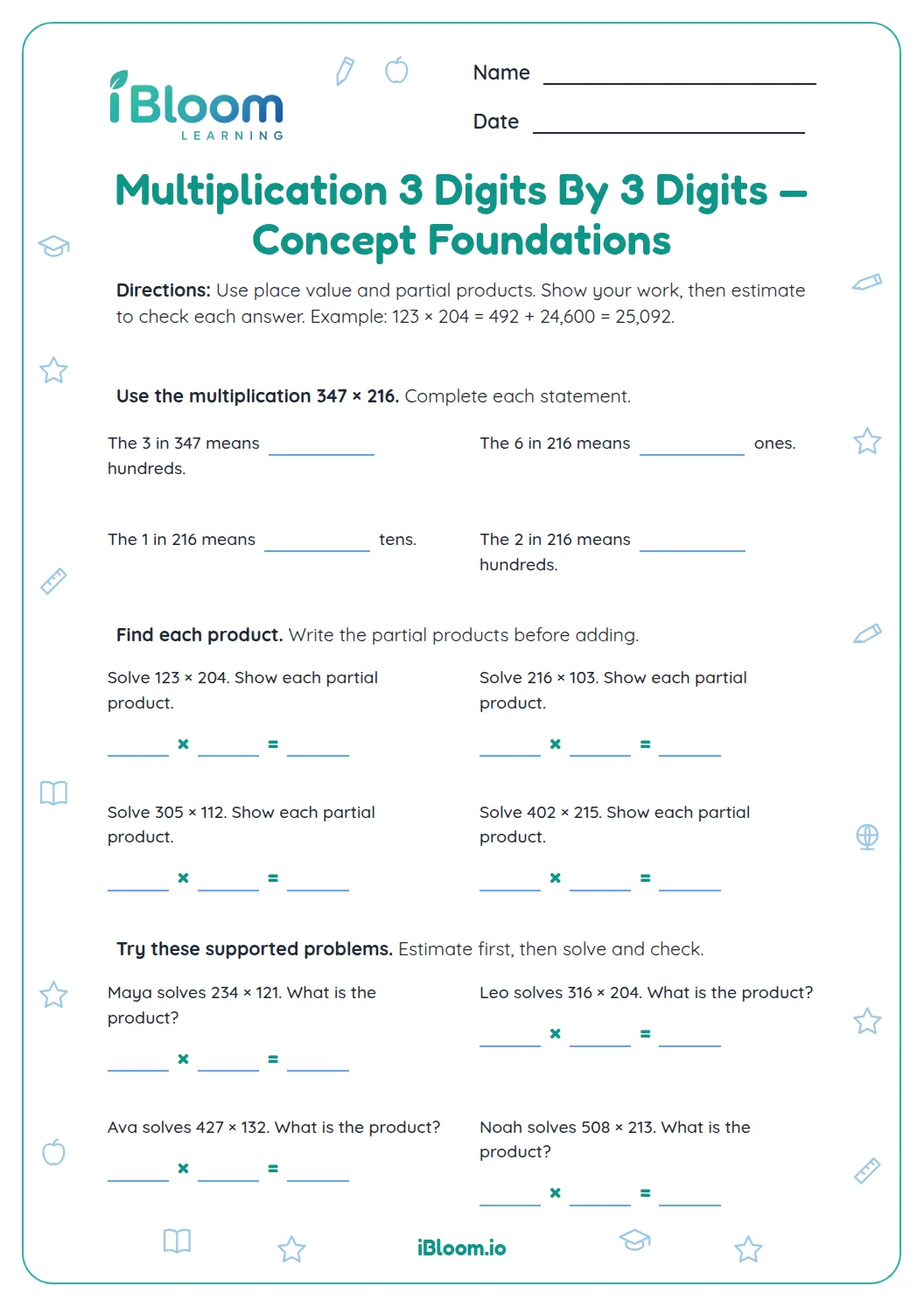
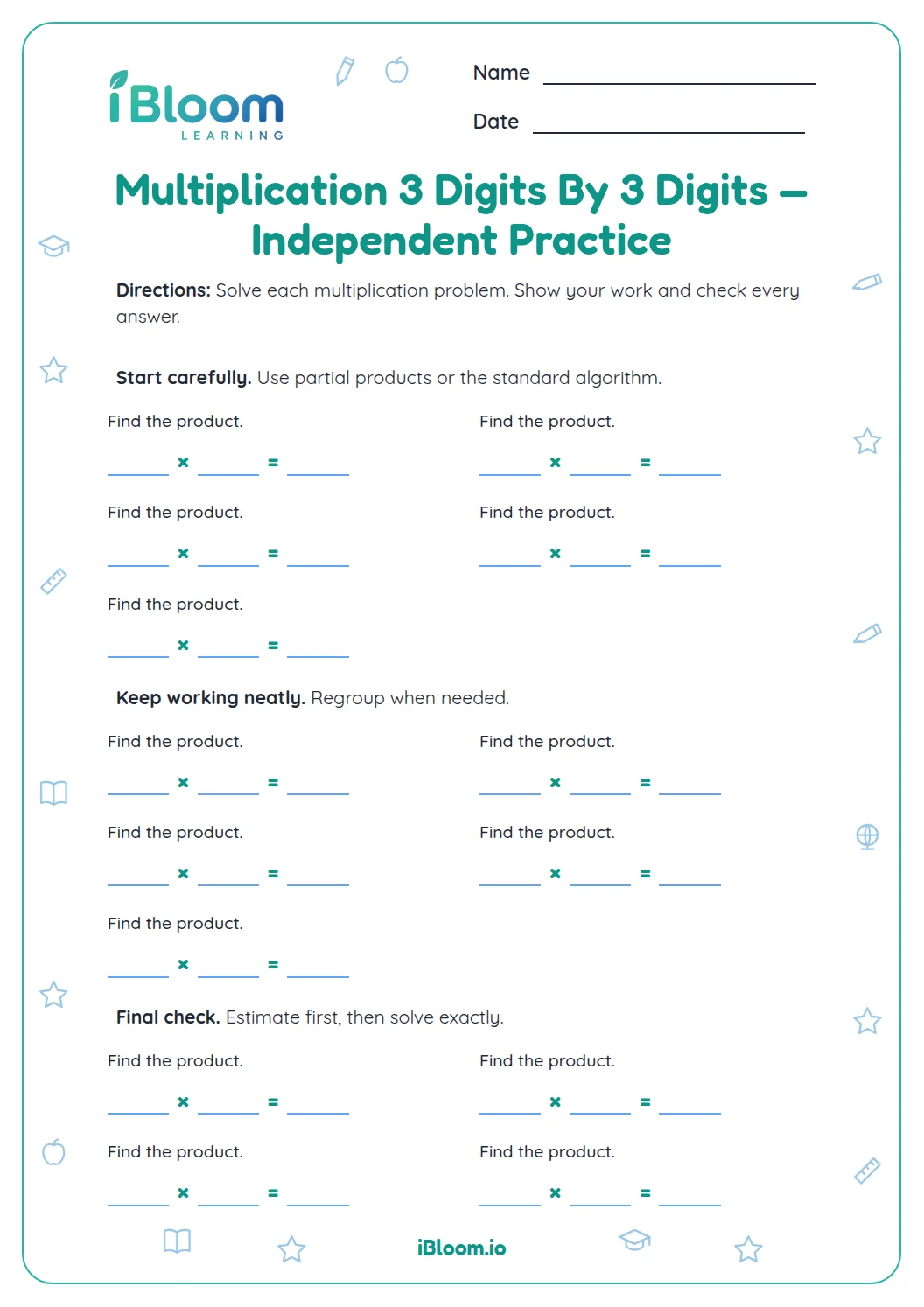
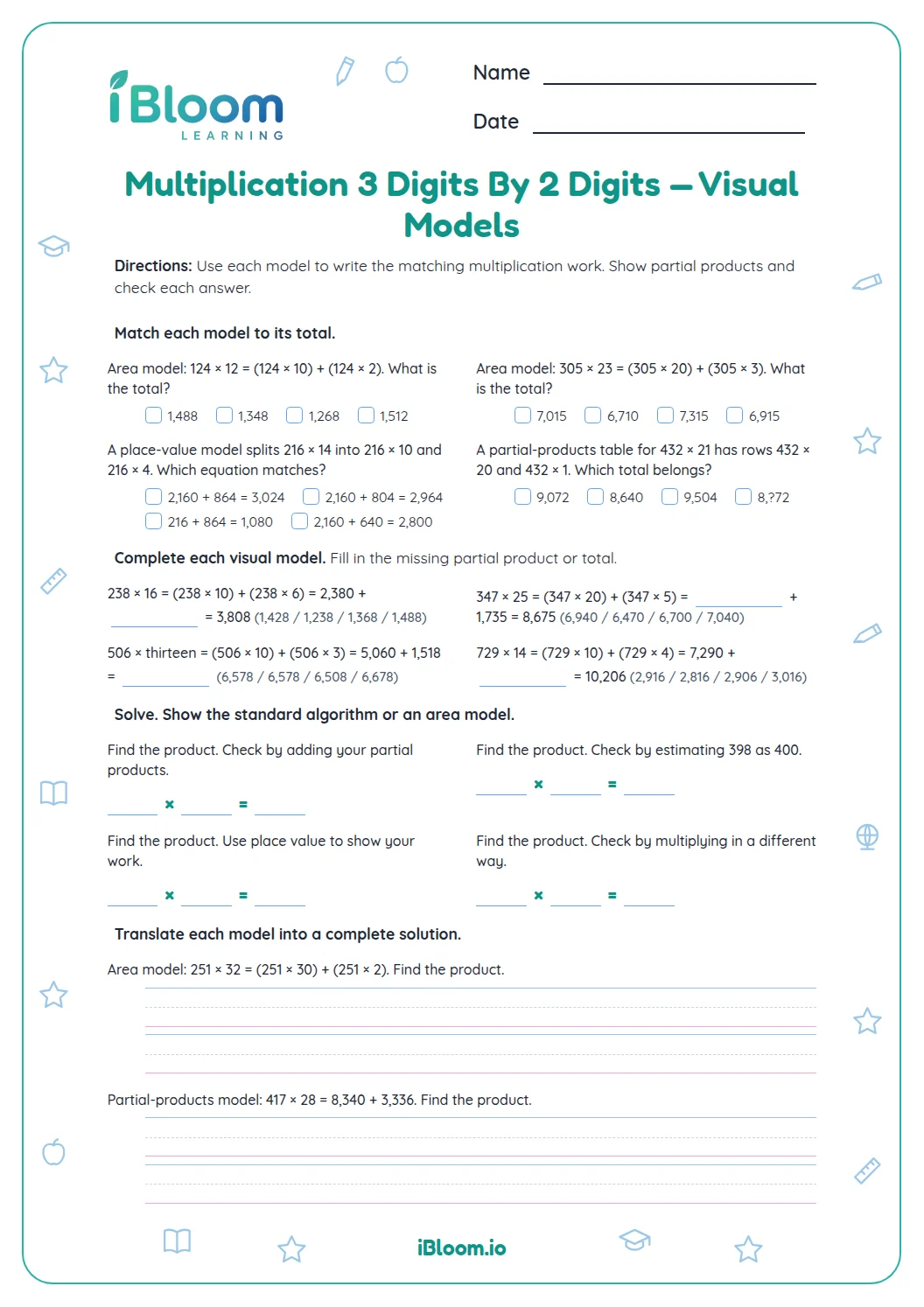
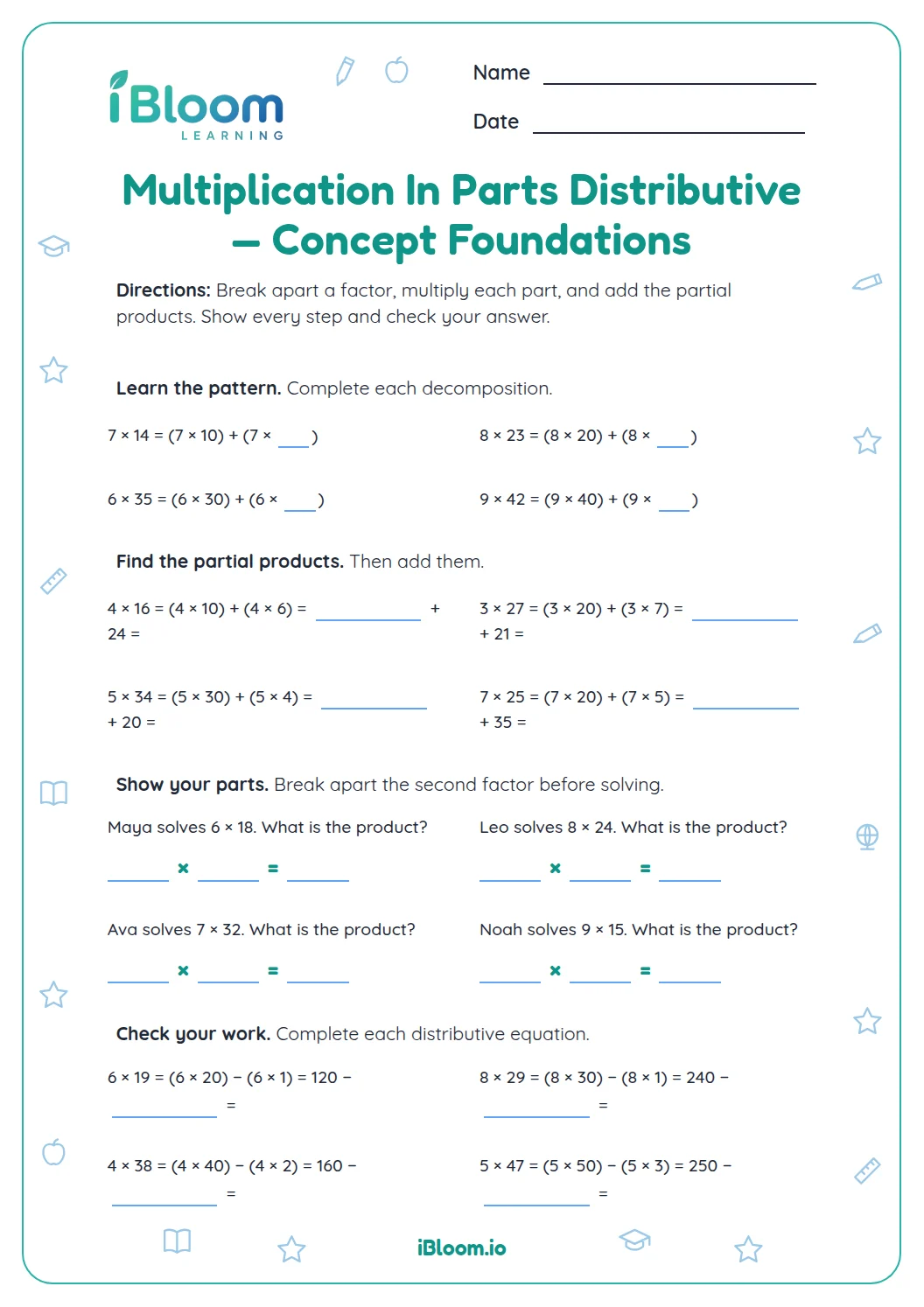
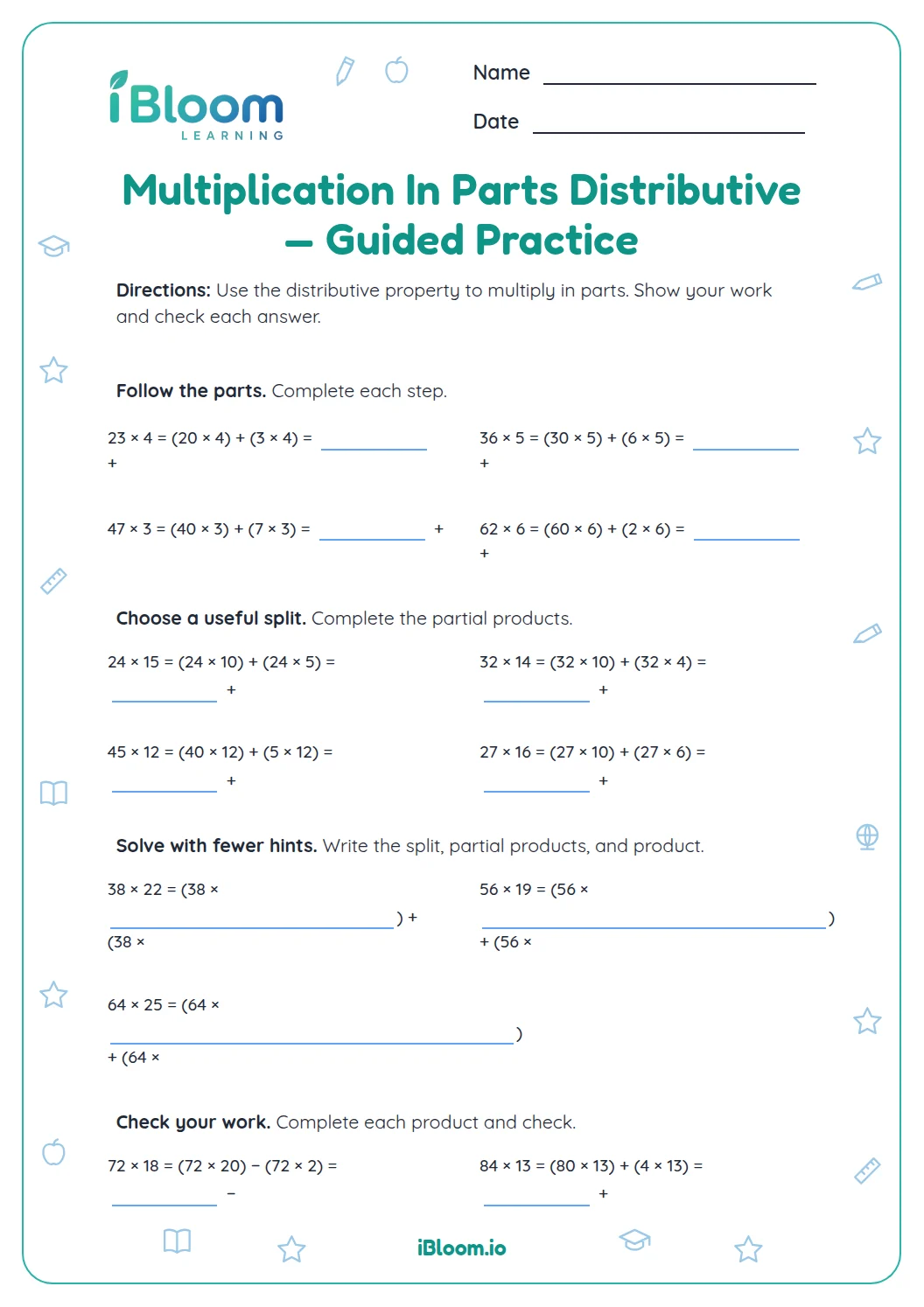
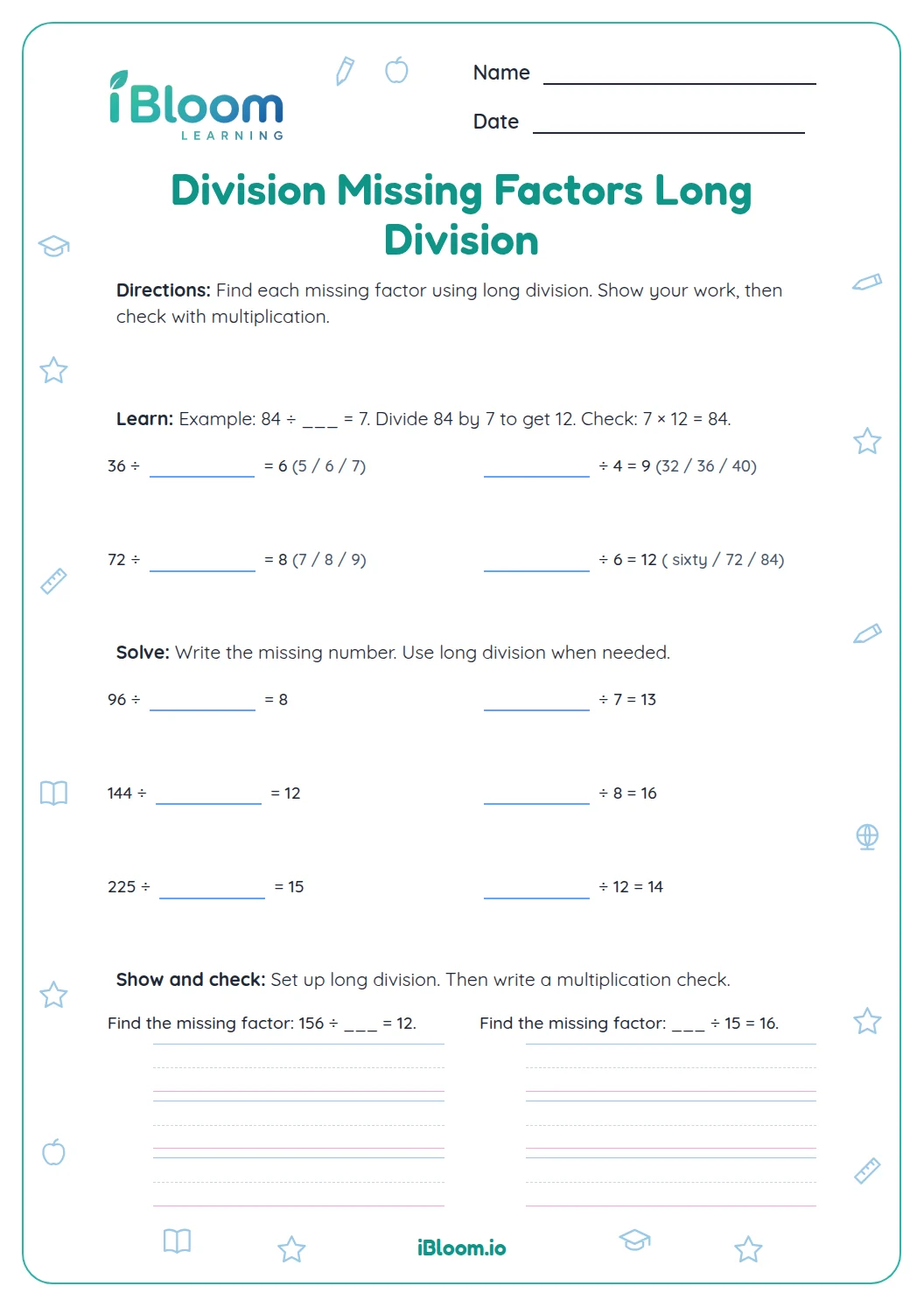
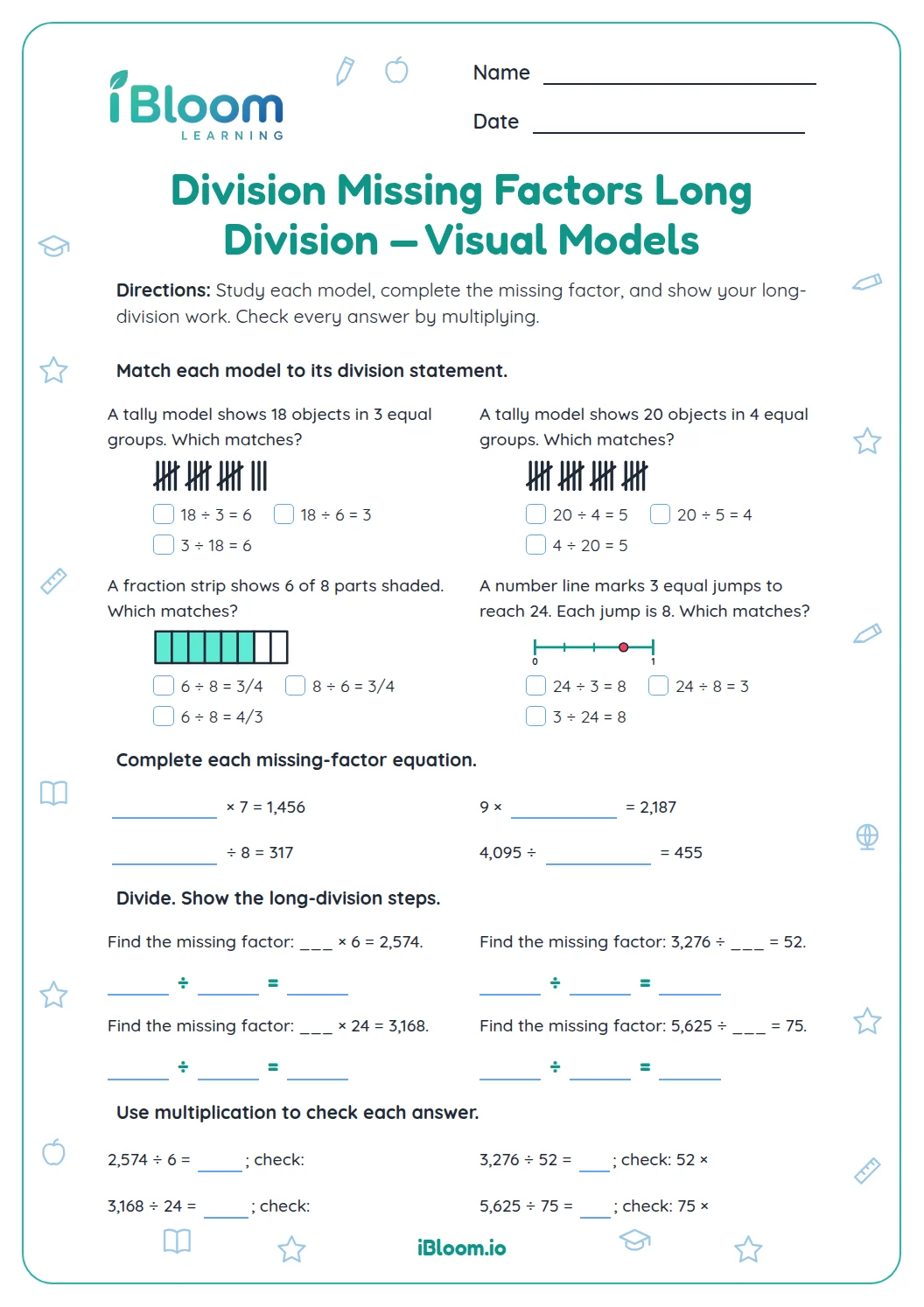
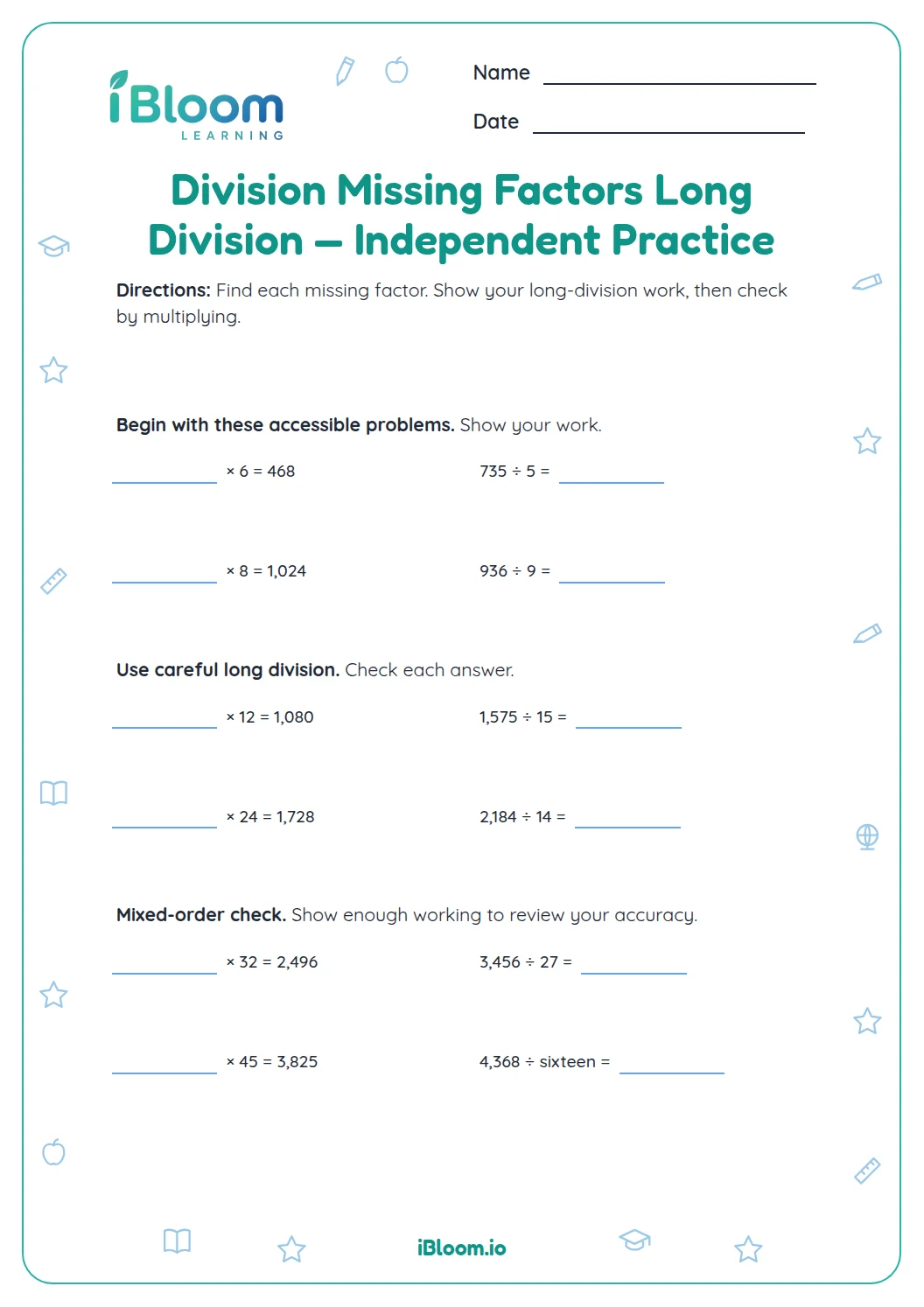
This free Grade 6 multiplication worksheet gives students 17 questions about three-digit by three-digit products. They use place value to interpret partial products, estimate product size, calculate exact products, find missing factors, and check claims. A separate answer key lists products, estimates, and sample reasoning. Students should show their multiplication steps on the worksheet and compare exact answers with a reasonable estimate.
Aligned to 5.NBT.B.5
How does place value organize a product?
A three-digit factor can be decomposed into hundreds, tens, and ones. Partial products represent those place values, so the tens row is shifted one place left and the hundreds row two places left.
For example, in 324 × 216, the 1 in 216 represents 10. Its partial product is 324 × 10, or 3,240.
- 1324 × 216
- 2The 1 in 216 means 10.
- 3324 × 10 = 3,240
- 4The tens partial product is shifted one place left.
How can an estimate check the answer?
Round factors to compatible hundreds or tens, multiply, then compare the estimate with the exact product. For 438 × 207, 400 × 200 is about 80,000, so an exact product near 90,000 is plausible.
An estimate can catch a place-value slip, such as writing 400 × 300 as 12,000 instead of 120,000.
What is included in the challenge?
The 17 problems combine reasoning about place value with exact multiplication and estimation. Missing-factor questions can be checked by multiplying the two factors.
- Part A: inspect multiplication reasoning and estimates
- Part B: calculate three-digit products
- Part C: find missing factors and check product claims
- Part D: estimate products
How to solve the multiplication problems
- 1Estimate the size of the product before calculating.
- 2Write each factor by place value or use the standard algorithm.
- 3Align ones, tens, and hundreds partial products.
- 4Add the partial products to find the exact product.
- 5Check the answer against the estimate or multiply factors to verify.
Common multiplication mistakes
The mistake
Treating a digit in the tens place as ones.
The fix
Write the value of each digit before multiplying.
The mistake
Forgetting to shift a tens or hundreds partial product.
The fix
Label each row by the place value it represents.
The mistake
Accepting a product that is far from a reasonable estimate.
The fix
Round both factors and compare before finishing.
Common Core alignment
This worksheet practices the following multiplication skill.
Students multiply multi-digit whole numbers using place-value strategies or the standard algorithm.
On this sheet: Students multiply three-digit whole numbers and use place-value reasoning to interpret products.
Show the official wordingHide the official wording
Fluently multiply multi-digit whole numbers using the standard algorithm.
What to practice next
Make more practice
Further reading
Questions parents and teachers ask
How many questions are on the worksheet?
There are 17 questions in four parts. Students inspect multiplication reasoning, find exact products, solve missing-factor items, and estimate products. The questions use three-digit factors and ask students to pay attention to place value. A separate key provides answers and sample reasoning.
Do the product questions use three-digit factors?
Yes. The exact multiplication items use three-digit factors, including factors with zero in one place. The missing-factor questions also use products that come from three-digit factors, so students can check their results by multiplying. The estimates round factors to convenient values.
Why estimate before multiplying?
An estimate gives a reasonable size for the exact product. For example, 438 × 207 is near 400 × 200, or 80,000. If an exact answer is far away, check the partial products and place-value shifts before deciding it is correct.
How can a missing factor be found?
Use the product and known factor to determine the other factor, then multiply the two factors to check. For example, if ___ × 216 = 69,984, divide 69,984 by 216 to find 324, then verify 324 × 216. The answer key lists the missing factor.
What is in the answer key?
The key lists correct products, missing factors, and estimates, along with sample reasoning for claim questions. Students should show their own calculation steps in the worksheet work area and use the key to check the result. The estimates help catch place-value errors.