





About this worksheet
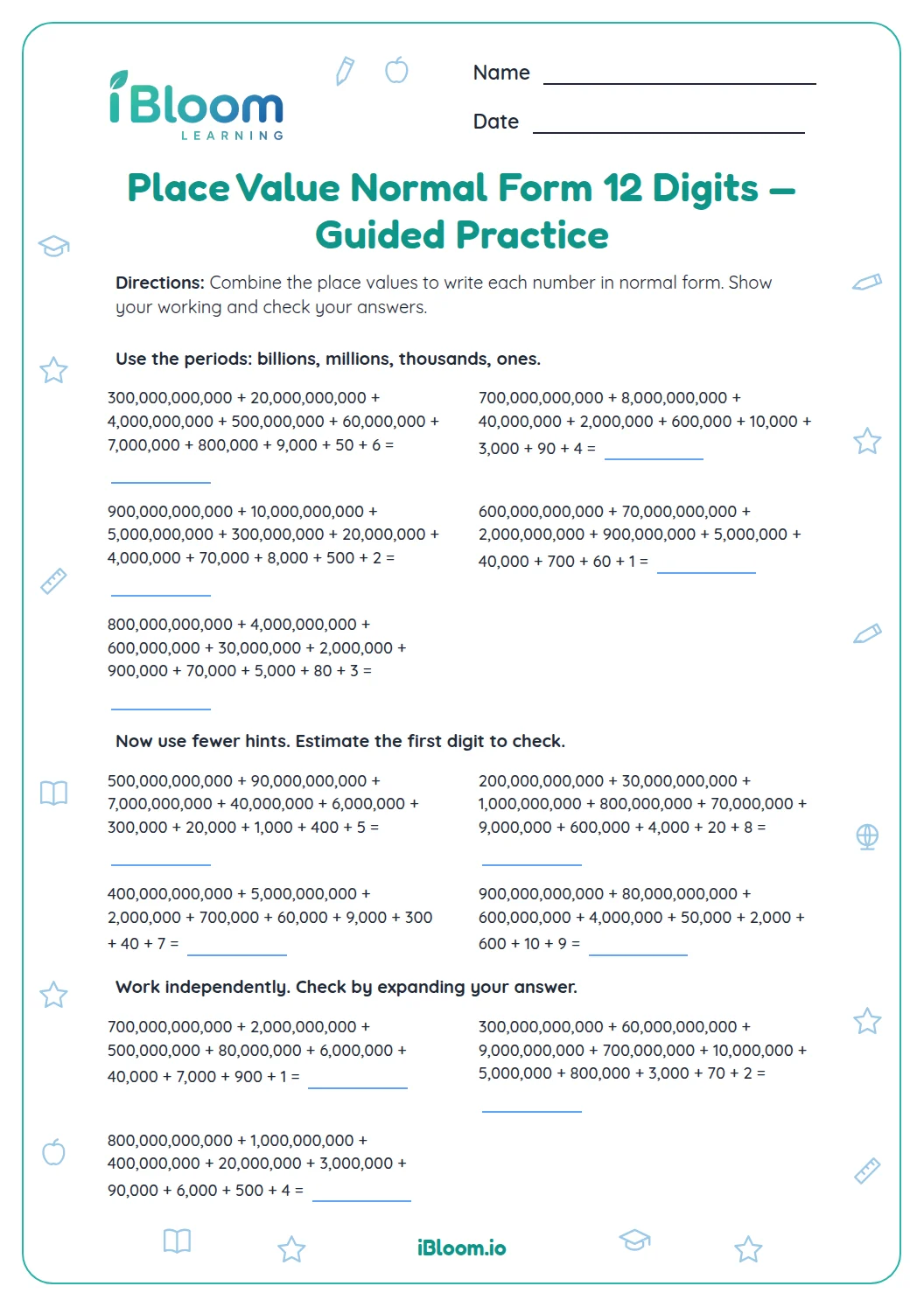
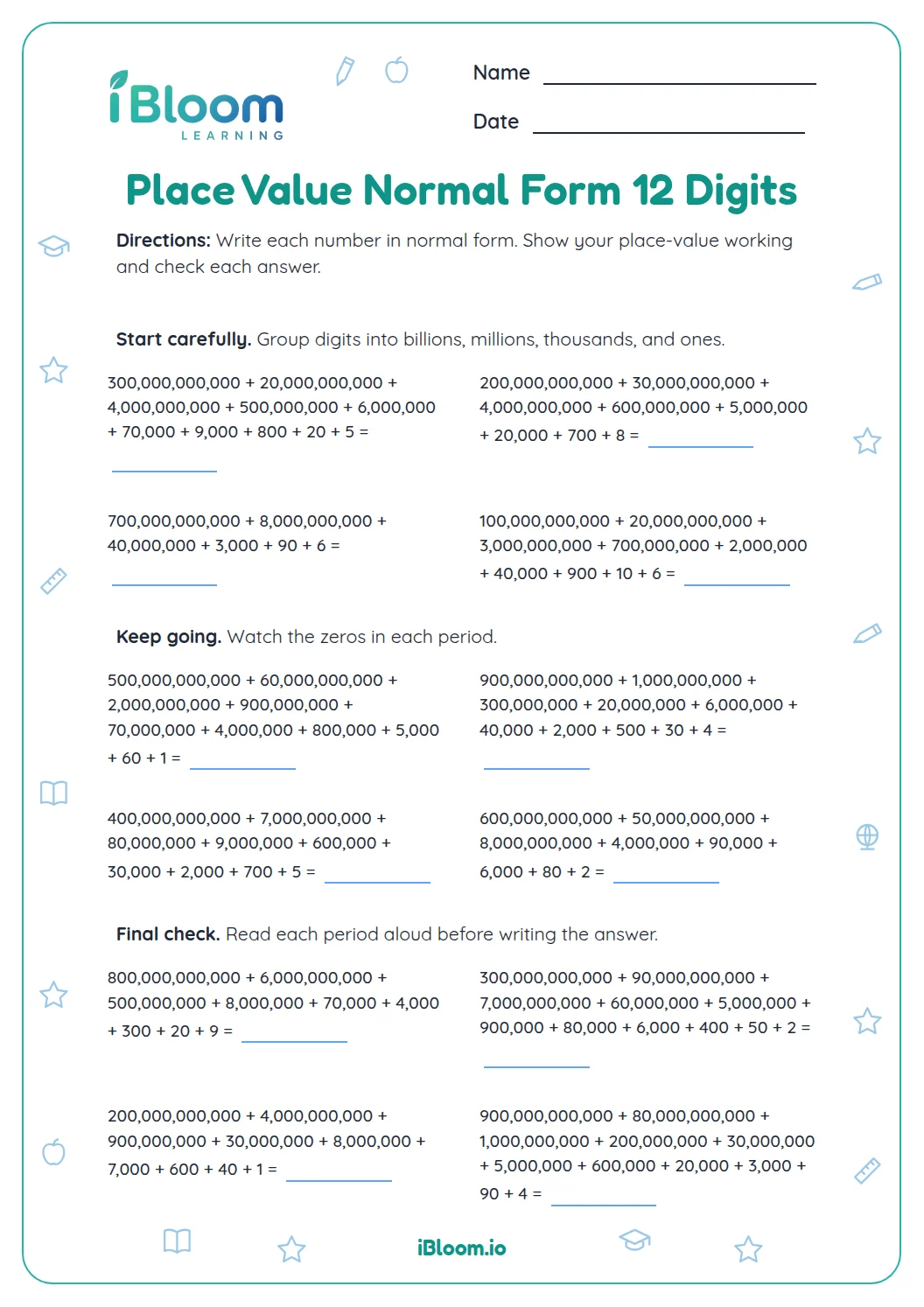
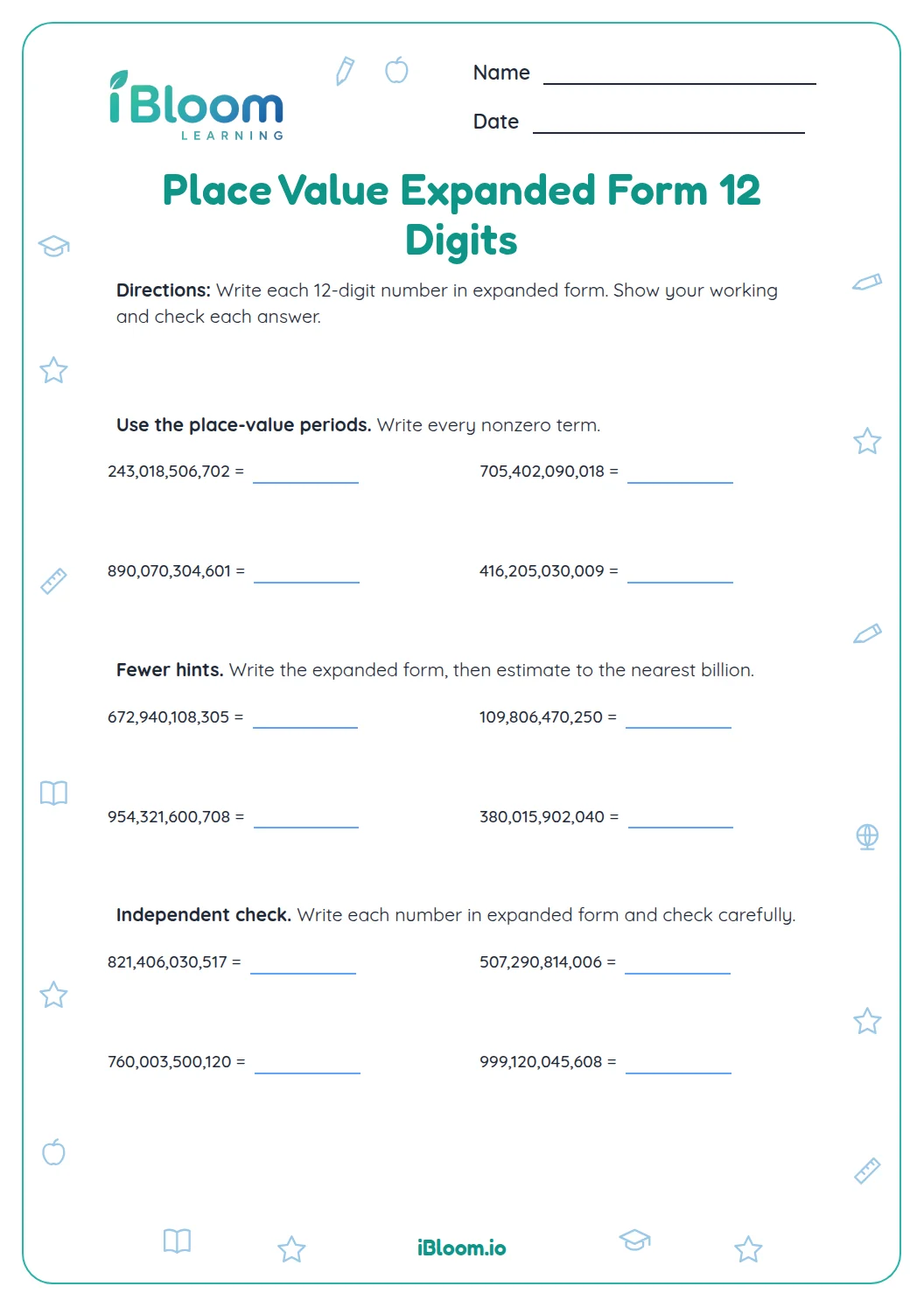
This free printable Grade 6 worksheet practices writing 12-digit numbers in standard form. Students add expanded place values in 14 real-world problems, then check their comma-separated answers with the included key.
What is on this 12-digit place value page?
Students add the expanded place values in 12-digit real-world numbers and write each total in standard form. The answer key shows each number with commas.
Every problem uses a distinct 12-digit number and a familiar information context.
- Write all 14 expanded numbers in standard form
- Use commas to separate periods
- Compare the completed numbers with the answer key
How should a child approach the questions?
For example, the museum archive total starts with 384,000,000,000 + 200,000,000 + 5,000,000. Add the remaining place values, then group the digits into periods of three.
The expanded terms show the value contributed by each nonzero digit.
- 1Museum archive: 300,000,000,000 + 80,000,000,000 + 4,000,000,000 + 200,000,000 + 5,000,000 + 700,000 + 10,000 + 6,000 + 900 + 40 + 2 records. Write the number in standard form: ___.
- 2Key answer: 384,205,716,942
How can an adult support this practice?
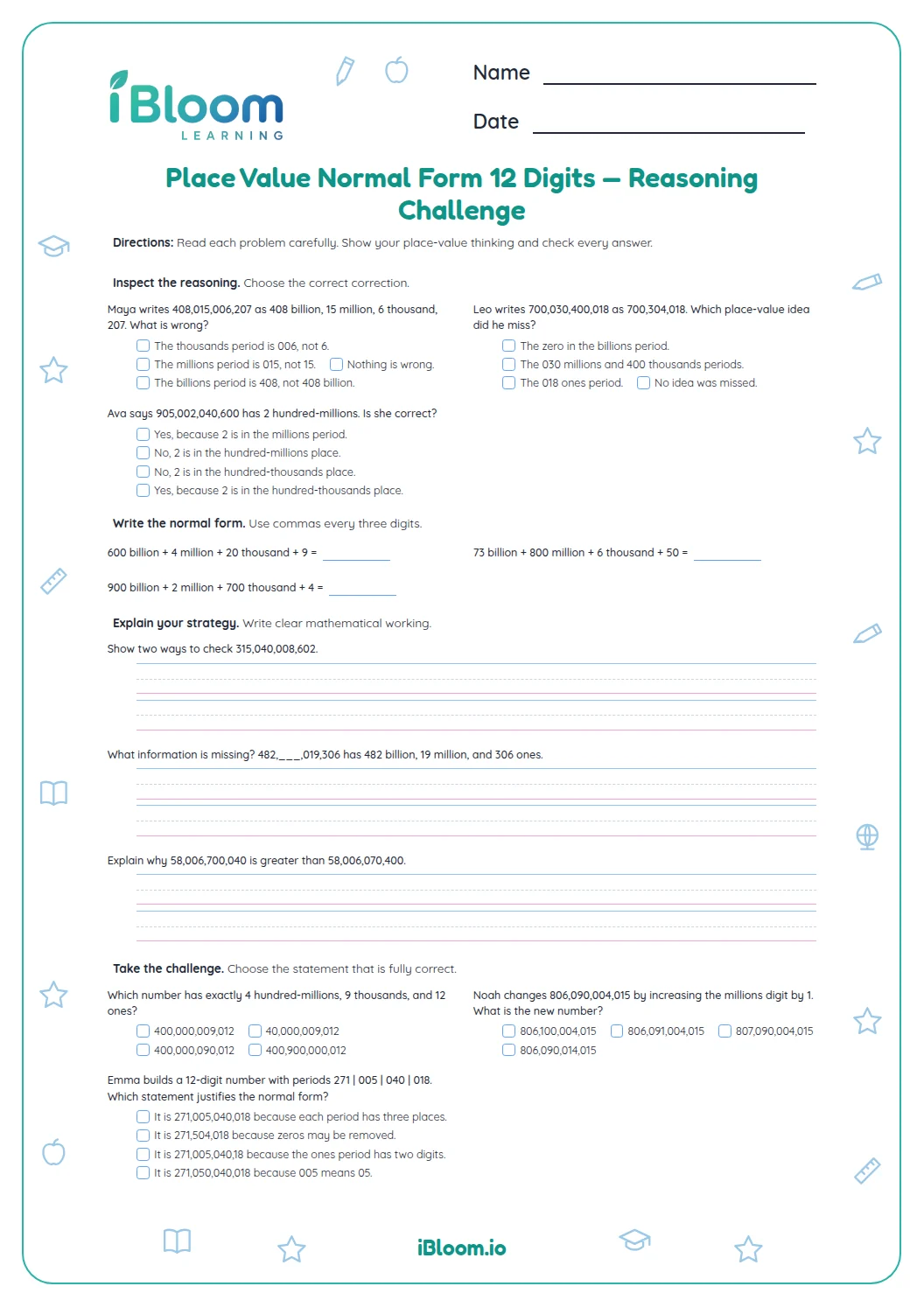
Ask the student to name the period before reading each group of three digits. This keeps zeros in the correct places and helps distinguish a digit from the value it represents. An adult can point to the clue with the child before choosing an answer.
Use the separate answer key after each item or after the full page. For written forms, compare each place-value period and its zeros; for digit-value questions, check both the digit and its position. An adult can point to the clue with the child before choosing an answer.
How to use this worksheet
- 1Read the direction at the start of each part.
- 2Answer each question using its wording and choices.
- 3Reread the completed response to check that it fits.
- 4Use the answer key to check the work and discuss an answer that needs another look.
Common mistakes and quick fixes
The mistake
Answering before reading the whole prompt.
The fix
Read the complete sentence or situation, then choose a response that fits.
The mistake
Confusing a word or digit with its role in the question.
The fix
Check the clue named in the prompt before answering.
The mistake
Skipping a final check.
The fix
Reread the response and compare it with the answer key.
What to practice next
Make more practice
Questions parents and teachers ask
What place-value skills does this worksheet practice?
Students add expanded place values and write the resulting 12-digit number in standard form. Each prompt gives a real-world context and a sum of place-value amounts; the key shows the standard-form number with commas. Each number includes a distinct arrangement of nonzero and zero periods.
How many problems are included?
There are 14 problems in one part. Every item presents an expanded sum for a 12-digit quantity and asks students to write the total in standard form, using commas to keep the periods easy to read. The answer key follows the same item order as the worksheet.
How can I check a digit’s value?
Add the values by place, then compare the resulting digits with the key. Check the billions, millions, thousands, and ones periods in order, including zeros where a place has no value. Compare the periods in order before deciding where a zero belongs.
How should students use the answer key?
Use the answer key after students finish the page or one side. Compare each three-digit period from left to right, and make sure commas separate the billions, millions, thousands, and ones groups. The printed sum makes each named period visible in the prompt.
What is a useful support strategy?
Have students group the expanded terms by period and combine the values in each group. Then write the periods from left to right, keeping placeholder zeros wherever a place value is missing. This grouping also helps students read the final number aloud.
What can students practice next?
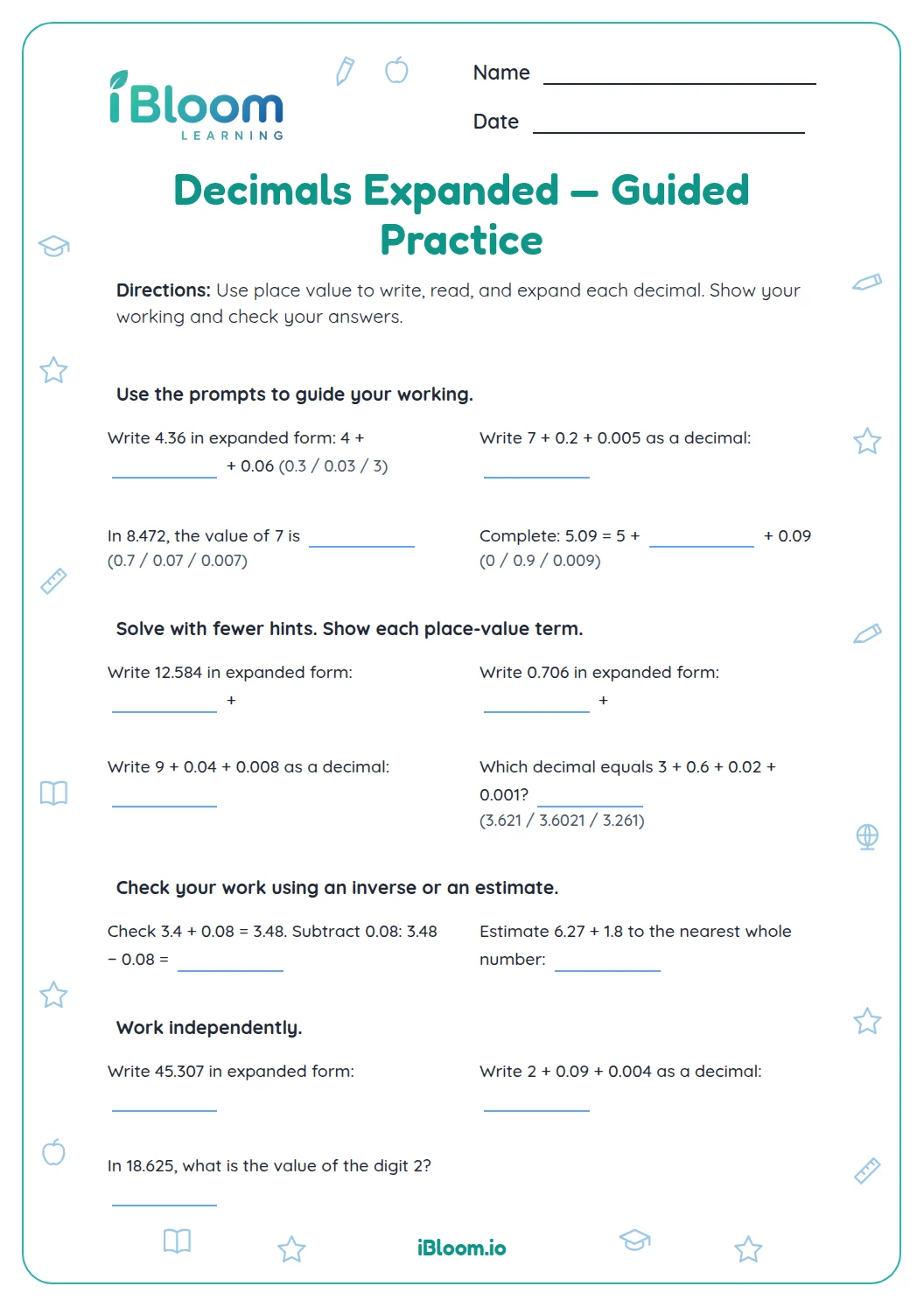
The linked place-value pages continue with expanded form and related number skills. Students can practice moving between a written number and the value of each digit, using the same period-grouping strategy. Students may use scratch paper to add the four period values.