

About this worksheet
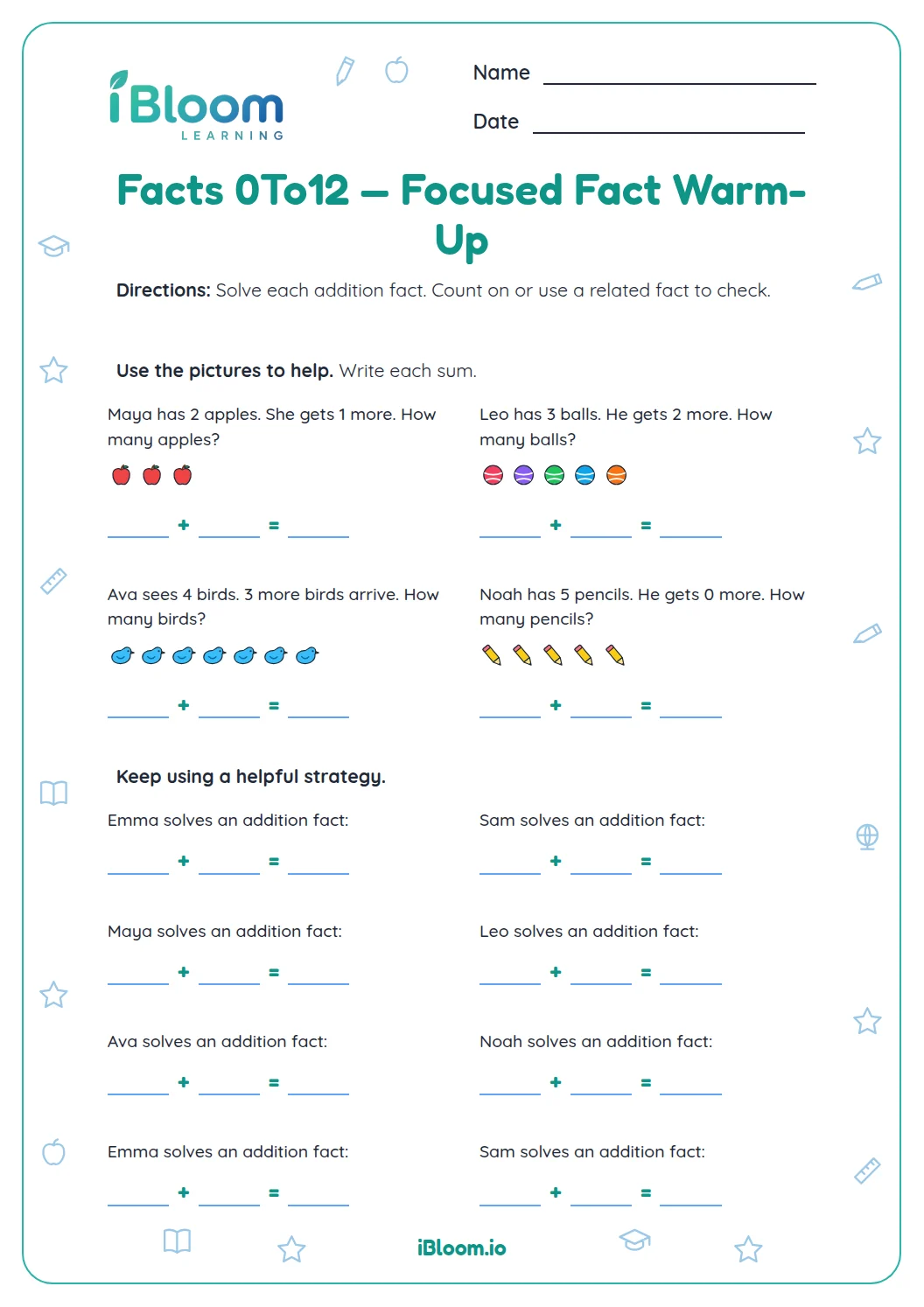
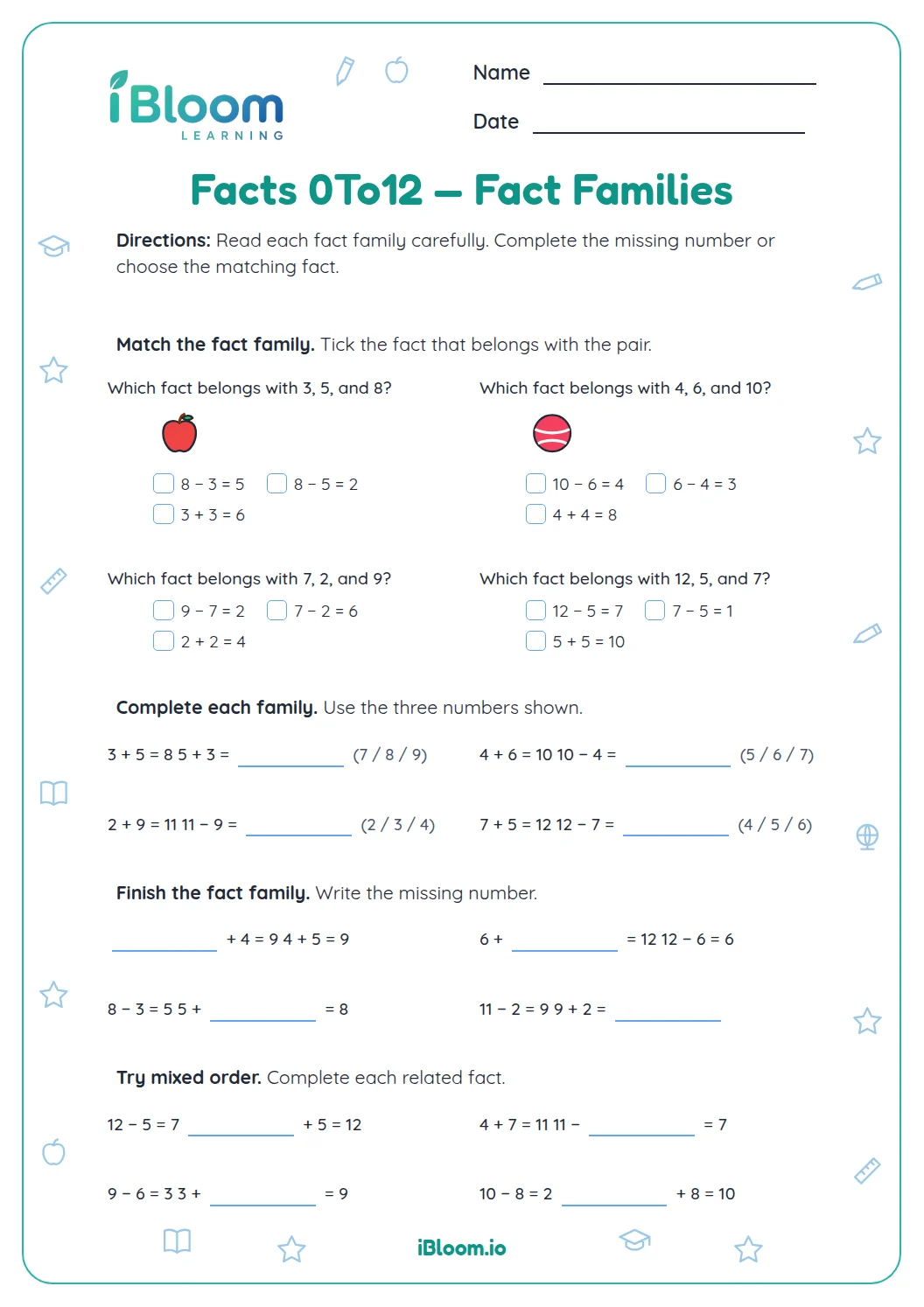
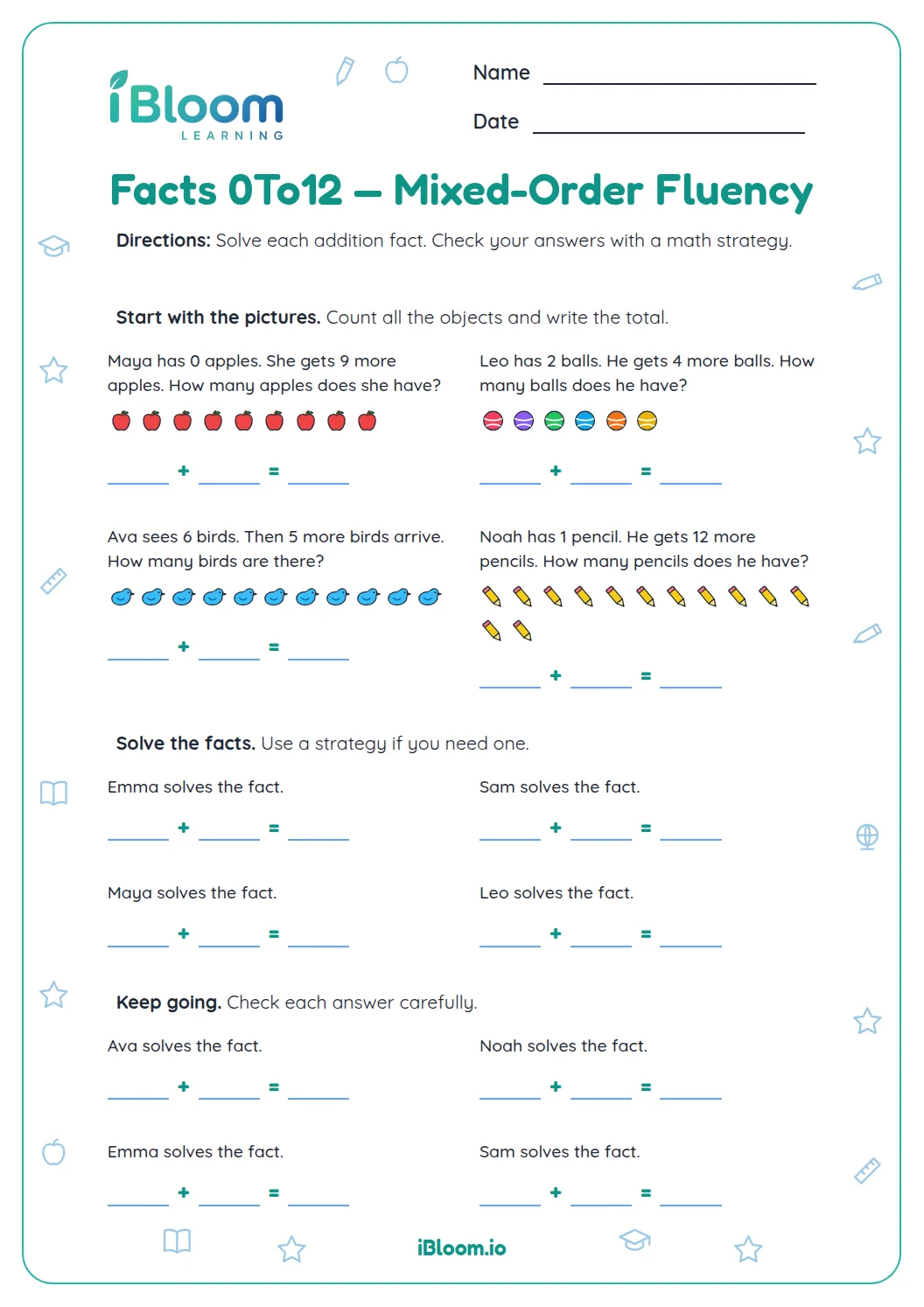
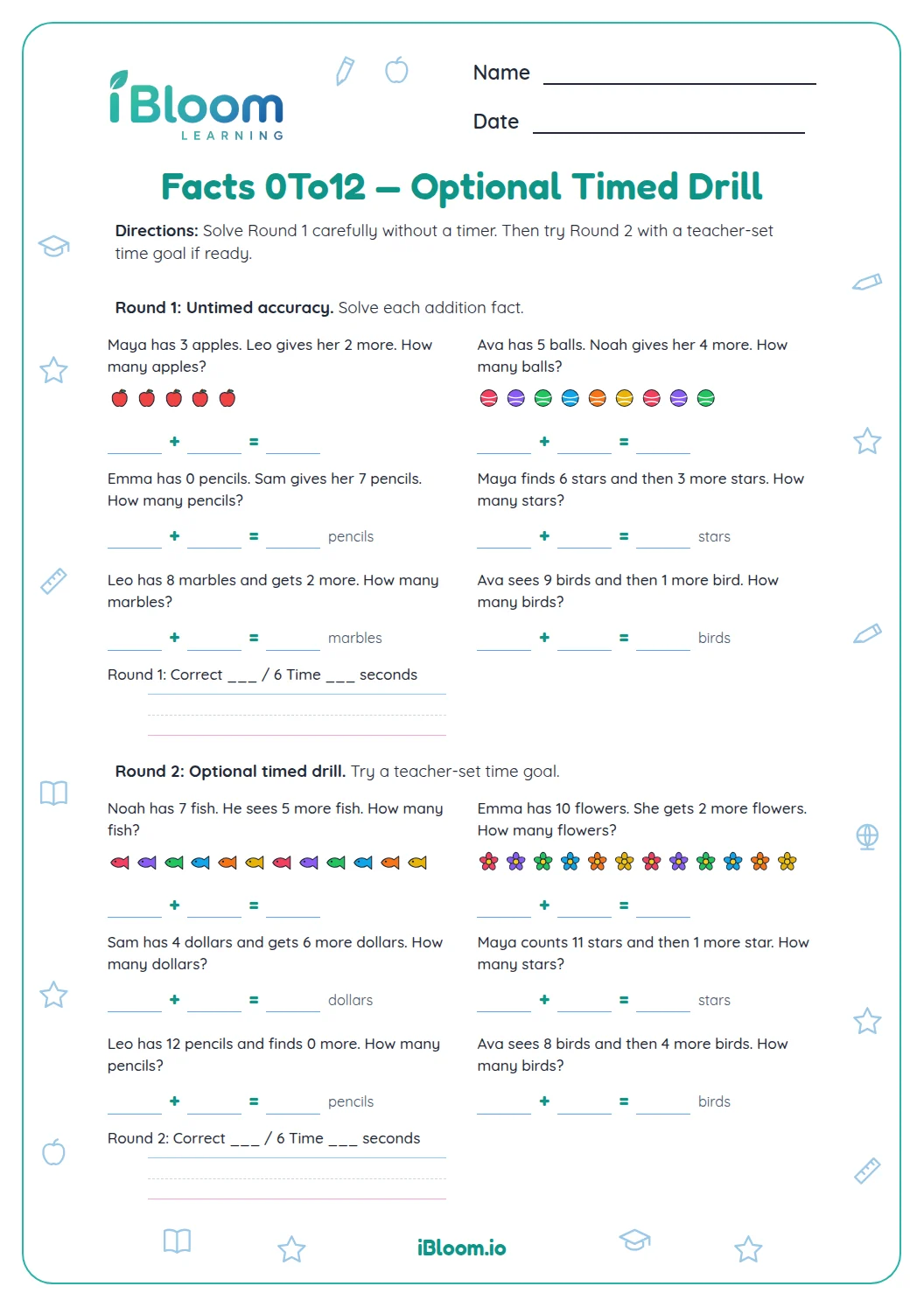
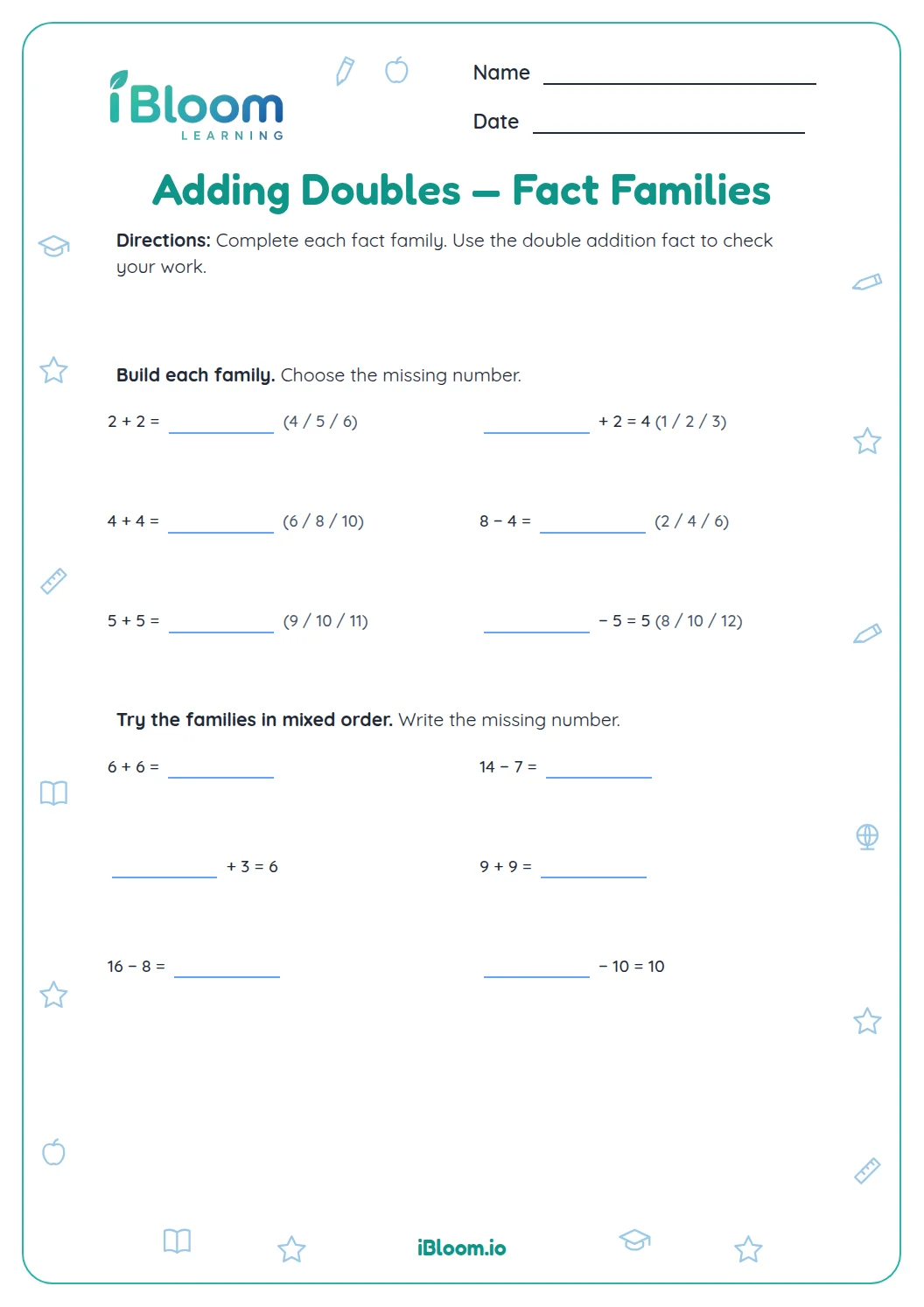
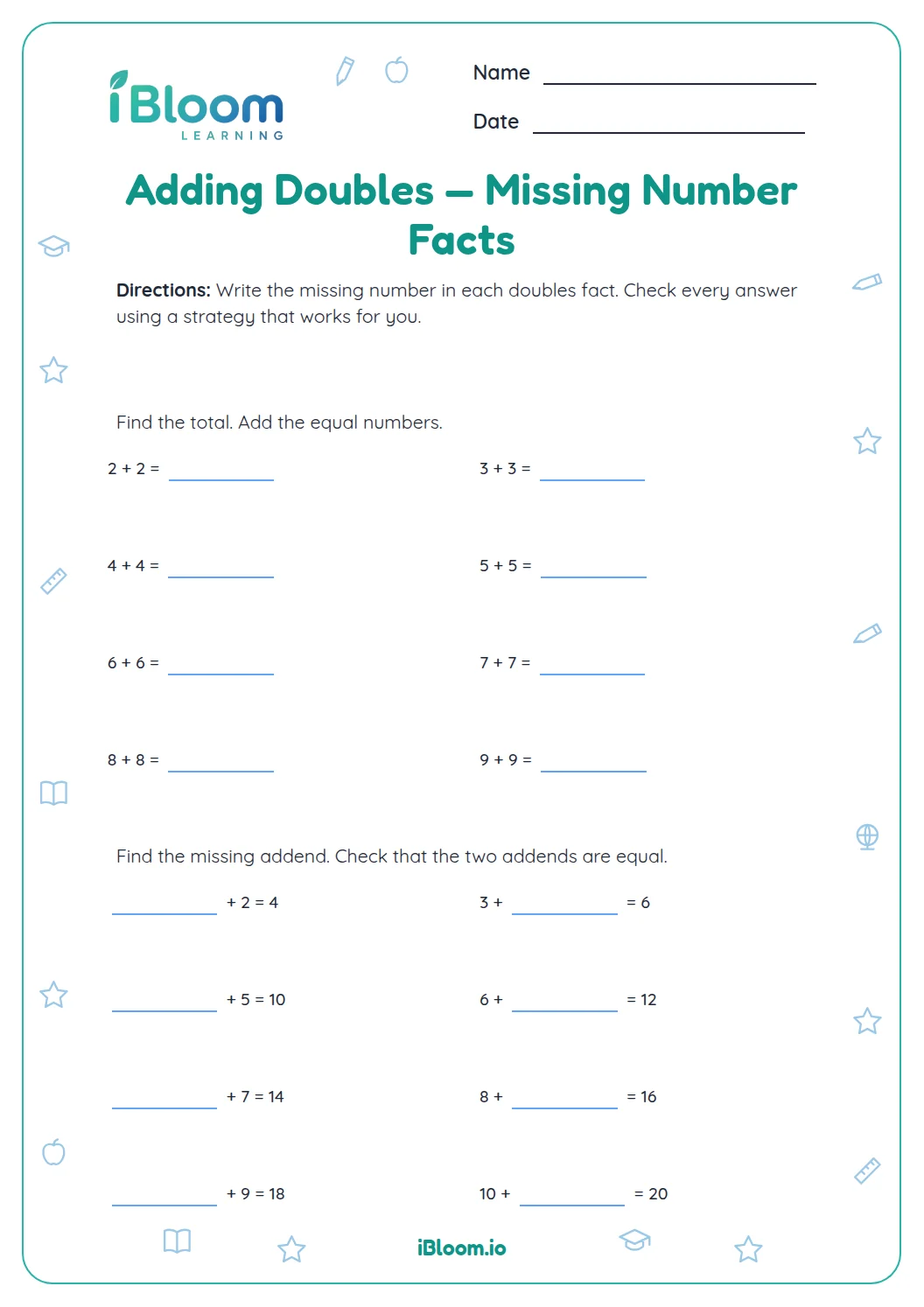
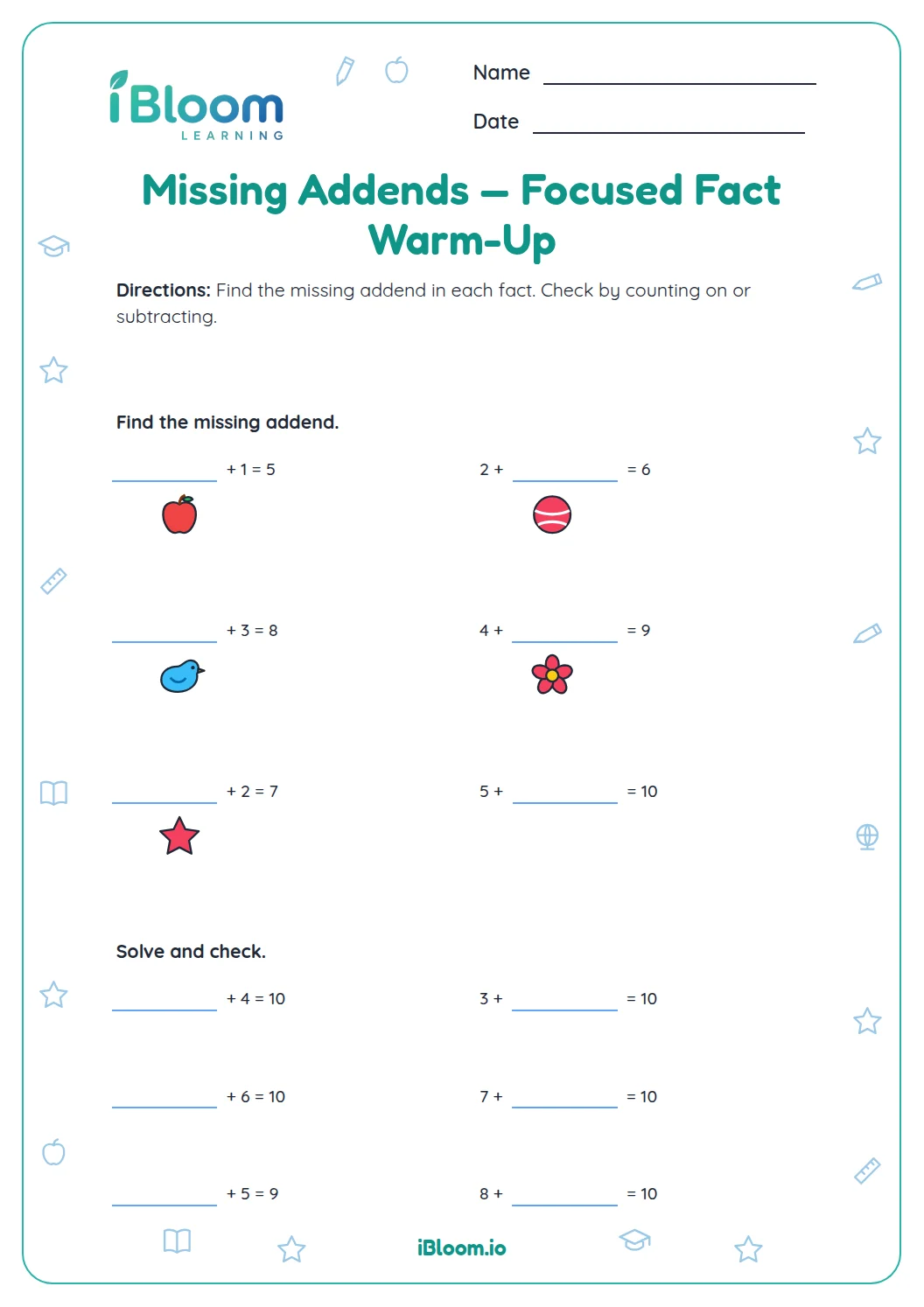
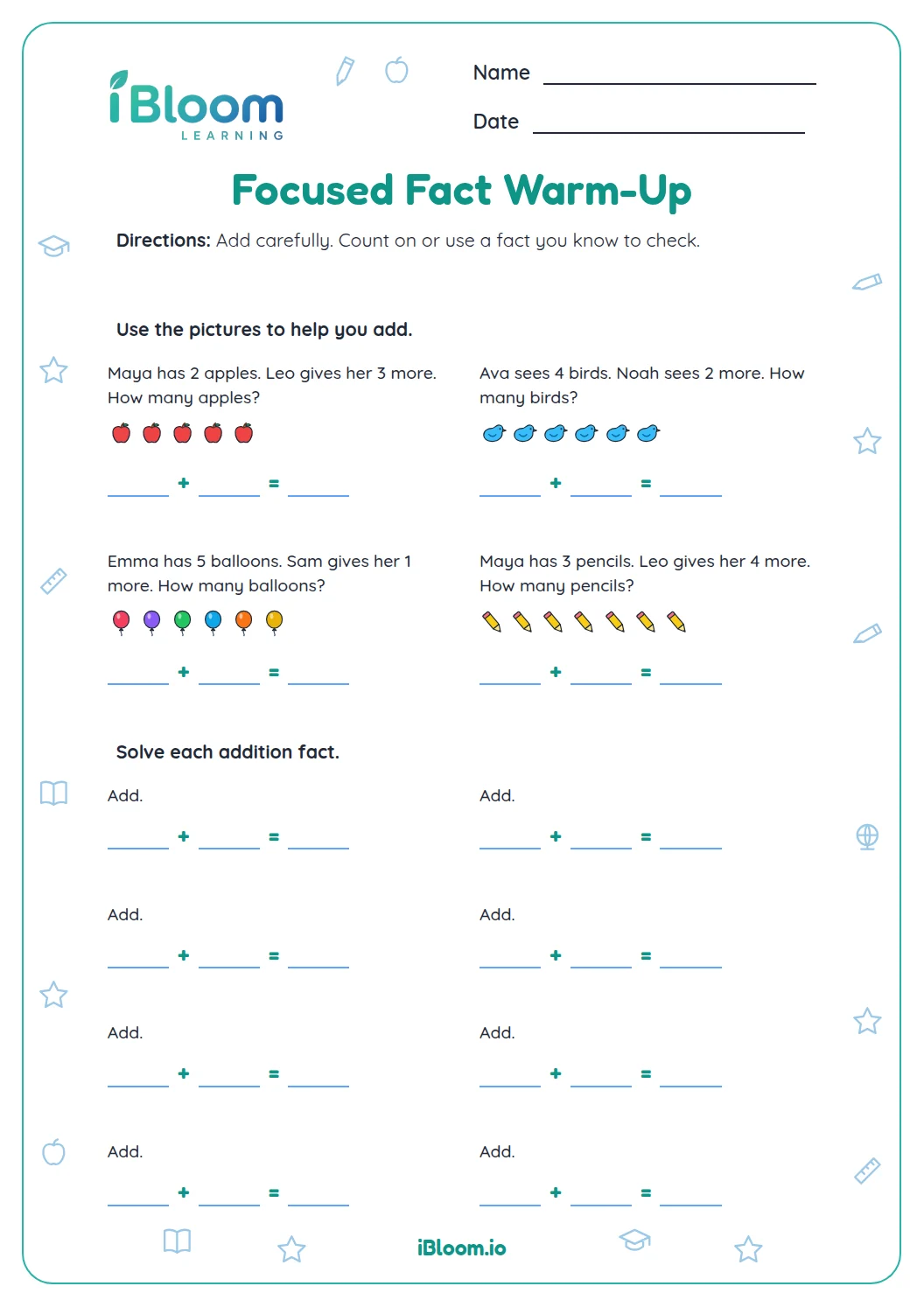
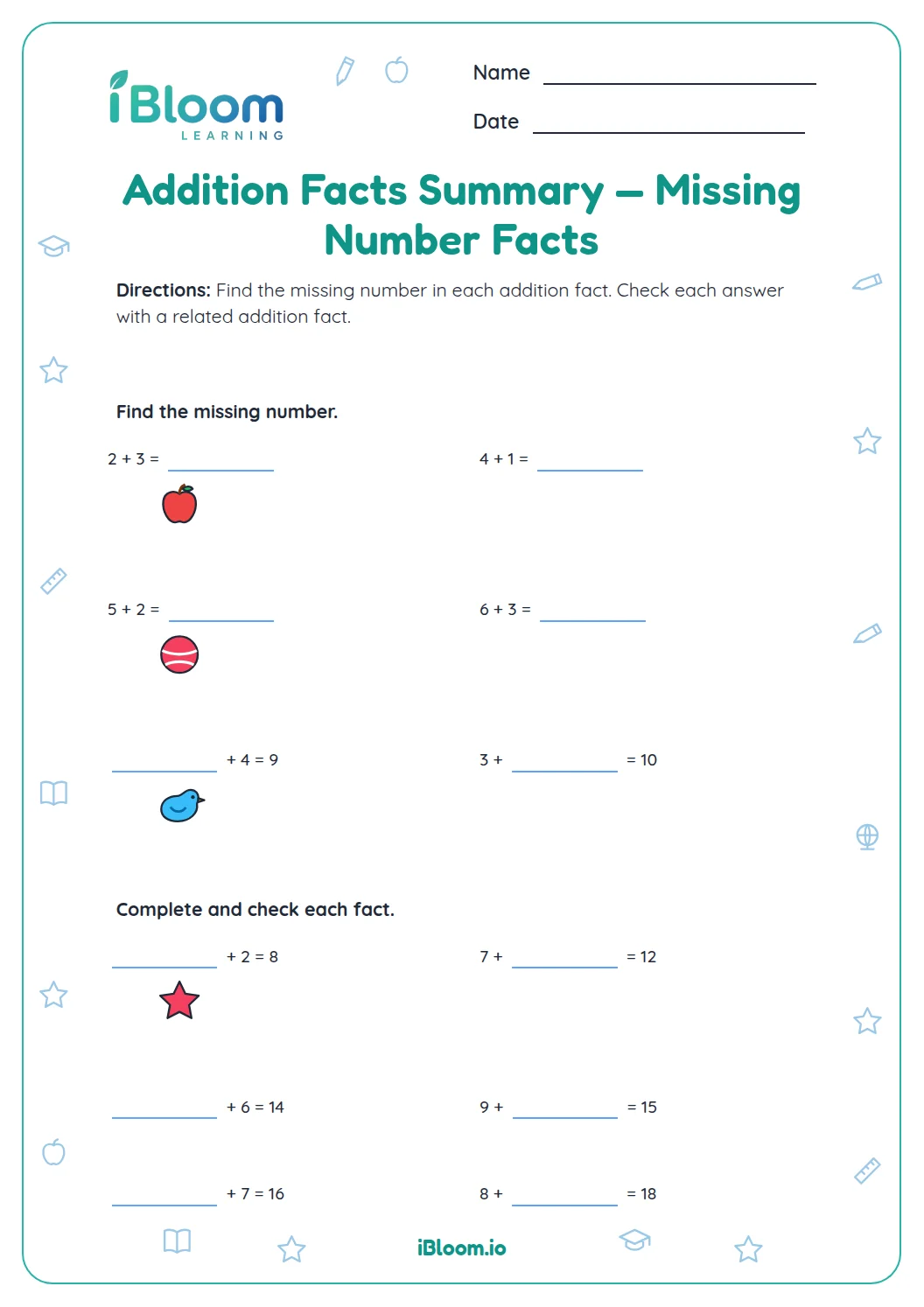
This addition facts check gives Grades 1–2 learners 18 number sentences using addends from 0 through 12. Sixteen ask for a sum and two ask for a missing addend; sums stay within 20. Learners can use doubles, counting on, making ten, or another known fact, then check their answers with the separate key. The practice connects to CCSS 1.OA.C.6.
Aligned to 2.OA.B.2
How can a known fact help with a sum?
A known fact can make a new sum easier. For 6 + 9, think of 6 + 10 = 16, then take away 1 to get 15.
- 16 + 9 = ___
- 26 + 10 = 16; 16 − 1 = 15.
What facts are included?
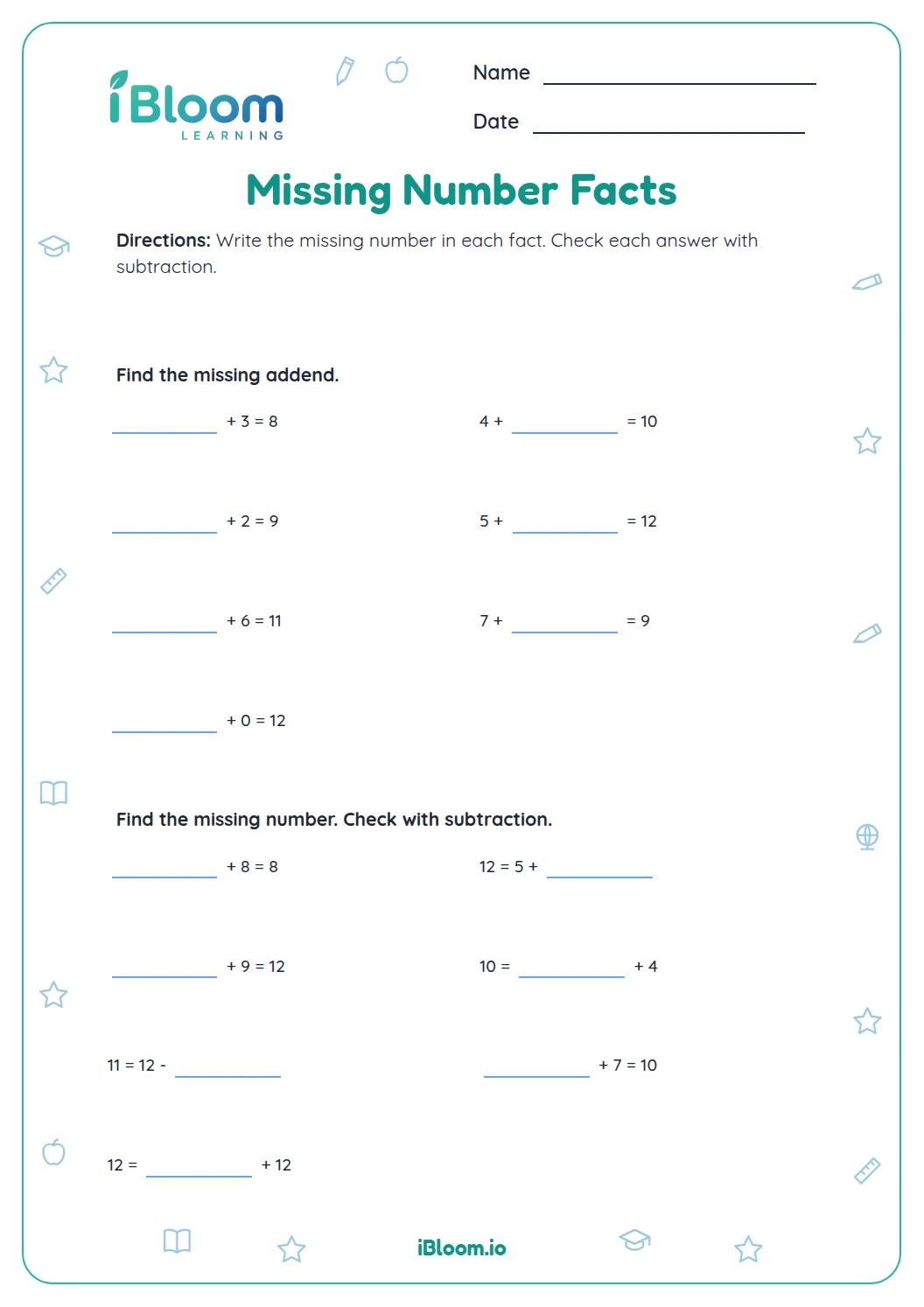
The 18 questions mix addition facts with addends from 0 to 12 and totals no greater than 20. Two equations leave one addend blank, so learners find the number that completes the total.
How can a learner check a missing addend?
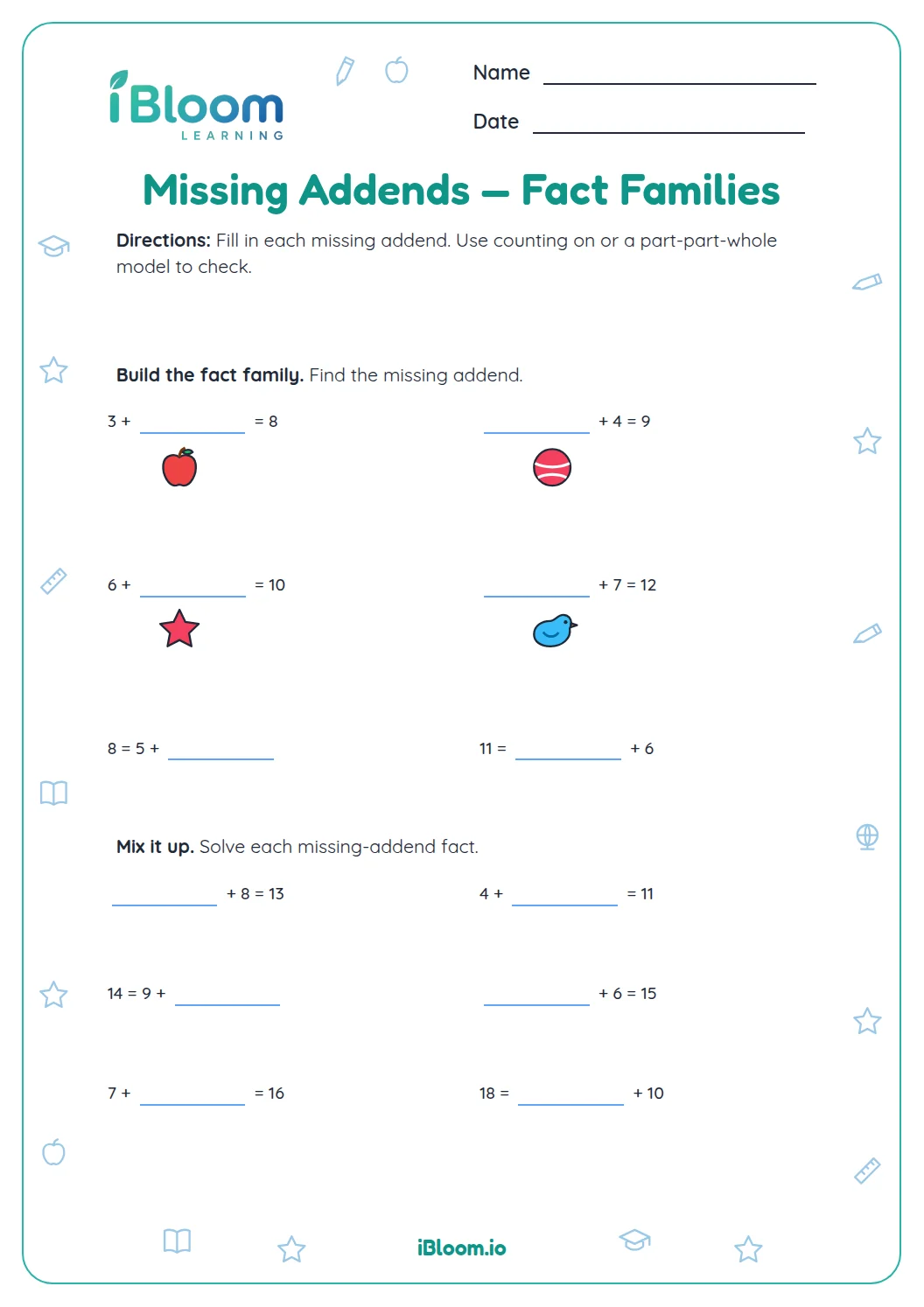
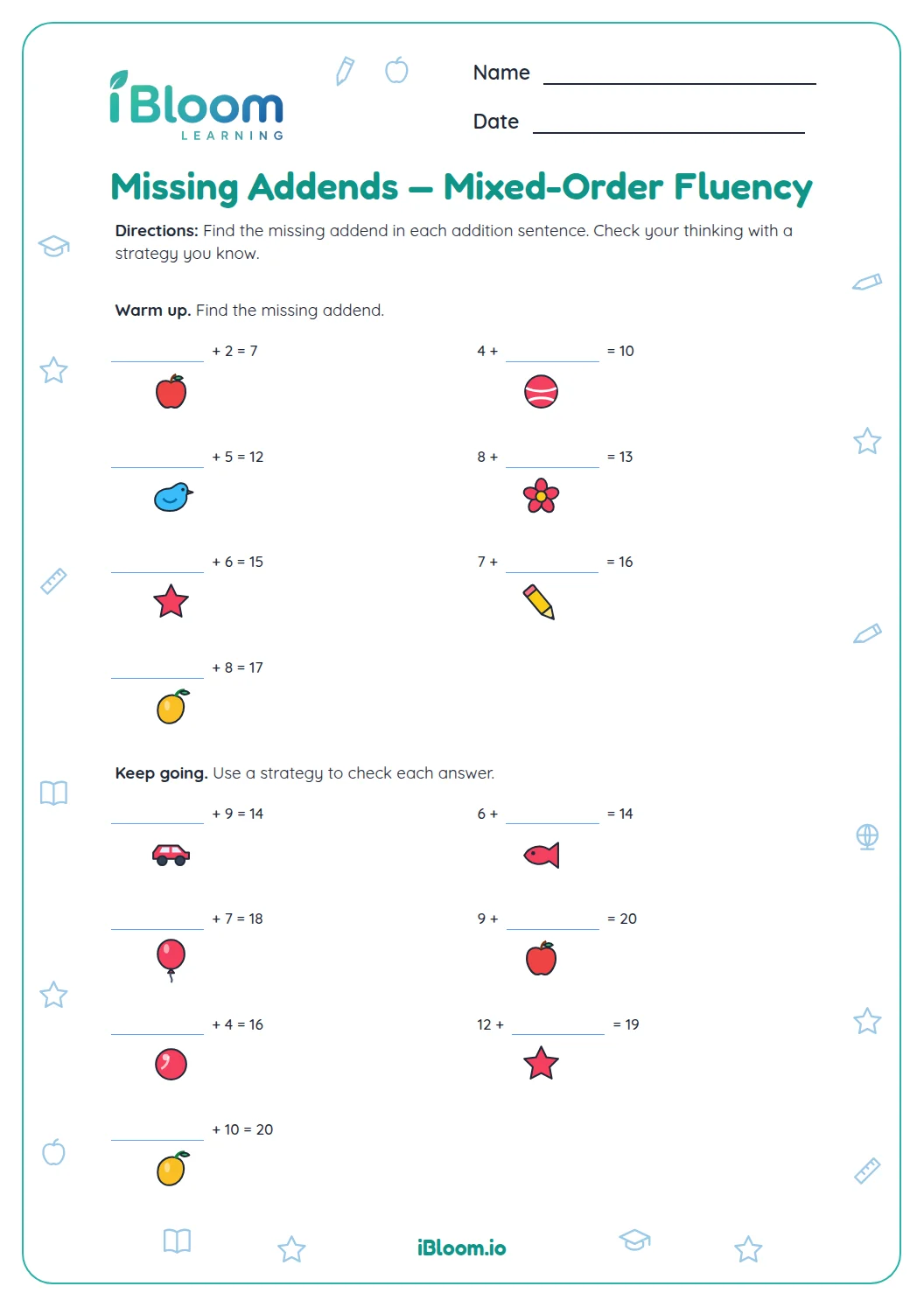
Subtract the known addend from the total or count up to the total. For 6 + ___ = 14, the missing number is 8 because 6 + 8 equals 14.
How to use this worksheet
- 1Read the addition sign and both numbers.
- 2Choose a strategy such as a double or making ten.
- 3Write the sum in the blank.
- 4For a missing addend, find what reaches the total.
- 5Check by adding the numbers again.
Common mistakes and quick fixes
The mistake
Adding only one of the two addends.
The fix
Point to both numbers and say the whole addition fact.
The mistake
Writing the total as the missing addend.
The fix
Find how much the known addend needs to reach the total.
The mistake
Changing the total when addends switch places.
The fix
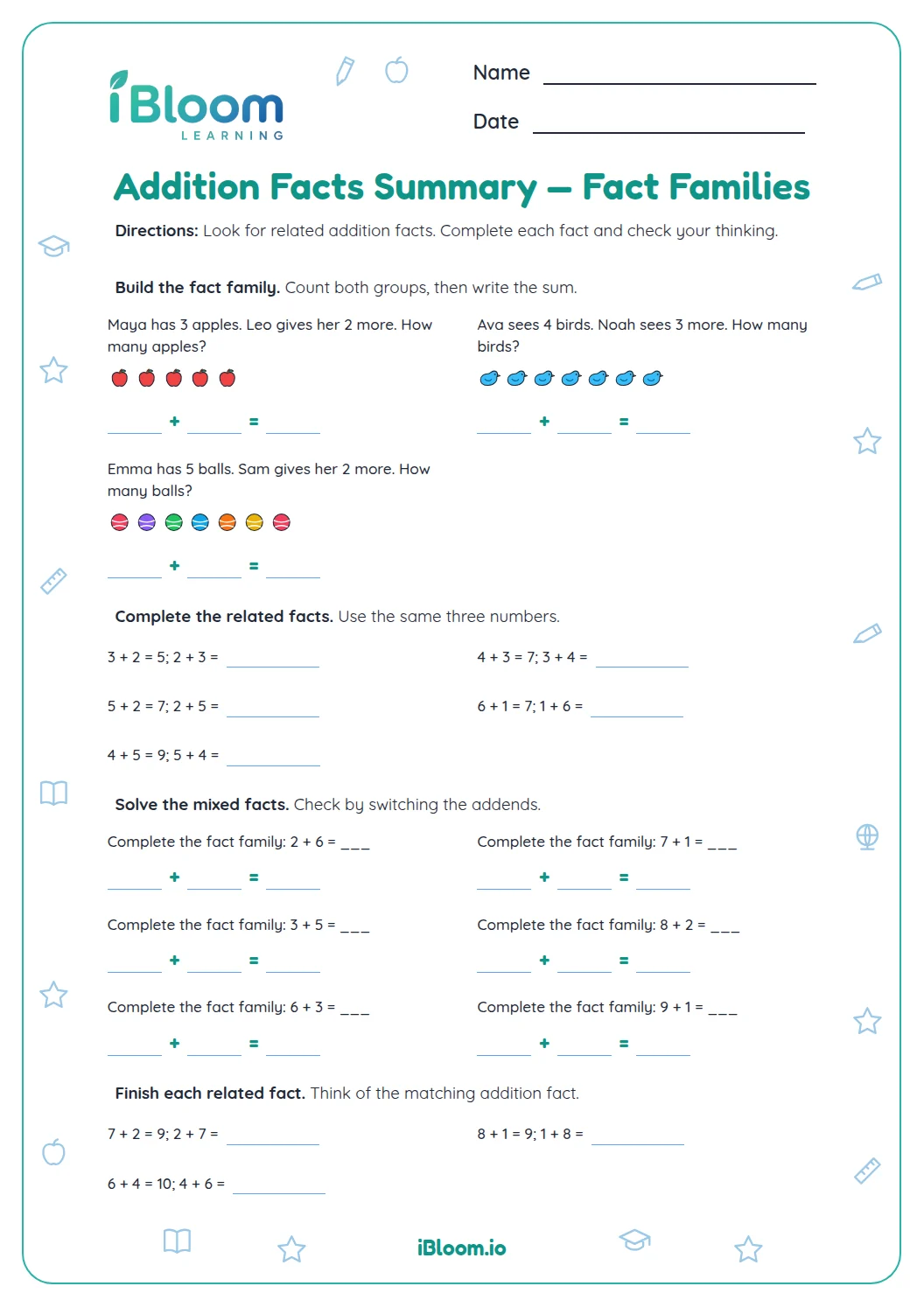
Check that reversing the addends keeps the same sum.
Use mental strategies to add within 20 and find missing addends.
On this sheet:
Show the official wordingHide the official wording
Fluently add and subtract within 20 using mental strategies. By end of Grade 2, know from memory all sums of two one-digit numbers.
What to practice next
Make more practice
Further reading
Questions parents and teachers ask
What facts does the worksheet include?
The worksheet has 18 number sentences with addends from 0 through 12. Sixteen ask for a sum, and two leave an addend blank. Every total is within 20, and the separate answer key lists each result for checking.
Can learners use different strategies?
Yes. A learner may count on, use a double, make ten, or use a related fact. For example, 6 + 9 can become 6 + 10 and then one less. The answer stays the same whichever sensible strategy the child chooses.
How do you solve a missing-addend fact?
Find how much the known number needs to reach the total. For 6 + ___ = 14, count from 6 to 14 or subtract 6 from 14; the missing addend is 8. The sheet has two problems of this kind.
Is this worksheet timed?
No timer is required. Learners can work at a comfortable pace and use a strategy they know for each fact. Afterward, the separate answer key helps an adult review any facts that need another look or a second strategy.
What does the answer key show?
The answer key lists the sum or missing addend for all 18 number sentences. If an answer differs, revisit the equation and try a known fact, counting on, or making ten to check the result. The key is useful for a quick review together.