




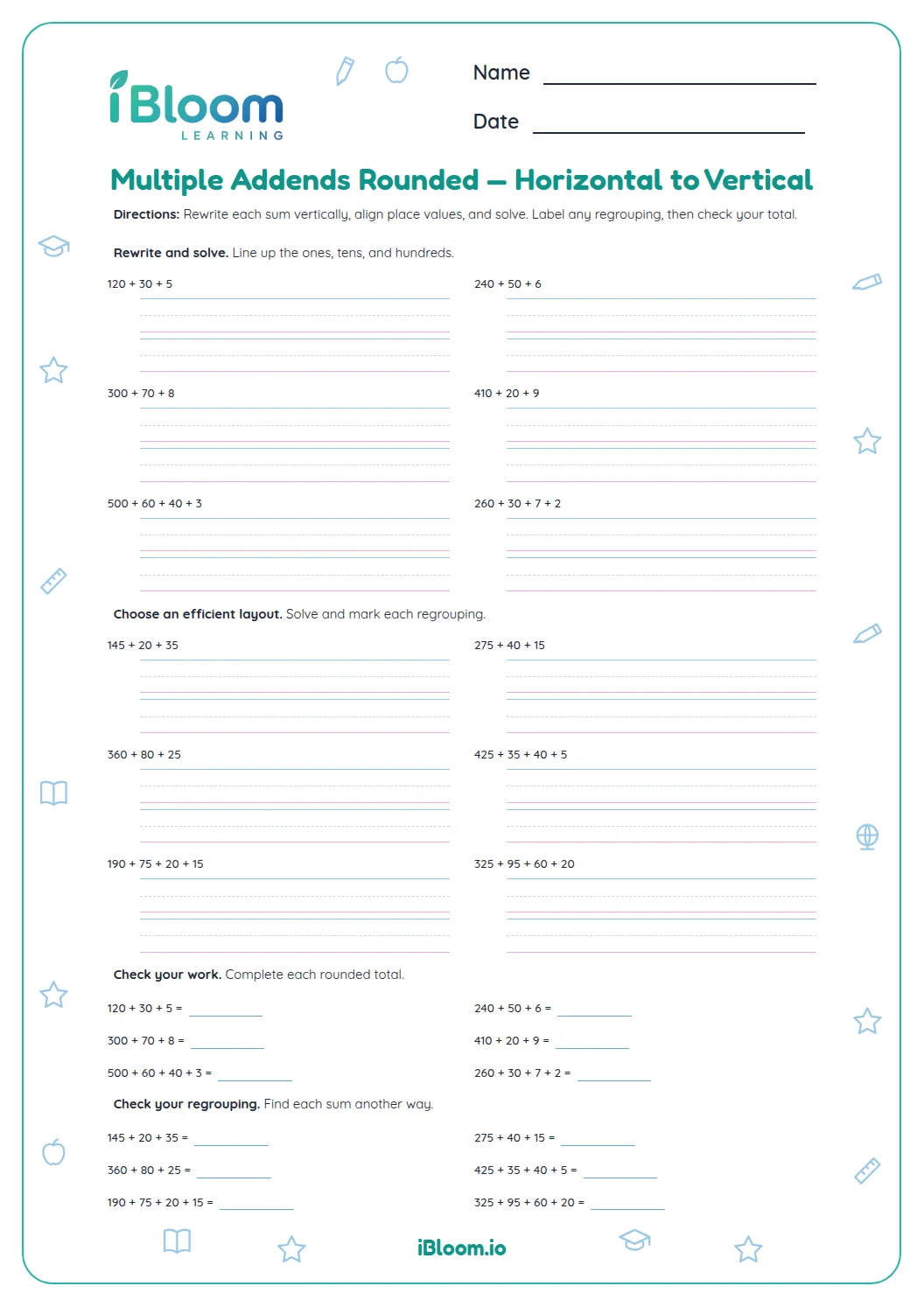
About this worksheet
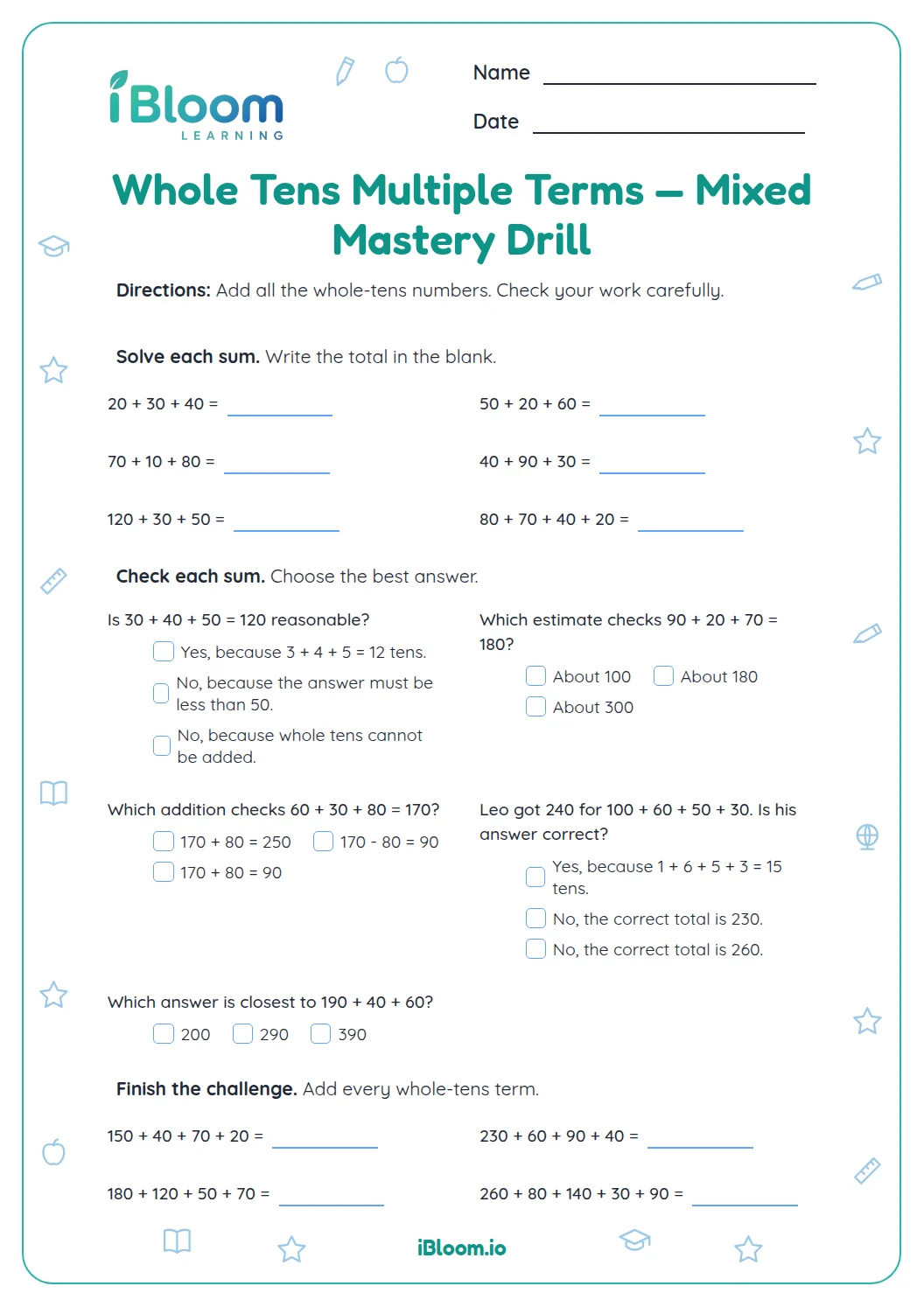
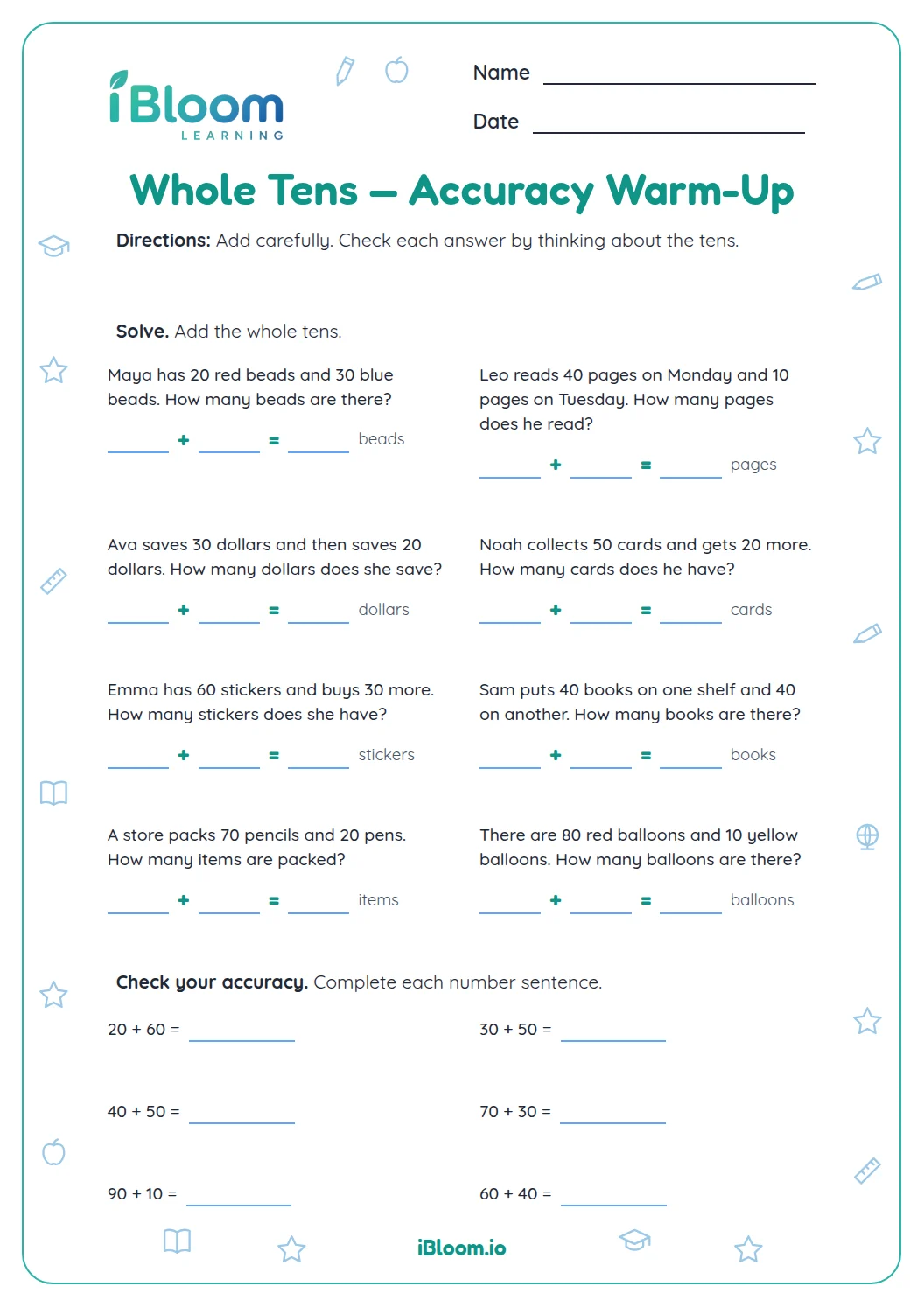
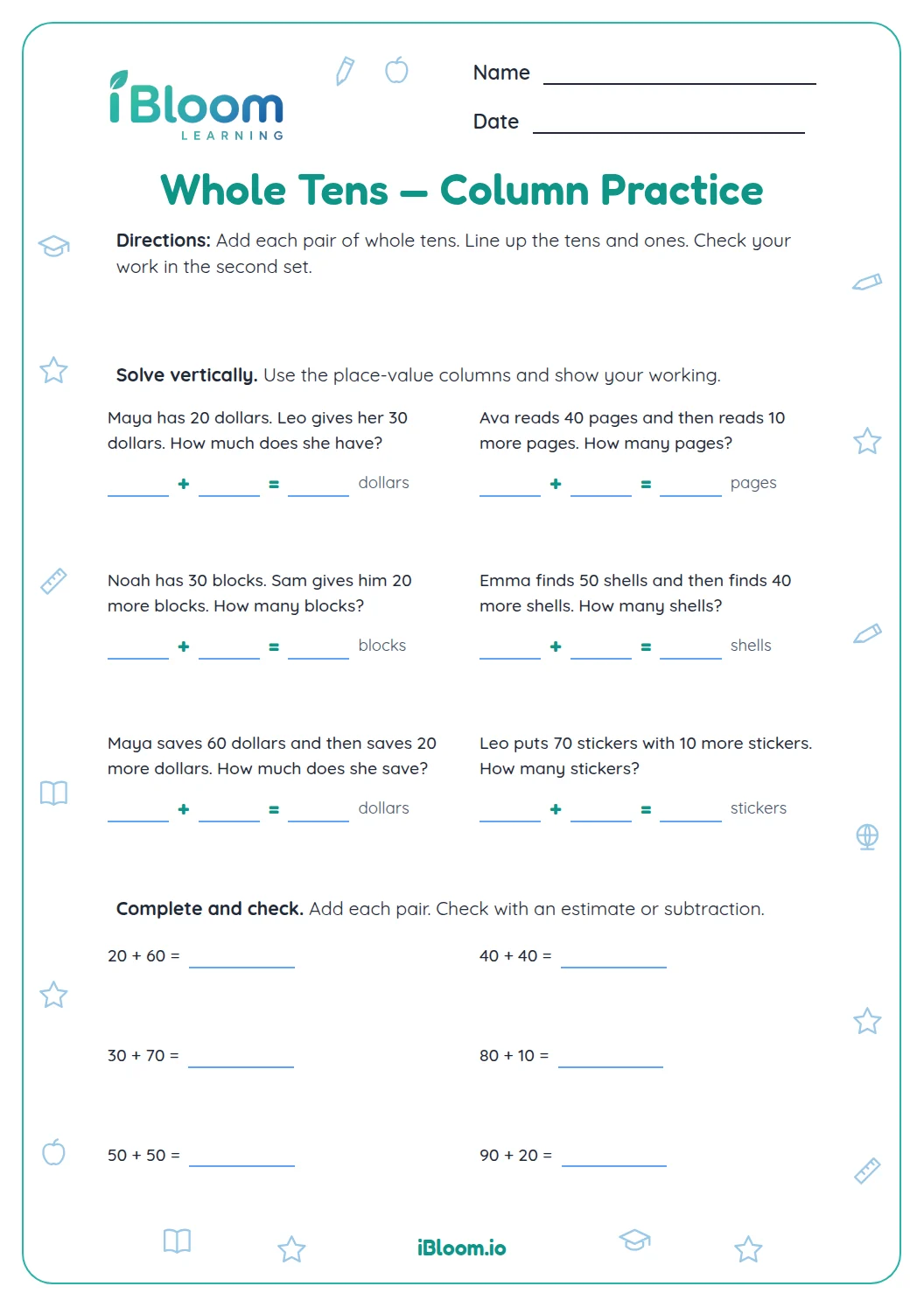
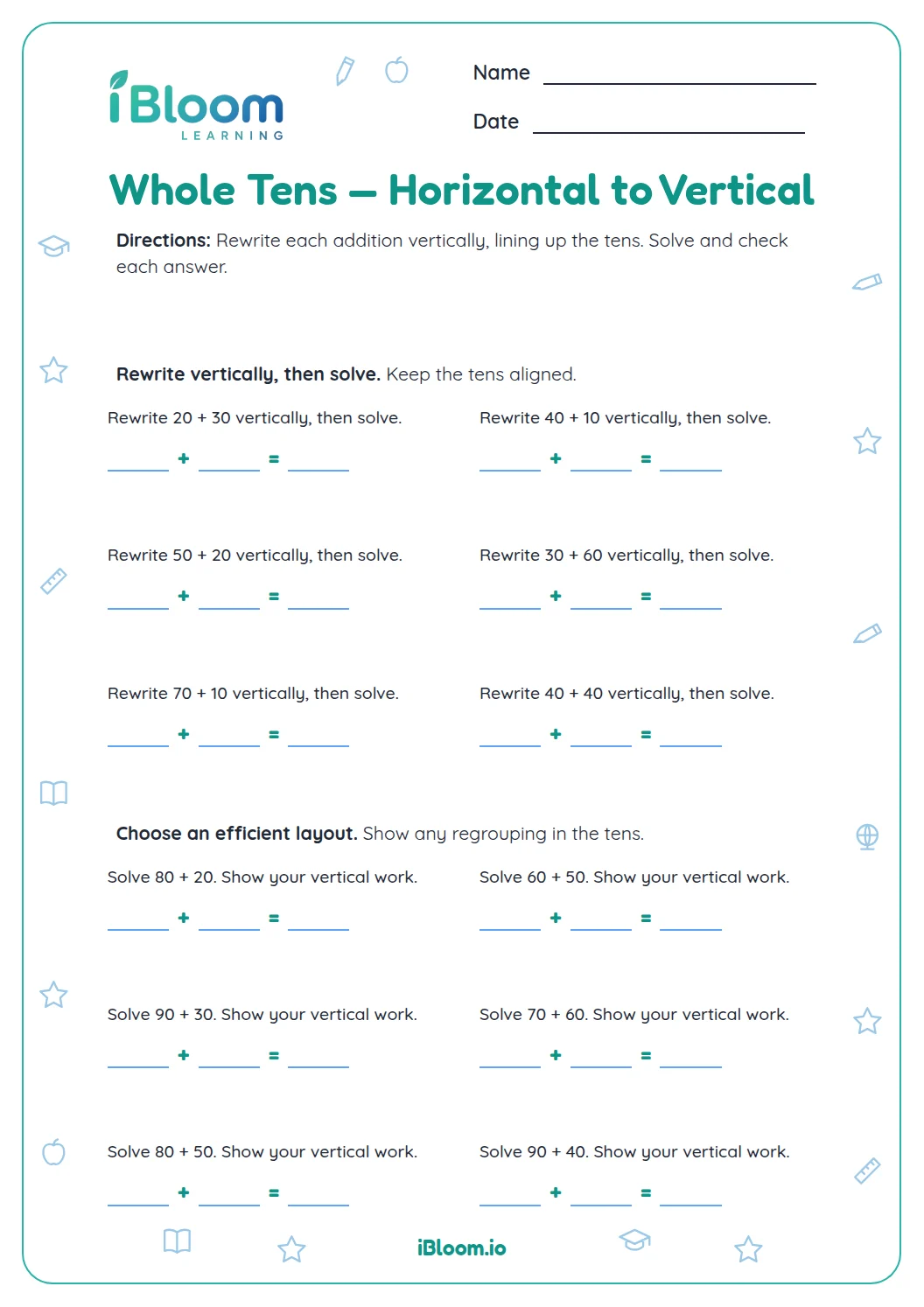
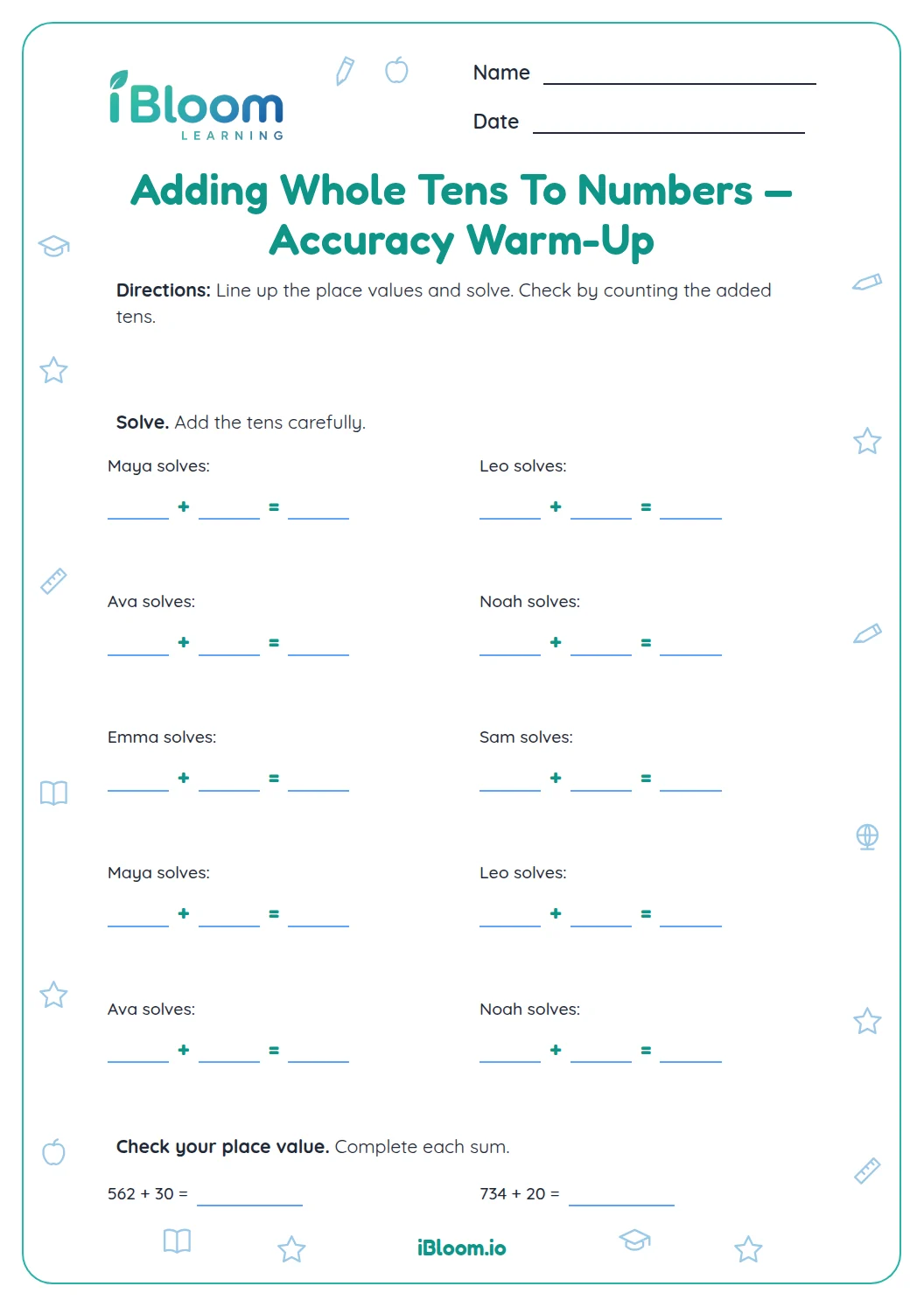
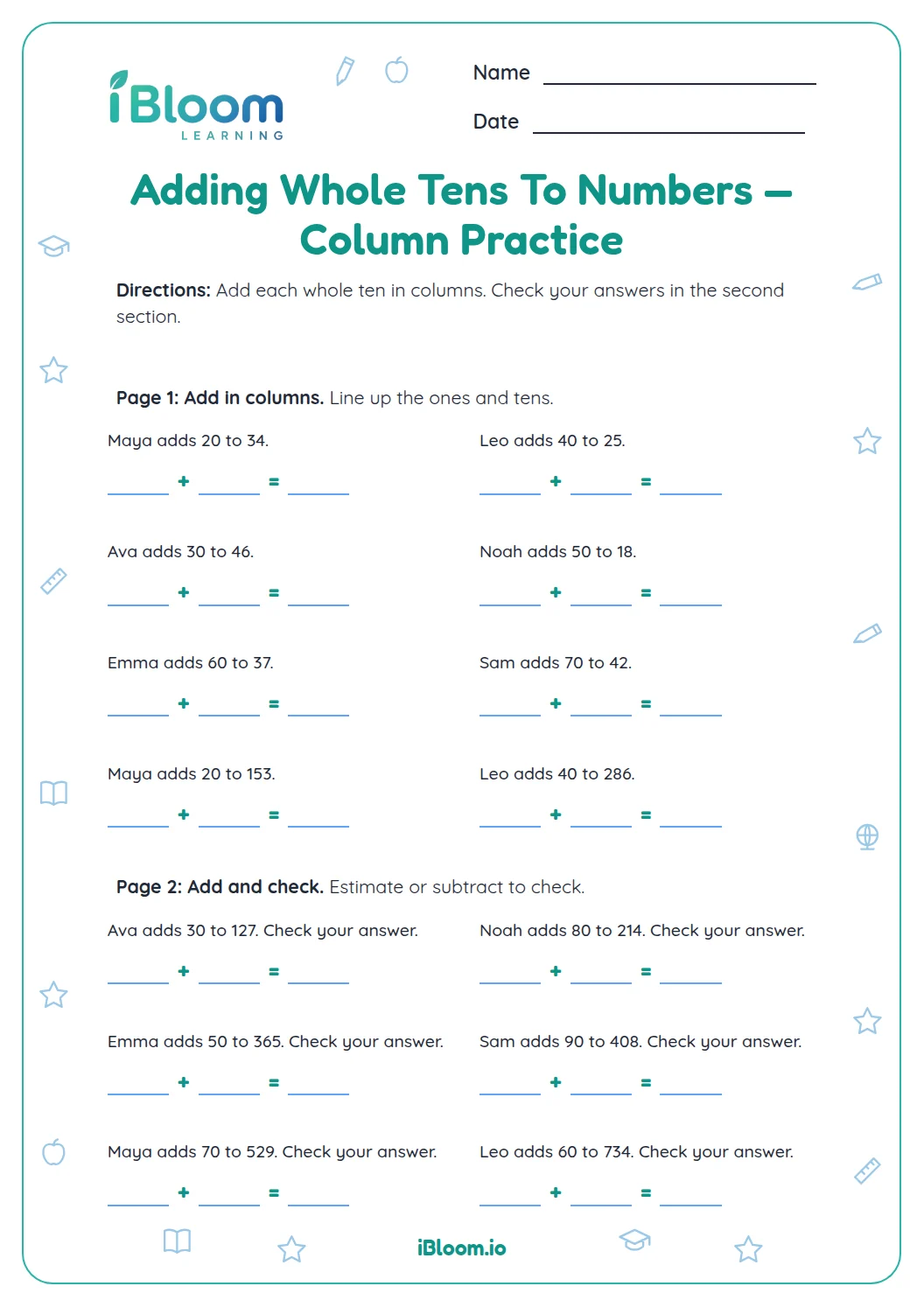
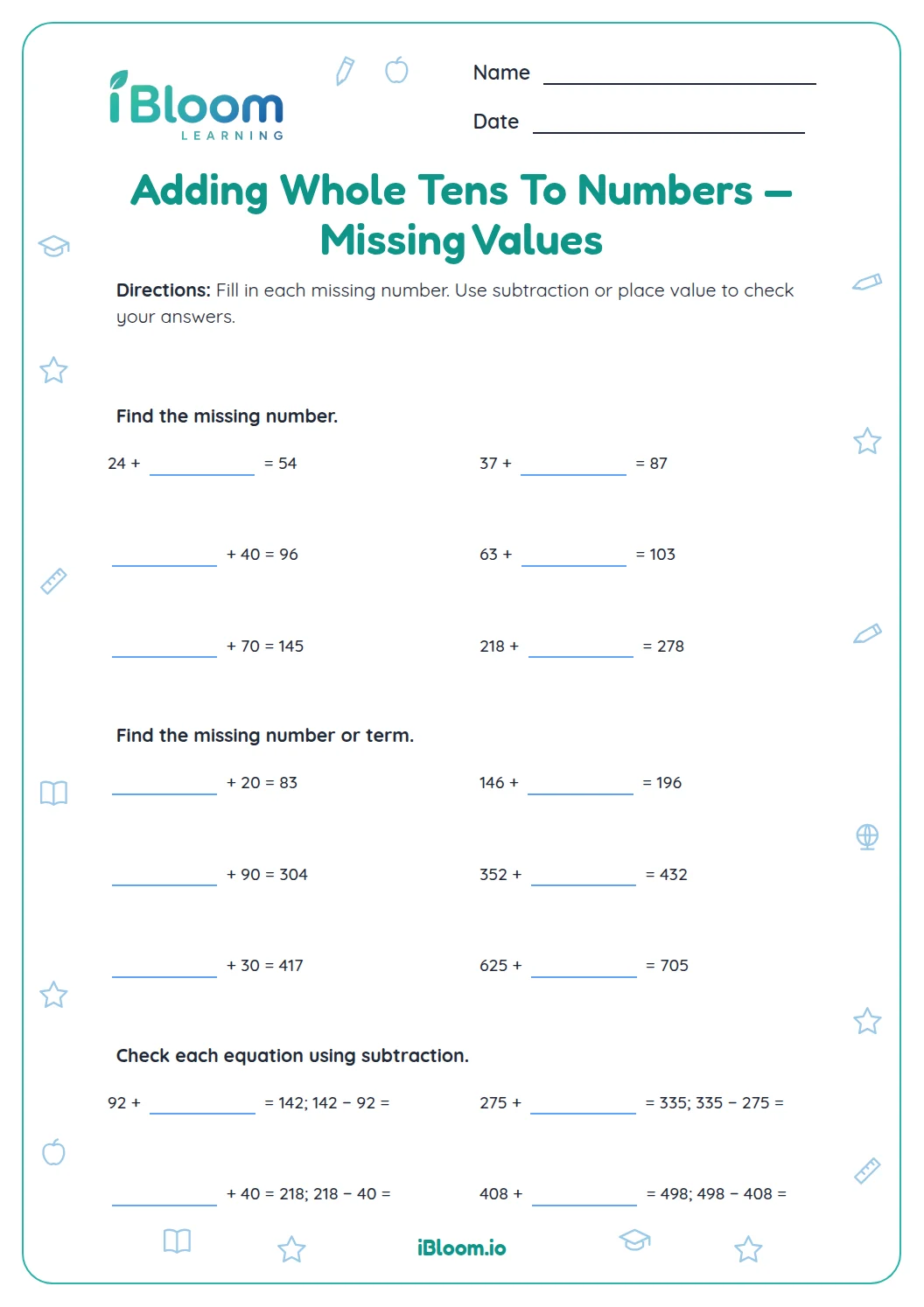
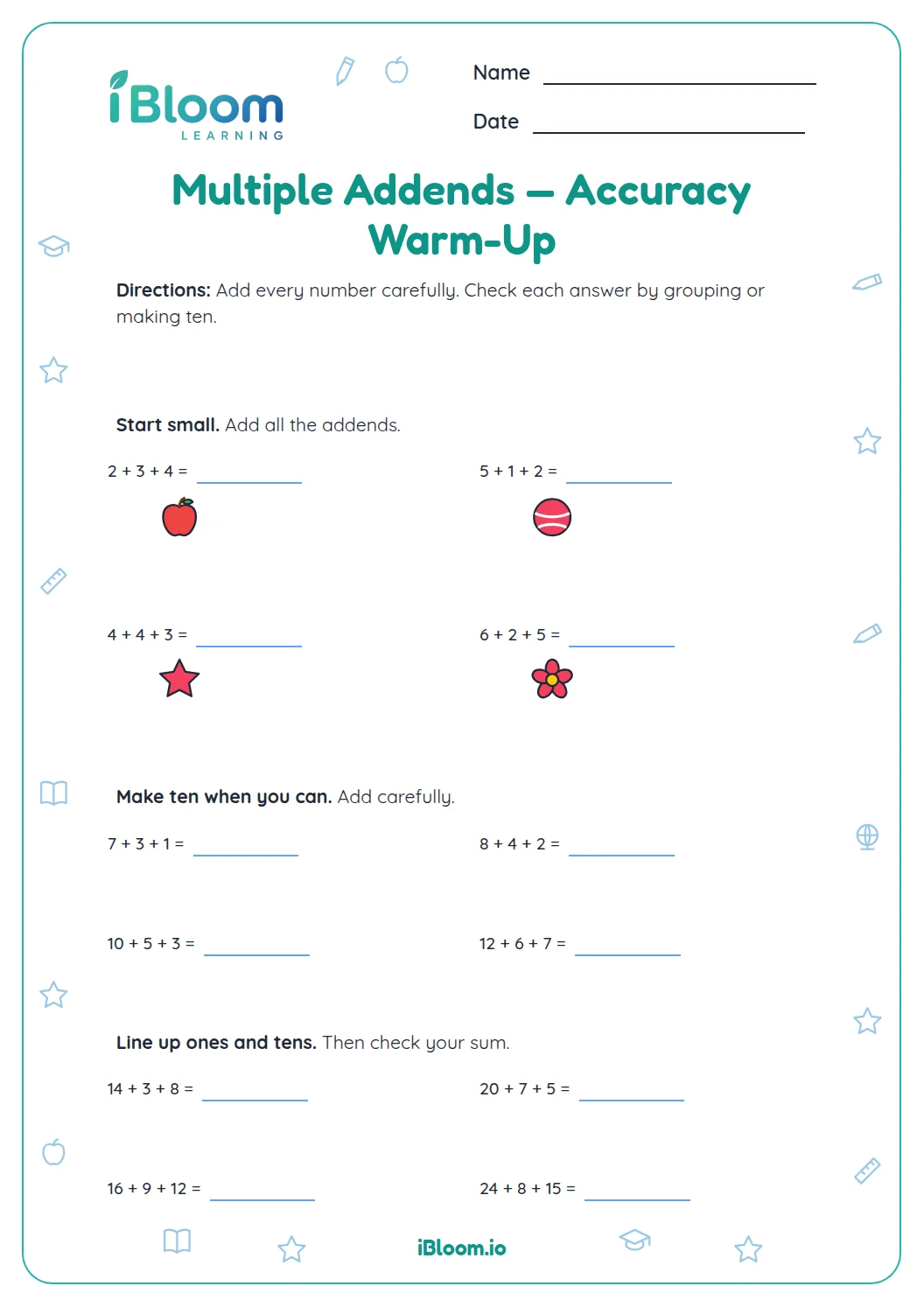
This printable worksheet gives students 16 Grade 2–4 questions with three whole-tens addends. They inspect possible errors, explain totals using groups of ten, and solve fresh sums. The practice connects place-value strategies to CCSS 2.NBT.B.6.
Aligned to 2.NBT.B.6
How can you check a whole-tens sum?
Error analysis starts by checking whether the written total matches all of the addends. Students then solve new expressions to practice the same place value idea independently.
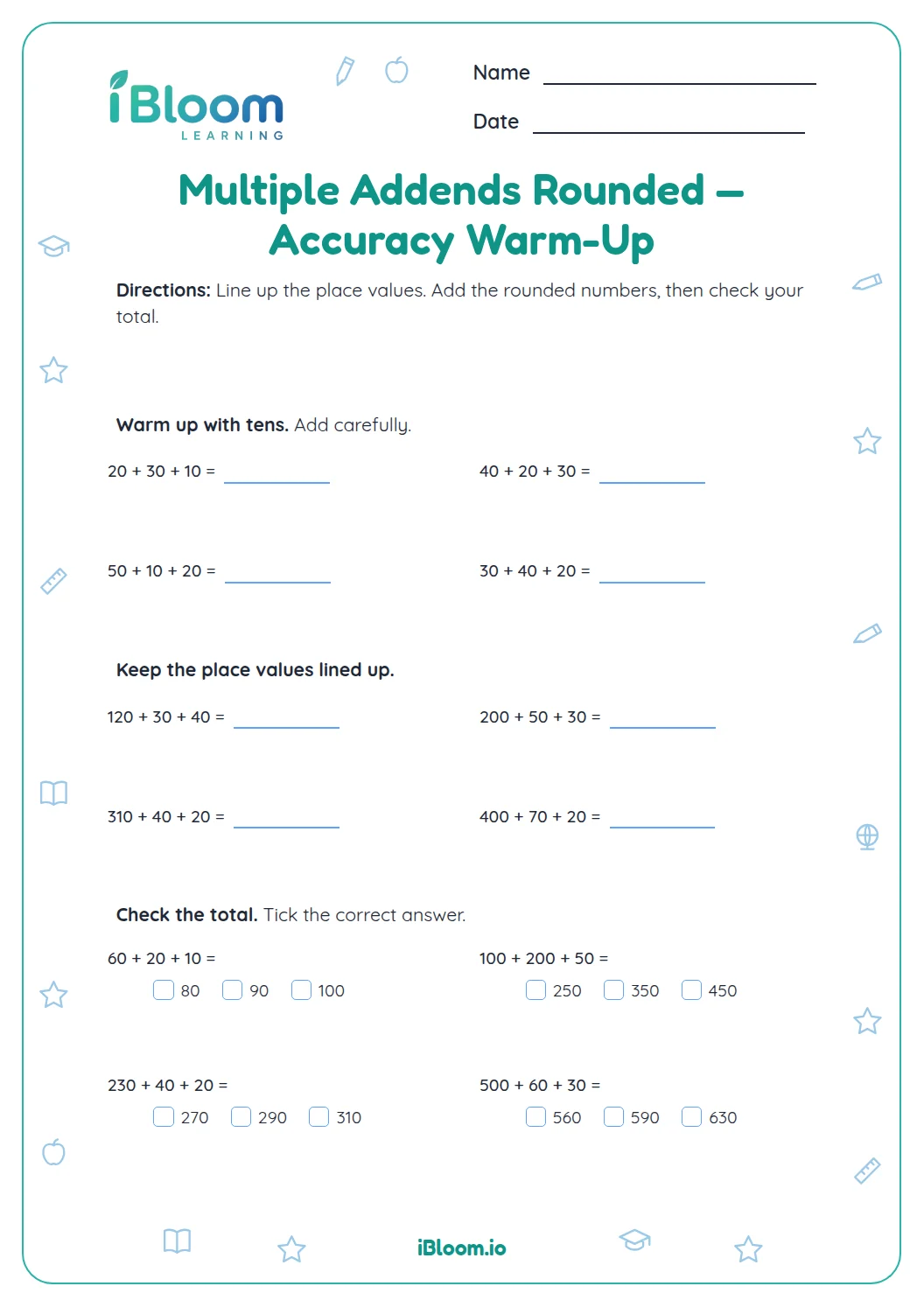
- 1A student wrote 60 + 20 + 10 = 80. What is the correct sum?
- 290
Why group the addends as tens?
Each addend is a number of tens, so the ones digits stay zero. Counting the tens makes it easier to see that 60 + 20 + 10 is six tens plus two tens plus one ten, or 90.
What changes in the final part?
The final eight items remove the student’s error and ask for a total directly. Keep the same habit: count all the tens before writing the sum.
How to use this worksheet
- 1Read the three addends and identify each number of tens.
- 2For the first problems, decide whether the shown sum is correct.
- 3Correct an incorrect total using the working grid.
- 4Solve the final number sentences by grouping tens.
- 5Check each total with the answer key.
Common mistakes and quick fixes
The mistake
Stopping at 80 for 60 + 10 + 20.
The fix
Count six tens, one ten, and two tens: nine tens make 90.
The mistake
Dropping one addend while checking a sum.
The fix
Touch each number as you add its tens to the running total.
The mistake
Writing the number of tens as the final sum.
The fix
Rename nine tens as 90, not 9.
Common Core alignment
This worksheet practices the listed Common Core skill in short, focused examples.
Add three whole-tens addends using place value.
On this sheet: Add three whole-tens addends using place value.
Show the official wordingHide the official wording
Add up to four two-digit numbers using strategies based on place value and properties of operations.
What to practice next
Make more practice
Further reading
Questions parents and teachers ask
What whole tens are added on this page?
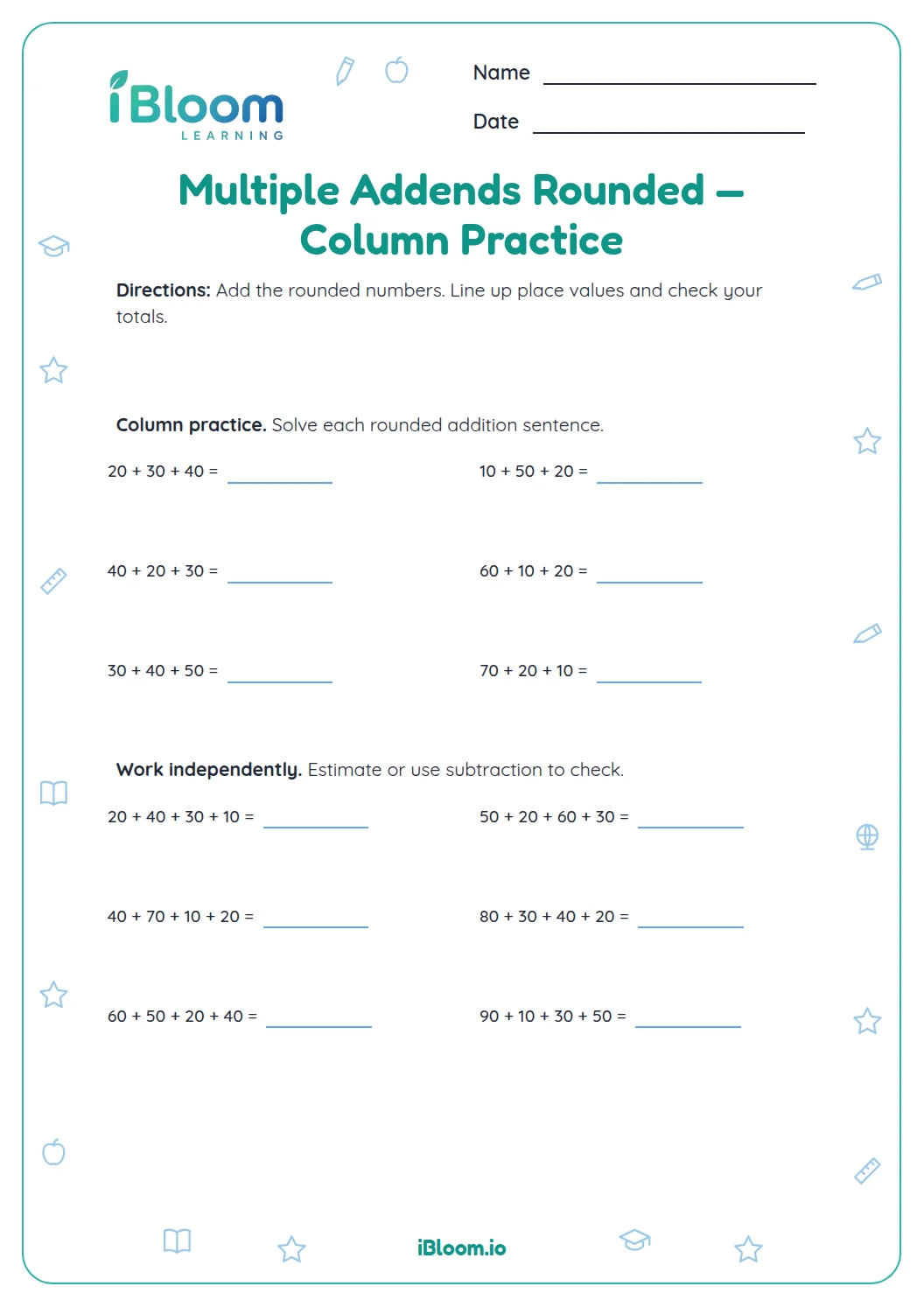
The calculations use two-digit multiples of ten, such as 20, 30, 40, and 60. Students first inspect sums with three addends, then solve eight fresh number sentences by combining groups of ten. The repeated tens make place value easy to check without regrouping ones.
How can a student find an addition error?
Add the tens in the written expression and compare the total with the student’s result. For example, 60 + 10 + 20 has nine tens, so the correct sum is 90. The place value check catches a total that is one ten too small.
What does “whole tens” mean?
A whole ten is a group of ten with no ones left over. In 40 + 20 + 30, a learner can add four tens, two tens, and three tens to make nine tens, or 90. Each addend is a multiple of ten, so the groups combine cleanly.
Should learners show their work on every problem?
The first questions include working grids and answer boxes for error corrections. The final part presents short number sentences for quick practice. A child can still jot down the number of tens or use mental grouping before writing each total.
How can I help if the totals are difficult?
Have the learner say each addend as tens: 30 is three tens and 40 is four tens. Combine the groups, then rename the total as a number. Check with the key and ask which written error would change the total.