
About this worksheet
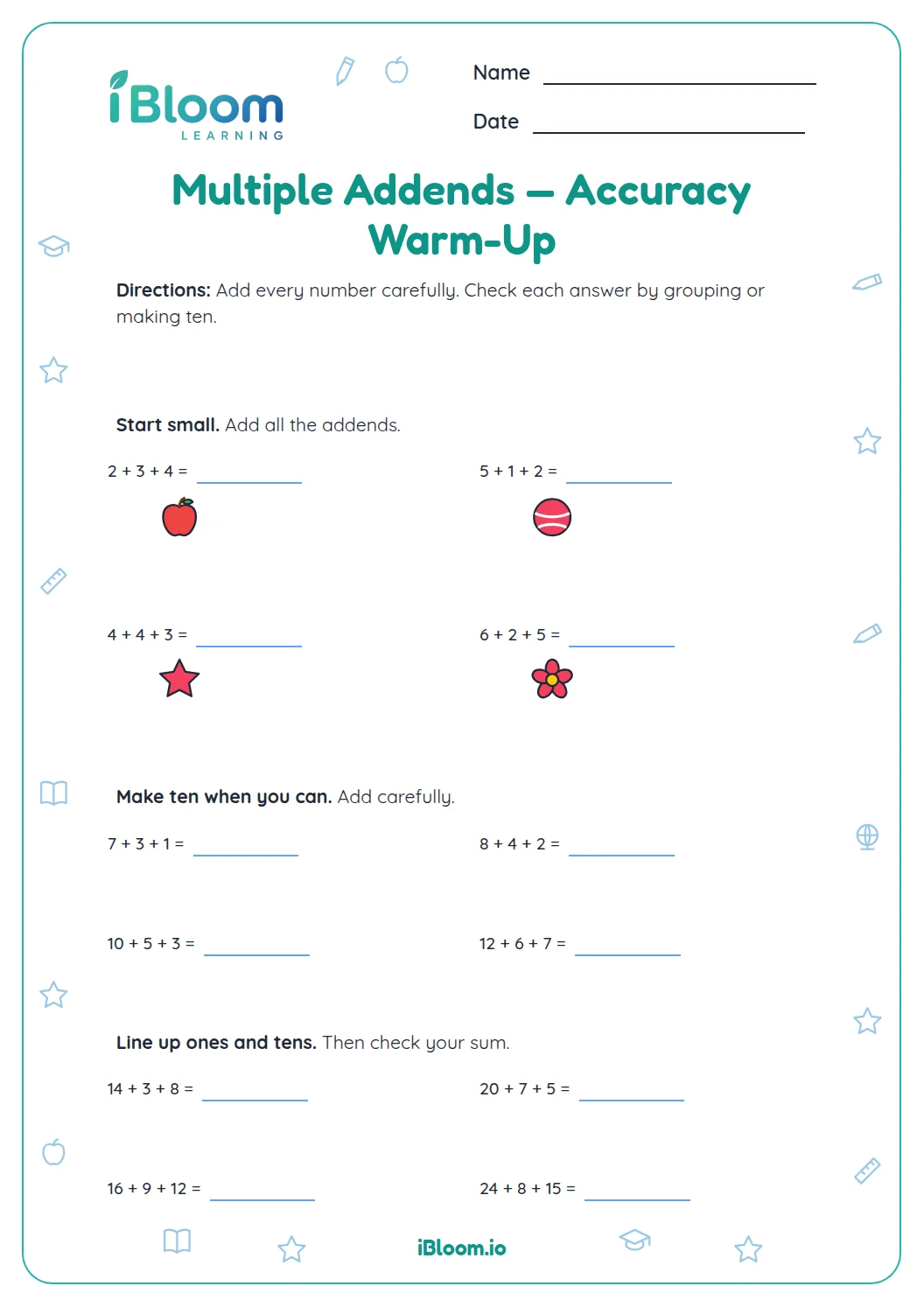
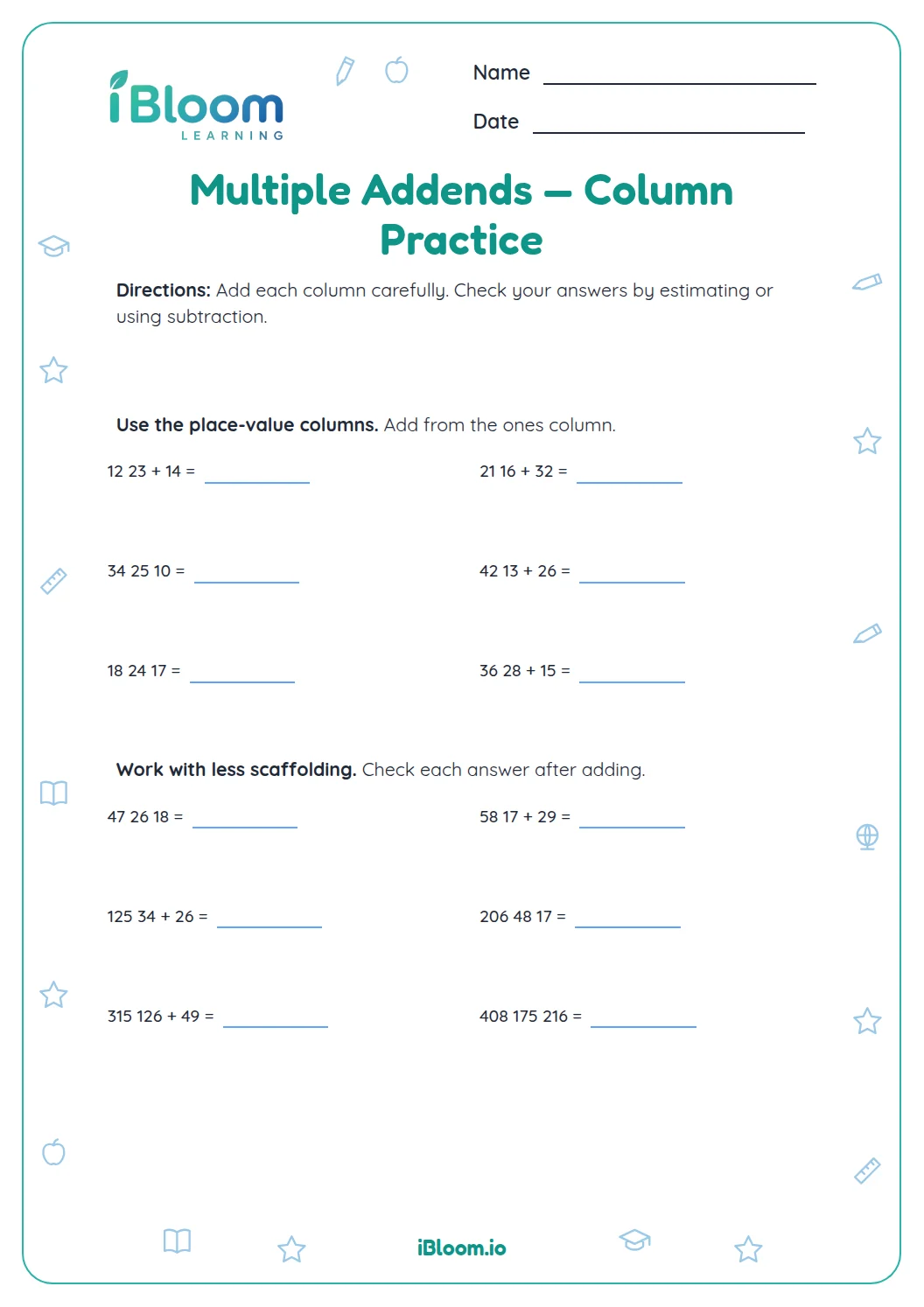
This Grade 4 addition drill has 16 horizontal sums with three addends each. Children rewrite the numbers vertically, align place values, and regroup across sums that grow from two-digit to six-digit addends. The worksheet comes with a separate answer key. Common Core 4.NBT.B.4 calls for fluently adding and subtracting multi-digit whole numbers with the standard algorithm; these problems give focused addition practice with that method.
Aligned to 4.NBT.B.4
How should addends line up?
Start each number in the same rightmost place-value column. Shorter addends leave blank spaces on the left; their ones still align with the other ones.
The first part moves from two- and three-digit sums into larger numbers.
- 124 + 13 + 11
- 2Write 24, 13, and 11 in separate rows with the ones aligned.
- 3Add the columns to get 48.
When do you regroup?
Add the digits in a column. If their total is ten or more, write the ones digit in that column and carry the tens into the next column.
In the later problems, several addends can create a column total above 9, so include every carry once.
How can you check a large sum?
Estimate by rounding the addends, then compare the estimate with the exact total. You can also add the same numbers in a different order to check.
Keep commas in large answers readable, and make sure every addend was included.
How to use this worksheet
- 1Copy the horizontal addends onto separate rows.
- 2Align the ones column at the right; line up each place value.
- 3Add the ones and write any regrouped ten above the next column.
- 4Continue left, including each carried value once.
- 5Estimate or add in a new order to check the total.
Common mistakes and quick fixes
The mistake
Starting every addend at the left edge
The fix
Align the rightmost digits so ones sit under ones.
The mistake
Dropping a carried ten
The fix
Record the carry above the next place-value column and include it.
The mistake
Skipping a short addend’s place
The fix
Place its ones in the ones column, even when it has no tens or hundreds.
Common Core alignment
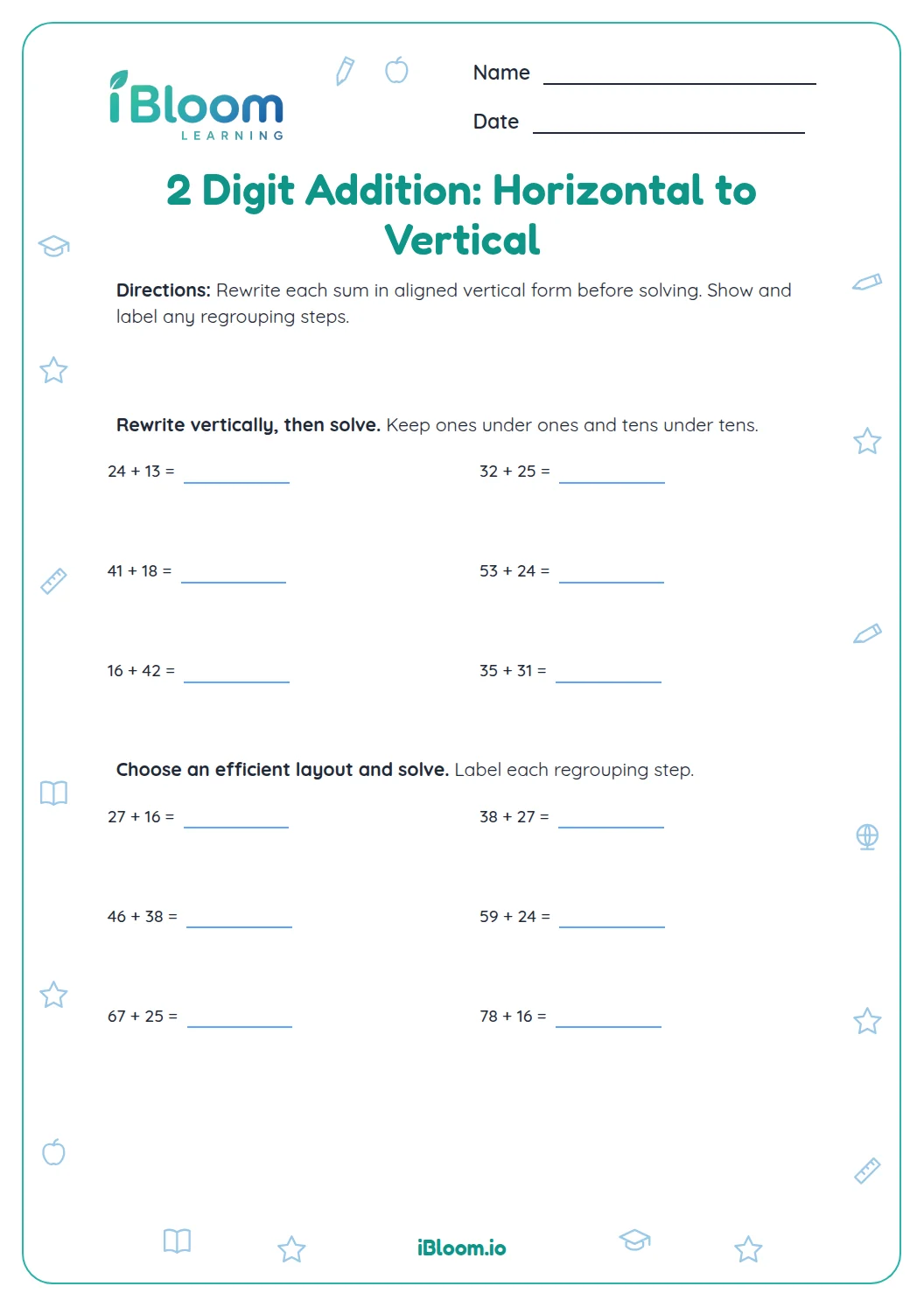
This worksheet practices rewrite each horizontal sum in vertical columns and regroup to add three or more addends.
Rewrite each horizontal sum in vertical columns and regroup to add three or more addends.
On this sheet: Rewrite each horizontal sum in vertical columns and regroup to add three or more addends.
Show the official wordingHide the official wording
Fluently add and subtract multi-digit whole numbers using the standard algorithm.
What to practice next
Make more practice
Further reading
Questions parents and teachers ask
What does horizontal to vertical addition mean?
The problem is printed in one horizontal line, and the student rewrites each addend in a vertical column. Aligning place values makes it easier to add by ones, tens, hundreds, and larger units. All 16 questions use three addends.
How many questions and pages are included?
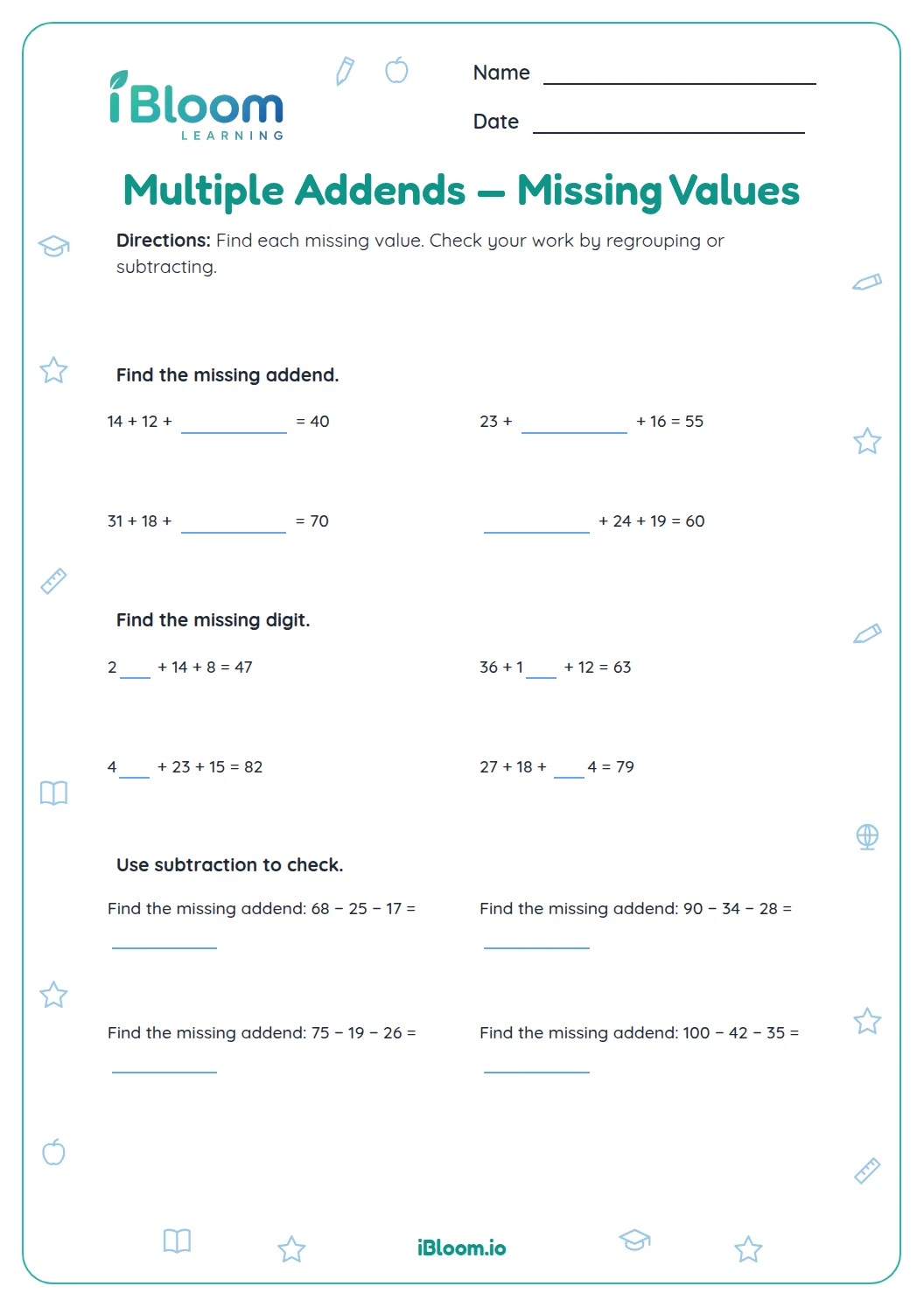
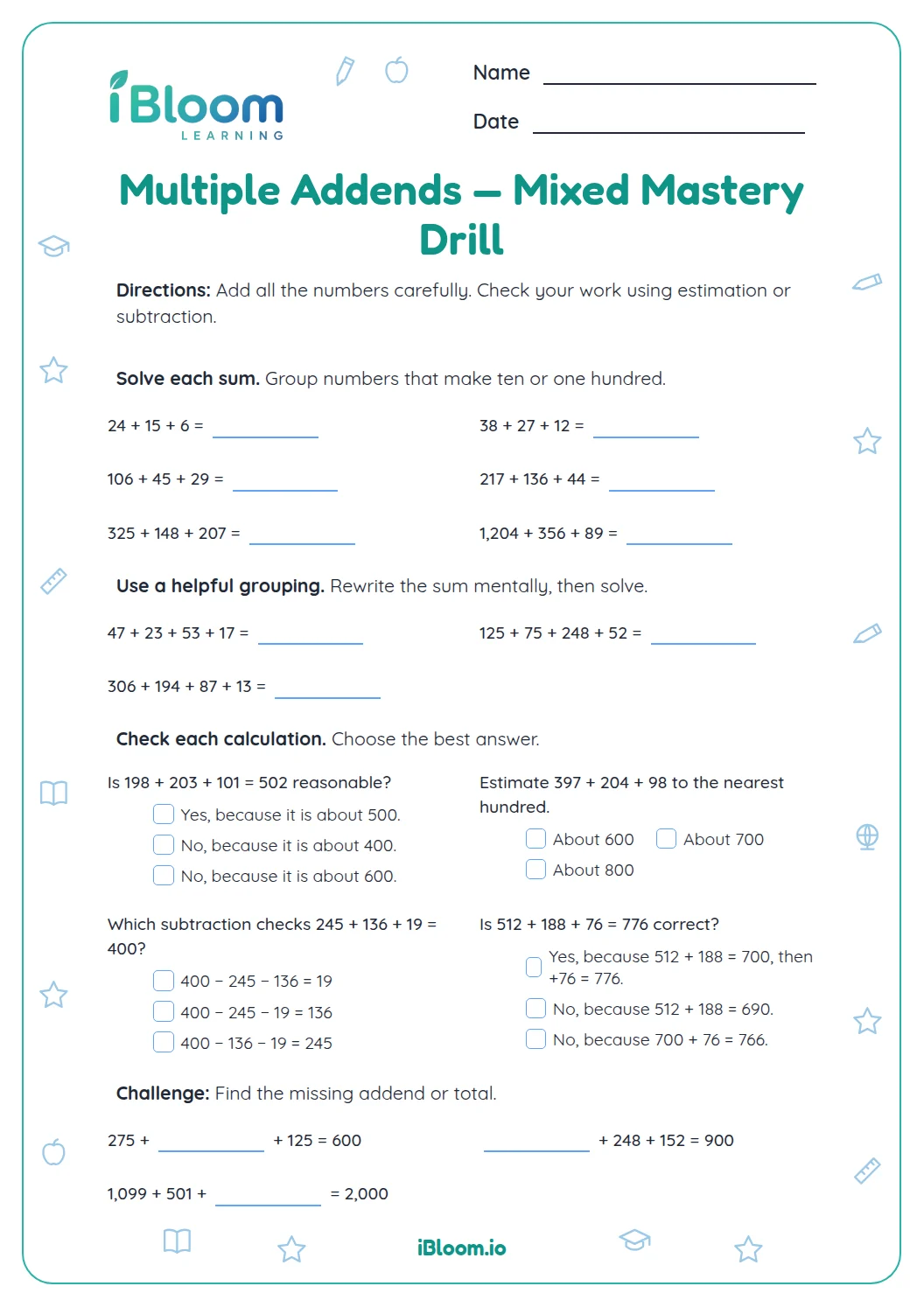
The drill has 16 questions in two parts, moving from smaller addends to larger ones. The printable includes three worksheet pages and three matching answer-key pages. The key lists each completed sum so a child can check work after solving.
Do these questions require regrouping?
Many questions have a column total of ten or more, so children need to regroup. The opening problems establish the layout, and later sums include more place values and carries. The answer key lists each completed total for checking.
How can I check an addition answer?
First estimate by rounding the addends and see whether the exact sum is reasonable. Then add the numbers in a different order or check each column, including every carried ten. The printed answer key provides the final total for comparison.
Which grade is this worksheet for?
The sheet is labeled Grade 4 and practices multi-digit addition with the standard algorithm. Its addends range from two digits to six digits, so an adult may choose a starting section or work through the problems together as needed.