
About this worksheet
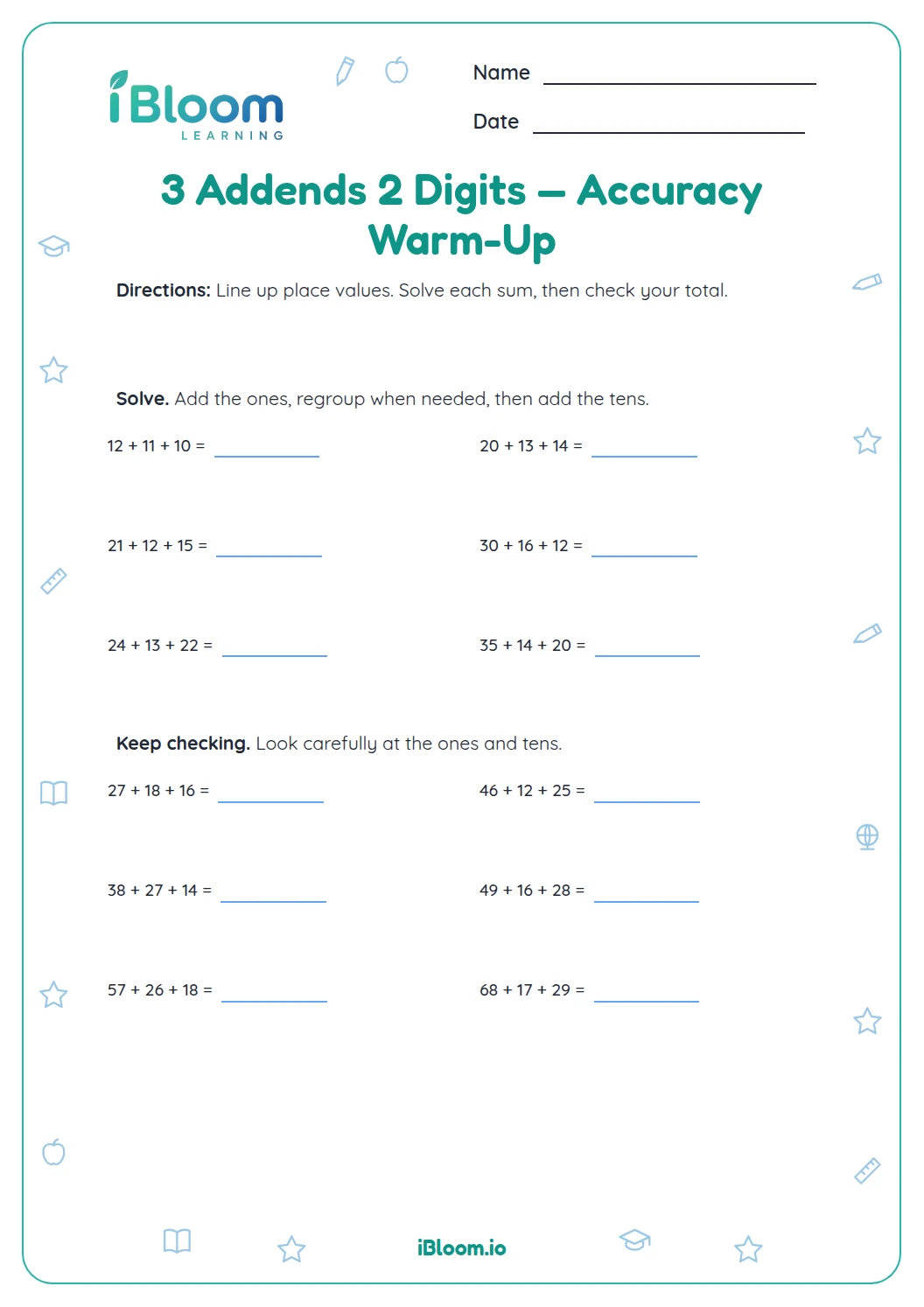
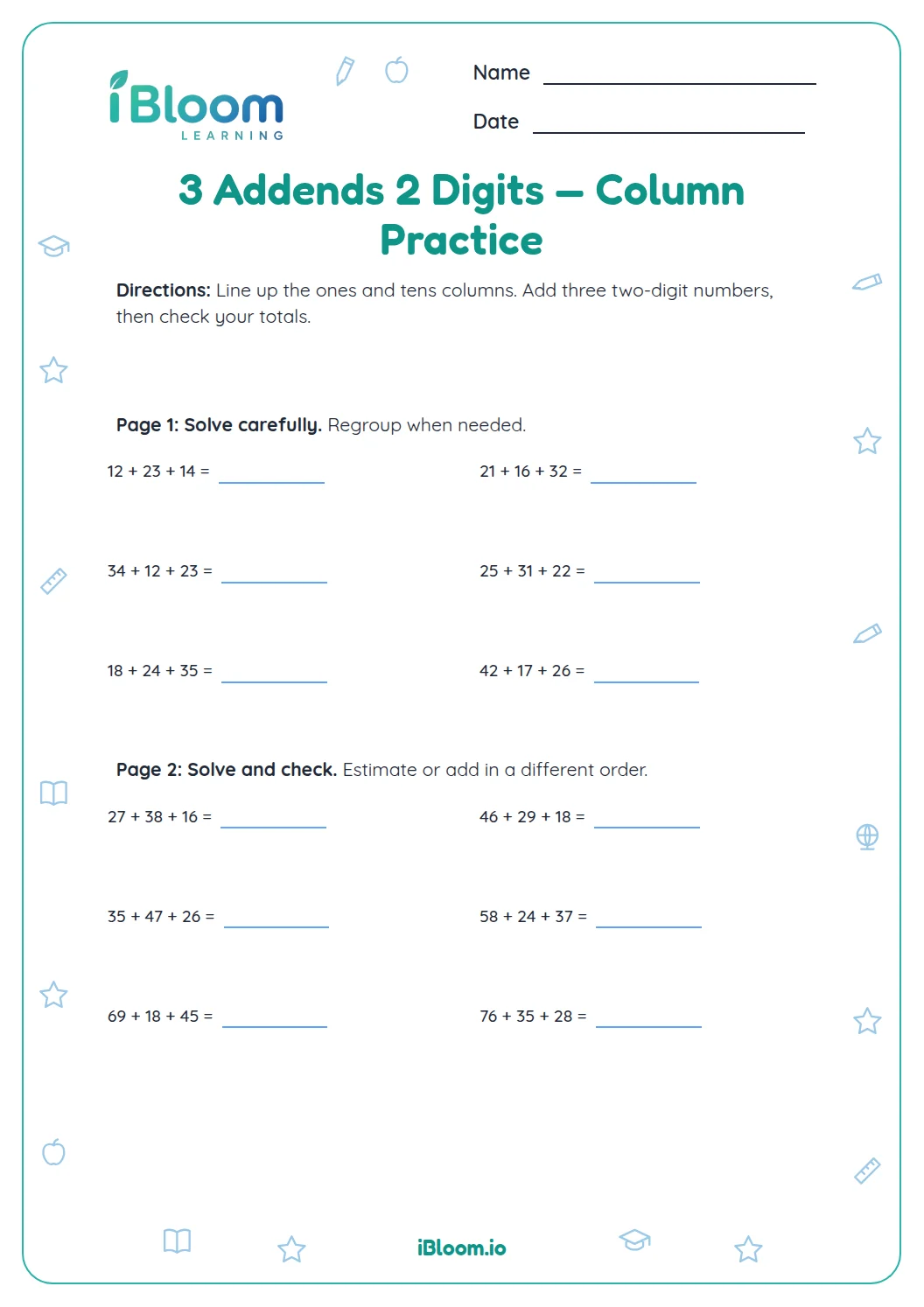
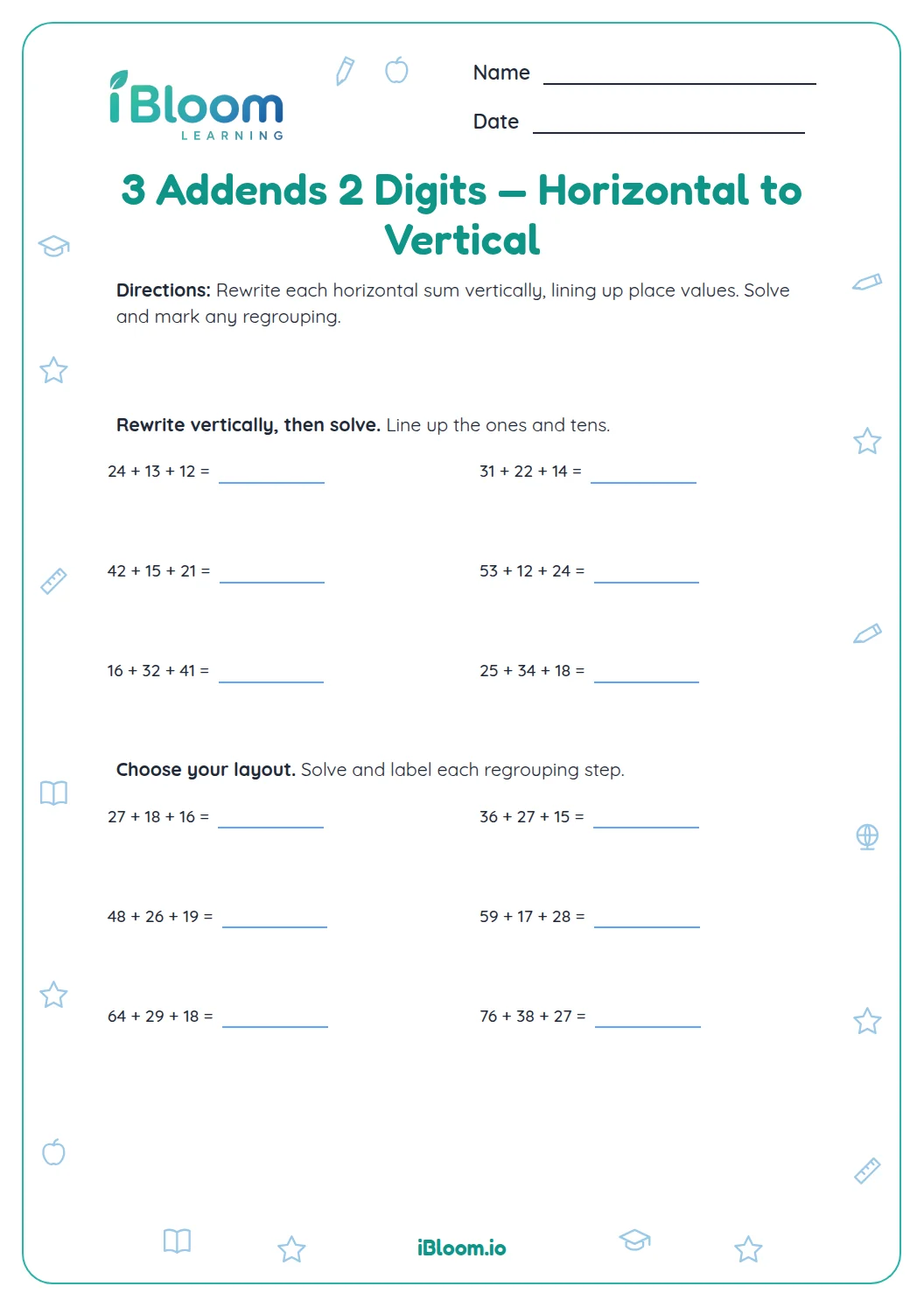
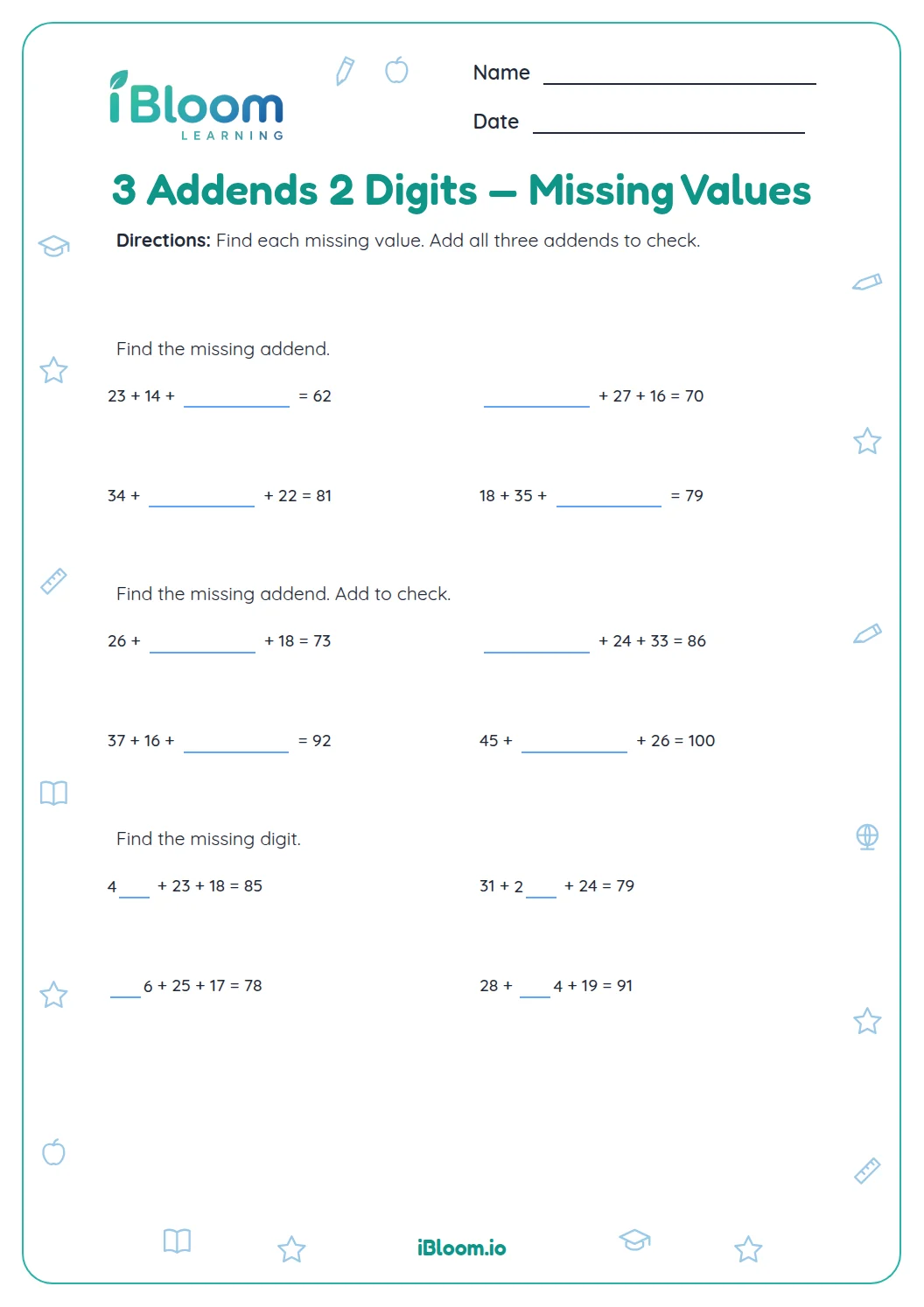
This printable error-analysis sheet gives students 14 chances to check sums with three addends. Children identify the first incorrect line, complete corrected calculations, compare two ways to group addends, and finish two sums. The examples use addition facts and friendly pairs that make a ten, such as 24 + 16. A separate answer key supports checking.
Aligned to 3.NBT.A.2
How do students find the first error?
Check each equation in order. Recompute only the line being tested, then decide whether the mistake starts there or earlier.
- 124 + 16 = 40 is true
- 240 + 5 = 45 is true
- 3No line is incorrect
- 4Check: 24 + 16 + 5 = 45
Why can addends be grouped in different ways?
A pair that makes a multiple of ten can make the remaining addition quicker. Compare each method and verify that it uses all three addends.
What practice is included?
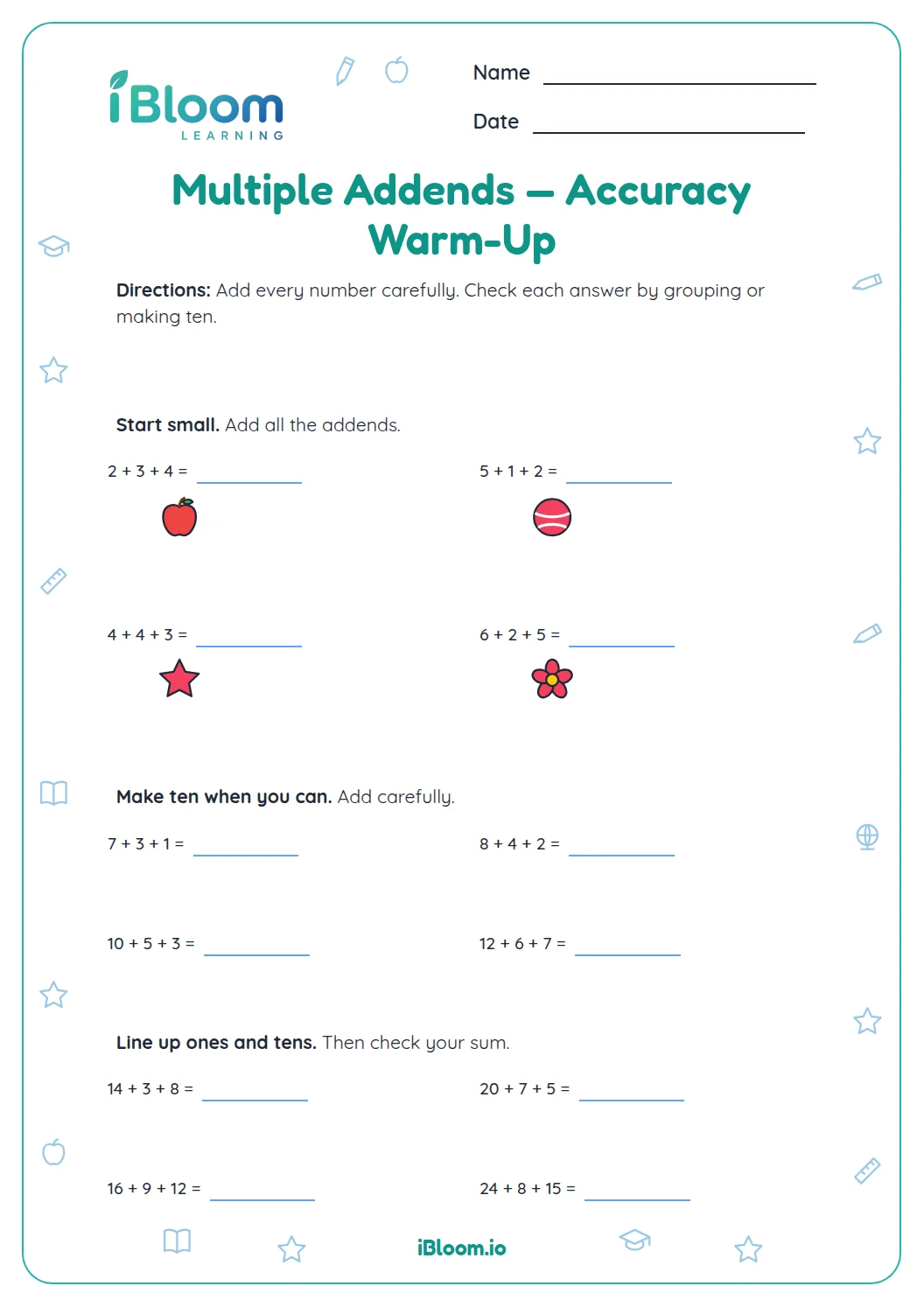
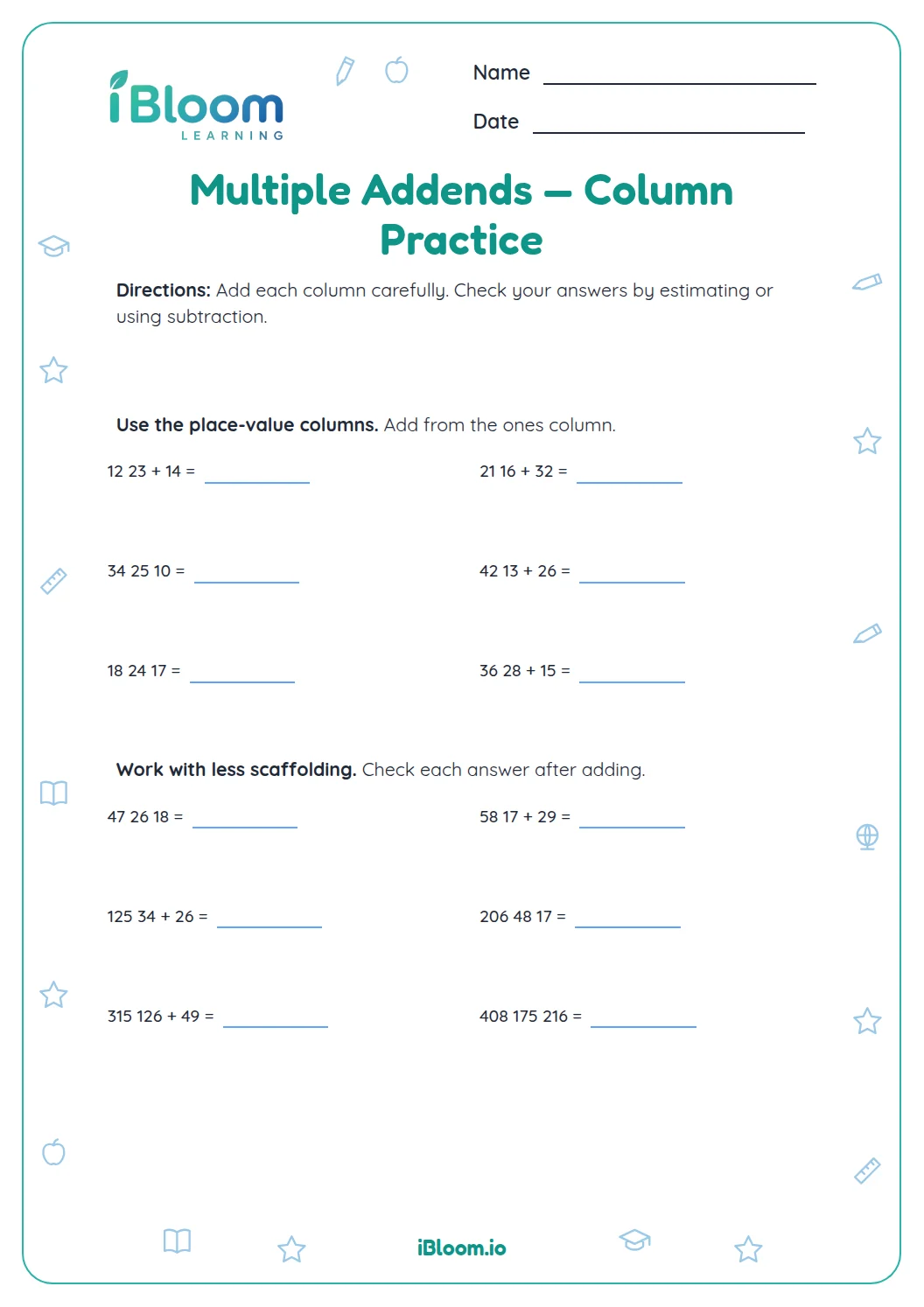
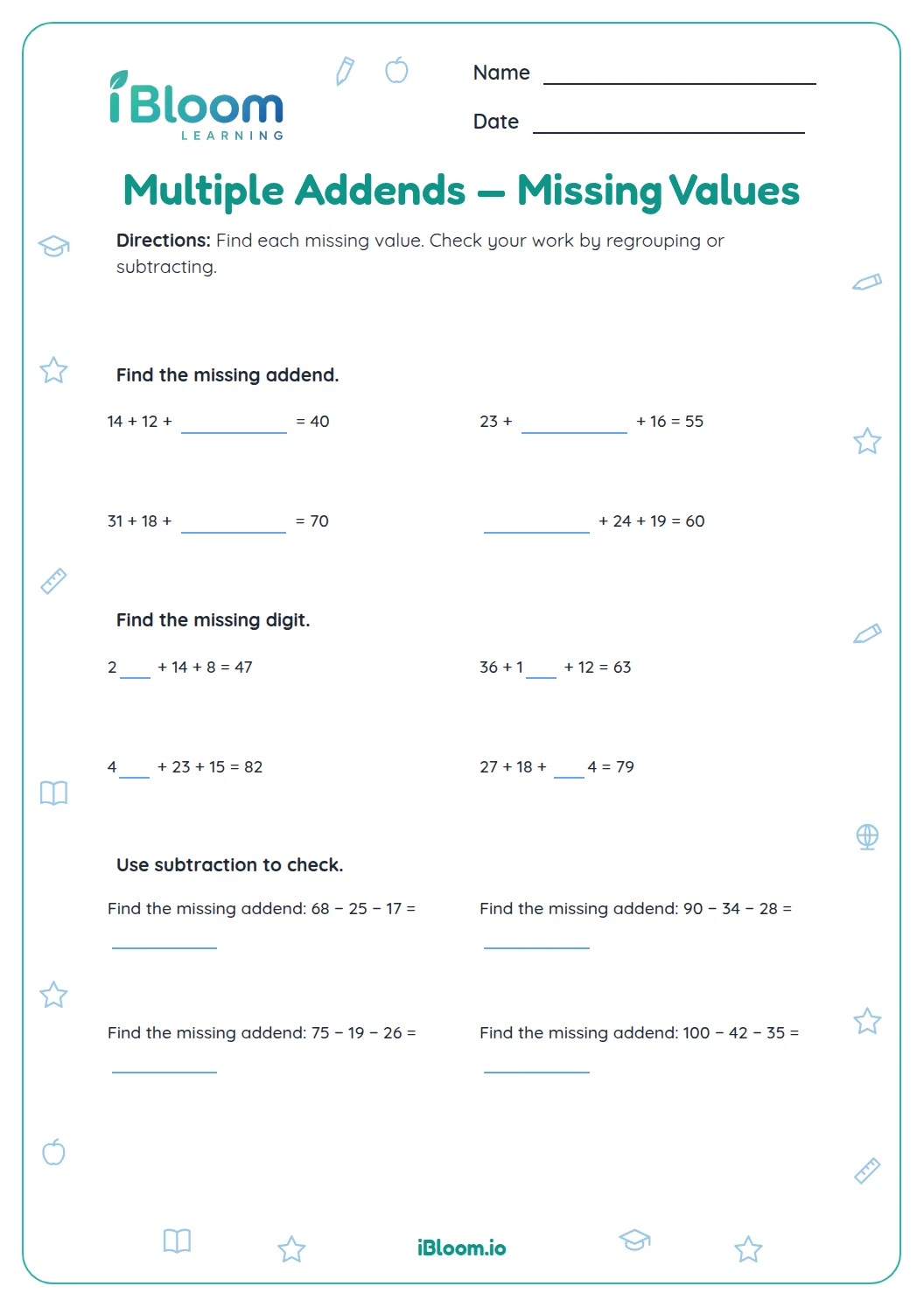
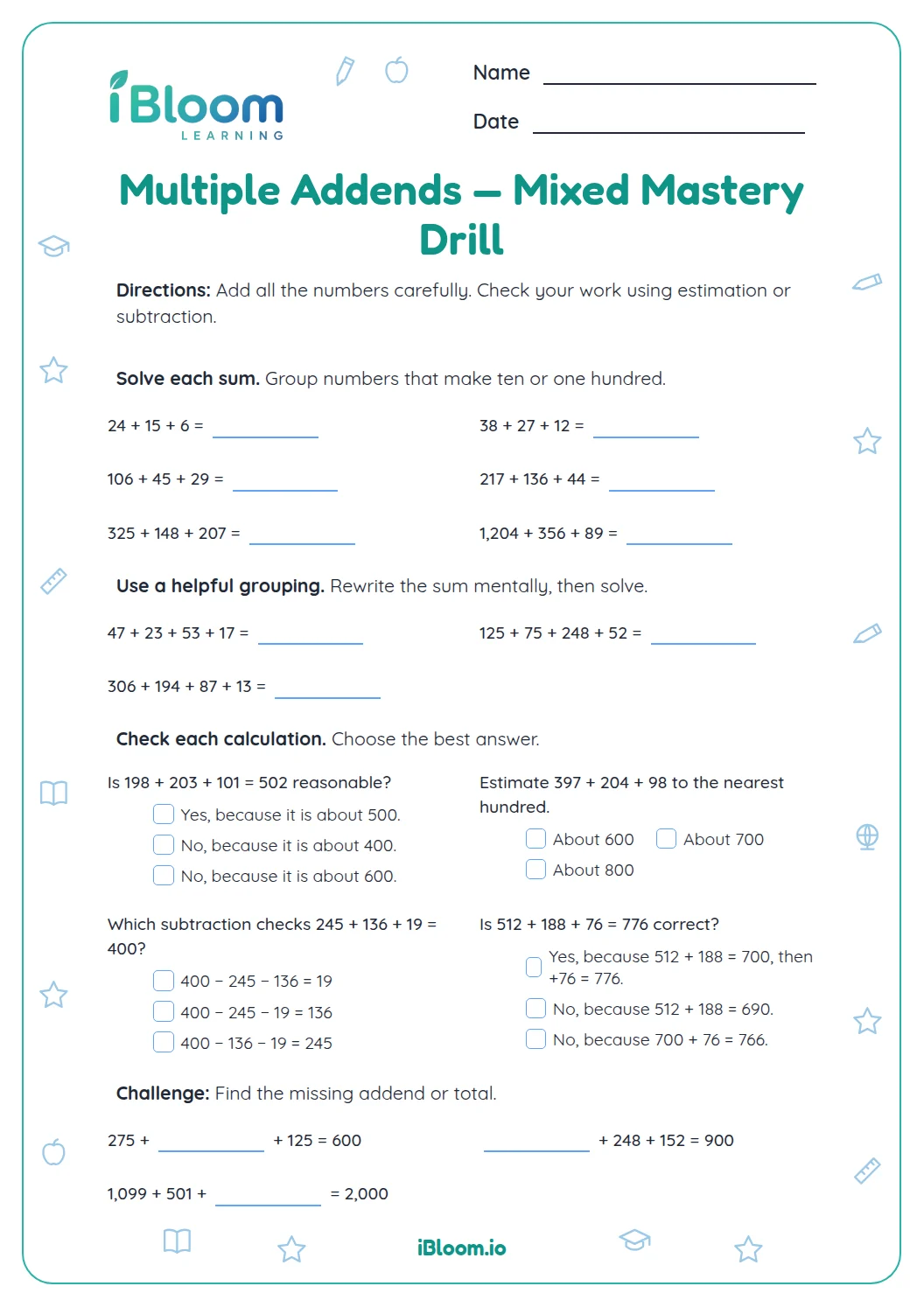
The two worksheet pages move from checking work to correcting sums, comparing groupings, and applying the same addition strategies.
- Part A: four first-error checks
- Part B: four corrected totals
- Part C: four grouping comparisons
- Part D: two final sums
How to use this worksheet
- 1Read the original addends before checking the written work.
- 2Test the first equation before moving to the next one.
- 3Look for pairs that make 10, 20, 30, or another friendly number.
- 4Add the remaining number and check that every addend is included.
Common mistakes and quick fixes
The mistake
Accepting a correct first line even when a later line changes the sum incorrectly.
The fix
Check every equation from left to right until the first false equality appears.
The mistake
Dropping an addend after making a friendly pair.
The fix
Point to each original addend as it appears in the rewritten calculation.
The mistake
Thinking that regrouping changes the total.
The fix
Add both groupings and compare; addition stays the same when addends are regrouped.
Common Core alignment
The calculations use multi-digit addition and place-value strategies.
Add whole numbers using place-value strategies and algorithms.
On this sheet: Students calculate multi-addend sums and examine regrouped addition within 100.
Show the official wordingHide the official wording
Fluently add and subtract within 1000 using strategies and algorithms based on place value, properties of operations, and/or the relationship between addition and subtraction.
What to practice next
Make more practice
Further reading
Questions parents and teachers ask
How many questions are included?
There are 14 questions across two worksheet pages. The separate two-page answer key lets students check first-error choices, missing totals, method comparisons, and final sums. Review a missed item by checking each equality and making sure every original addend is included in the corrected calculation.
What does error analysis ask a student to do?
A student checks a worked calculation and finds the first line that is not true. Looking at the steps in order helps identify where the total went wrong. On this sheet, some examples contain a false first line, while others are correct all the way through.
Why do some examples group two addends first?
Some pairs make a friendly ten, such as 24 + 16 = 40. Adding that pair first can make the final step easier, while the total stays the same. Students compare methods and check the arithmetic rather than choosing a strategy based only on how it looks.
Can both methods be correct?
Yes. Addition can be regrouped, so two different pairs may be added first and still produce the same final total. The method-comparison questions ask students to check each route. On this sheet, each listed method is compared against the same three addends and total.
What should a student do after finding an error?
Correct the first false equation, then finish the addition using all the original addends. A final check can add the numbers in a different order. The key supplies expected results, while students can verify their own work by recomputing the sum.