


About this worksheet
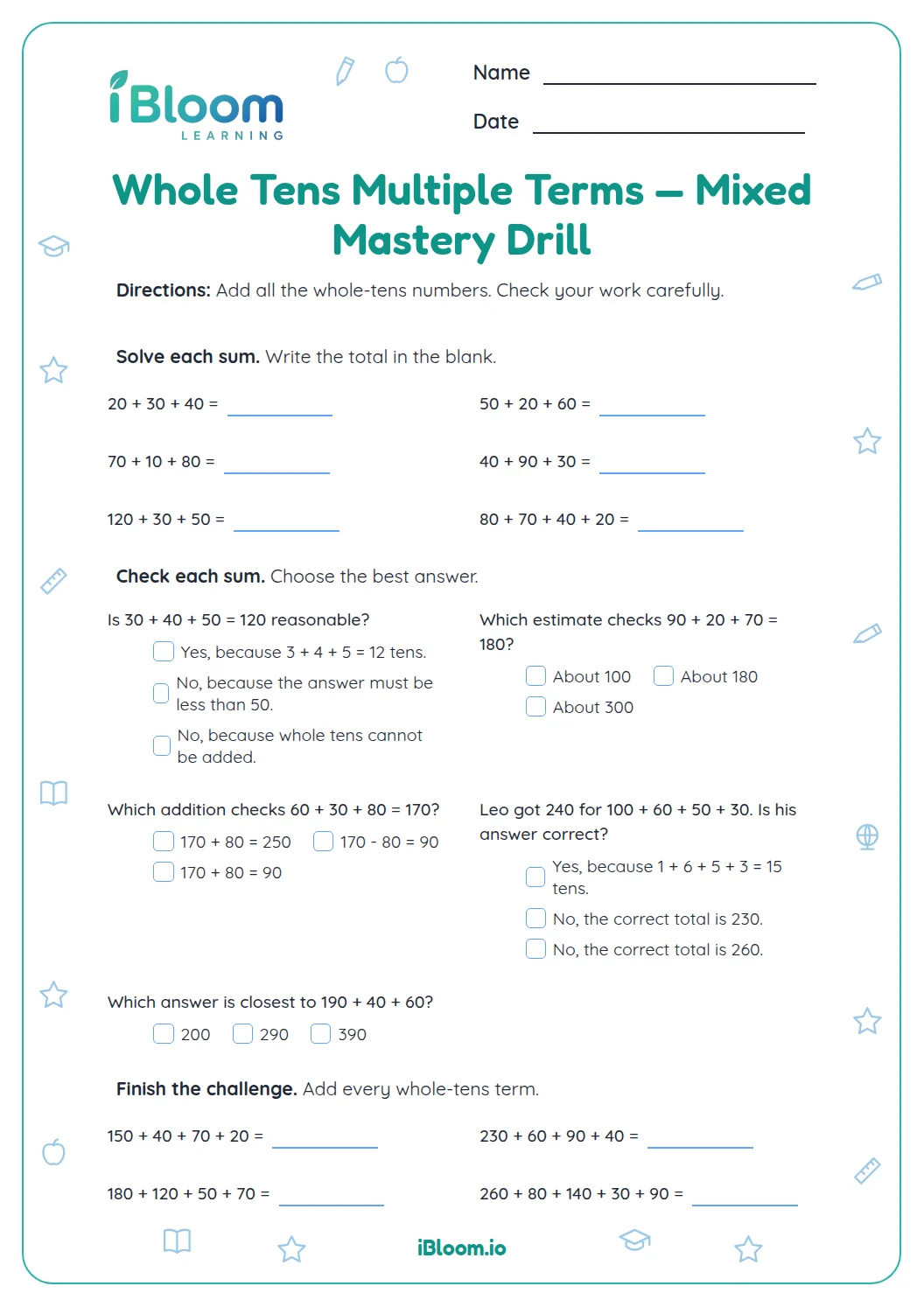
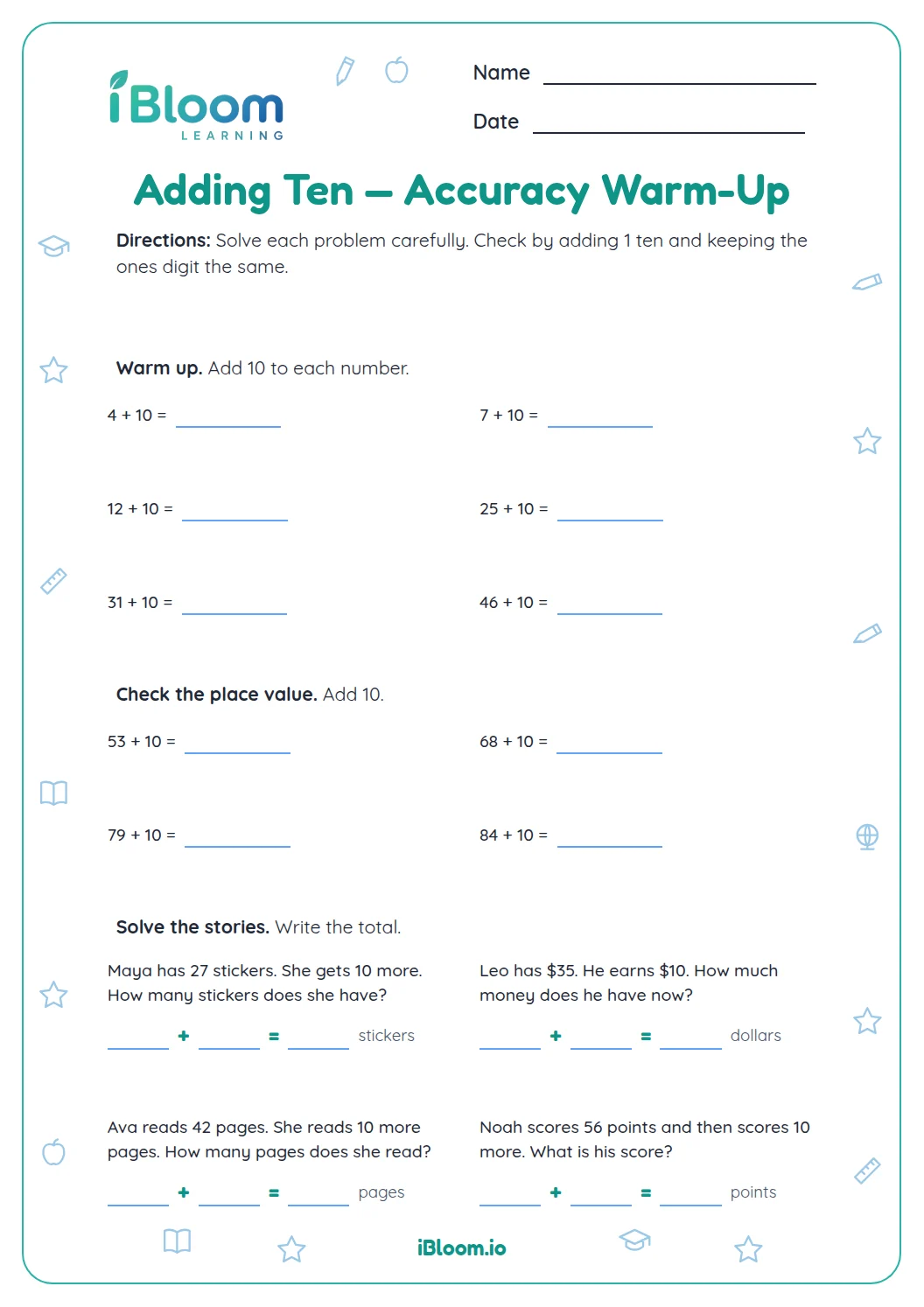
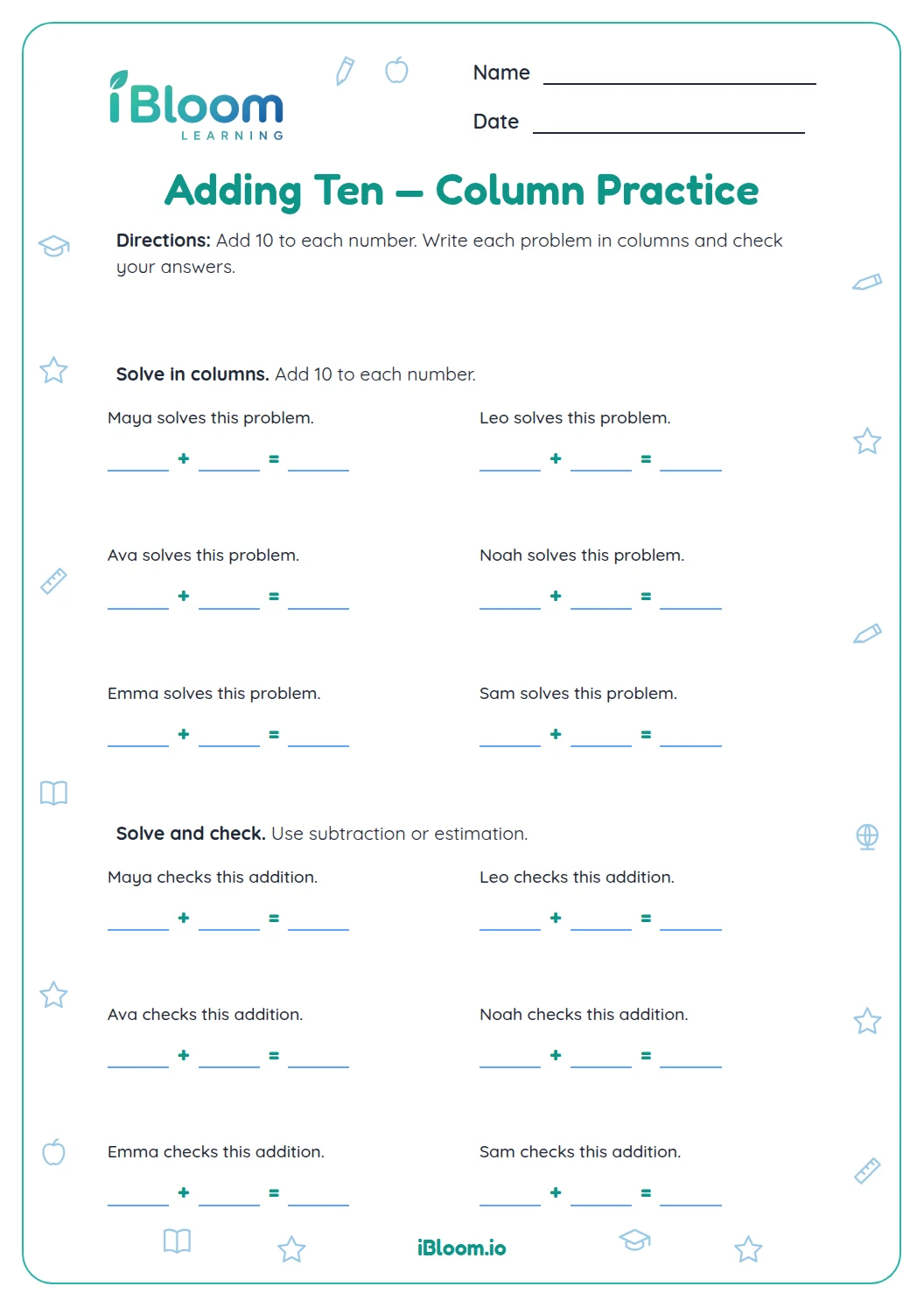
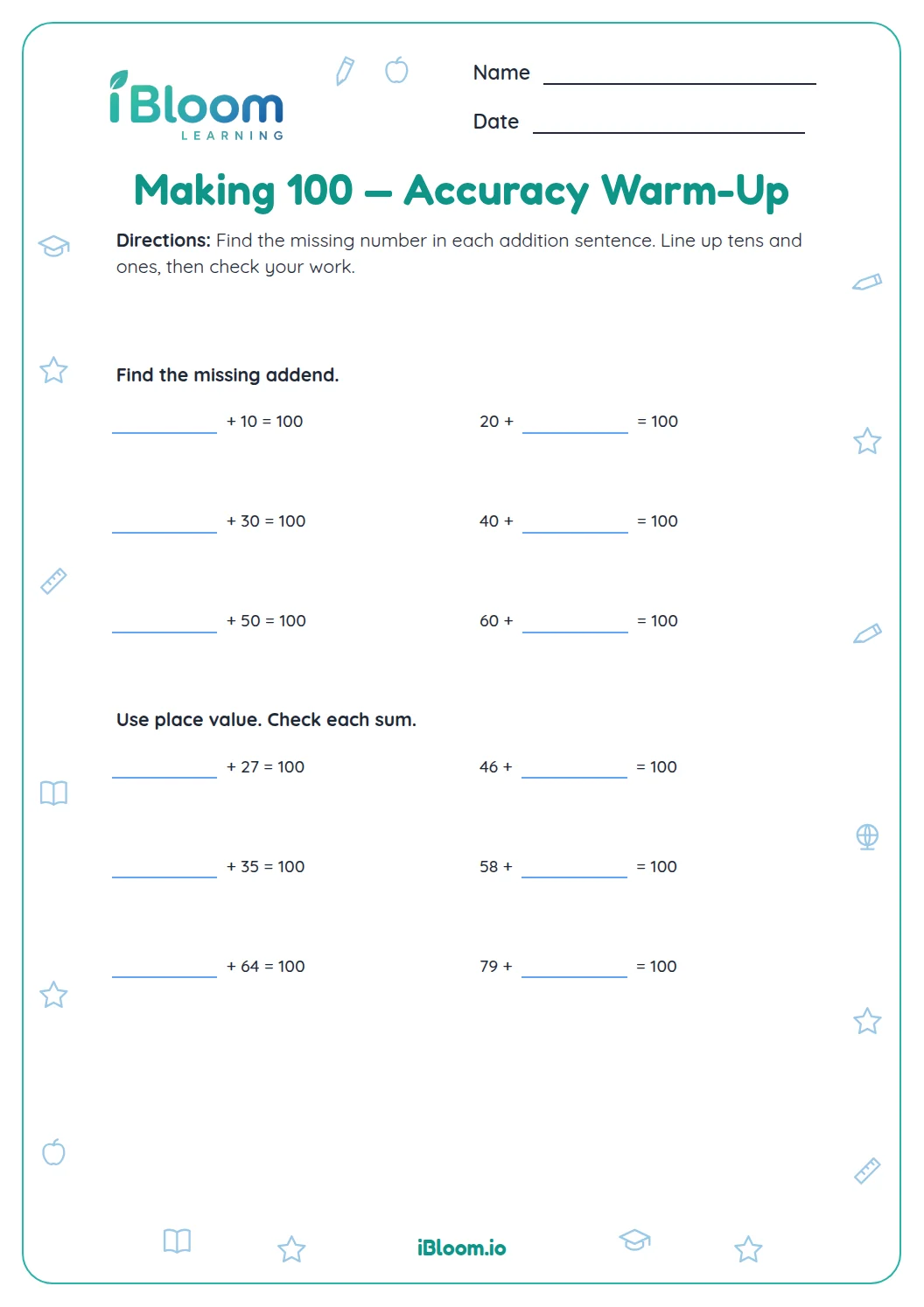
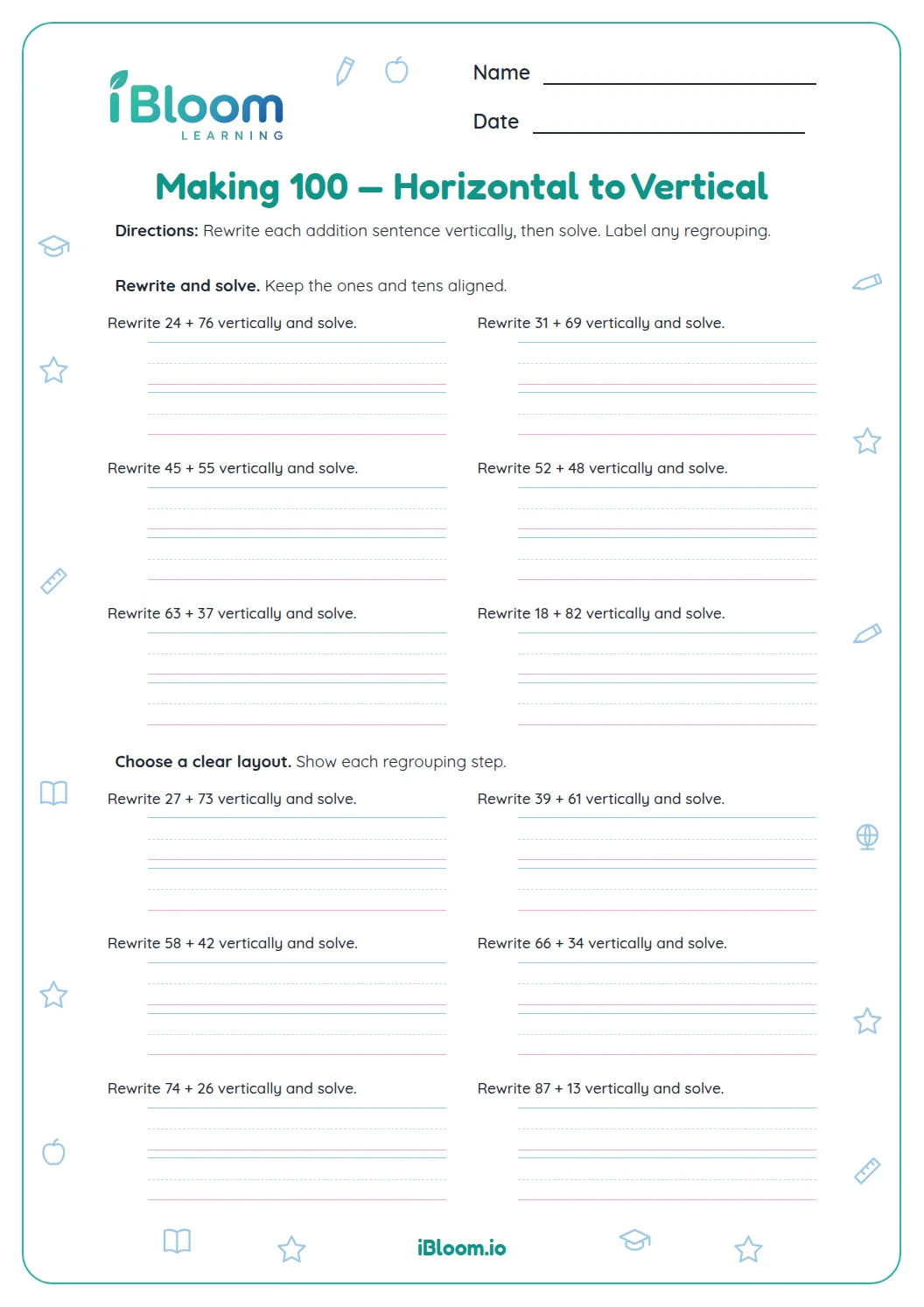
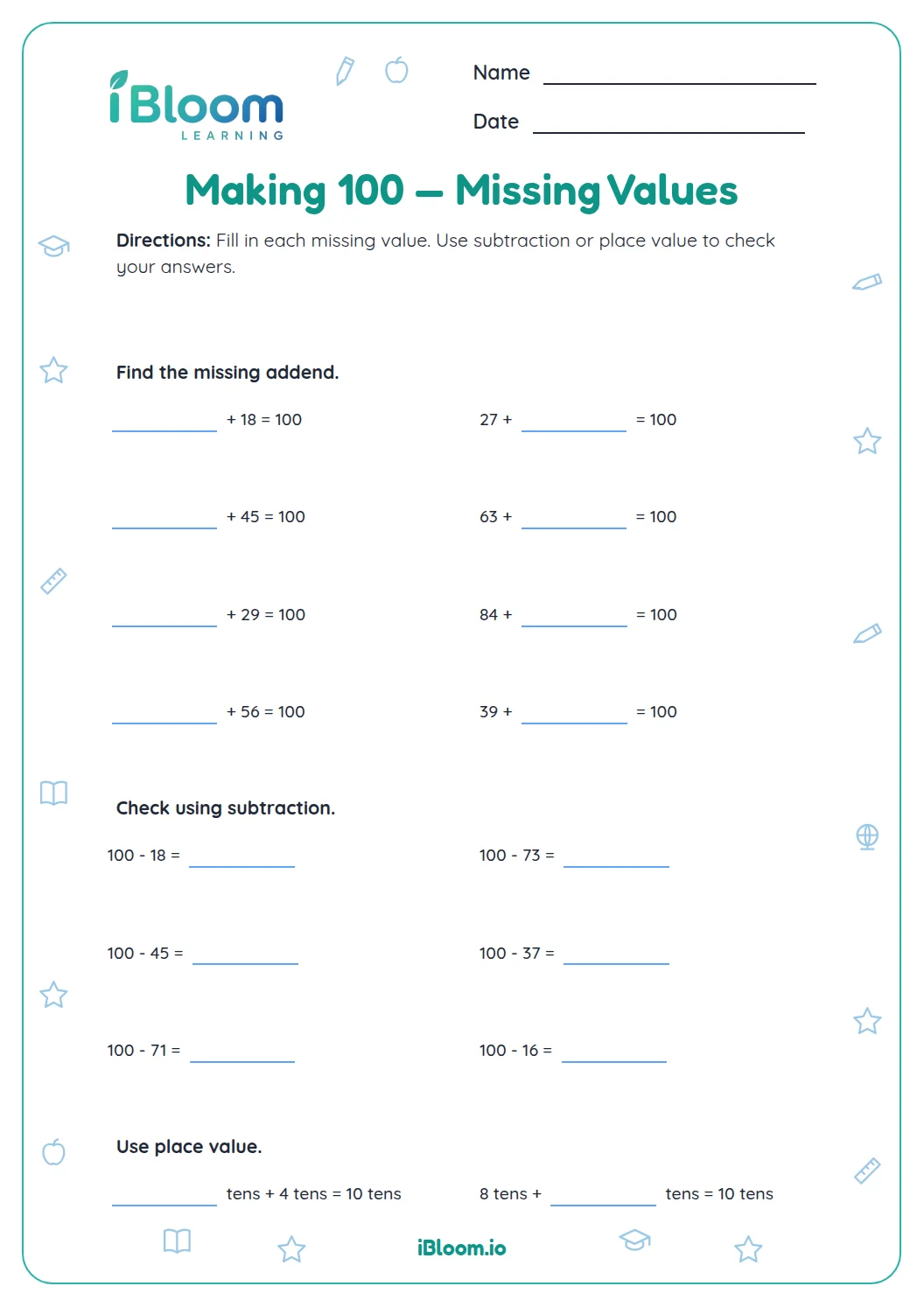
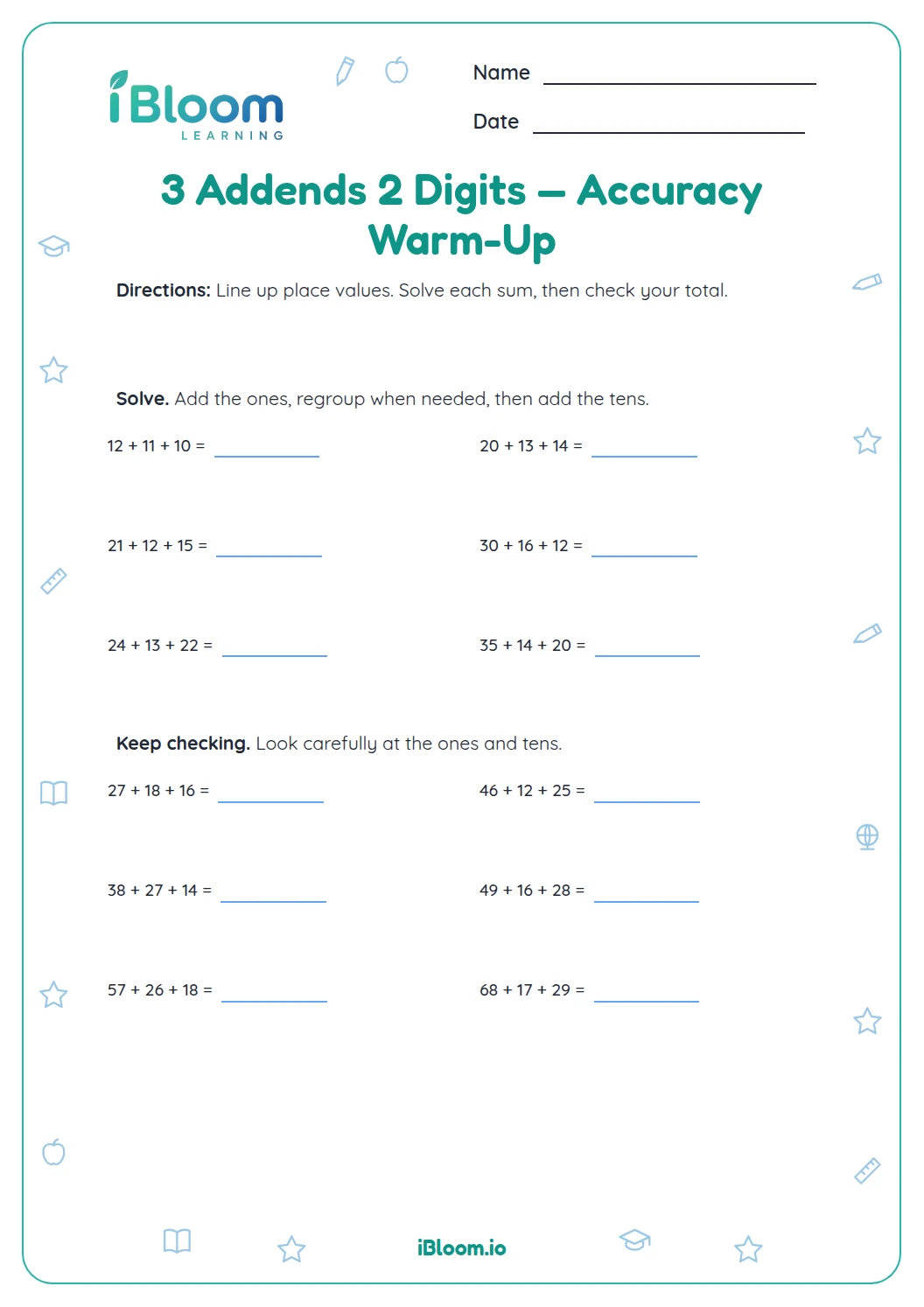
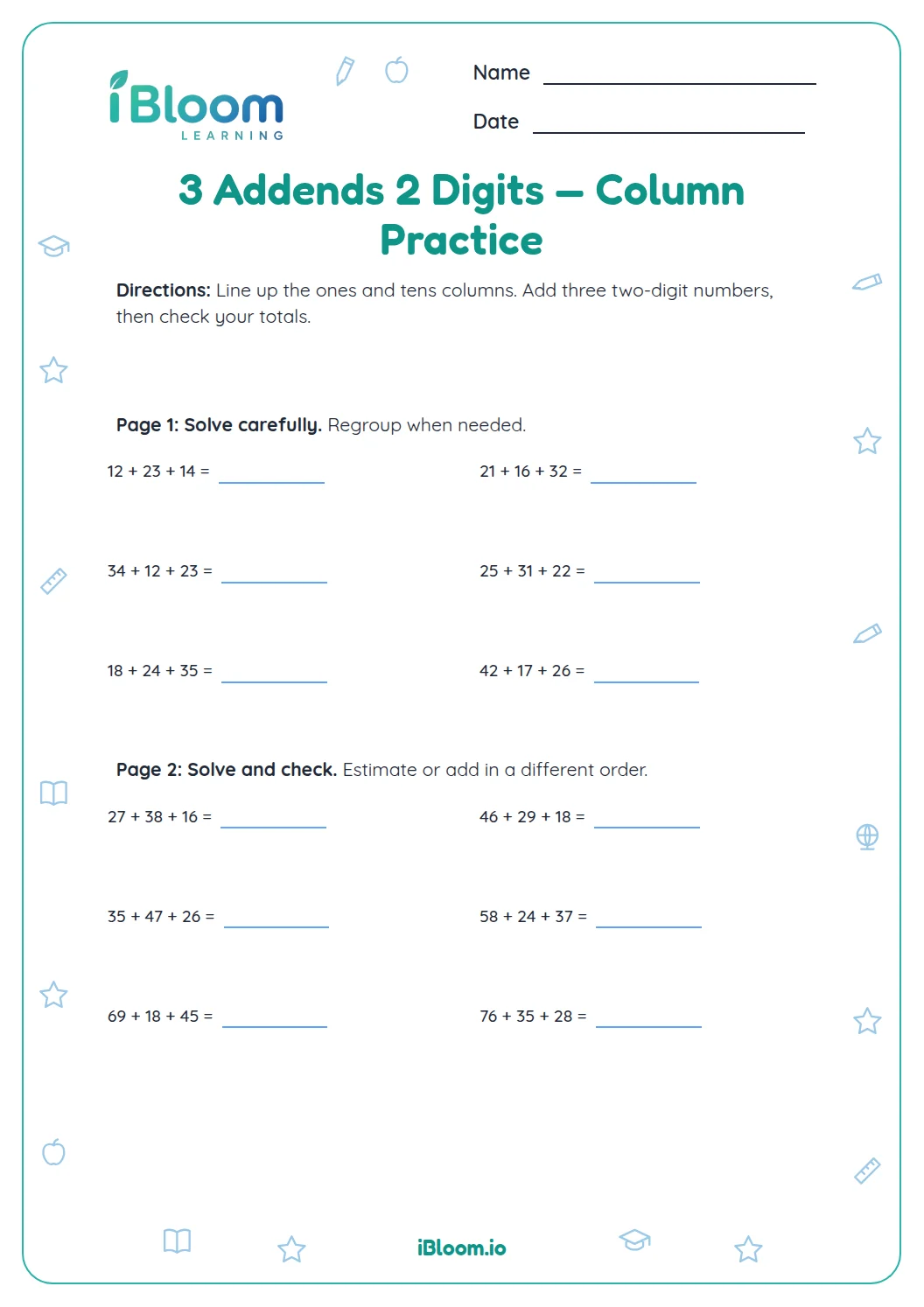
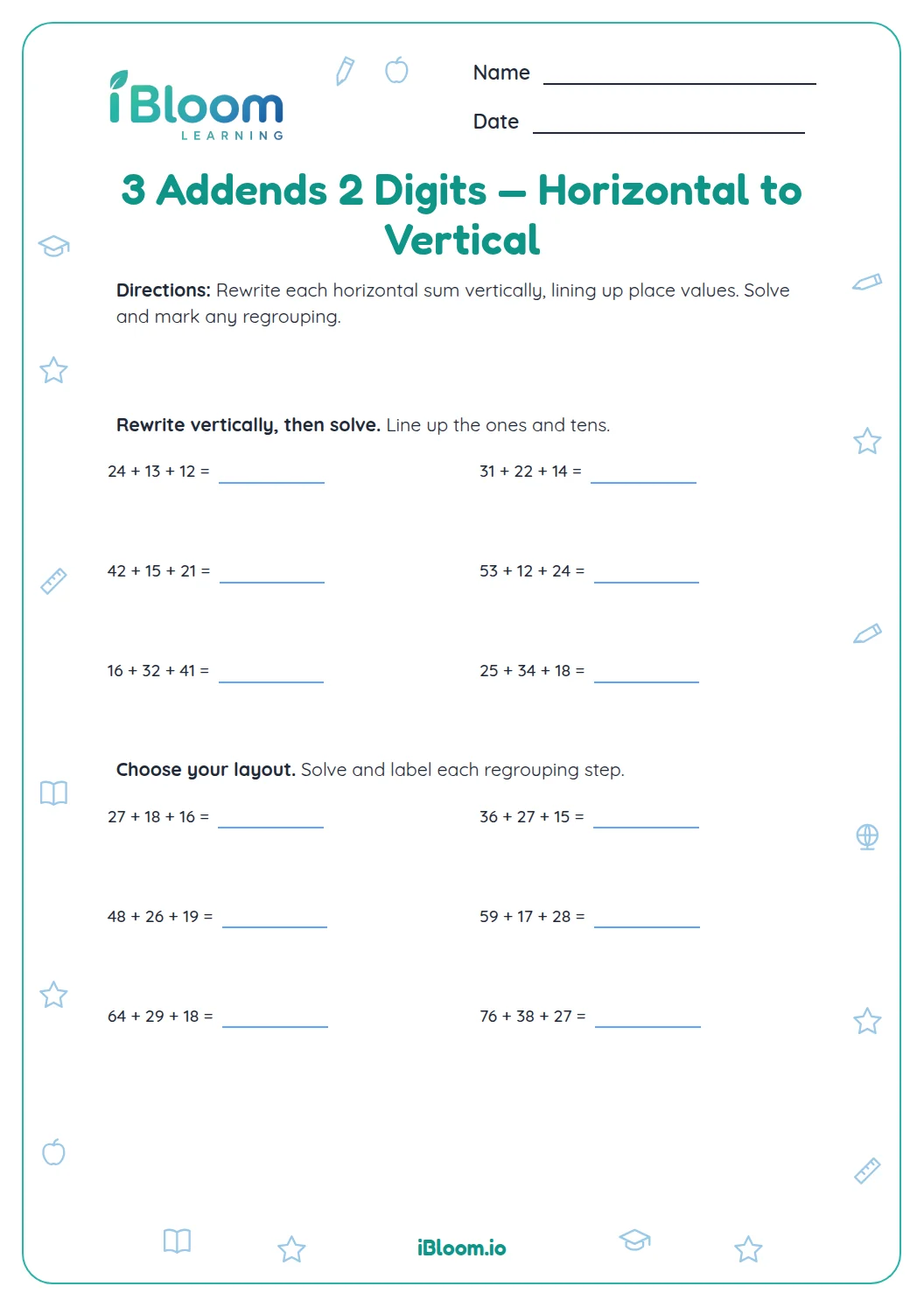
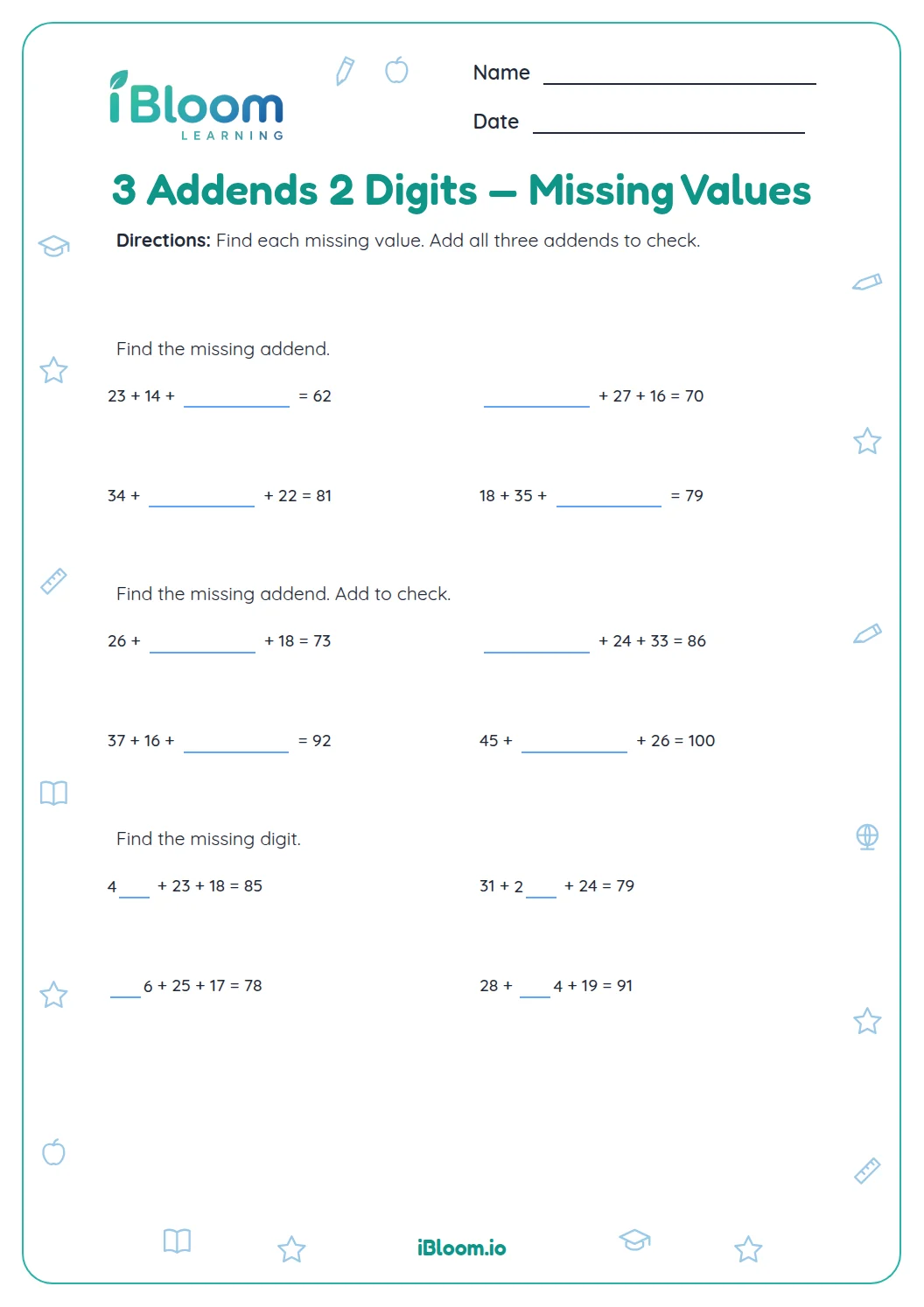
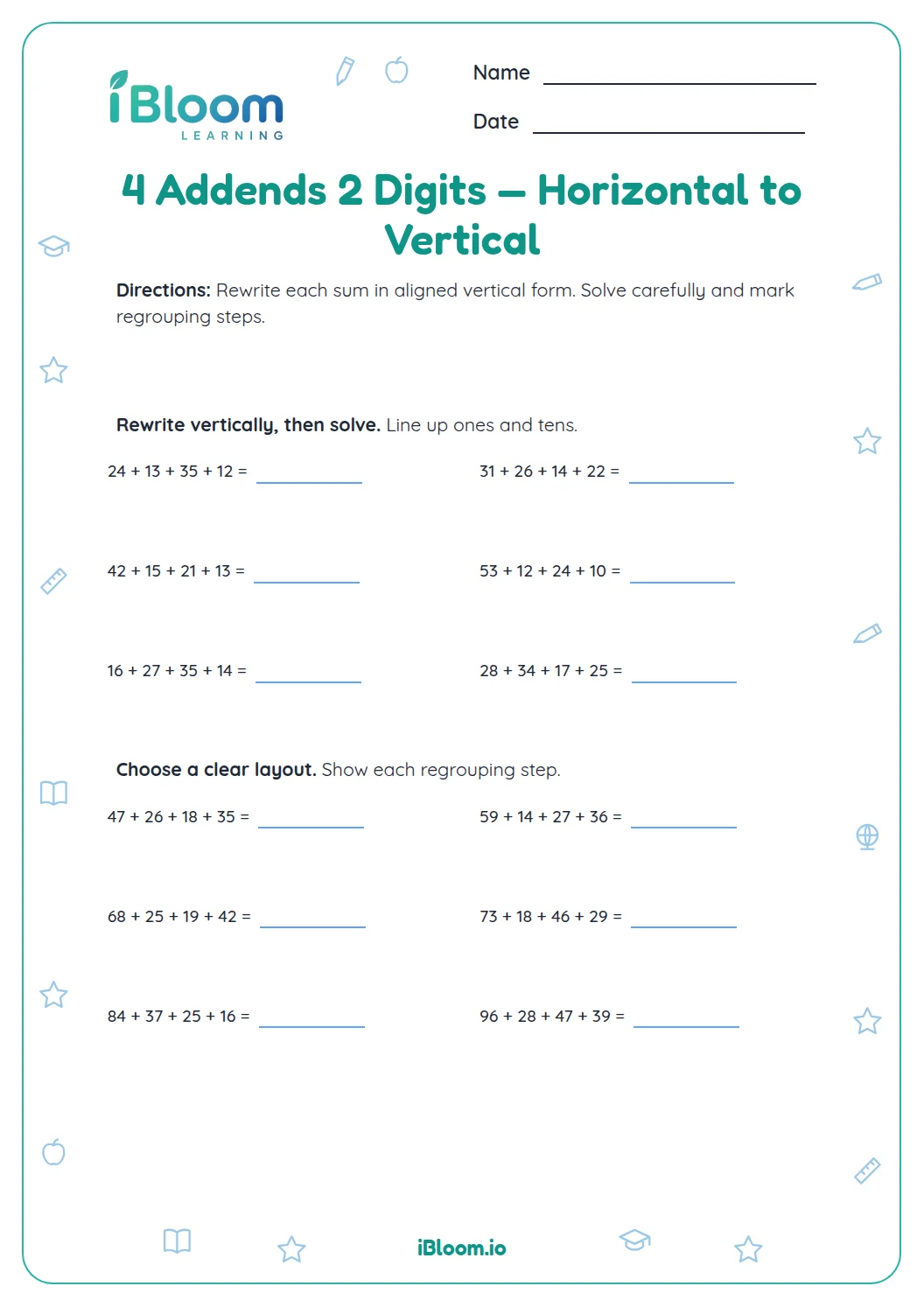
This free whole-tens worksheet gives students in Grades 2–4 space to practice setting up addition in columns. Each of the 16 questions contains three or four two-digit multiples of 10. Students rewrite the horizontal expression vertically on a working grid, line up tens and ones, and calculate the total. Part A uses three addends; Part B uses four. Some totals stay below 100, while others require regrouping tens as hundreds. The practice supports Common Core 2.NBT.B.6, adding up to four two-digit numbers with place-value strategies. A separate key lists every sum.
Aligned to 2.NBT.B.6
How do children set up each column?
The expressions are printed horizontally so children can practice arranging them themselves. On the grid, place each ones digit directly under the previous ones digit. Write the plus sign beside the last addend and draw a line underneath.
Every addend ends in zero, so adding the ones gives zero. Add the tens and decide whether to exchange ten tens for one hundred. The grid leaves space at the left for the hundreds digit.
What happens when the tens add up to more than nine?
Rename the total number of tens using hundreds and tens. Question 3 has 3 tens, 2 tens and 6 tens. Together they make 11 tens, or 1 hundred and 1 ten. Keep the zero in the ones place.
- 130 + 20 + 60
- 2On the grid: stack 30, 20 and 60 with zeros aligned.
- 33 tens + 2 tens + 6 tens = 11 tens
- 411 tens = 1 hundred + 1 ten = 110
How can students check a four-addend sum?
Regroup the addends mentally to make a friendly total. In question 10, 50 + 10 + 40 + 20 can be checked as (50 + 40) + (10 + 20), or 90 + 30 = 120. This offers a second route to the answer after doing the column work.
Another check removes the last addend from the total. For question 10, 120 − 20 = 100, and the first three addends also total 100. Students can say the check aloud; the printed grids are for the column calculations.
Set up, add, and check
- 1Write the first addend near the top of the grid, leaving a column for hundreds at the left.
- 2Copy the other addends underneath, keeping all the ones digits in one column.
- 3Write a plus sign by the last addend and draw a line under the column.
- 4Add the ones, then add the tens and regroup as hundreds when needed.
- 5Write the total in the answer box and check it by pairing addends or subtracting one addend.
Mistakes to watch for
The mistake
Writing 11 for 30 + 20 + 60.
The fix
Say “11 tens” and rename it as 110. The zero records that there are no leftover ones.
The mistake
Losing an addend in a four-number sum.
The fix
Touch each printed addend as you copy it, then count four numbers in your column before adding.
The mistake
Writing 80 as 8 in the vertical setup.
The fix
Keep both digits. Align the zero under the other zeros and the 8 under the other tens digits.
Common Core alignment
Add three or four two-digit multiples of ten using place value and regrouping.
On this sheet: All 16 problems add three or four two-digit numbers; column work makes the tens and ones explicit.
Show the official wordingHide the official wording
Add up to four two-digit numbers using strategies based on place value and properties of operations.
What to practice next
Make more practice
Further reading
Questions parents and teachers ask
Are the numbers already stacked in columns?
Students set up the columns themselves on the printed working grids. Each expression appears horizontally, and the directions ask children to rewrite it vertically before adding. This makes lining up the tens and ones part of the practice, with an answer box for the final total.
Why does every answer end in zero?
Each addend is a whole number of tens, so there are no leftover ones to add. Adding the ones column gives zero in every problem. The tens can combine into hundreds, but the ones digit stays zero whether the total is 80, 110 or 300.
Does this worksheet include regrouping?
Yes. Several sums contain ten or more tens, so students rename part of the total as hundreds. For example, 30 + 20 + 60 makes 11 tens, or 110. The working grids give children room to include the hundreds place when they set up their sums.
Which grades can use this drill?
The sheet is labeled for Grades 2–4 and practices the place-value addition described in CCSS 2.NBT.B.6. Use it when a child can identify tens and ones and is ready to add several two-digit numbers. Older students can use the same page for a focused accuracy review.
Should I time this addition practice?
Timing is optional; accurate setup is the main task. Let children finish the two parts at a comfortable pace and use the key to check all 16 totals. If you repeat the sheet, compare how carefully they align and include every addend before considering their speed.