
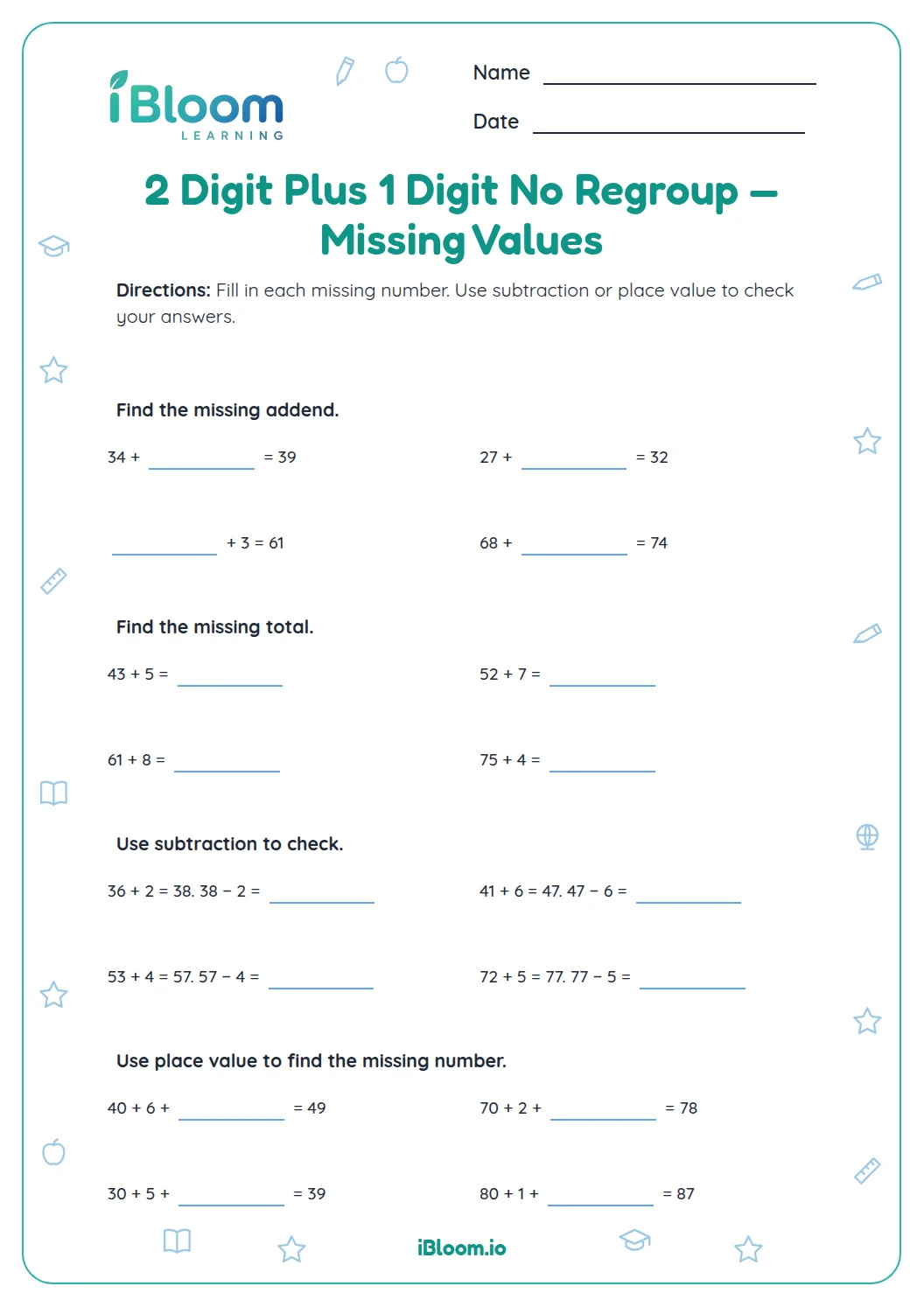
About this worksheet
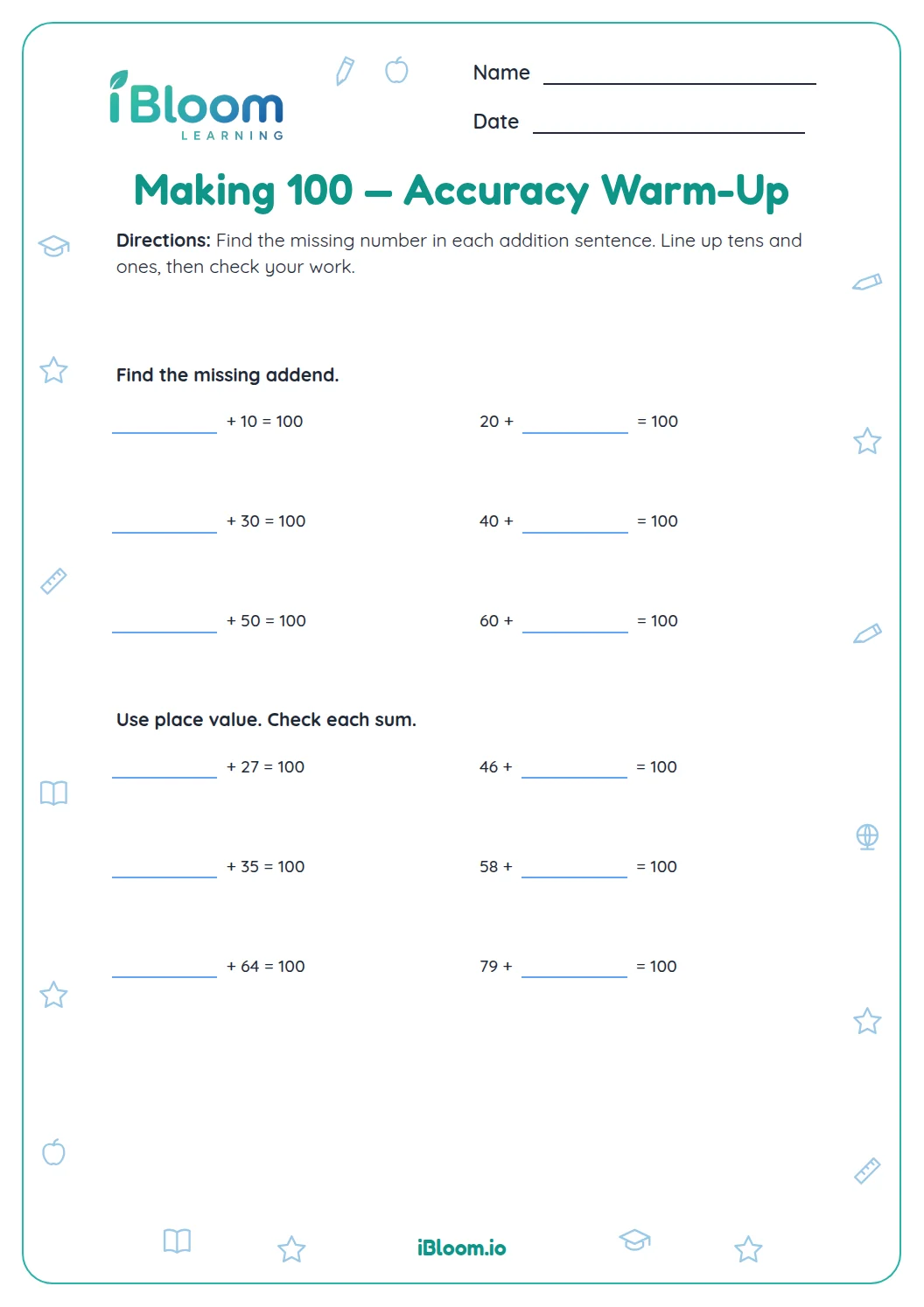
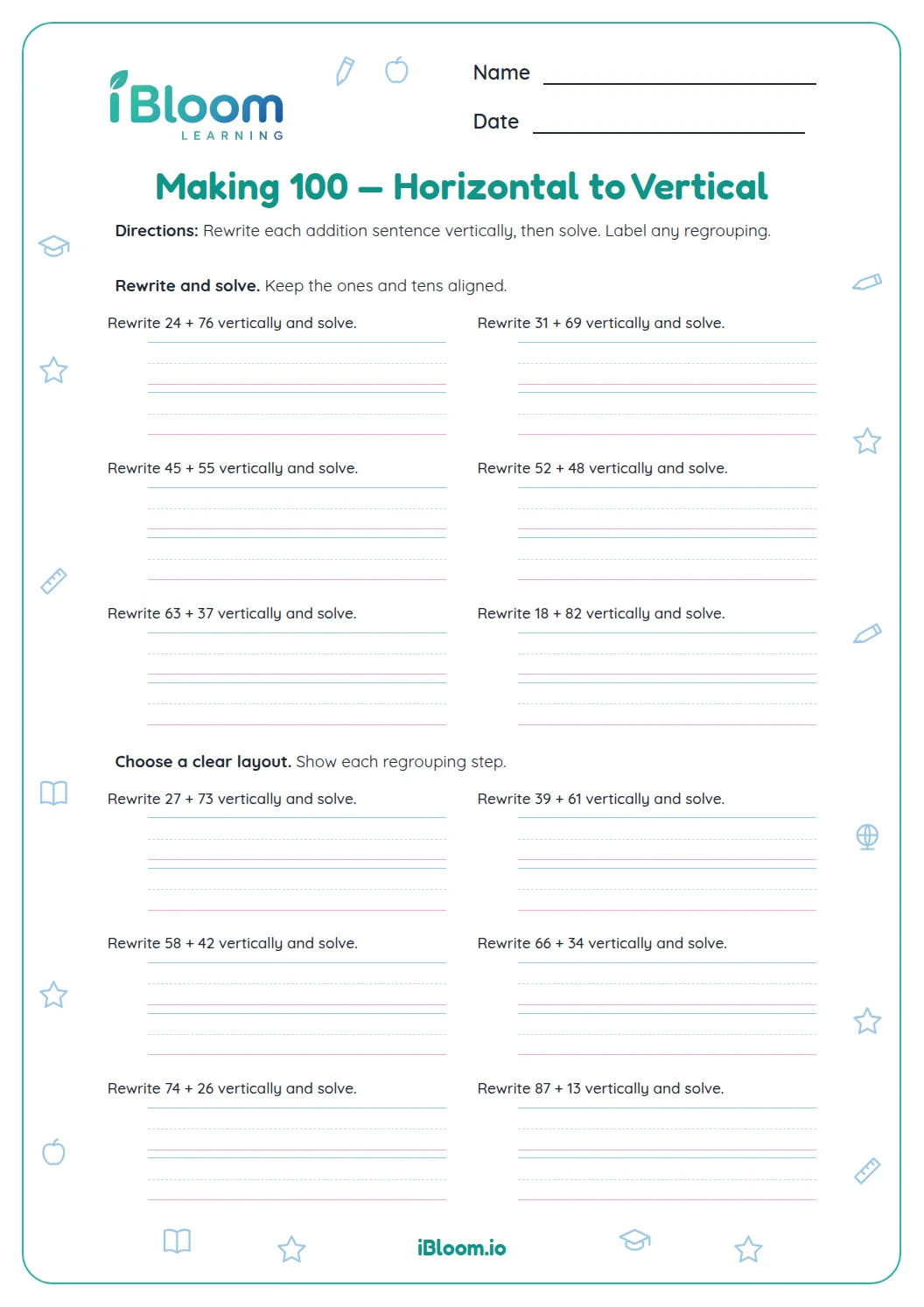
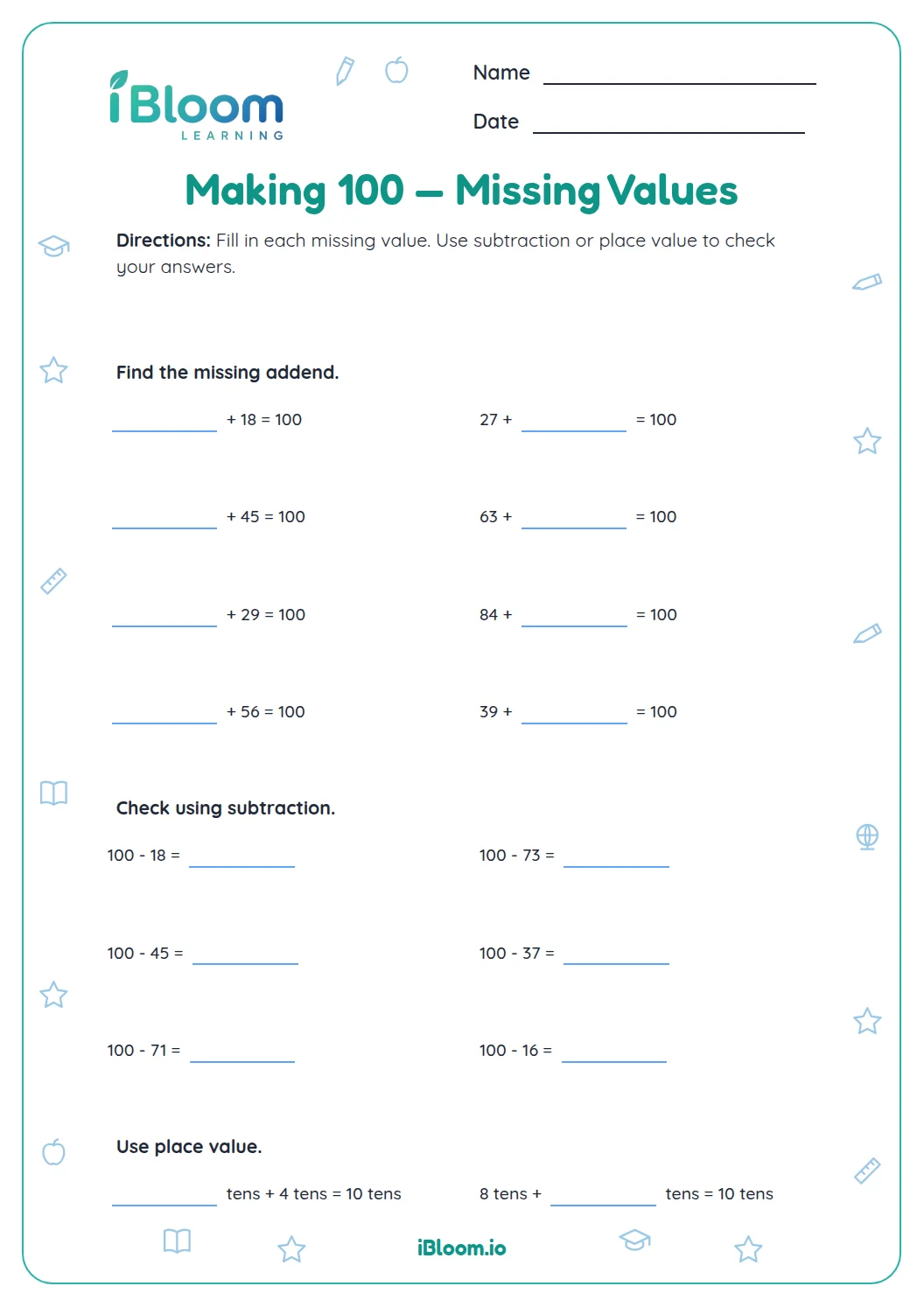
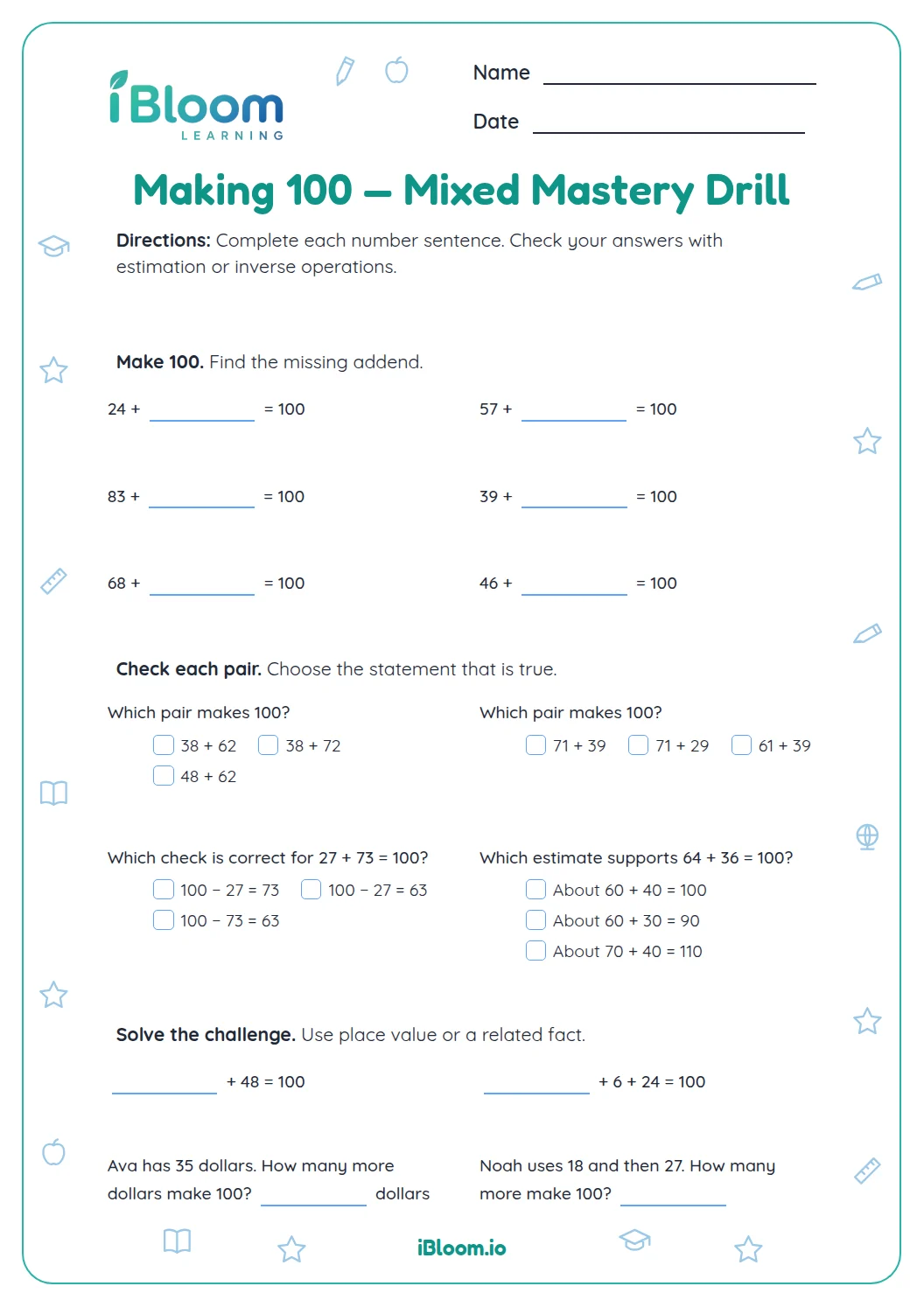
This printable gives Grades 2–4 learners 16 column addition and subtraction problems built around pairs near 100. Children add two-digit numbers, then use subtraction to check related pairs whose totals are 99 or 100. It practices place-value addition and subtraction within 100, with a separate answer key.
Aligned to 2.NBT.B.5
How do you add a pair in columns?
Part A practices two-digit column sums with totals of 99 or 100. Line up ones and tens, then add by place.
How can subtraction check a sum?
Subtract one addend from the given total to check its partner. For 34 + 66, 100 − 34 = 66.
- 134 + 66 = ___
- 230 + 60 = 90; 4 + 6 = 10.
- 390 + 10 = 100.
What is in the second part?
Part B includes checking pairs that total 99 or 100. For 18 + 81 = 99, compute 99 − 18 to confirm 81.
- 118 + 81 = 99
- 299 − 18 = 81
How to use the column practice
- 1Line up ones beneath ones and tens beneath tens.
- 2Add the ones, regroup if needed, and combine the tens.
- 3For a check item, subtract the given addend from 100.
- 4Compare the difference with the partner addend.
- 5Use the key to review each result.
Column addition slips to catch
The mistake
Adding digits in the same row without tracking their place value.
The fix
Keep ones in the ones column and tens in the tens column.
The mistake
Forgetting to regroup when the ones make ten.
The fix
Write the ones digit and add the carried ten to the tens column.
The mistake
Subtracting 100 from an addend instead of the addend from 100.
The fix
Write the check as 100 − the known addend.
Common Core alignment
Add and subtract the two-digit pairs within 100.
On this sheet: Add two-digit numbers and use subtraction to check the related addend within 100.
Show the official wordingHide the official wording
Fluently add and subtract within 100 using strategies based on place value, properties of operations, and/or the relationship between addition and subtraction.
What to practice next
Make more practice
Further reading
Questions parents and teachers ask
Why do some pairs total 99 and others 100?
The worksheet practices two-digit column addition with totals close to 100. Part A includes sums of 99 and 100, and Part B asks learners to check related pairs by subtraction. This variation helps learners attend to the actual addends and total in each problem, while keeping place-value work central.
How does subtraction check an addition pair?
Subtract one addend from the sum. For 49 + 51 = 100, compute 100 − 49 to find 51. The result matches the other addend, confirming the pair. Try the check after completing the addition in columns to see the inverse fact.
Does the worksheet include regrouping?
Some pairs require combining ones to make a new ten, such as 34 + 66. Keep ones and tens aligned, regroup when needed, and use the key to check each result. The pairs include both totals of 99 and 100.
How many problems are included?
There are 16 questions in two parts: eight column addition problems and eight subtraction checks. The separate answer key lists each sum or difference. Both the worksheet and answer key print across two pages for easy handling after attempting the questions.
How can a child check an answer key result?
For an addition item, add the two numbers and compare the sum with the key. For a check item, add the difference to the known addend; the result should match the printed total. This confirms the inverse relationship used in the second part.