
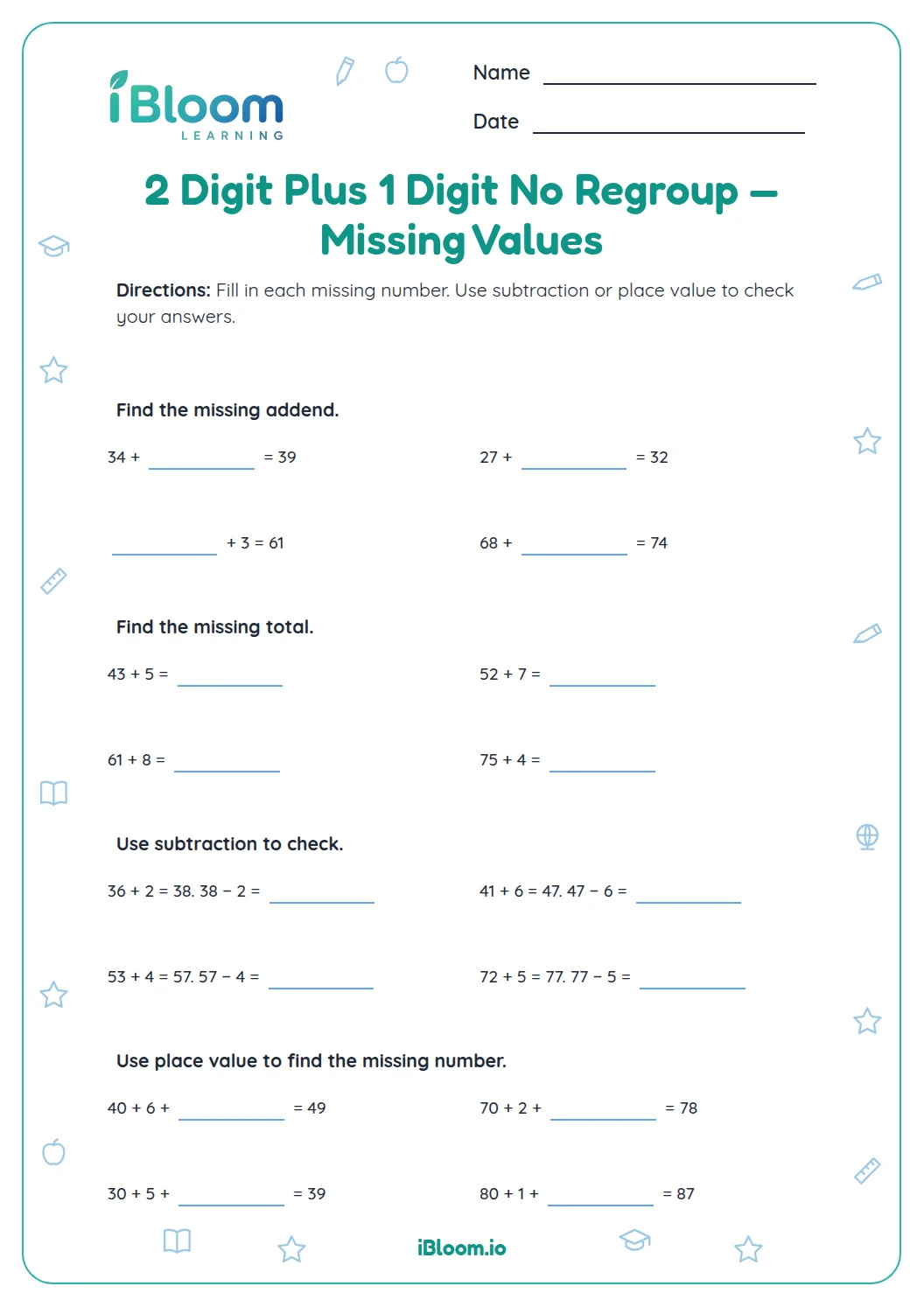
About this worksheet
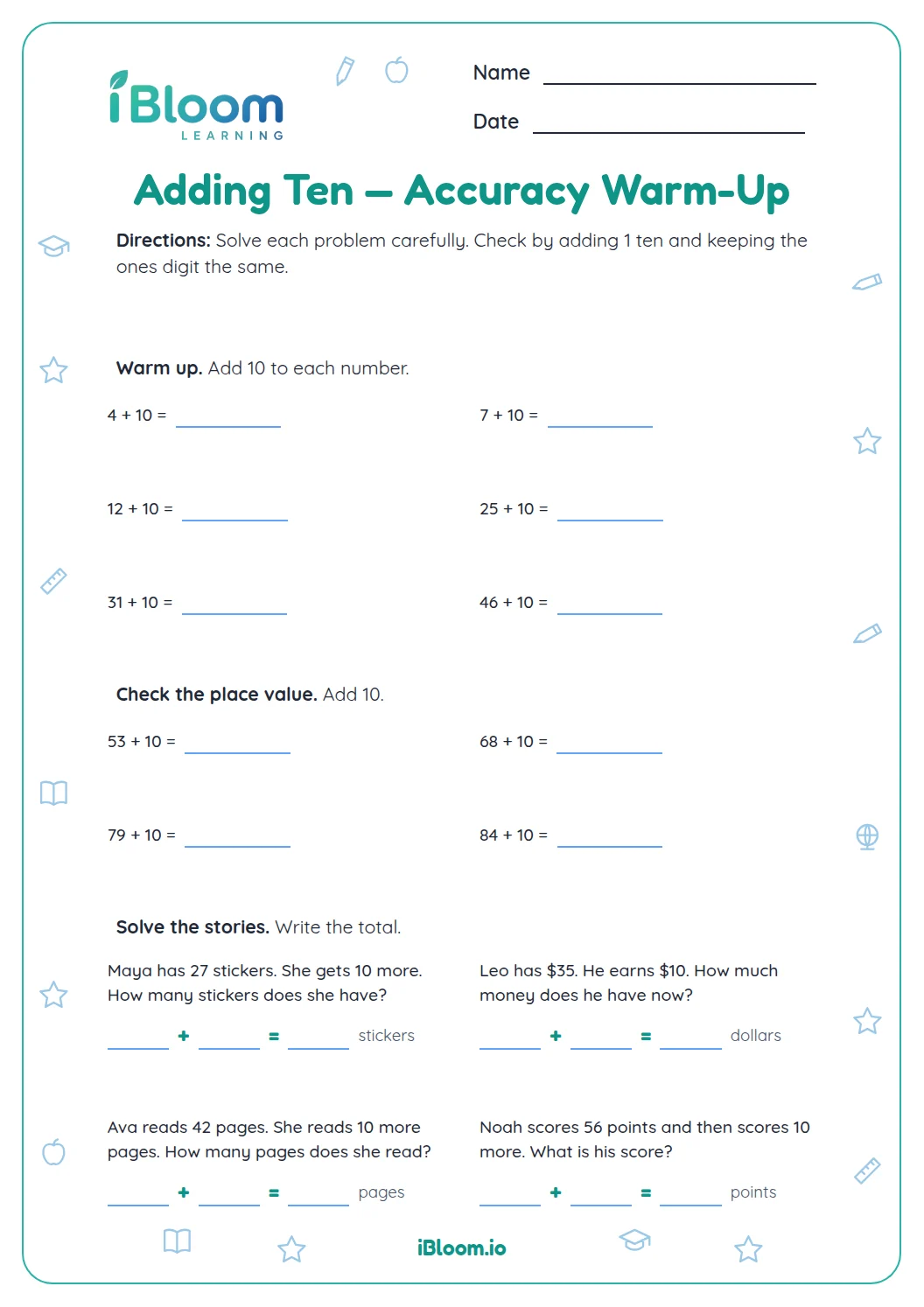
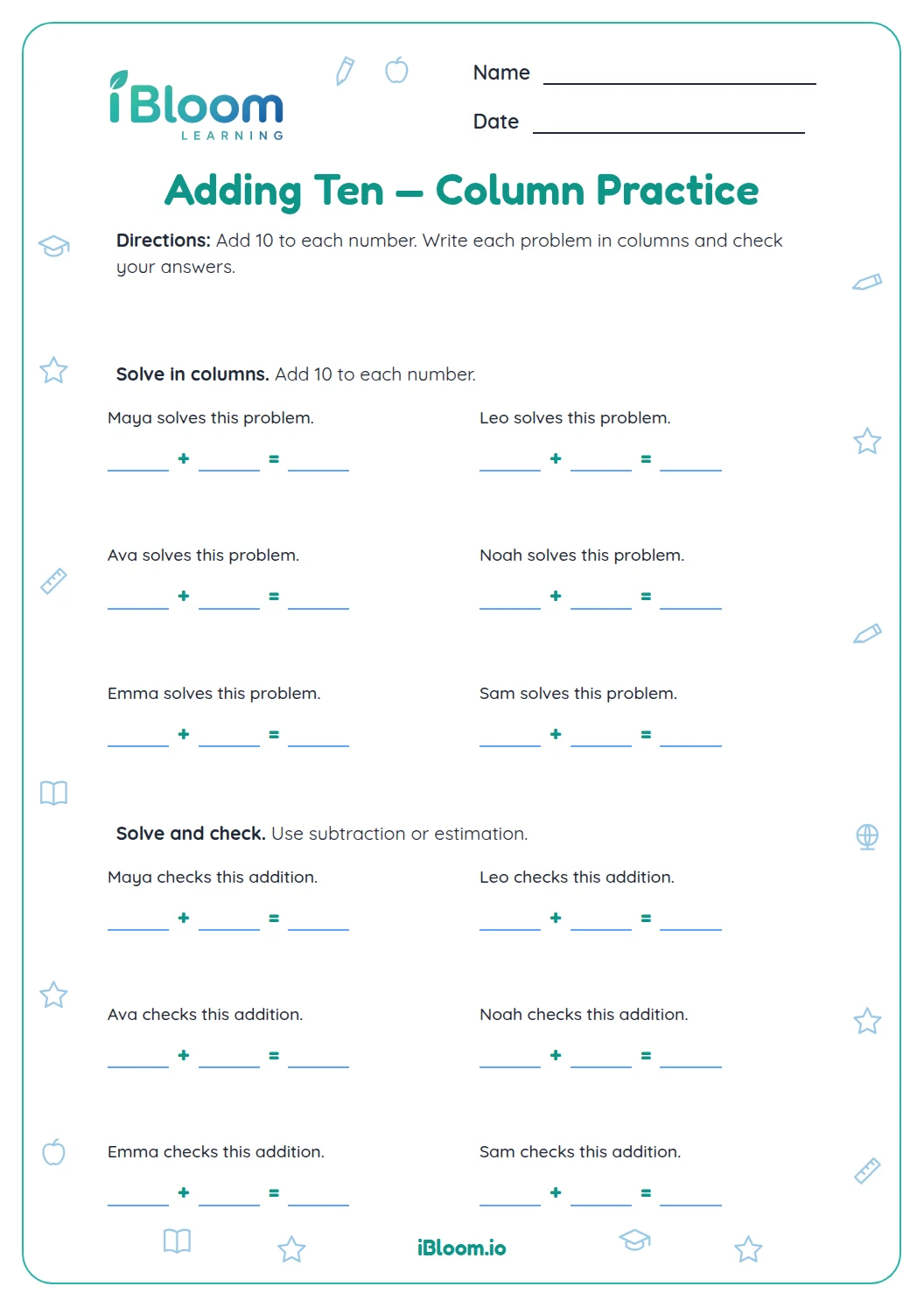
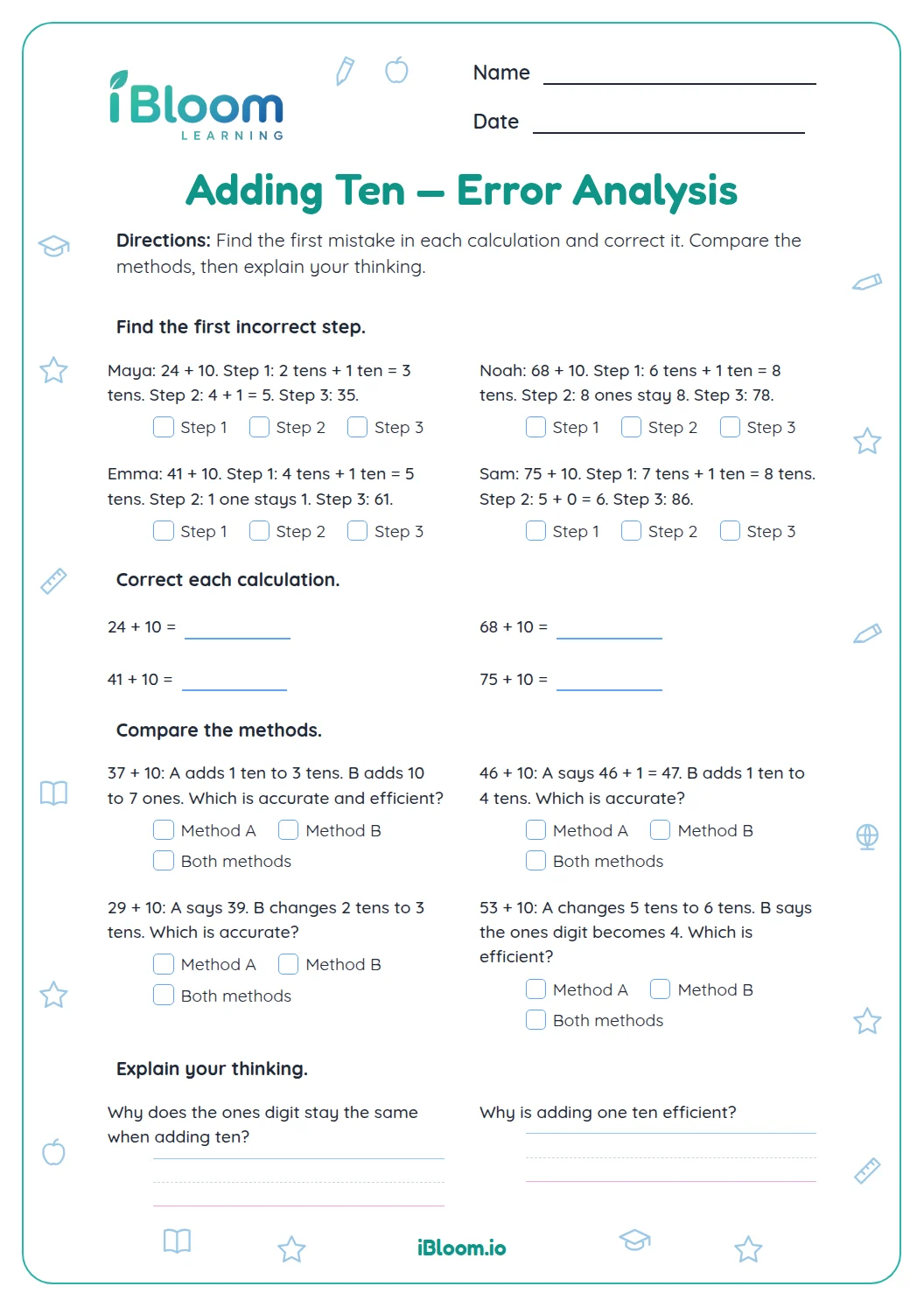
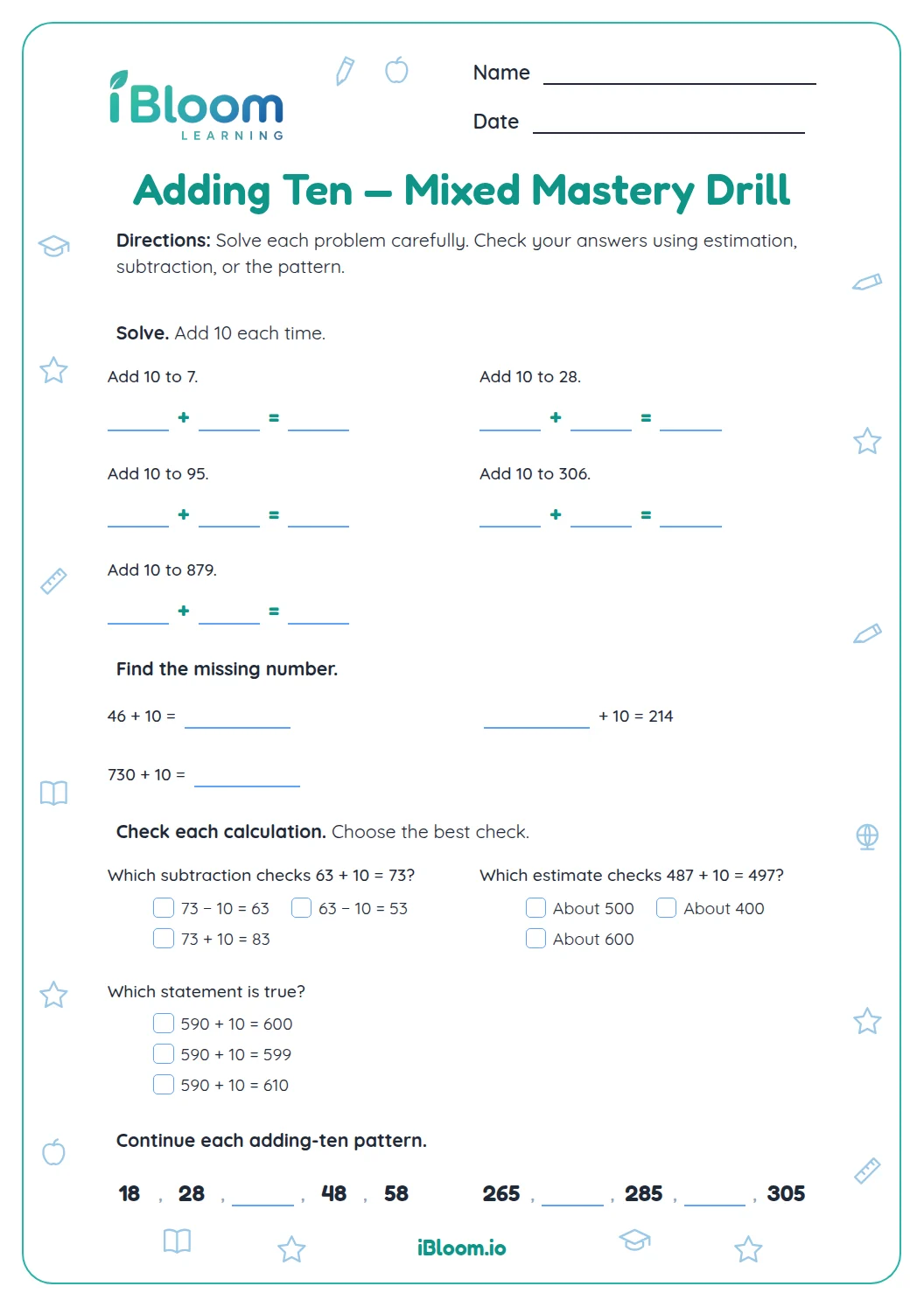
This free Grade 2 worksheet gives students 20 ways to practice adding 10 to three-digit numbers. They find missing sums, work backward to find a starting number, and answer four place-value questions. The separate answer key lists each result. The problems reinforce the pattern that adding 10 increases the tens by one while the ones digit stays the same, including when the number crosses a hundred.
Aligned to 2.NBT.B.8
What changes when you add 10?
Adding 10 adds one ten. The ones digit stays the same, and the tens digit increases by one; when the tens digit is 9, the number crosses into the next hundred.
For example, 438 + 10 = 448: the 8 ones remain, and the tens change from 3 to 4.
- 1438 + 10 = 448
- 2The ones digit stays 8; the tens digit increases by one.
How do you solve a missing-value item?
When the sum is missing, add one ten to the given number. When the starting number is missing, subtract 10 from the sum to work backward.
The page uses both missing sums and missing starting numbers, then finishes with four quick choices that check the same place-value pattern.
How can students check their answers?
Look at the ones digit first: it should stay the same. Then check that the tens have increased by one, accounting for a change in the hundreds when crossing a hundred.
How to use this worksheet
- 1Read whether the start or sum is missing.
- 2If the sum is missing, add one ten.
- 3If the start is missing, subtract one ten from the sum.
- 4Check the ones digit stays the same.
- 5Use the key to review any item that felt tricky.
Common mistakes and quick fixes
The mistake
Change the ones digit instead of the tens.
The fix
Compare the ones digit before and after; it must match.
The mistake
Add one to the number rather than ten.
The fix
One ten is 10, so the tens place changes.
The mistake
Forget regrouping from 390 to 400.
The fix
Count up by ten and rename ten tens as one hundred.
Common Core alignment
This page gives students focused practice with the named Common Core skill.
Mentally add 10 to three-digit numbers by changing the tens digit.
On this sheet: Every item asks students to add 10 mentally to a number from 100 to 900.
Show the official wordingHide the official wording
Mentally add 10 or 100 to a given number 100-900, and mentally subtract 10 or 100 from a given number 100-900.
What to practice next
Make more practice
Further reading
Questions parents and teachers ask
What does this adding 10 worksheet practice?
Students mentally add 10 to three-digit numbers, find missing sums, and work backward to find missing starting numbers. Four final choices check the place-value pattern. The separate answer key lists all 20 answers. The examples include changes across a hundred as well as changes within one hundred.
Which grade is this page for?
The worksheet is labeled Grade 2 and focuses on adding 10 to three-digit numbers. An adult can invite the student to say which digit changes and which digit stays the same before checking a result. The questions focus on the same place-value pattern throughout the worksheet.
How should we use the answer key?
Complete the equations before checking the key. If an answer differs, compare the ones digit with the starting number, then check that the tens increased by one. For a missing starting number, subtract 10 from the given sum. Check the ones digit and the tens digit before moving on to another equation.
How long will the worksheet take?
Plan for about 20 minutes for the 20 questions. Students can complete the missing-value equations first and then finish with four place-value choices. Review one example that crosses a hundred, such as 294 + 10 = 304. The sheet has two worksheet pages and two key pages for review.
What happens when adding 10 crosses a hundred?
The hundreds digit increases when the tens move from 9 to 0. For example, 294 + 10 = 304. The ones digit remains 4, while the total grows by one ten. This reverse check uses the same relationship as adding ten.