





About this worksheet
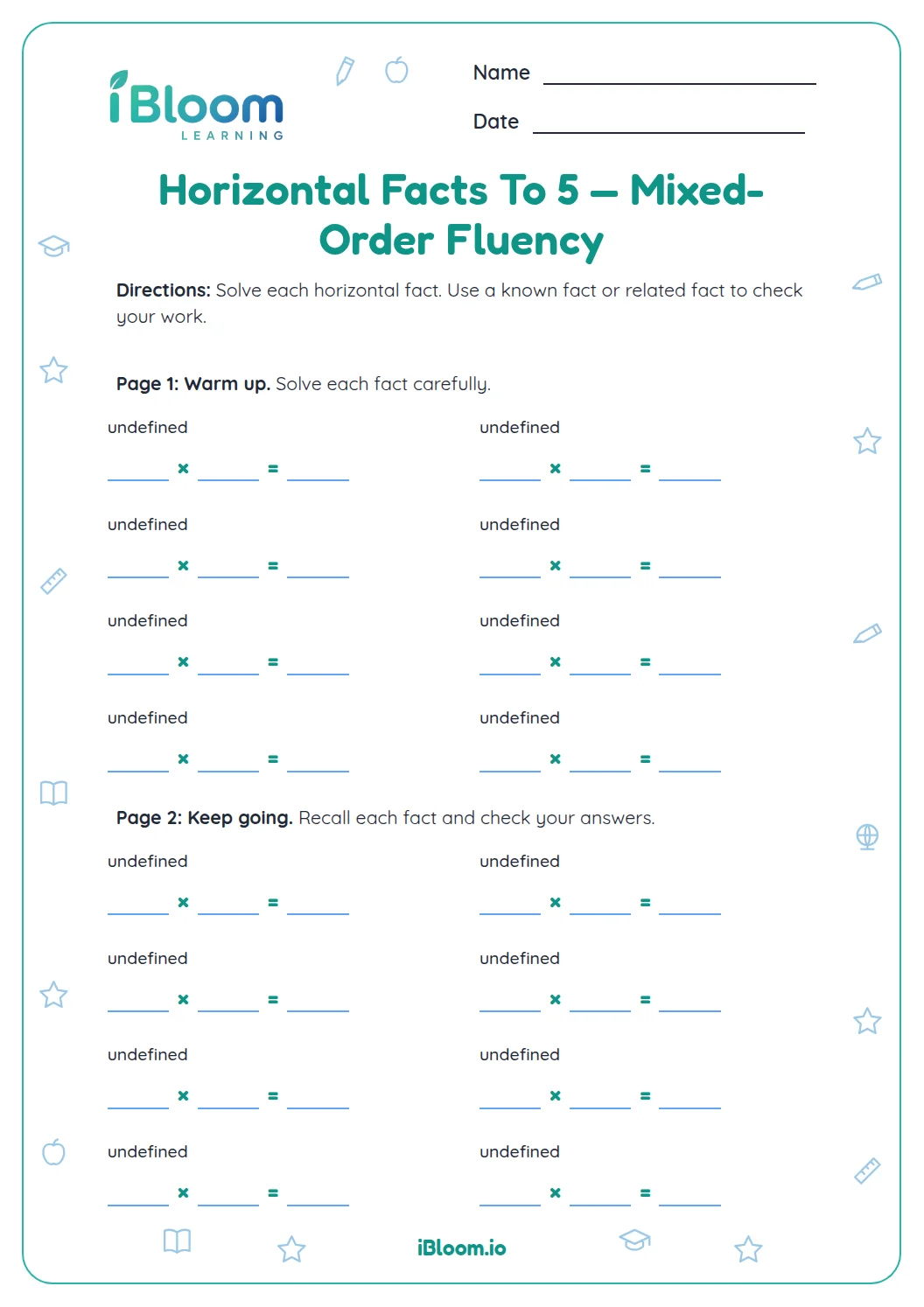
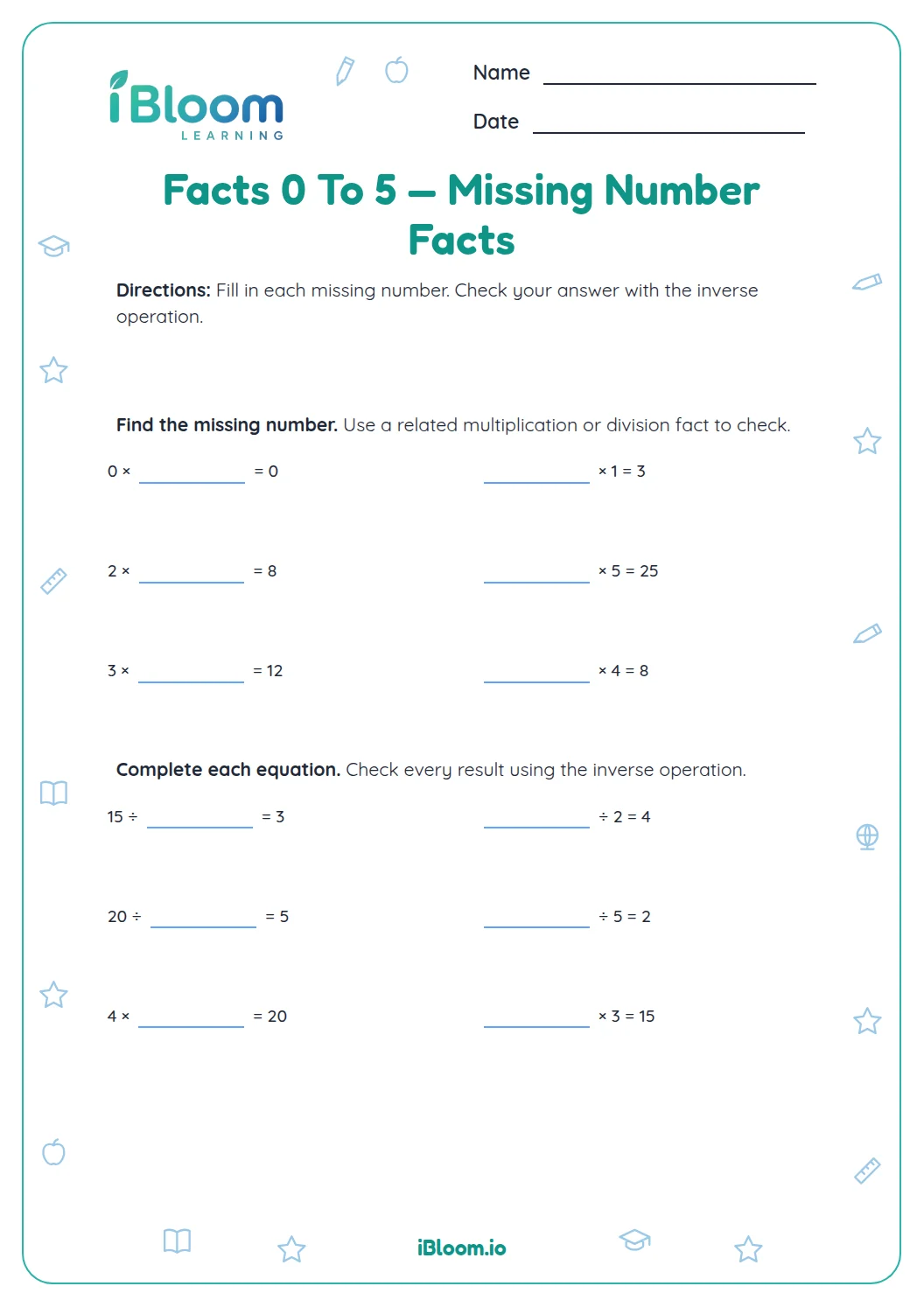
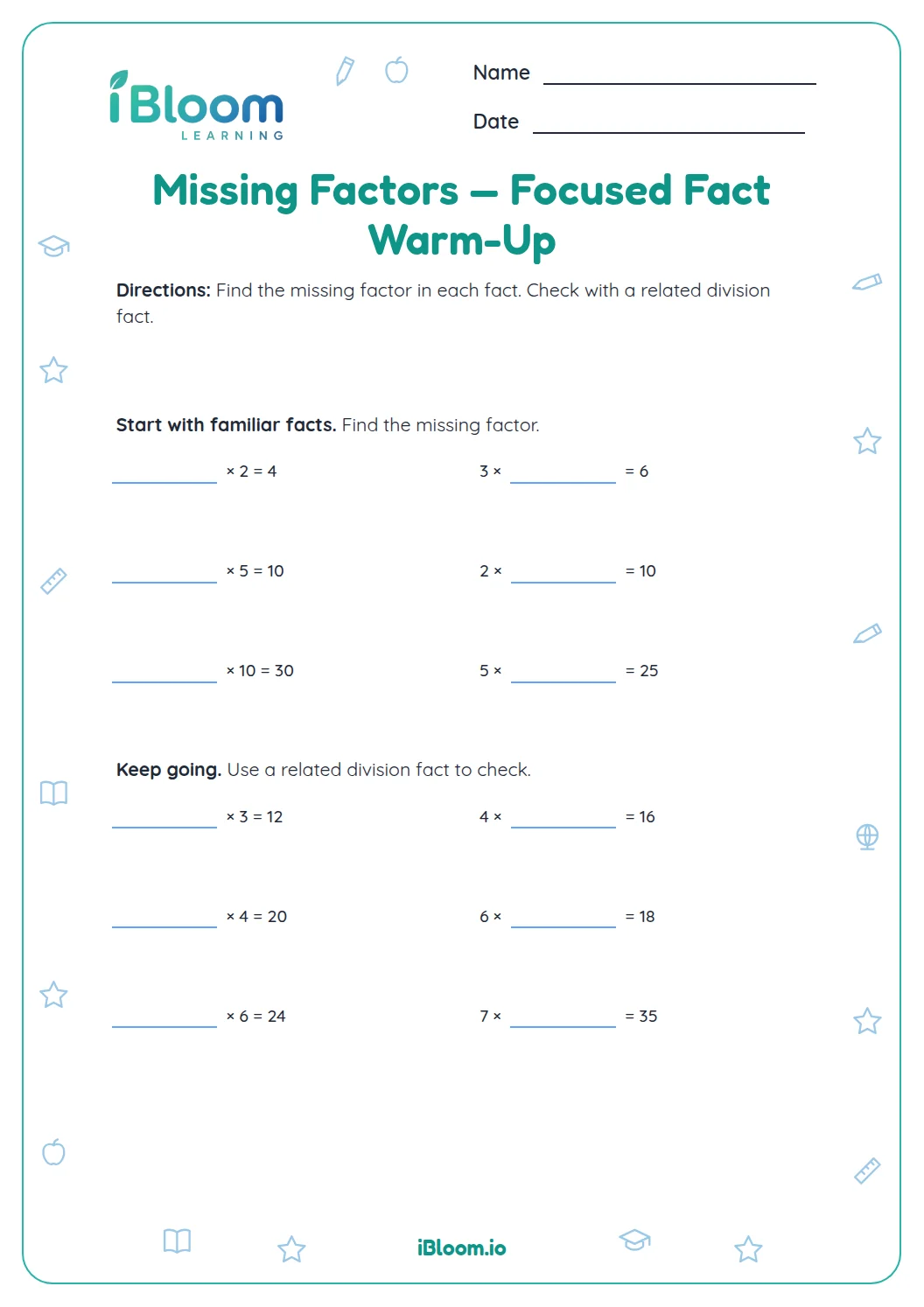
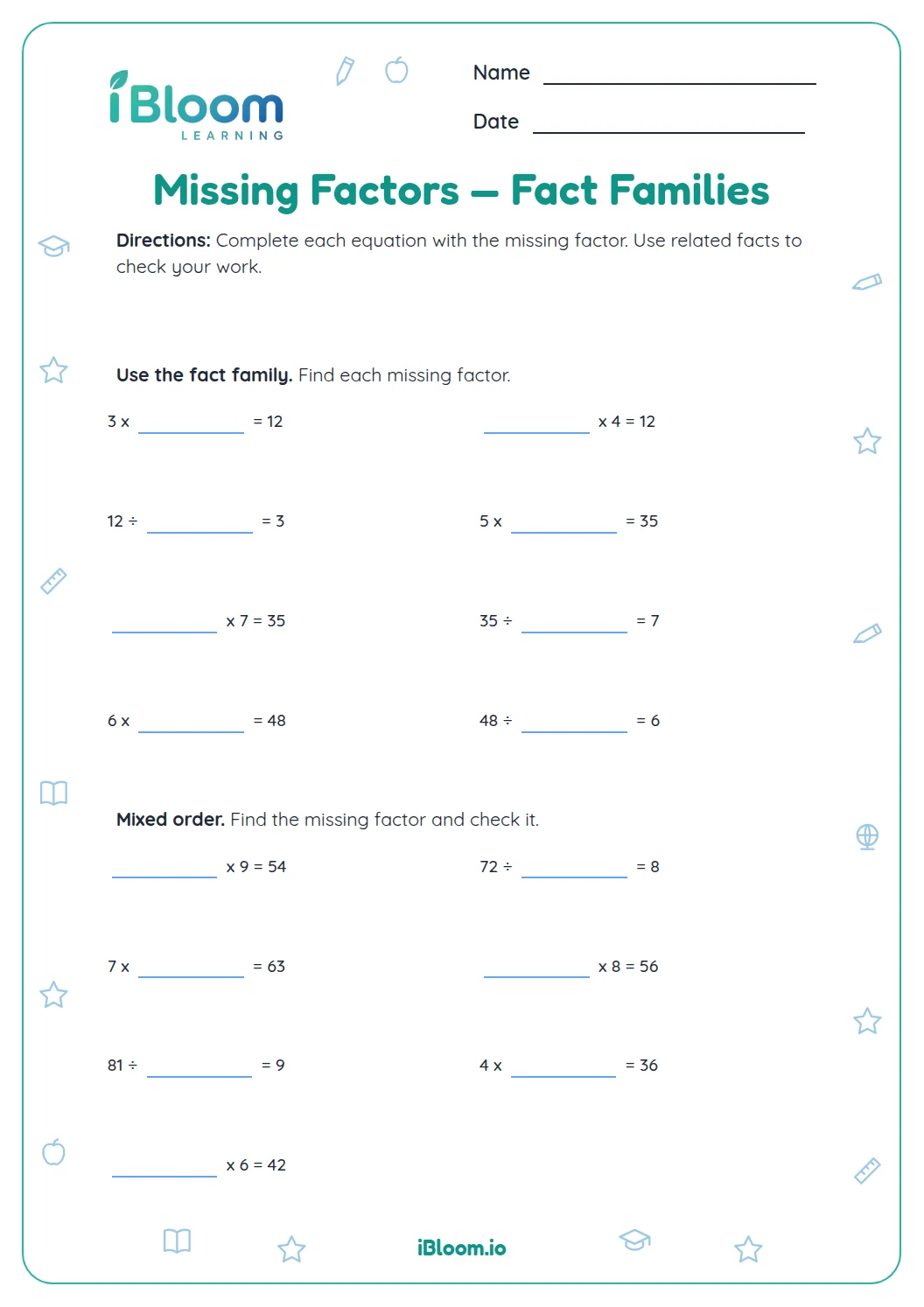
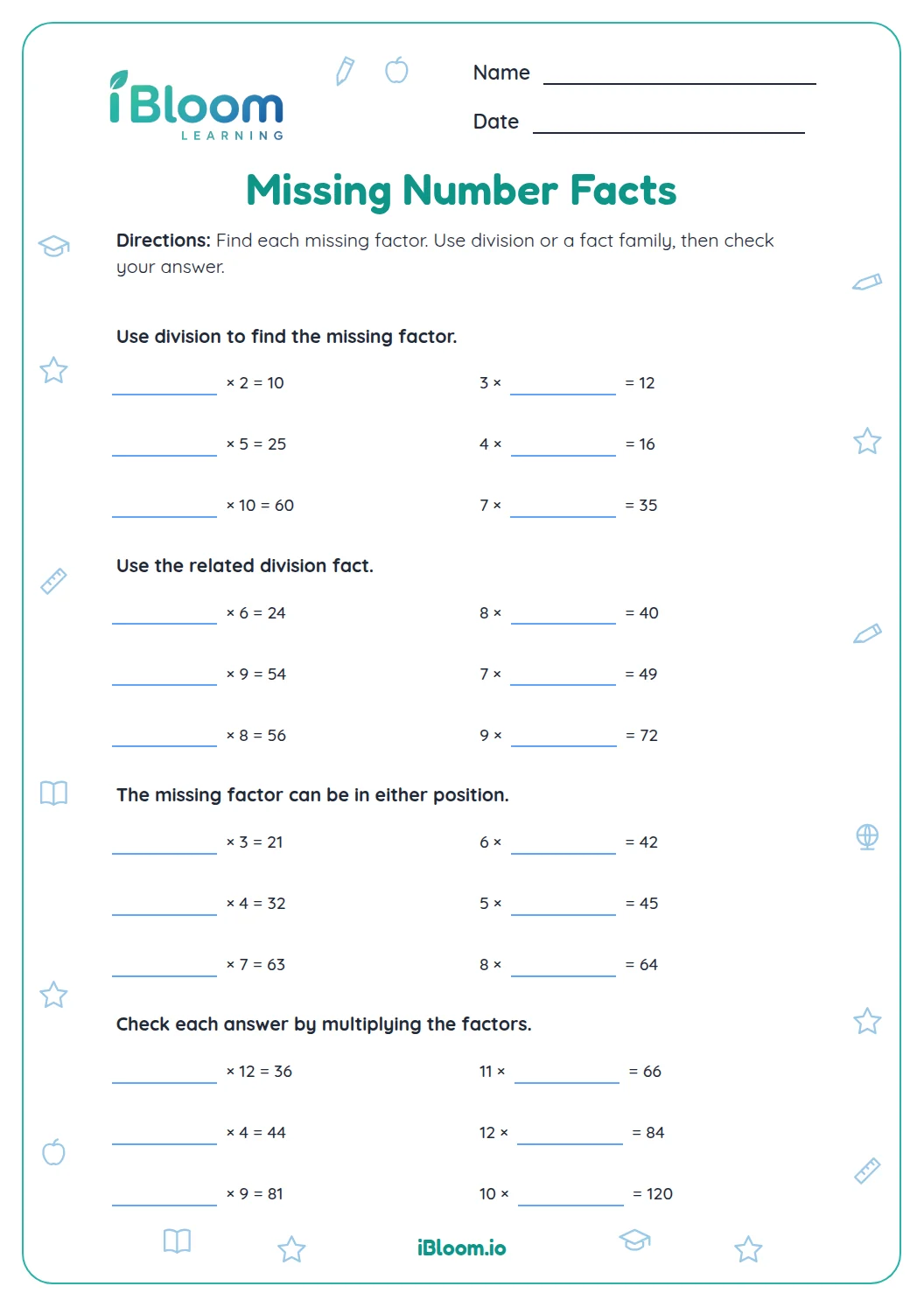
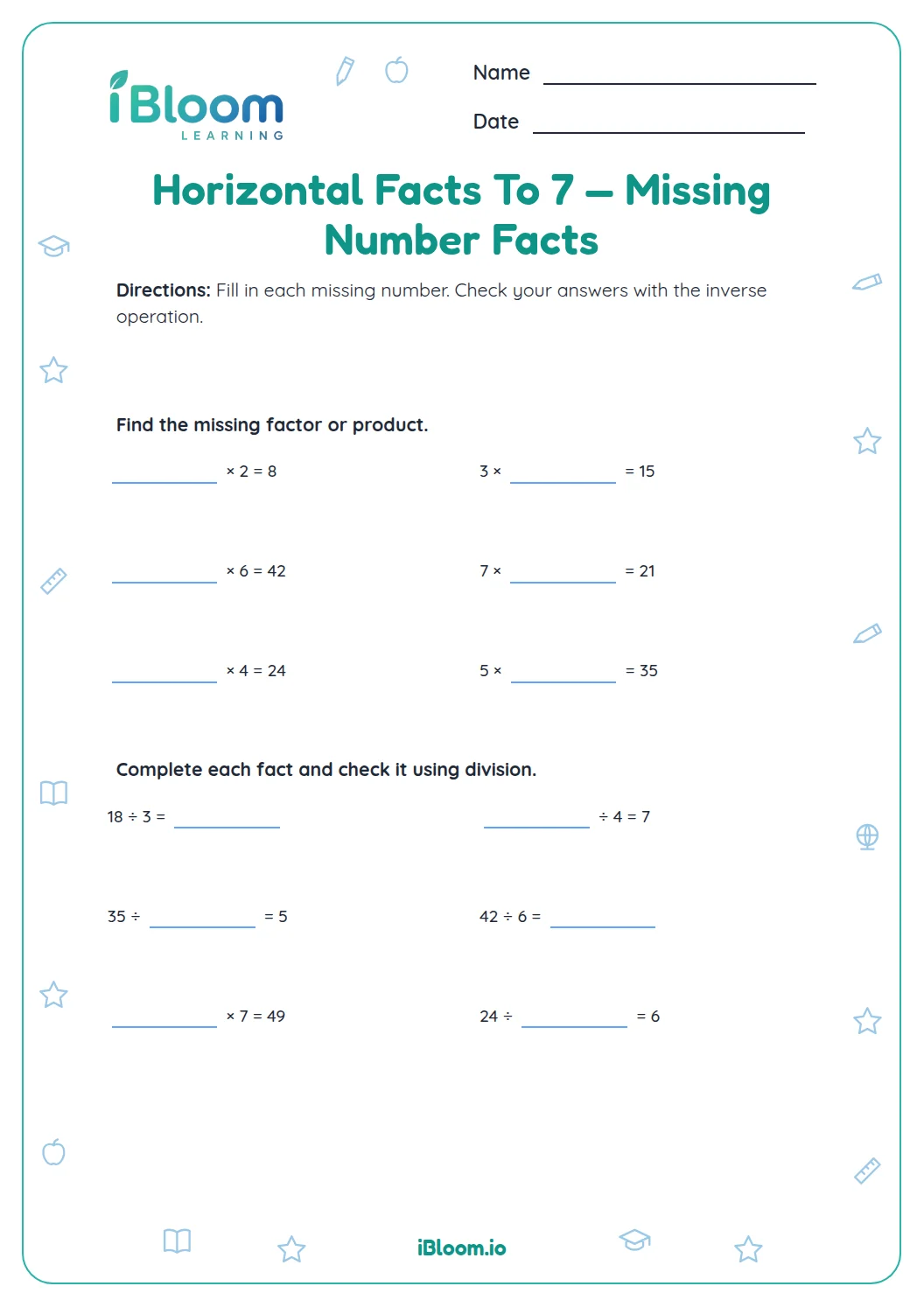
This free printable mastery check gives Grade 3 and Grade 4 students sixteen horizontal multiplication facts with factors from zero through five. Both parts mix the facts, so children must look at each multiplication sign and factor before answering. Products range from zero to twenty-five, including square facts and reversed factors. The worksheet practices fact fluency under Common Core 3.OA.C.7. Use it without a timer first, then check the separate answer key and choose a few missed facts for a short follow-up practice session.
Aligned to 3.OA.C.7
Which facts are in this mastery check?
Every factor is between 0 and 5, inclusive. The sheet includes zero and one facts, doubles, three and four facts, and five facts. Each part has eight questions written horizontally with a blank for the product.
Part B mixes in more square facts and reversed factors. The sixteen questions give a small sample that can guide the next practice session.
How can a known fact help with 4 × 3?
Use doubles: 2 × 3 is 6, so twice as many groups of three total 12. This gives a useful recovery strategy when a fact is not recalled immediately.
- 14 × 3 = ___
- 22 × 3 = 6
- 3Double 6: 6 + 6 = 12
- 44 × 3 = 12
What should happen after checking the answers?
Mark each correct product and list the missed facts. Ask the child to explain one missed fact with equal groups, repeated addition, or a known product. Then return to that fact later without the support.
A correct answer reached through counting is useful information too. Note it separately from an incorrect answer so the next activity can build quicker recall while preserving the meaning of multiplication.
How to use this worksheet
- 1Explain that each blank needs the product of the two factors.
- 2Let the child complete the first eight facts without help.
- 3Continue with the second mixed set, keeping any timer optional.
- 4Compare all sixteen products with the separate answer key.
- 5Choose two or three missed or slow facts and revisit them using known facts.
Mistakes to check and how to help
The mistake
Adding the factors, so 4 × 3 becomes 7.
The fix
Say four groups of three and connect the groups to 3 + 3 + 3 + 3 = 12.
The mistake
Writing 4 for 0 × 4.
The fix
Zero groups of four contain zero objects; the product is 0.
The mistake
Treating 3 × 5 and 5 × 3 as unrelated facts.
The fix
Turn an array of three rows of five and count the same fifteen objects as five rows of three.
Common Core alignment
Recall multiplication products with factors from 0 through 5.
On this sheet: Sixteen horizontal facts check multiplication recall with factors from 0 through 5.
Show the official wordingHide the official wording
Fluently multiply and divide within 100, using strategies such as the relationship between multiplication and division (e.g., knowing that 8 × 5 = 40, one knows 40 ÷ 5 = 8) or properties of operations. By the end of Grade 3, know from memory all products of two one-digit numbers.
What to practice next
Make more practice
Further reading
Questions parents and teachers ask
Does facts to 5 mean that the answers stop at 5?
No, it means each factor is from 0 through 5. The products can be larger: question 10 is 5 × 5, whose product is 25. The worksheet also includes zero products, one facts, and other products made from the same small factor range.
Should this mastery check be timed?
Timing is optional. Begin with an untimed attempt so you can see which facts the child knows and which need counting or another strategy. If you later use a timer, compare the child with their own earlier attempt and continue checking accuracy as well as completion time.
What score shows that my child is ready to move on?
Use the answers and the method together when deciding on the next practice. Sixteen correct answers with comfortable recall suggest trying a wider factor range. If the child gets the answers by long counting, practice a few of those facts again and check recall on another day.
How can I help with a missed four fact?
Start from a known two fact and double its product. For 4 × 3, two groups of three make six, so four groups make twelve. Let the child explain that connection aloud, then return to the original fact after completing a different problem or taking a short break.
Why are reversed factors included?
Reversed factors let children use the same product in a different order. The sheet includes 3 × 5 and 5 × 3, both equal to 15. After checking the answers, ask the child to describe or sketch an array that can be turned to show both facts.