


About this worksheet
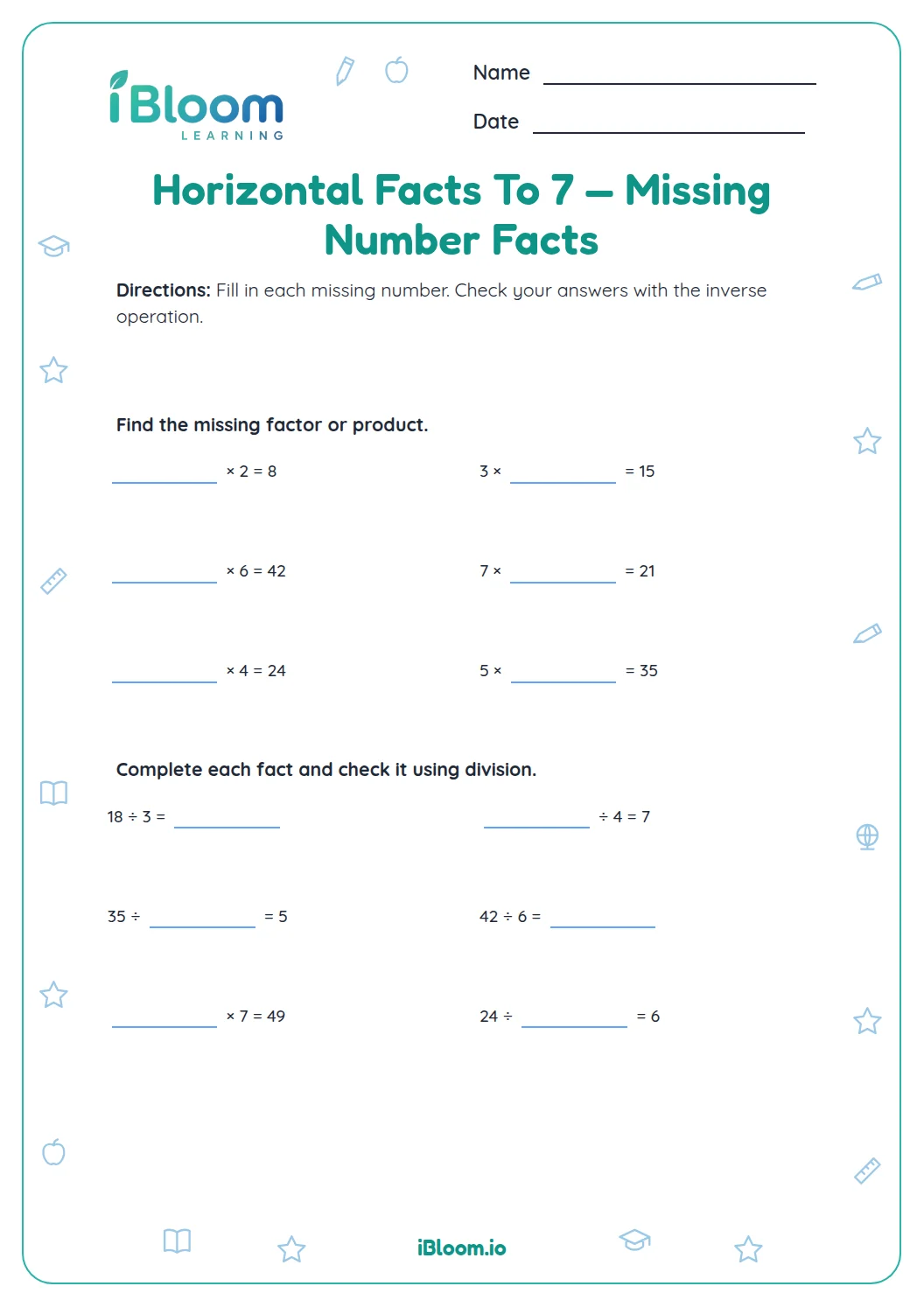
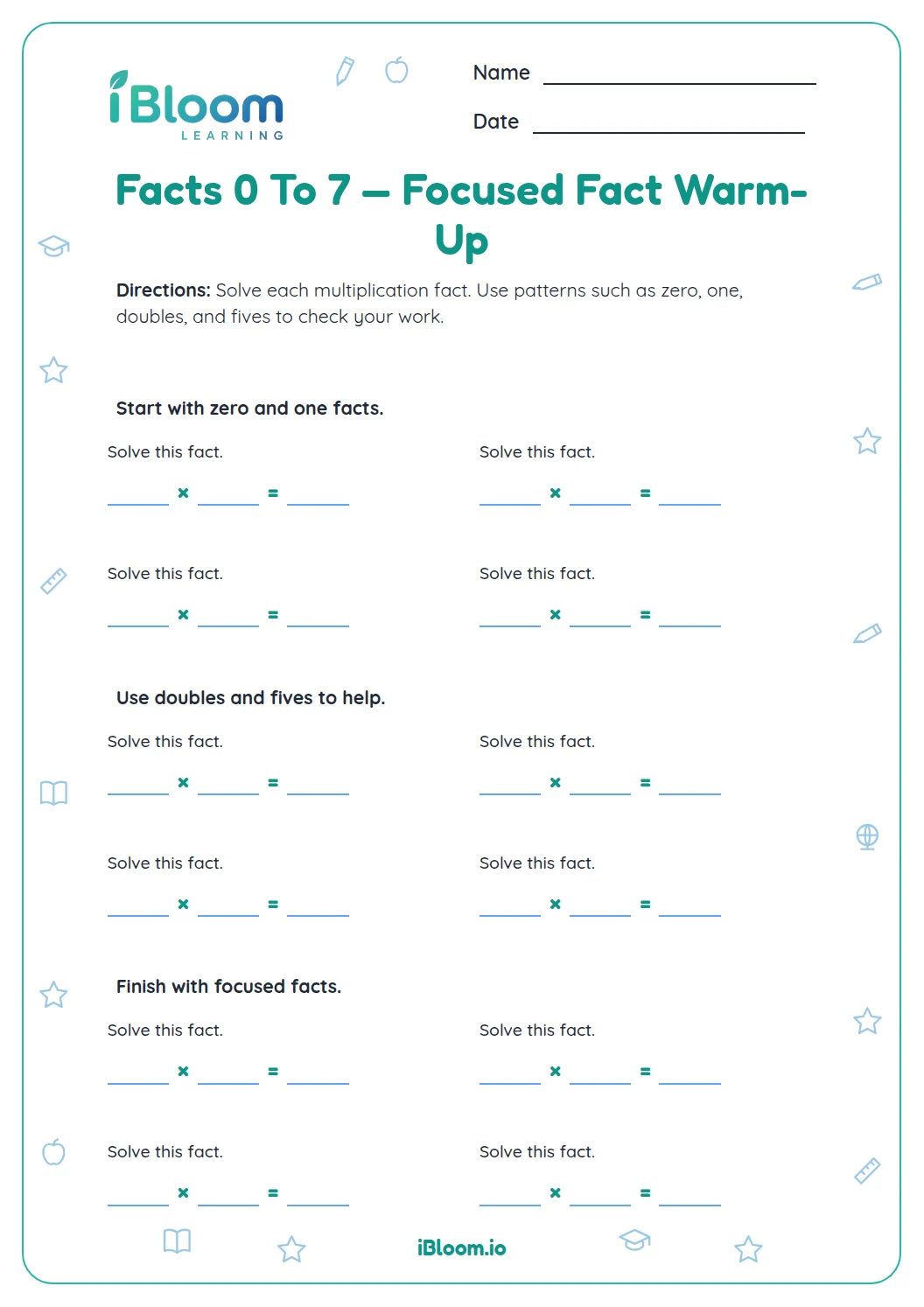
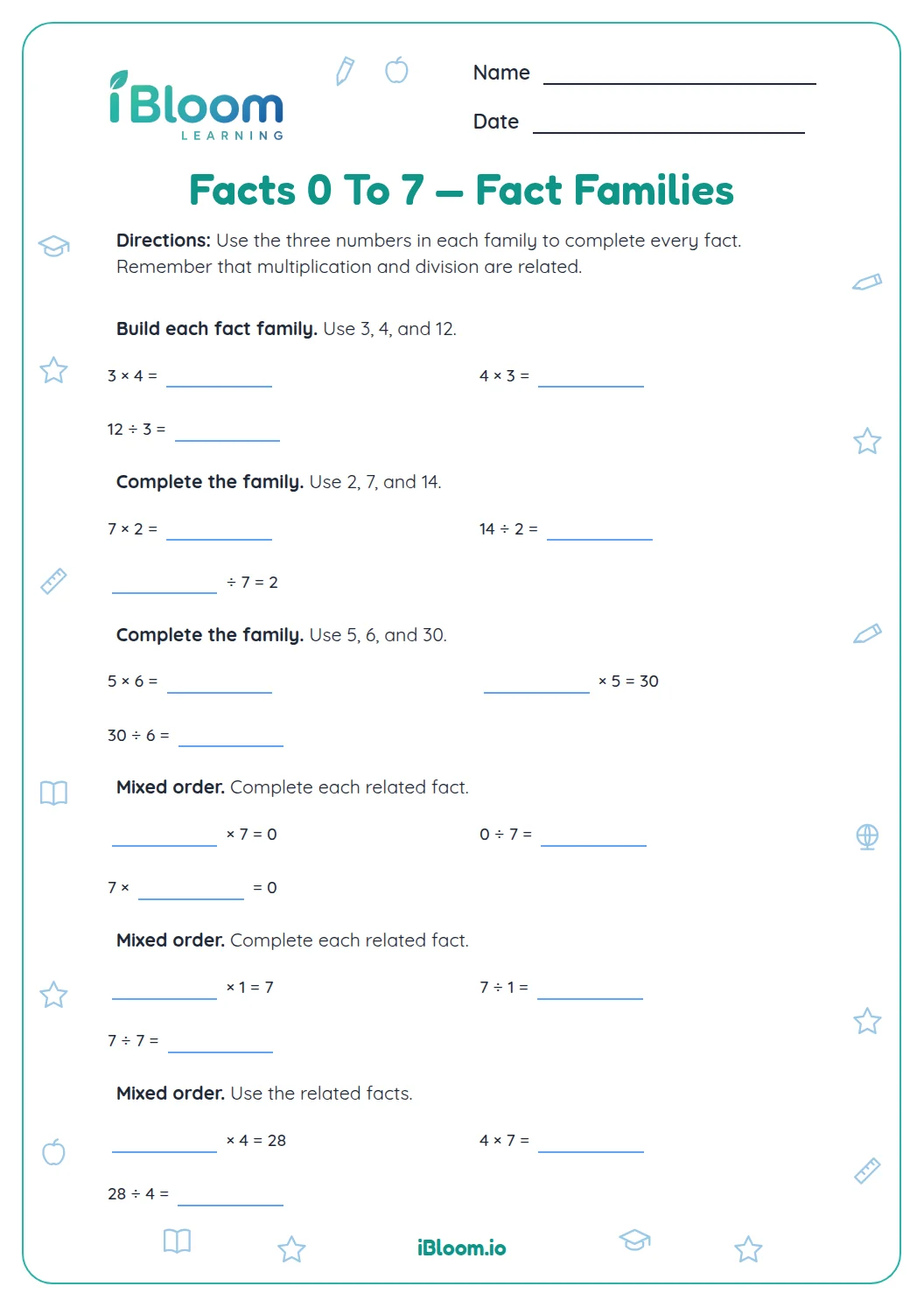
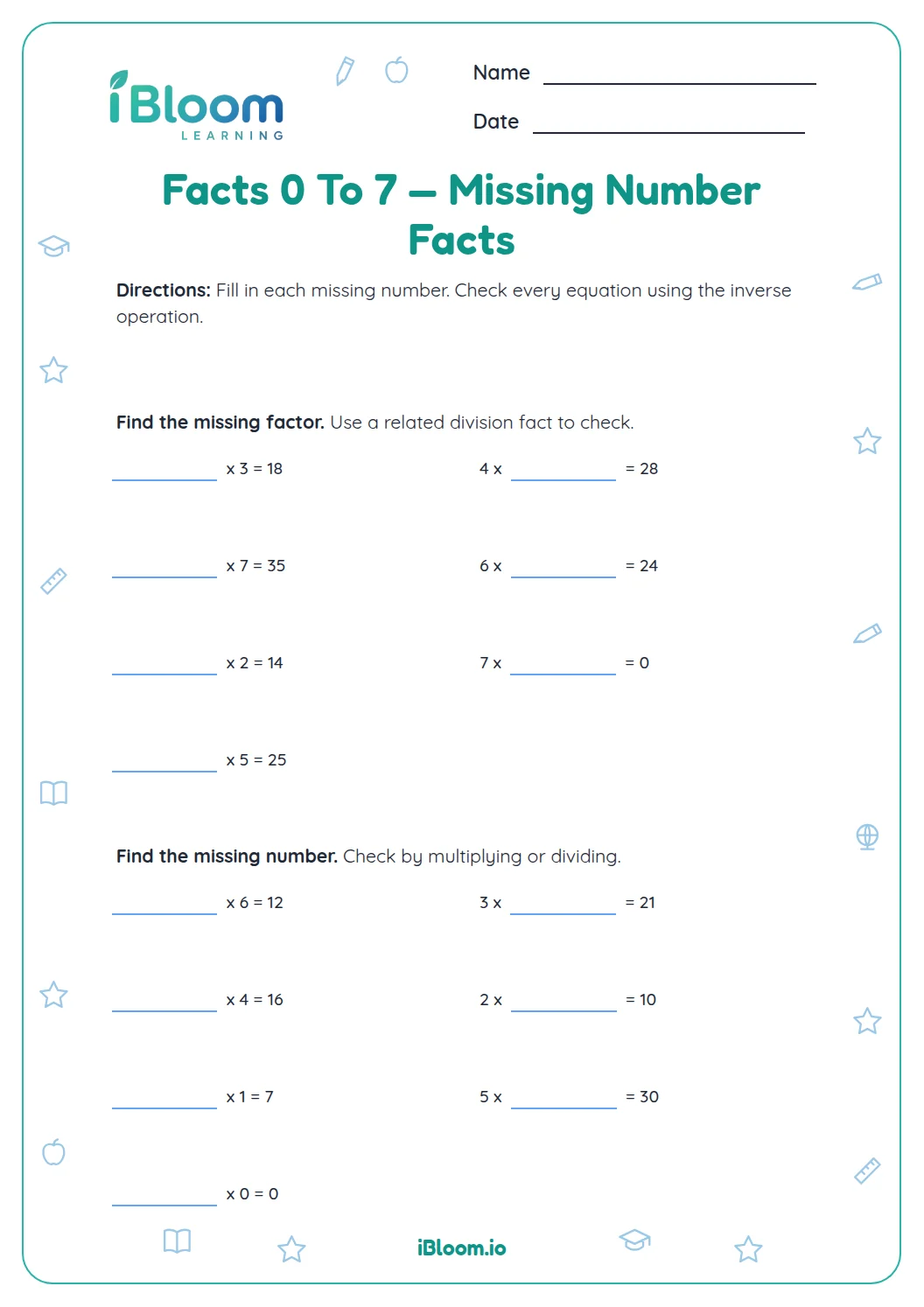
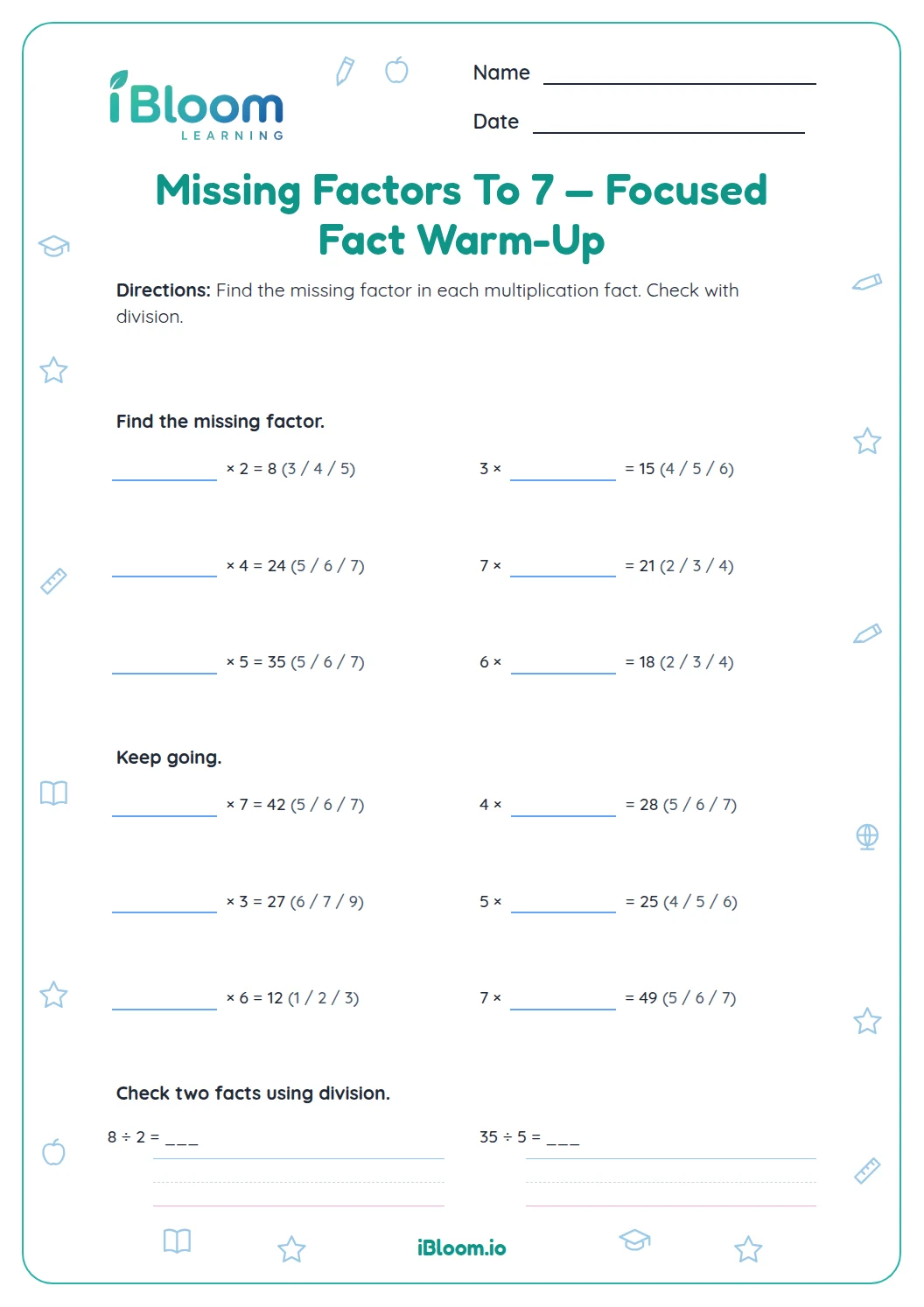
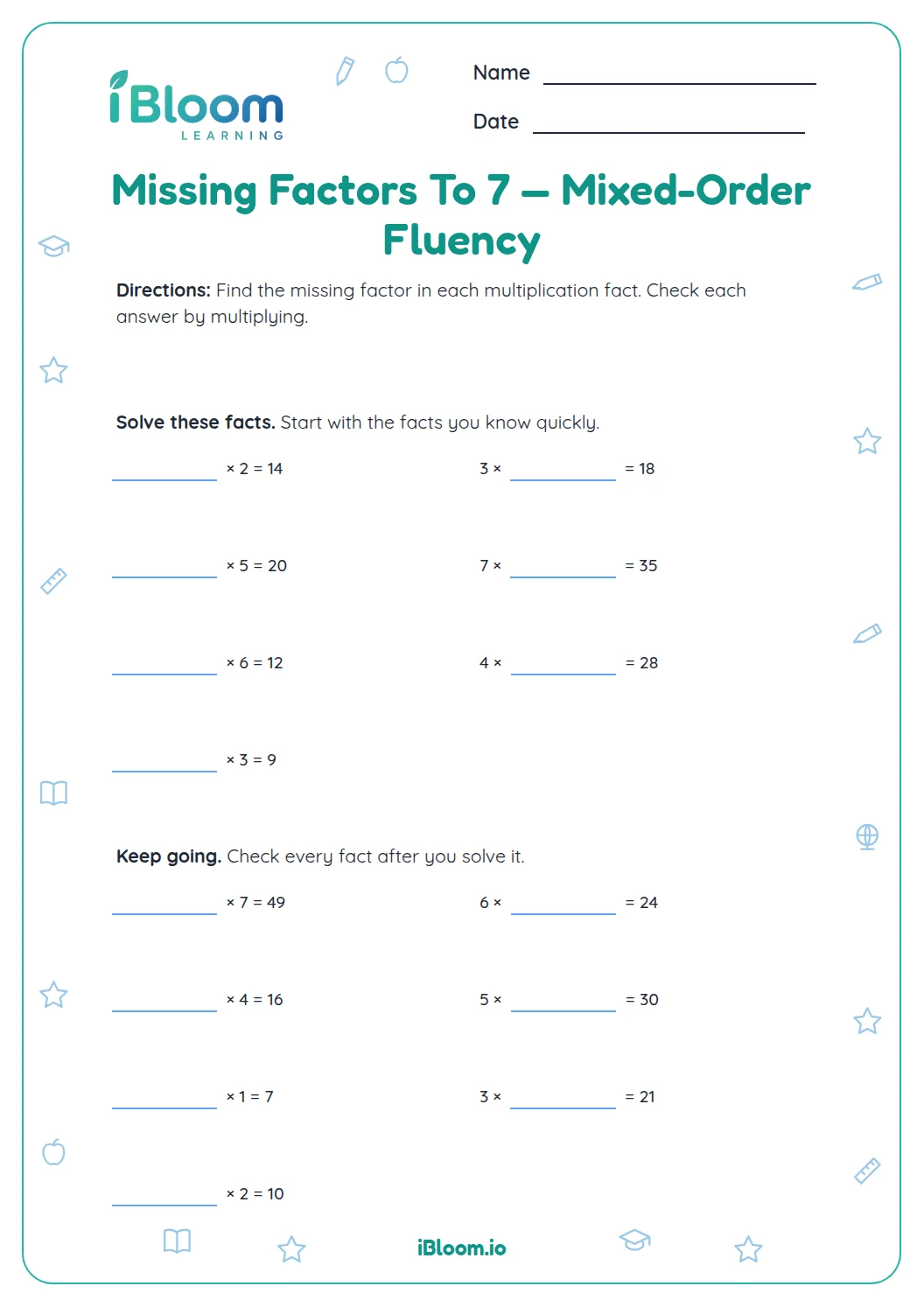
This horizontal fact family worksheet gives students 16 problems using factors from 0 through 7. Students multiply, find missing factors, connect products to division, and write related facts from the same three numbers. The answer key lists each fact family response. This practice supports Common Core 3.OA.C.7, which calls for fluency with multiplication and division within 100 and memory of one-digit products by the end of Grade 3.
Aligned to 3.OA.C.7
How do you find a product?
Think of equal groups or a known fact. A factor pair can be reversed without changing its product.
- 17 × 2 = 14; reversing the factors gives 2 × 7 = 14.
How can a fact family reveal a missing factor?
Use the product and the factor you know. The matching division fact asks how many groups of that size make the product.
- 1___ × 4 = 24 → 24 ÷ 4 = 6, so the missing factor is 6.
Which division facts belong in the family?
For a product and its two factors, write one division fact for each factor as the divisor. These facts reverse multiplication.
- 135 ÷ 7 = 5 and 35 ÷ 5 = 7, as in question 12.
How to use this worksheet
- 1Solve the multiplication facts you know first.
- 2For a missing factor, divide the product by the known factor.
- 3Use the same three numbers to write related division facts.
- 4Check each equation by multiplying or dividing in reverse.
- 5Practice a missed fact again before finishing.
What should students check?
The mistake
Mistake: changing the product when factors switch places.
The fix
Multiplication order can reverse without changing the product.
The mistake
Mistake: dividing the smaller factor by the product.
The fix
Divide the product by the known factor.
The mistake
Mistake: using a number outside the fact family.
The fix
Keep the same two factors and their product.
Common Core alignment
The questions give students direct practice with the listed skill.
Build fluency with one-digit multiplication and related division facts.
On this sheet: Students practice facts with factors through 7, missing factors, and related division equations.
Show the official wordingHide the official wording
Fluently multiply and divide within 100, using strategies such as the relationship between multiplication and division (e.g., knowing that 8 × 5 = 40, one knows 40 ÷ 5 = 8) or properties of operations. By the end of Grade 3, know from memory all products of two one-digit numbers.
What to practice next
Make more practice
Further reading
Questions parents and teachers ask
What does “facts through 7” mean on this page?
The factors on this sheet range from 0 through 7. Students solve multiplication and related division equations, with products no greater than 42. A fact family uses the same two factors and their product to show two multiplication facts and two division facts.
Why are division questions on a multiplication worksheet?
Multiplication and division are inverse operations, so they belong in one fact family. For example, 5 × 7 = 35 helps solve 35 ÷ 5 = 7 and 35 ÷ 7 = 5. Reversing the multiplication factors gives another fact in the family.
How can a student find a missing factor?
Divide the product by the known factor, or ask how many equal groups make that product. For ___ × 4 = 24, the related fact 24 ÷ 4 = 6 reveals that the missing factor is 6. This connection also helps check an answer.
What should students do if they forget a product?
Use a known fact or a strategy such as equal groups, an array, or a related multiplication fact. Check the result by reversing the factors or using division. Drawing equal groups can make the total visible and help identify a fact to practice again.
Should students be timed while using this worksheet?
No timer is needed. This page is for accurate fact-family practice. Students can work at a comfortable pace, check a missed fact, then try it again. Accuracy and understanding come before speed on this drill. Students can review one missed fact before trying it again.