

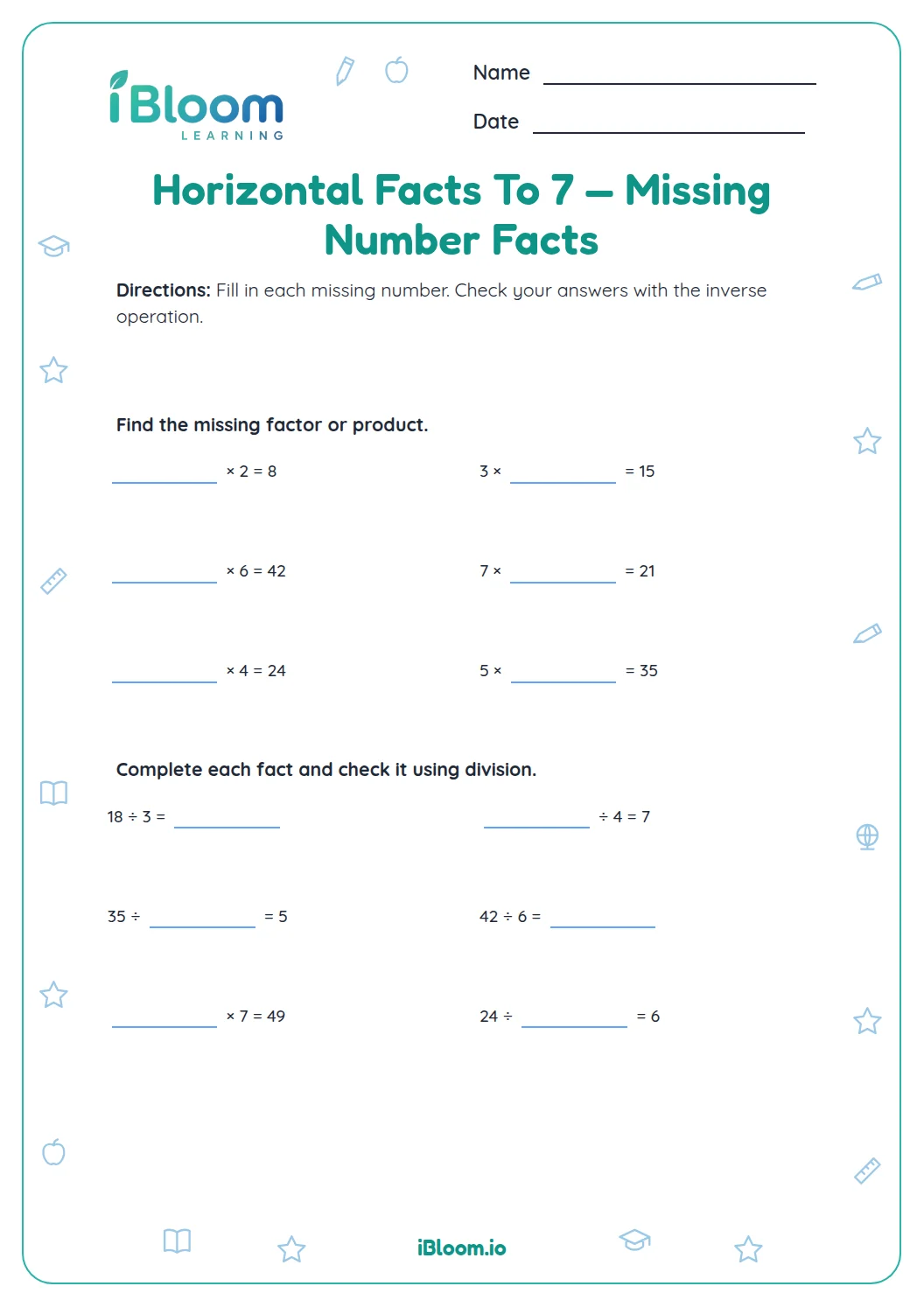


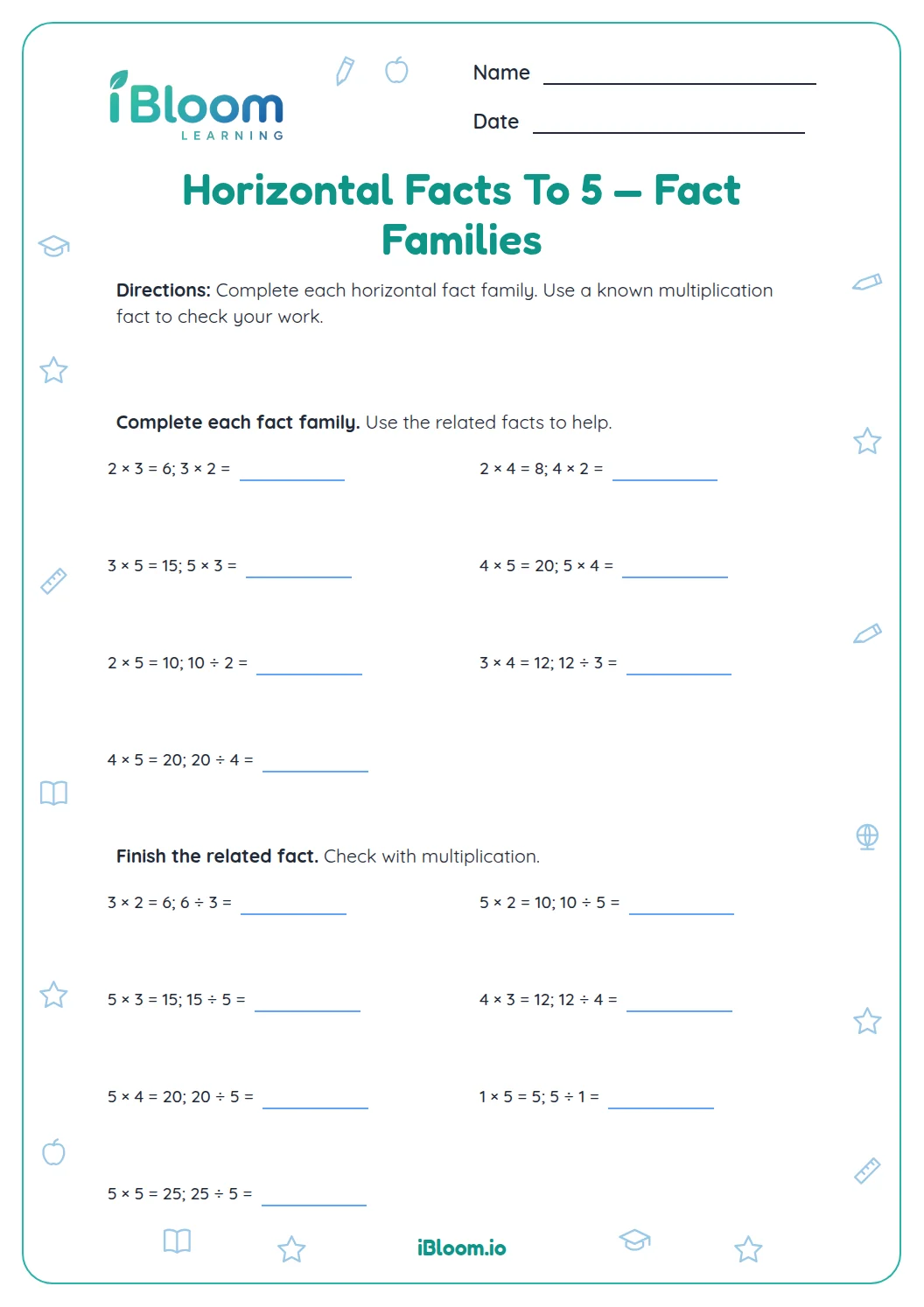
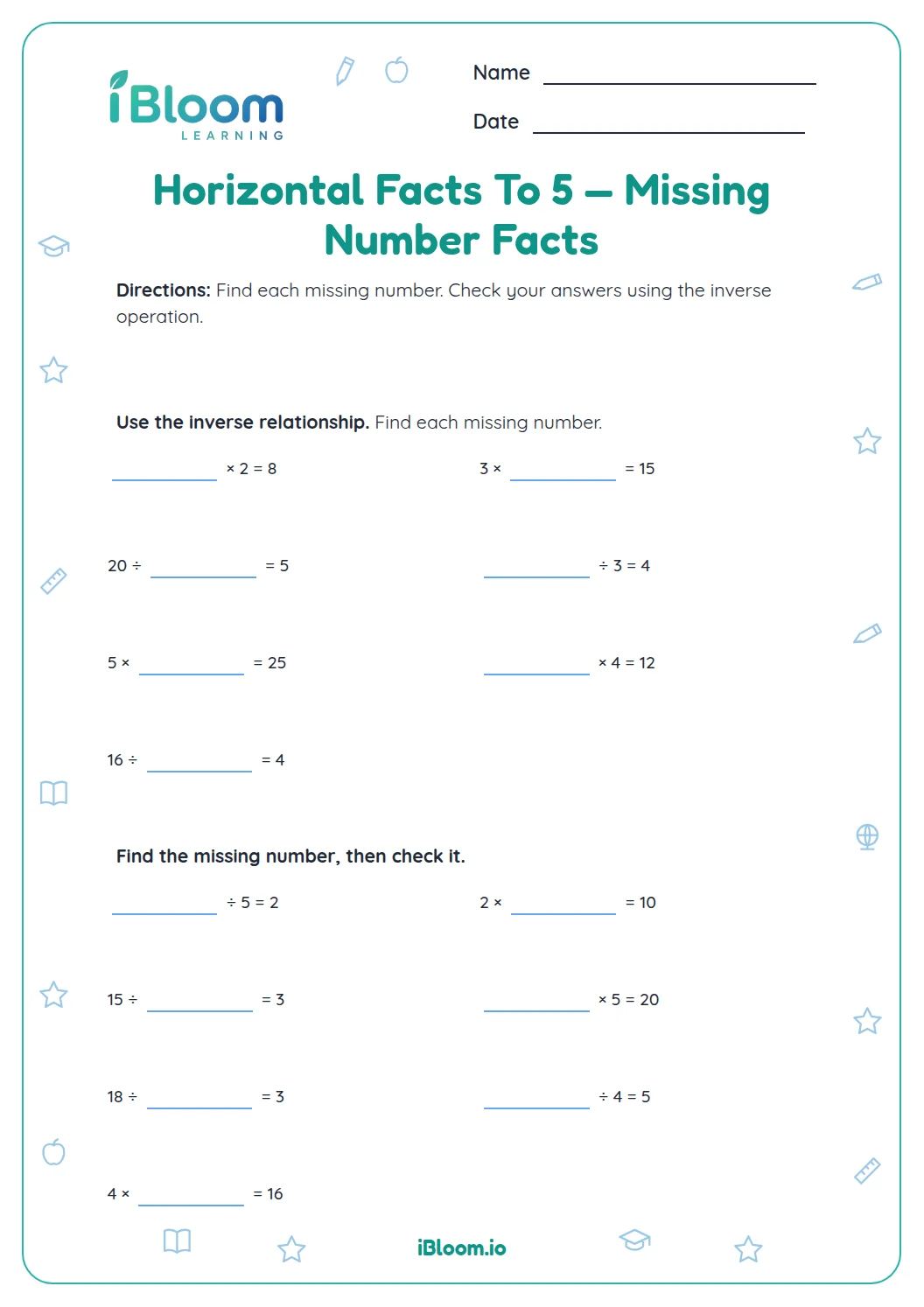

About this worksheet
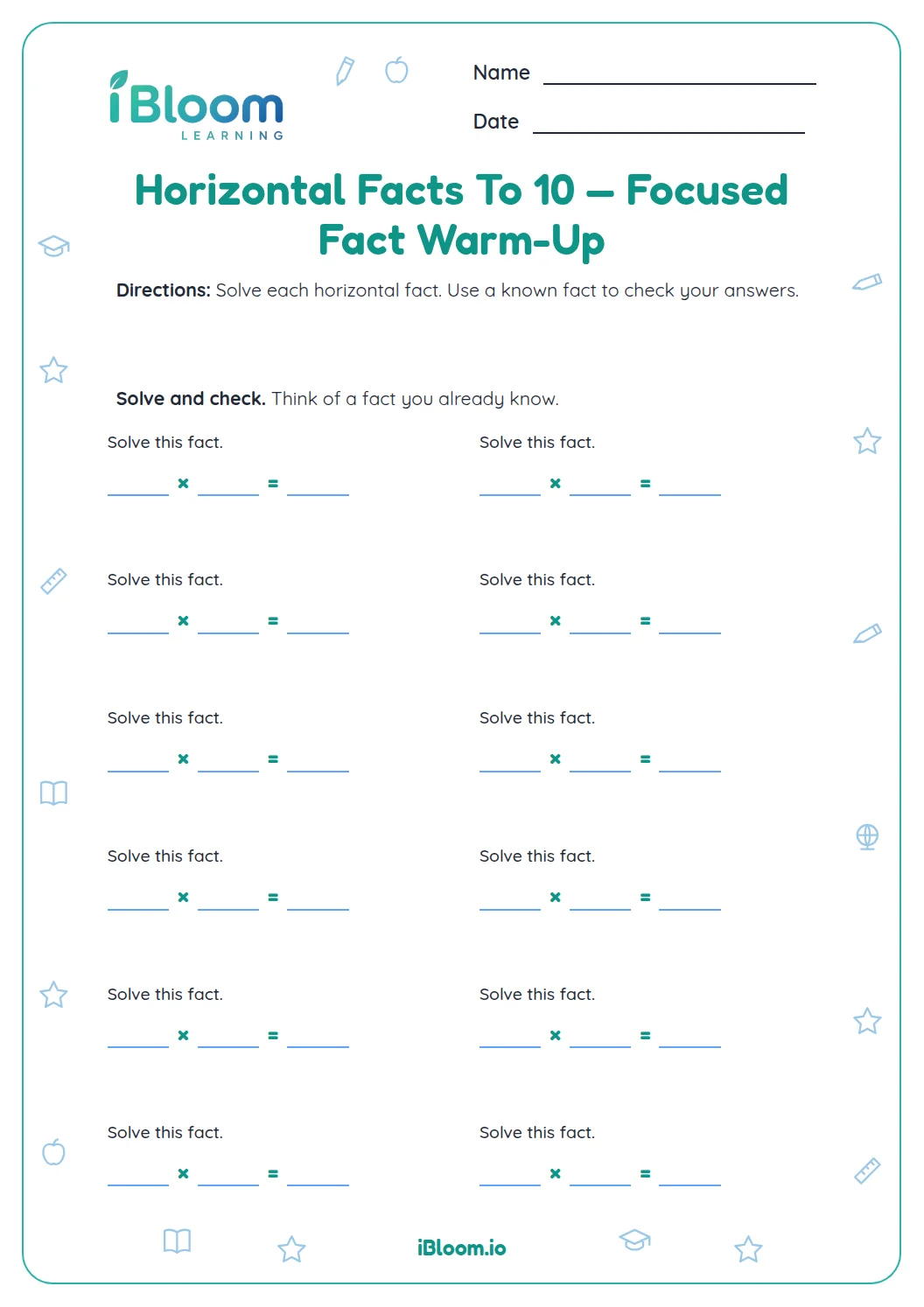
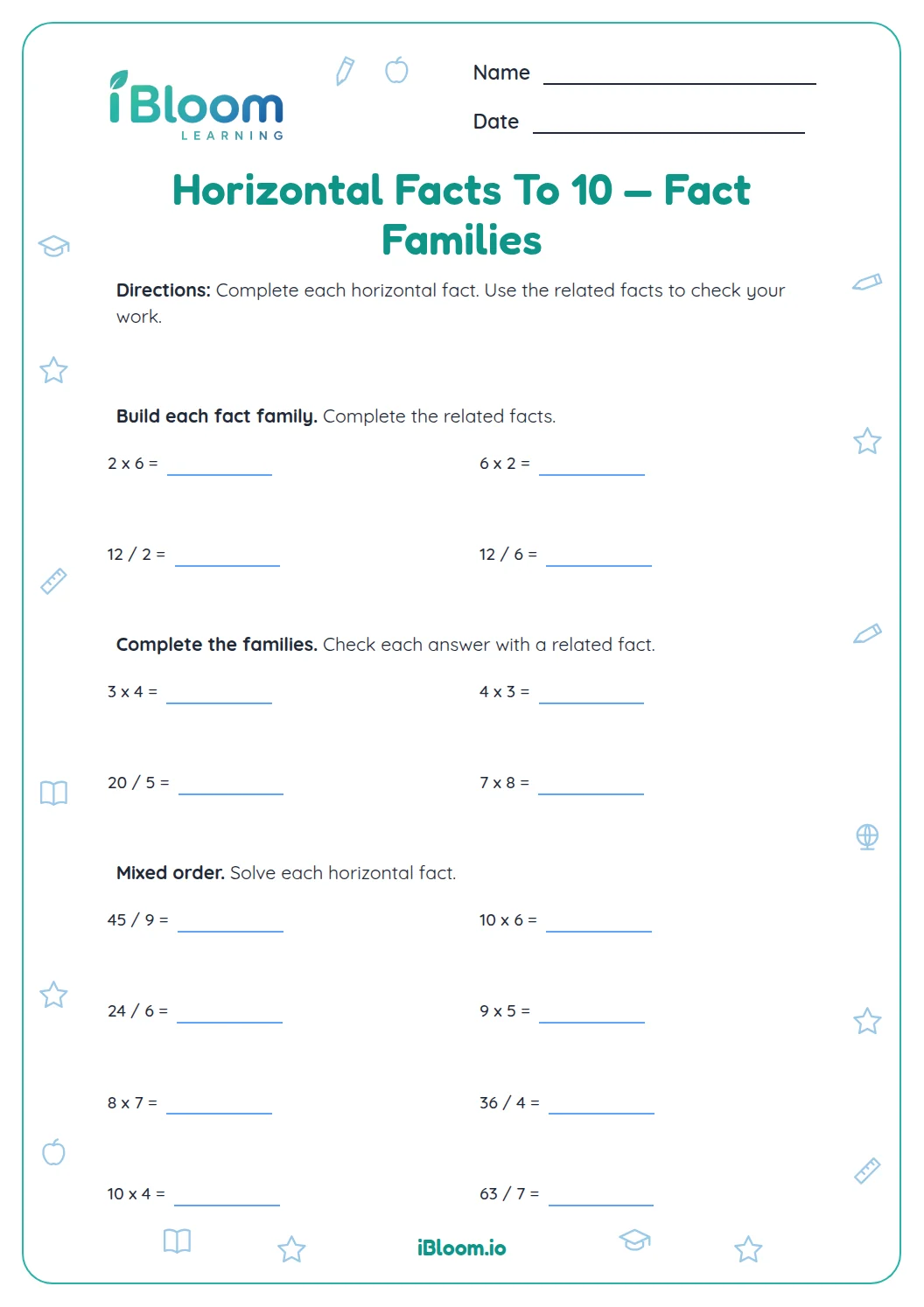
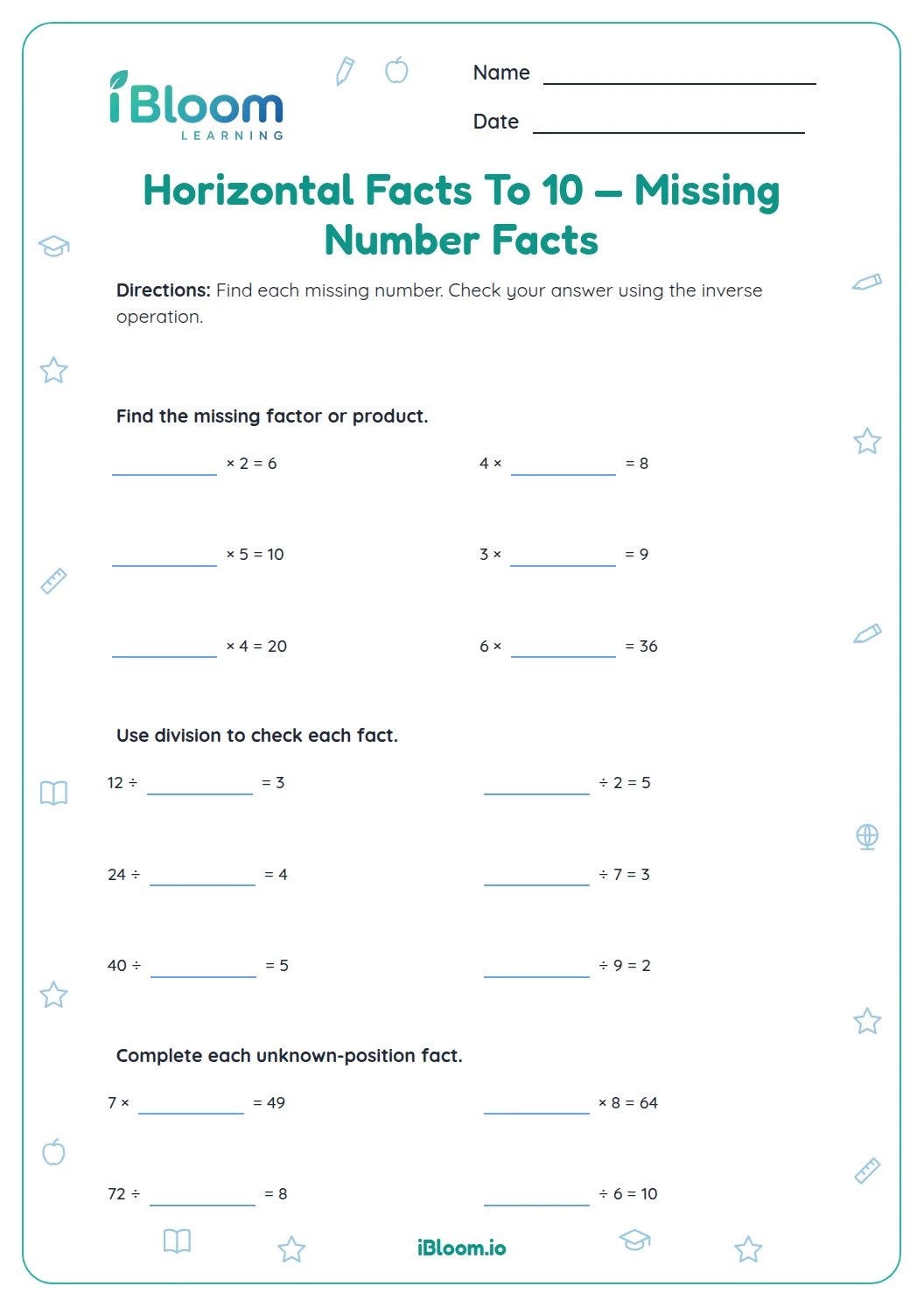
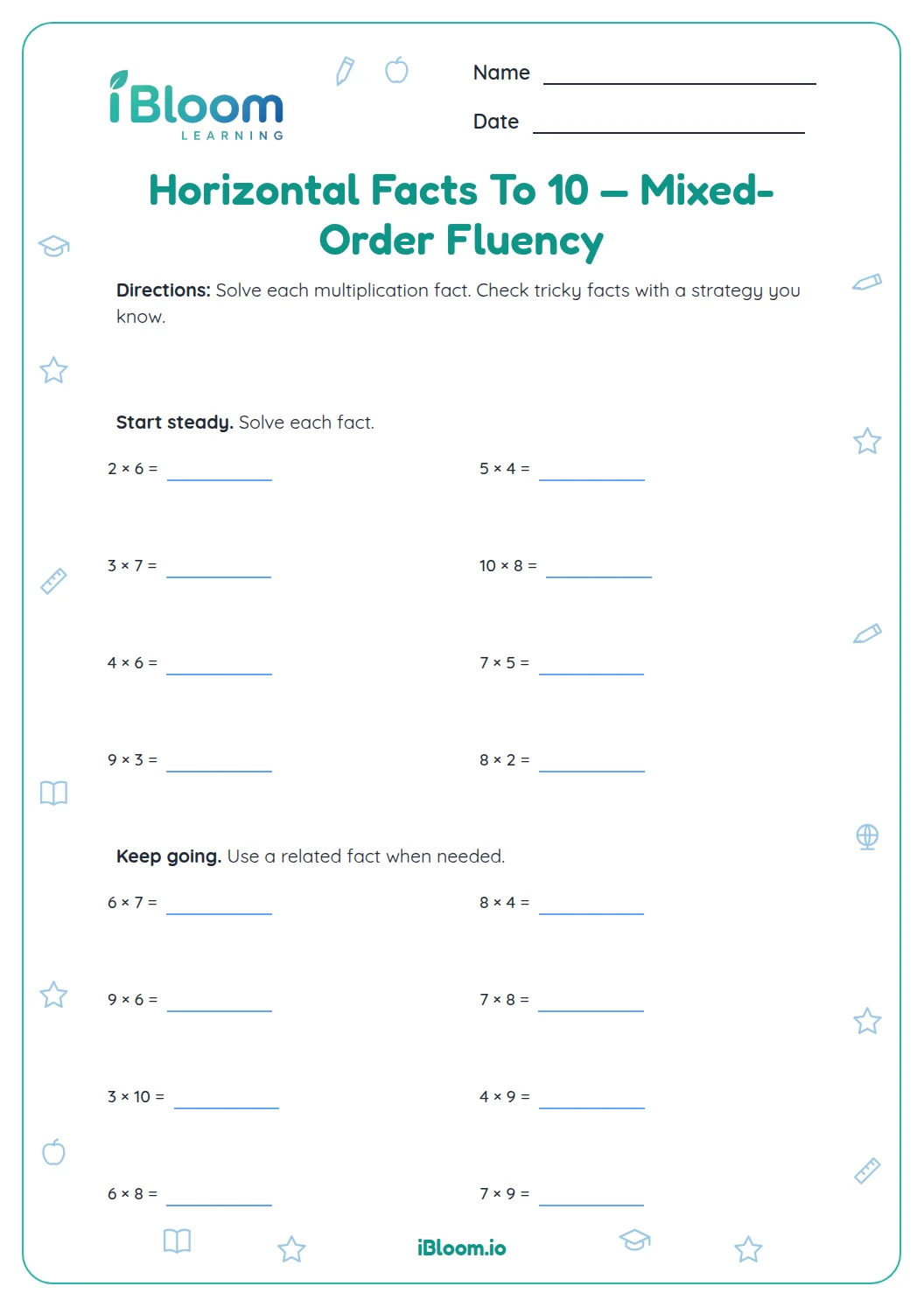
This free printable multiplication drill gives Grade 3 students and Grade 4 reviewers 48 horizontal facts with factors from 0 through 7. Part A starts with zero, one, doubles, and fives. Part B mixes facts through 7, and Part C gives a round with square facts and reversed factor pairs. Part D adds 24 mixed facts, including zero, one, and reversed pairs. The sheet practices Common Core 3.OA.C.7 through multiplication recall and mental strategies. Children can work without a clock or record their total time on scrap paper. The separate answer key makes it easy to check all four rounds before deciding which facts need another try.
Aligned to 3.OA.C.7
How are the 48 facts arranged?
Parts A, B, and C each contain eight horizontal number sentences. Part A includes zero, one, twos, and fives. Part B mixes factors through 7, and Part C builds fluency with more combinations. Part D has 24 mixed facts, bringing the total to 48.
Every factor from 0 through 7 appears, and every pair of factors in that range occurs in at least one order. The largest product is 49. Reversed pairs let children check that changing the order does not change the product.
How can a child work out 7 × 6?
Start with a nearby fact that is easy to recall. Five groups of 6 make 30; two more groups make 12. Together they make seven groups of 6, or 42.
After checking question 22, cover the answer and say the completed fact once. A later attempt can show whether the product now comes to mind without rebuilding the groups.
- 17 × 6 = ___
- 25 × 6 = 30 and 2 × 6 = 12
- 330 + 12 = 42
- 47 × 6 = 42
How should an optional timed attempt work?
Use the first attempt to check accuracy. If the child wants to add timing, start the clock with question 1 and stop after question 48. Record elapsed time on scrap paper, along with the number correct out of 48.
Keep any comparison personal and use the same sheet conditions. Review errors before trying again; a faster attempt with more errors is a reason to slow down and revisit the facts.
How to use this worksheet
- 1Read the directions and decide together whether to use a timer.
- 2Complete Part A, recalling the zero, one, two, and five facts.
- 3Finish Parts B, C, and D; use a nearby known fact when needed.
- 4Check all 48 answers with the key before recording a score.
- 5Practice two or three missed facts aloud and try them again later.
Mistakes to notice and fix
The mistake
Writing 0 × 7 = 7.
The fix
Zero groups contain zero objects, so the product is 0.
The mistake
Writing 7 × 6 = 13 by adding the factors.
The fix
Think seven groups of six; combine 30 and 12 to get 42.
The mistake
Giving different answers for 4 × 6 and 6 × 4.
The fix
Reversing the factors keeps the product the same: both equal 24.
Curriculum alignment
Recall products with factors through 7 and use known facts to solve less familiar ones.
On this sheet: All 48 questions practice multiplication products within 49, using recall or mental strategies.
Show the official wordingHide the official wording
Fluently multiply and divide within 100, using strategies such as the relationship between multiplication and division (e.g., knowing that 8 × 5 = 40, one knows 40 ÷ 5 = 8) or properties of operations. By the end of Grade 3, know from memory all products of two one-digit numbers.
What to practice next
Make more practice
Further reading
Questions parents and teachers ask
Does facts to 7 mean only the seven times table?
No. This sheet mixes factors from 0 through 7, including facts such as 3 × 4, 6 × 6, and 7 × 7. It has 48 questions in four rounds. That mix helps children choose the right product without relying on the order of one times table.
Is there a required time limit?
No. Children can complete every question without a timer. If you choose timing, record how long the full sheet takes and how many answers are correct out of 48. Use those two numbers together when looking at another attempt, keeping the emphasis on accurate recall.
How can my child check 6 × 4?
One way is to use 5 × 4 = 20 and add one more group of 4, making 24. Question 17 uses this fact. The sheet also includes 4 × 6, so children can check that reversing the factors gives the same product in both places.
What if my child gets stuck in Part C?
Let your child use a known fact to build the answer. For 7 × 6, five sixes make 30 and two sixes make 12, totaling 42. Mark that fact for later practice, then continue. A clock can be set aside whenever it interferes with careful thinking.
How should we use the answer key after the drill?
Check every product and record the number correct out of 48. For each error, have the child say a helping fact and write the corrected product. Choose a few missed facts for the next practice session. Keep any timing record beside the score rather than treating speed alone as success.