


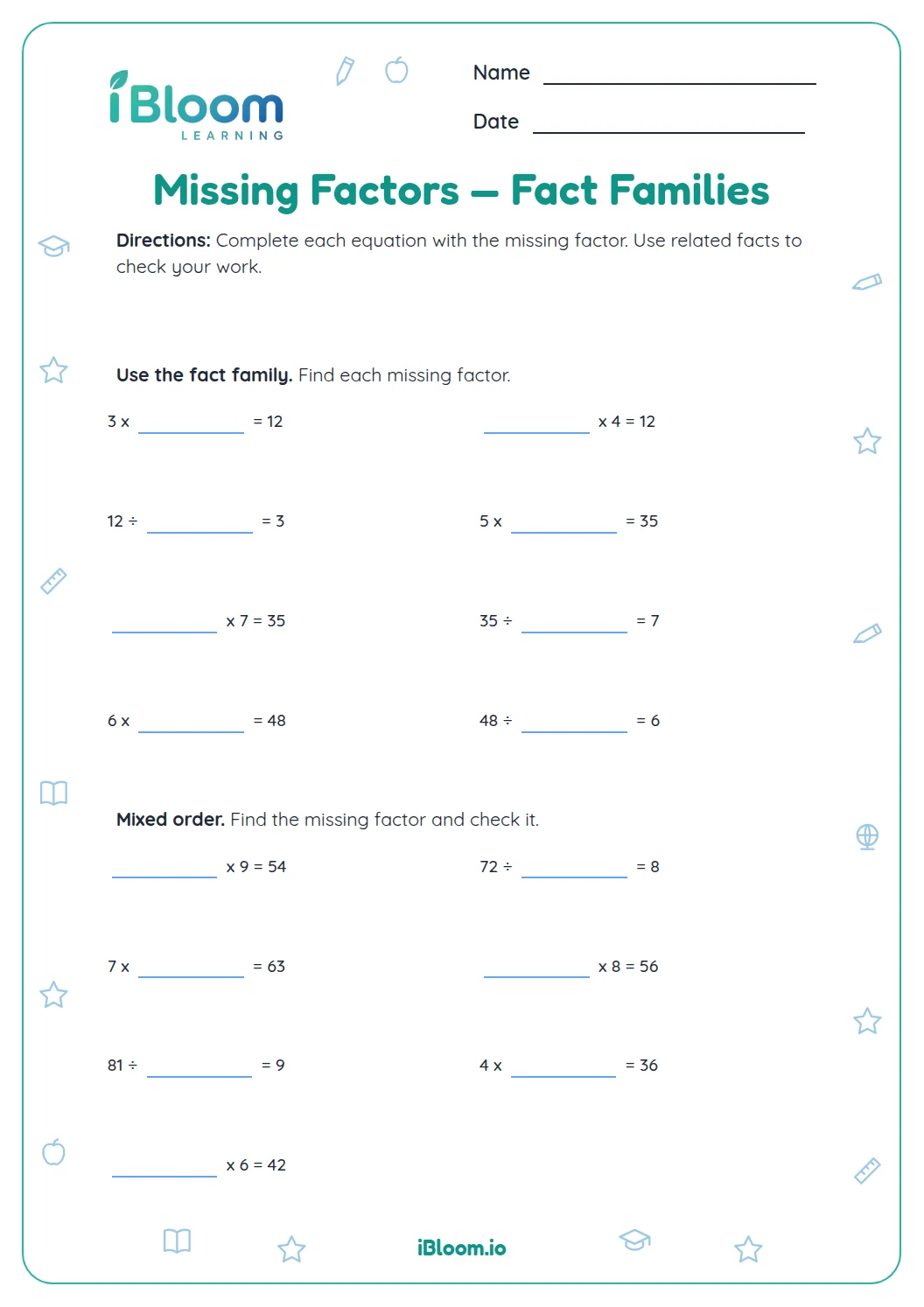
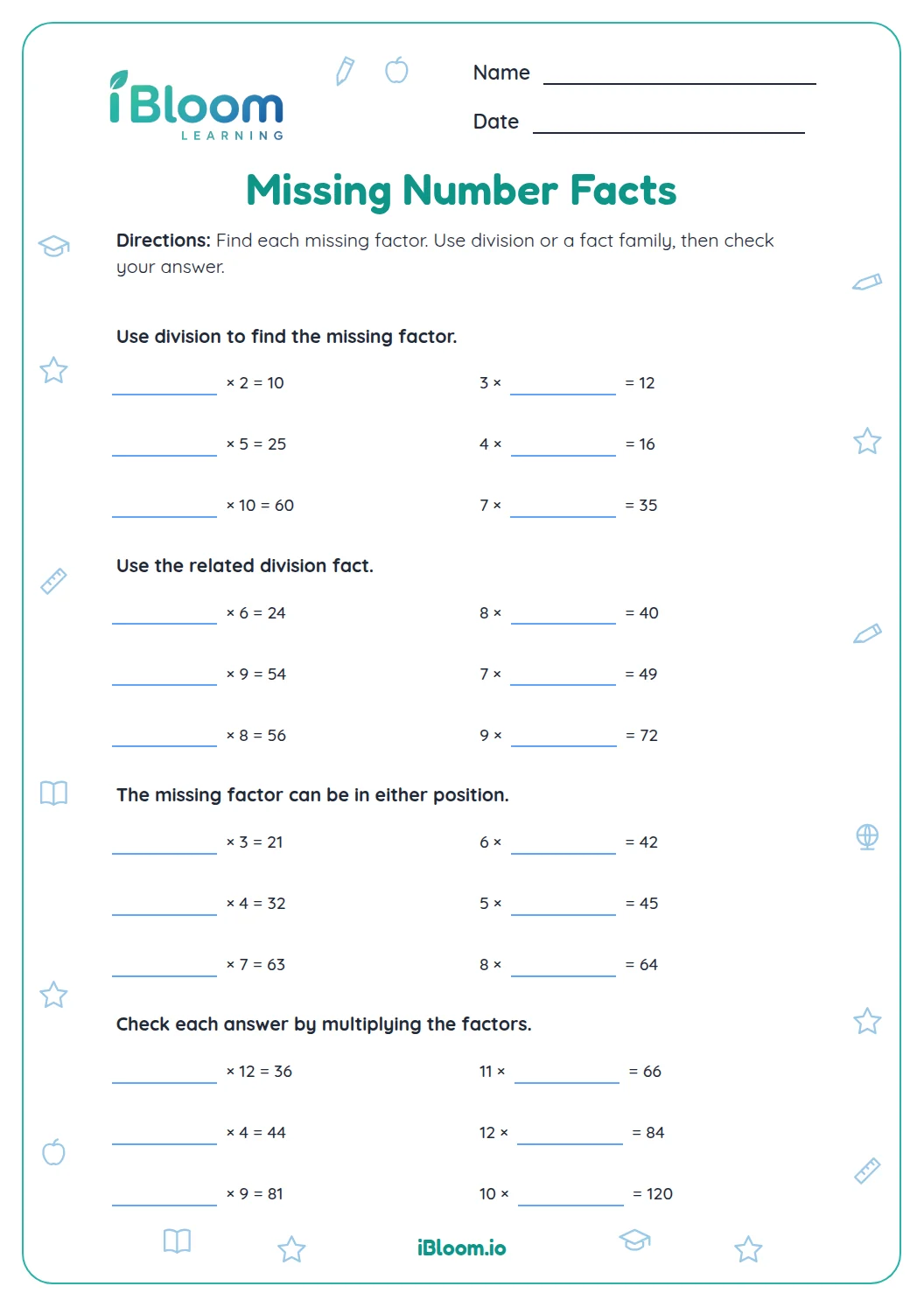

About this worksheet
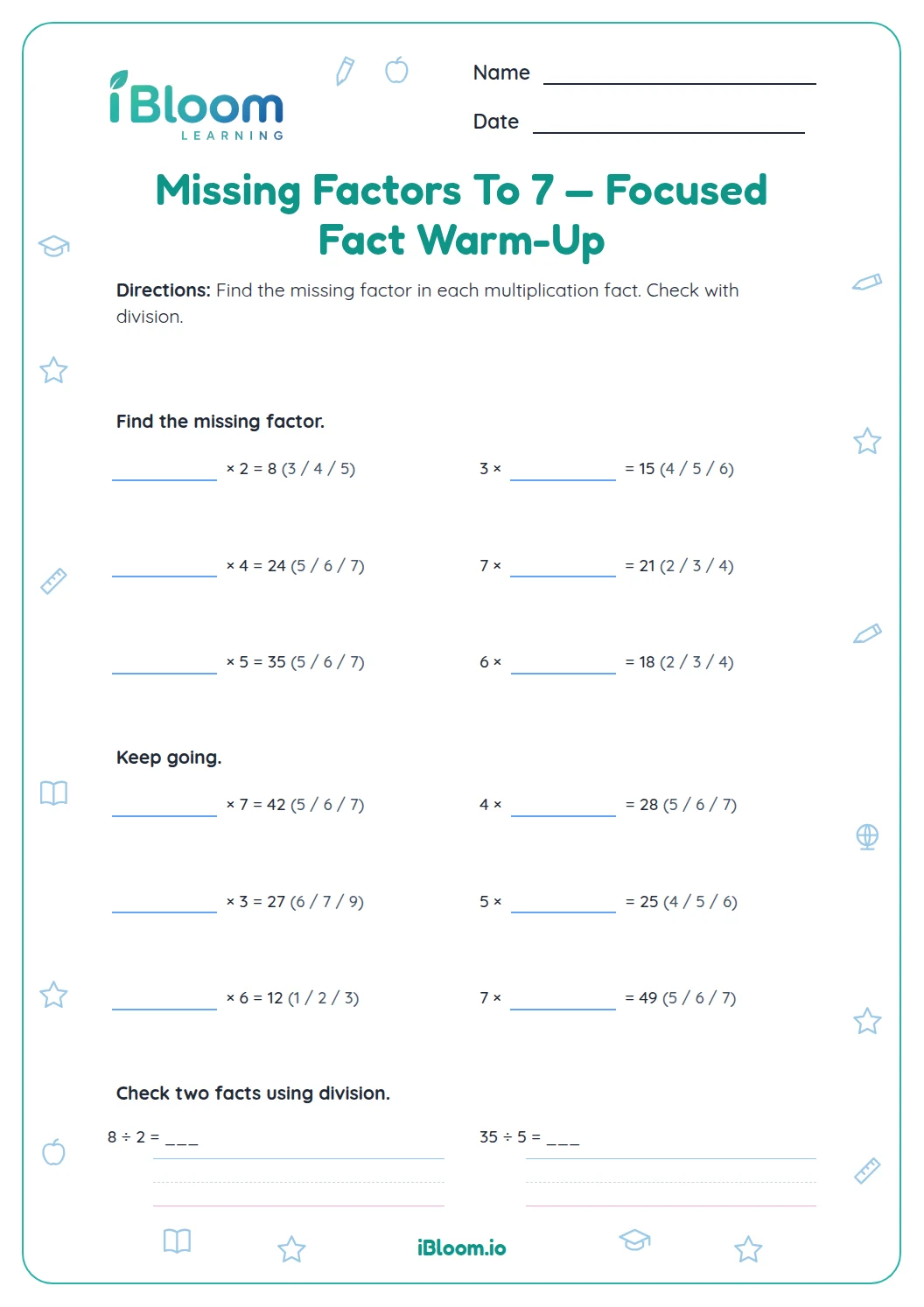
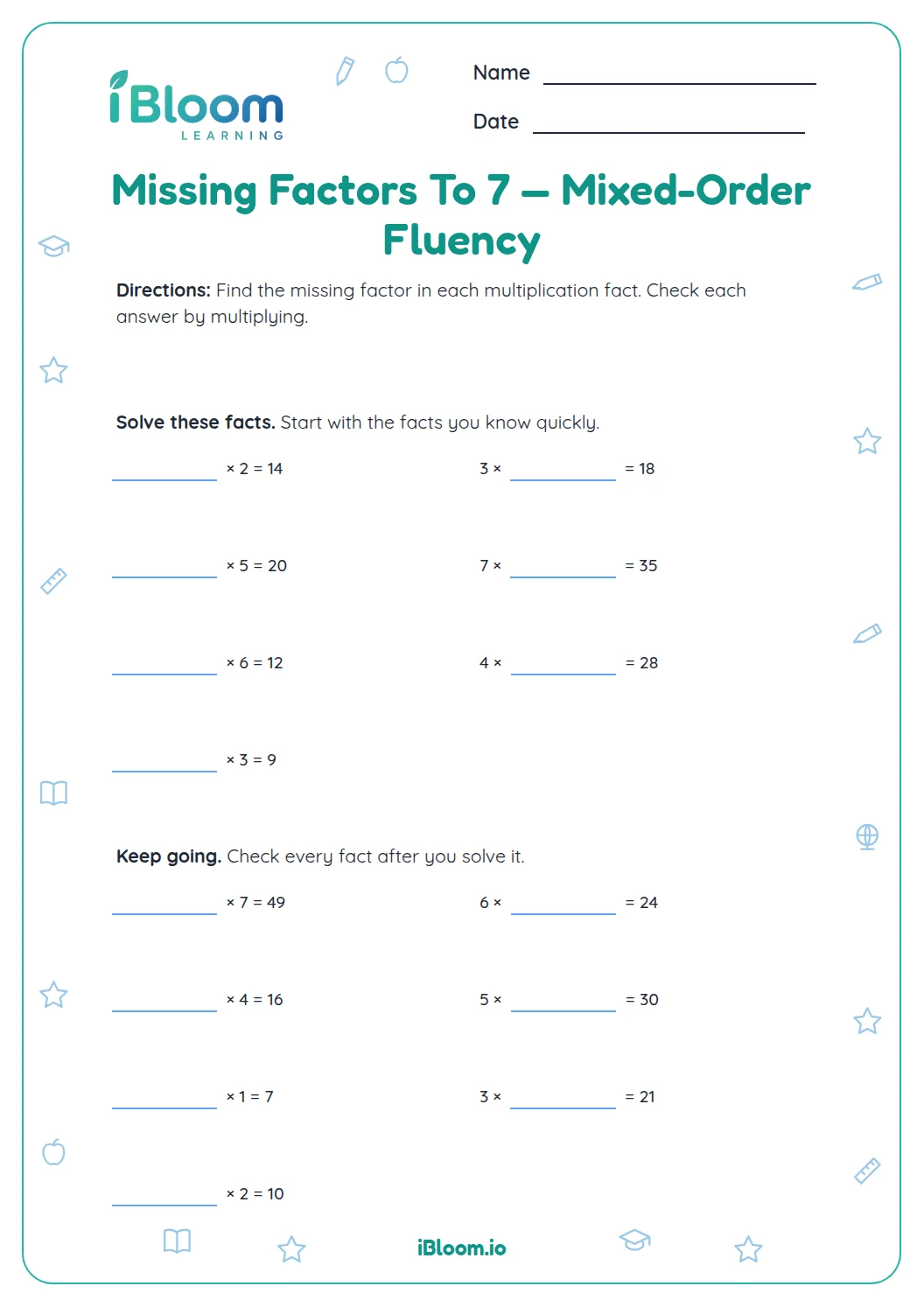
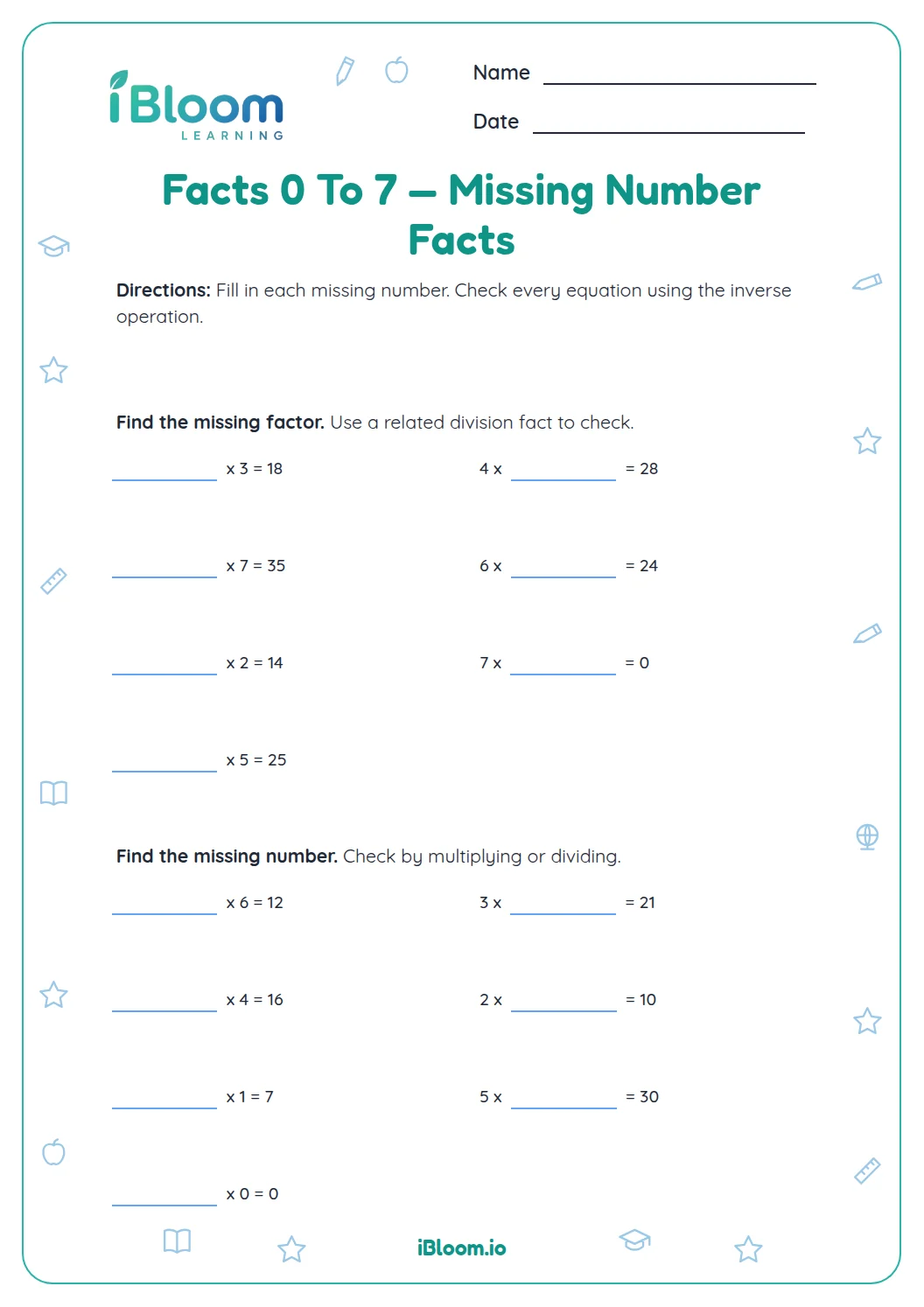
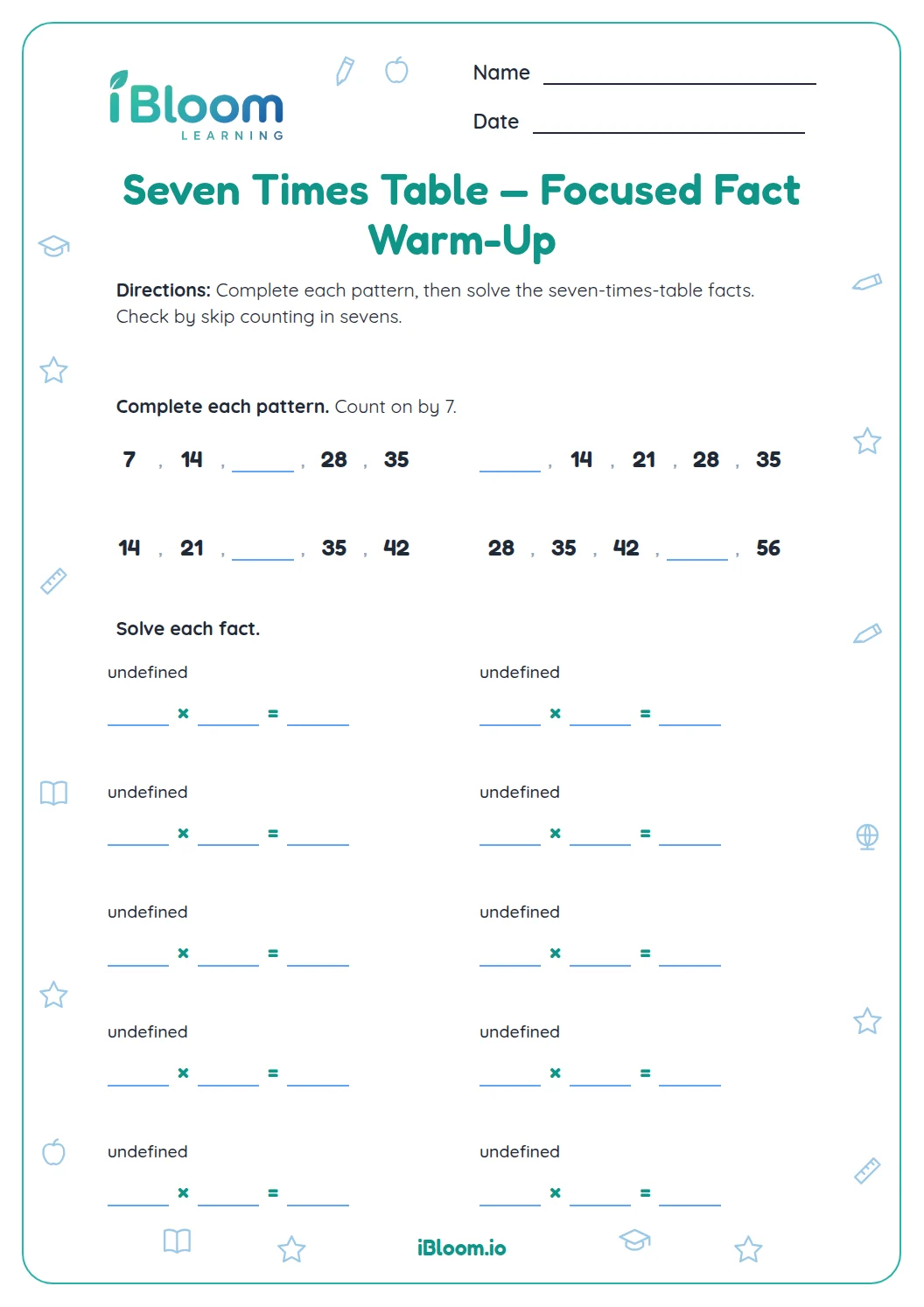
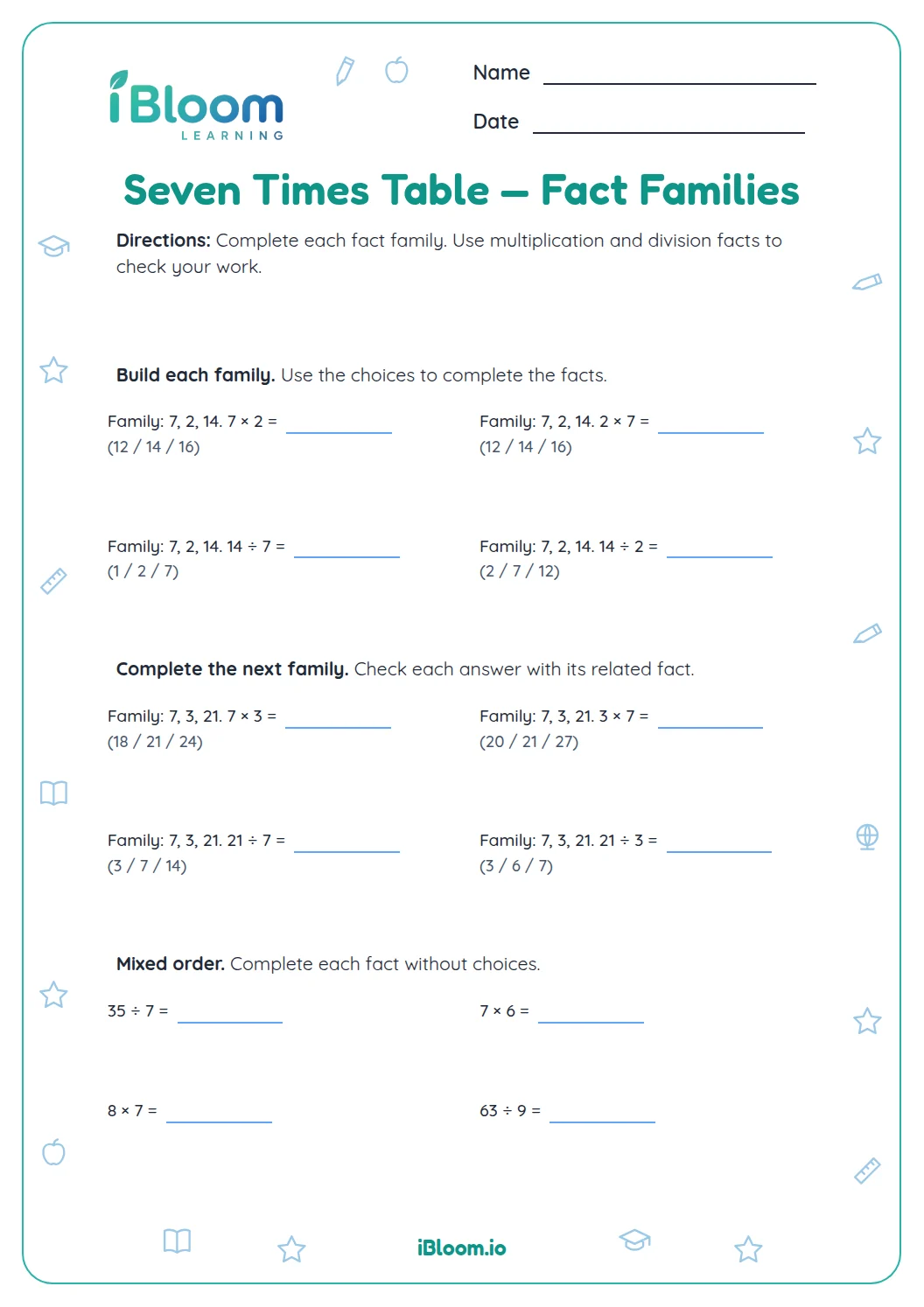
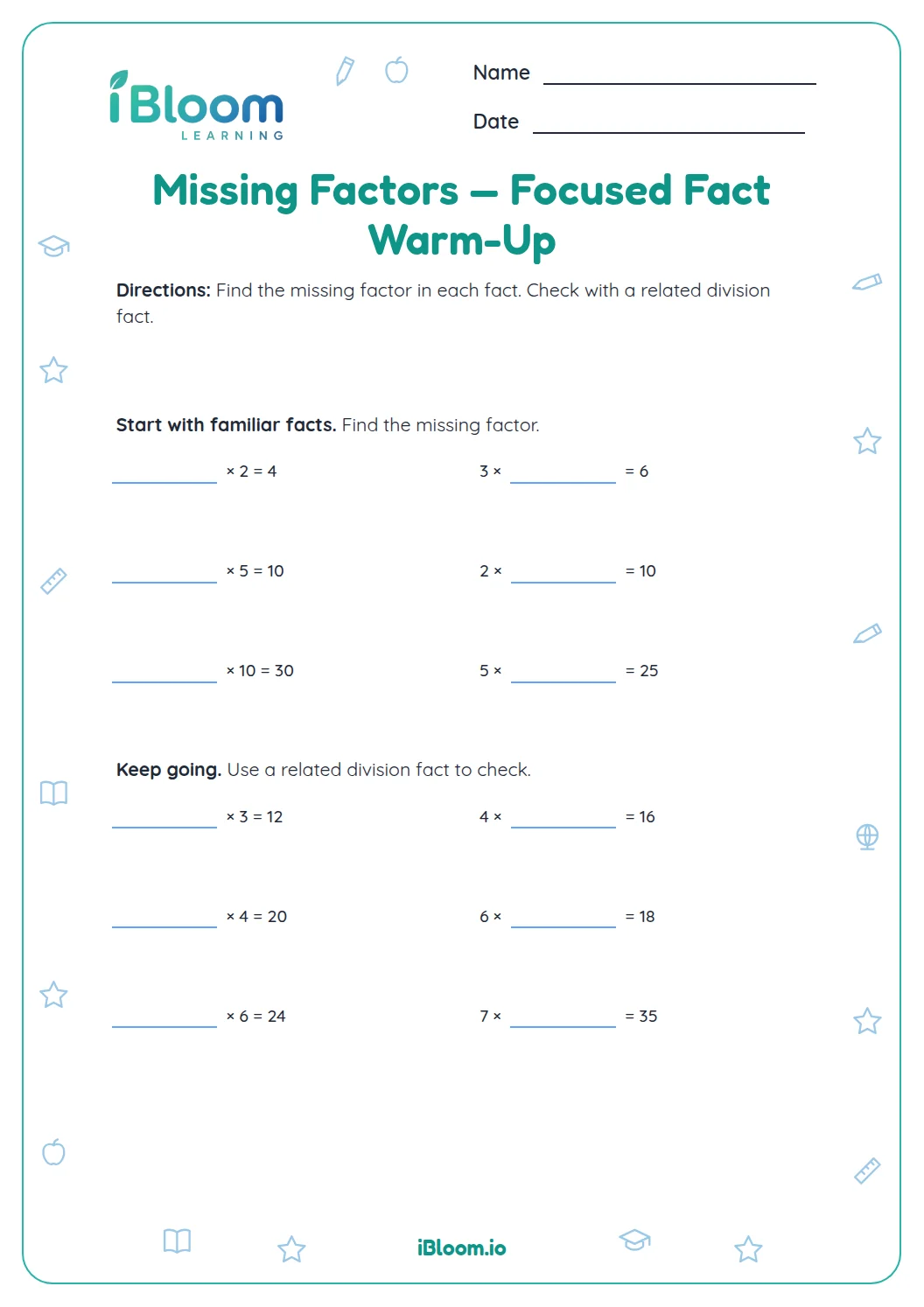
This Grade 3 worksheet gives learners 10 multiplication equations with a missing factor and 8 related division equations. The blanks appear in different positions, and the factors stay within 2 through 7. Children can use a known multiplication fact to find an unknown factor, then connect multiplication and division as inverse operations. A separate answer key is included.
Aligned to 3.OA.A.4
How can a known product reveal a factor?
Use a related fact you already know. If 4 groups make 20, then each group has 5 because 4 × 5 = 20. The missing factor is the number that completes the multiplication equation.
- 14 × ___ = 20
- 2Think: 4 × 5 = 20
- 3The missing factor is 5.
How can you check a missing factor?
Put the number into the blank and multiply. For question 7, 7 × 4 = 28, so 4 makes the equation true. A quick check helps catch a factor that is one too high or too low.
What facts are included?
There are 18 equations with factors from 2 through 7. Some blanks come first and others follow the known factor, so learners read the whole equation before answering.
How to use this worksheet
- 1Read the entire multiplication equation.
- 2Notice the known factor and the product.
- 3Recall or build the related multiplication fact.
- 4Write the missing factor in the blank.
- 5Multiply to check that the product matches.
Common slips and quick fixes
The mistake
Using the product as the missing factor
The fix
Ask which number times the known factor gives that product.
The mistake
Switching the known factor and product
The fix
Read the equation aloud, naming the factor groups and the total.
The mistake
Guessing without checking
The fix
Substitute the answer and multiply to see if the equation is true.
Common Core alignment
This worksheet gives children a chance to apply the standard to a focused set of printable questions.
Find an unknown factor in a multiplication equation.
On this sheet: Every item asks for the missing whole-number factor in a multiplication equation.
Show the official wordingHide the official wording
Determine the unknown whole number in a multiplication or division equation relating three whole numbers.
What to practice next
Further reading
Questions parents and teachers ask
How do you find a missing factor?
Use the product and the known factor to recall a multiplication fact. In 4 × ___ = 20, ask what number multiplied by 4 makes 20. Since 4 × 5 = 20, the missing factor is 5. Have the learner say the complete fact aloud after filling the blank.
Why are there division facts on this page?
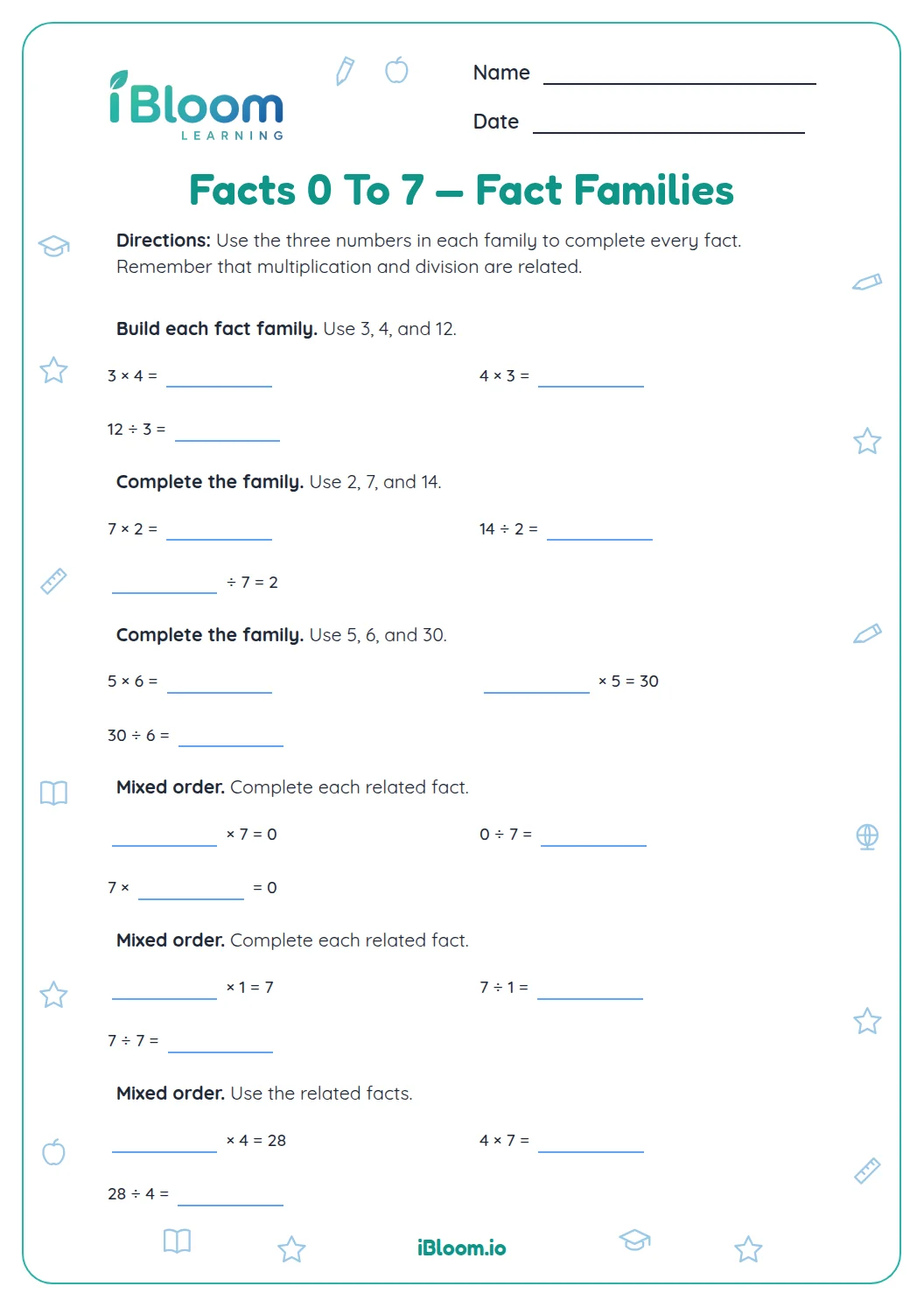
Division undoes multiplication, so a division equation can check a related multiplication fact. For example, if 6 × 7 = 42, then 42 ÷ 6 = 7. The second part asks learners to complete related facts. Students can use either multiplication or division to check their work.
Are the factors limited to 7?
The missing multiplication factors range from 3 to 7, and each multiplication fact uses a known factor from 2 through 7. The products stay within 49, making them suitable for Grade 3 multiplication fact practice. Each equation has one whole-number answer that makes it true.
What is a quick way to check an answer?
Put the number into the blank and calculate. For ___ × 4 = 28, substitute 7 and check 7 × 4 = 28. For division, multiply the quotient by the divisor to see whether it returns the dividend.
What does the answer key show?
The separate key lists the missing whole number for each of the 18 facts. Learners can check one section at a time, then correct a missed answer by writing the related multiplication or division fact. Looking at a missed fact beside its related fact can make the correction clearer.