



About this worksheet
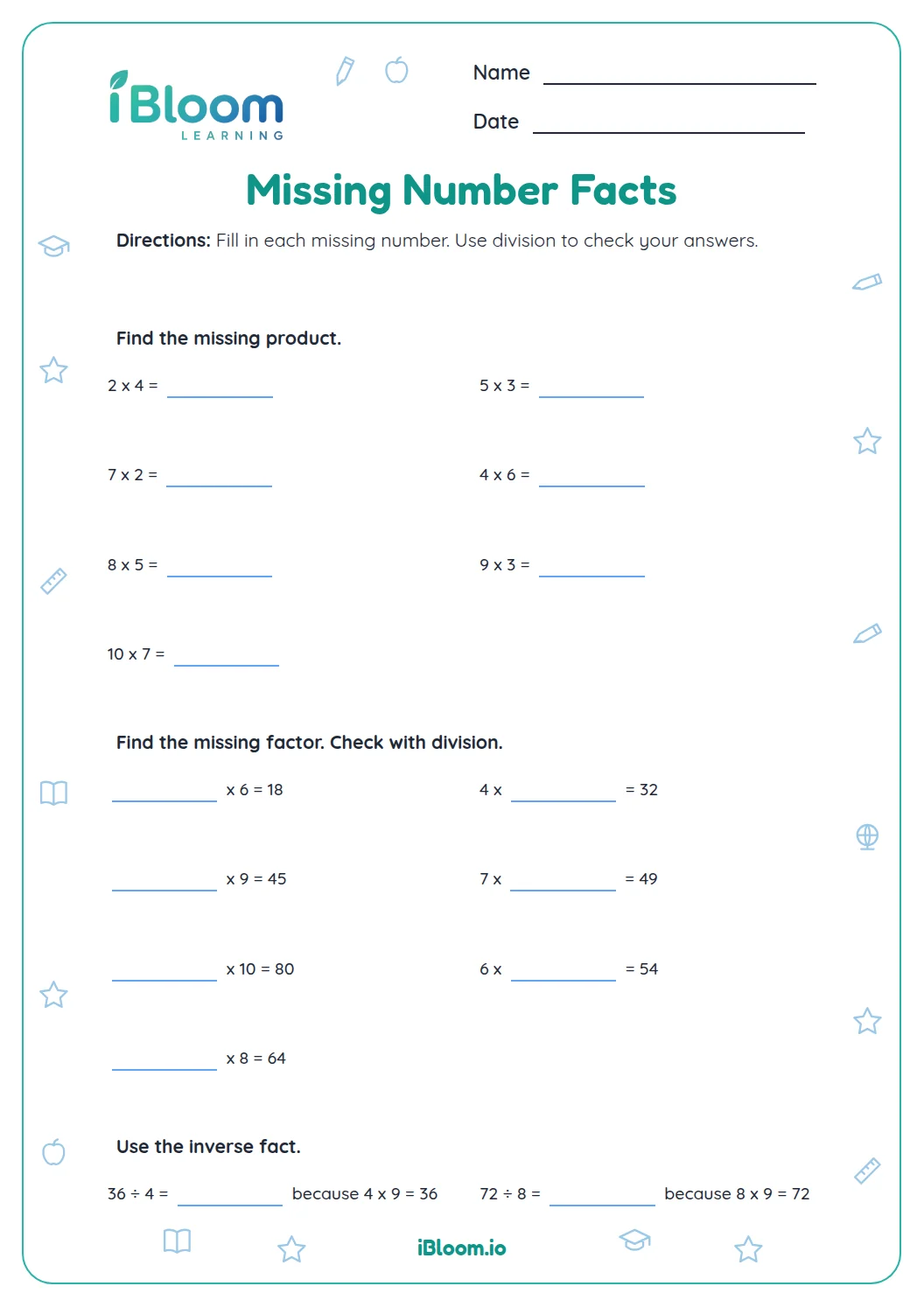
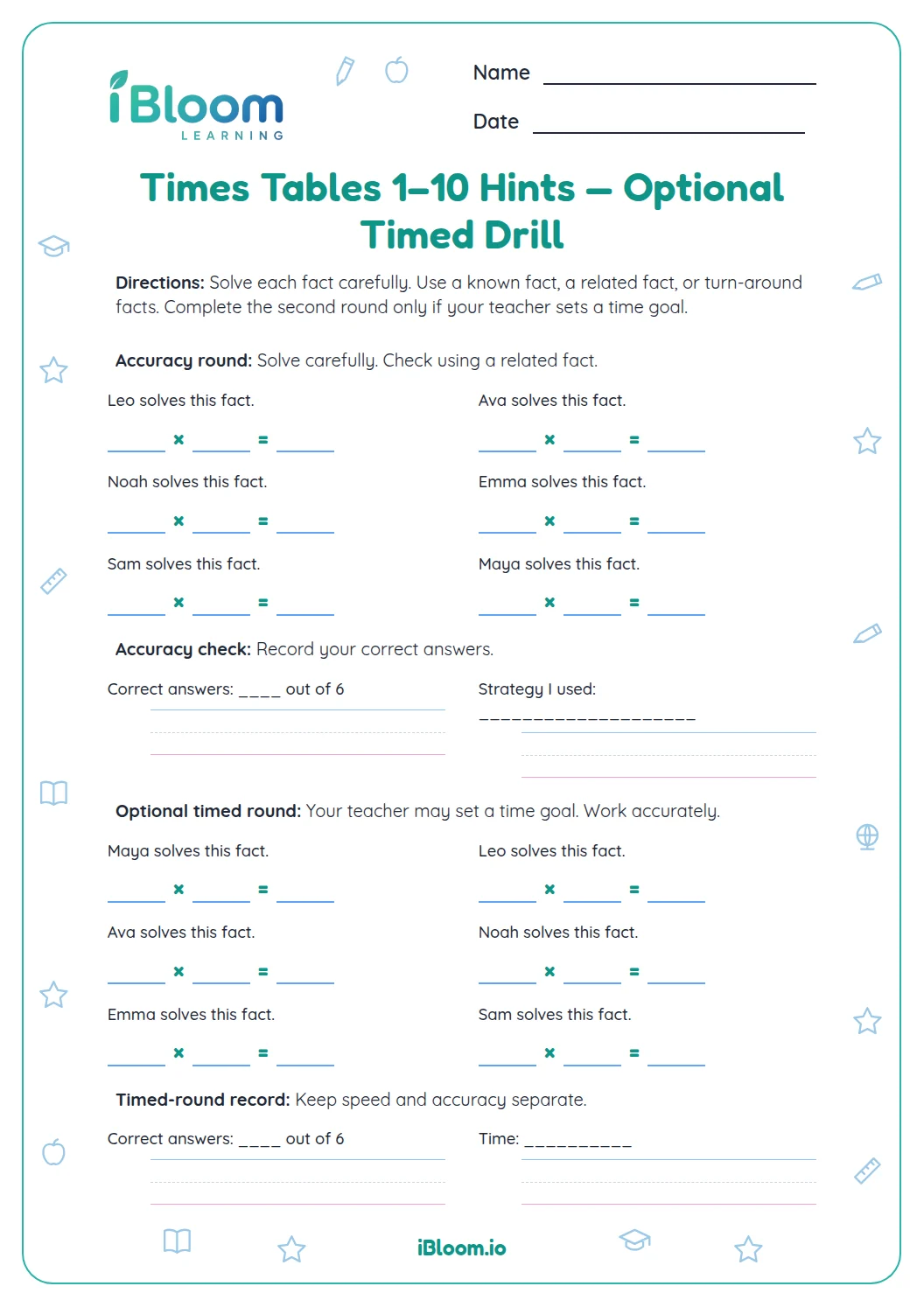
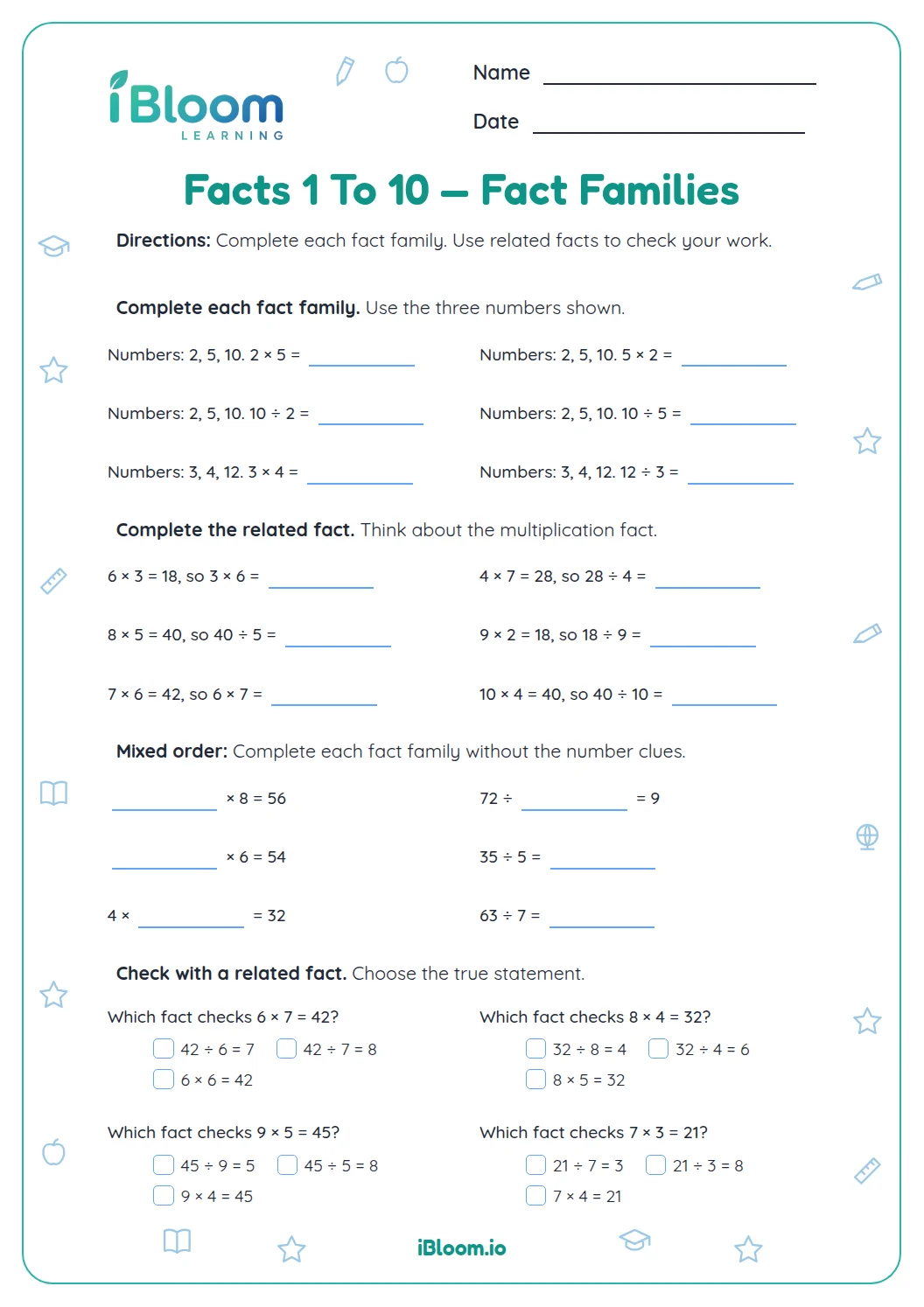
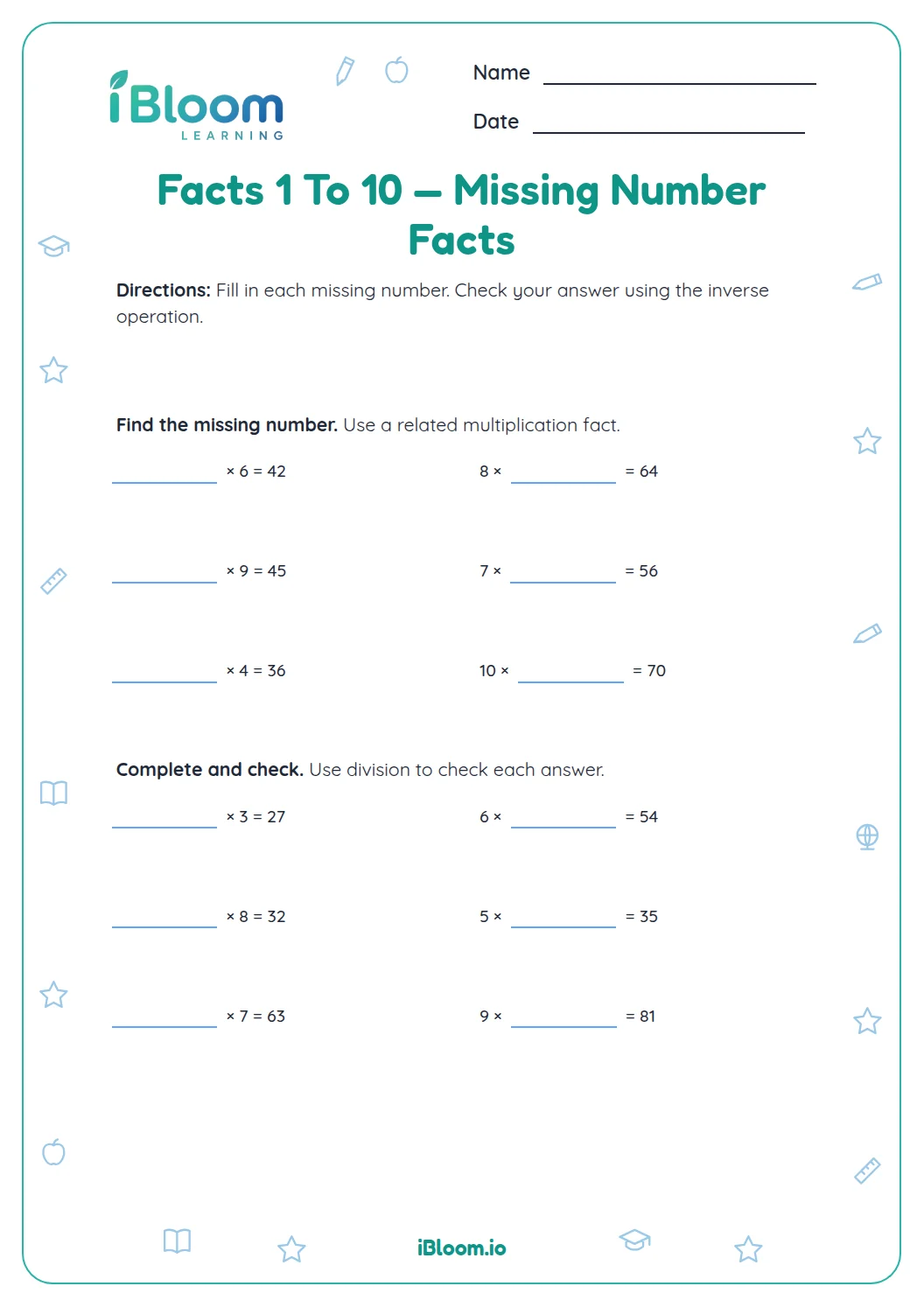
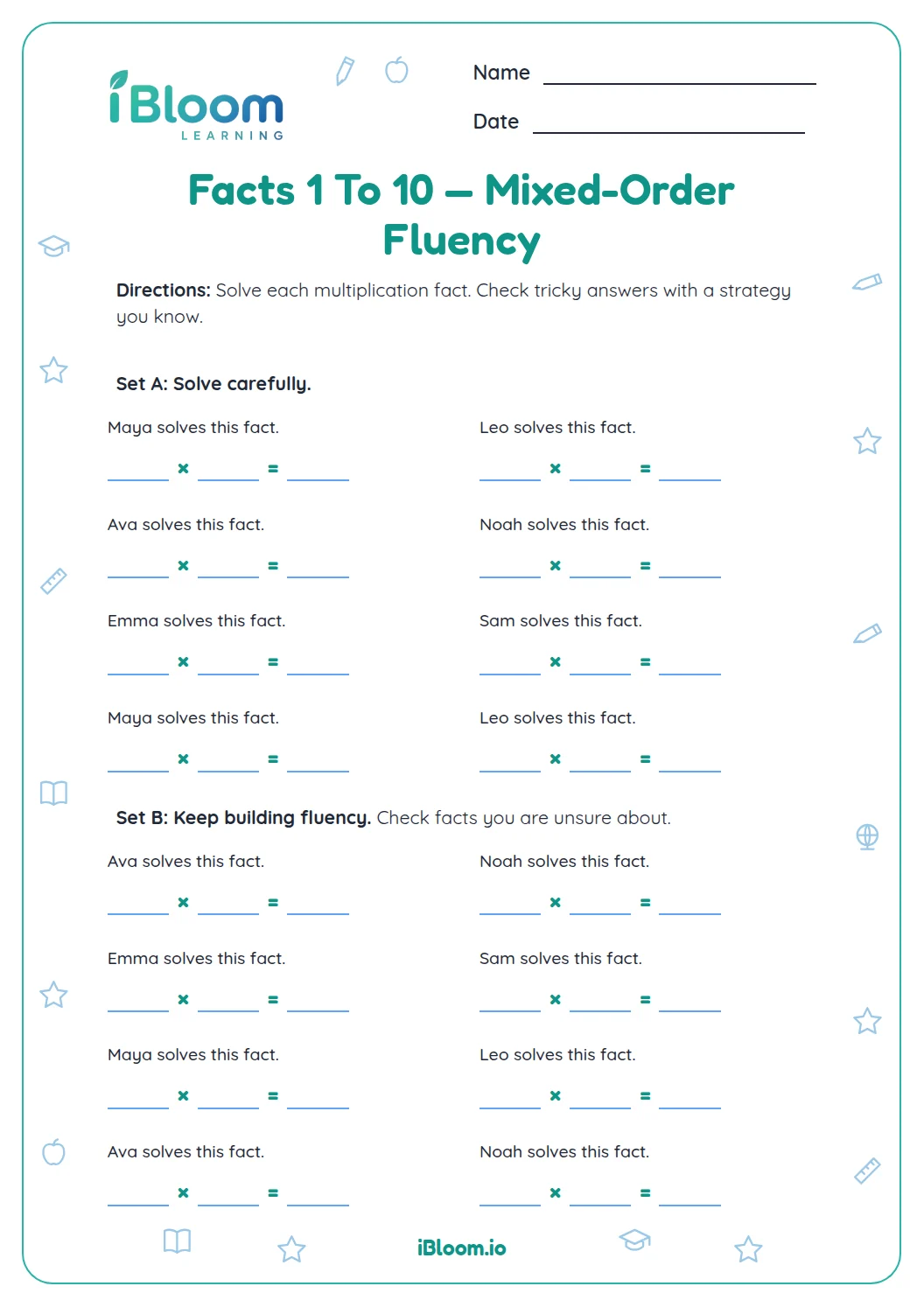
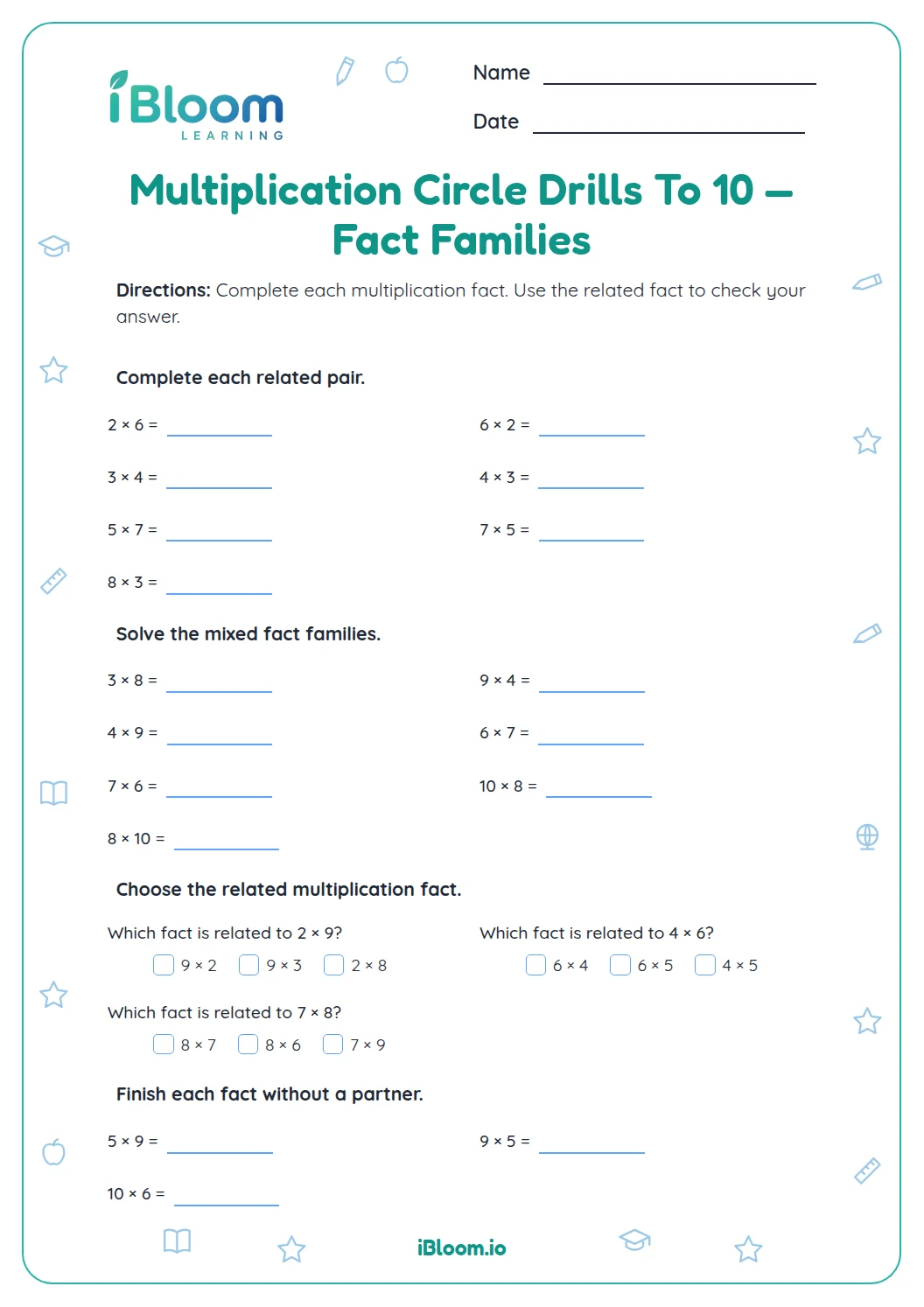
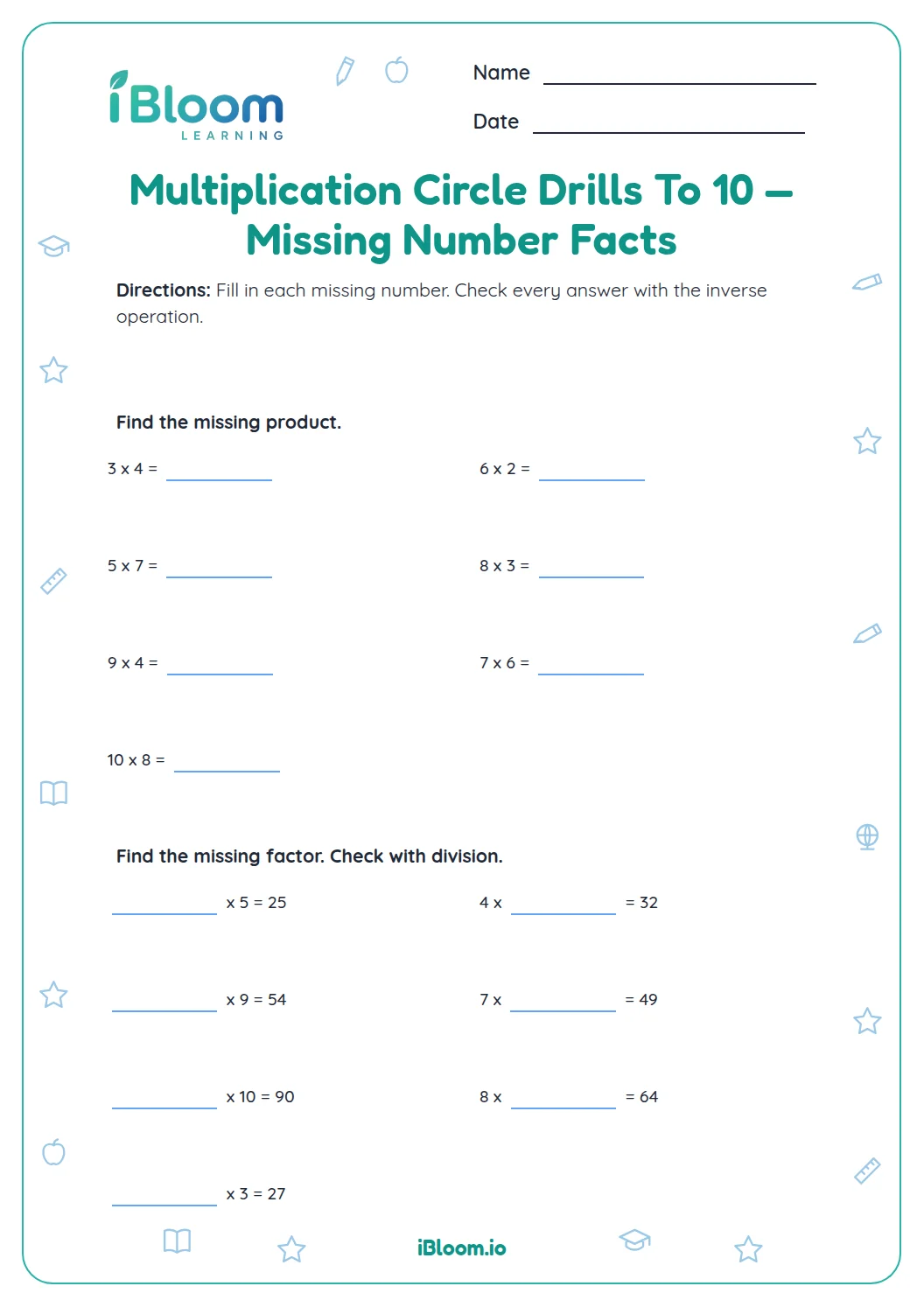
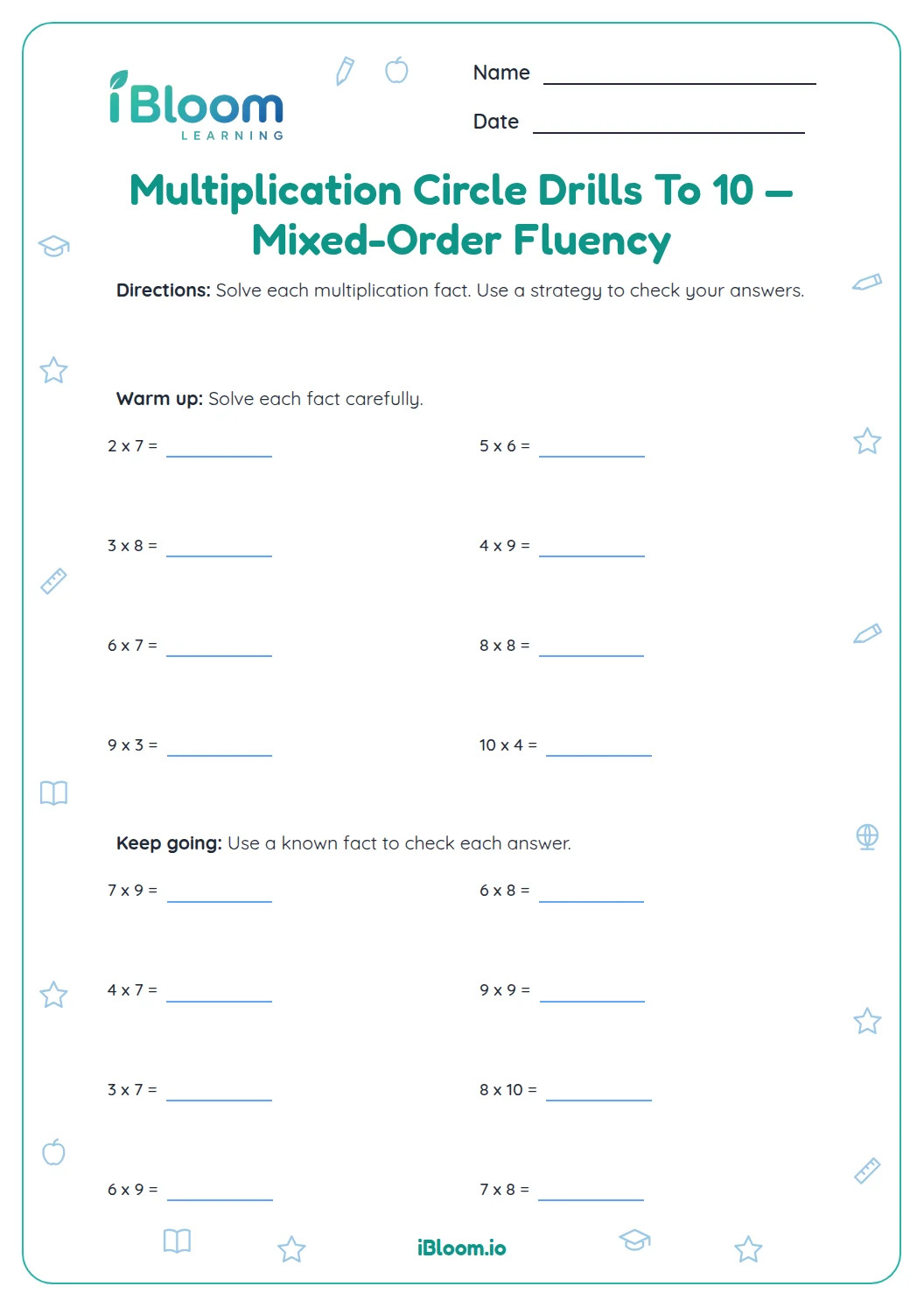
This Grade 3 multiplication worksheet mixes facts from the 1 through 10 tables so learners must read each factor rather than follow a counting sequence. It includes 16 number sentences and four equal-group word problems, for 20 questions total. The separate answer key gives products for every item. The practice supports CCSS 3.OA.C.7 fluency with one-digit multiplication facts.
Aligned to 3.OA.C.7
How do mixed facts build fluency?
The factors appear in a mixed order, so learners must attend to both numbers in each expression. For q1, 8 × 7 can be worked out by splitting 7 into 5 and 2: 8 × 5 is 40 and 8 × 2 is 16, for a total of 56.
How can a known fact help?
Break a harder fact into parts that are easier to recall, then combine the partial products. Doubling, using a five-times fact, or using a related multiplication fact are useful ways to check a product.
How do equal groups become an equation?
For q17, six bags with seven marbles each can be represented as 6 × 7 = 42. The word problems ask learners to identify the number of groups and the number in each group before finding the total.
How to use this worksheet
- 1Read both factors and the multiplication sign.
- 2Recall the product or break a factor into easier parts.
- 3For a story problem, identify the number of groups and items per group.
- 4Write one product or total for each question.
- 5Check with a related fact or repeated groups.
Common mistakes and quick fixes
The mistake
Adding the two factors instead of multiplying.
The fix
Model equal groups or use a known product.
The mistake
Dropping a factor in a word problem.
The fix
Identify both groups and items in each group.
The mistake
Using an answer from a nearby fact.
The fix
Reread the factors before writing the product.
These activities connect practice to the following standard.
Build fluency with one-digit products and use related facts to check.
On this sheet:
Show the official wordingHide the official wording
Fluently multiply and divide within 100, using strategies such as the relationship between multiplication and division (e.g., knowing that 8 × 5 = 40, one knows 40 ÷ 5 = 8) or properties of operations. By the end of Grade 3, know from memory all products of two one-digit numbers.
What to practice next
Make more practice
Further reading
Questions parents and teachers ask
Which times tables does this page include?
The worksheet includes one-digit multiplication facts using factors from 1 through 10. The facts are mixed rather than ordered by table, so learners need to read both factors in each number sentence before finding the product. The range includes every table from 1 to 10.
How many problems are on the worksheet?
There are 20 questions: 16 direct multiplication facts and four equal-group word problems. The first section focuses on products, and the second asks learners to apply multiplication to groups of objects or people. The answer key lists each product and total.
What does “mixed order” mean?
Mixed order means the facts do not move from 1 × 1 upward in a counting sequence or stay within one times table. This lets learners practice recalling a range of products while checking each factor pair carefully.
How can a learner solve a fact they do not remember?
Break one factor into easier parts and combine the products. For 8 × 7, use 8 × 5 and 8 × 2, then add 40 and 16 to get 56. A learner can also use a known related fact to check the result.
What do the word problems practice?
Each word problem describes equal groups, such as bags with the same number of marbles or rows with the same number of seedlings. Identify the number of groups and the amount in each group, then multiply to find the total.