
About this worksheet
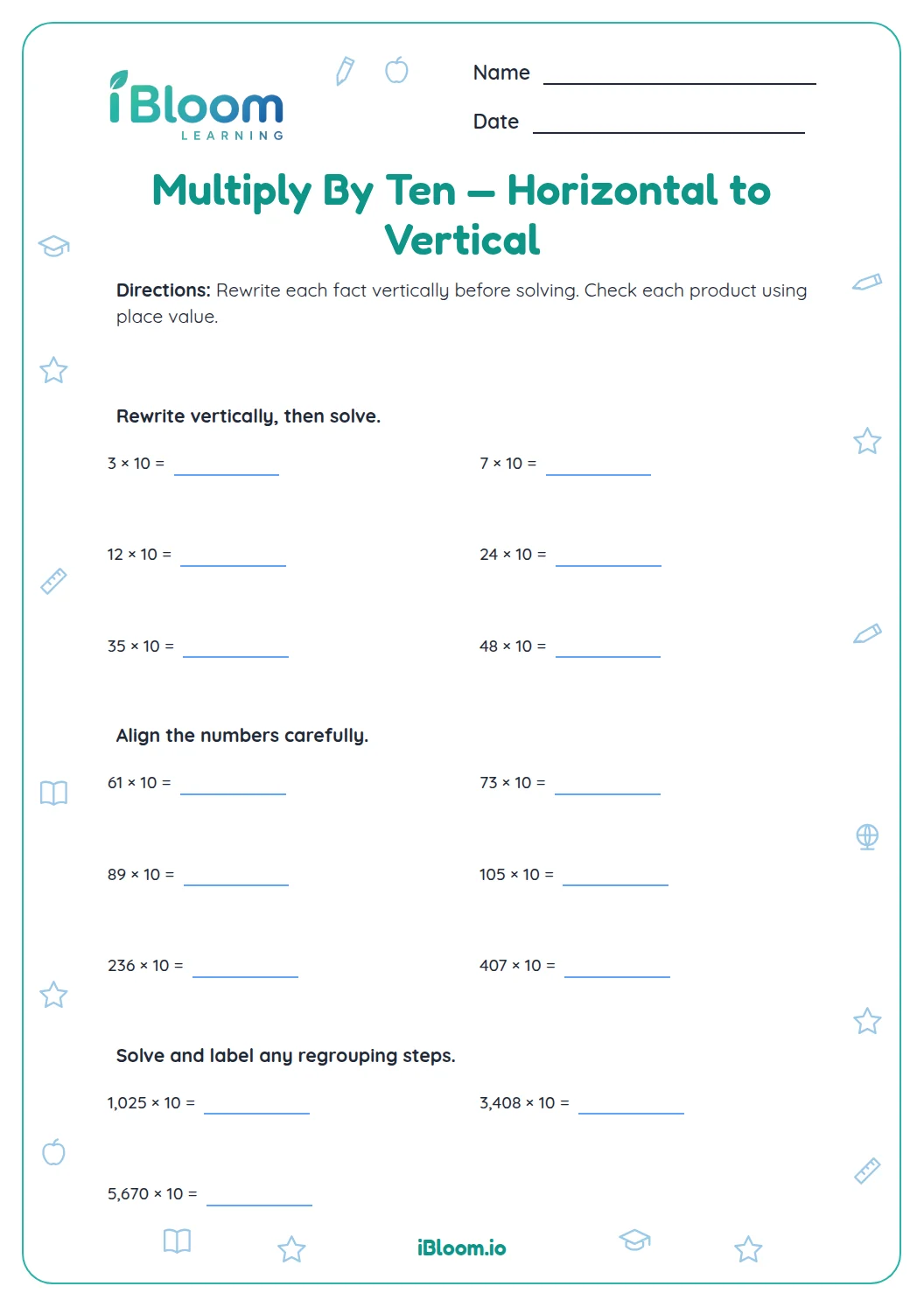
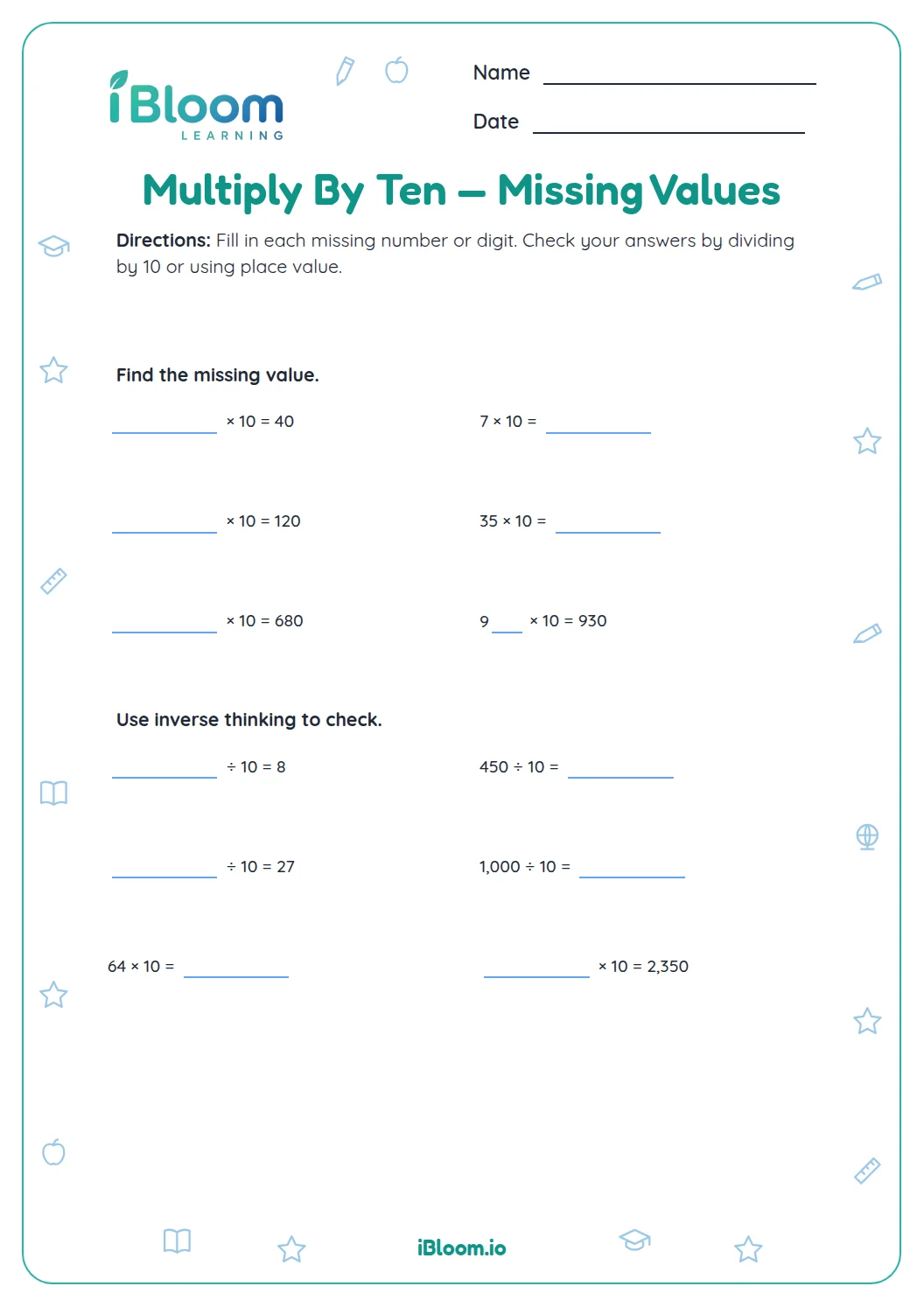
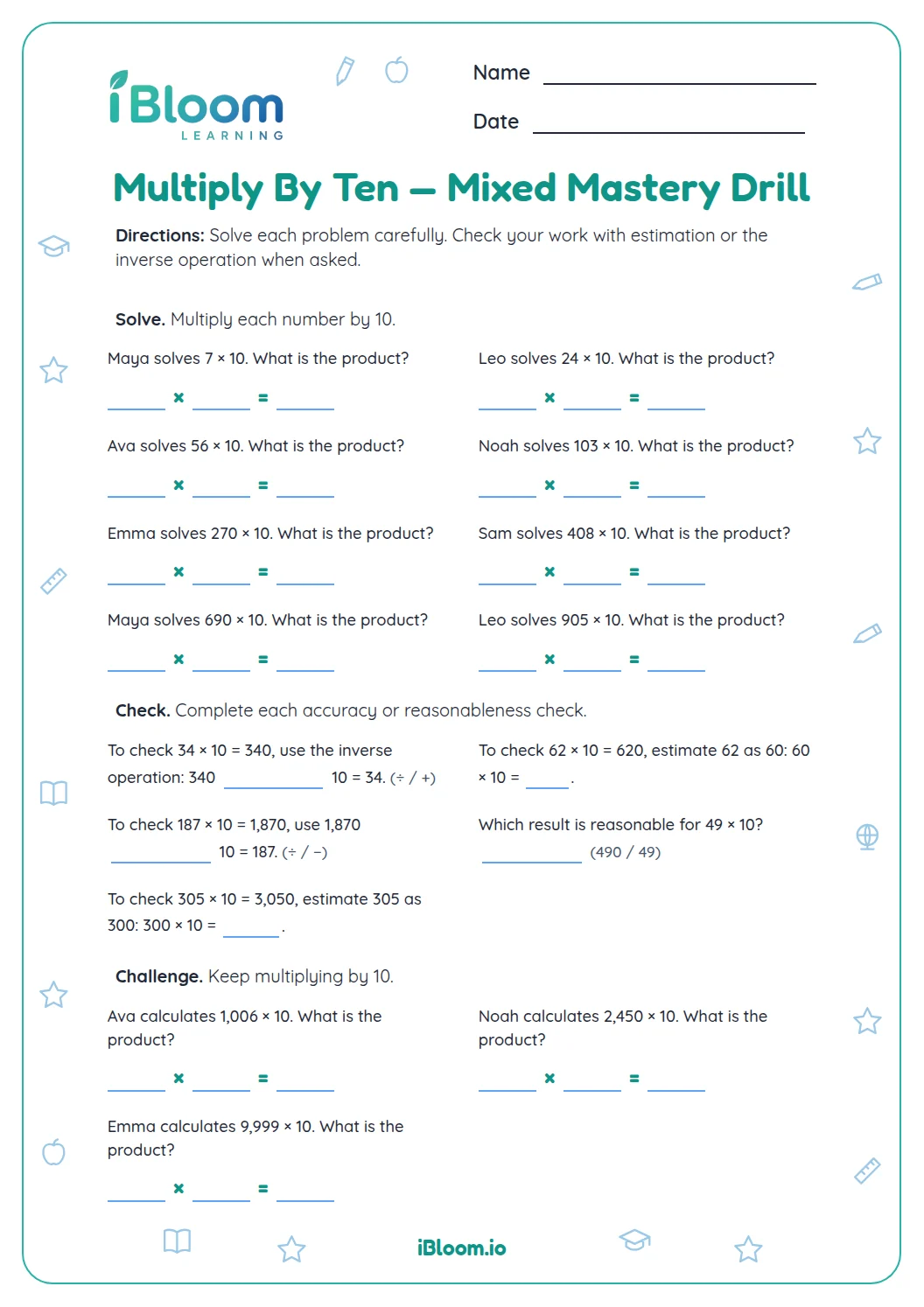
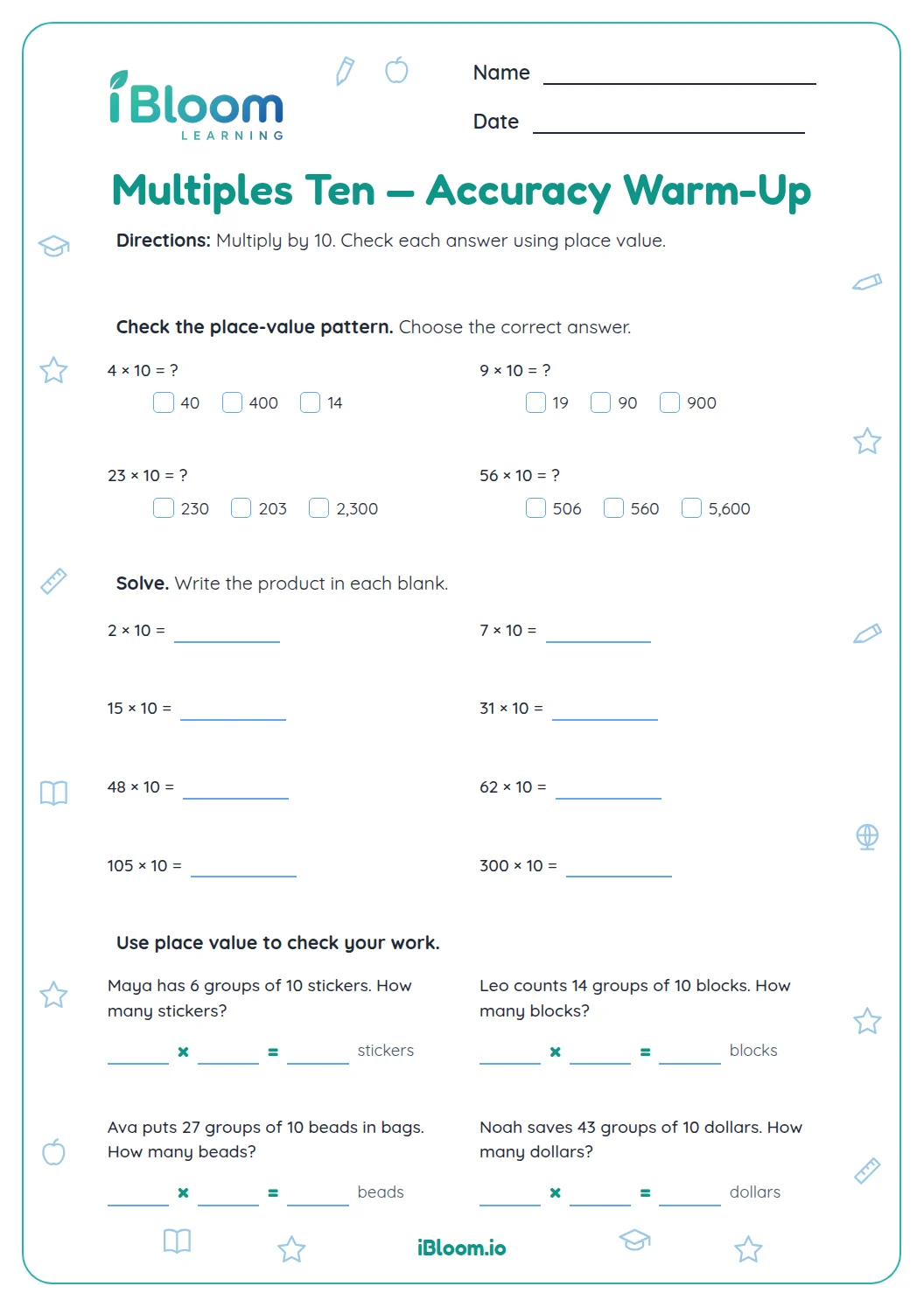
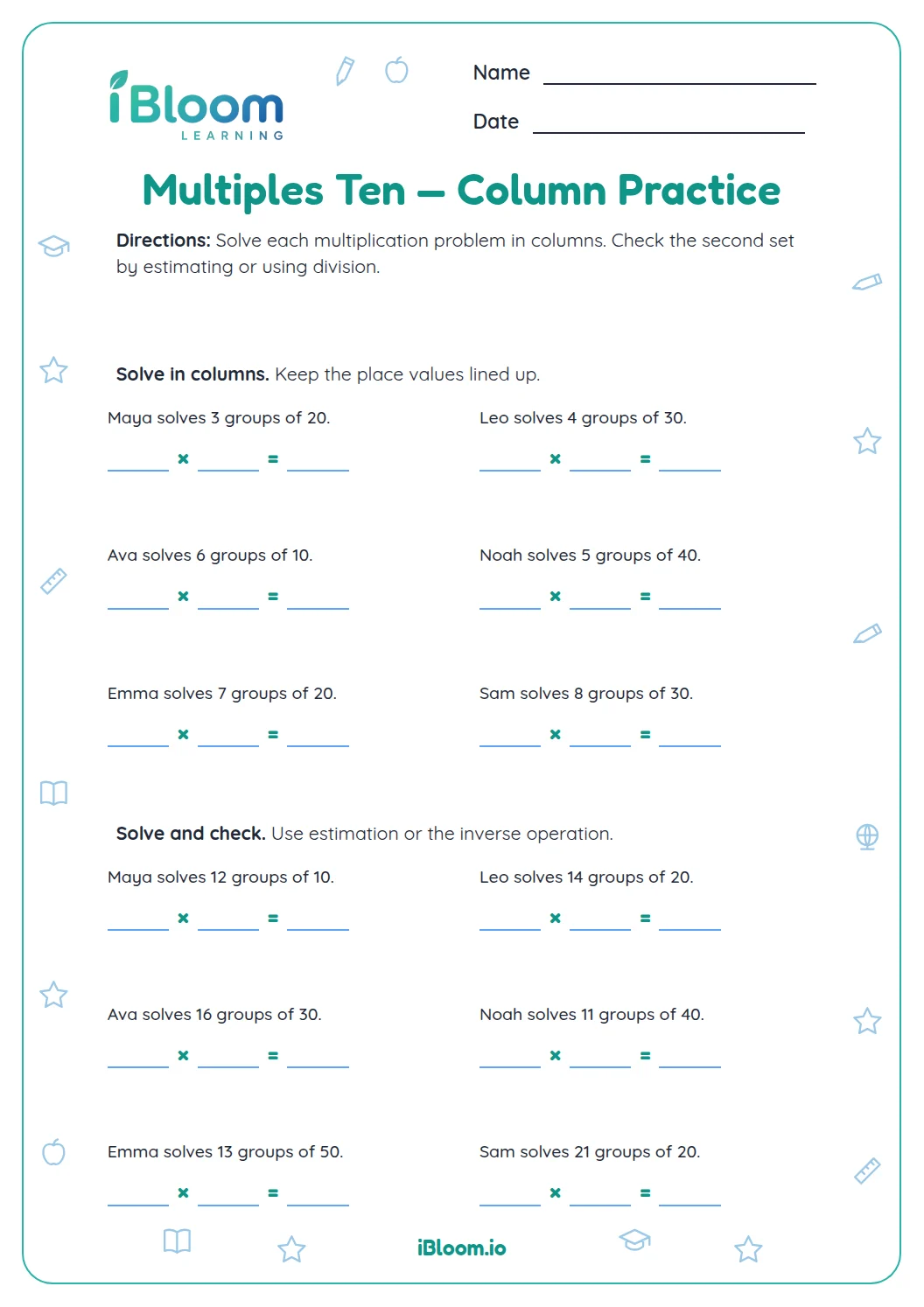
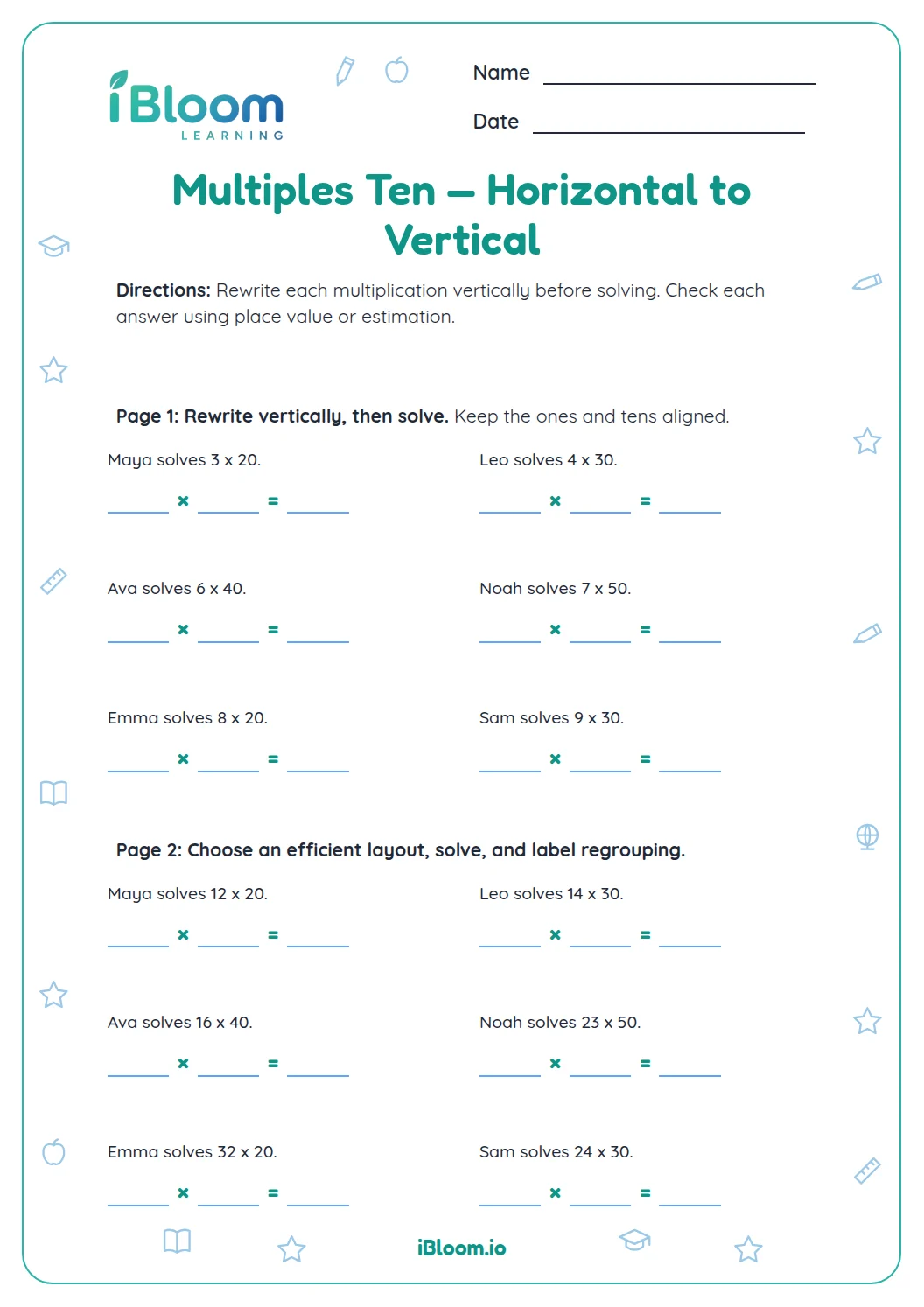
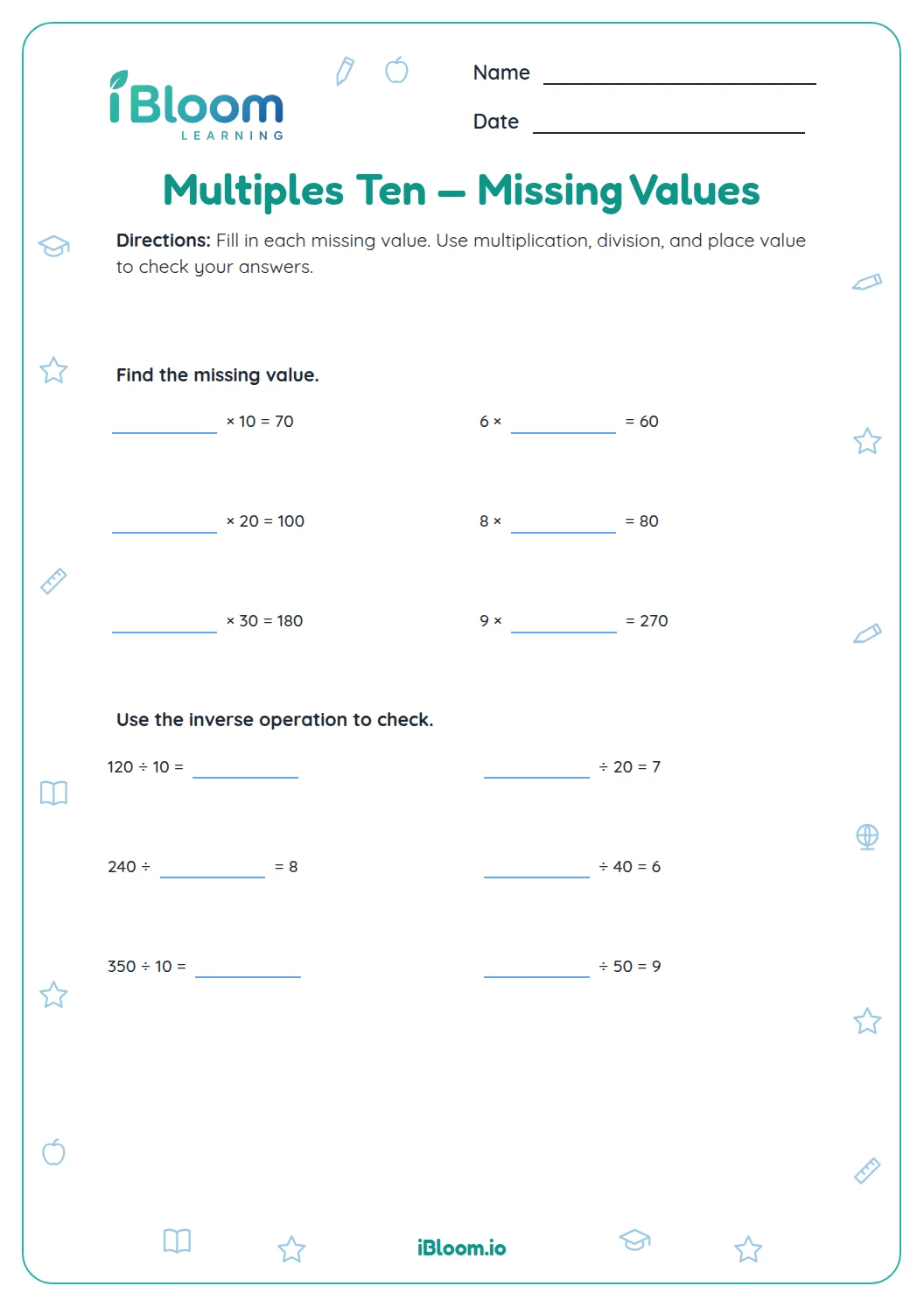
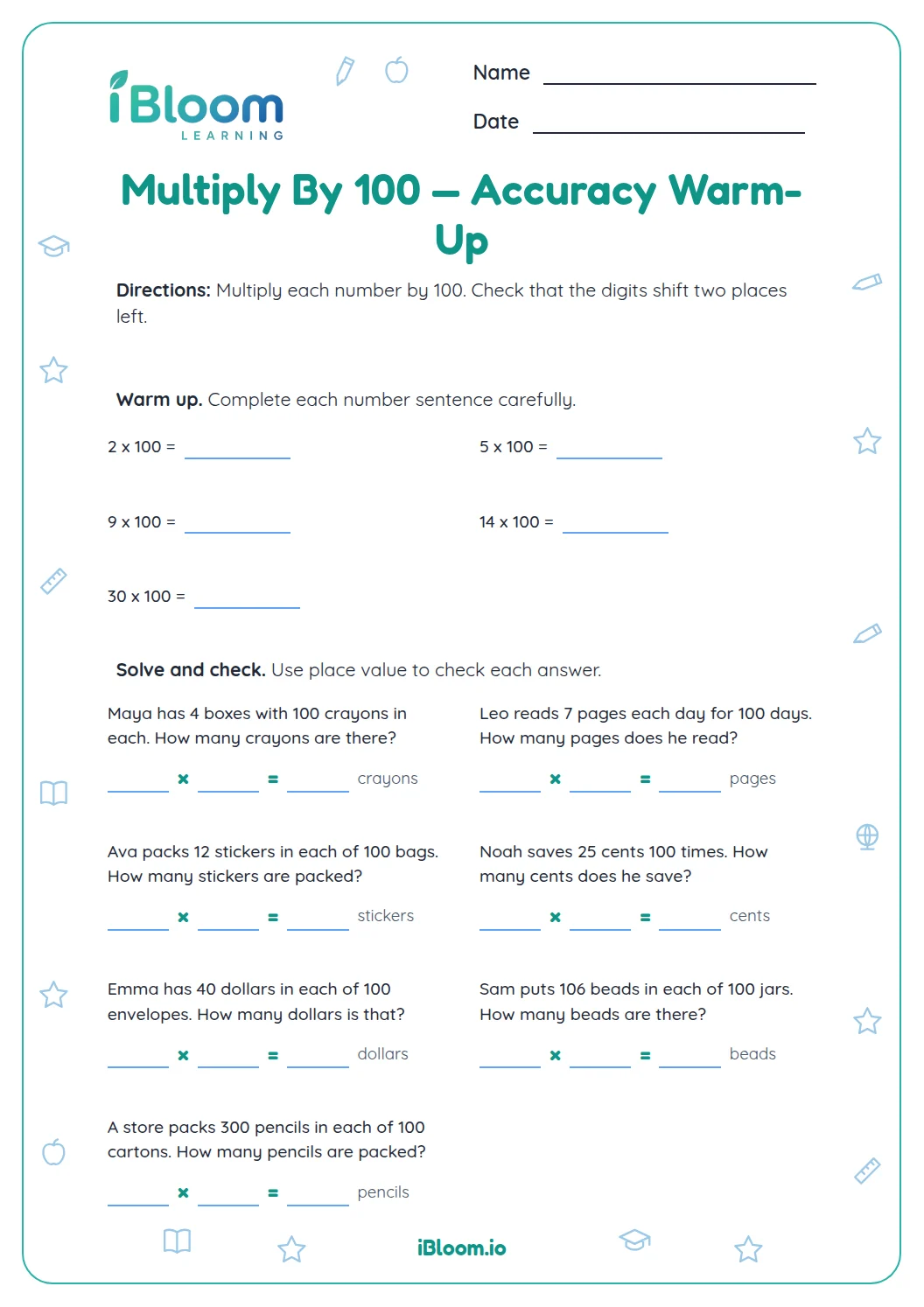
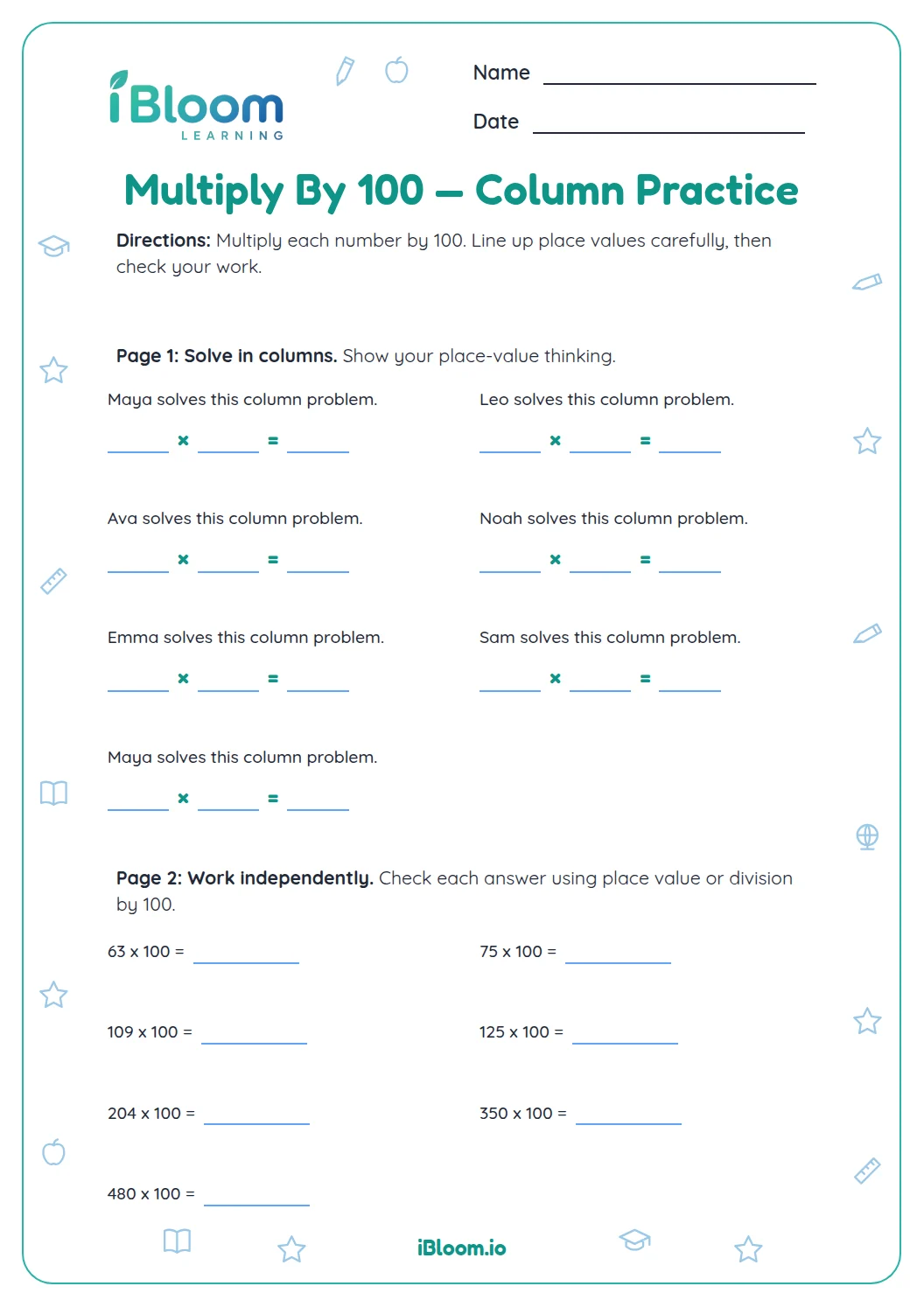
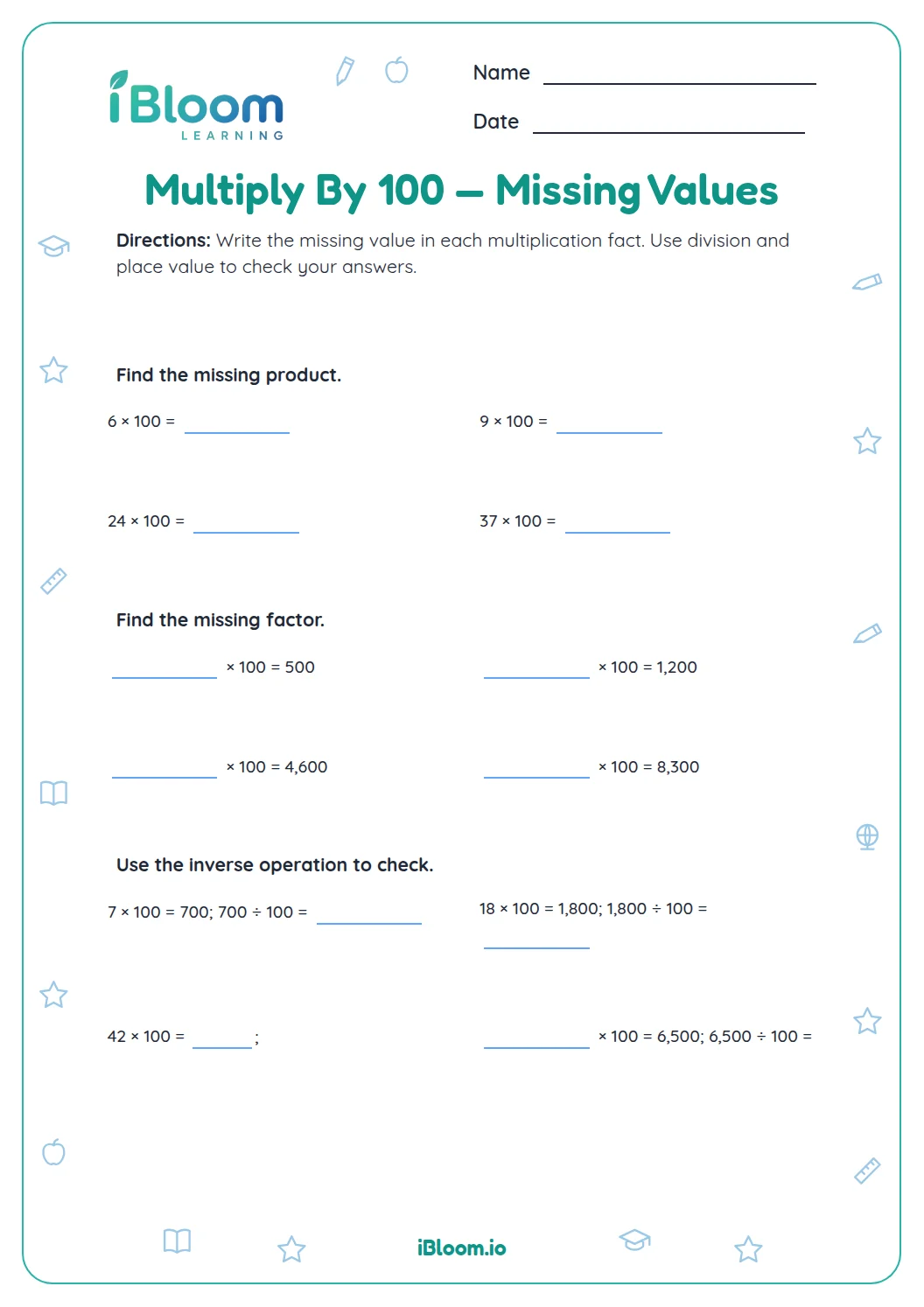
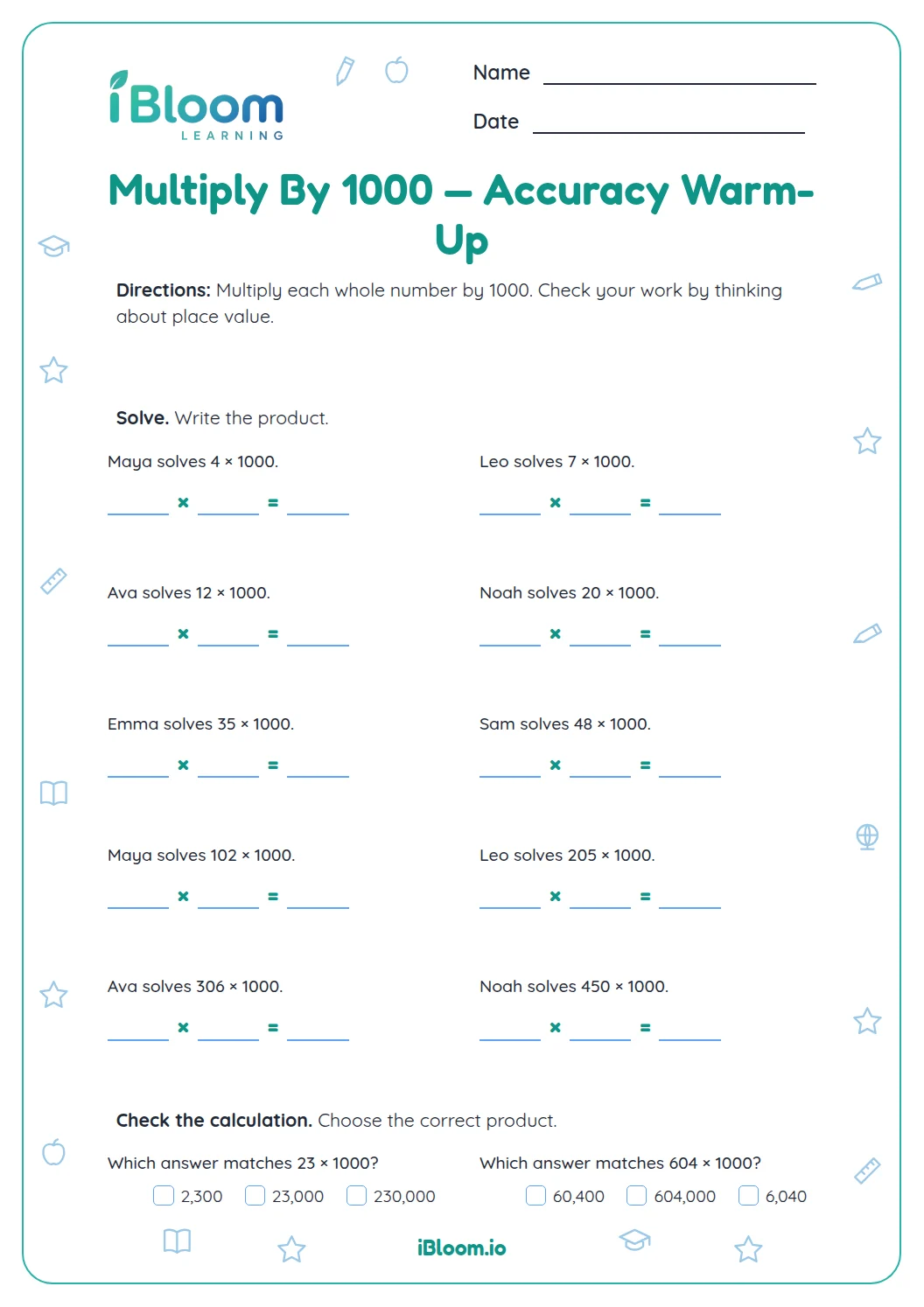
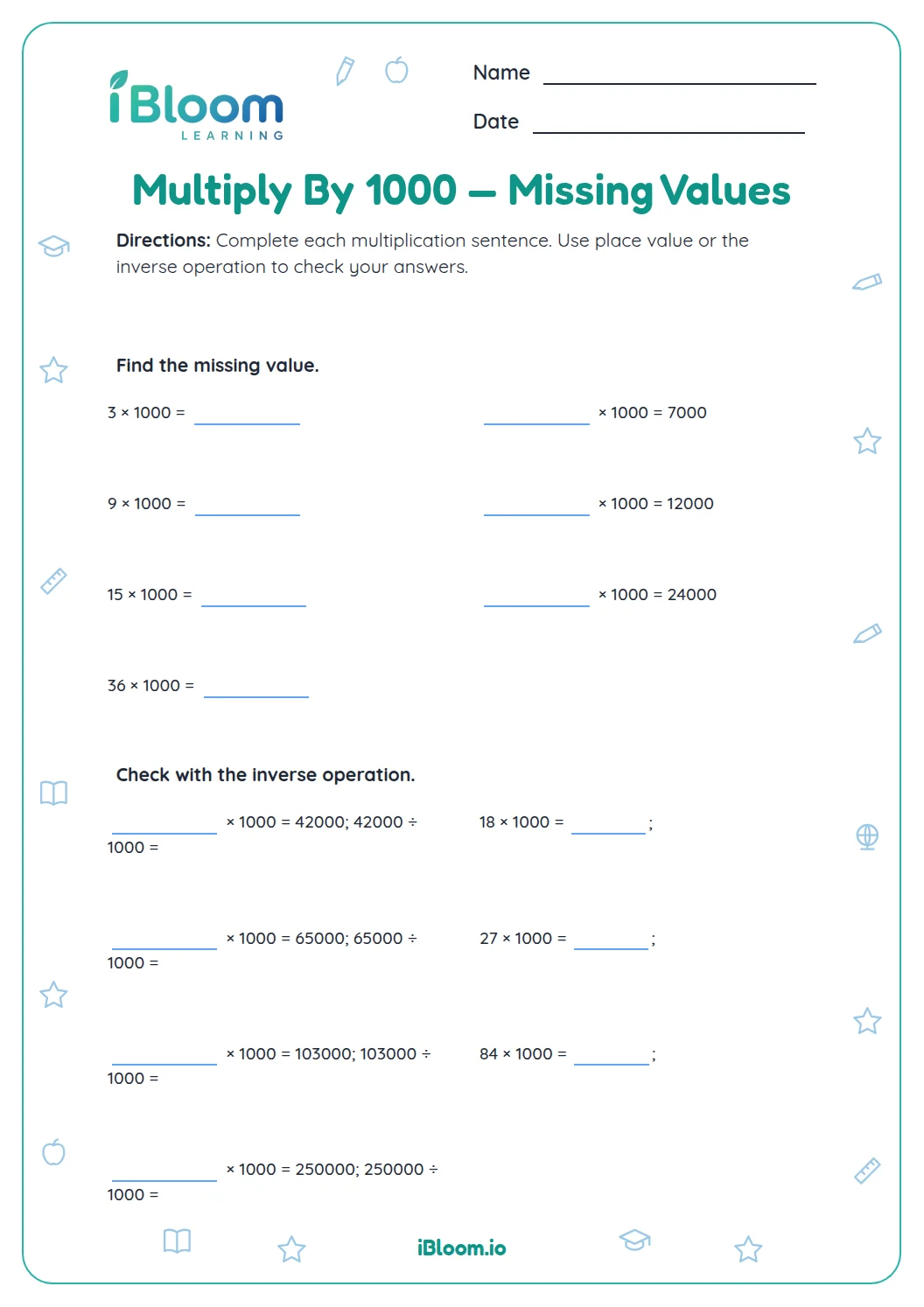
This Grade 4 warm-up practices multiplying whole numbers by ten through the base-ten place-value pattern. Learners solve 20 equations, beginning with two-digit factors and advancing to four-digit factors. A separate answer key gives each product for checking.
Aligned to 4.NBT.A.1
How does the practice build?
Part A begins with whole numbers. Later parts ask learners to apply the same skill with less support.
- 112 × 10 = ___
- 2Work carefully, then check the answer key.
What will learners do on the page?
The 20 equations begin with two-digit factors and progress to four-digit factors, so learners can watch each digit shift one place in value.
How can an adult support practice?
Read the direction once, then let the learner work independently. Ask how they checked one answer.
How to use this worksheet
- 1Read the page direction together.
- 2Complete Part A carefully.
- 3Continue to each new part in order.
- 4Check answers with the separate key.
Mistakes to watch for
The mistake
Rushing through a prompt.
The fix
Read each item aloud and name what it asks.
The mistake
Skipping a check.
The fix
Use the model or answer key to review one response.
The mistake
Changing an answer without a reason.
The fix
Explain the evidence or computation before revising.
Common Core alignment
This page practices the standard below through the activities on the worksheet.
Use the tenfold place-value pattern to find each product.
On this sheet: Use the tenfold place-value pattern to find each product.
Show the official wordingHide the official wording
Recognize that in a multi-digit whole number, a digit in one place represents ten times what it represents in the place to its right.
What to practice next
Further reading
Questions parents and teachers ask
What does multiplying a number by ten do?
Multiplying a whole number by ten makes the value of every digit ten times as large, so the digits represent places one position to the left. For example, 12 × 10 is 120. The worksheet practices this place-value pattern with two- and three-digit factors.
What grade is this worksheet for?
The page is written for Grade 4 and practices the base-ten pattern described in 4.NBT.A.1. Learners multiply whole numbers by ten, moving from two-digit factors to four-digit factors, then use place value to check each product. An adult can model the first example.
Why does a zero appear in many products?
A zero is a placeholder when the digits move into places with ten times the value. For example, 58 × 10 = 580: the 5 hundreds become 5 hundreds? Actually 58 is 5 tens and 8 ones, so the product is 5 hundreds and 8 tens, or 580. Read the place values to check.
How can a learner check a product?
Read the factor by place value, multiply its value by ten, and compare the result. For 340 × 10, three hundreds become three thousands and four tens become four hundreds, giving 3,400. The answer key helps confirm each product. Adults can use this prompt for another short review after the page is complete.
Does the worksheet include an answer key?
Yes. The printable includes a separate answer key with the product for every one of the 20 equations. Have the learner finish before checking, then use an incorrect answer to discuss which digit place changed and why. There is no timer on the page.