


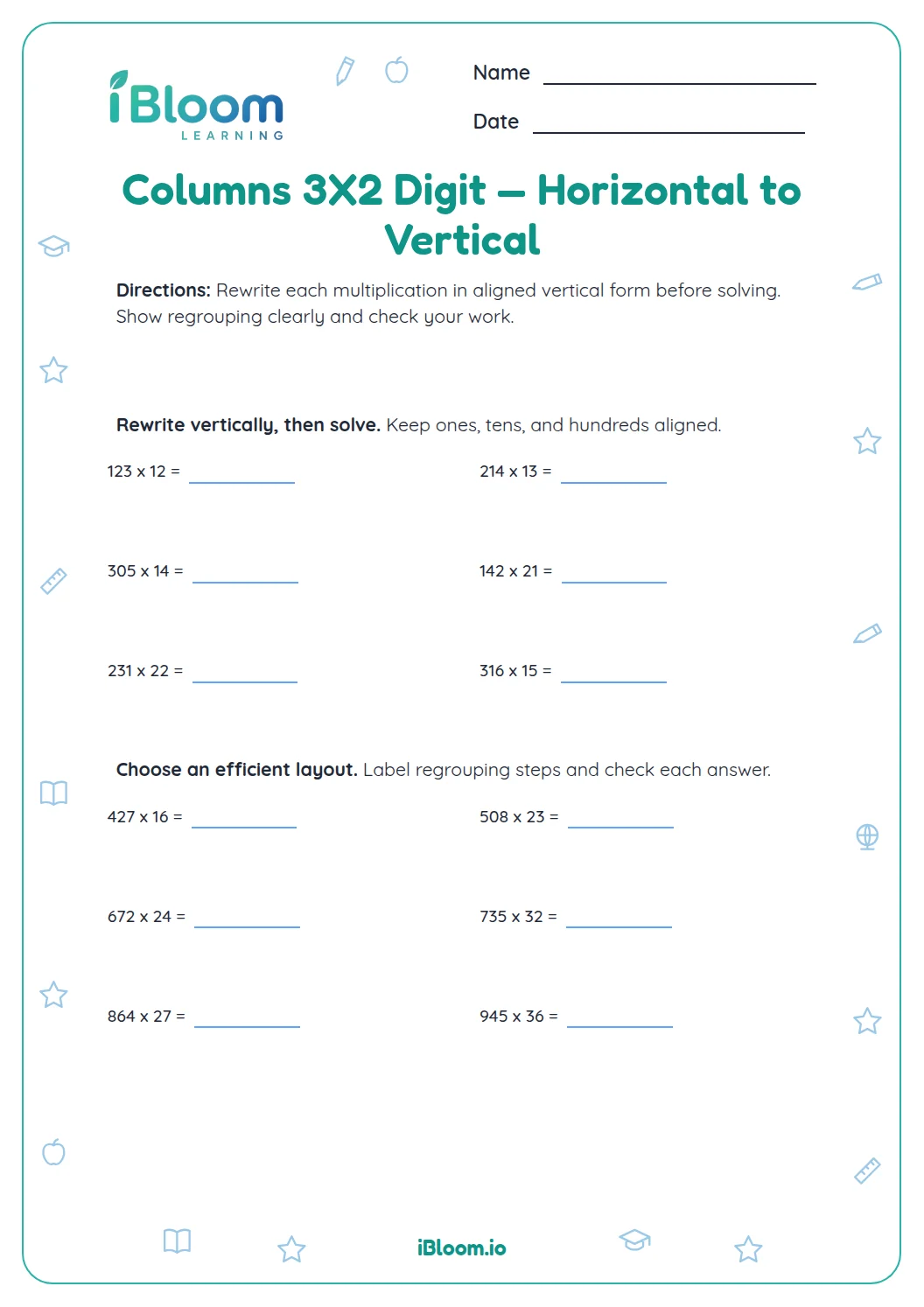
About this worksheet
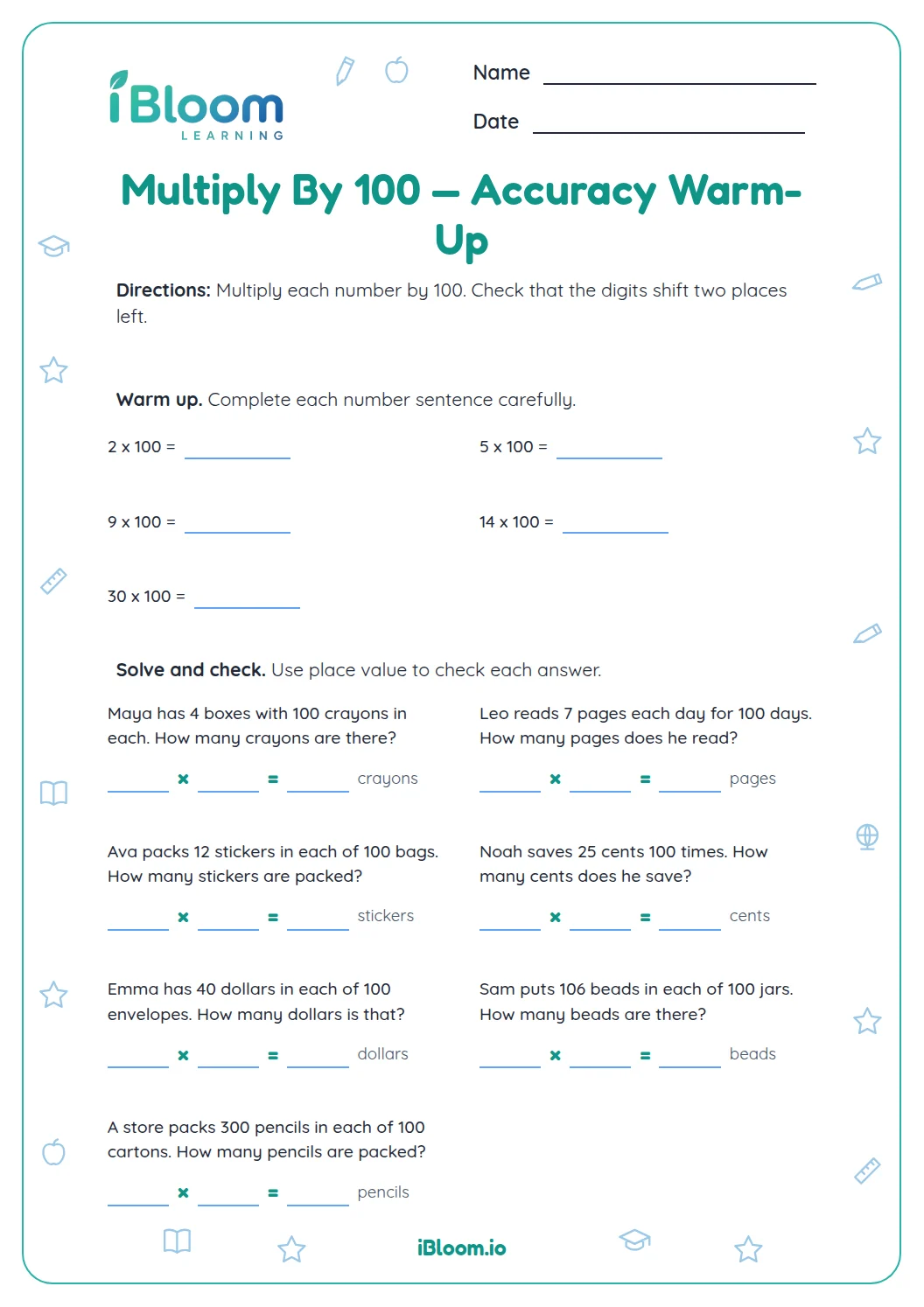
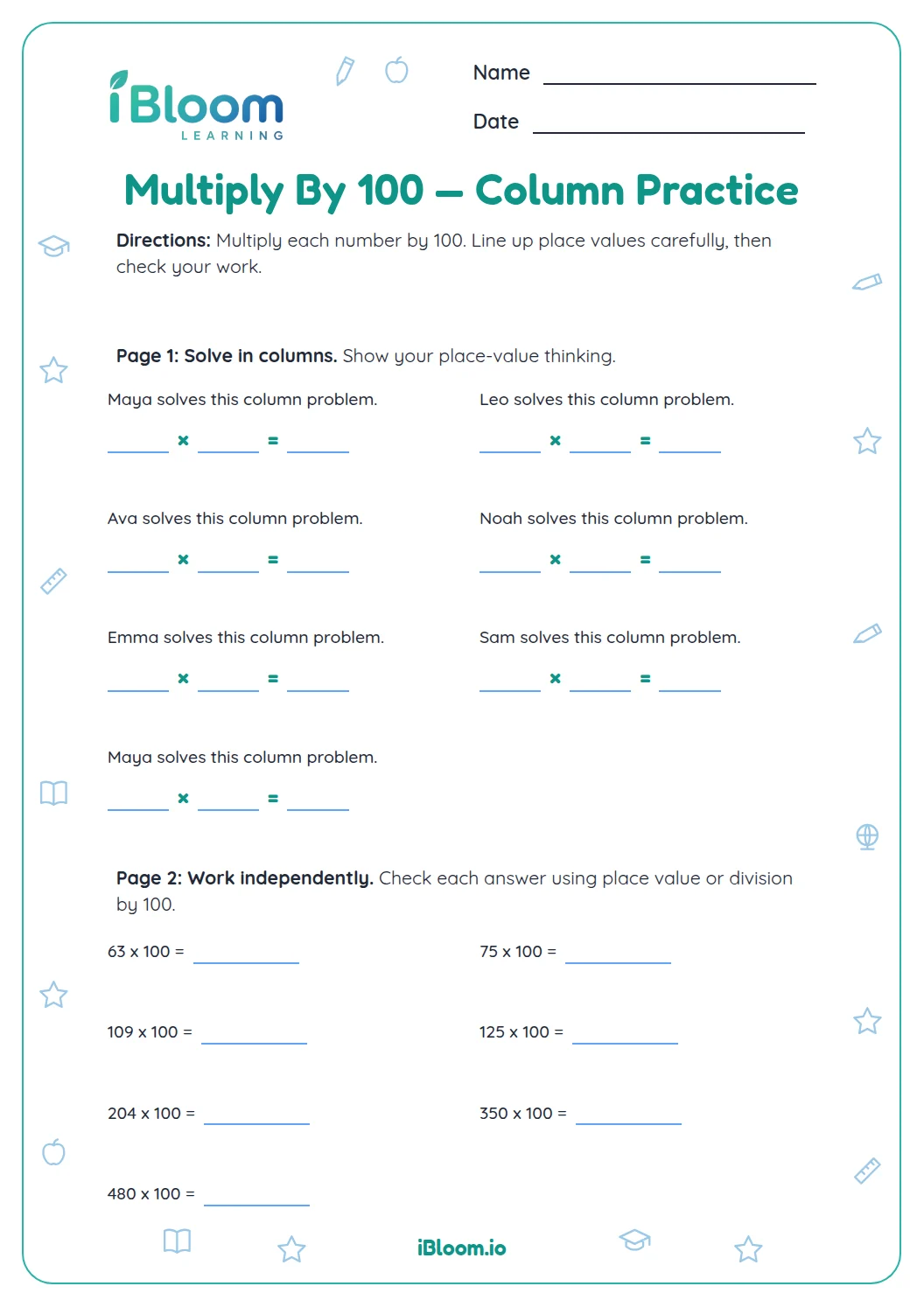
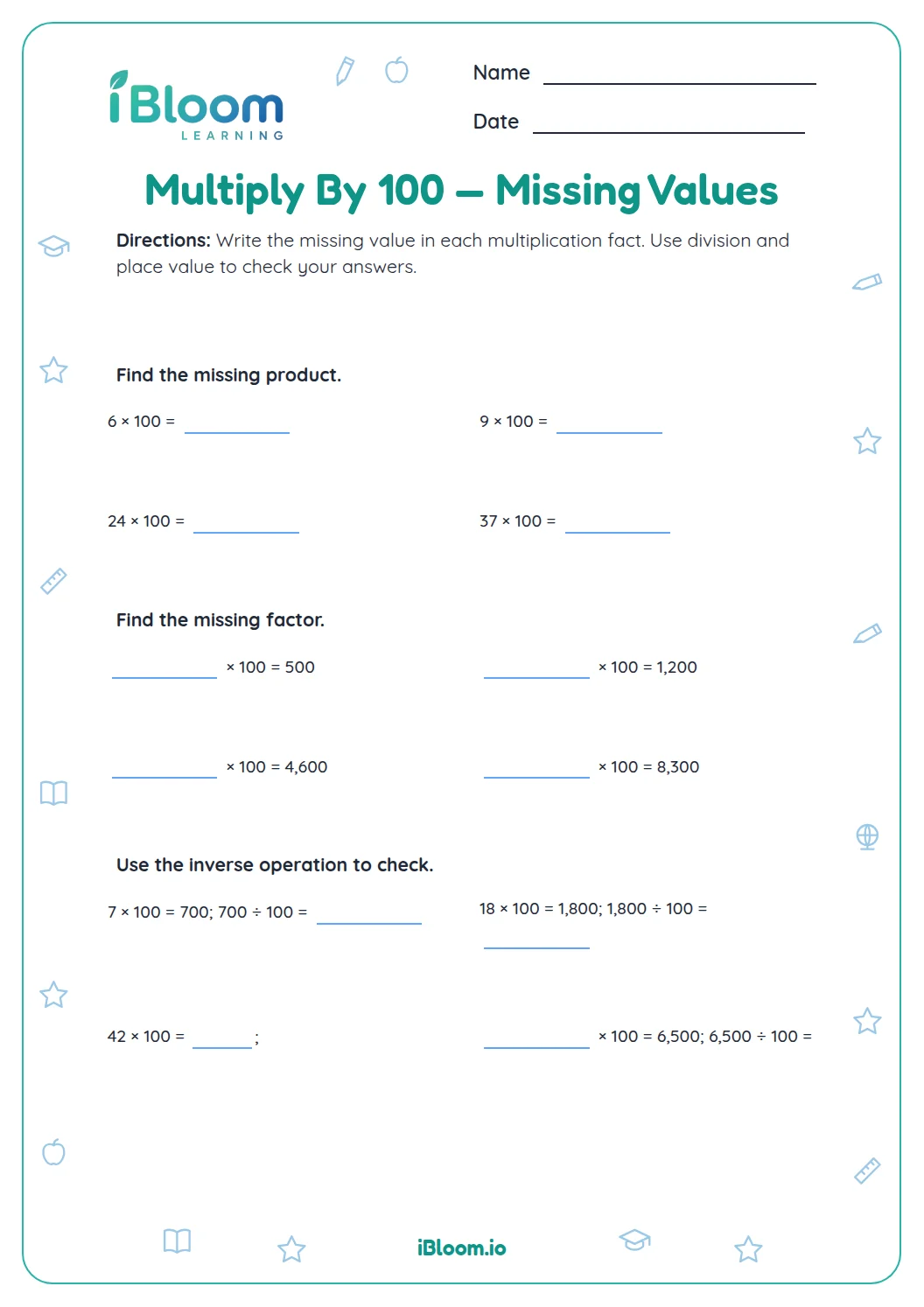
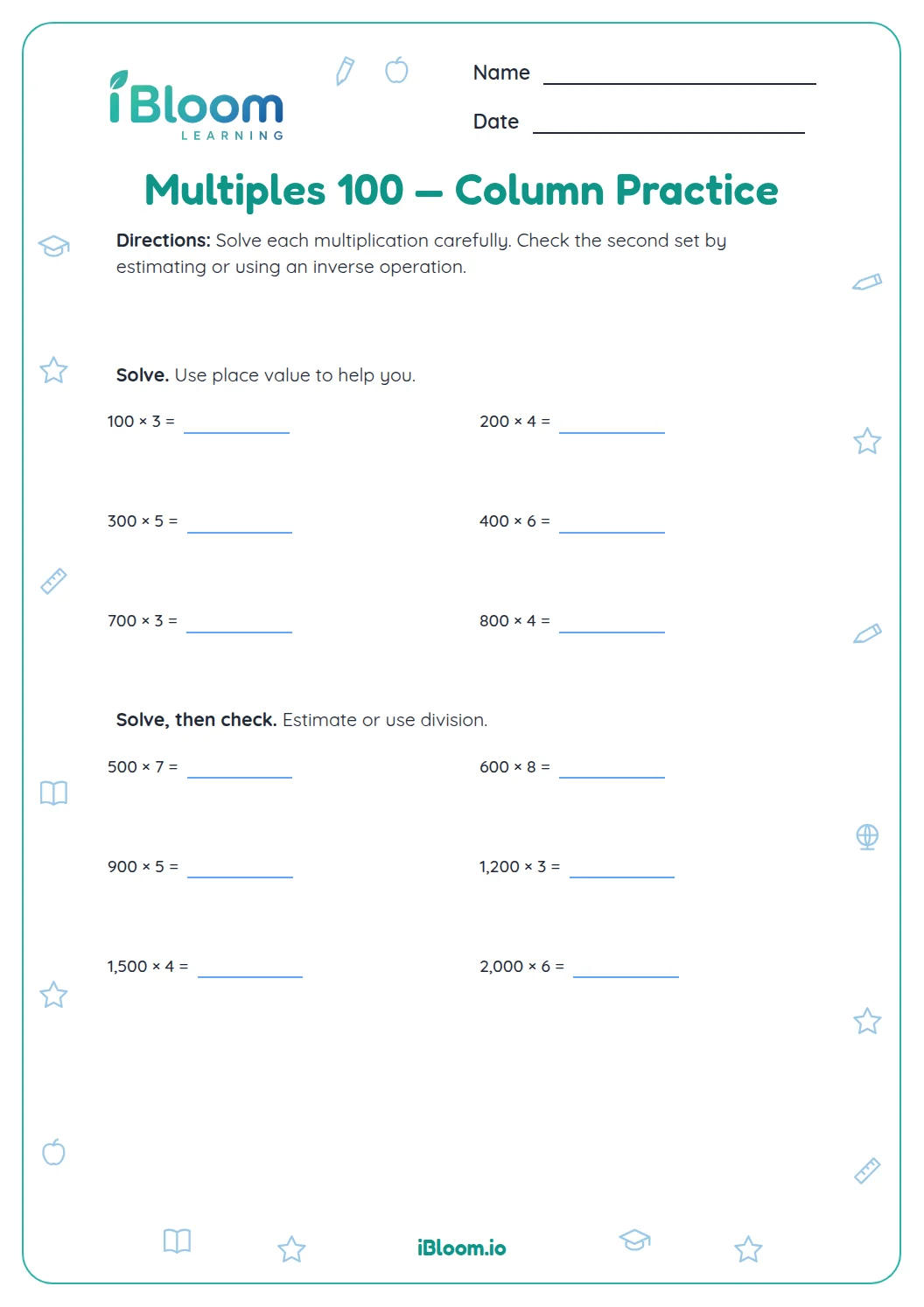
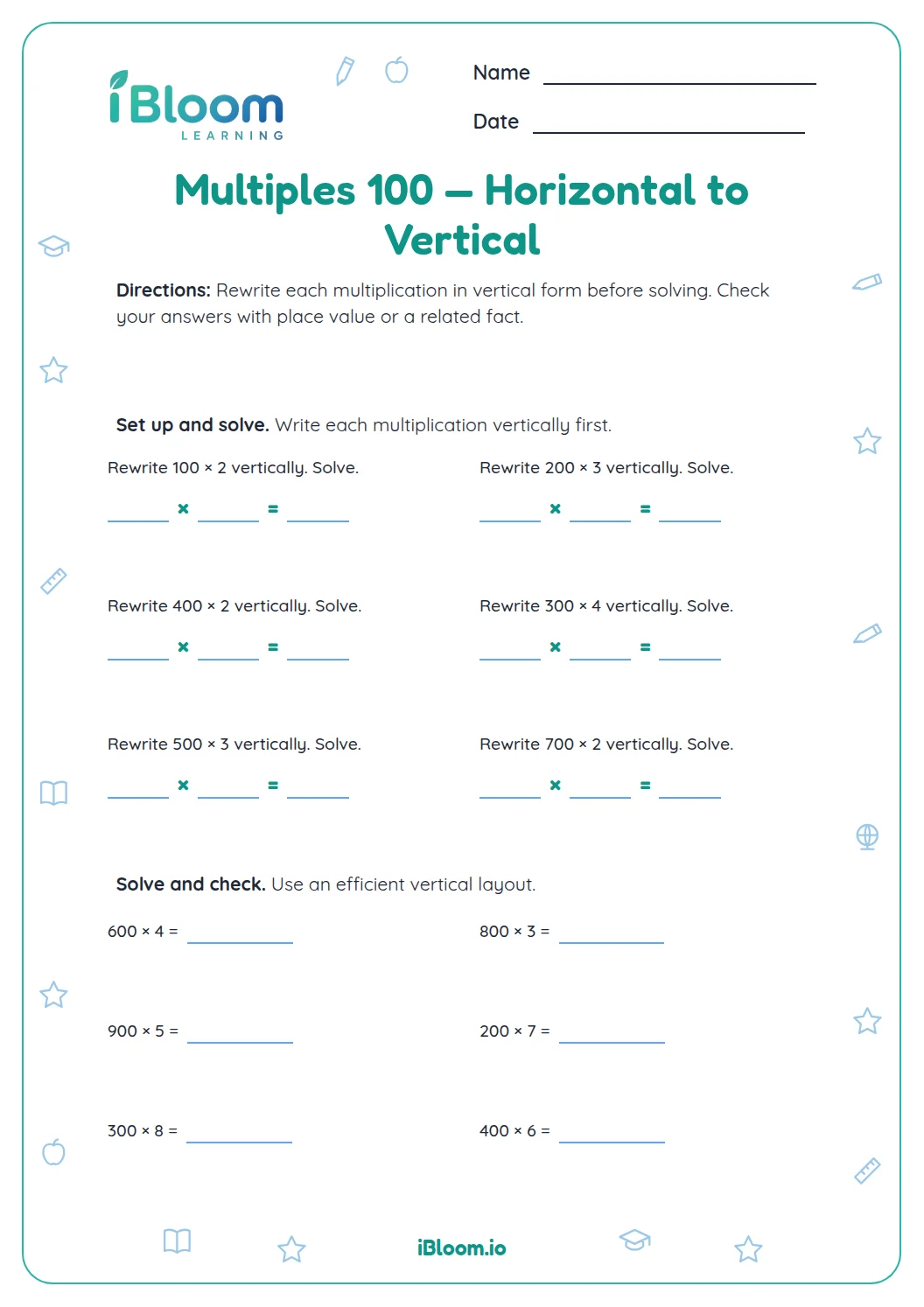
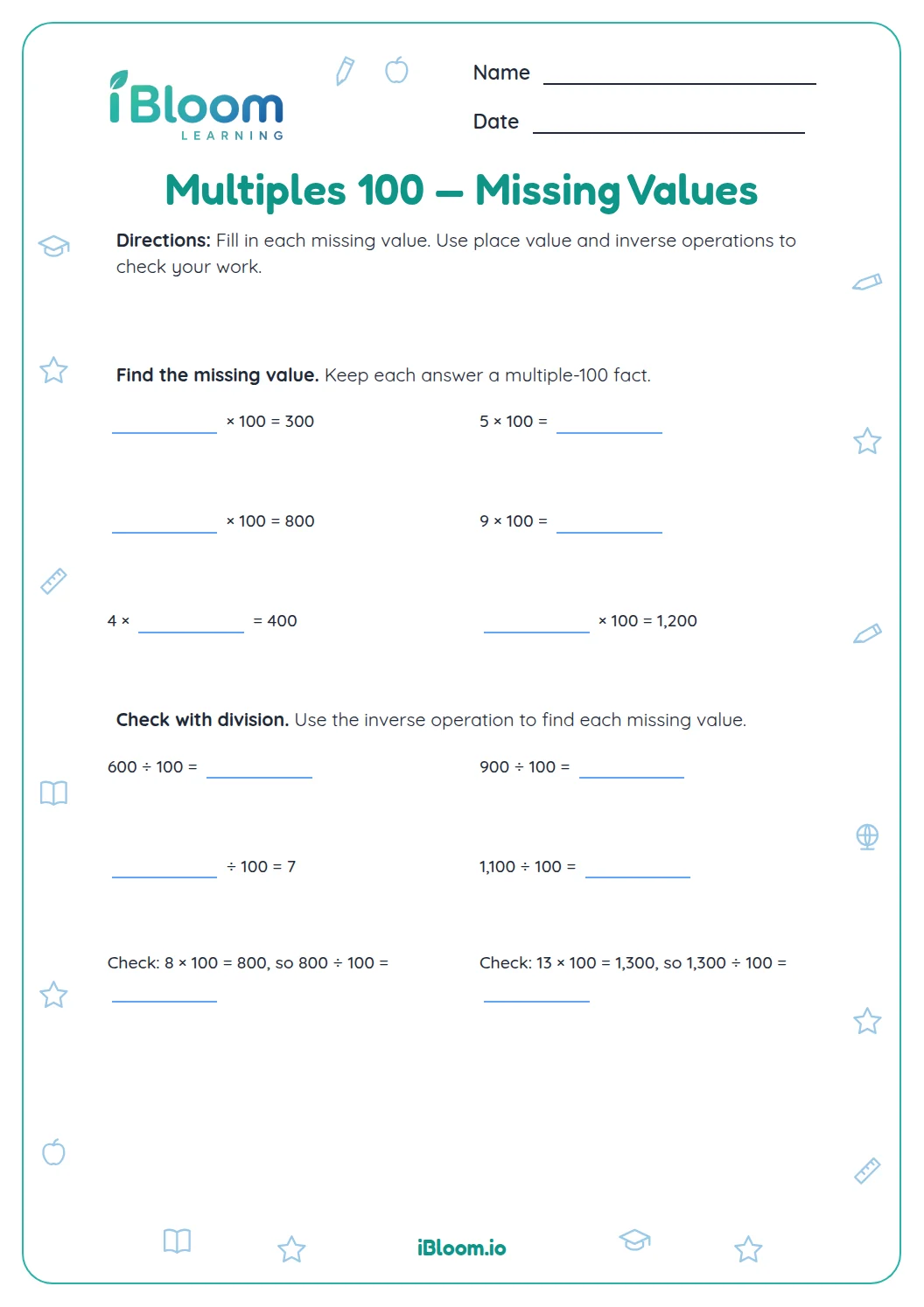
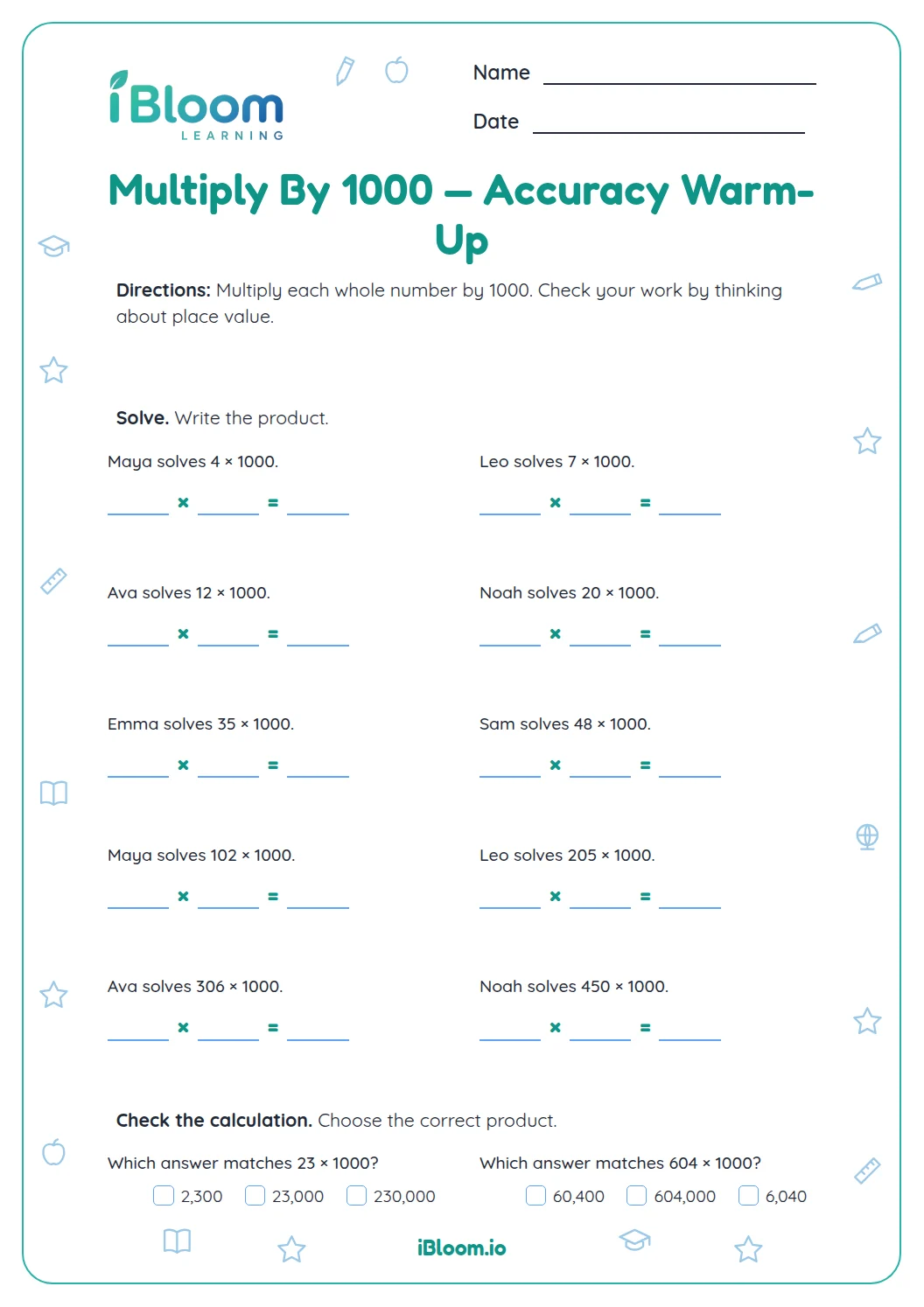
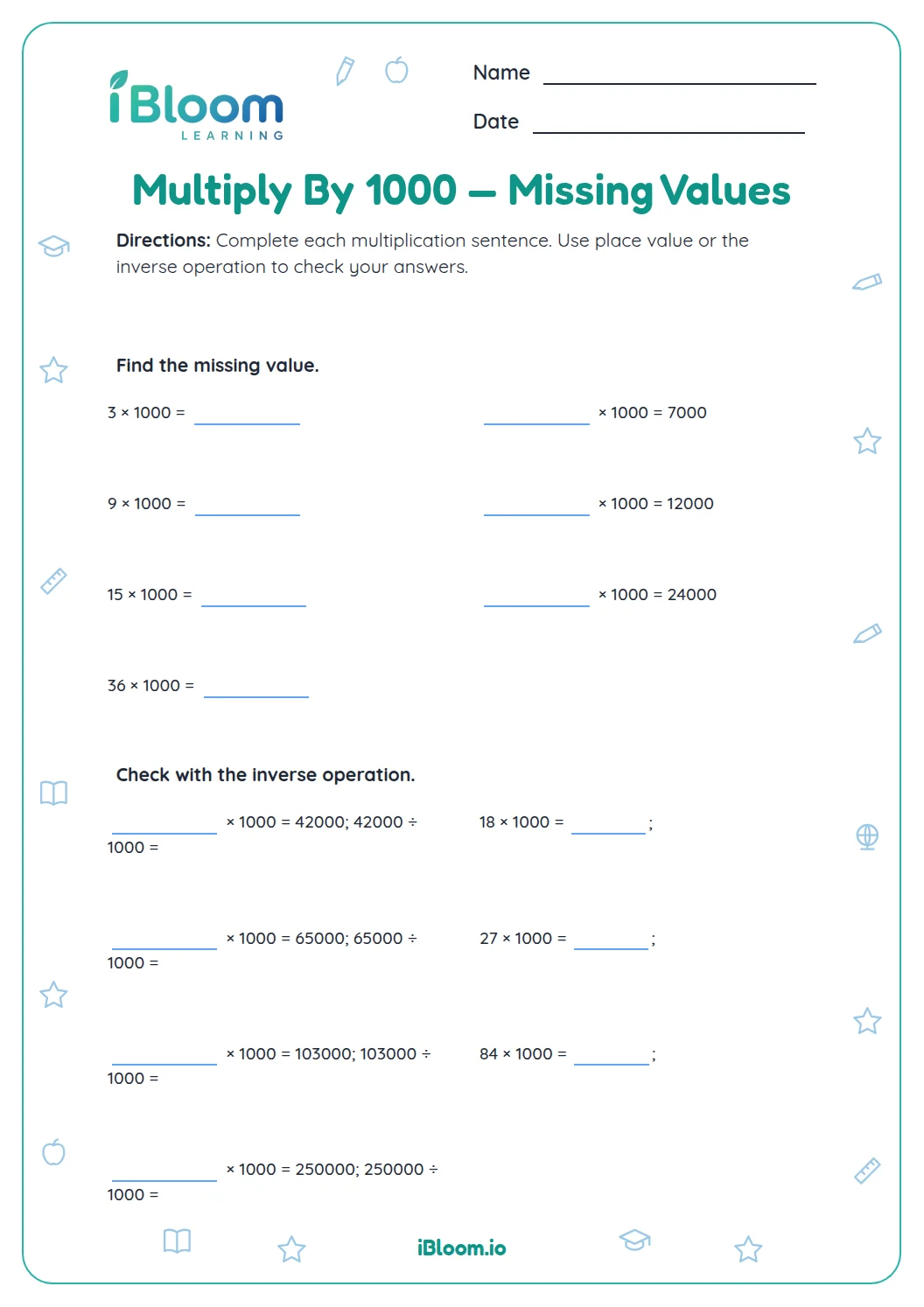
This printable drill practices multiplying two-digit whole numbers by 100, moving from horizontal expressions to vertical work and a place-value check. It includes 14 questions across two pages and a separate answer key. Learners can explain how each digit’s value changes by two place-value positions.
Aligned to 4.NBT.A.1
How does multiplying by 100 change a number?
Each digit takes a value one hundred times as large. In 46, the 4 means 4 tens and the 6 means 6 ones; in 4,600 they represent 4 thousands and 6 hundreds.
For question 2, rewrite 46 × 100 vertically and solve. The product, 4,600, is 100 times as large as 46.
- 146 × 100
- 2Write the problem vertically.
- 3Answer: 4,600
Why does the sheet move from one part to another?
Part A builds a steady multiplication routine with eight factors. Part B repeats the skill with a fresh set and invites children to explain the digit shift as a check.
How can a learner check a product?
Read the factor aloud, then compare its size with the product. Multiplying by 100 makes a positive whole number 100 times larger, so 71 × 100 must be 7,100, not 710 or 71,000.
How to use this worksheet
- 1Read the factor and say what × 100 means.
- 2Write the factor digits in order.
- 3Move each digit two place-value places left.
- 4Use zero placeholders so no place is lost.
- 5Estimate whether the product is 100 times the factor.
- 6Check each result with the key.
Common mistakes and quick fixes
The mistake
Adding one zero and stopping
The fix
Compare the place-value names: 23 is twenty-three; 2,300 is twenty-three hundreds.
The mistake
Writing the digits in a new order
The fix
Keep the factor digits in order as each moves to a larger place.
The mistake
Dropping an interior zero
The fix
Use placeholders wherever an empty place occurs, as in 4,600.
Common Core alignment
This worksheet gives focused practice with the standard below.
Use place value to explain why multiplying by 100 makes each digit worth 100 times as much.
On this sheet: The products show how digits take values two places to the left.
Show the official wordingHide the official wording
Recognize that in a multi-digit whole number, a digit in one place represents ten times what it represents in the place to its right.
What to practice next
Make more practice
Further reading
Questions parents and teachers ask
What happens when you multiply a whole number by 100?
Each digit takes a value one hundred times as large. For example, 23 becomes 2,300 because 2 tens become 2 thousands and 3 ones become 3 hundreds. The worksheet asks learners to rewrite each horizontal expression vertically, solve it, and use place value to check the product.
Does multiplying by 100 always add two zeros?
For whole-number factors, the product is 100 times as large, and zero placeholders often appear at the end. For 46 × 100, the result is 4,600. The key idea is the value of each digit, so learners should keep the digits in order and preserve empty places.
How is this sheet arranged?
The sheet has 14 multiplication questions across two worksheet pages. Learners rewrite each horizontal expression vertically and solve. The second part prompts a place-value check, and a separate answer key lists all 14 products so an adult or learner can review the work.
Should children show work?
Yes. The activity is designed around rewriting each horizontal expression in a vertical layout, then solving. Children can label hundreds, tens, and ones if that helps them track the digits. The answer key gives the finished products for checking after the work is complete.
What grade is this worksheet for?
The printable is labeled Grades 3–5 and focuses on multiplying whole numbers by 100. Learners can work at a comfortable pace and use place-value language to explain why a two-digit factor becomes a larger product. A separate key supports independent checking.