







About this worksheet
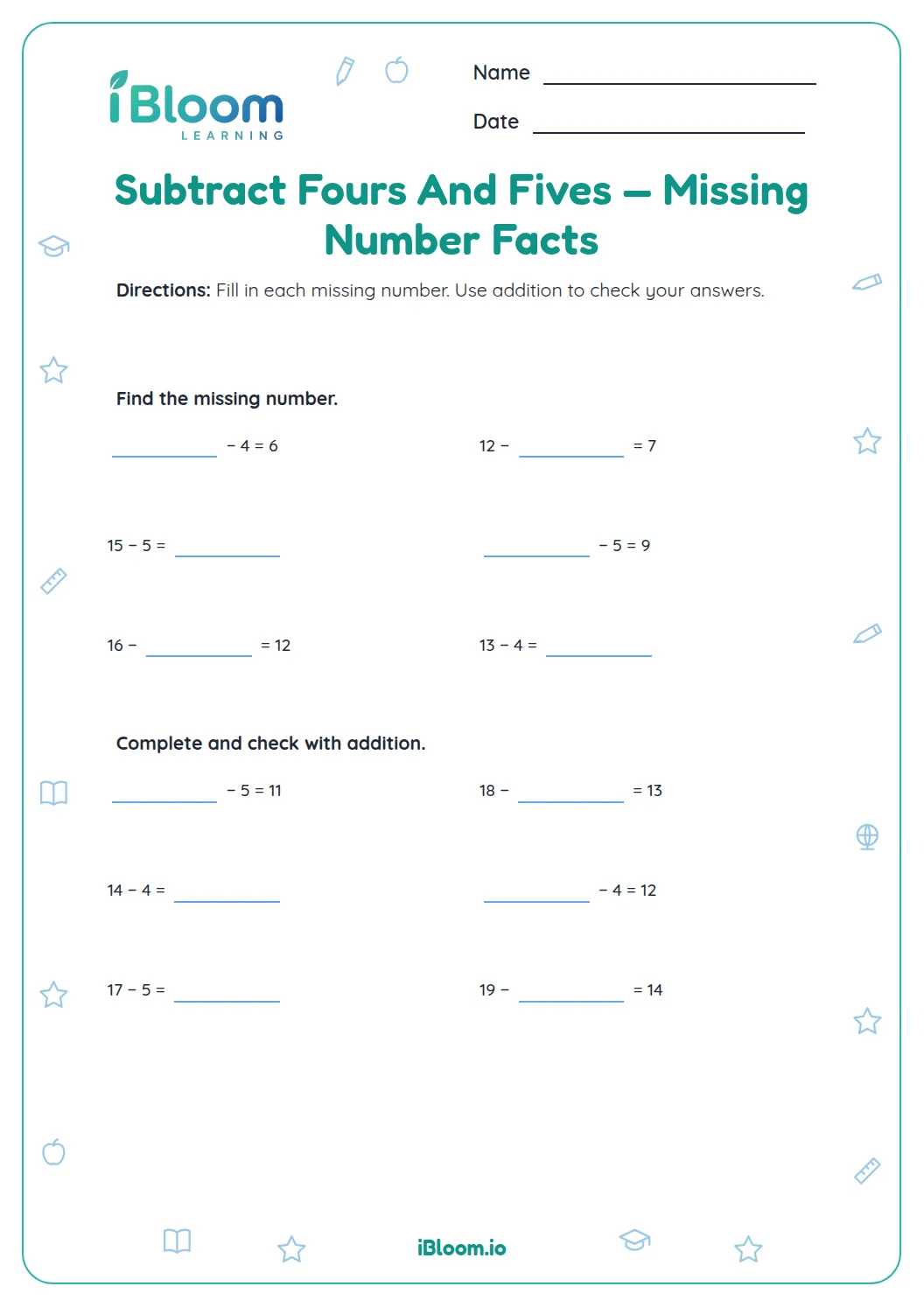
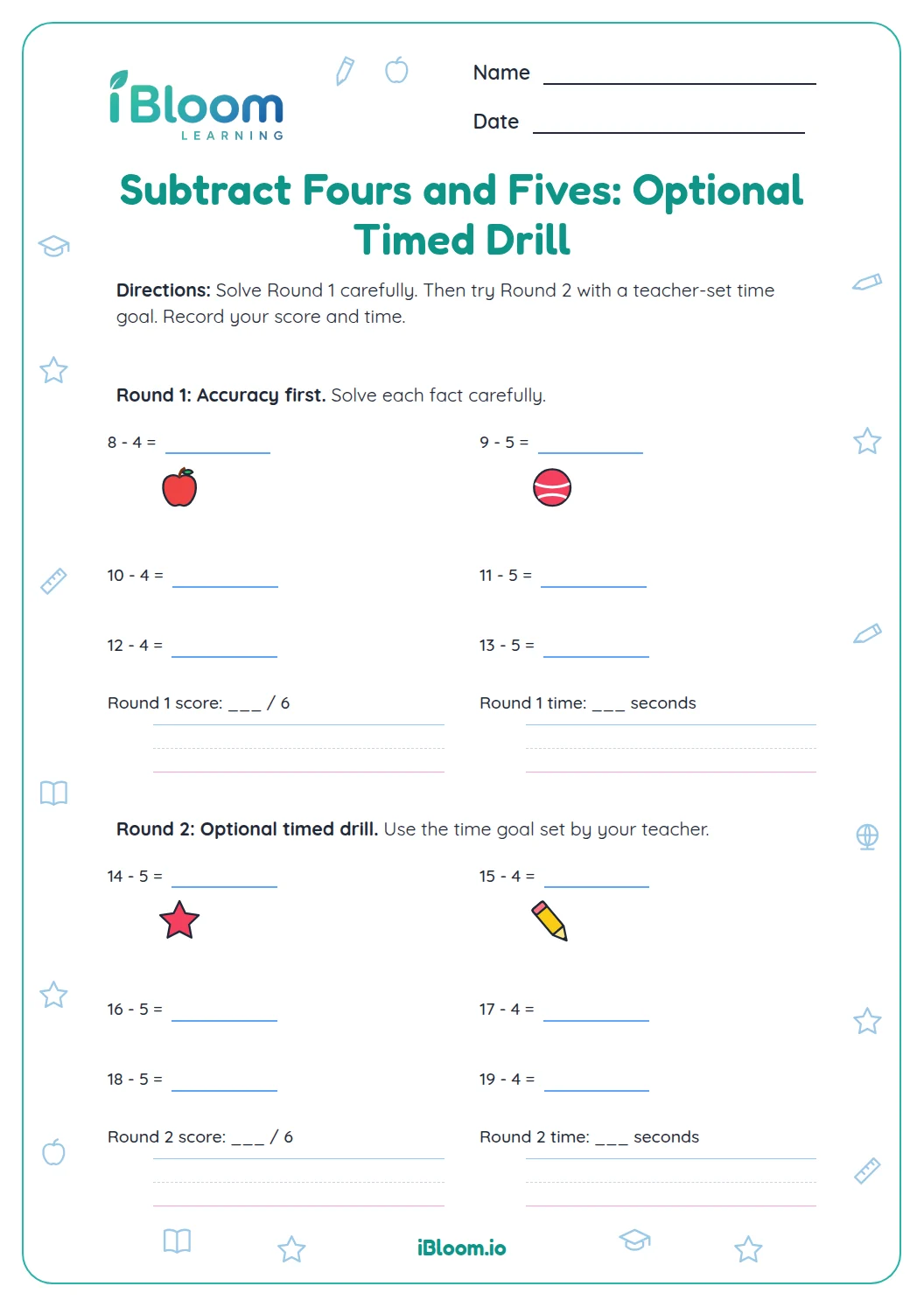
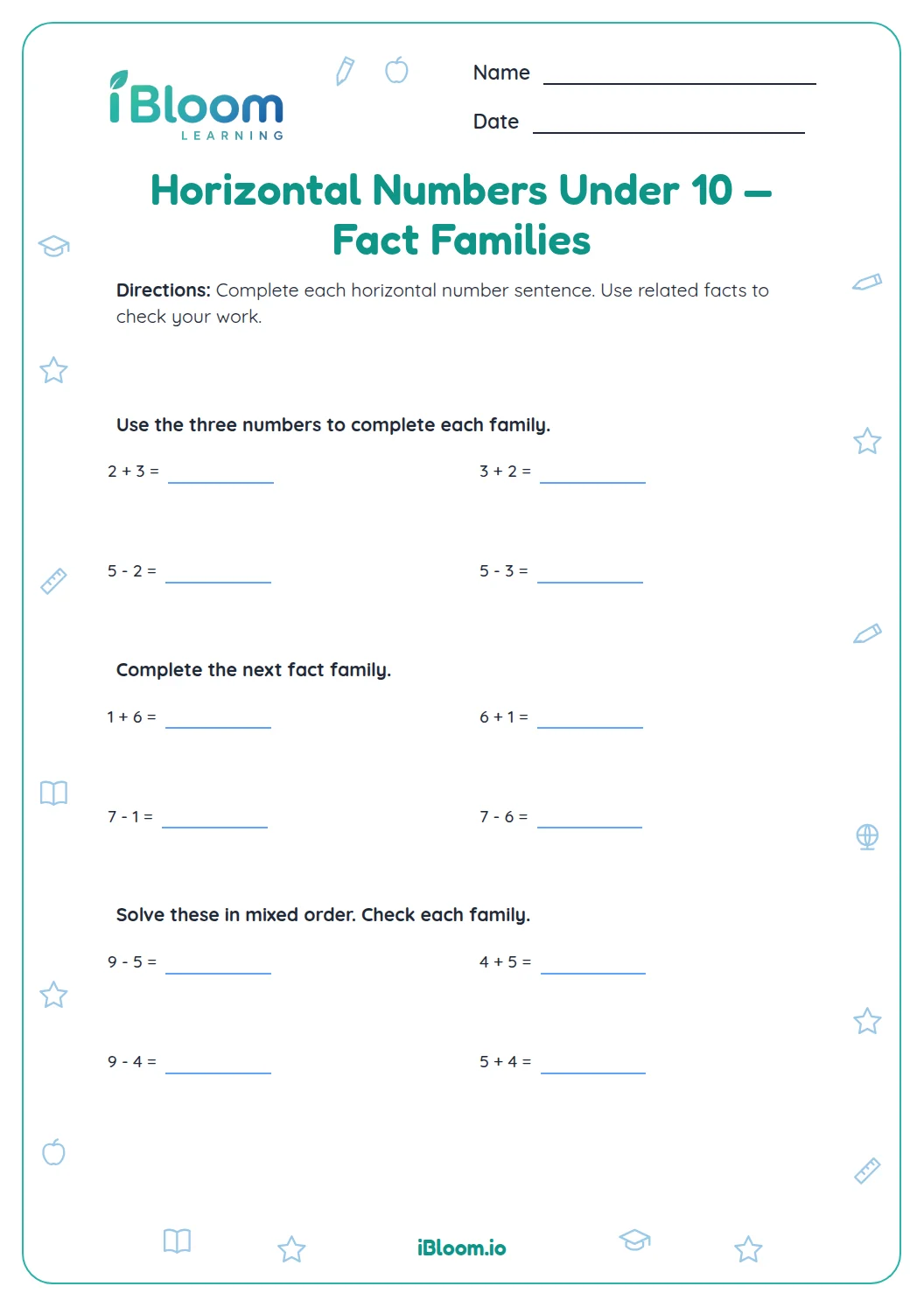
This free printable worksheet gives Grades 1–2 students focused subtraction practice with 4 and 5. It includes 24 problems in three parts: direct facts, mixed facts, and equations with a missing starting number. The facts stay within 20 and support mental subtraction practice associated with 2.OA.B.2. A separate answer key includes each difference and missing minuend.
Aligned to 2.OA.B.2
How are the subtraction facts organized?
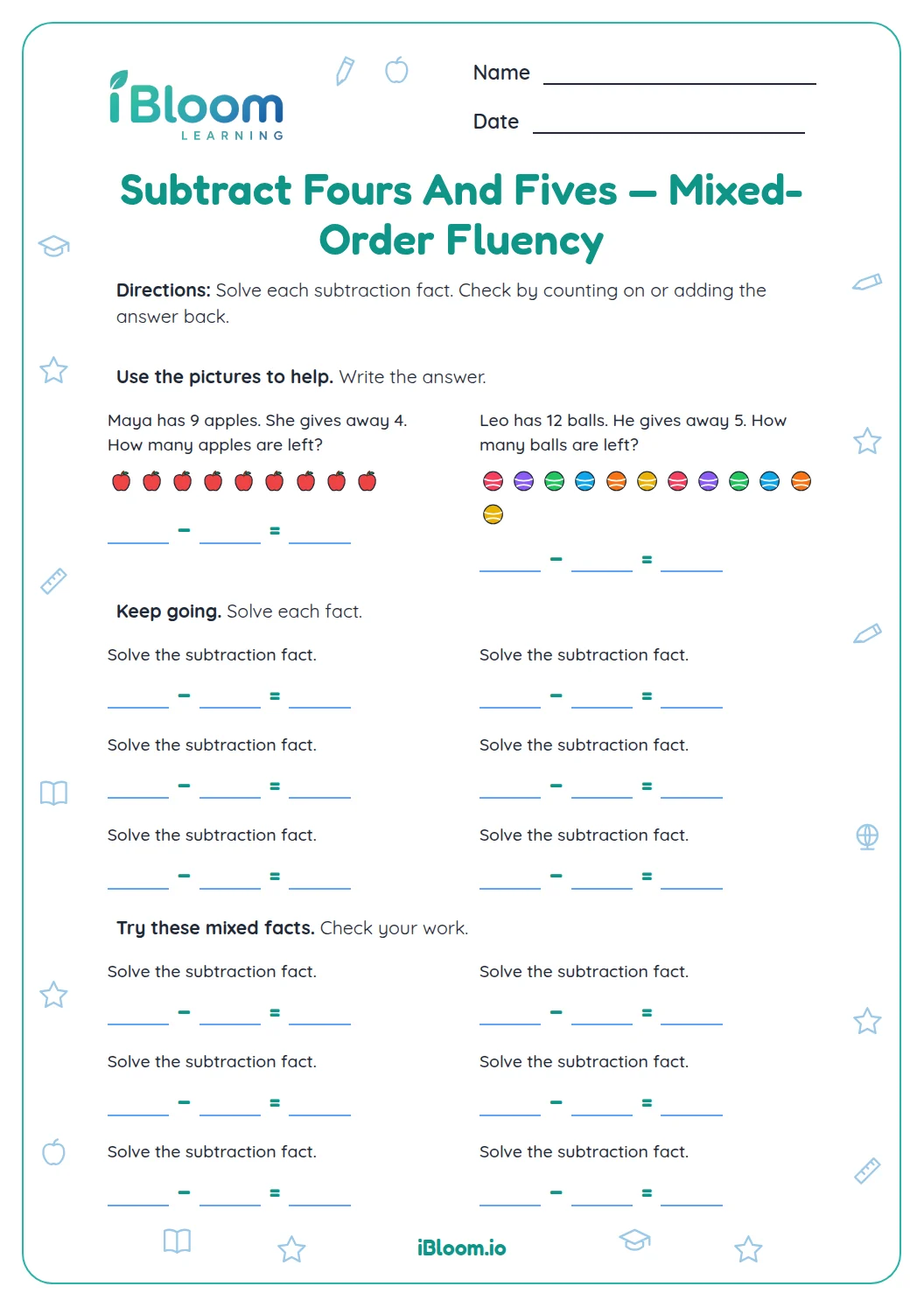
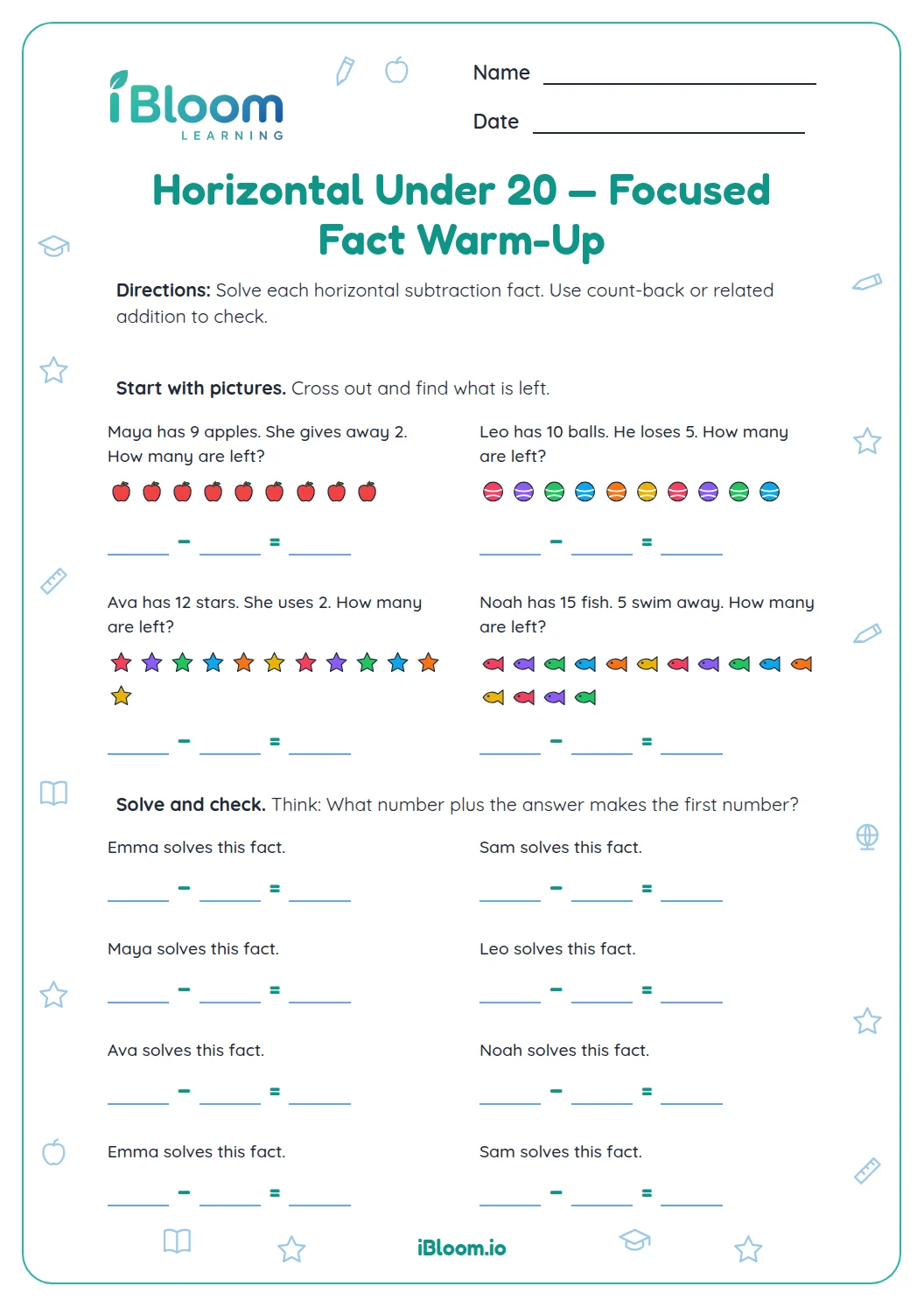
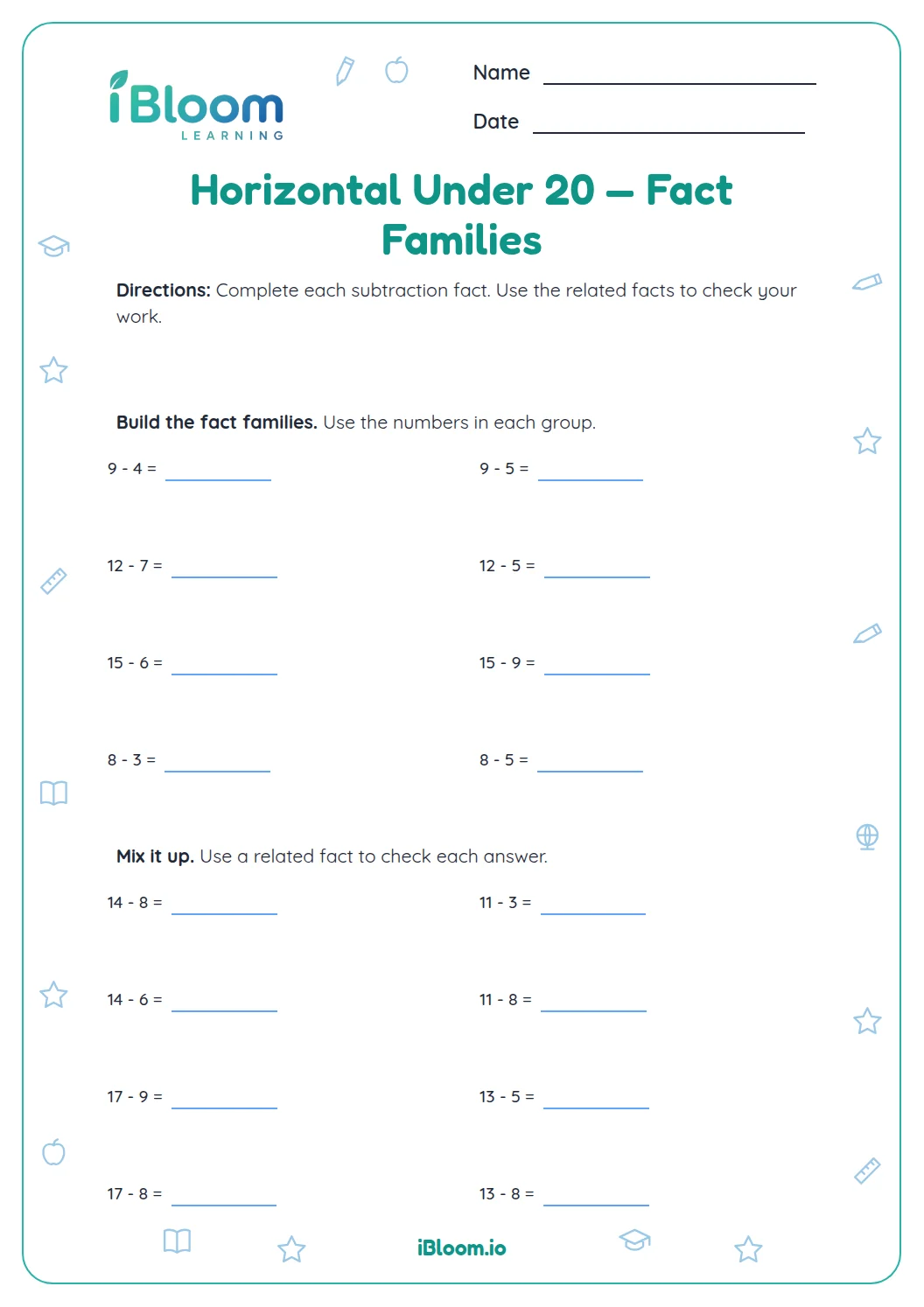
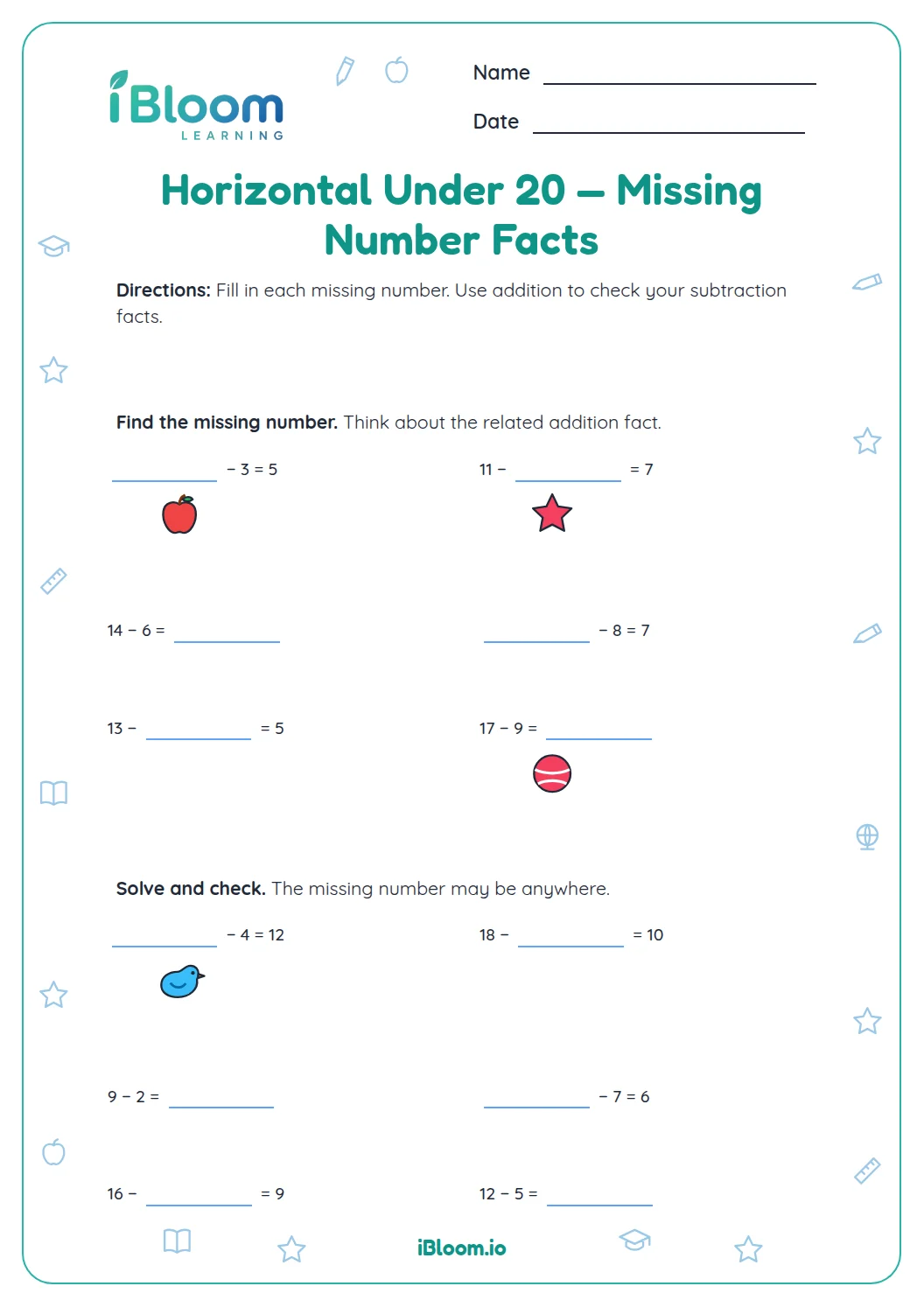
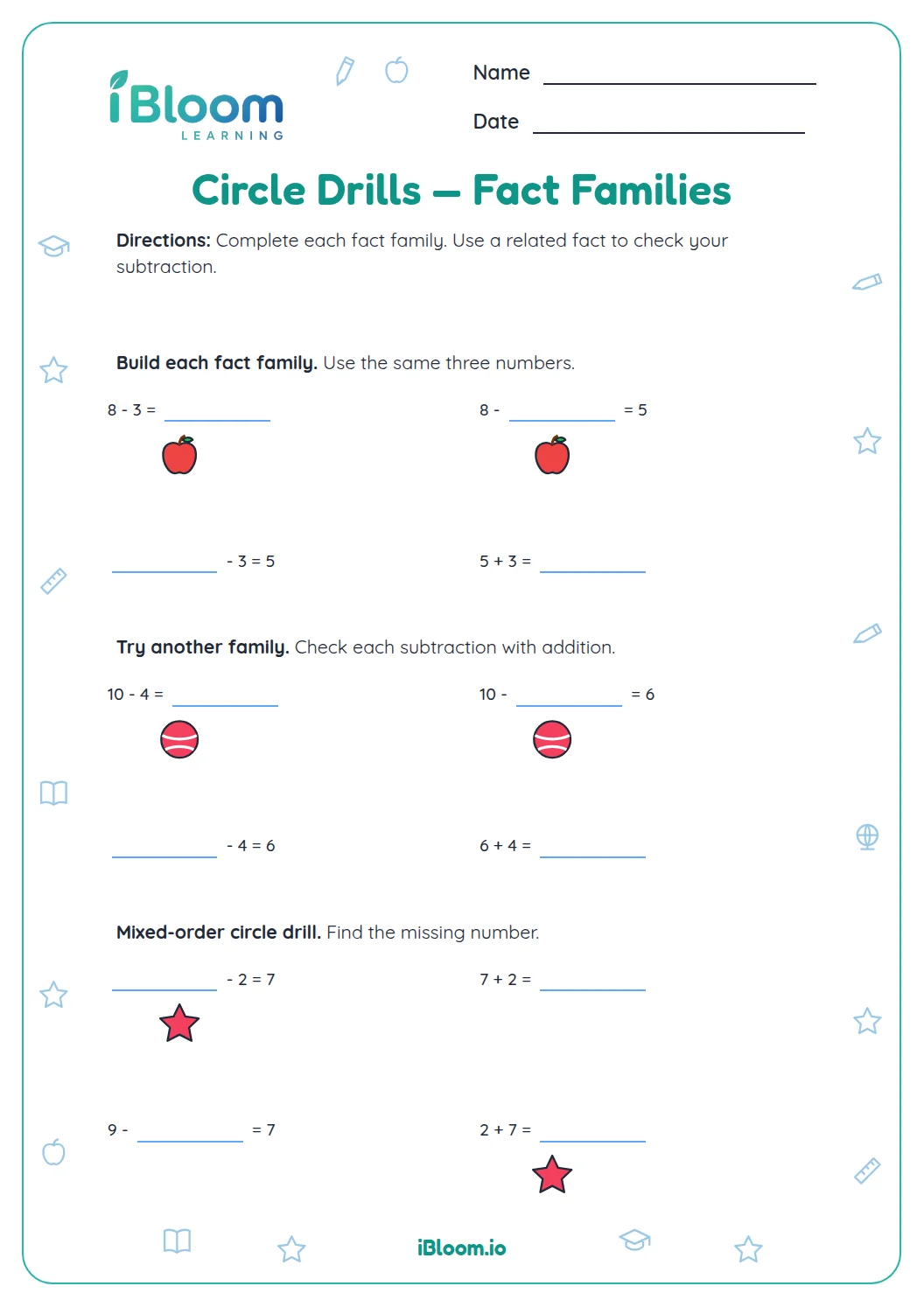
Part A returns to the old sheet’s picture method: count the objects, cross out the amount given away, and find what remains. Part B practices subtraction facts with 4 and 5. Part C mixes those facts in a new order. Part D begins with missing starting numbers and ends with more direct facts.
- Part A: Cross out objects in two picture problems
- Part B: Subtract 4 or 5
- Part C: Mix the facts
- Part D: Find missing starts and solve more facts
How do you find a missing starting number?
Use the count picture as a model: cross out four of Maya’s eight apples and count what remains. The equation is 8 − 4 = 4, so four apples remain. The picture helps connect taking away to the subtraction fact.
- 18 apples − 4 apples
- 2Cross out 4; 4 apples remain.
How do you find a missing starting number?
A subtraction equation can be checked by adding the difference to the number being subtracted. In question 13, the missing start is 10 + 4, so it is 14. Check: 14 − 4 = 10.
How should the answer key be used?
Check each answer after attempting the full set. For a missed direct fact, solve it again or use addition to check. For a missing minuend, add the subtrahend and difference, then substitute the result back into the equation.
How to use this worksheet
- 1In Part A, count the pictured objects and cross out the number given away.
- 2For each fact, read the subtraction sign and the number being taken away.
- 3Subtract 4 or 5 to find the difference.
- 4When the blank is the starting number, add the subtrahend and difference.
- 5Check by substituting the answer back into the equation.
Common subtraction slips
The mistake
Subtracting the smaller number from the larger without following the equation.
The fix
Keep the starting number and subtrahend in the order shown.
The mistake
Putting the difference in a blank that asks for the minuend.
The fix
For ___ − 4 = 10, find the number that is 4 more than 10.
The mistake
Skipping the check after finding a missing number.
The fix
Substitute it back and make sure both sides match.
Common Core alignment
These within-20 subtraction facts provide practice with mental strategies.
Fluently add and subtract within 20 using mental strategies.
On this sheet: Students practice subtraction facts within 20 and use addition to find missing minuends.
Show the official wordingHide the official wording
Fluently add and subtract within 20 using mental strategies. By end of Grade 2, know from memory all sums of two one-digit numbers.
What to practice next
Make more practice
Further reading
Questions parents and teachers ask
How many problems are on this worksheet?
There are 24 problems in three parts. Students subtract 4 and 5 from numbers within 20, then solve four equations with a missing starting number before continuing with more facts. The answer key is separate and lists each answer in question order.
What is a missing minuend?
The minuend is the number from which another number is subtracted. In ___ − 4 = 10, the missing starting number is 14 because 14 − 4 equals 10. Add 10 and 4 to find it, then substitute 14 into the original equation to check.
Are the facts all within 20?
Yes. Each subtraction fact starts with a number no greater than 20 and subtracts either 4 or 5. The missing-start equations also have answers within 20. This keeps the practice focused on the named facts and the mental strategies used to solve them.
How should I use the answer key?
Have the student complete the facts before checking. For a missed answer, solve the equation again and say what the subtraction sign asks. For a missing minuend, substitute the answer into the equation and verify that the stated difference is correct.
How long does the drill take?
About 10 minutes is a reasonable starting estimate for 24 short problems. Give more time if the student is explaining a mental strategy or correcting missed problems. Accuracy and checking the missing-start equations matter more than speed, especially in the final section.