







About this worksheet
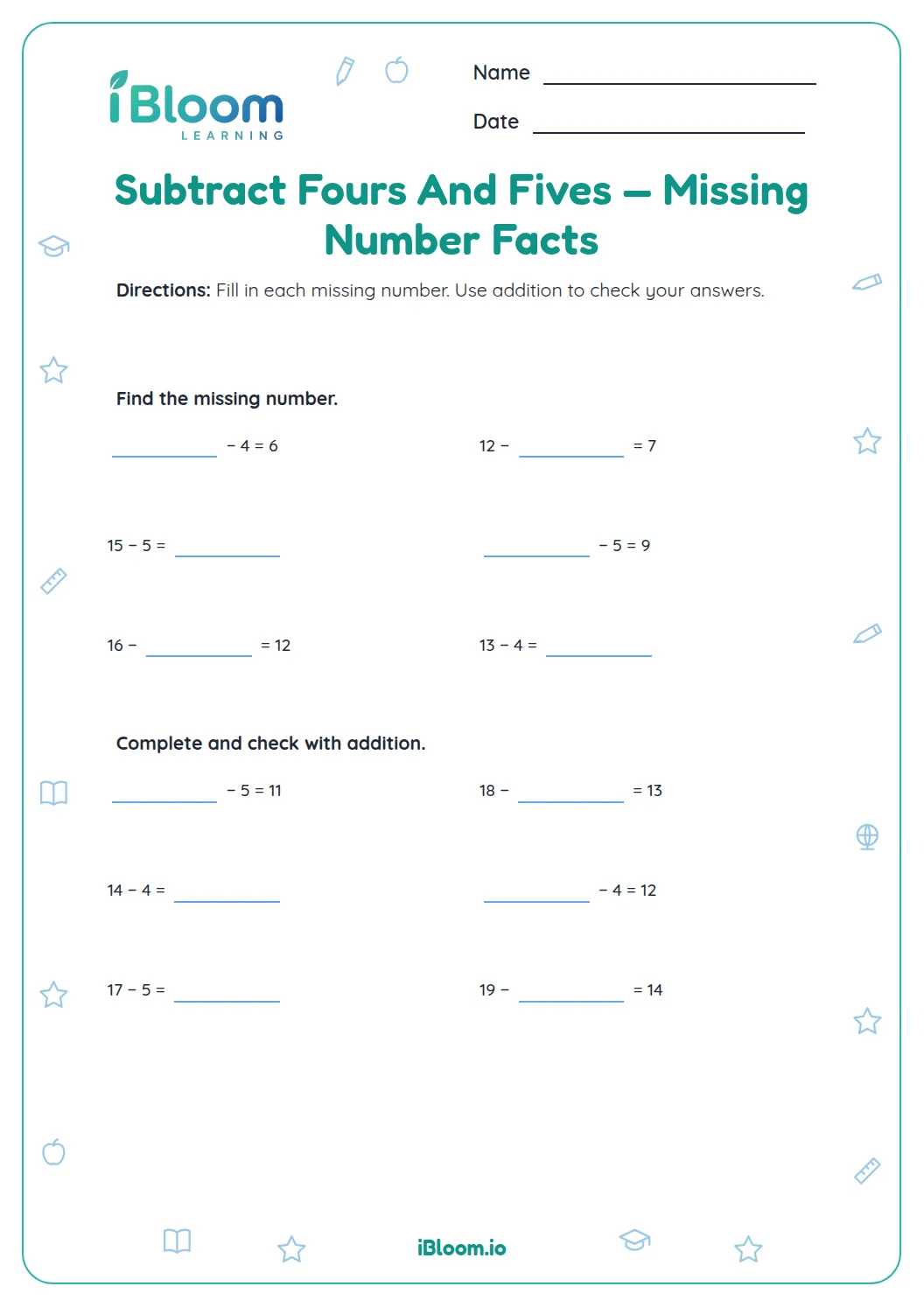
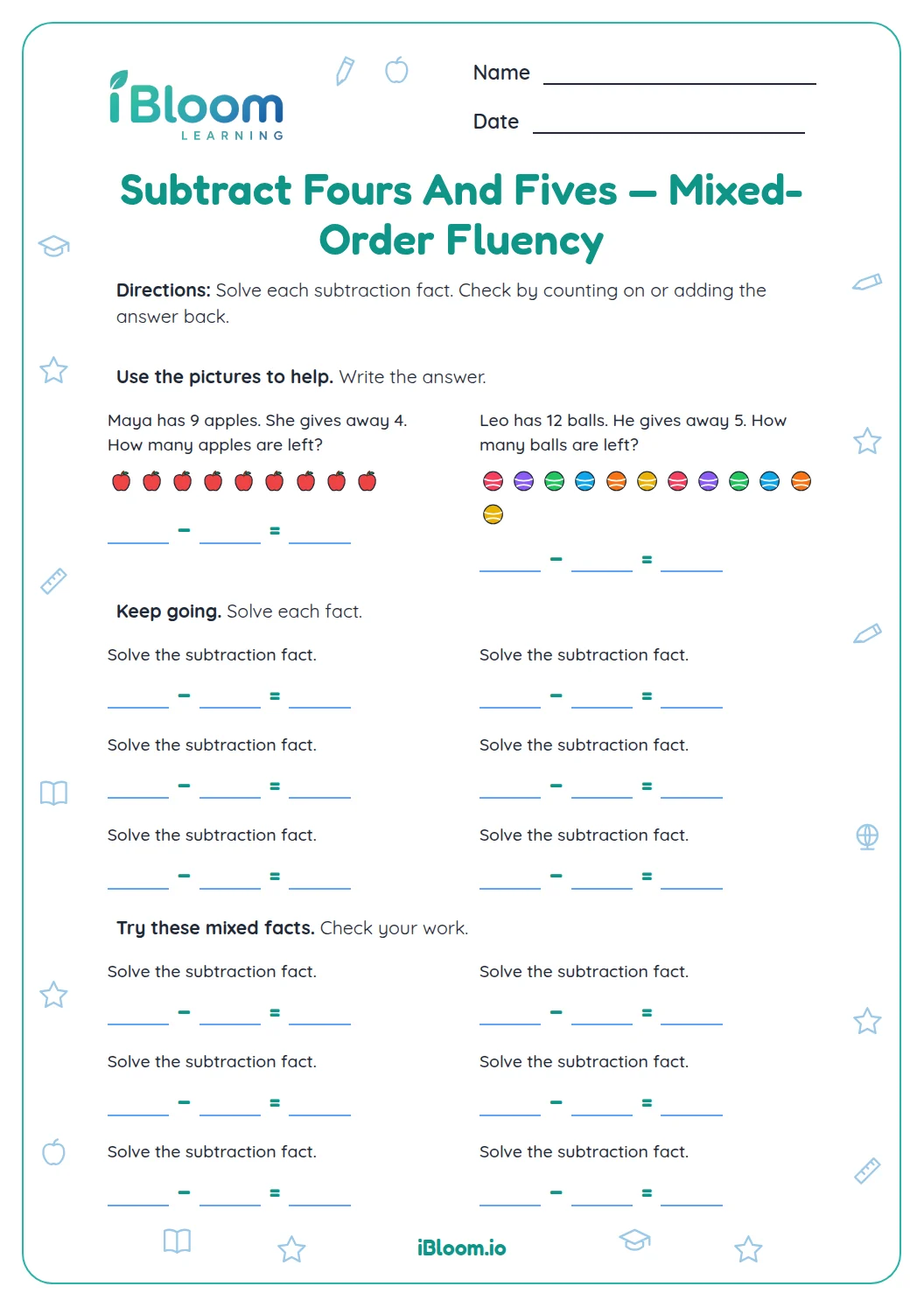
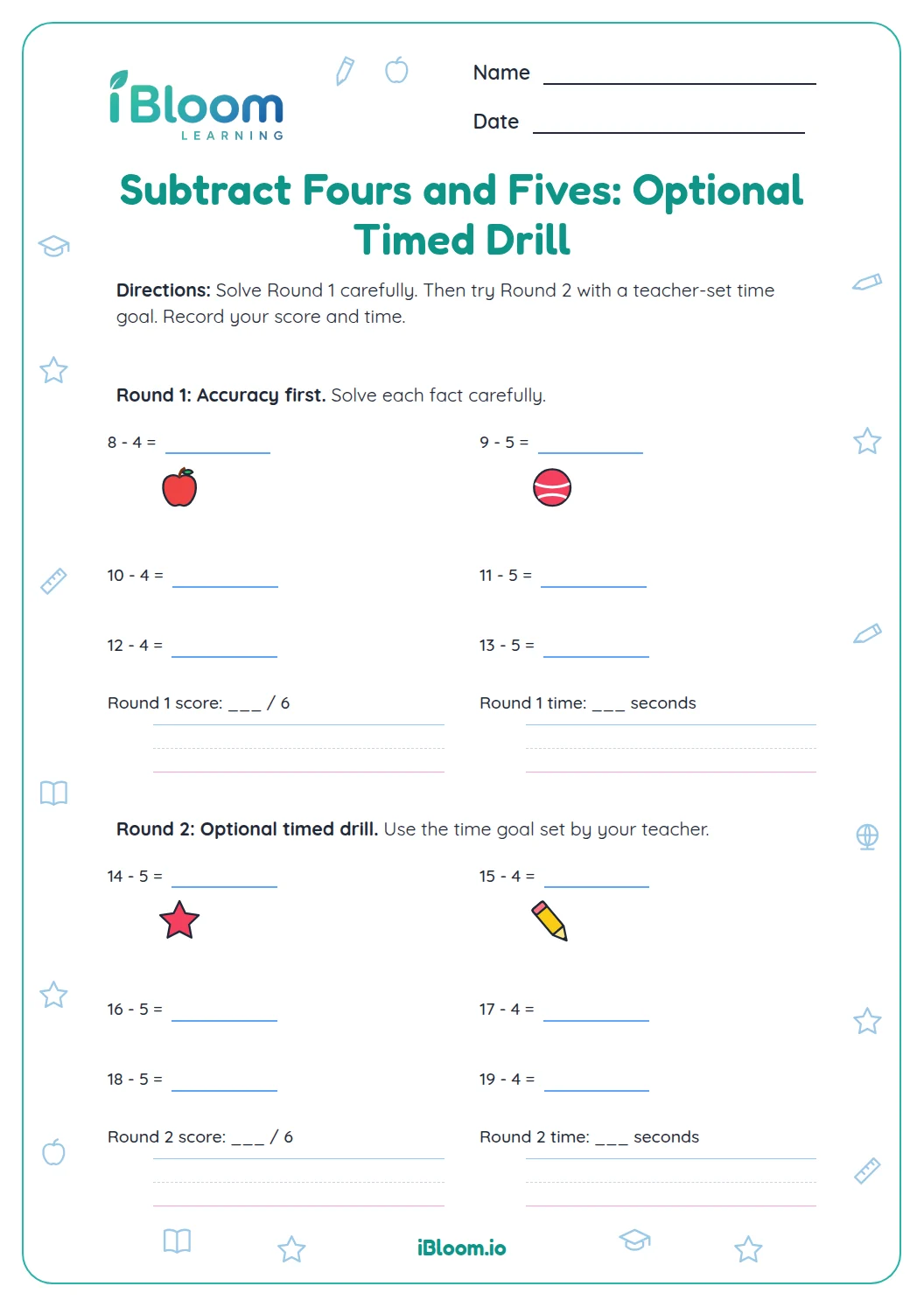
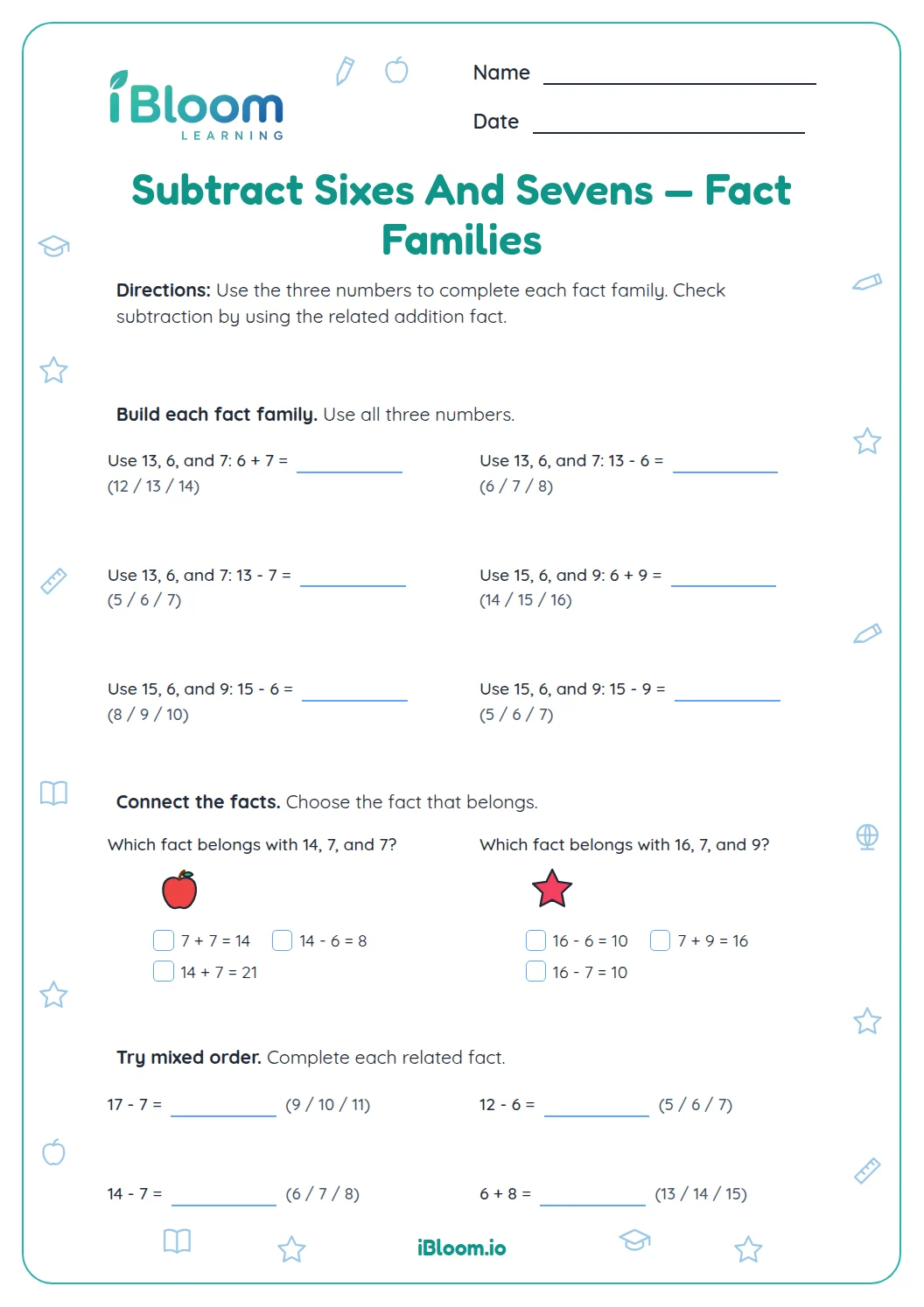
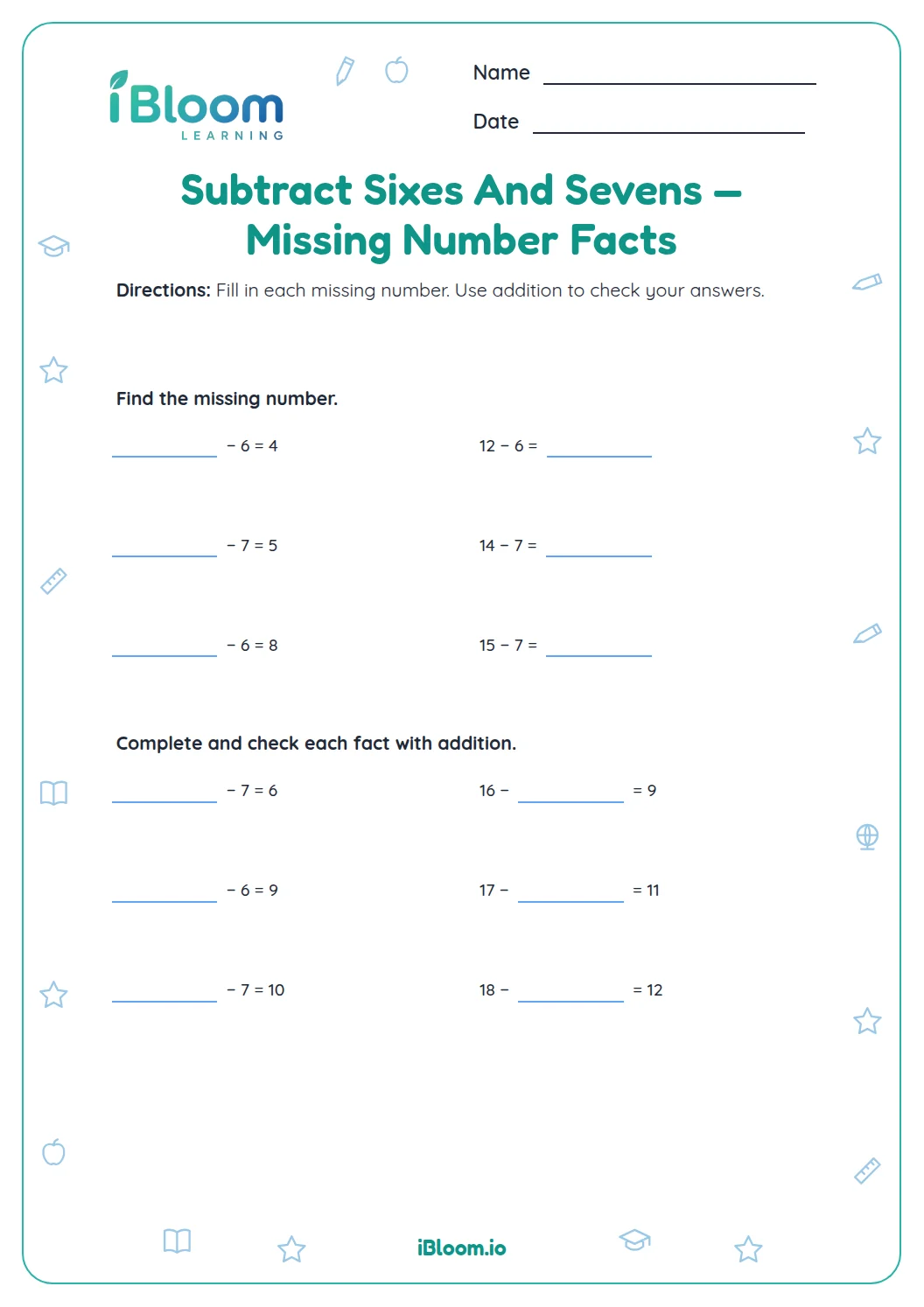
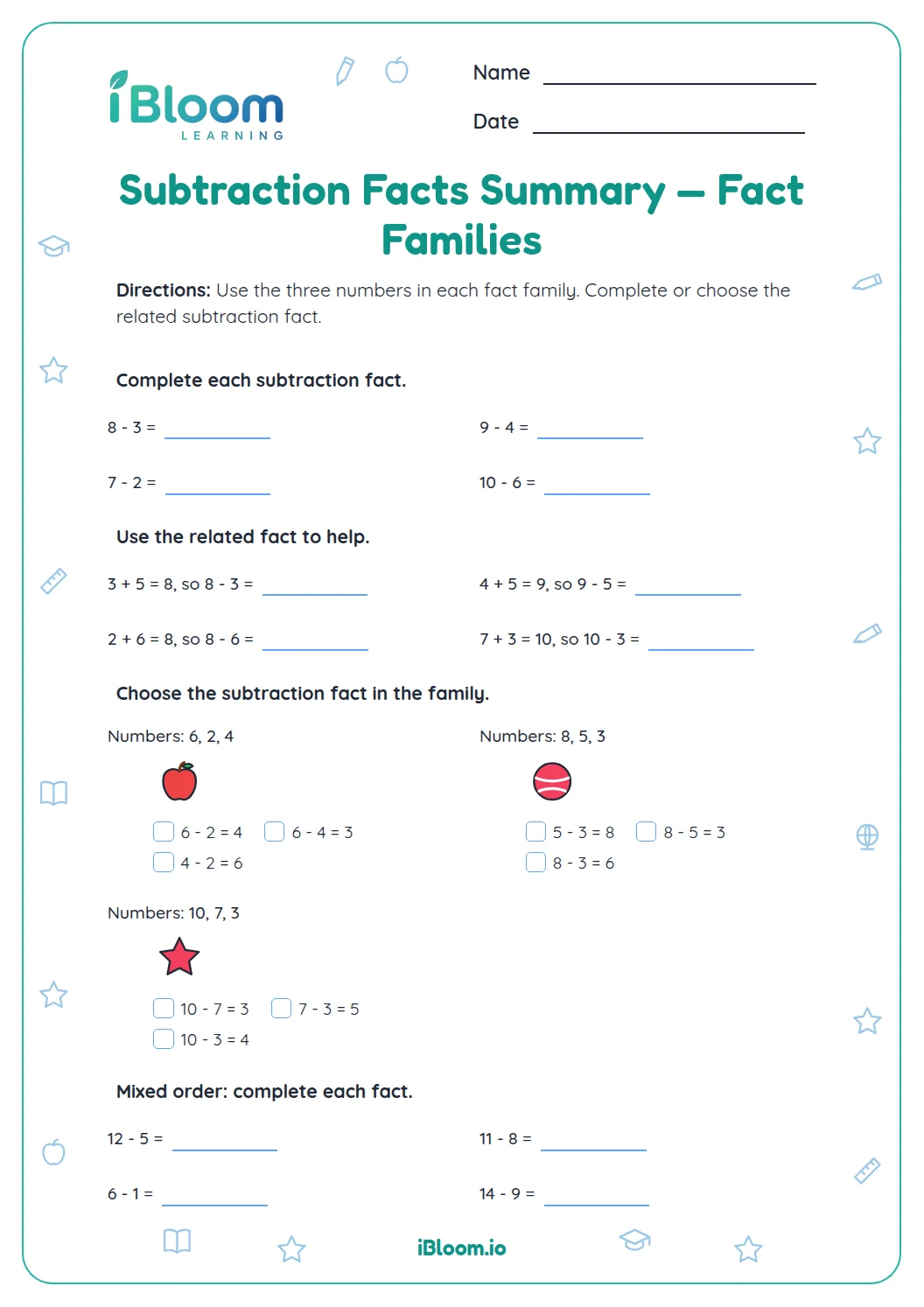
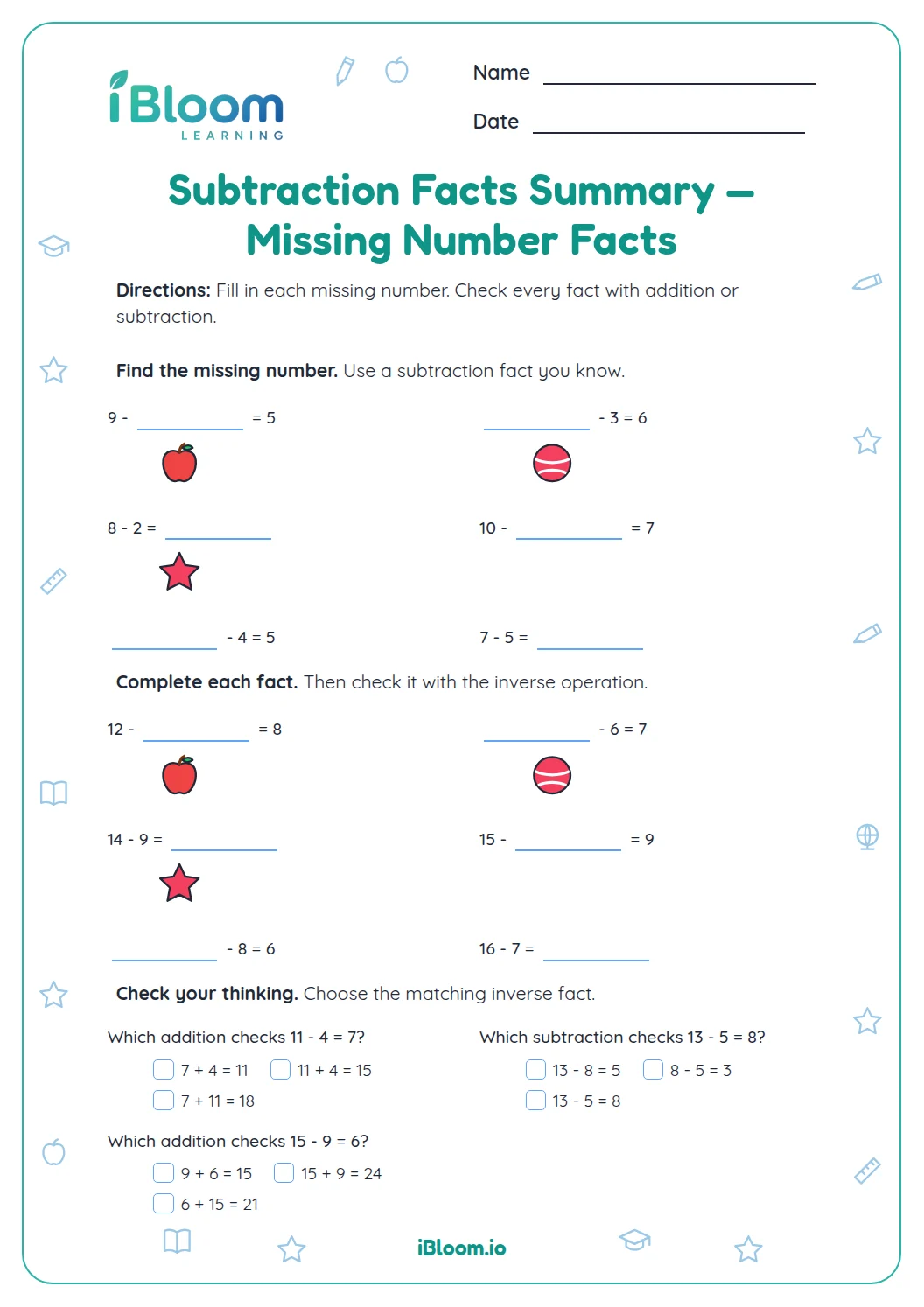
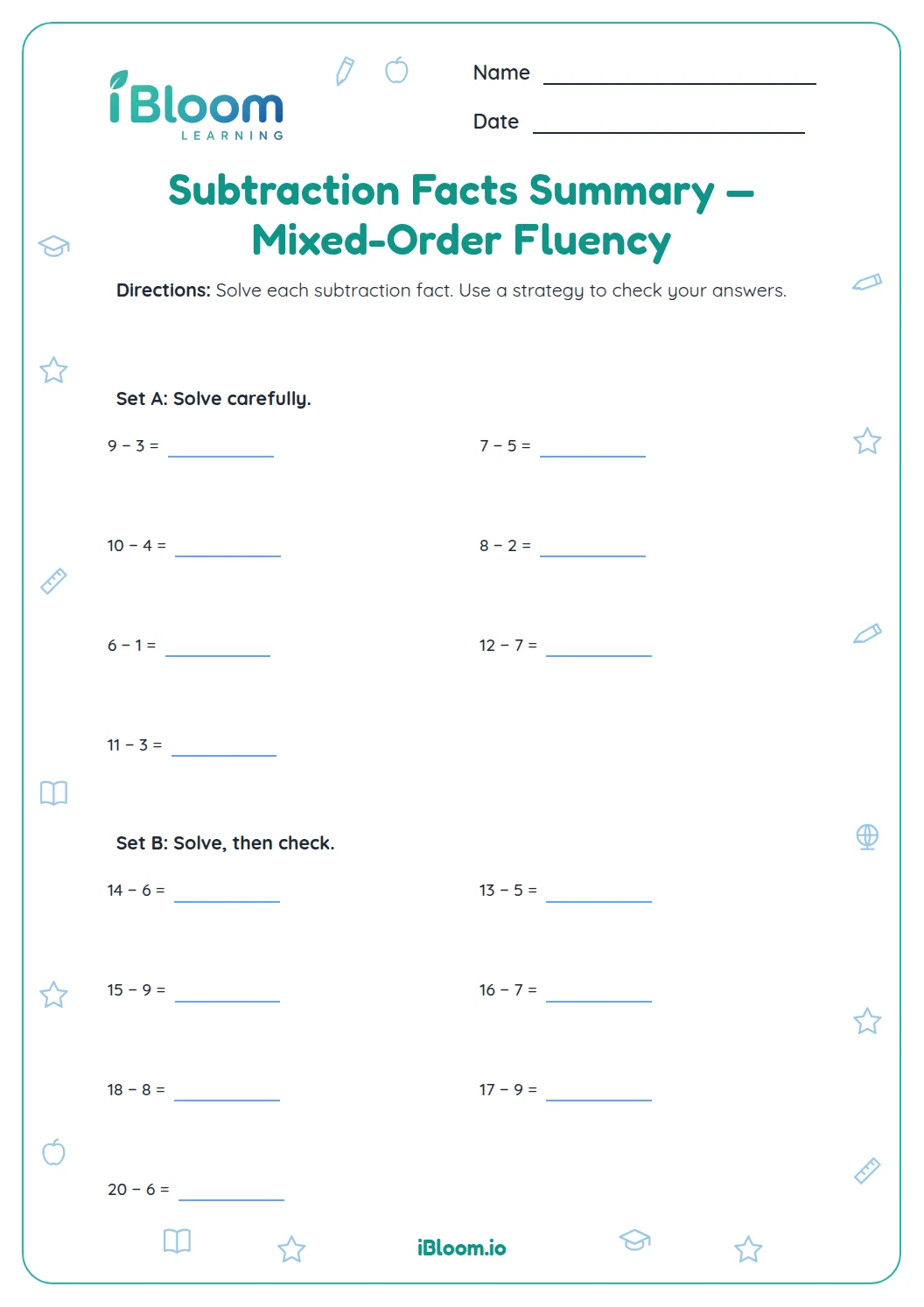
This free Grade 1 printable gives learners 20 mixed subtraction facts using 4 or 5 as the number subtracted. The problems use totals within 20 and appear in two groups of ten. Students find each difference and can use a related addition fact to check. The old page used picture stories, error explanations, and missing-number items; this replacement is a focused fact drill. It practices the addition-subtraction relationship in CCSS 1.OA.C.6. A separate answer key is included.
Aligned to 1.OA.C.6
What subtraction facts will learners solve?
The sheet has 20 different number sentences, arranged as two groups of ten. Each subtracts 4 or 5, with starting numbers from 7 to 20.
The old page combined picture subtraction, error analysis, and missing-number practice. This replacement concentrates on mixed-order facts so learners repeatedly read the operation and subtrahend.
How can addition check subtraction?
A difference plus the number subtracted should equal the starting number. For 13 − 5, the answer is 8; adding 8 + 5 returns 13.
- 116 − 4 = 12. Check: 12 + 4 = 16.
How can learners work through the drill?
Solve each fact in order, keeping the minus sign in view. If a fact feels uncertain, count back or use the related addition fact. Check the numbered answers with the key when finished.
How to use this worksheet
- 1Read the sign and both numbers in each fact.
- 2Find the difference by counting back or recalling the fact.
- 3For a check, add the number subtracted to your answer.
- 4Finish both groups, then compare each response with the answer key.
Common mistakes and quick fixes
The mistake
Subtracting 4 when the fact says subtract 5.
The fix
Read the subtrahend carefully before calculating.
The mistake
Adding the two numbers instead of subtracting.
The fix
Name the operation aloud, then solve the number sentence.
The mistake
Checking by adding the subtrahend to the starting number.
The fix
Add the subtrahend to the difference; the result should be the starting number.
Common Core alignment
This Grade 1 worksheet practices subtraction within 20 and checking with addition.
Solve subtraction facts within 20 and use addition to check a difference.
On this sheet: The sheet practices subtraction within 20 and the inverse relationship with addition.
Show the official wordingHide the official wording
Add and subtract within 20, demonstrating fluency for addition and subtraction within 10. Use strategies such as counting on; making ten (e.g., 8 + 6 = 8 + 2 + 4 = 10 + 4 = 14); decomposing a number leading to a ten (e.g., 13 − 4 = 13 − 3 − 1 = 10 − 1 = 9); using the relationship between addition and subtraction (e.g., knowing that 8 + 4 = 12, one knows 12 − 8 = 4); and creating equivalent but easier or known sums (e.g., adding 6 + 7 by creating the known equivalent 6 + 6 + 1 = 12 + 1 = 13).
What to practice next
Make more practice
Further reading
Questions parents and teachers ask
What does this subtraction facts with 4 and 5 worksheet practice?
This Grade 1 printable has 20 questions focused on subtraction facts with 4 and 5. The facts are in mixed order, with each problem subtracting 4 or 5 from a number no greater than 20. The answer key is on its own page, so an adult or student can check responses after the practice is complete.
How can I help if a learner gets stuck?
Read the full prompt together and return to the clue or rule that the item asks about. For 13 − 5, the difference is 8; the related addition fact 8 + 5 = 13 checks it. Ask the learner to explain why the answer fits before checking the key; that keeps the discussion tied to the skill on this sheet.
How many questions are on the printable?
There are 20 questions, arranged in two parts that move from guided recognition to more independent practice. The page copy and answer key follow the same question numbering, making it easy to review a specific response without repeating the whole activity.
Is an answer key included?
Yes. A separate answer key is included with answers for the 20 worksheet questions. For any response that can vary, the key provides a model or accepts equivalent wording when it meets the stated skill; review those responses by checking the rule, not handwriting or personal preference.
What is one example from the subtraction facts with 4 and 5 practice?
For 13 − 5, the difference is 8; the related addition fact 8 + 5 = 13 checks it. The full sheet includes 20 distinct subtraction expressions. The worksheet includes other examples so learners can apply the same idea across different prompts, then use the separate key to check their work.