

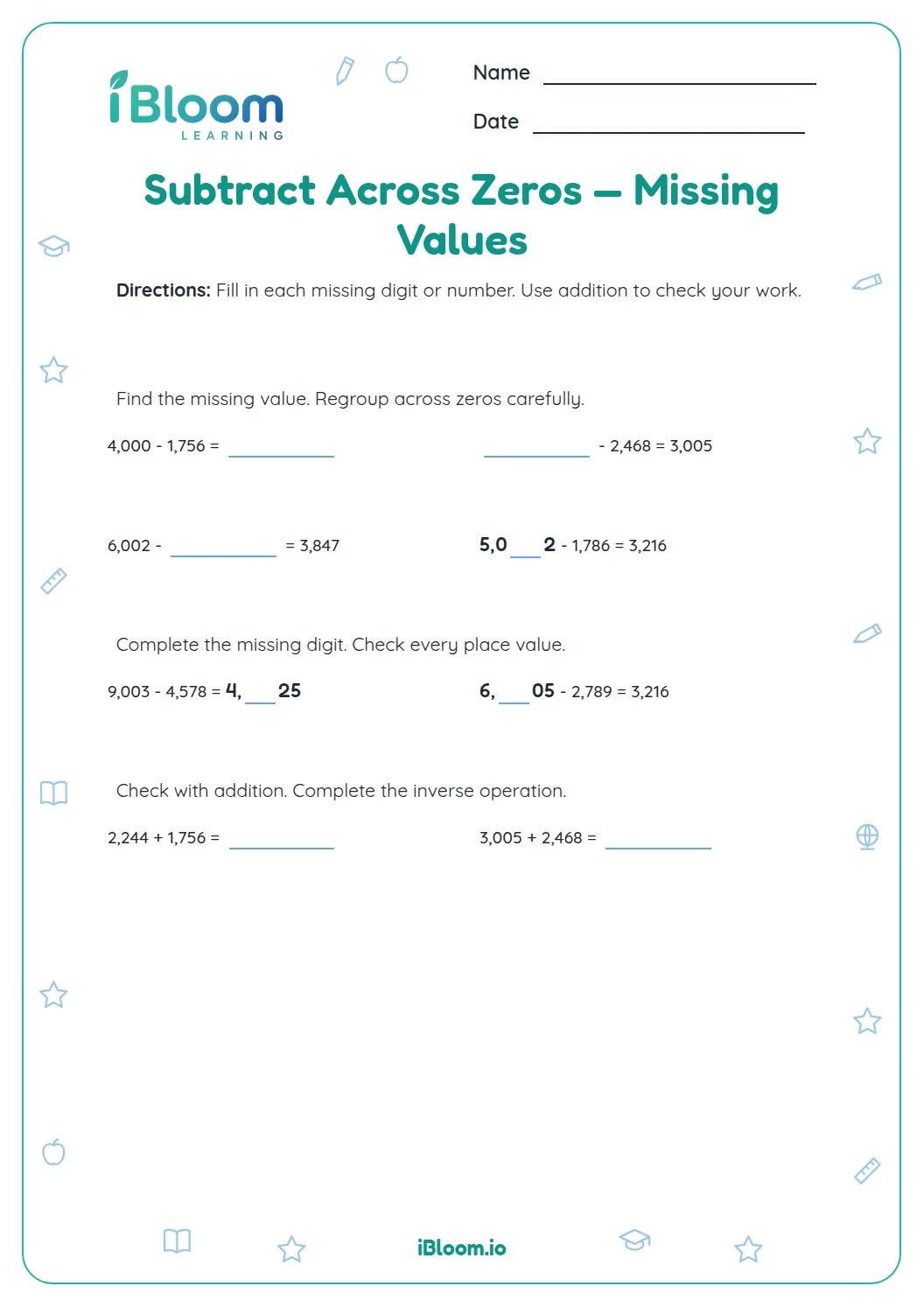
About this worksheet
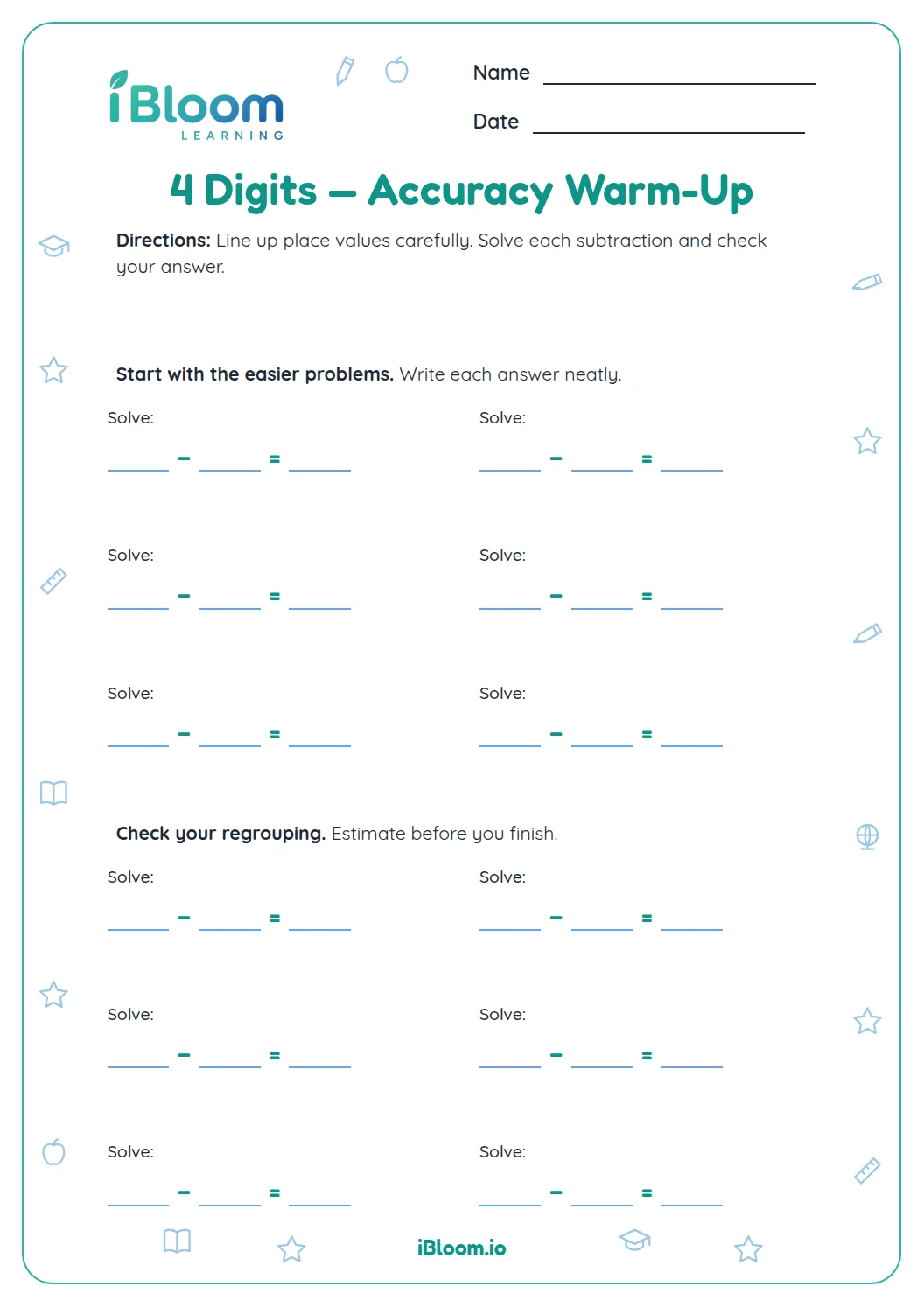
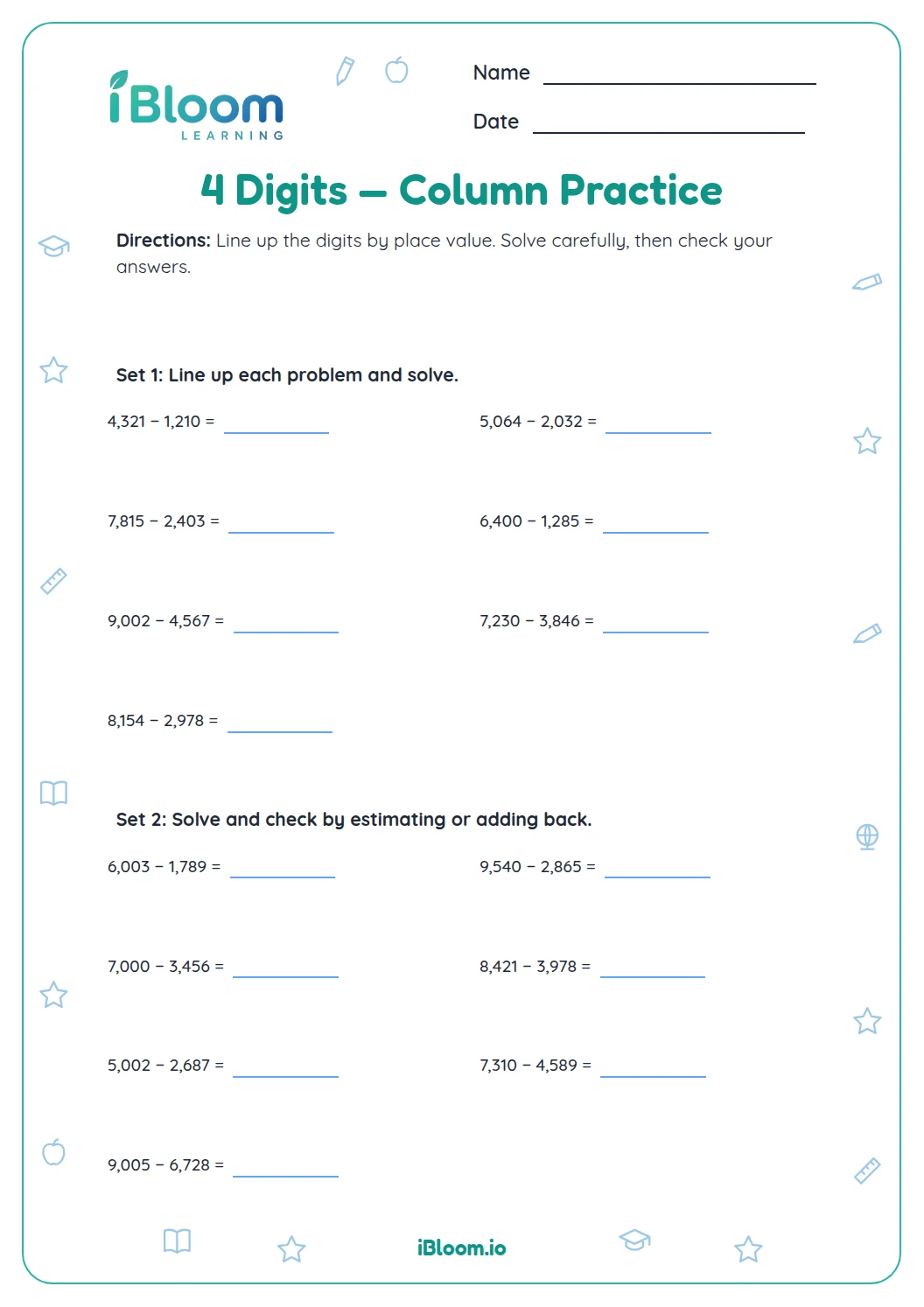
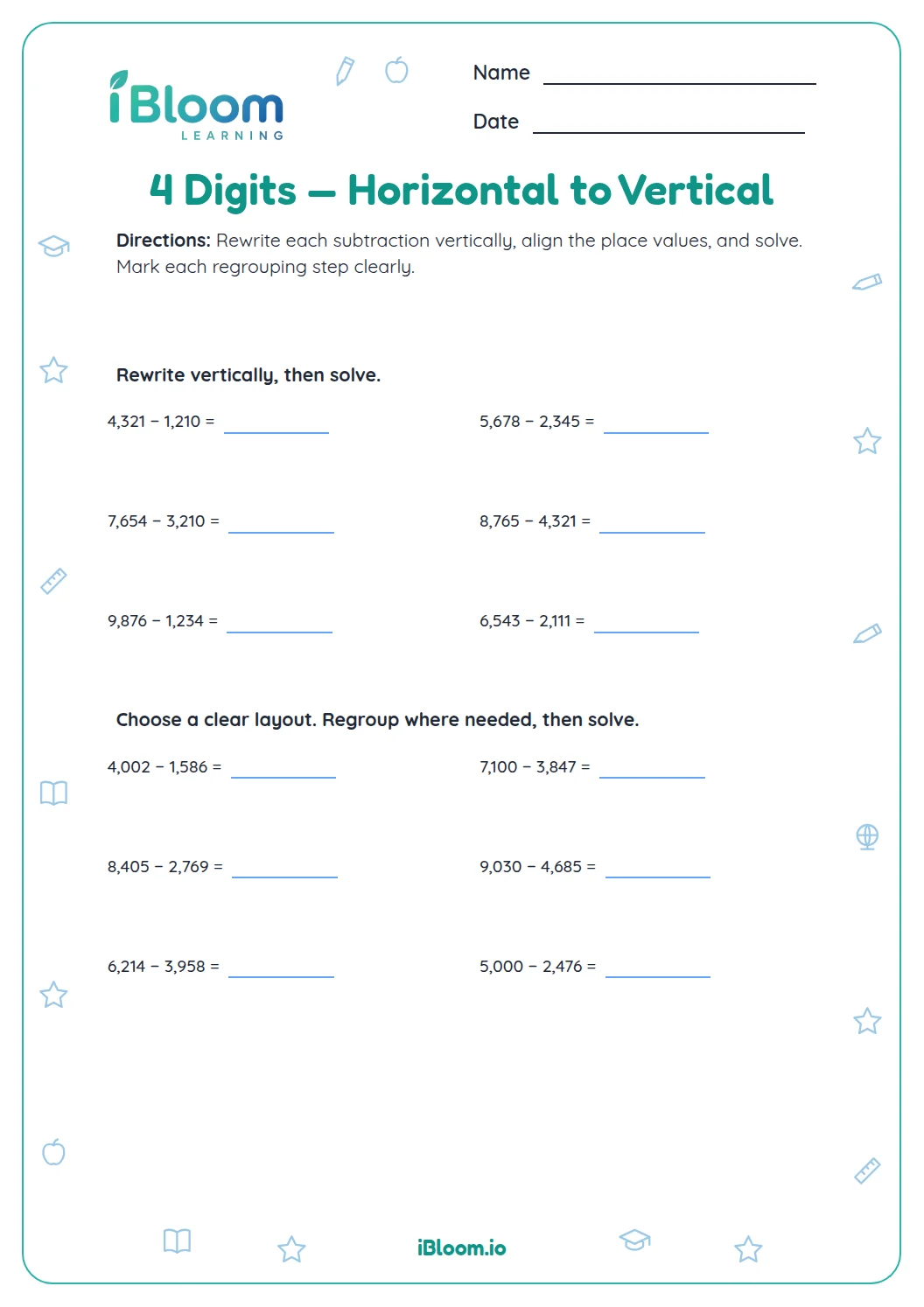
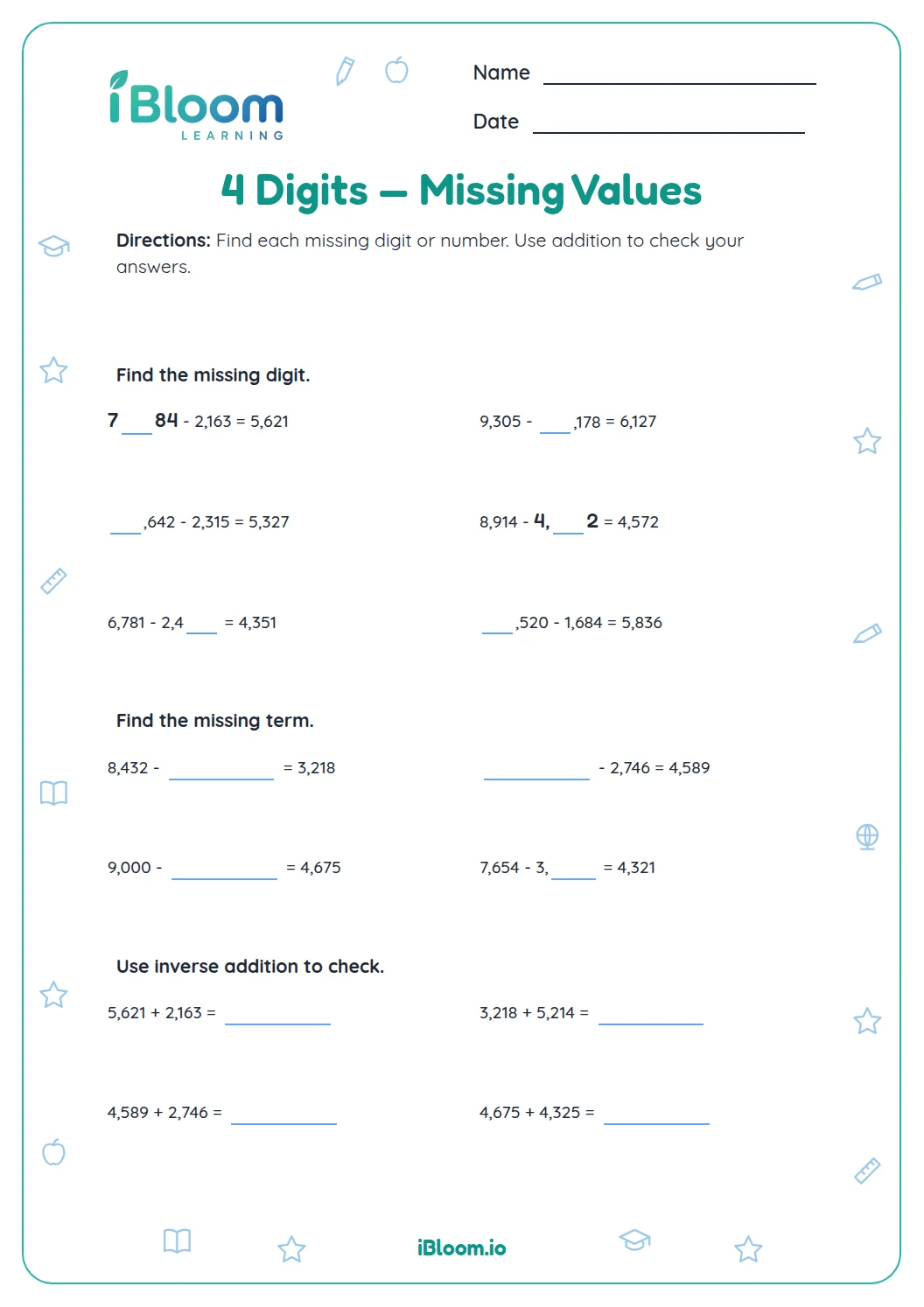
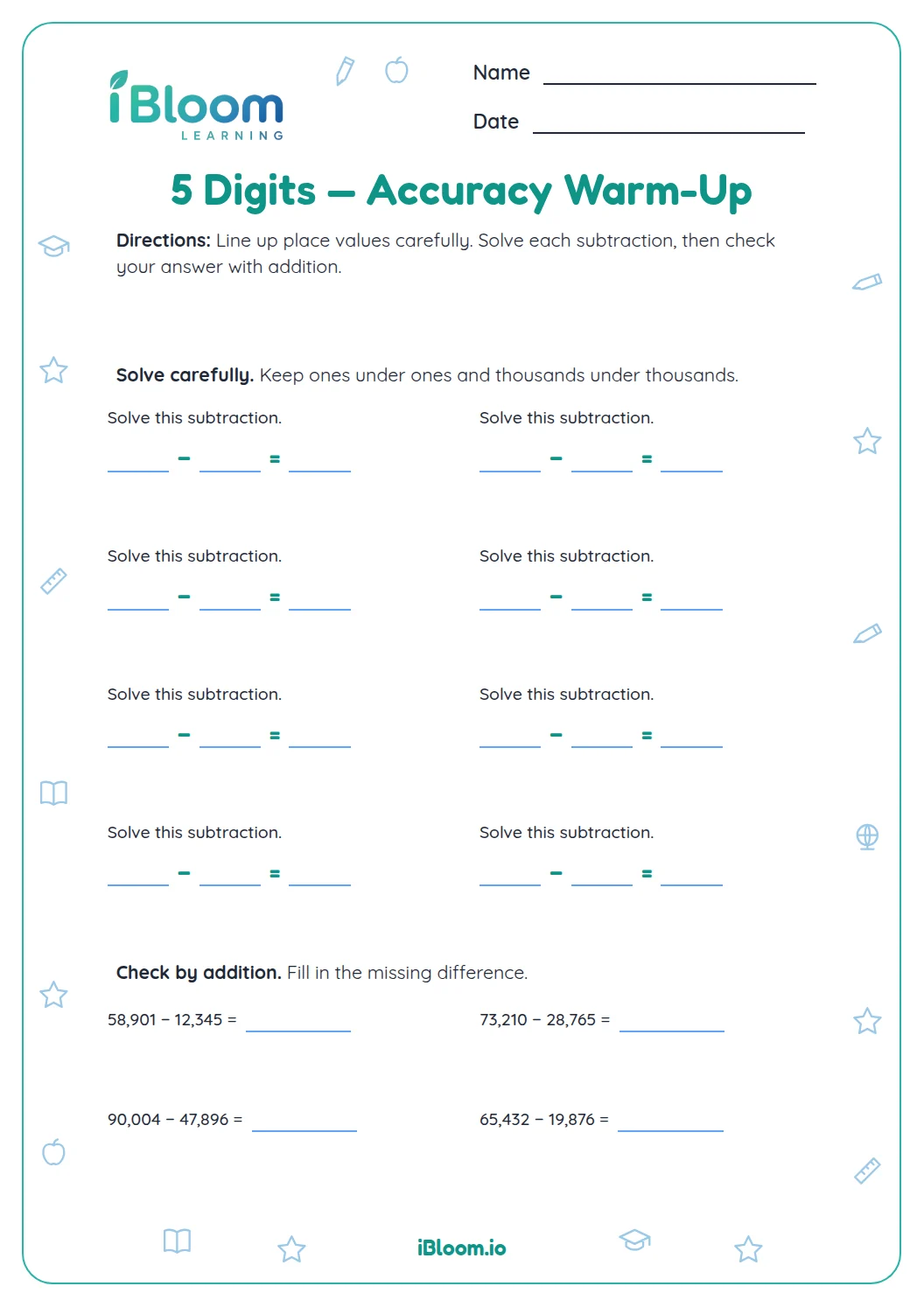
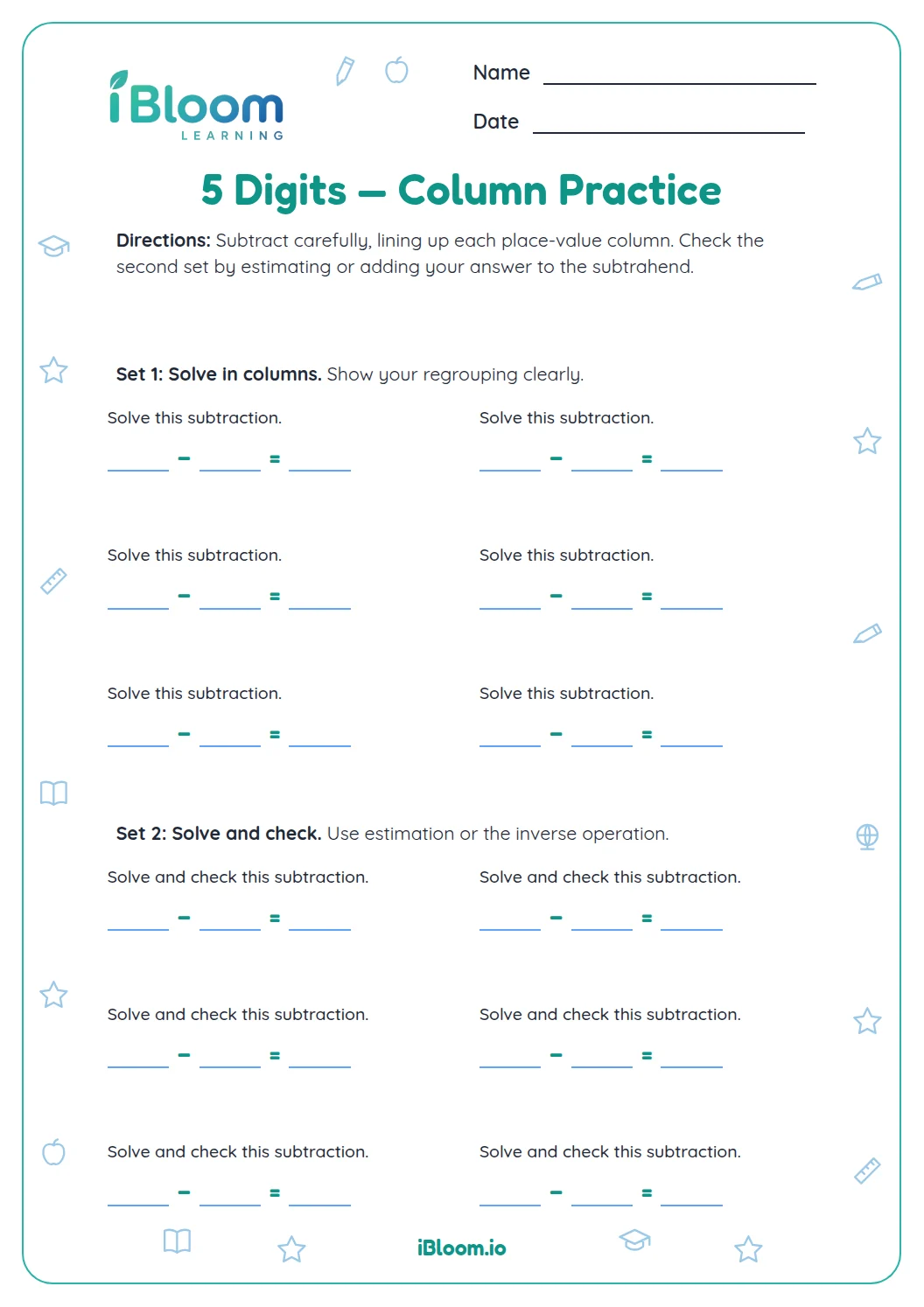
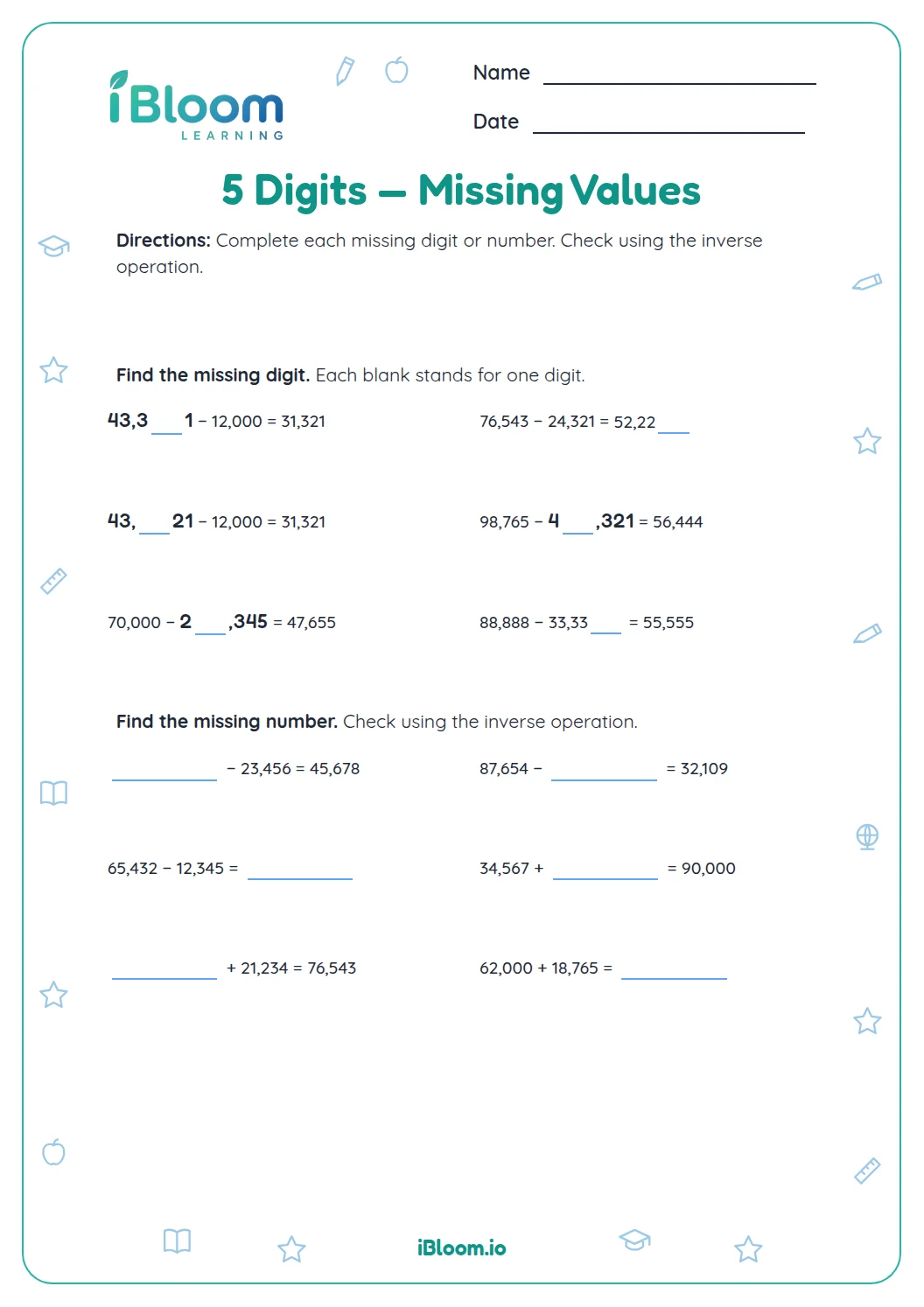
This printable four-digit subtraction drill is for students in Grades 4–5 who are practicing the standard algorithm. It includes 16 problems in three parts, with regrouping and subtraction across zeros, plus a separate answer key. Students can show their renaming above each column and check a result by adding the difference to the number subtracted. It aligns with Common Core 4.NBT.B.4, which calls for fluent multi-digit addition and subtraction using the standard algorithm.
Aligned to 4.NBT.B.4
How do you regroup in a four-digit subtraction problem?
Subtract from the ones place toward the thousands. If a top digit is too small, rename one unit from the place to its left as ten units in the current place. Keep track of the changed digits before continuing.
For example, 6,842 − 2,317 begins with 2 − 7, so rename one ten as ten ones: 12 − 7 = 5. The tens become 3, and 3 − 1 = 2. Continue to get 4,525.
- 16,842 − 2,317
- 212 − 7 = 5 ones; 3 − 1 = 2 tens
- 38 − 3 = 5 hundreds; 6 − 2 = 4 thousands
- 4Difference: 4,525
- 5Check: 4,525 + 2,317 = 6,842
What changes when the minuend has a zero?
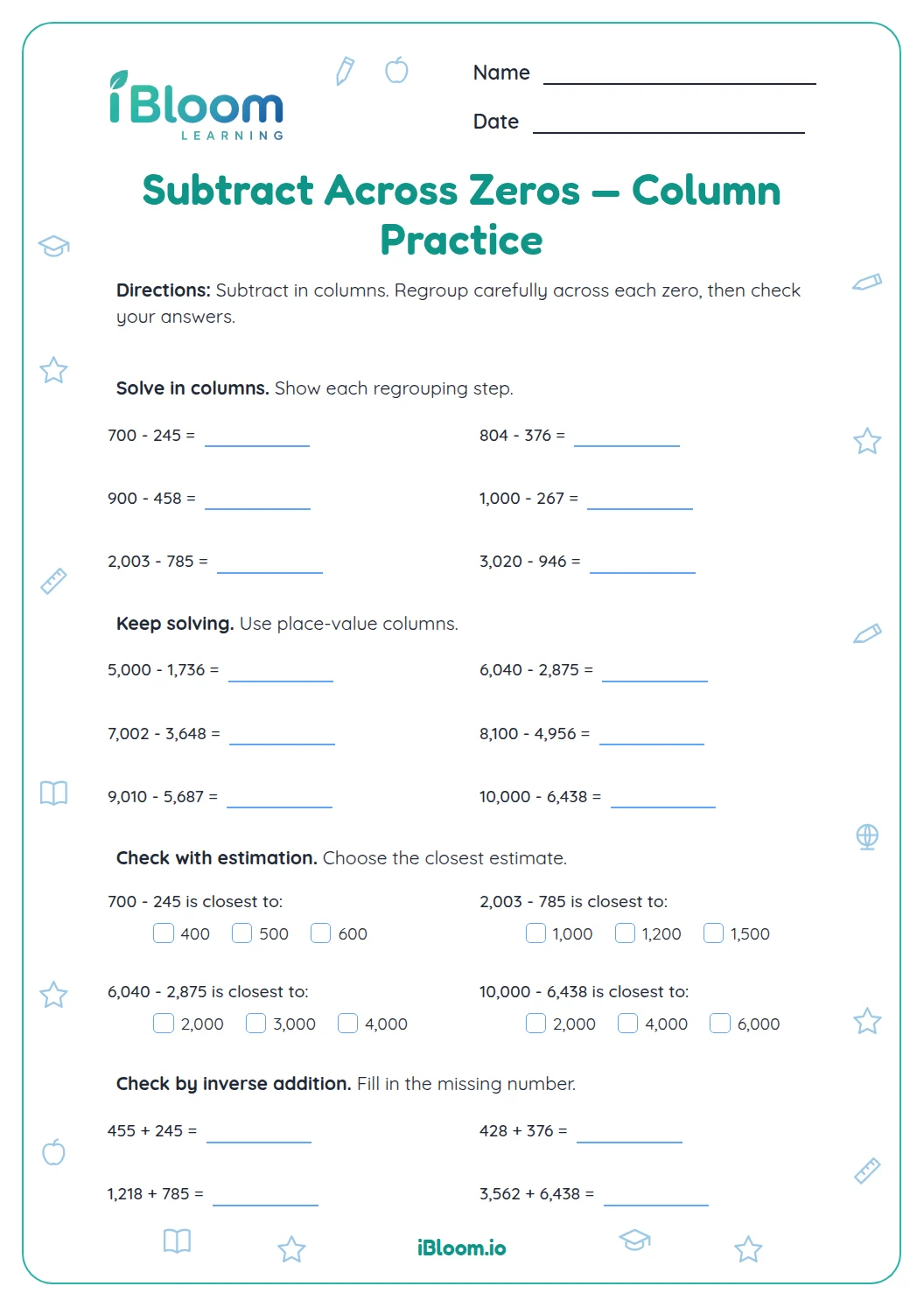
A zero may need to receive a trade from a place farther left. In 9,000 − 4,675, rename one thousand as ten hundreds, then one hundred as ten tens, and one ten as ten ones. The top digits become 8 thousands, 9 hundreds, 9 tens, and 10 ones.
Take the subtraction one column at a time after renaming. The zero is not ignored; it becomes part of the chain of trades.
How is the worksheet organized?
Part A builds regrouping practice, Part B focuses on zeros in the minuend, and Part C mixes both patterns. The answer key lists each difference in order. Encourage students to write the regrouped digits above the original number before subtracting.
How to use this worksheet
- 1Line up ones, tens, hundreds, and thousands.
- 2Start at the ones place and rename when the top digit is smaller.
- 3Carry each trade through any zeros to the left.
- 4Subtract each column and read the difference.
- 5Add the difference to the subtrahend to check.
Common mistakes and quick fixes
The mistake
Subtracting the smaller digit from the larger digit in every column.
The fix
If the top digit is too small, regroup from the place to its left before subtracting.
The mistake
Forgetting that a trade changes the digit in the place to the left.
The fix
Write the new top digits clearly before moving to the next column.
The mistake
Skipping over a zero when a trade must pass through it.
The fix
Rename from the nearest nonzero place and update each zero along the way.
Curriculum alignment
This practice connects the worksheet tasks to the standard below.
Use the standard algorithm to subtract multi-digit whole numbers.
On this sheet: All items subtract four-digit whole numbers, including regrouping across zeros.
Show the official wordingHide the official wording
Fluently add and subtract multi-digit whole numbers using the standard algorithm.
What to practice next
Make more practice
Further reading
Questions parents and teachers ask
How many problems are on the drill?
There are 16 four-digit subtraction problems across three parts. The first group practices regrouping, the second puts regrouping across zeros in focus, and the last group mixes the skills. A separate answer key makes it easy to check each difference after the student has finished.
Does the worksheet include subtraction across zeros?
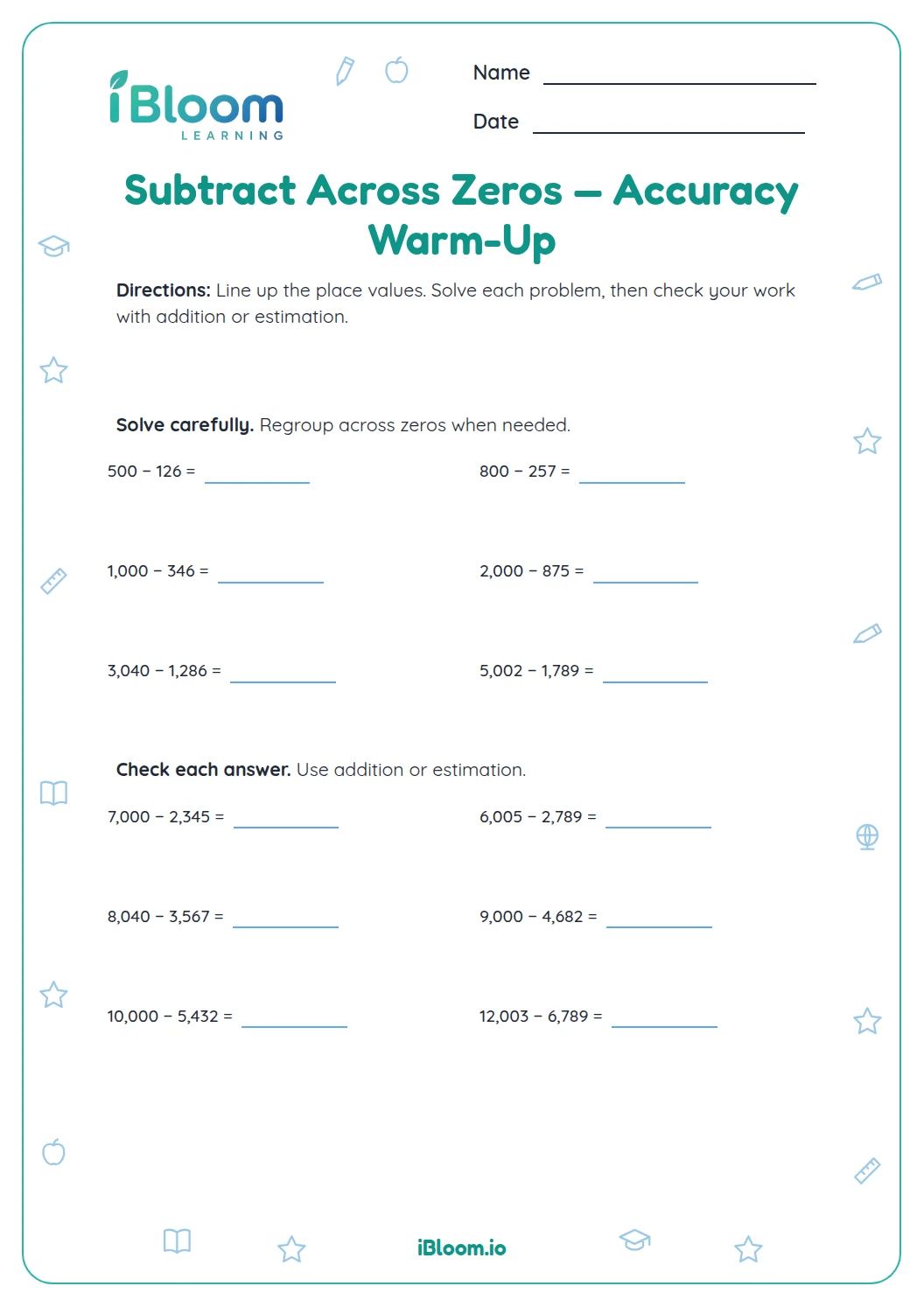
Yes. Part B includes problems such as 8,120 − 3,964 and 7,015 − 2,867. Students should rename through the zero place as needed, then subtract each column from right to left and check by adding the difference to the subtrahend.
What is one way to check a difference?
Add the answer to the number being subtracted. For example, after solving 6,842 − 2,317 = 4,525, check that 4,525 + 2,317 returns 6,842. This reverse operation can reveal a place-value or regrouping error before the work is marked.
What grade is this subtraction practice for?
The sheet is labeled for Grades 4–5 and focuses on four-digit whole-number subtraction. It gives repeated practice with the standard algorithm and regrouping, including cases with zeros, so teachers can use it for classwork, review, or extra independent practice.
How should a student handle a zero while regrouping?
Move left to the nearest place with a value to trade. Rename that place, then pass one ten across each zero until the needed column has enough units. Keep each renamed digit visible in the working so the student can follow how the value changes.