
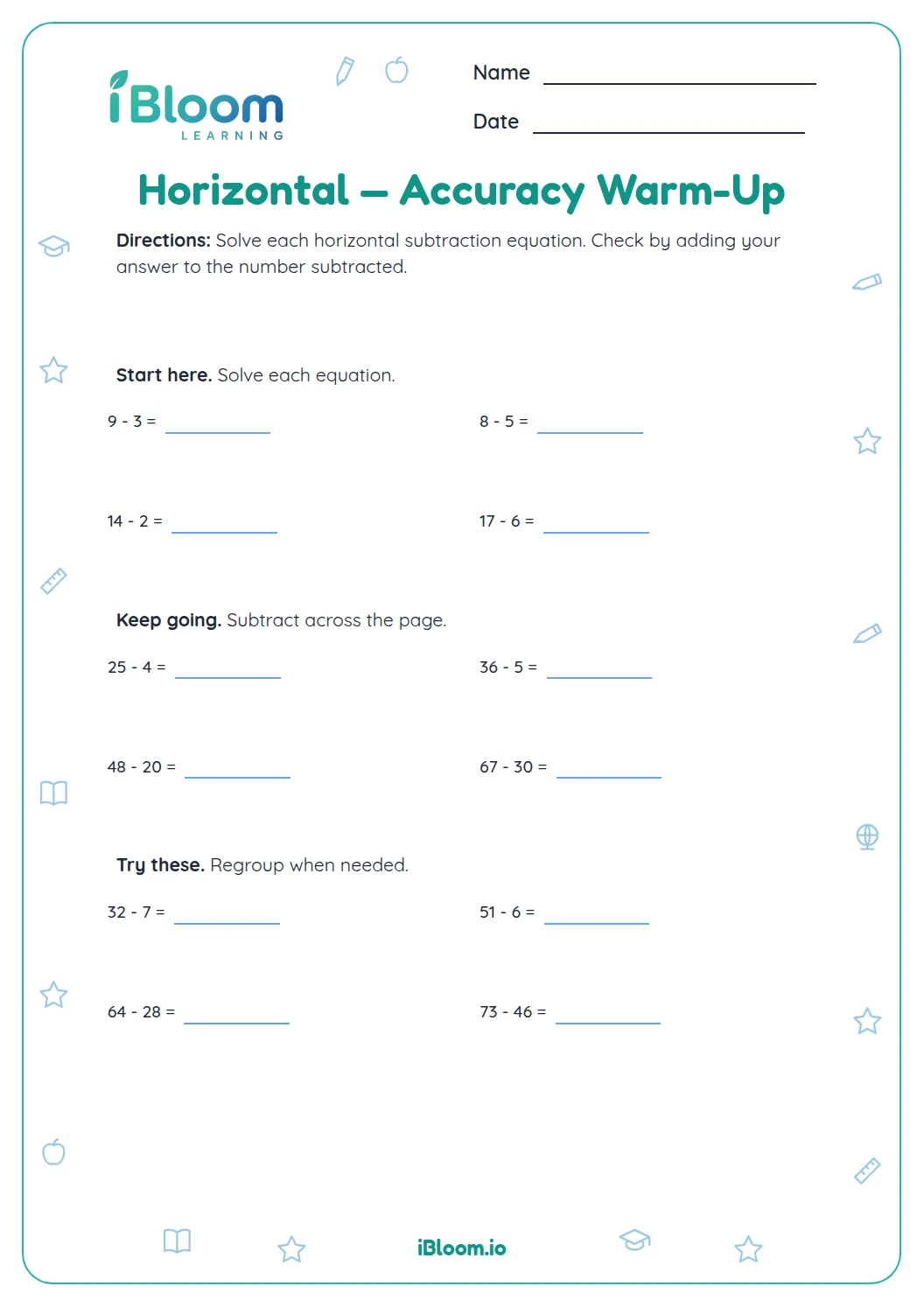
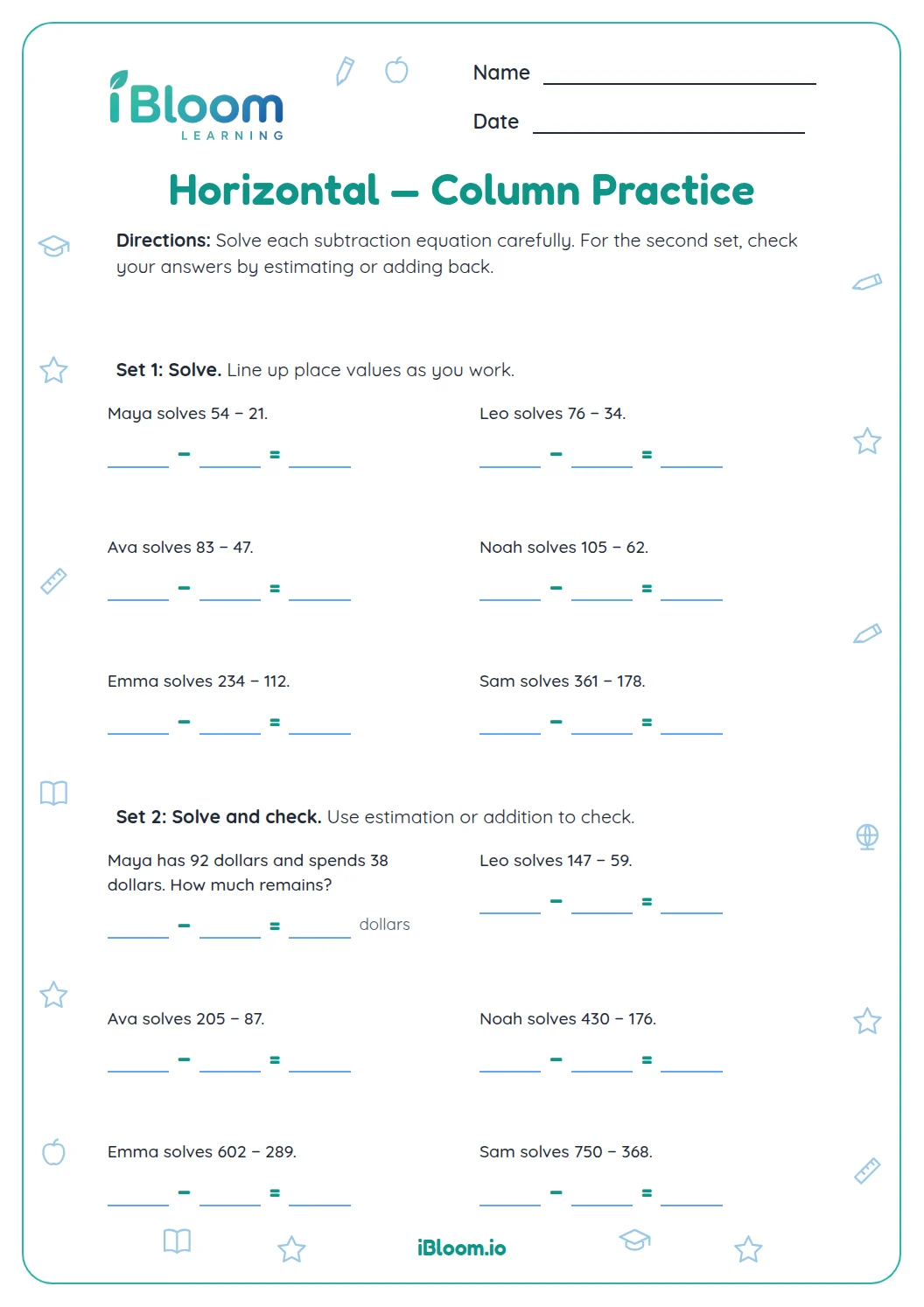
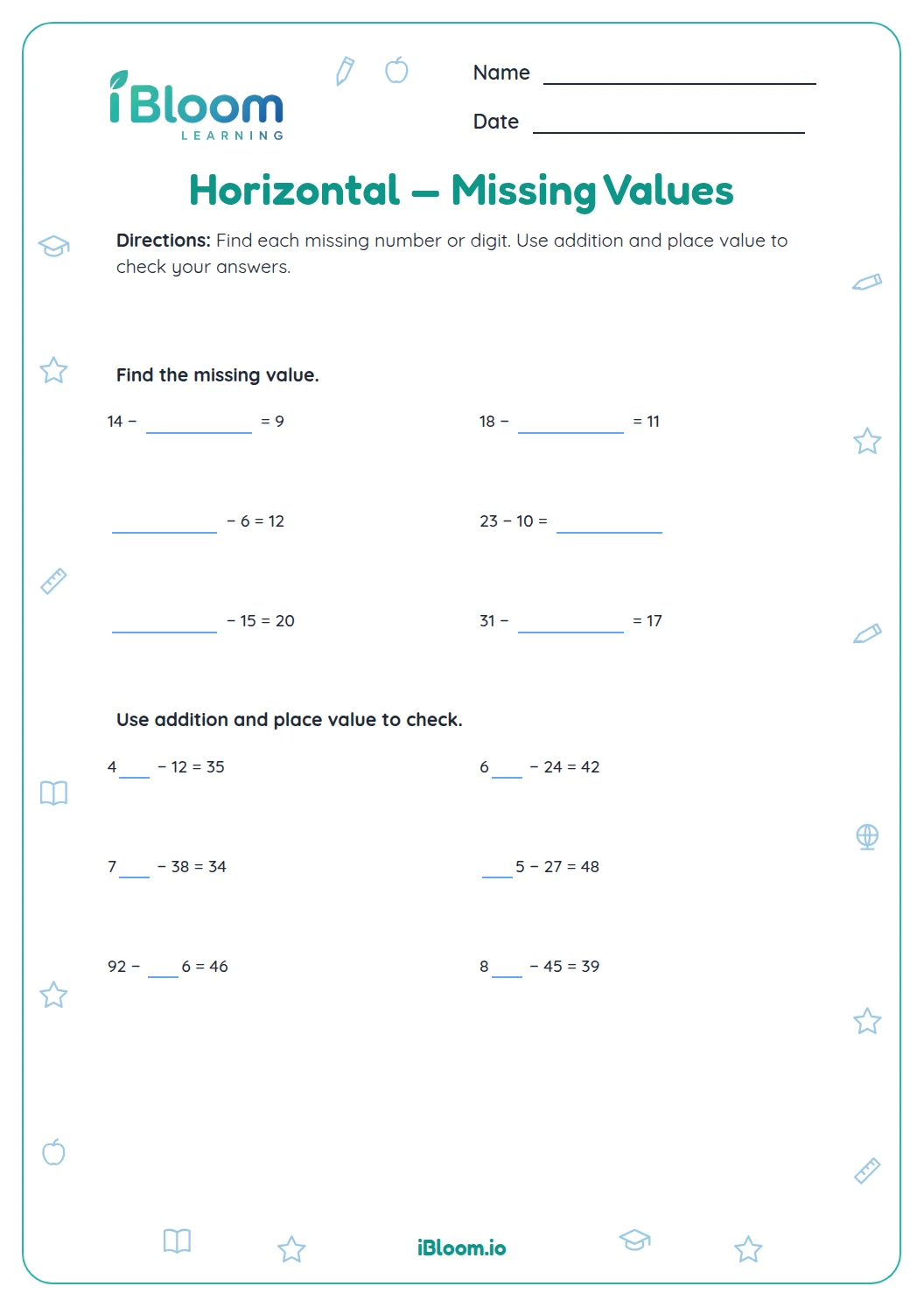
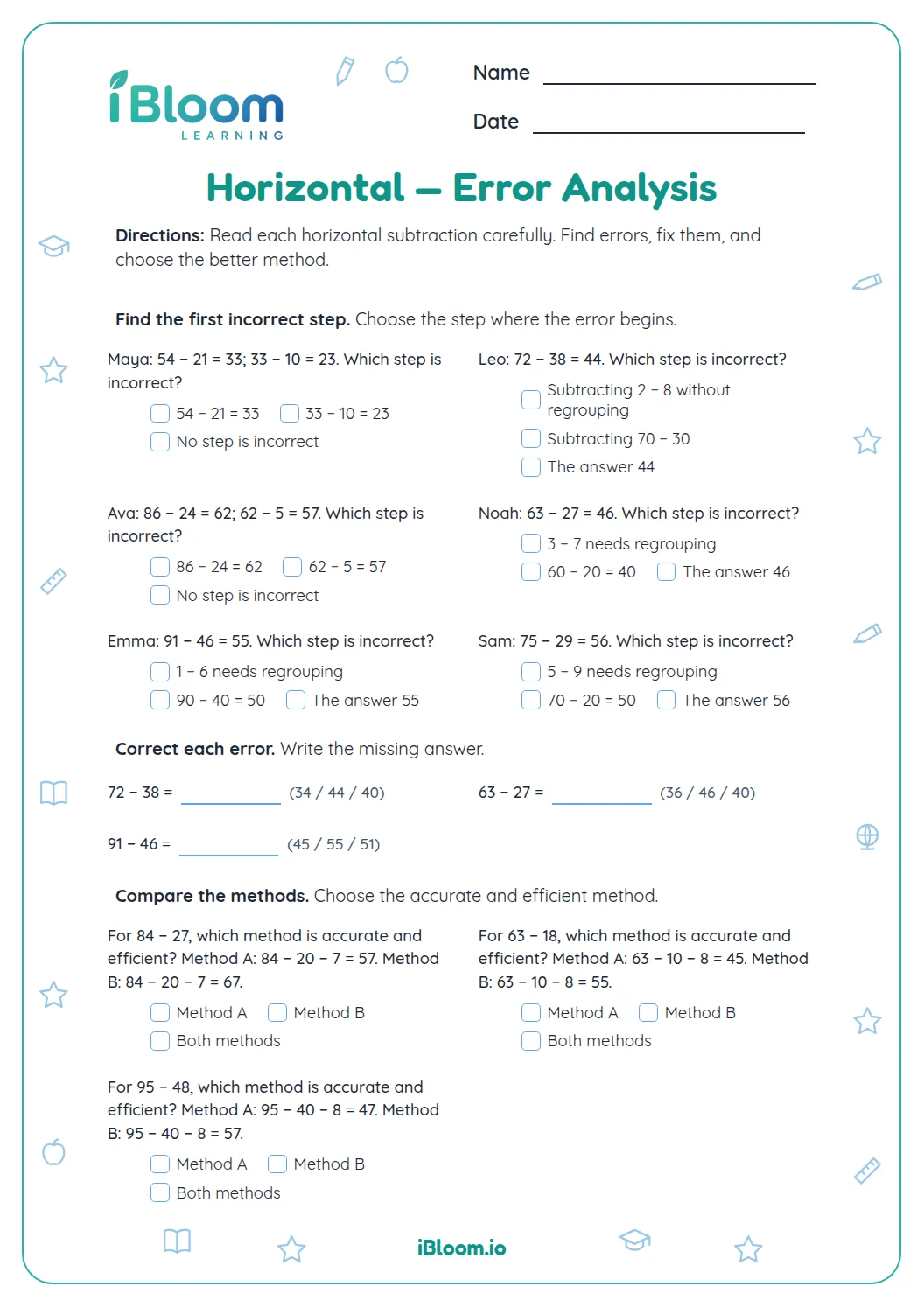




About this worksheet
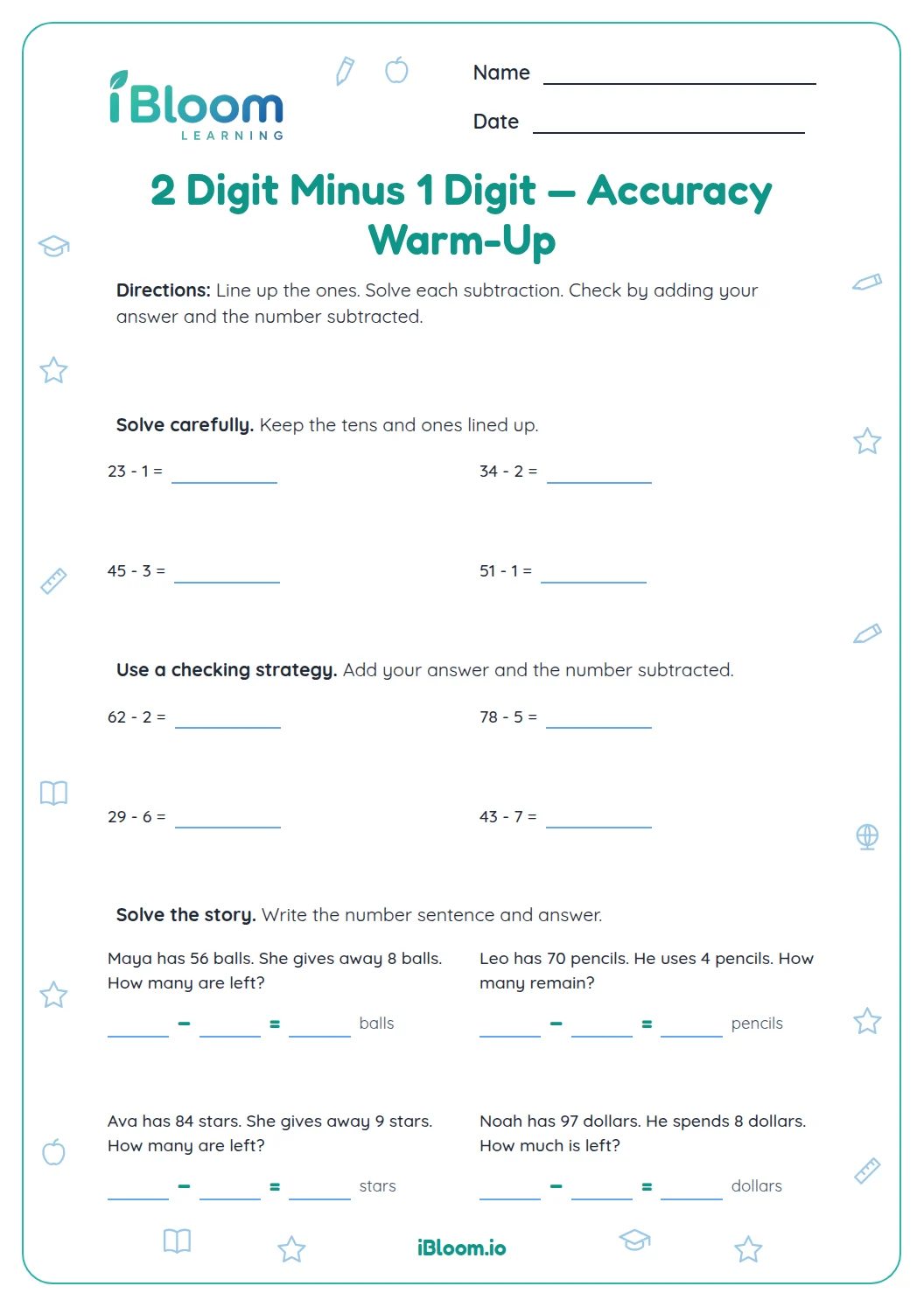
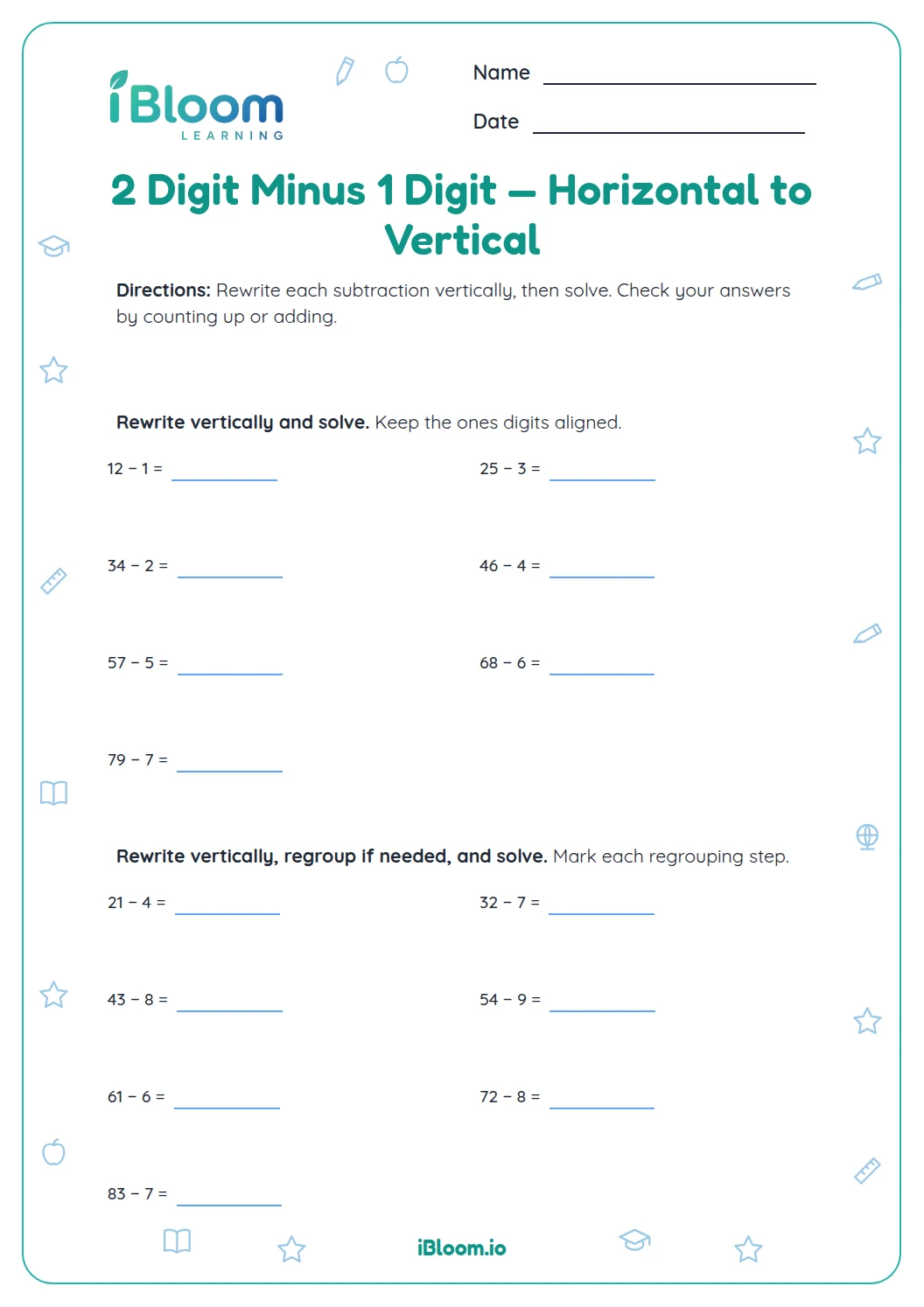
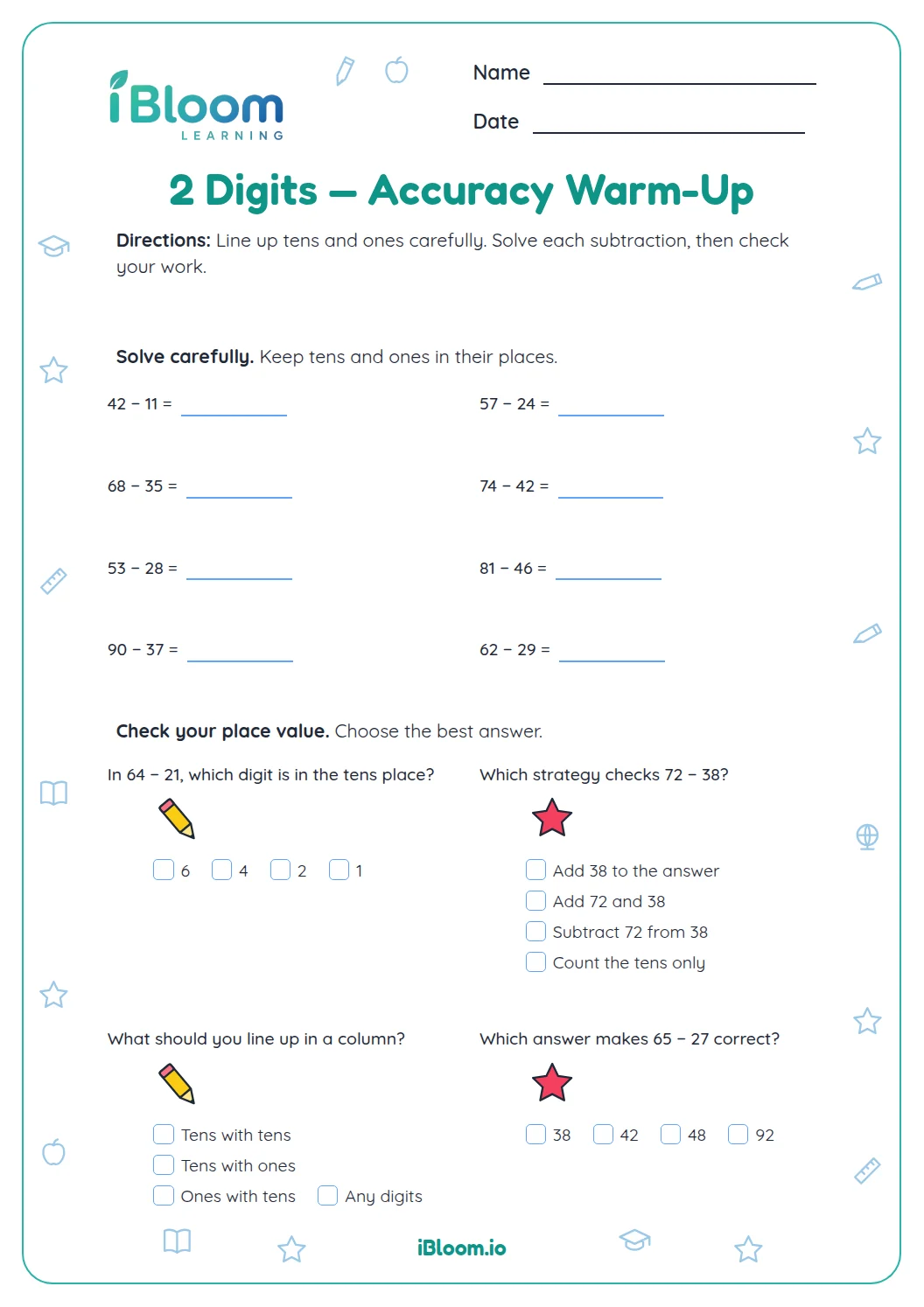
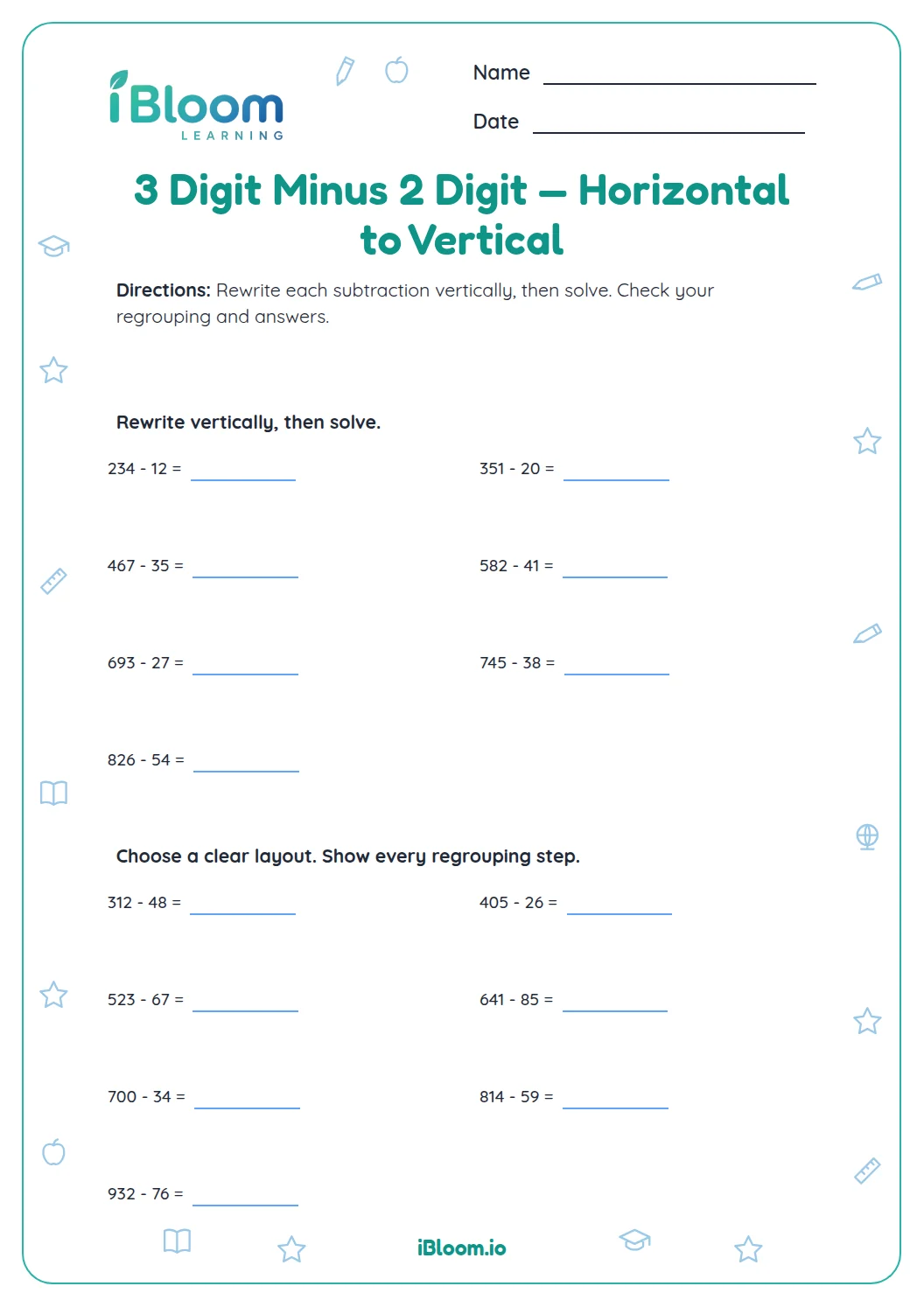
This Grade 4 practice sheet has 20 horizontal subtraction problems with whole numbers through the thousands. Students regroup across place values and can check a difference by adding it to the number subtracted. A separate answer key gives the result for every problem.
Aligned to 4.NBT.B.4
When does subtraction require regrouping?
Regroup when a digit in the top number is smaller than the digit below it. If the next place is zero, move across to the next nonzero place and regroup through the intervening place.
- 1604 − 289 = 315
- 2Check: 315 + 289 = 604
How does addition check a difference?
For a subtraction sentence a − b = c, check that c + b = a. This inverse relationship catches many regrouping and calculation slips.
How can students work from a horizontal equation?
The equation is printed left to right. Students may write it vertically on scrap paper so matching place values line up, then record the difference on the sheet.
How to use this worksheet
- 1Read the direction for each part before starting.
- 2Work through subtraction problems in order and write enough steps to check the result.
- 3Compare each response with the answer key and redo any missed item.
- 4Ask the learner to explain one strategy aloud.
Common mistakes and quick fixes
The mistake
Rushing past a sign or key detail in a subtraction problem.
The fix
Read the prompt again, identify the needed subtraction step, and check the result.
The mistake
Using a correct method but making a small computation error in subtraction.
The fix
Read the prompt again, identify the needed subtraction step, and check the result.
The mistake
Writing an answer without checking it against the original question.
The fix
Read the prompt again, identify the needed subtraction step, and check the result.
Common Core alignment
Students fluently subtract multi-digit whole numbers and check with addition.
Subtract multi-digit whole numbers and check a difference with addition.
On this sheet: The 20 subtraction equations practice regrouping in multi-digit whole numbers; addition provides an inverse check.
Show the official wordingHide the official wording
Fluently add and subtract multi-digit whole numbers using the standard algorithm.
What to practice next
Make more practice
Further reading
Questions parents and teachers ask
What does “horizontal subtraction” mean?
Each problem prints as a number sentence from left to right, such as 604 − 289. Students can solve mentally or set the numbers in columns on their own paper when regrouping helps. The answer key lists the difference for all 20 problems.
How can addition check a difference?
Add the difference to the subtrahend; the sum should return to the minuend. For example, 315 + 289 equals 604, so it checks 604 − 289 = 315. This inverse check can reveal a regrouping or calculation slip.
Why do some problems need regrouping?
Regrouping is needed when a place has too few units to subtract. In 604 − 289, there are not enough ones to subtract 9 from 4, and the tens place is zero, so regrouping must move across place values.
What is a good way to avoid place-value errors?
Keep ones, tens, hundreds, and thousands in their own columns when writing out a problem. Subtract one place at a time, regroup only as needed, and then check by adding the difference to the subtrahend. This keeps each digit in its correct place.
How many problems are on the sheet?
There are 20 subtraction equations across two worksheet pages, followed by two answer-key pages. Later problems use larger numbers, including thousands, so students can practice regrouping across several place values and check each result with addition. The key makes it easy to review all responses.
What should students do after finishing?
Have the learner choose one problem, explain each regrouping step, and verify the result with addition. Related subtraction links on this page move from smaller number ranges to larger multi-digit problems, giving a clear next step after this mixed practice.