




About this worksheet
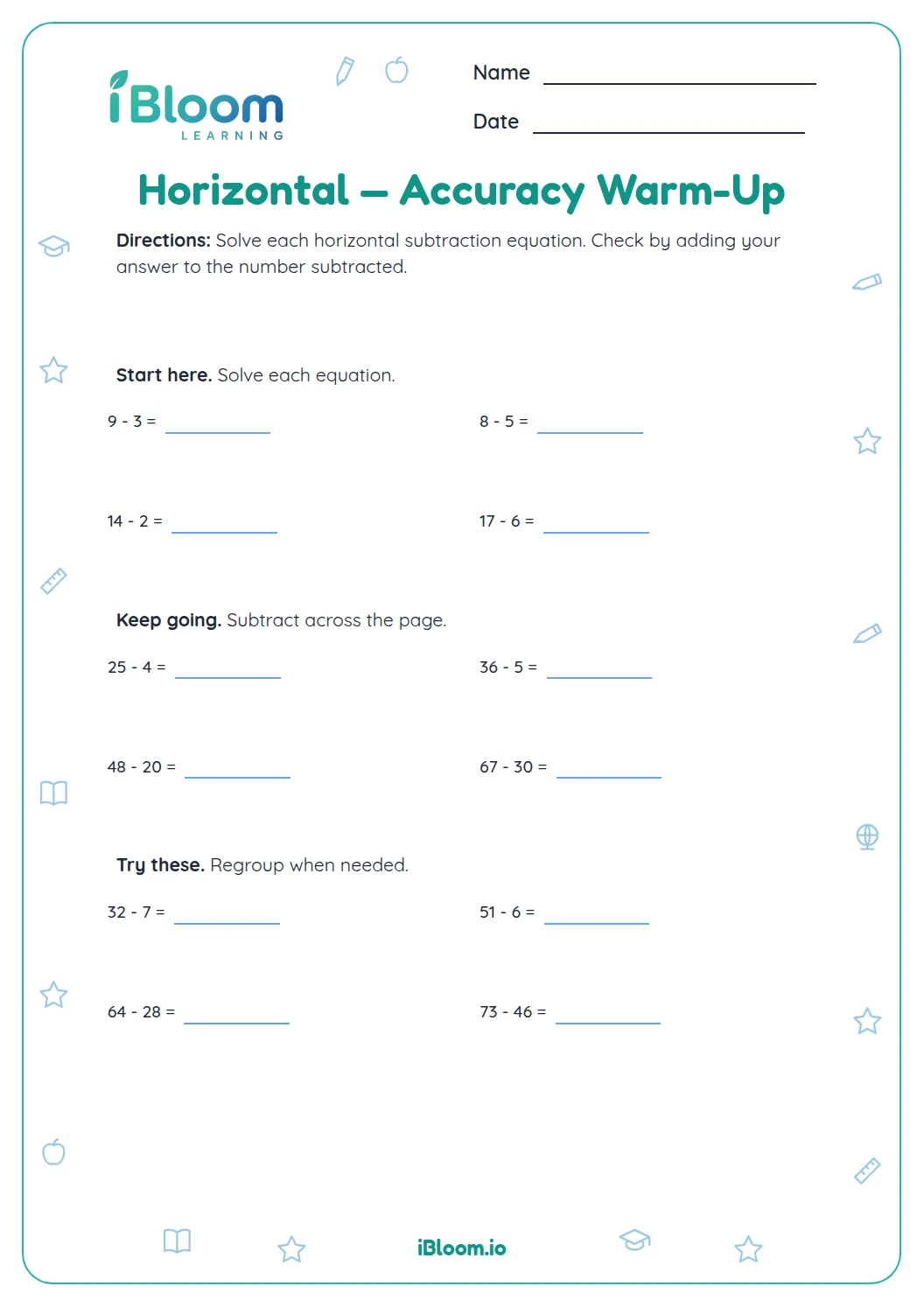
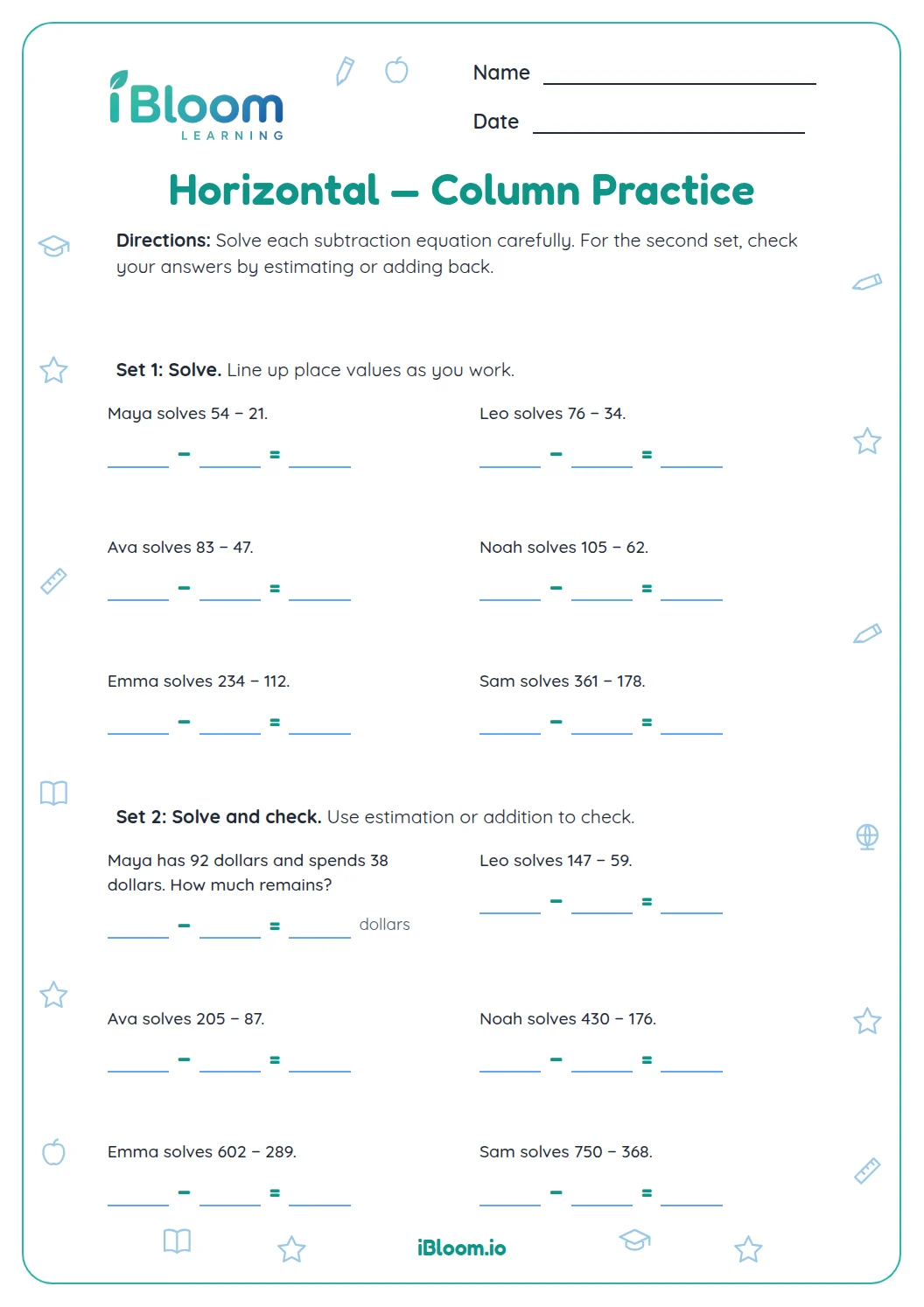
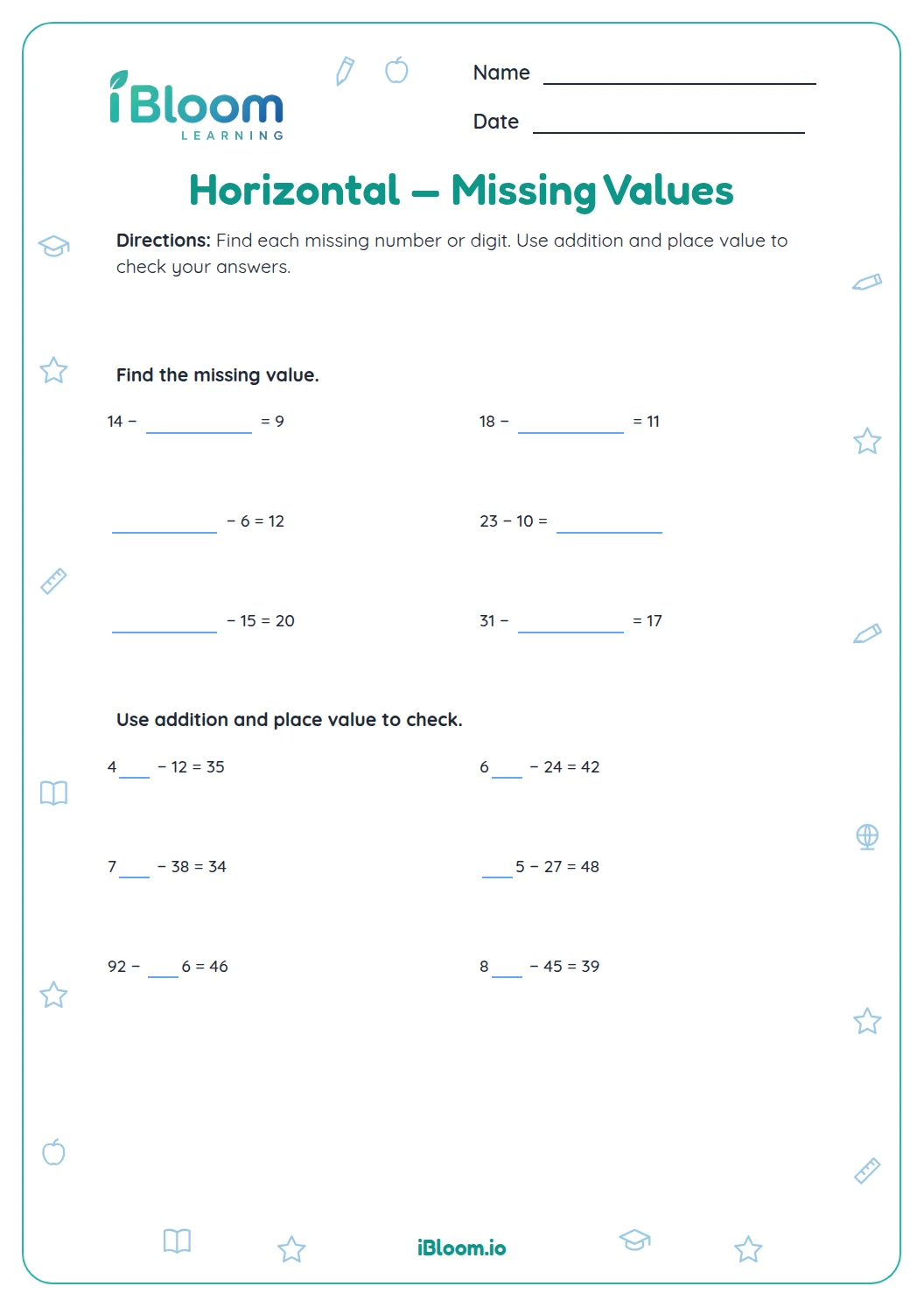
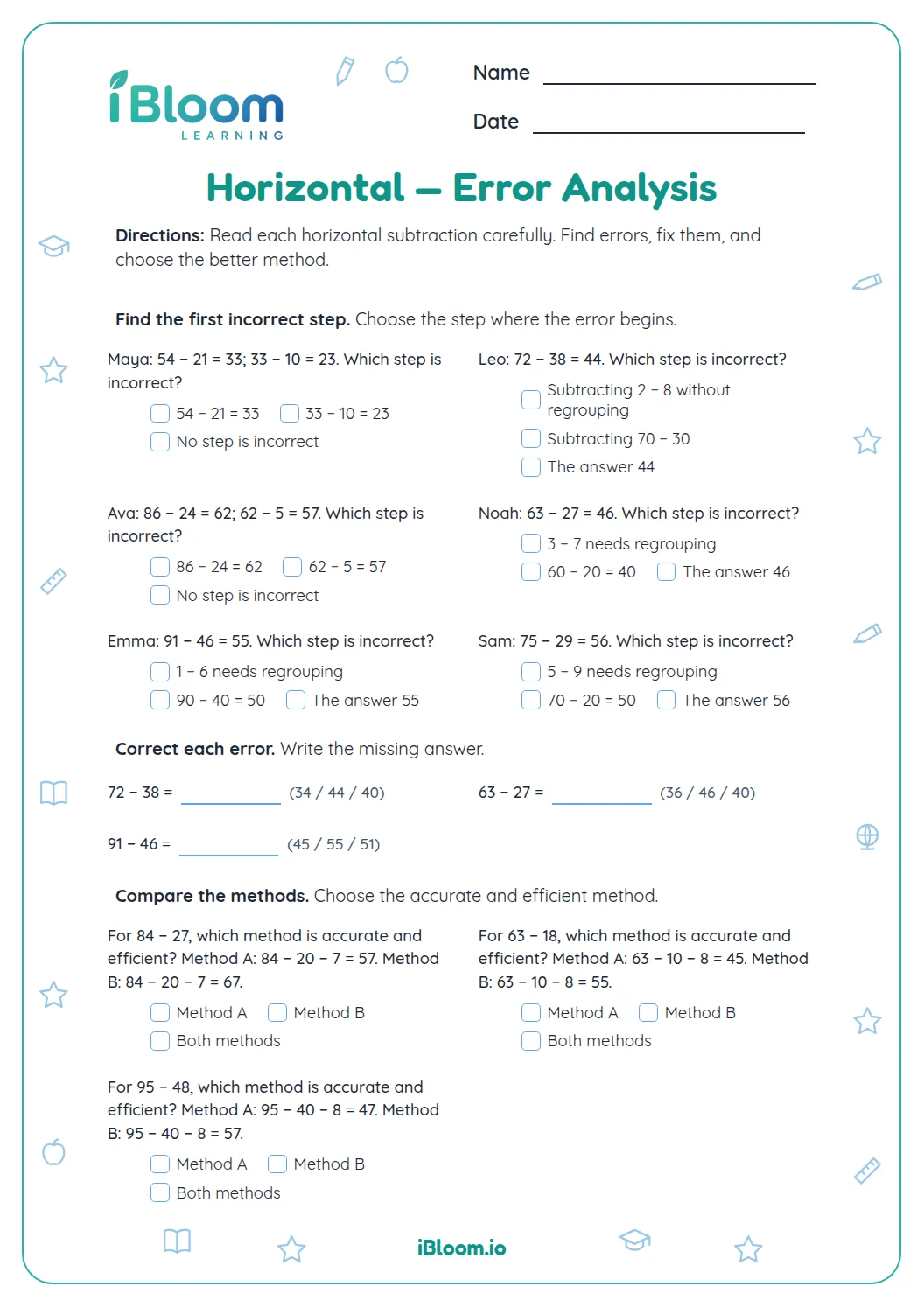
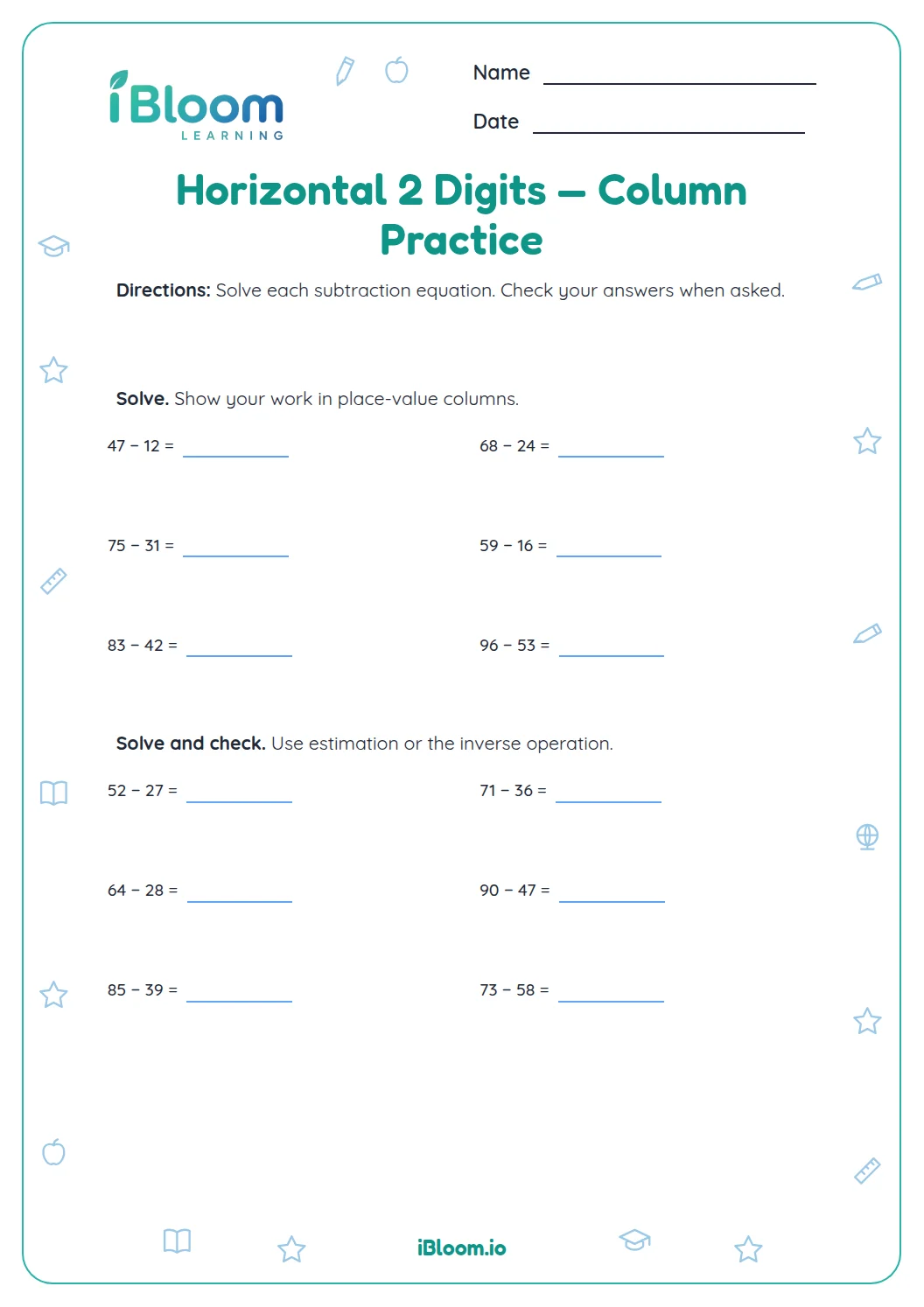
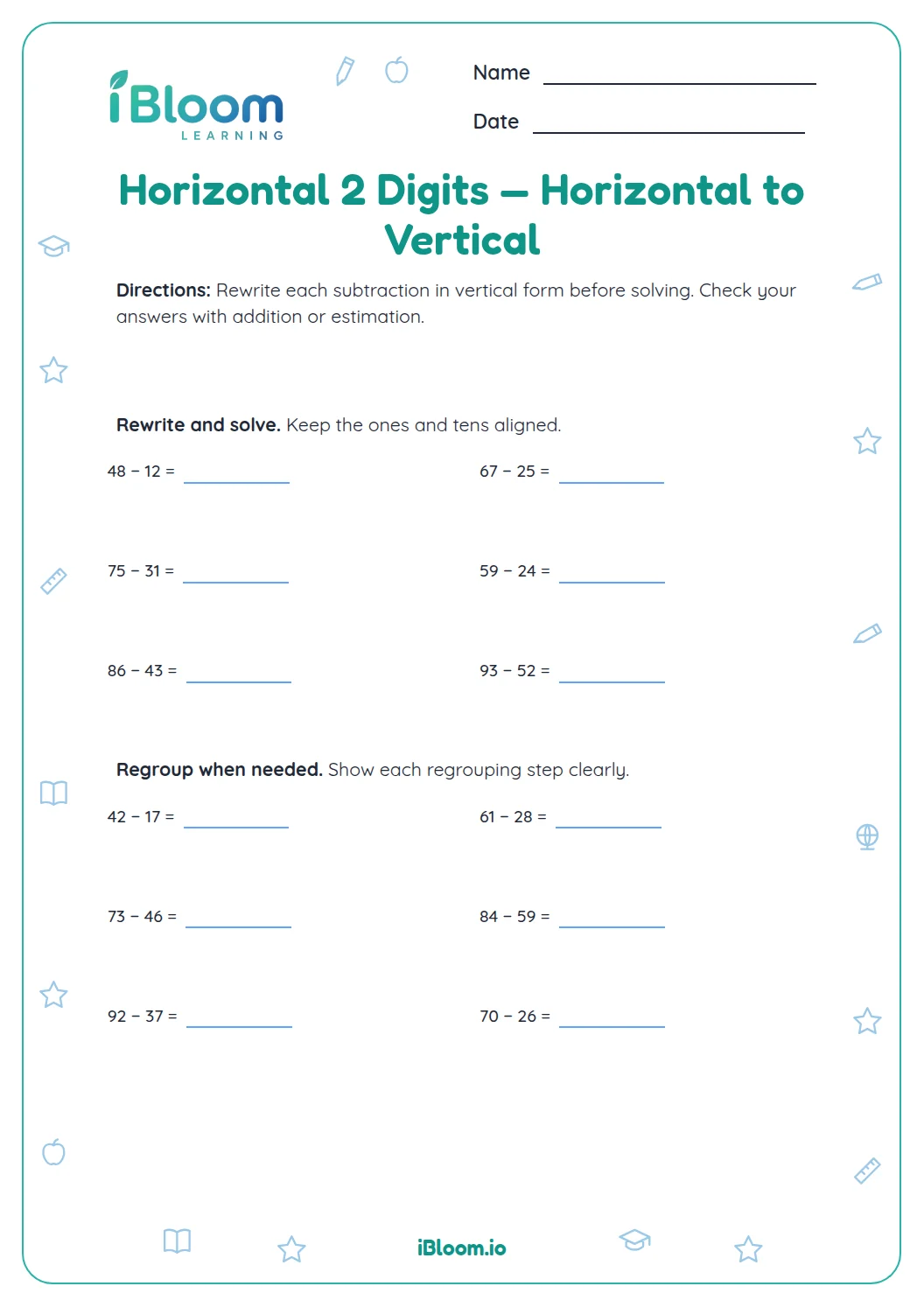
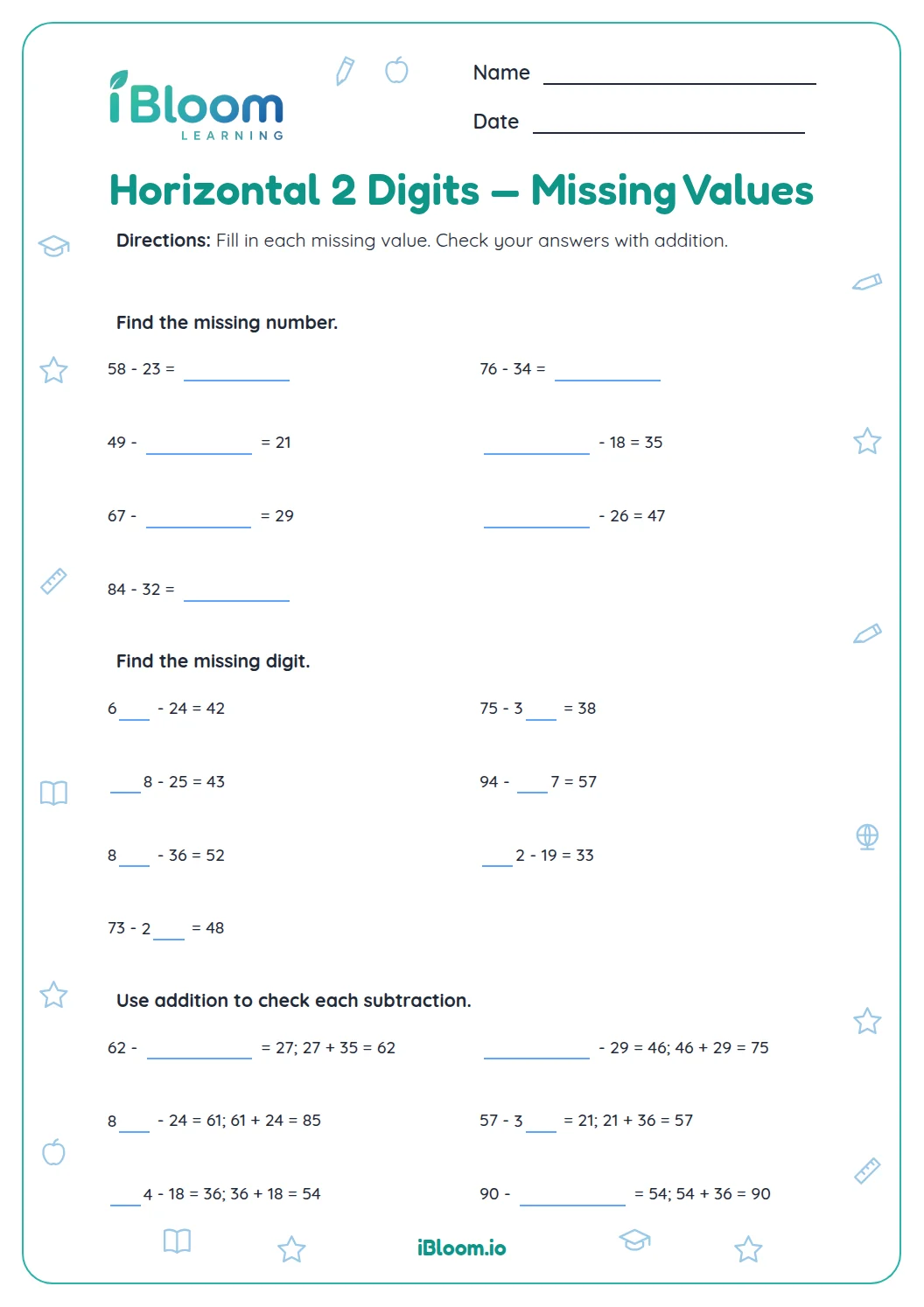
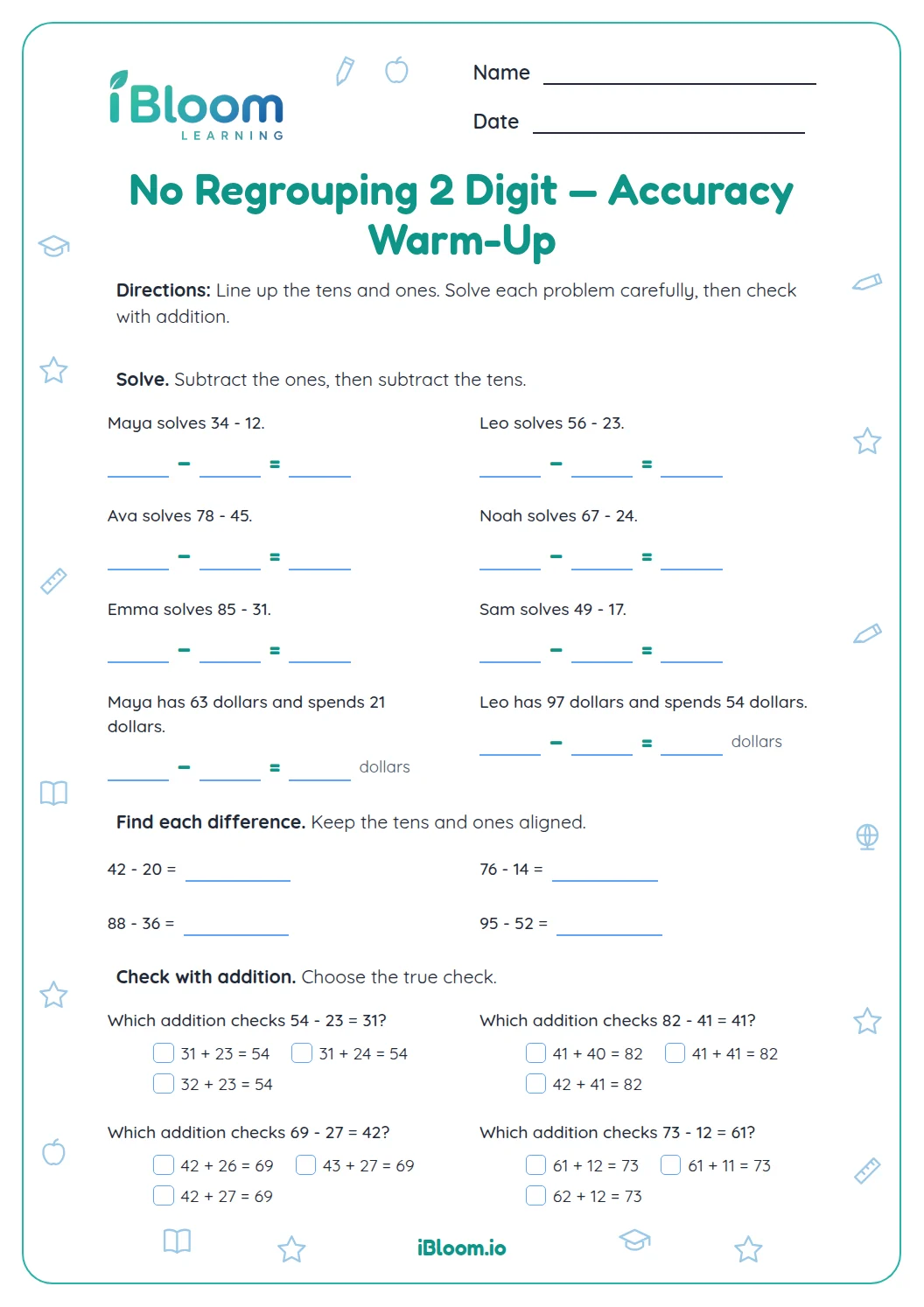
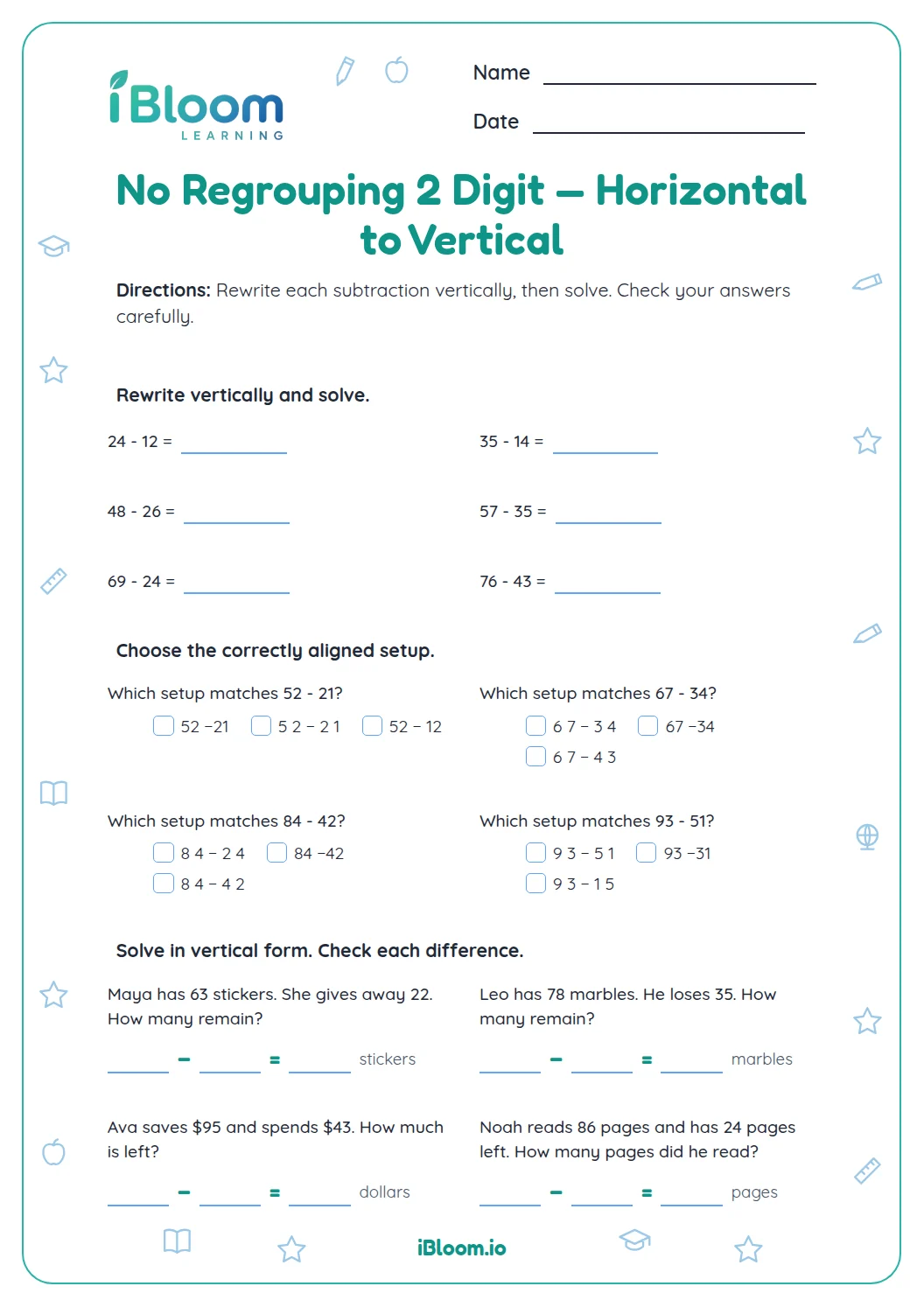
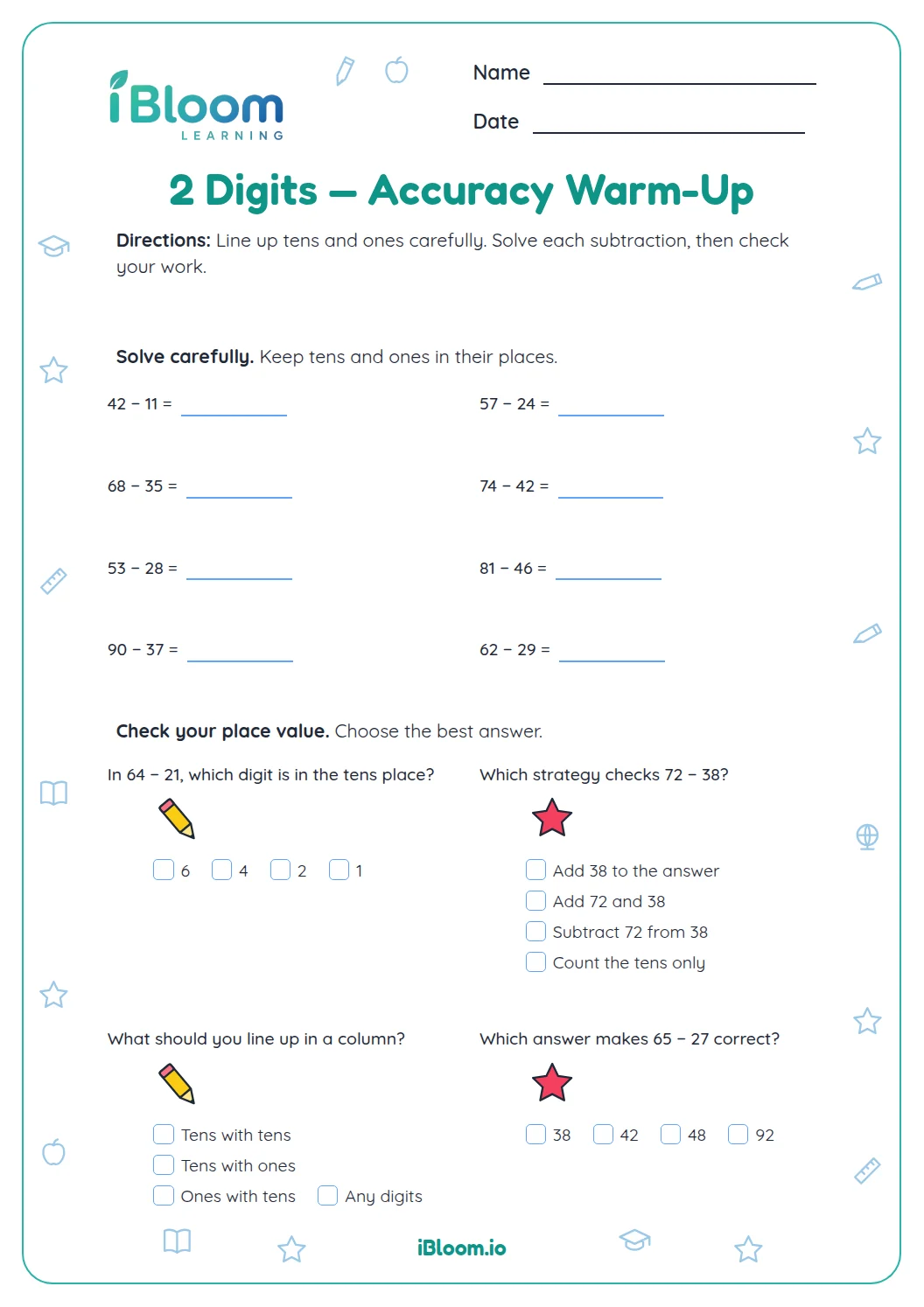
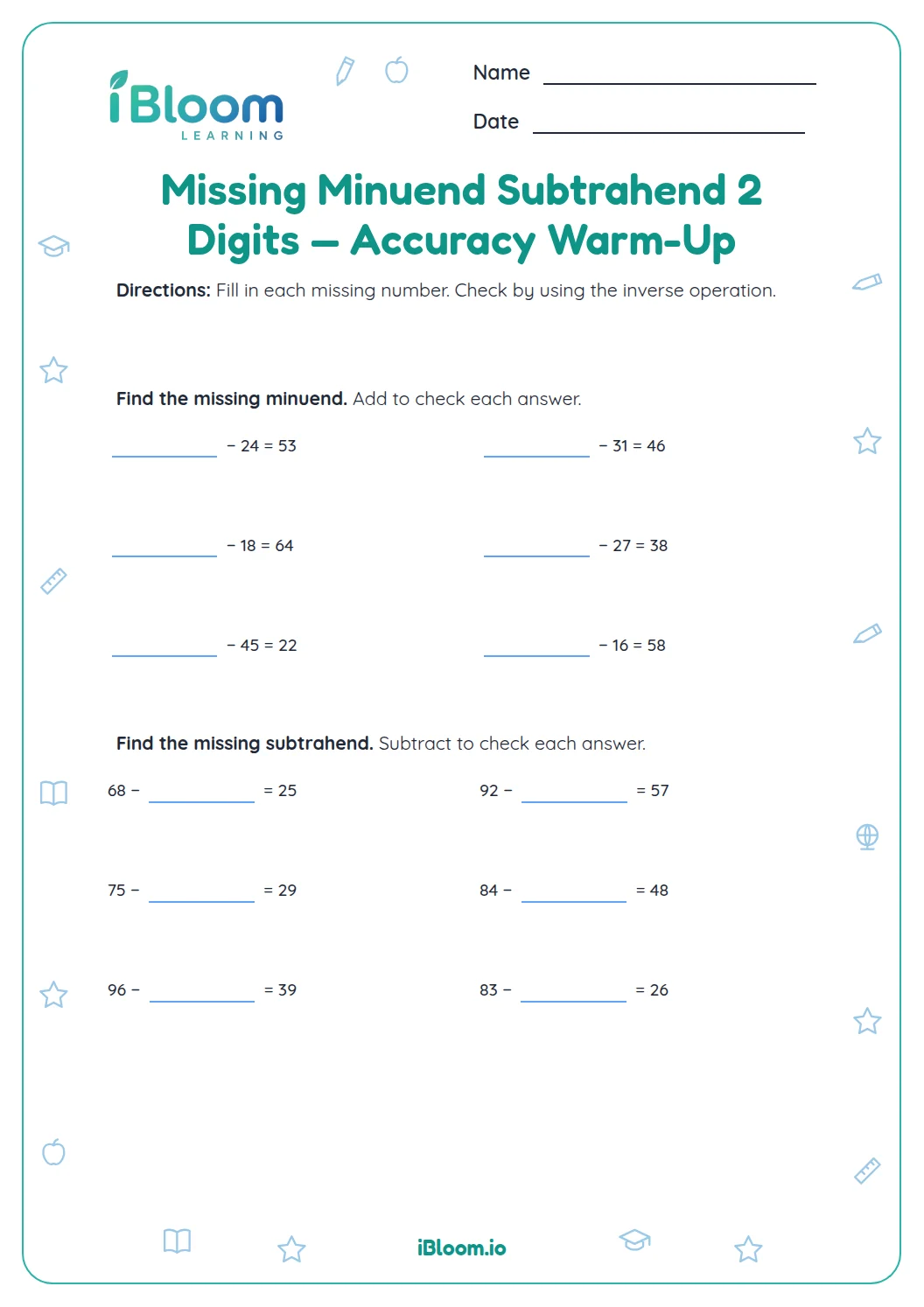
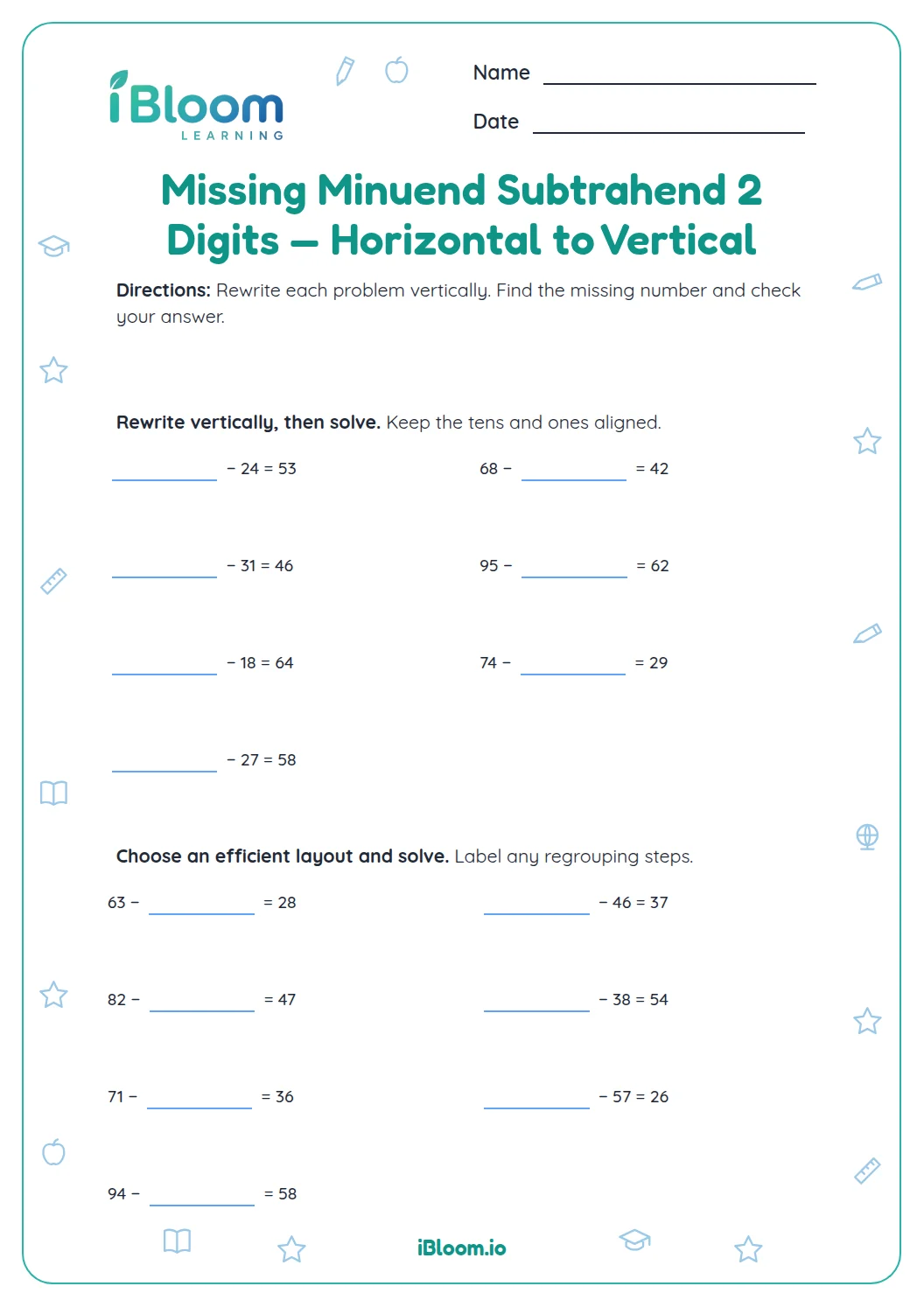
This free Grade 3 worksheet helps children move from a horizontal subtraction expression to vertical place-value work with hundreds, tens, and ones. It includes 16 three-digit subtraction problems within 1,000, with regrouping practice and a final set to check using addition. Each question leaves working space for rewriting the expression and solving it. The practice aligns with Common Core 3.NBT.A.2, which calls for fluent addition and subtraction within 1,000 using place-value strategies and algorithms.
Aligned to 3.NBT.A.2
Why rewrite a horizontal problem vertically?
Vertical form places the ones digits in one column and the tens digits in another. That alignment helps children work with one place value at a time and see when a ten must be regrouped.
- 1Horizontal: 825 − 359
- 2Write 825 above 359, lining up ones, tens, and hundreds.
- 3Regroup one hundred as ten tens, then one ten as ten ones.
- 4Subtract: 15 − 9 = 6; 11 − 5 = 6; 7 − 3 = 4.
- 5Difference: 466.
When should a child regroup?
Regroup when the top digit in the ones place is smaller than the bottom digit. Trade one ten for ten ones, subtract the ones, then use the reduced tens digit. This keeps the total value of the number unchanged during the trade. Questions 9–12 focus on regrouping, and the final section adds an inverse check.
How can addition check a difference?
Part C asks children to rewrite each horizontal subtraction vertically, solve it, and check the result with addition. Working grids give room to line up place values and record the check.
How to use this worksheet
- 1Read the horizontal expression before writing anything.
- 2Set the first number above the second number.
- 3Line up ones with ones and tens with tens.
- 4Regroup one ten as ten ones when the top ones digit is too small.
- 5Solve, then check the final problems with addition and compare with the key.
Common mistakes and quick fixes
The mistake
Putting a tens digit over a ones digit.
The fix
Use place-value columns and check that each digit is directly above its matching place.
The mistake
Subtracting the smaller ones digit from the larger without regrouping.
The fix
If a top digit is smaller, regroup from the next place before subtracting.
The mistake
Forgetting that regrouping reduces the tens.
The fix
Mark the changed digit after each trade, then subtract each place.
Common Core alignment
This Grade 3 subtraction drill connects horizontal notation with place-value work in vertical form.
Subtract within 1,000 using place-value strategies and the relationship to addition.
On this sheet: Children align hundreds, tens, and ones, regroup when needed, and check subtraction with addition.
Show the official wordingHide the official wording
Fluently add and subtract within 1000 using strategies and algorithms based on place value, properties of operations, and/or the relationship between addition and subtraction.
What to practice next
Make more practice
Further reading
Questions parents and teachers ask
What does horizontal to vertical subtraction mean?
It means starting with a subtraction expression written across a line, then rewriting it in columns. Place ones under ones and tens under tens before subtracting. The working space on this worksheet supports that rewrite for each of the 16 problems.
When does a subtraction problem need regrouping?
Regroup when a top digit is smaller than the digit below it. Trade one unit from the next place for ten units in the current place, then subtract each column. The middle section gives extra regrouping practice. Check each place before moving on.
How can a child check subtraction with addition?
Add the difference to the subtrahend. The sum should equal the starting number, called the minuend. For example, 466 plus 359 should equal 825. This check can reveal a subtraction error. This inverse check uses the same numbers and can catch an arithmetic slip.
How many problems are on the worksheet?
There are 16 three-digit subtraction problems within 1,000. All begin in horizontal form, and the child rewrites each vertically. The final four problems include an addition check as part of the directions. Every problem has working space. The key shows all differences.
Should a child use the answer key after every problem?
The key can be used after a section or at the end. If an answer differs, compare the written columns and look for a missed regrouping step. The goal is to correct the place-value method as well as the final difference. Encourage the child to redo the regrouping step before erasing the whole problem.