





About this worksheet
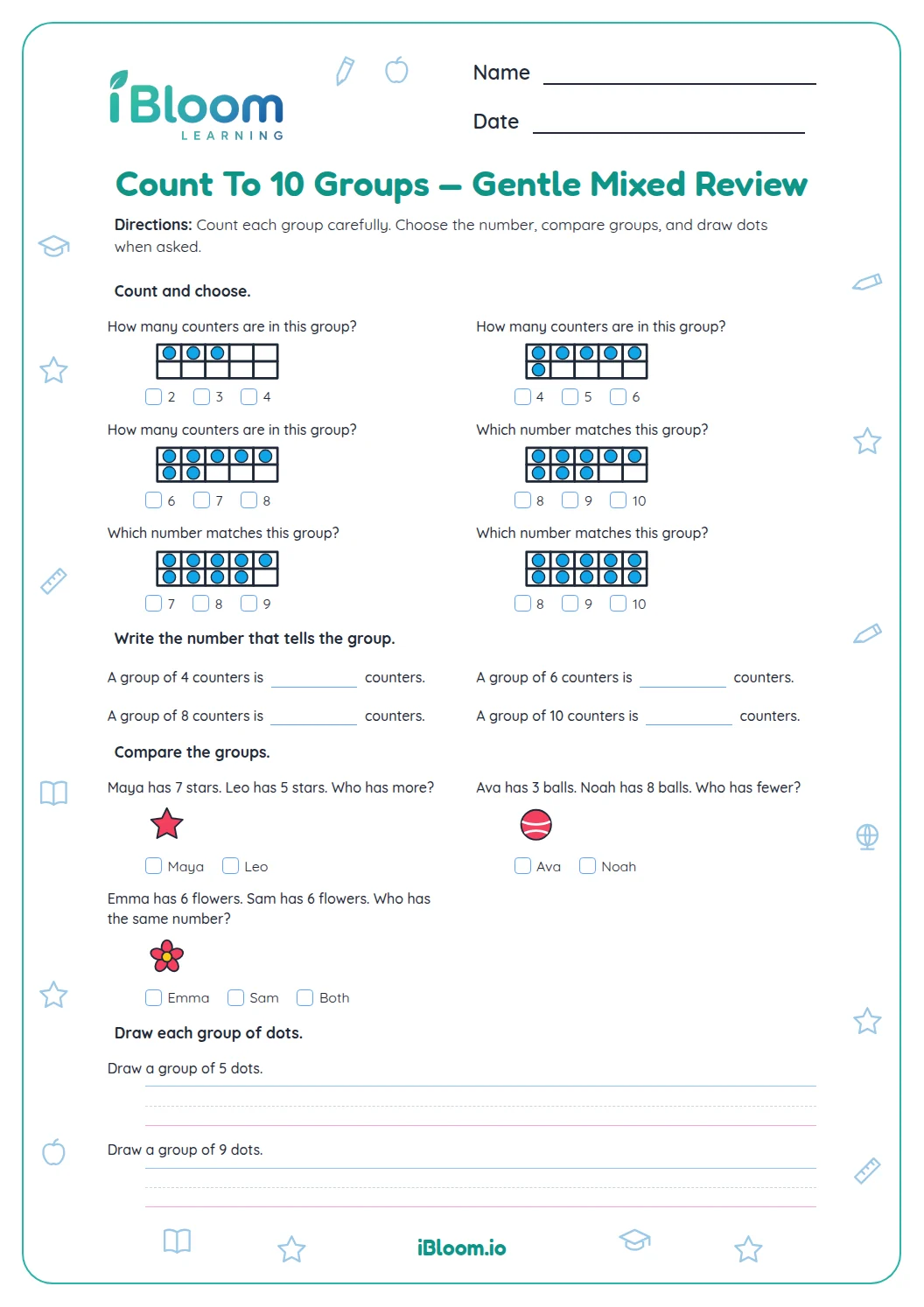
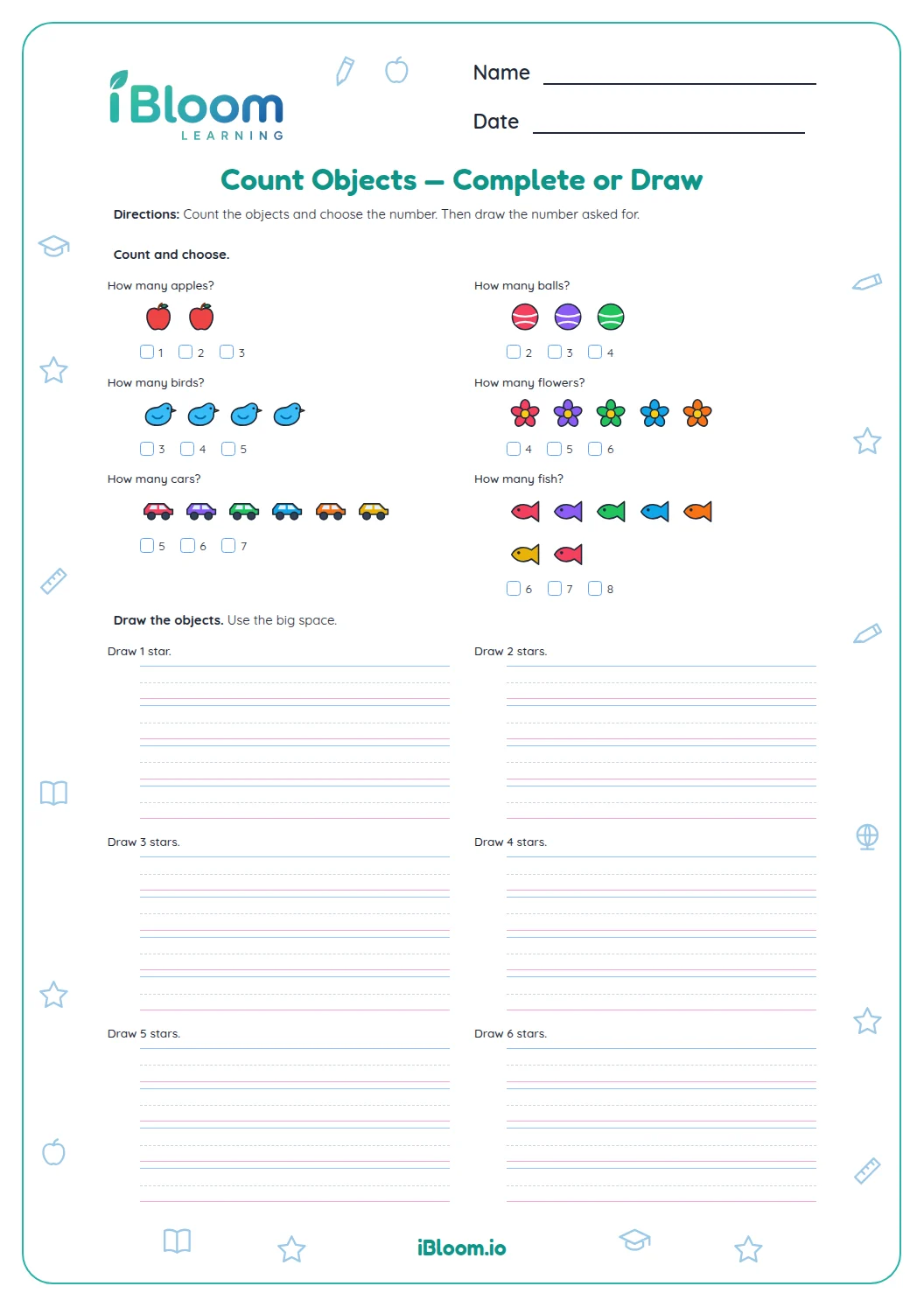
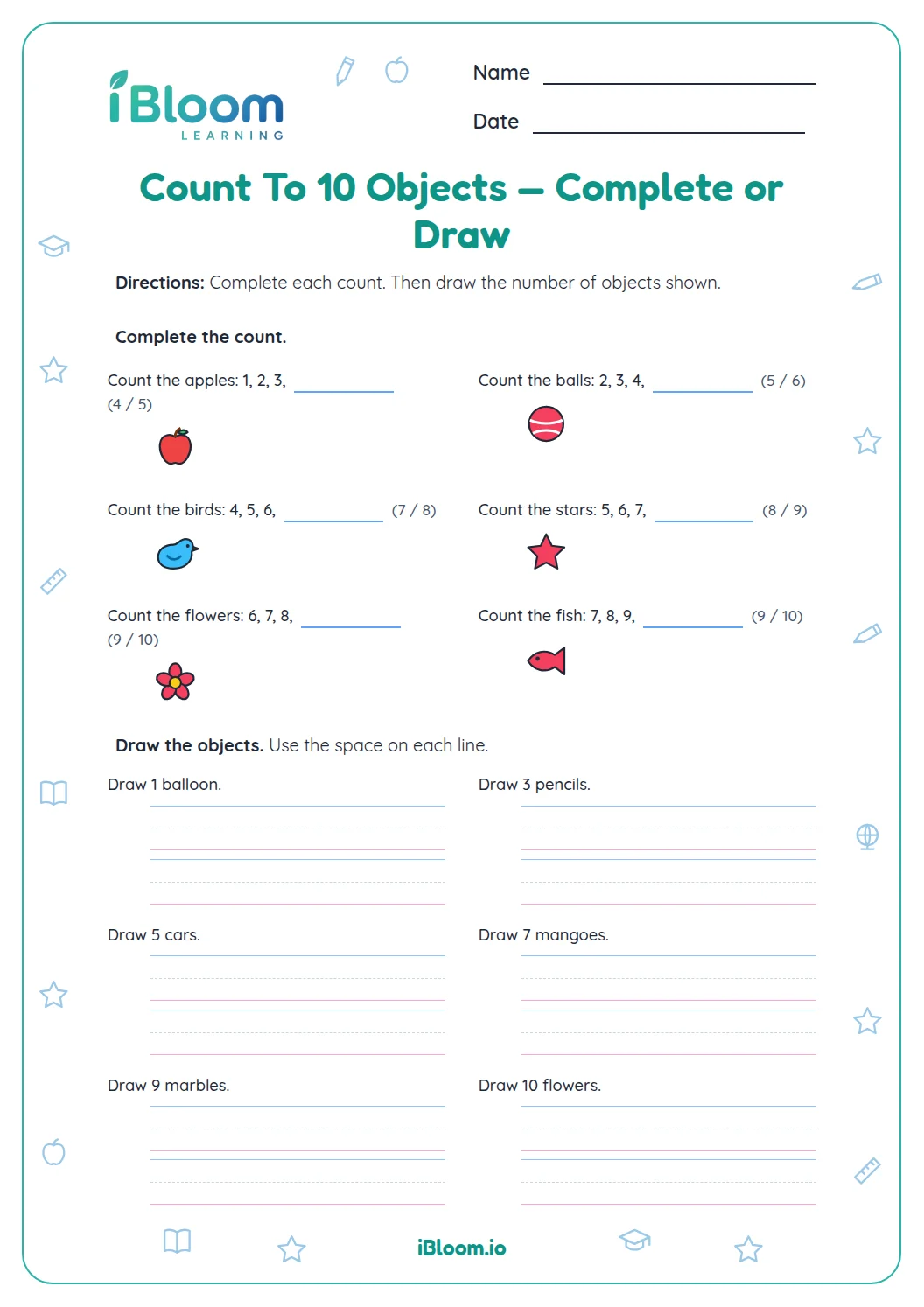
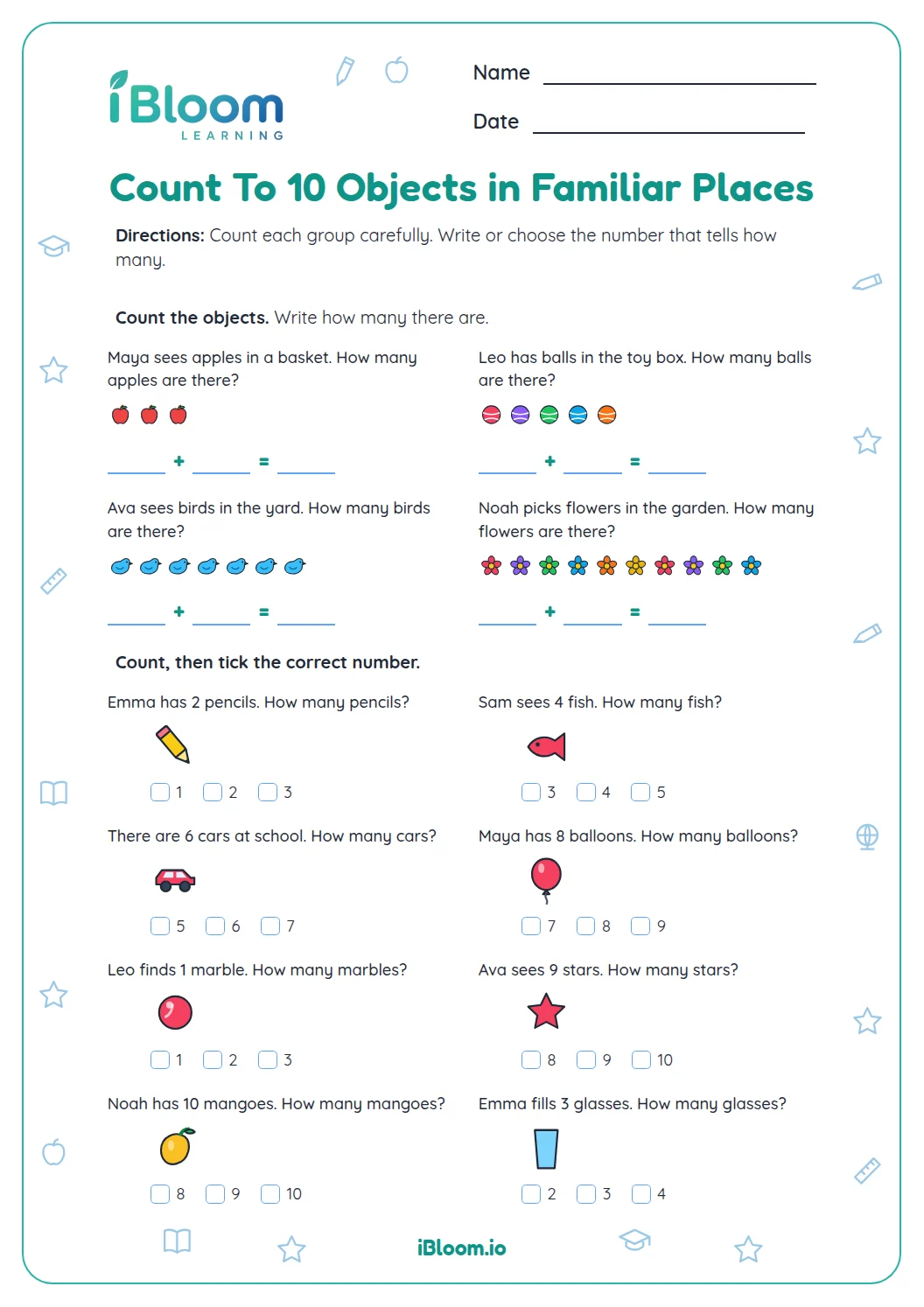
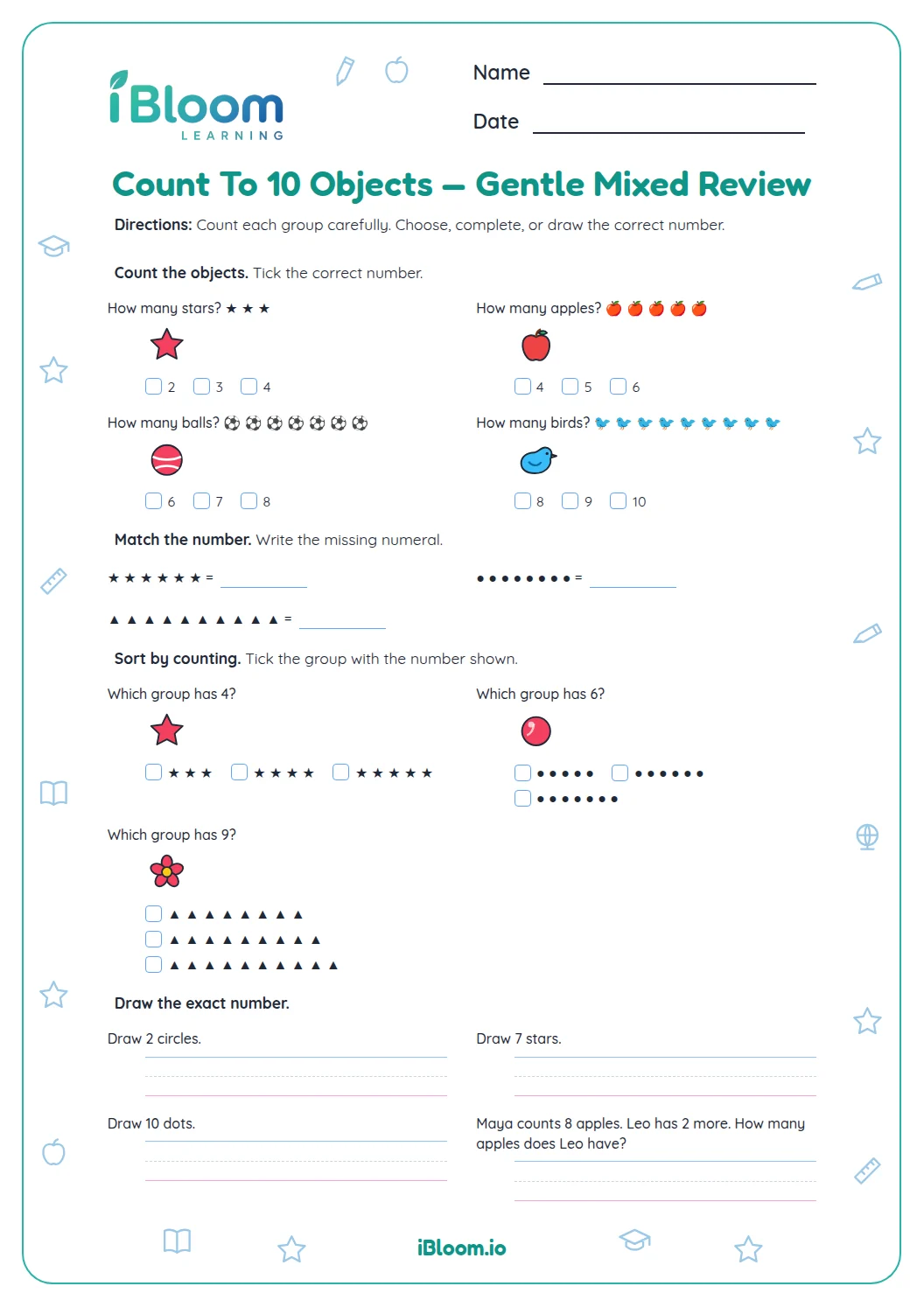
This free counting worksheet is for preschool and kindergarten children practicing how many objects are in a group and how two groups combine. Children count 10 pictured groups, then solve four addition equations with totals within 10. The activities retain the old sheet’s count-the-groups-and-add approach while using a fresh two-page layout. A separate answer key is included.
Aligned to K.CC.B.4 and K.OA.A.2
How does counting a group tell how many there are?
Point to one object for each number word. Keep the count in order and stop when every object has been counted. The last number you say tells how many objects are in that group.
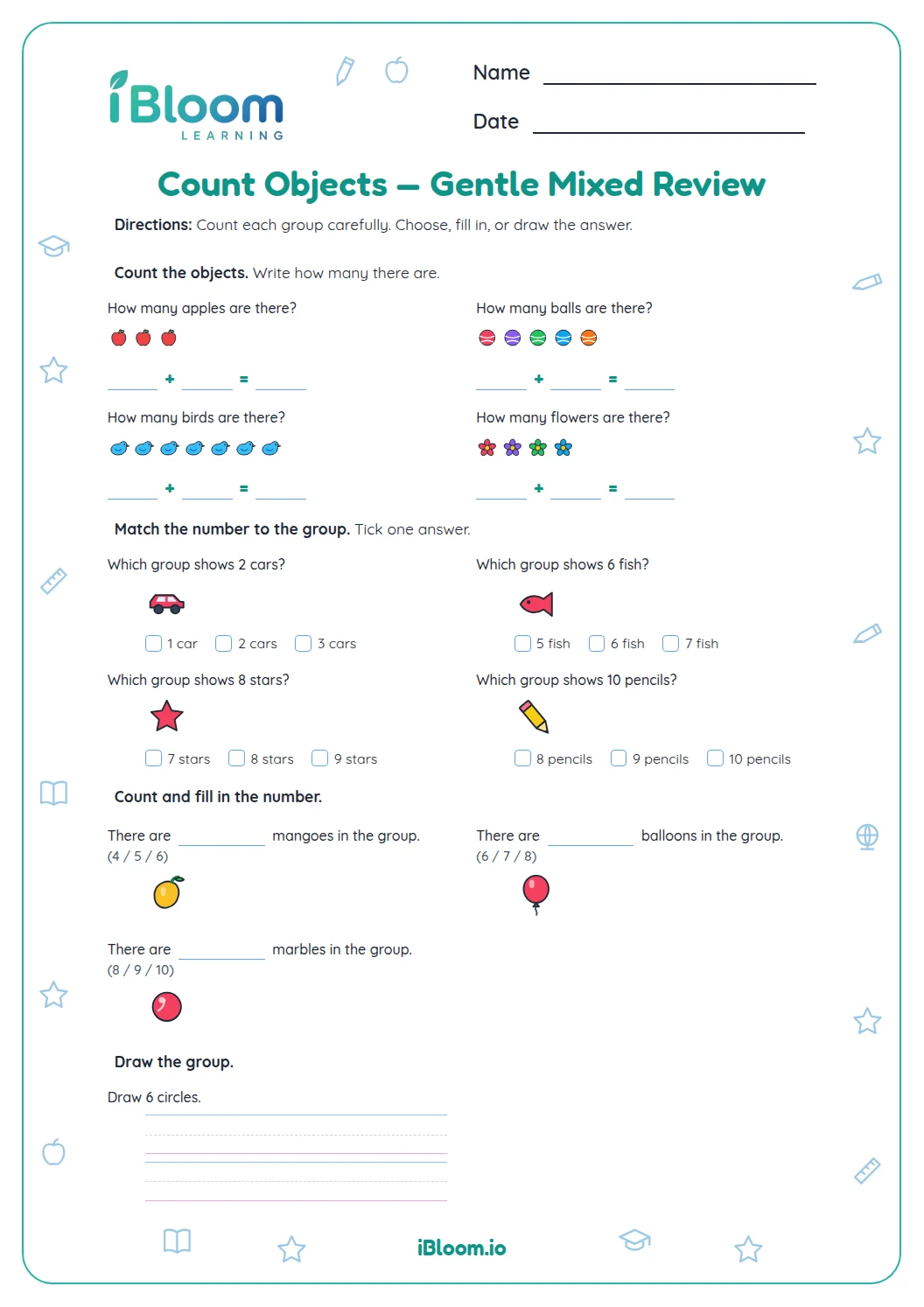
For question 1, count the three apples one at a time: one, two, three. Write 3 in the answer space.
- 1Point to each apple once.
- 2Say: one, two, three.
- 3Write 3 as the total.
How does the worksheet connect counting and adding?
The first ten questions show one group of a familiar object. Children count each group and record its total. The last four give two amounts to combine, such as 4 cars + 3 cars.
Each addition equation has a total within 10. Children can count on from the first amount or count both amounts to find the sum.
How can an adult use the answer key?
Let the child count before checking the key. If a total differs, recount slowly while pointing to one picture at a time. A missed or double-counted object is easier to spot when the child tracks each picture with a finger.
How to use this worksheet
- 1Point to each pictured object once.
- 2Say the count in order.
- 3Read whether the prompt adds more objects.
- 4Continue counting from the group total.
- 5Write the final total.
Common mistakes and quick fixes
The mistake
Skipping an object while counting.
The fix
Point to or cover each object as it is counted.
The mistake
Counting one object more than once.
The fix
Move a finger from left to right, one picture at a time.
The mistake
Writing the number before finishing the group.
The fix
Count the entire group, then write the last number said.
This sheet practices the following Common Core math skill.
Children count pictured objects and tell how many are in each group.
On this sheet:
Show the official wordingHide the official wording
Understand the relationship between numbers and quantities; connect counting to cardinality.
Children count pictured groups and add a stated amount, with totals within 10.
On this sheet:
Show the official wordingHide the official wording
Solve addition and subtraction word problems, and add and subtract within 10, e.g., by using objects or drawings to represent the problem.
What to practice next
Make more practice
Further reading
Questions parents and teachers ask
How many questions are on the worksheet?
There are 14 questions across two worksheet pages: 10 picture-counting groups and 4 addition equations. The first questions ask how many objects are in each group; the last four give two amounts to combine. A separate two-page key lists all answers.
Which numbers will children practice?
The pictured groups range from 1 through 10, and every total in that range appears. The four addition equations combine amounts with sums from 5 to 8. This gives children direct counting practice followed by a small set of addition applications.
Should children count aloud or silently?
Either is fine. Counting aloud lets an adult listen for the number sequence, while pointing to each picture helps the child count each object once. For an addition equation, children can count on from the first amount or count both groups. An adult can model either way.
What if a child gets a different total from the key?
For a picture question, have the child recount while pointing to each object. For an addition equation, ask the child to represent or sketch both amounts, then count the combined group. Compare the new result with the answer key after checking each object once.
Can an adult help with writing the numerals?
Yes. The adult can write the number the child says, or help the child copy it. The main ideas are counting one object at a time and finding the total when two small groups are joined. The key can be used after the child tries each question.