



About this worksheet
This free printable worksheet gives Kindergarten learners focused practice with count by tens. The questions build from guided recognition to independent application, and a separate answer key supports review at home or in class. Use the section directions to work through the page one step at a time.
How do children continue a sequence by tens?
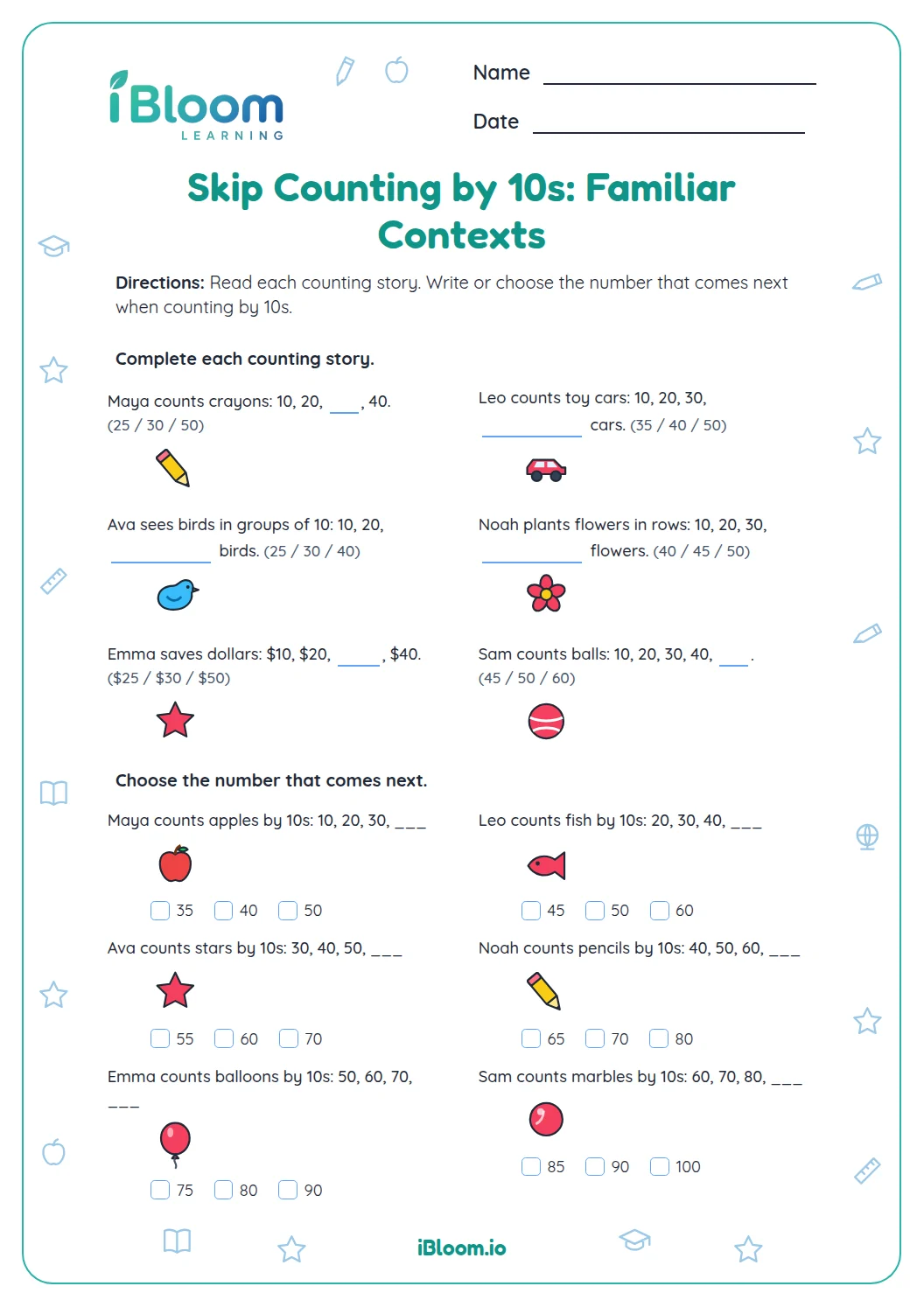
Each number increases by 10. In question 1, the sequence is 10, 20, ___, 40, so the missing number is 30. Saying the sequence aloud can help keep the order steady.
How do groups of ten connect to counting?
Each group adds ten more. Six boxes with ten toy cars each make 60 cars; eight groups of ten seeds make 80 seeds. The pictured apples provide a count-by-ones check of one group of ten.
What is on the worksheet?
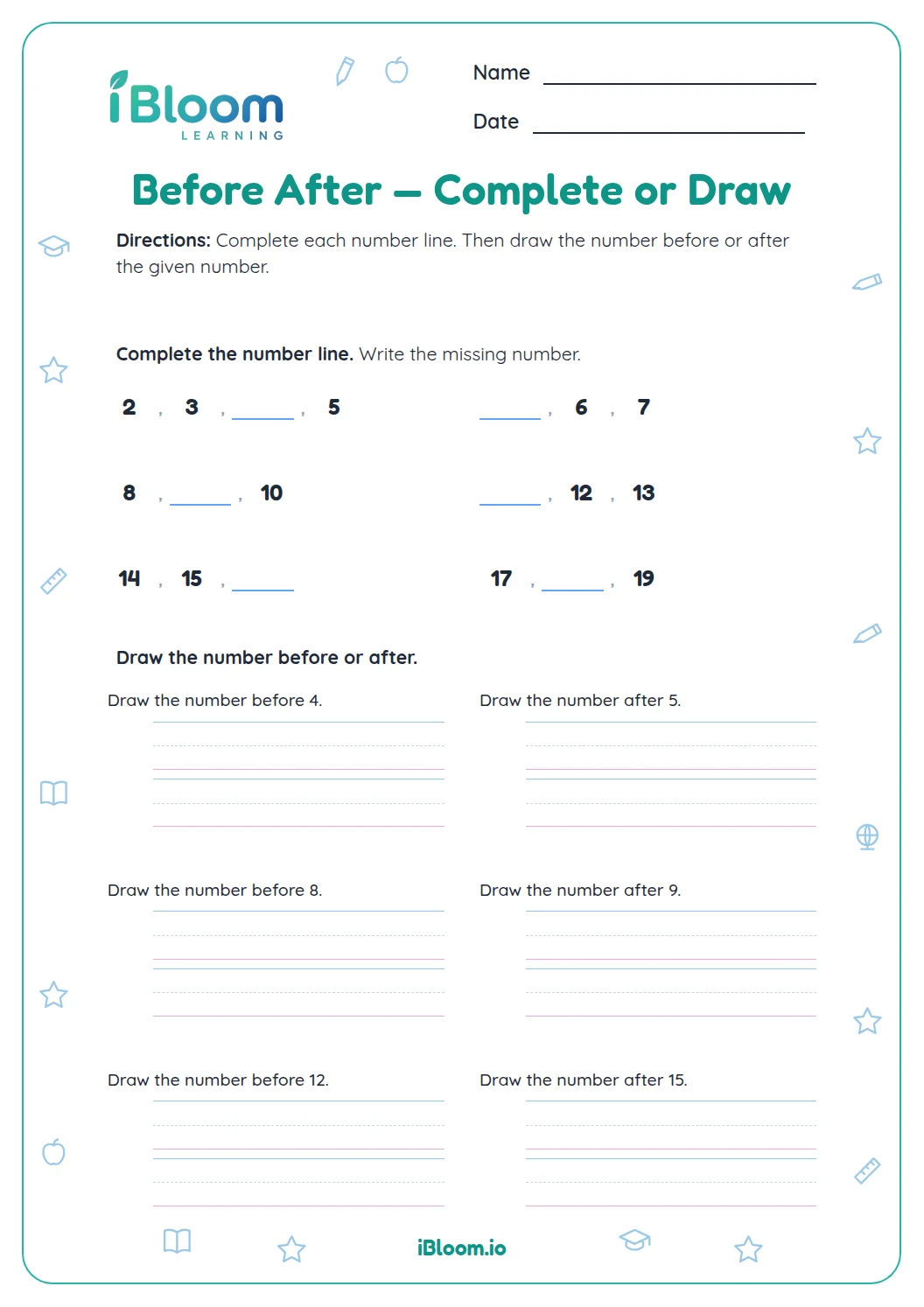
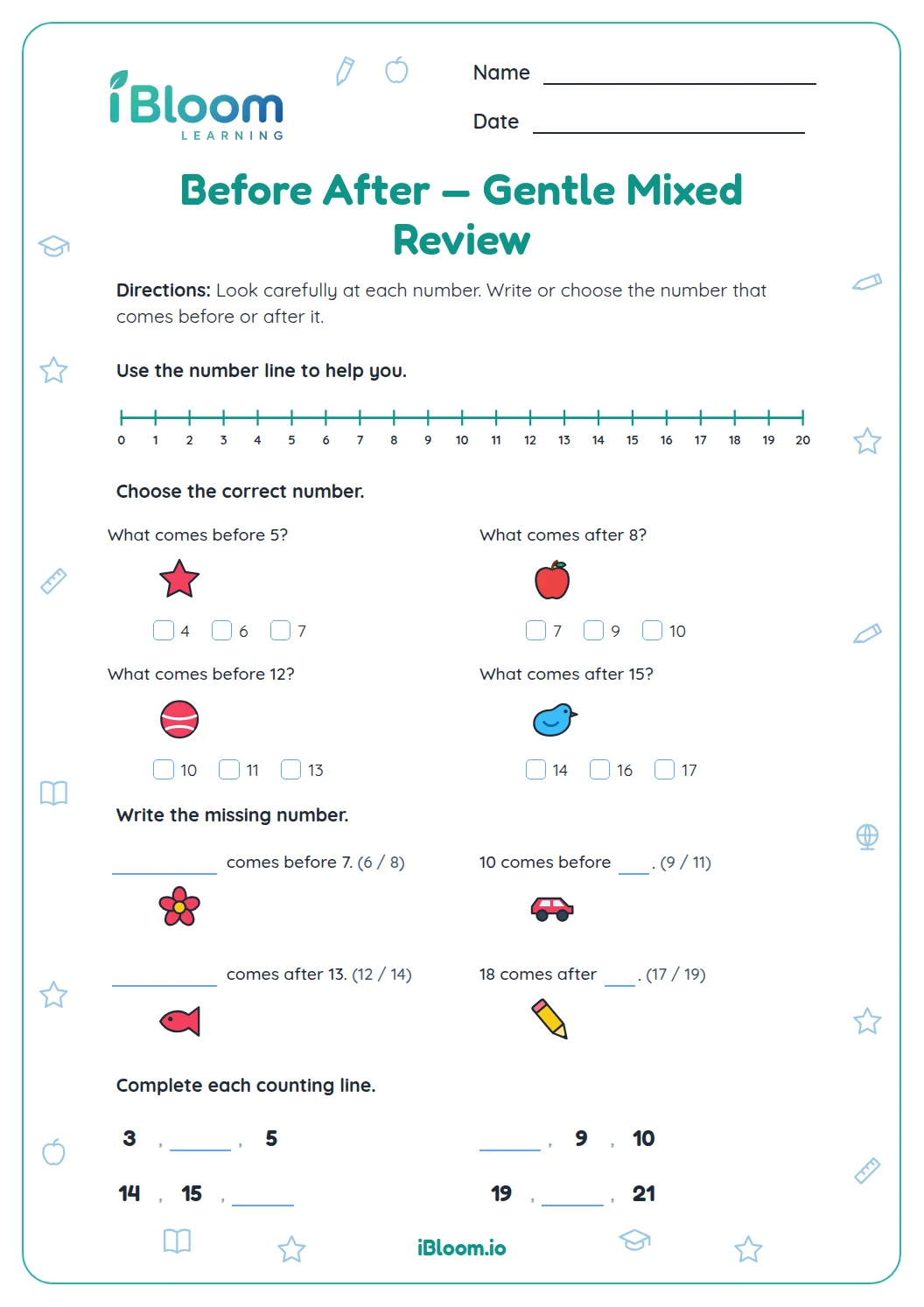
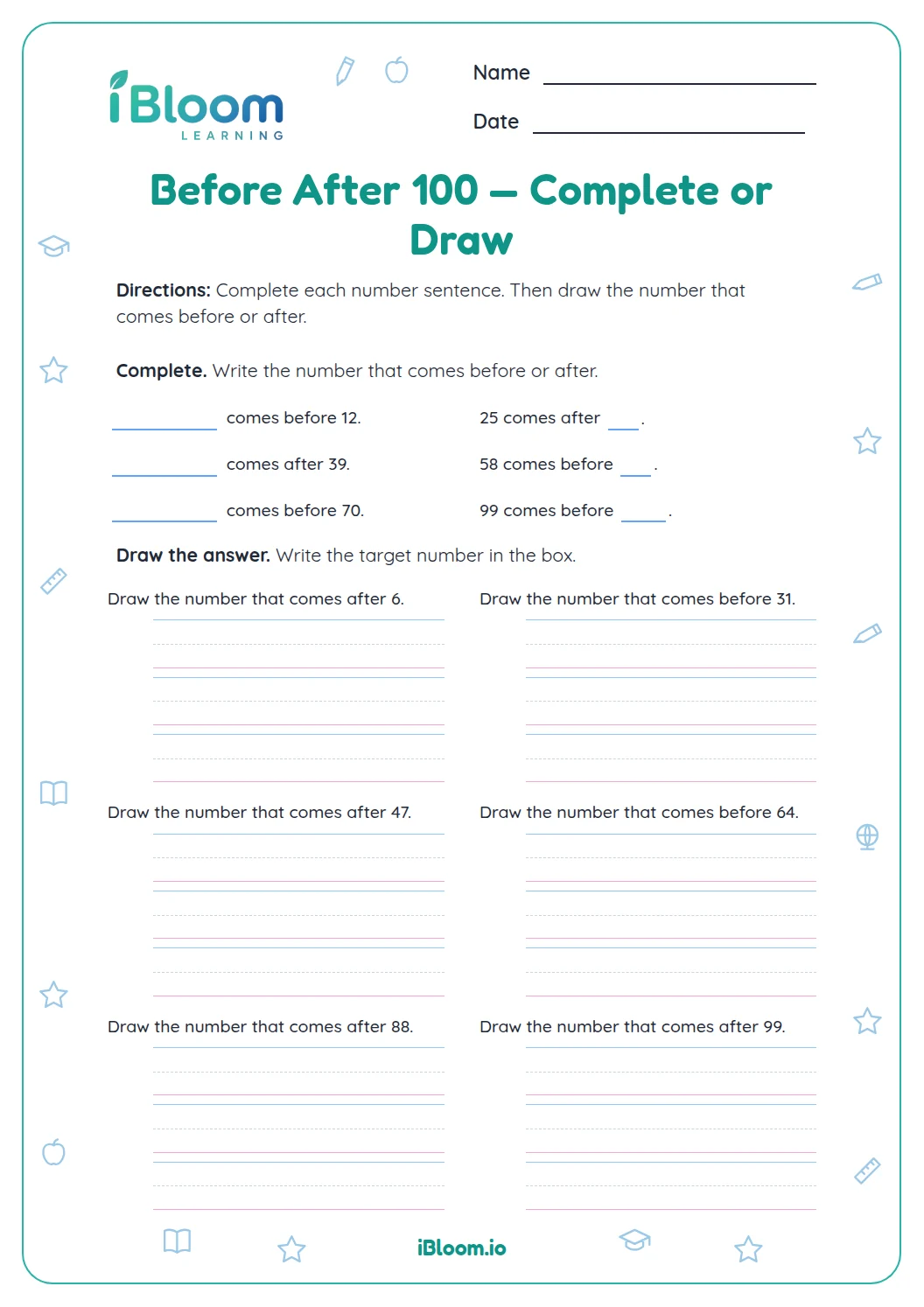
There are 16 questions in three parts: missing numbers in sequences, numbers before or after a point, and totals involving groups of ten.
How to use this worksheet
- 1Say the known tens in order before filling a blank.
- 2Add ten each time you move to the next number.
- 3For a sequence that asks for numbers before or after a point, count in order and record them in order.
- 4Use the pictured group to count each apple once.
- 5For a group total, count one ten for each bag, box, or row named.
Common mistakes and quick fixes
The mistake
Counting by one instead of by ten.
The fix
Say the tens aloud: 10, 20, 30, 40.
The mistake
Skipping a number when filling several blanks.
The fix
Keep the sequence moving by exactly ten for each blank.
The mistake
Counting each group as one object.
The fix
Count ten objects in each group, then add the groups.
What to practice next
Make more practice
Questions parents and teachers ask
What does it mean to skip count by tens?
Start with a number and say the next number that is ten greater: 20, 30, 40, and so on. The worksheet asks children to fill missing places in these patterns, continue a count, and find totals made from groups of ten.
How can I help a child find a missing number?
Read the numbers aloud and notice the jump from one to the next. Each step adds ten. Start from the closest number the child knows, say the next tens together, and then write the number that belongs in the blank.
What are the group questions practicing?
The worksheet practices counting in tens and filling missing numbers in a sequence. One pictured group of ten apples connects the spoken pattern to a set children can count. Other questions ask for numbers before or after a point in the sequence.
Why does the ones digit stay the same?
Adding ten changes the tens count by one while leaving the ones count unchanged. In the patterns on this page, children can notice that 30, 40, and 50 all end in zero as they count forward. This pattern can help them check each step.
How can the picture help with counting?
Question 14 shows a group of ten apples. Have the child touch each apple once and count the group, then connect that count to the tens patterns elsewhere on the worksheet. The answer key gives the count and totals for the group problems.