



About this worksheet
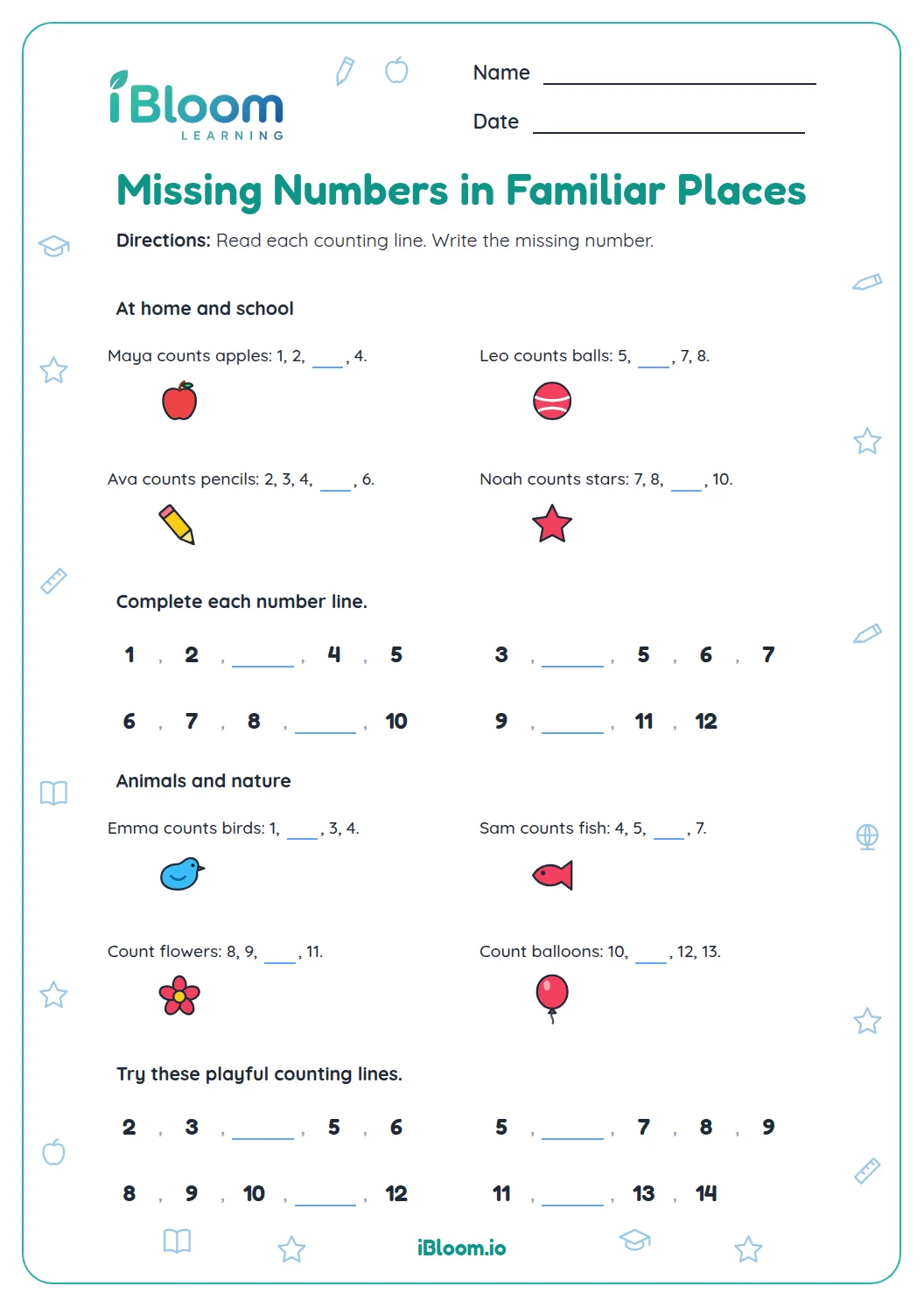
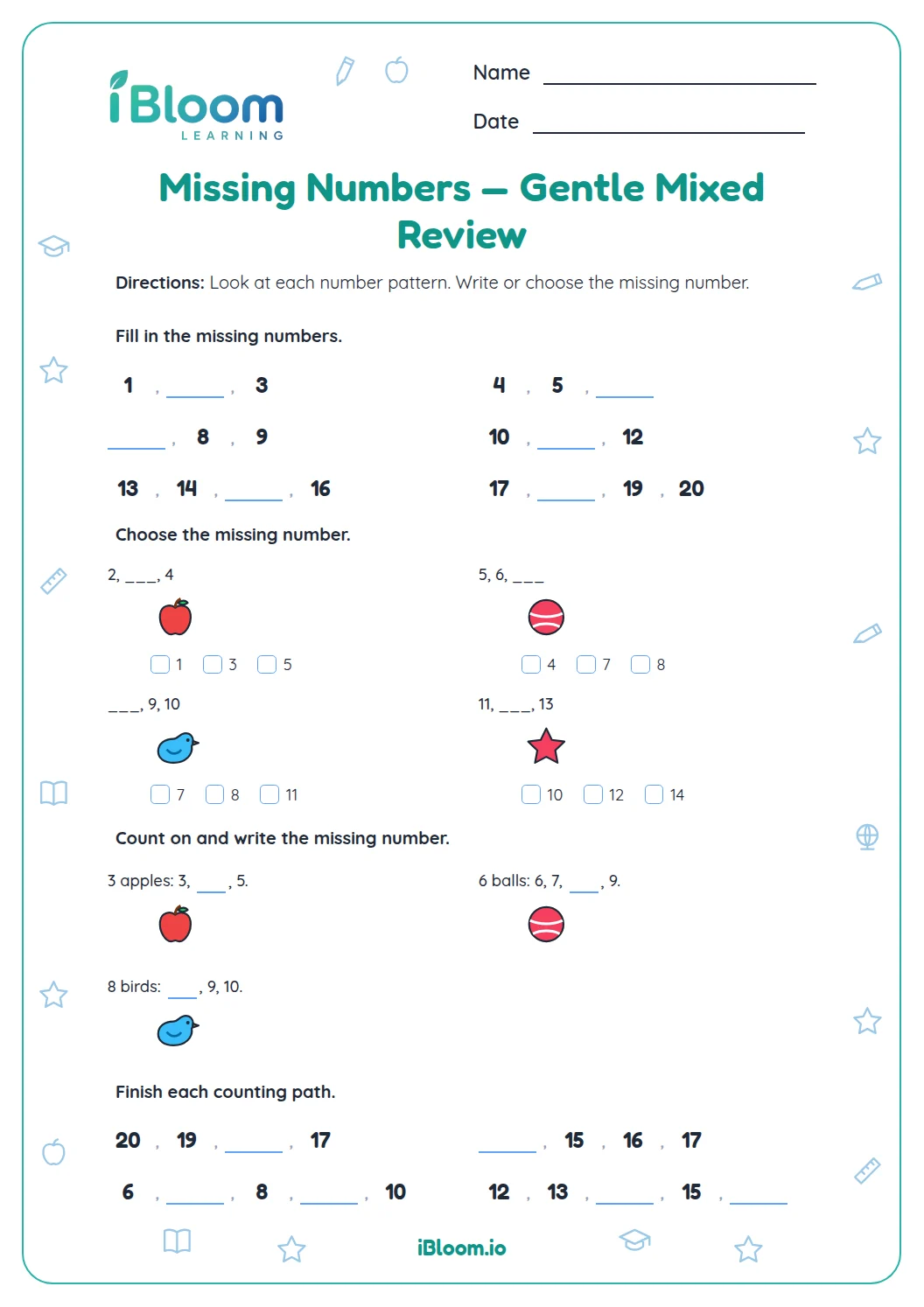
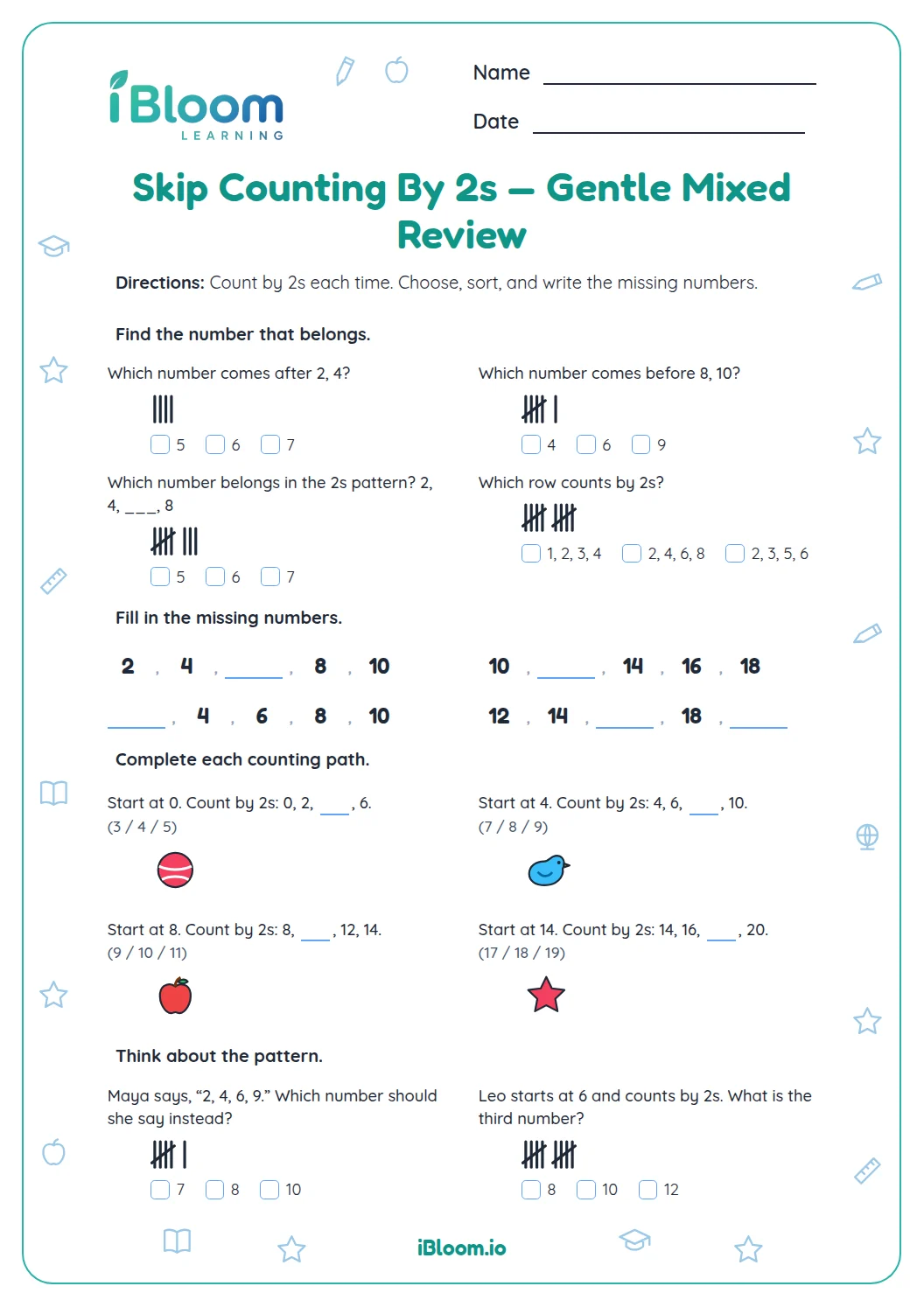
This printable gives preschool and kindergarten learners gentle practice counting by tens. Children find totals for groups of ten, fill missing numbers in short sequences, and continue a count through 100. The first questions show ten frames or pictured blocks; later items build fluency with the numeral pattern. The answer key lists each total and missing number.
How do groups show the count?
Part A starts with ten frames and blocks. Count each group as ten, then write the total number represented.
How can a child fill a missing term?
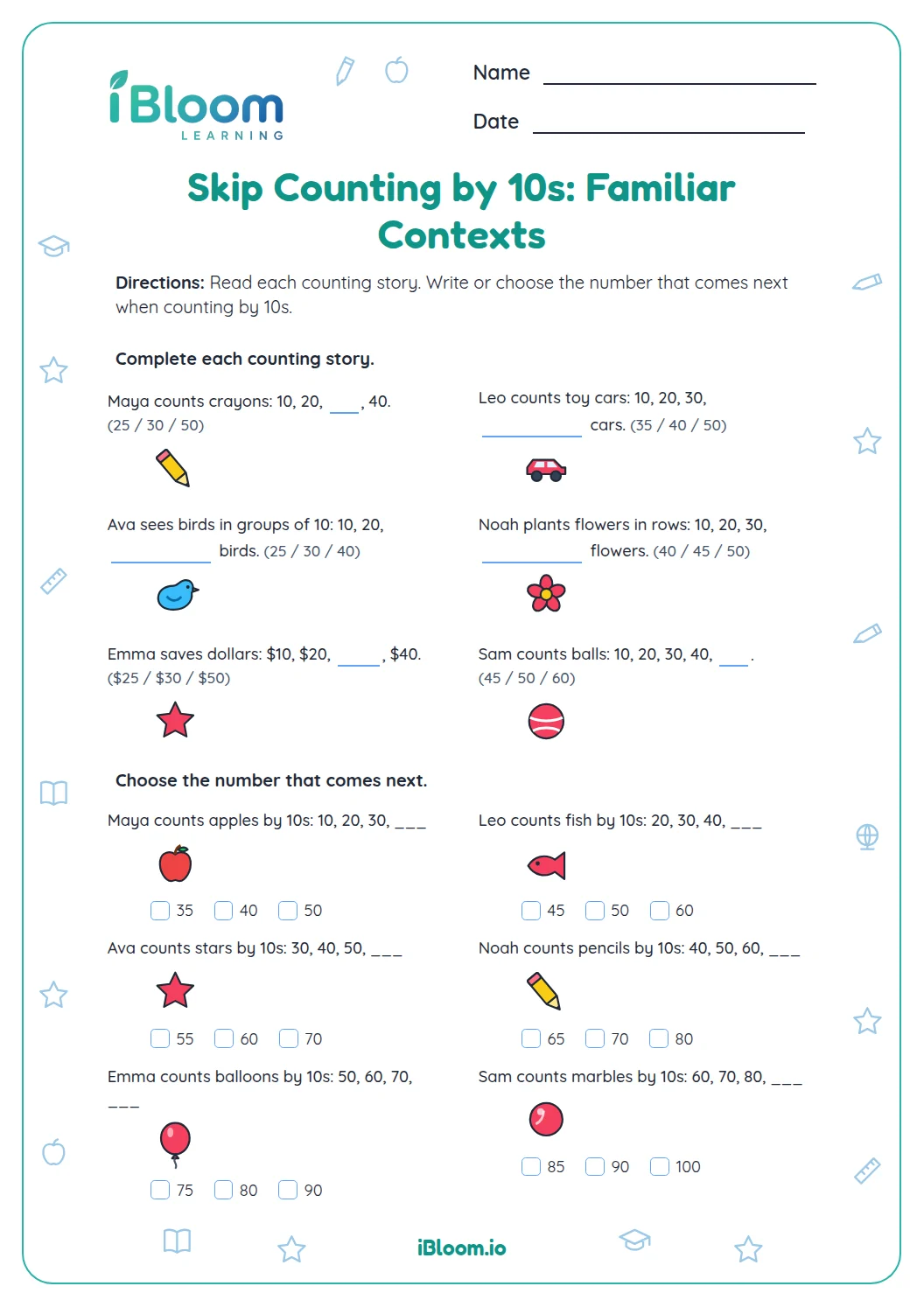
Read the numbers from left to right and say the next ten each time. If the sequence is 10, 20, ___, 40, the missing number is 30 because it is ten more than 20.
- 110, 20, ___, 40
- 2Count ten more: 10, 20, 30, 40
- 3Write 30 in the blank.
What should children do with two blanks?
Keep the same ten-step pattern for both spaces. Say the sequence out loud from its first number, then write each next ten in order.
How to use this worksheet
- 1Count the objects or groups in Part A and remember that each group represents ten.
- 2For a missing number, read the sequence from the start.
- 3Say the next ten aloud before writing it.
- 4When two spaces are empty, fill them in order from left to right.
- 5Use the key to check each total and sequence.
Common mistakes and quick fixes
The mistake
Counting a group of ten as one object.
The fix
Point to the whole group and say “ten” before counting the next group.
The mistake
Adding one instead of ten.
The fix
Say the pattern aloud and notice that the tens digit changes by one.
The mistake
Writing two missing numbers in reverse order.
The fix
Count forward from the first number and fill the left blank before the right blank.
What to practice next
Make more practice
Questions parents and teachers ask
What does skip counting by tens mean?
Skip counting by tens means adding ten each time: 10, 20, 30, 40. The first part connects that pattern with groups of ten, then children fill missing numbers and continue short sequences. The visual warm-up shows how each group adds another ten.
How high do the sequences go?
The written sequences continue through 100. Some have one missing number and others ask for two numbers in a row. Children can say the pattern aloud before writing the missing terms, then check the completed sequence with the answer key.
Are pictures included?
Yes. The opening questions show ten frames or star pictures, with each star representing a group of ten where stated. Later questions use number sequences so children can practice saying and writing the pattern directly. The models connect the groups with the count.
Can a young learner use this independently?
Some kindergarten learners may work independently, while preschool learners may benefit from an adult reading each prompt and counting aloud together. The page begins with visual group models and then moves to number sequences. Children can say each count before writing.
What is the answer key for?
The key lists each group total and missing term. Invite the child to count ten more from the number before a blank, or point to the groups in the opening models. This helps connect the written pattern to another group of ten.