




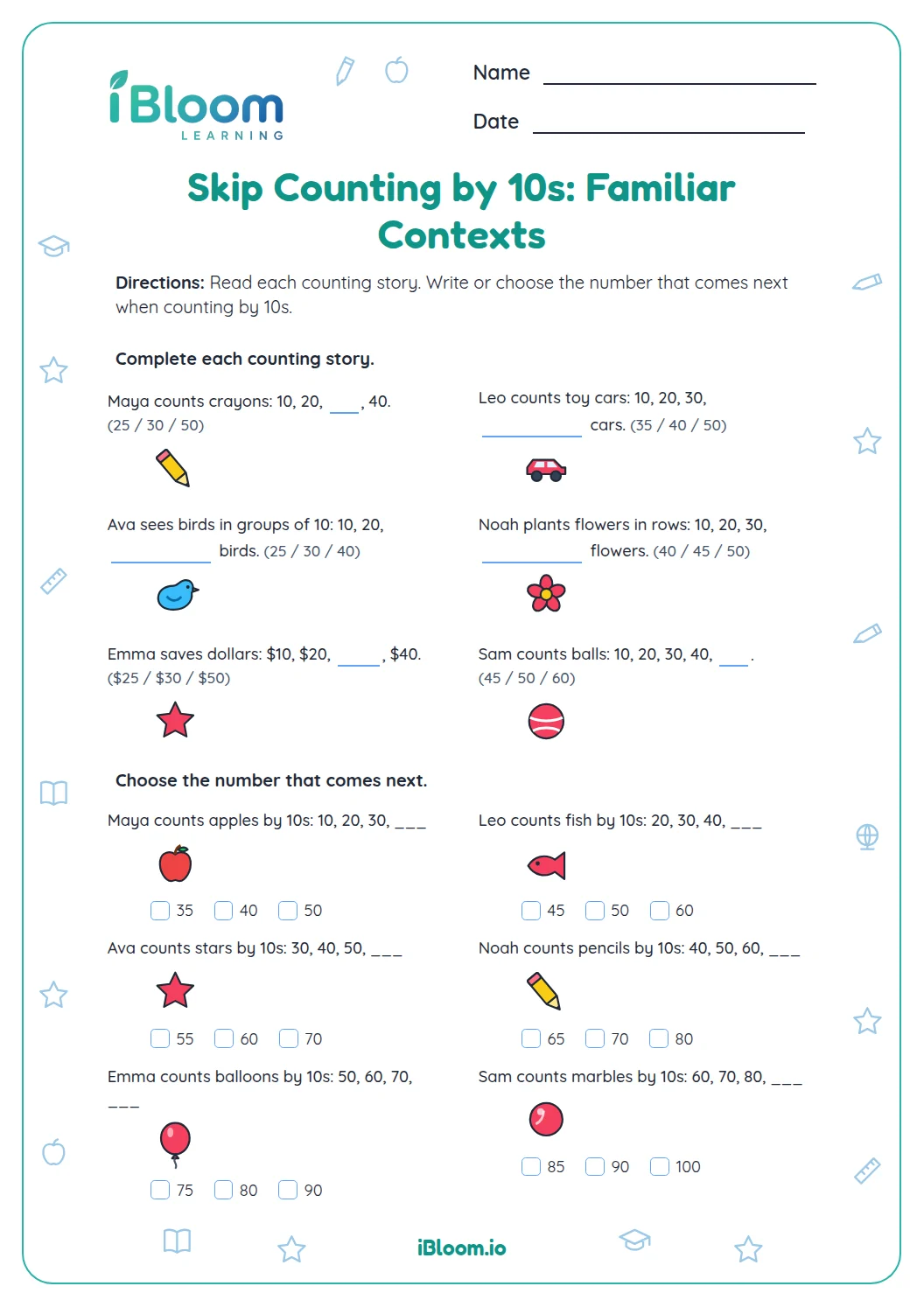
About this worksheet
This preschool and kindergarten worksheet introduces counting by twos with familiar pictures and pairs. Children count pictured objects, fill missing numbers in the 2, 4, 6 sequence, and connect pairs of socks, mittens, or shoes to a total. A separate answer key gives the number or pair count for each item.
What does counting by twos look like?
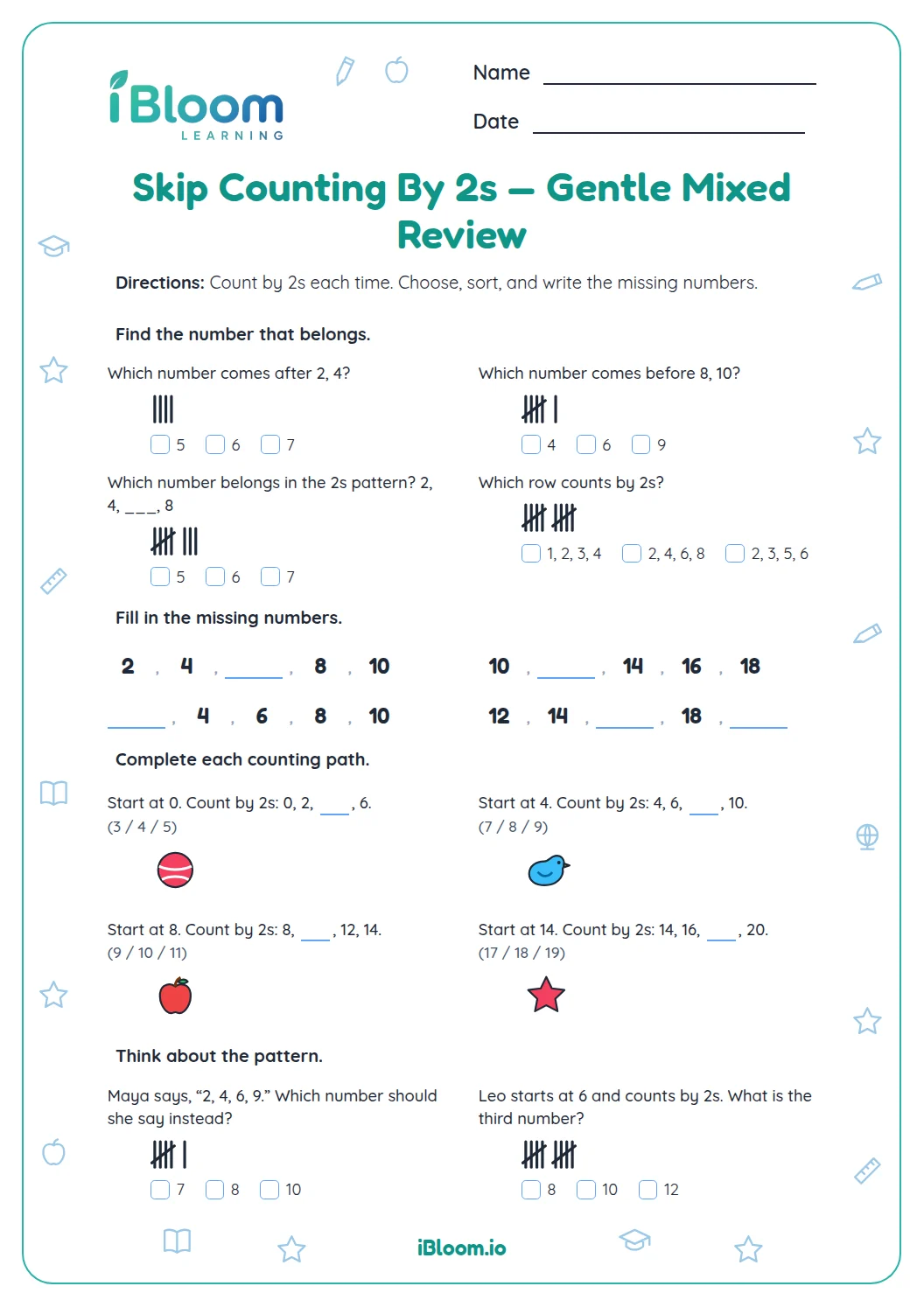
Each count adds two: 2, 4, 6, 8. On the first pictured questions, children count one object at a time while saying the numbers in this pattern to reach the group’s total.
How can a child fill in a missing number?
Look at the numbers before and after the blank. In 2, 4, ___, 8, the count increases by two each time, so the missing number is 6.
How do pairs help with counting?
A pair has two objects. If there are 8 socks, count four pairs: 2, 4, 6, 8. The final section connects the number pattern to objects children may see at home.
How to work through the page
- 1Point to each object once while counting.
- 2Say the numbers in order: 2, 4, 6, 8, and onward.
- 3For a blank, check that the count changes by two each time.
- 4For a pair problem, count two objects for every pair.
- 5Use the picture to check the object named in the prompt.
Common slips and fixes
The mistake
Skipping a number in the pattern
The fix
Say the pattern aloud slowly and move one step of two each time.
The mistake
Counting one pair as one object
The fix
A pair contains two objects, so count two for every pair.
The mistake
Looking at the wrong object in a picture
The fix
Name the pictured object, then count each matching picture once.
What to practice next
Make more practice
Questions parents and teachers ask
What age group is this skip-counting worksheet for?
The page is labeled for preschool and kindergarten learners. It uses object pictures, short number patterns, and familiar pairs so an adult can point and count along with a child. Children can say each number aloud as they count objects two at a time.
How many questions does it include?
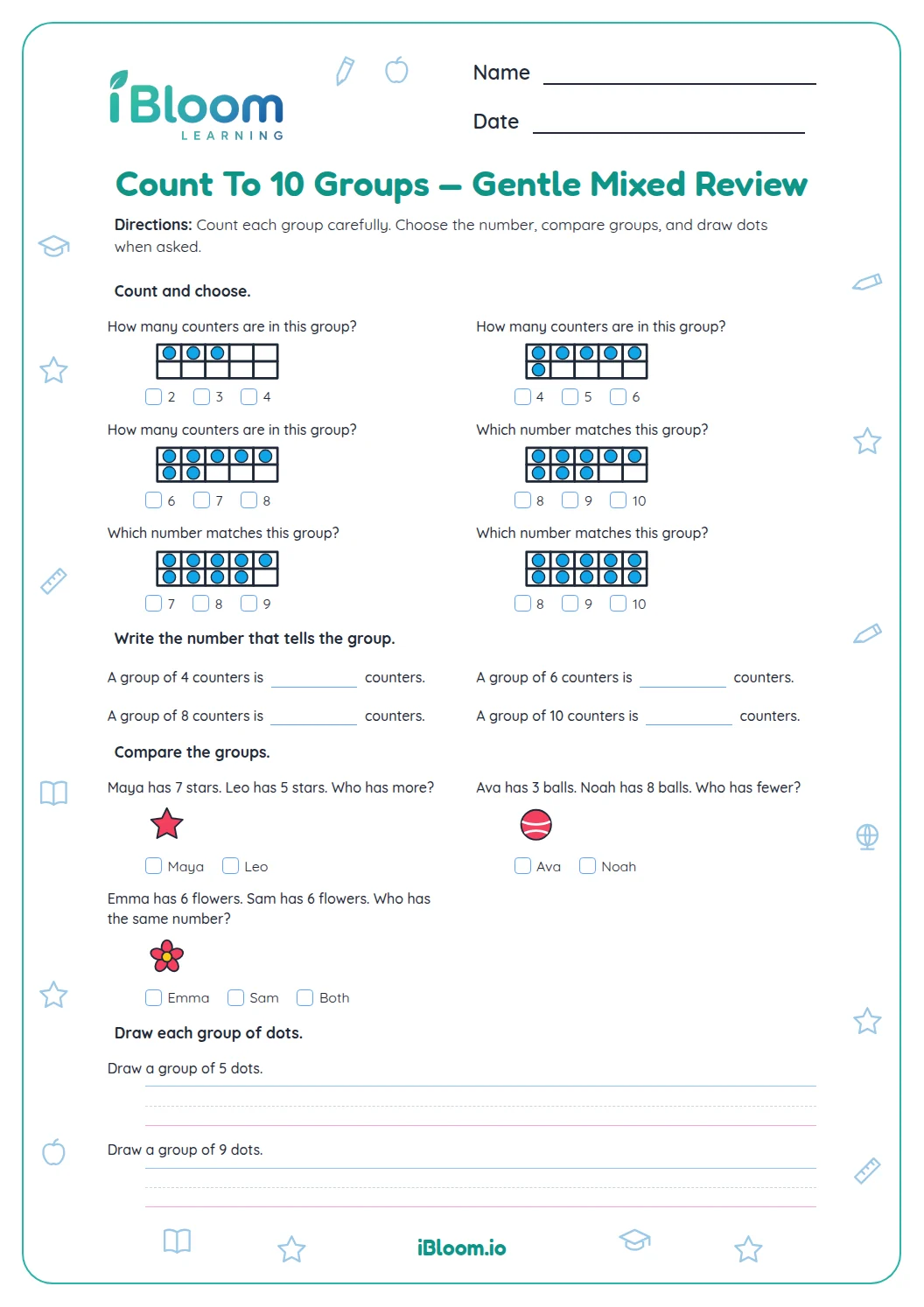
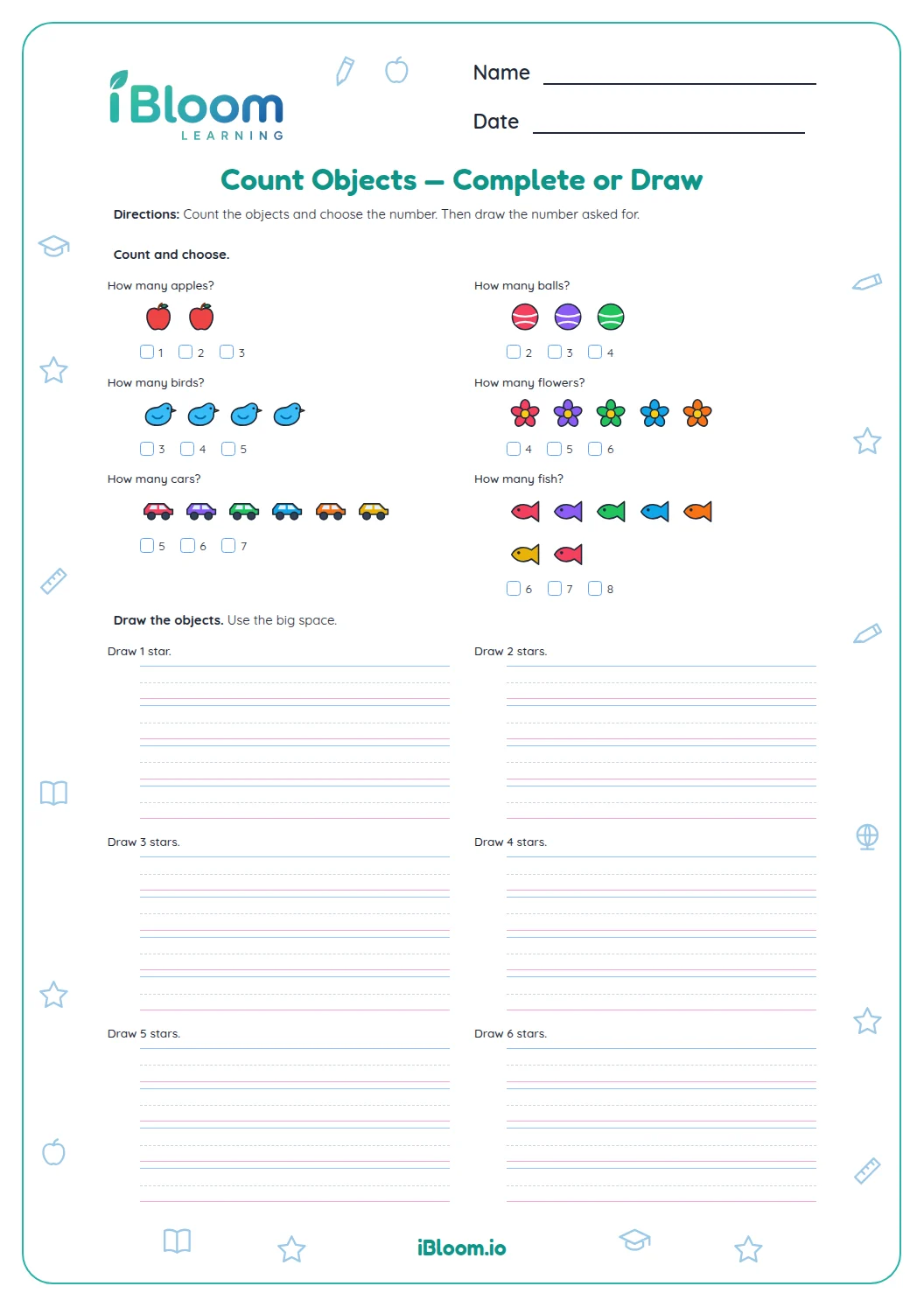
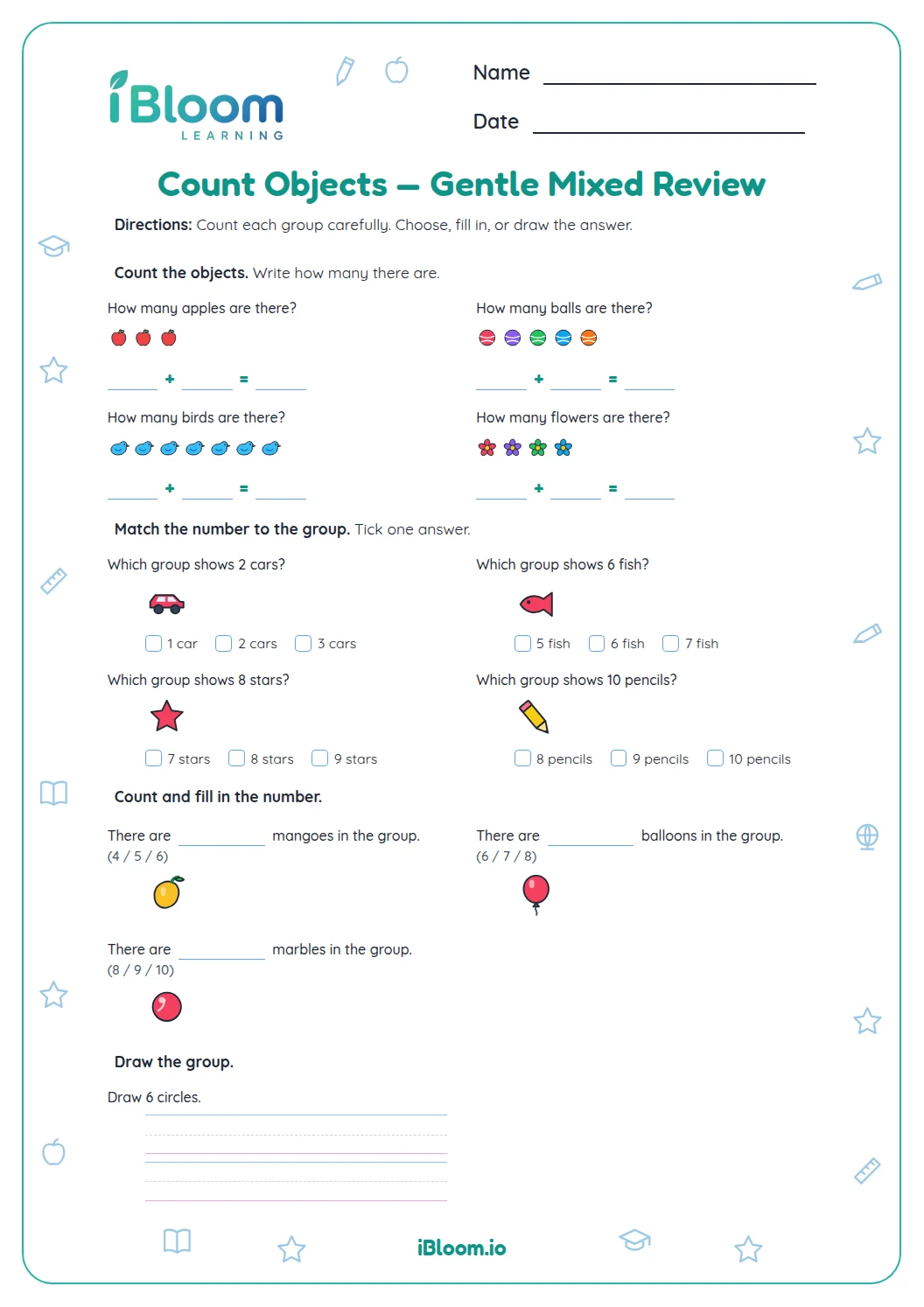
There are 16 items in four parts. Children count pictured groups, fill in missing numbers in a by-twos pattern, and answer questions about pairs of socks, mittens, and shoes. The separate answer key lists the expected totals. Children can point to each object as they count aloud.
Why does the worksheet use pairs?
A pair means two objects, so familiar pairs provide a concrete way to practice adding two each time. Counting two socks, then two more, matches the number pattern 2, 4, 6, 8 and helps children connect the spoken sequence to objects.
How can I help a child who loses track while counting?
Point to one object at a time and say the next number in the pattern together. Keep the groups small at first, and check that no object is counted twice or skipped. The child can then try the same pattern with the missing-number questions.
Is an answer key included?
Yes. The key follows the worksheet and gives the count for each picture group, the missing number in each sequence, and the totals for the pair questions. An adult can use it to check answers after the child has tried counting independently.