







About this worksheet
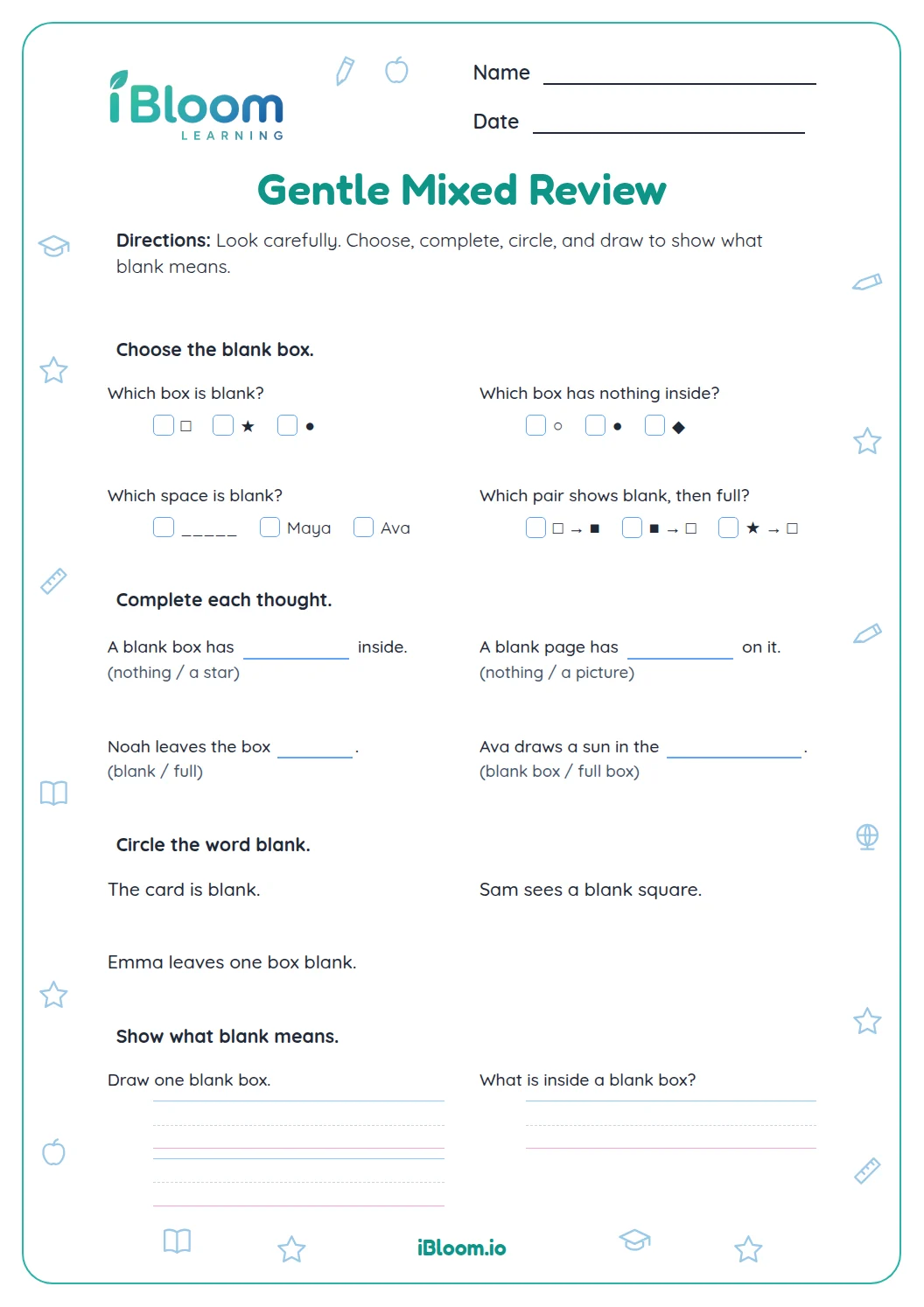
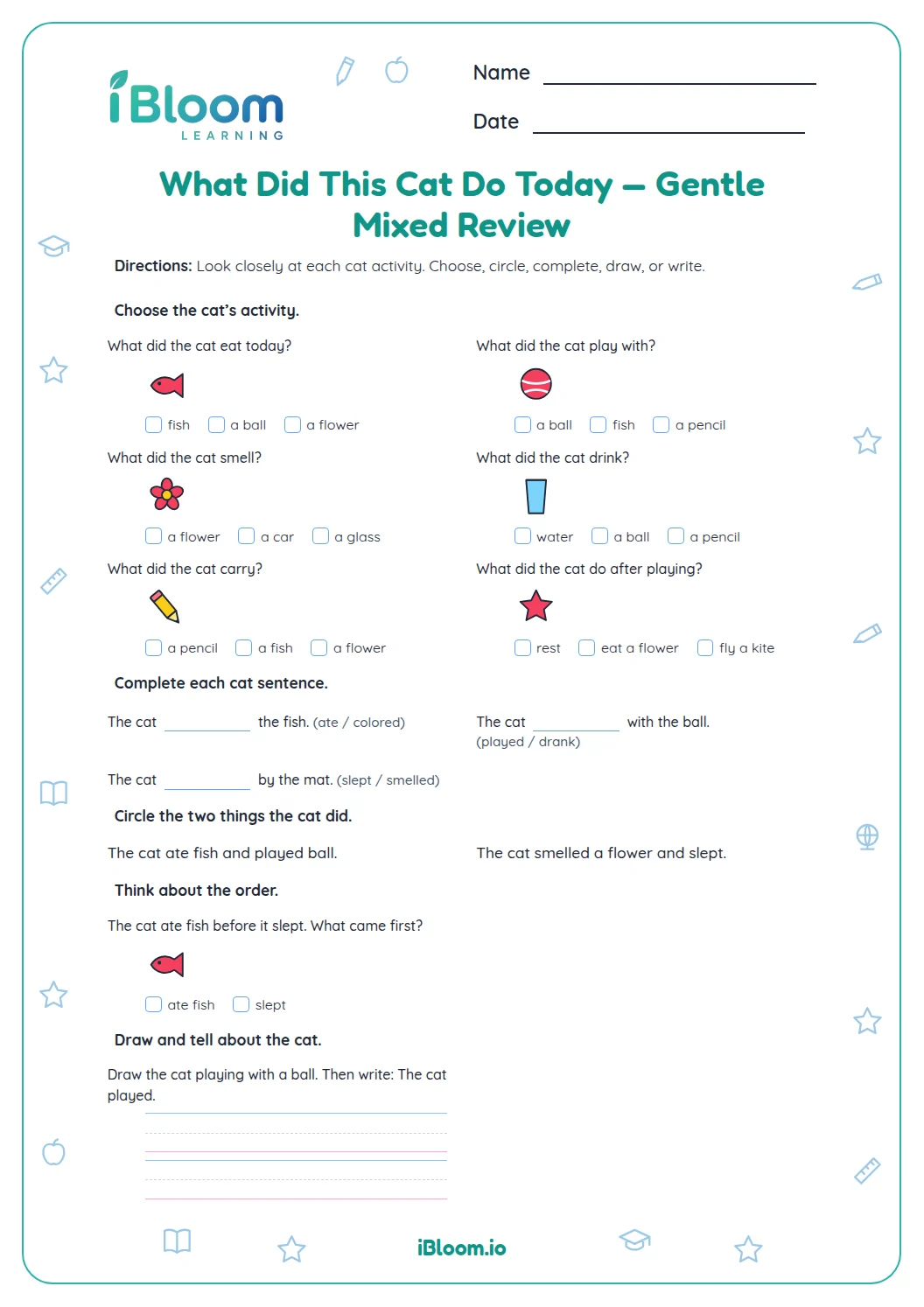
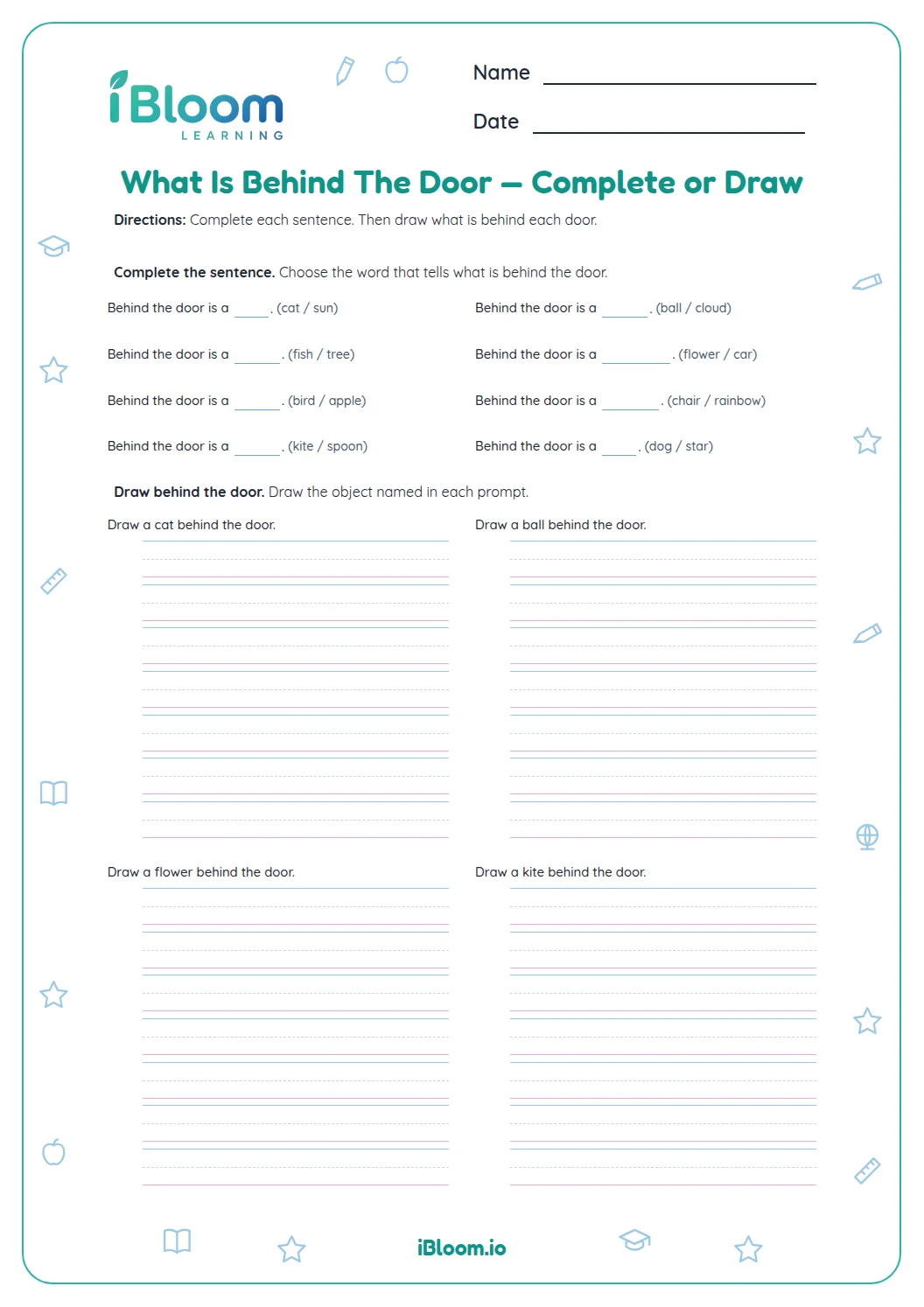
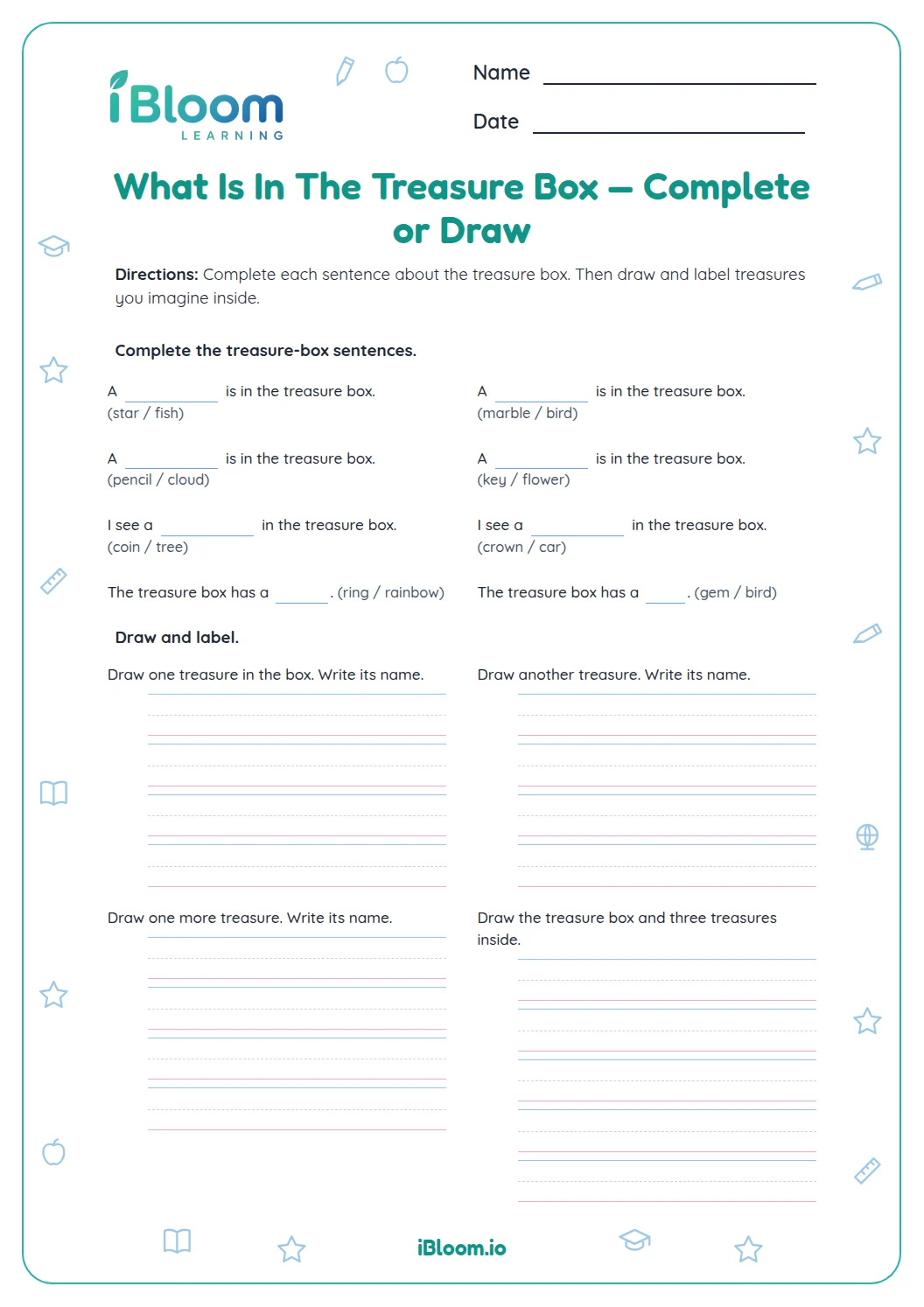
This printable supports preschool and kindergarten children as they connect familiar ideas with drawing and early writing. Children choose picture clues related to books, meals, play and home, then draw favorite objects and simple scenes in large response boxes. The answer key shows sample drawing ideas; children’s own drawings are welcome when they match the prompt.
What can a familiar picture help you imagine?
A familiar object can spark an idea. A book may make you think of a star sticker or a favorite story. In question 1, choose the star as a possible extra detail to draw beside the book. Other sensible picture choices could also inspire a drawing.
- 1Look at the book idea.
- 2Choose a small detail to add.
- 3Draw the detail beside the book.
How can one detail make a drawing clear?
Begin with one familiar thing, then add a detail that helps someone recognize it. A leaf can make an apple clear; stripes can make a ball look like your toy. Questions 5–8 offer favorite books, snacks, toys and places.
How can a drawing show an idea?
A person, action and place can turn a drawing into a tiny scene. In question 13, draw a person doing something you enjoy. Questions 14–15 offer one more familiar drawing idea.
How to use this worksheet
- 1Look at the familiar objects in the picture clue.
- 2Choose an idea that fits the place or activity.
- 3Start with a large simple shape in the drawing box.
- 4Add one detail, such as a leaf, stripe or smile.
- 5Tell someone one sentence about what you drew.
Common mistakes and quick fixes
The mistake
Trying to draw every detail at once.
The fix
Start with the main shape, then add one small detail.
The mistake
Choosing an idea unrelated to the familiar place.
The fix
Think about what you might really see or use there.
The mistake
Thinking every drawing must match the sample.
The fix
Use the sample as an idea; your own familiar drawing can be different.
What to practice next
Make more practice
Questions parents and teachers ask
Does my child need to write words too?
No. The main task is drawing. Invite your child to tell you one sentence about the picture, and you can write the words nearby if that helps. The worksheet accepts early marks, labels and dictated ideas as appropriate for the child.
What kinds of pictures are on the page?
The page uses familiar objects and places such as a book, lunch bag, park, home, bedroom and kitchen. Children choose related picture ideas before drawing their own favorite objects and simple scenes. The child can point, name the idea and add a detail in the drawing box.
How should I help if drawing feels hard?
Offer a simple starting shape, such as a circle for a ball or an oval for an apple. Ask what one detail could help someone recognize it. Avoid drawing the whole picture for the child; let them make the marks and choices.
Can my child draw a different idea from the sample?
Yes. The key gives examples, but children may choose another familiar object or detail that fits the prompt. For a prompt about a rainy day, an umbrella, rain boots or a raincoat are all reasonable drawing ideas. The child can point, name the idea and add a detail in the drawing box.
How many activities are included?
There are 15 activities: six picture-choice questions and nine drawing prompts. The answer key gives example choices and sample drawing ideas for an adult to use while checking the page. Children can choose different drawings that fit each prompt.
What skills does drawing practice support?
Drawing gives children a way to represent an idea and add a detail or action. Talking about the picture can connect drawing with oral language and early writing, while letting the child choose familiar subjects keeps the task approachable. The child can point, name the idea and add a detail in the drawing box.