







About this worksheet
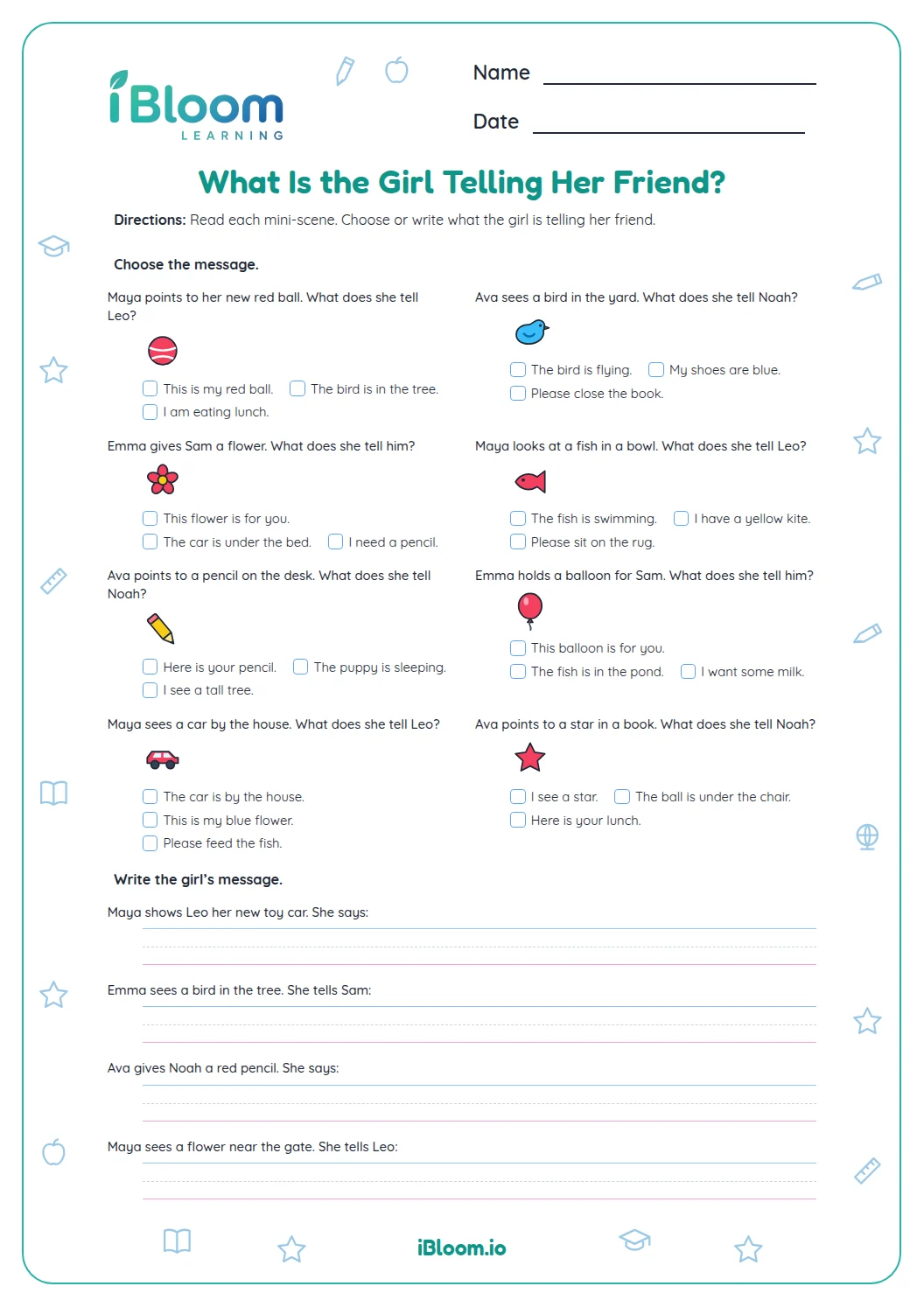
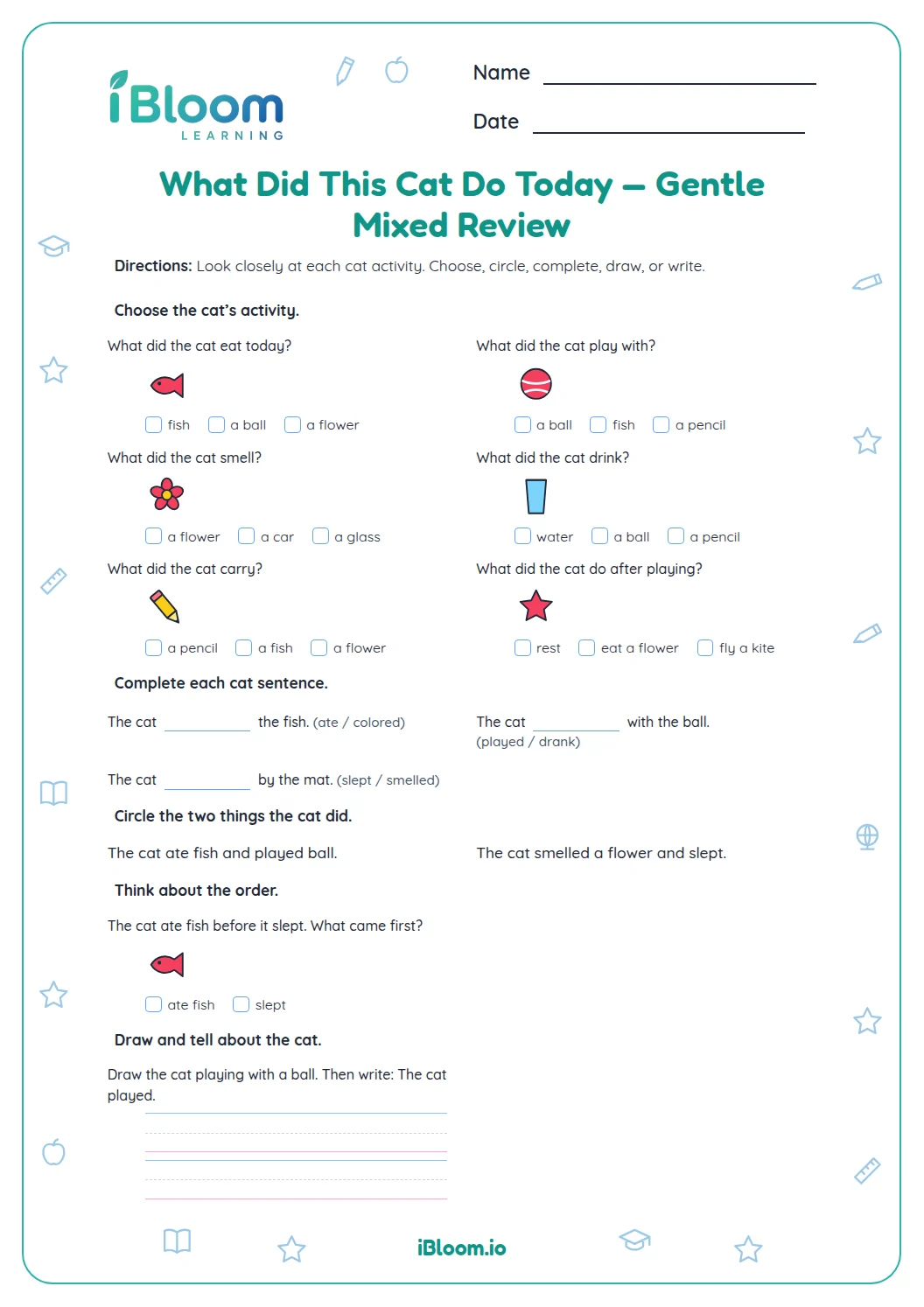
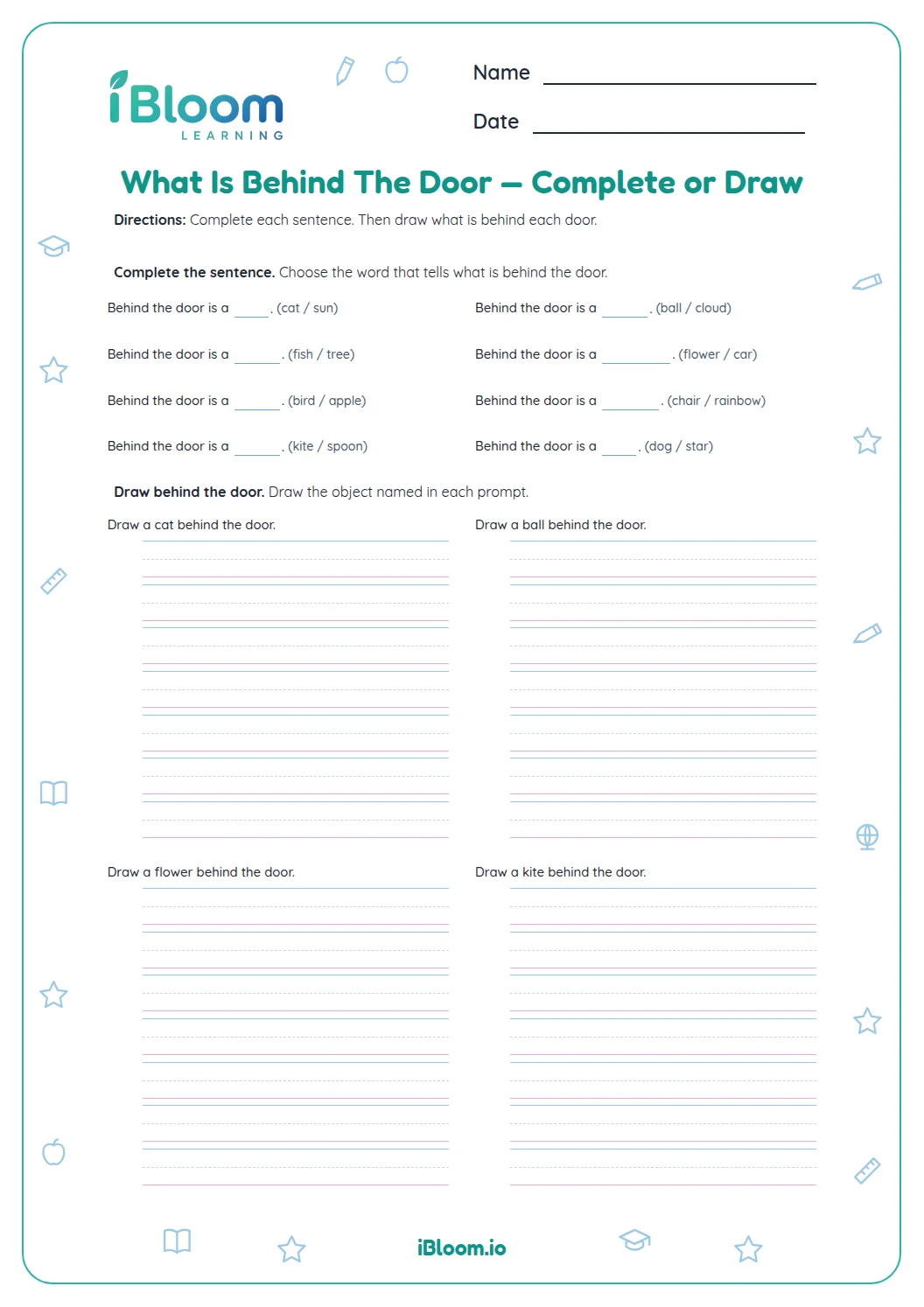
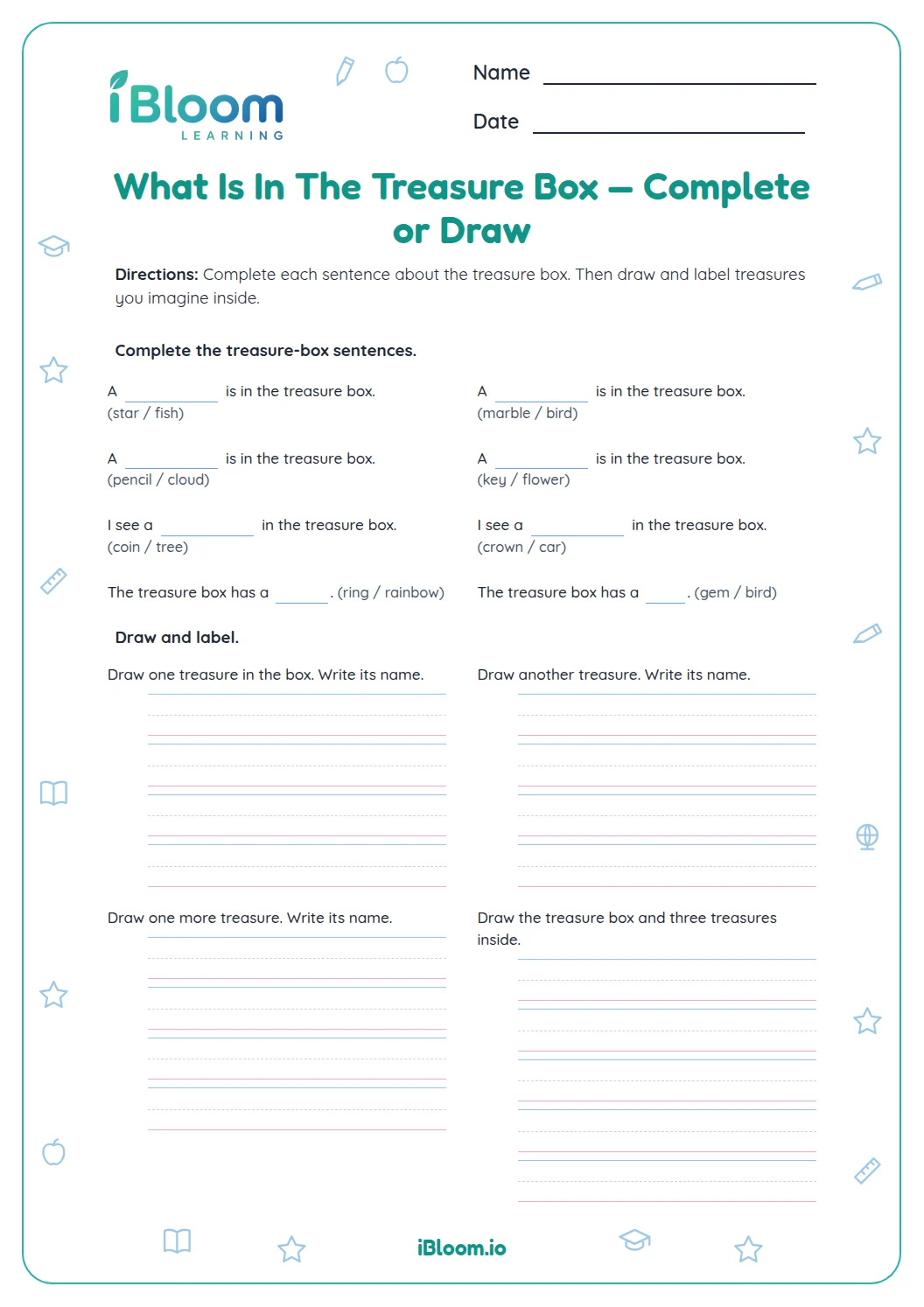
This preschool and kindergarten printable turns a picture-based “What is the girl telling her friend?” prompt into a sequence children can complete with picture clues. Six multiple-choice items invite a sensible message, followed by six sentence completions and two open drawing prompts. Children can dictate their ideas to an adult or add early writing. The flexible answer guide includes sample responses for open ideas.
How can a child find a message in a picture clue?
Name the object first. Then imagine one thing the girl could naturally tell her friend about it. In question 1, the ball can prompt “I found a ball!” A child may have a different sensible sentence when the response is open-ended.
- 1Picture clue: ball
- 2Name it: “I see a ball.”
- 3Make it a message: “I found a ball!”
- 4Say the sentence aloud or draw the moment.
When should a child complete a sentence or draw?
The first six questions offer three messages to choose from. Next, children complete six short sentence starters using familiar picture clues. The final two prompts invite a child to invent, draw, tell, or write a message. An adult can record dictated words when needed.
How can an adult support the response?
Ask “What do you notice?” and “What might you tell a friend?” Give the child time to answer before suggesting words. For either open drawing, accept a clear idea the child can explain.
- Six picture-supported message choices
- Six picture-supported sentence completions
- Two open drawing prompts
- A flexible answer guide for original responses
Guide a child through the page
- 1Look at the picture clue together and name the object.
- 2Read the answer choices aloud for the first question.
- 3Ask the child to explain which message fits the picture.
- 4Complete the two sentence starters using the object clue.
- 5For drawing prompts, let the child make the picture before dictating or writing a message.
- 6Celebrate a connected idea and use the answer guide as a model, not the only possible wording.
Common early storytelling hurdles
The mistake
Choosing a message that does not connect to the pictured object.
The fix
Name the object aloud first, then think of something a friend might want to know.
The mistake
Expecting one exact sentence for an open-ended drawing.
The fix
Ask the child to explain the drawing; accept a connected original message.
The mistake
Writing the child’s answer before giving them time to think.
The fix
Pause, invite the child to tell the idea, and write their words if needed.
What to practice next
Make more practice
Questions parents and teachers ask
What is this drawing and writing page about?
Children use picture clues to imagine what a girl might tell a friend. They choose a matching message, complete sentence starters, and create their own message with a drawing, oral response, or early writing. Name the pictured object together before inviting an idea.
Can a child dictate instead of writing?
Yes. A young child can say a sentence aloud while an adult writes it down. The child can still make a drawing and explain how it connects to the message. This lets the child contribute an idea even when writing is still emerging.
Do the open prompts have one right answer?
The first 12 questions have picture-linked choices or sentence completions. The final two invite original drawings and messages, so several responses can fit. Use the answer guide as a sample and ask the child to explain how the message connects to the picture.
How many activities are included?
There are 14 activities: six picture-supported choices, six picture-supported sentence completions, and two open drawing prompts. The sequence moves from selecting a message to completing one and then creating an idea independently. The two drawing items leave room for a child’s own idea.
What should I say if a child is unsure?
Start by naming the pictured object, then ask what the girl might tell her friend about it. Give the child time to think and answer in their own words. For a drawing, invite them to explain the picture after they finish.
Is an answer guide included?
Yes. The separate answer guide lists the correct choices, sample completions, and descriptions of suitable open responses. Many original messages can fit when they connect to the pictured clue, so invite the child to explain their idea. Adults can accept other clear responses that match the clue.