








About this worksheet
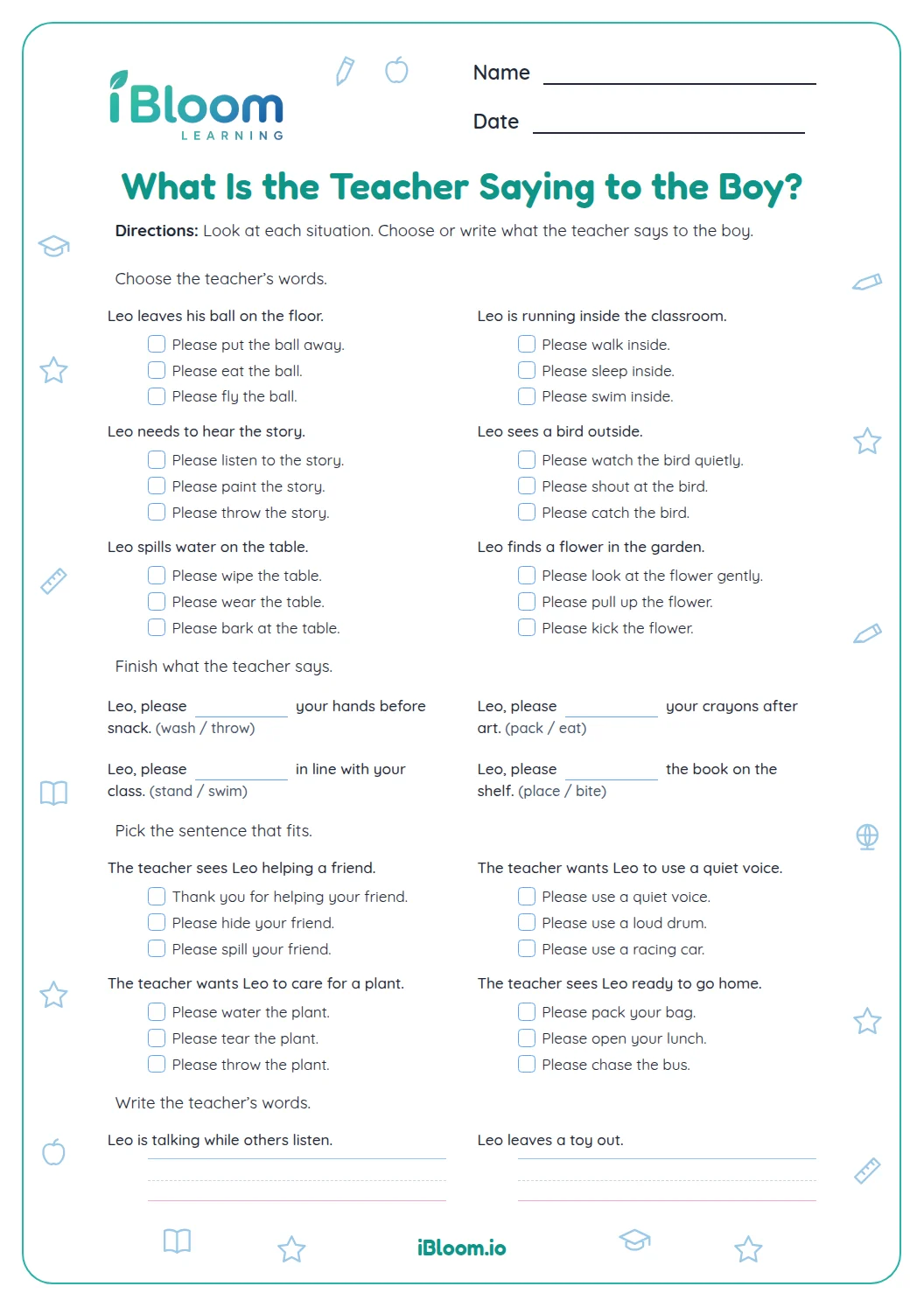
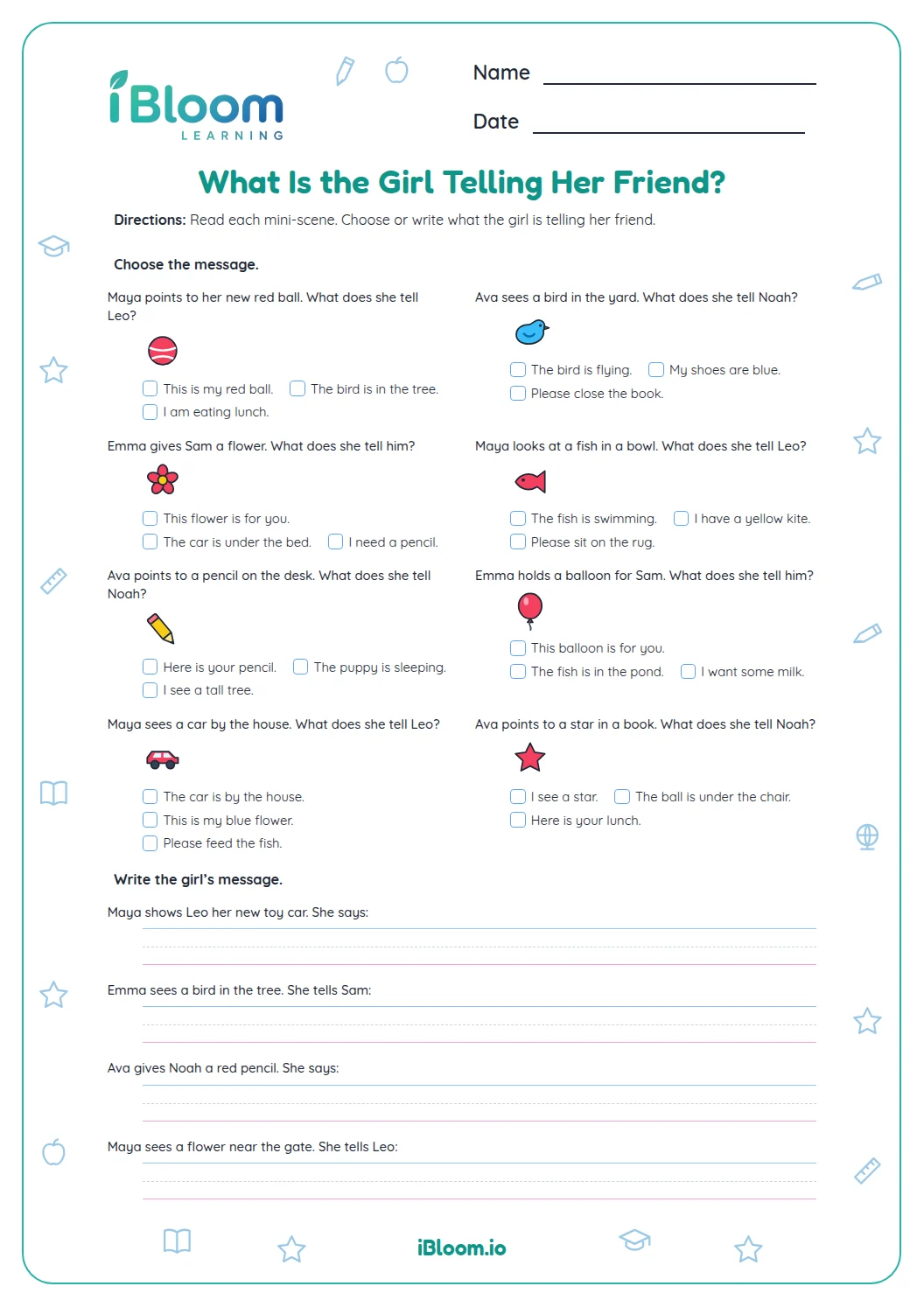
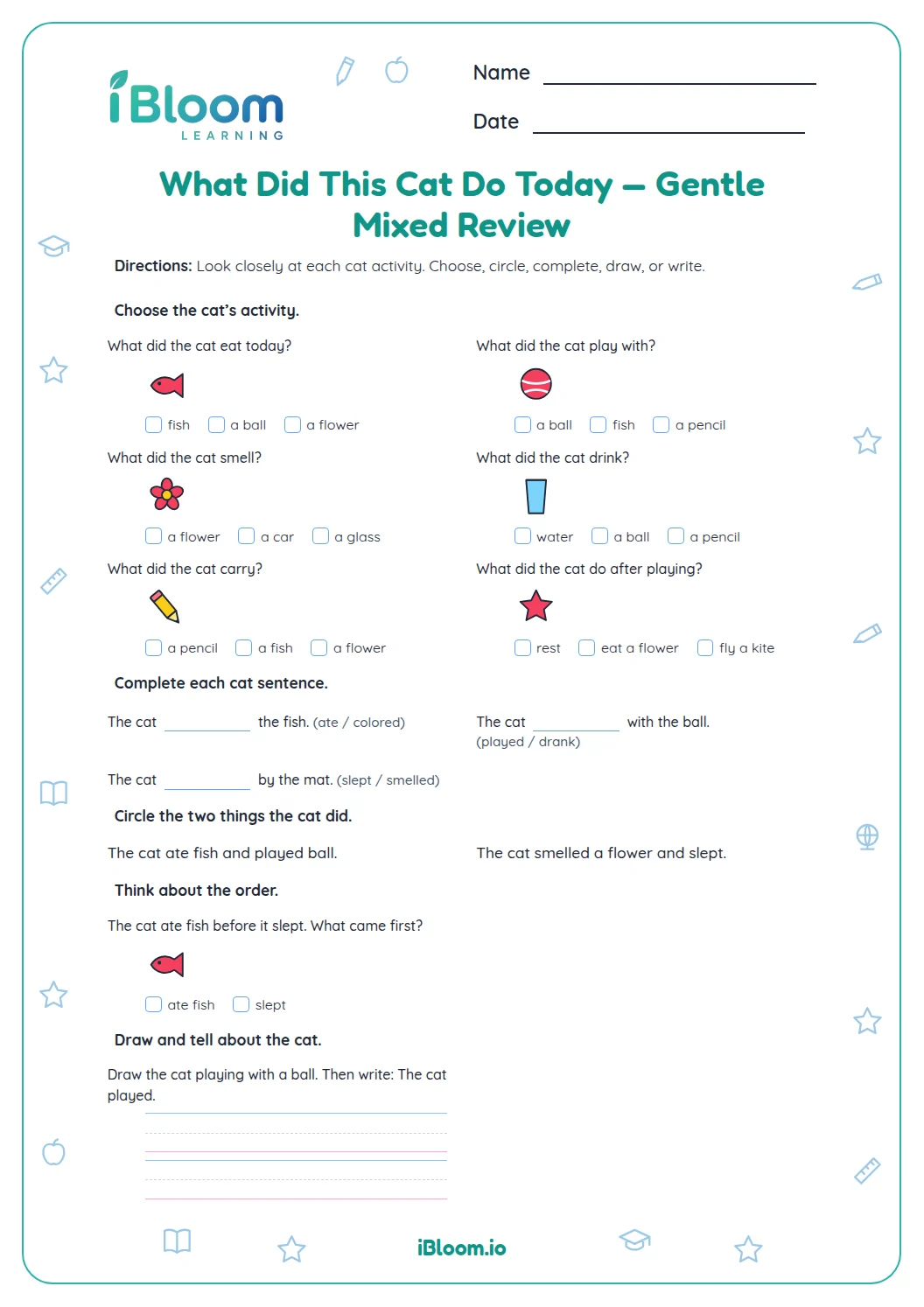
This Pre-K and Kindergarten worksheet helps young children connect everyday classroom situations with gentle teacher language. Picture clues show a boy and teacher as children choose a response, find polite words, complete short sayings, and write a kind sentence for a situation. It replaces the old shape-coloring item with classroom picture prompts while keeping the focus on what a teacher might say. There are 14 questions and an answer key.
What makes a teacher saying gentle?
A gentle saying gives a clear direction or offers help without shaming the child. “Please pick them up” tells what to do when crayons fall. “How can I help?” invites the child to ask for support.
- 1Situation: The boy drops his crayons.
- 2Choose words that tell him what to do kindly.
- 3“Please pick them up” is a calm direction.
- 4Answer: Please pick them up.
How do the picture clues help?
A picture of the boy and teacher keeps each question rooted in a familiar classroom moment. Children can look at the action, talk about what is happening, and then choose words that fit.
- Questions 1–6: choose a gentle response
- Questions 7–8: circle a polite word
- Questions 9–14: complete or write gentle sayings
What can children write?
For open responses, children may use their own kind words. The answer key gives one sample. An answer can differ as long as it fits the situation and sounds respectful.
How to use this worksheet
- 1Look together at the situation before reading the answer choices.
- 2Ask what the boy might need in that moment.
- 3Choose words that give a kind, clear direction or offer help.
- 4For the writing questions, say the sentence aloud before writing.
- 5Compare responses with the key and welcome other gentle phrases.
Common mistakes and quick fixes
The mistake
Choosing a response that blames the boy instead of helping him know what to do.
The fix
Look for words that give one calm, useful next step.
The mistake
Missing “please” or “thanks” when looking for polite words.
The fix
Read the sentence slowly and listen for the courteous word.
The mistake
Writing a response that does not match the situation.
The fix
Name what happened first, then choose words that would help in that moment.
What to practice next
Make more practice
Questions parents and teachers ask
What is a gentle teacher saying?
A gentle teacher saying gives a clear direction or offers help in respectful words. Examples on this worksheet include “Please pick them up,” “Please wait,” and “How can I help?” Children choose words that fit each classroom situation.
Are pictures included for young learners?
Yes. The choices include a boy and teacher picture clue, and the words describe familiar classroom moments such as dropping crayons or waiting for a turn. An adult can read prompts and choices aloud while the child points to an answer.
How many questions are included?
There are 14 questions: six picture-supported choices, two items for circling polite words, two word-choice completions, and four written responses. The answer key gives the selected words and sample sentences. The teacher can read prompts and choices aloud as needed.
Can a child give a different written answer?
Yes. The open responses have sample answers, not one required sentence. A different response is suitable if it matches the situation and uses kind, clear words that a teacher could reasonably say. Invite the child to say the response before writing it.
What changed from the old sheet?
The old first prompt asked children to circle a red shape, but the title is about teacher language. The replacement uses picture-supported classroom situations, polite words, and short response writing throughout. This keeps the page centered on what a teacher might say to the boy.