






About this worksheet
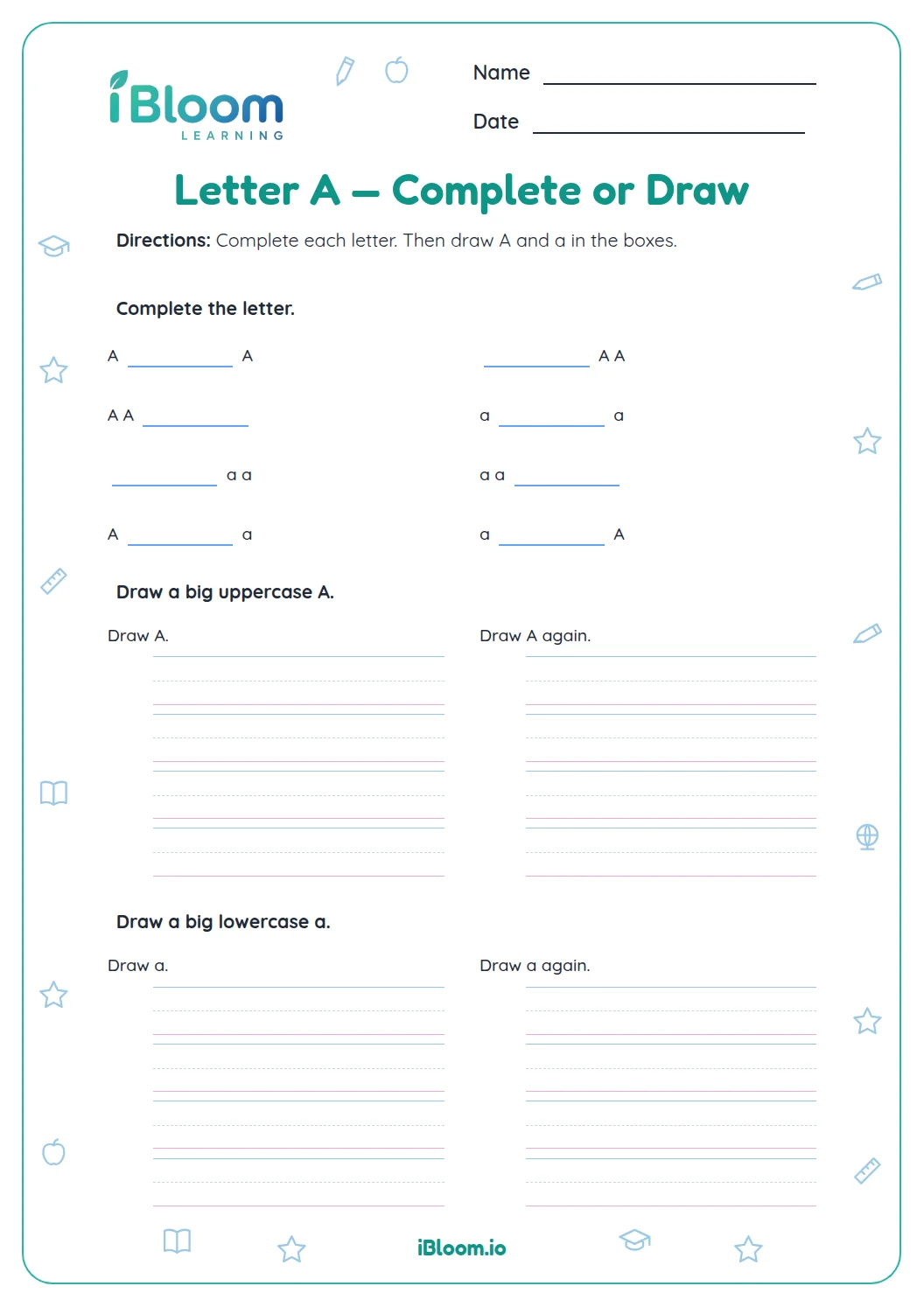
This free printable Letter A worksheet gives preschool and kindergarten children a gentle mix of tracing, recognition and printing. Three tracing rows introduce uppercase A, lowercase a and paired Aa. Nine letter-choice questions follow, including apple and ant picture cues. The final two tasks ask children to print each form independently. An adult can read the directions and name the pictures. The activities practice CCSS L.K.1.a and RF.K.1.d through letter formation and recognition. A separate answer key shows the target letters and correct choices.
Aligned to L.K.1.a and RF.K.1.d
What will children do with A and a?
Part A has three tracing rows: A, a and Aa. Children trace the repeated gray models, then use the line beneath to copy them. Part B offers five choices between letter forms, and Part C asks for one uppercase A and one lowercase a.
The apple and ant pictures give adults something concrete to name during the letter hunt. Read each prompt aloud so a child can concentrate on recognizing and forming the letter.
How can I model the letter before tracing?
Point to the printed uppercase A. Trace its two slanted sides with a finger, then the short crossbar. For lowercase a, follow the exact model on the worksheet and talk about the rounded part and its stem.
Use the printed model throughout the activity so children can compare their work with the same letter shape. Accept a recognizable handwritten lowercase a and help the child keep its parts connected.
- 1Read: Find uppercase A.
- 2Look at the choices H, A and V.
- 3Choose A: its slanted sides meet and it has a crossbar.
How much help should I give with the final letters?
In Part C, children print A and a on their own answer lines. Give time to look back at the models if needed, then ask them to name the letter they wrote. One clear letter is enough for each prompt.
Use the key as a guide to the intended letter. Letter size and neatness can develop with practice; check first that the form is recognizable and that uppercase and lowercase match the prompt.
How to use this worksheet
- 1Name A and a while pointing to the two printed forms.
- 2Trace the first uppercase model with a finger, then with a pencil.
- 3Use the blank line beneath each tracing row to copy the letters.
- 4Read Part B aloud and name the apple and ant before choosing letters.
- 5Let the child print one A and one a in Part C, then compare them with the key.
Mistakes to discuss
The mistake
Choosing V because it also has two slanted lines.
The fix
Point to the top meeting point and crossbar in A, then compare it with V.
The mistake
Writing uppercase A when the prompt asks for lowercase a.
The fix
Point to the lowercase model and say its name before the child tries again.
The mistake
Tracing the models but leaving all copying lines empty.
The fix
After one tracing row, pause and copy a letter onto the line immediately beneath it.
Common Core alignment
Trace and print uppercase A and lowercase a.
On this sheet: Parts A and C give guided and independent letter-printing practice.
Show the official wordingHide the official wording
Print many upper- and lowercase letters.
Recognize uppercase A and lowercase a among other letters.
On this sheet: Part B asks children to identify each form, with apple and ant cues.
Show the official wordingHide the official wording
Recognize and name all upper- and lowercase letters of the alphabet.
What to practice next
Make more practice
Further reading
Questions parents and teachers ask
Does the worksheet include uppercase and lowercase A?
Start by tracing A and a, then ask children to find each form among other letters. This sheet finishes with two independent printing tasks so you can see whether children can produce both forms after using the models.
Should an adult read the directions aloud?
Yes, an adult can read each direction while the child focuses on the letters. Point to the row or choices being used, and name the apple and ant pictures. Keep the help brief enough that the child still chooses or prints the requested letter independently.
What belongs on the line beneath the tracing models?
Children copy the letter or letter pair from the tracing row onto the blank line beneath it. They can start with one clear copy and add more if comfortable. In the paired row, copy A followed by a so both forms stay connected in the practice.
Why are an apple and an ant included?
The apple and ant provide picture cues for two familiar words beginning with A. The adult names each picture and reads the prompt, then the child chooses the requested letter. These questions keep the letter review varied while still checking the difference between uppercase A and lowercase a.
How should I use the answer key for handwriting?
Use the key to check which letter form each task requests. Handwriting will vary, so look for a recognizable uppercase A or lowercase a rather than an exact copy of the printed type. Compare the final independent letters with the earlier tracing models and choose one feature to practice next.