




About this worksheet
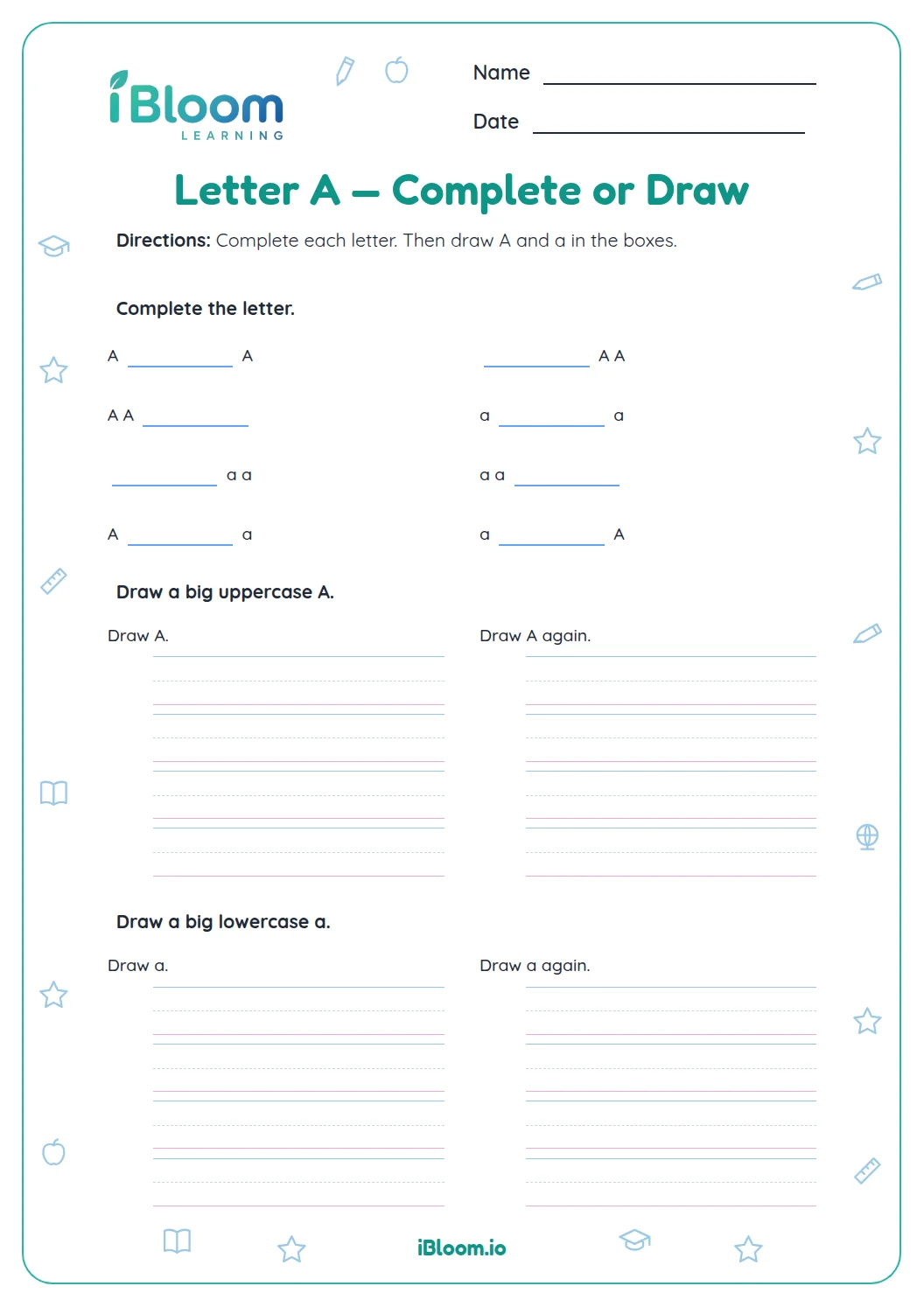
This early literacy worksheet introduces uppercase A and lowercase a in familiar words. Children trace both letter forms, choose pictured words that begin with the letter A, identify each letter form, and connect the printed forms to familiar words. Fourteen questions fill two worksheet pages, with a separate answer key. Picture choices keep beginning-letter practice concrete for preschool and kindergarten learners.
What is on the Letter A page?
The worksheet moves from tracing A and a to selecting pictured words that begin with the letter, then identifying uppercase and lowercase forms in print.
Picture choices include apple, ant, airplane, axe, avocado, and astronaut. The key shows the correct choice for each item.
How can a picture help a child hear A at the start?
Name each picture, then listen for the first sound and connect it to the first letter in the word. Apple begins with the letter A, while banana begins with B. Then point out whether a printed letter is uppercase A or lowercase a.
Question 3 contrasts apple with banana, so apple is the word that begins with the letter A.
- 1Name each pictured word: apple, banana.
- 2Apple begins with the letter A; banana begins with B.
- 3Choose the apple.
How should a child practice uppercase and lowercase A?
Trace the dotted form from its starting point, then copy it on the line. Uppercase A has two slanted strokes and a crossbar; lowercase a is a small rounded letter with a short stem.
How to use this worksheet
- 1Say the letter name and its sound before starting.
- 2Trace uppercase A and lowercase a with a finger first.
- 3Name each picture aloud before choosing its beginning letter.
- 4Trace the printed forms, then copy them independently.
- 5Review the answer key together and repeat any letter that needs practice.
Common mix-ups and quick reminders
The mistake
Choosing a picture because it contains the letter A somewhere in its name.
The fix
Listen only to the first sound. The pictured word must begin with A.
The mistake
Mixing uppercase A with lowercase a.
The fix
Compare their shapes side by side and name each form before tracing.
The mistake
Starting to trace at the bottom of the letter.
The fix
Begin at the top and follow the dotted path with one slow finger movement.
What to practice next
Make more practice
Questions parents and teachers ask
Which letter forms are on the page?
The worksheet includes uppercase A and lowercase a. Children trace each form, identify A or a in print, and connect the letter to pictured words that begin with its sound. The answer key shows the correct letter or picture for every question.
What pictures are included?
Children see familiar pictures such as an apple, ant, airplane, axe, avocado, and astronaut. Each picture choice pairs a word that begins with A with a word that begins with another letter, so the child names the picture and checks its first letter.
Is this worksheet for preschool or kindergarten?
It is suitable for early learners who are beginning to recognize and print letters. The page practices A and a through tracing, picture choices, and letter identification, with a separate answer key for an adult to check responses.
Does it include tracing?
Yes. The first two questions provide trace practice for uppercase A and lowercase a. The remaining questions connect those forms to beginning sounds and familiar printed letters, so children can move from tracing to recognizing the letter in use.
How can I help a child who reverses a letter?
Model the letter slowly and describe its strokes while the child traces it. For A, start at the top and make two slanting lines, then add the middle line. For a, point out its rounded shape and short stem, and practice beside the model.