


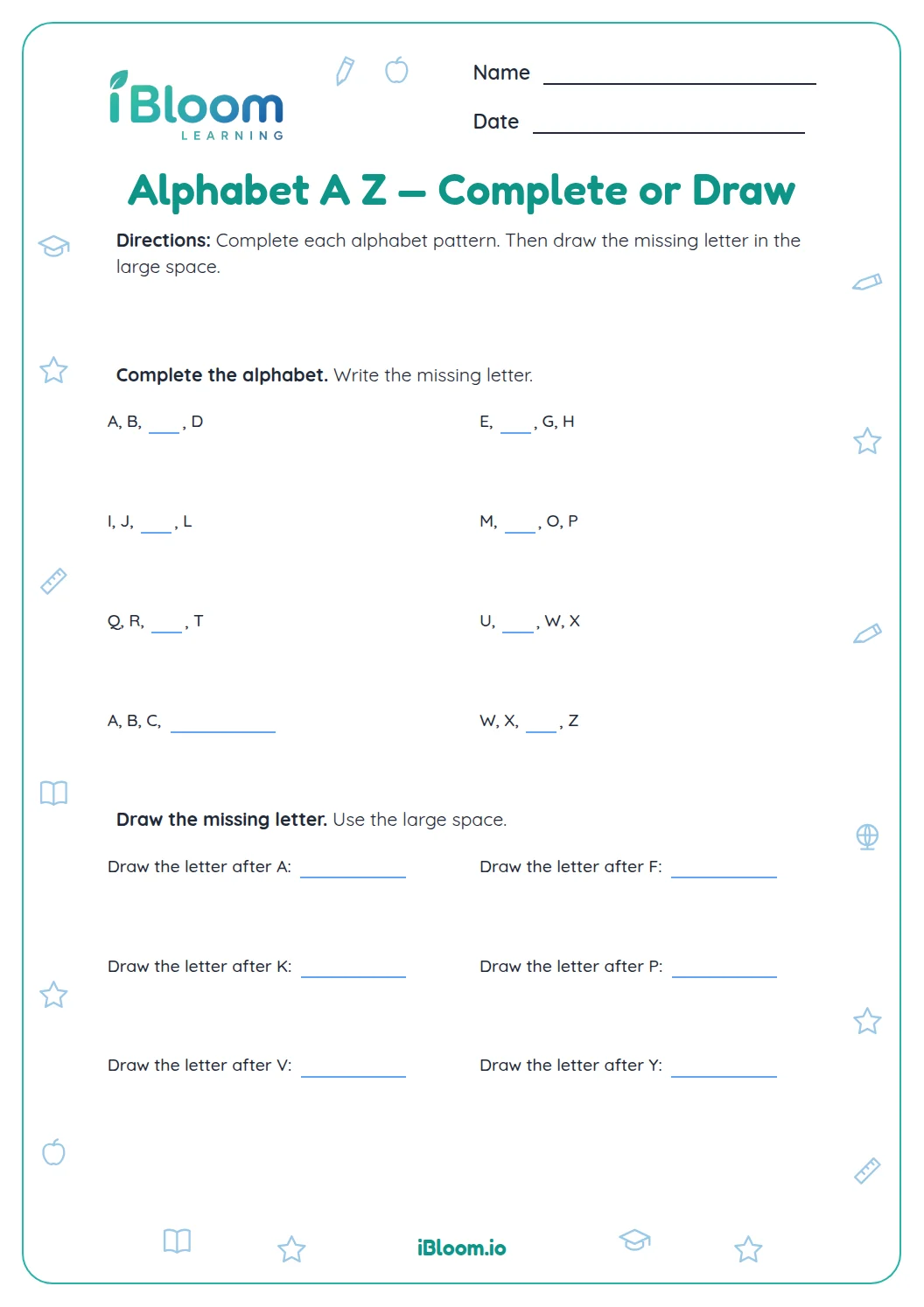
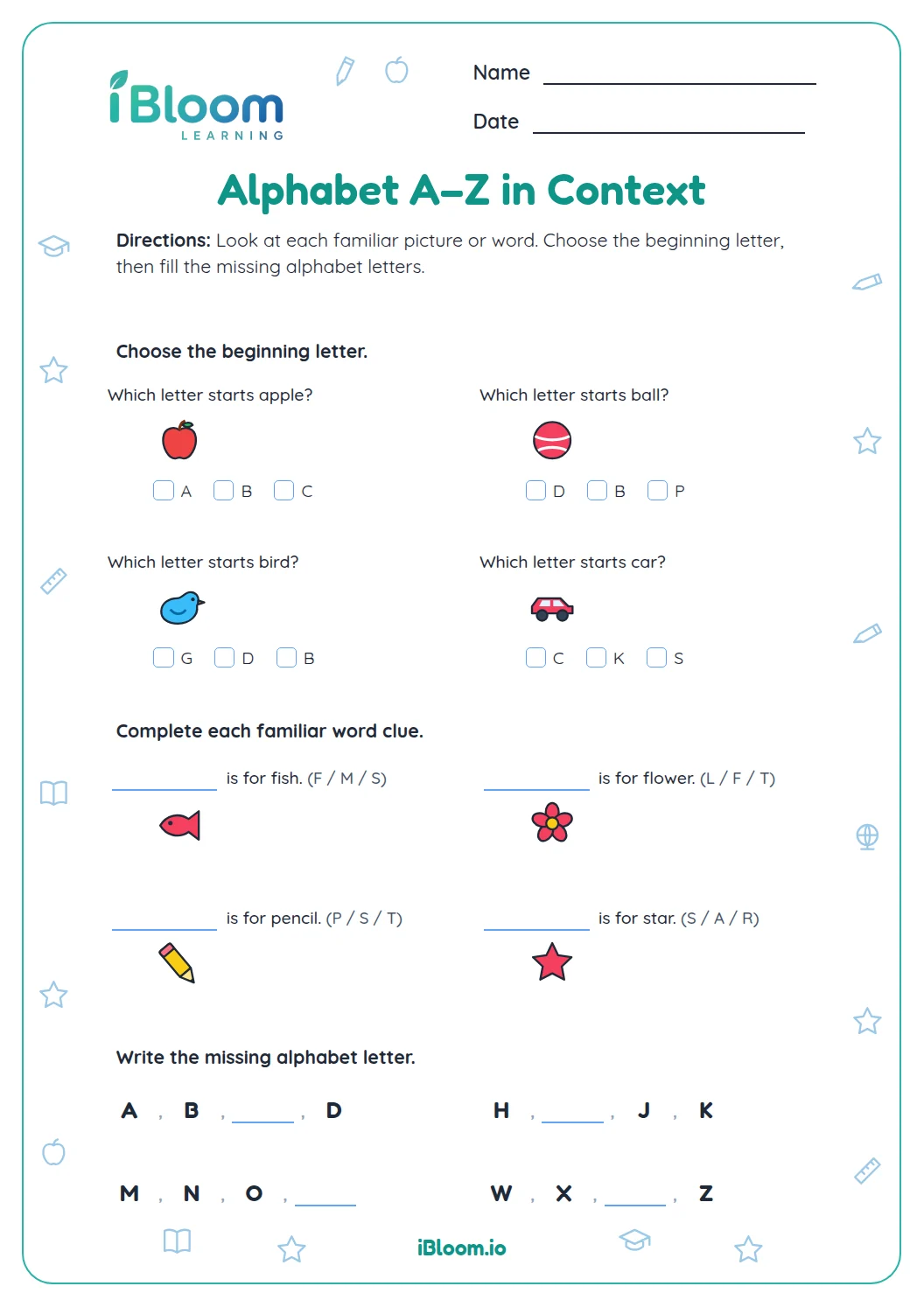

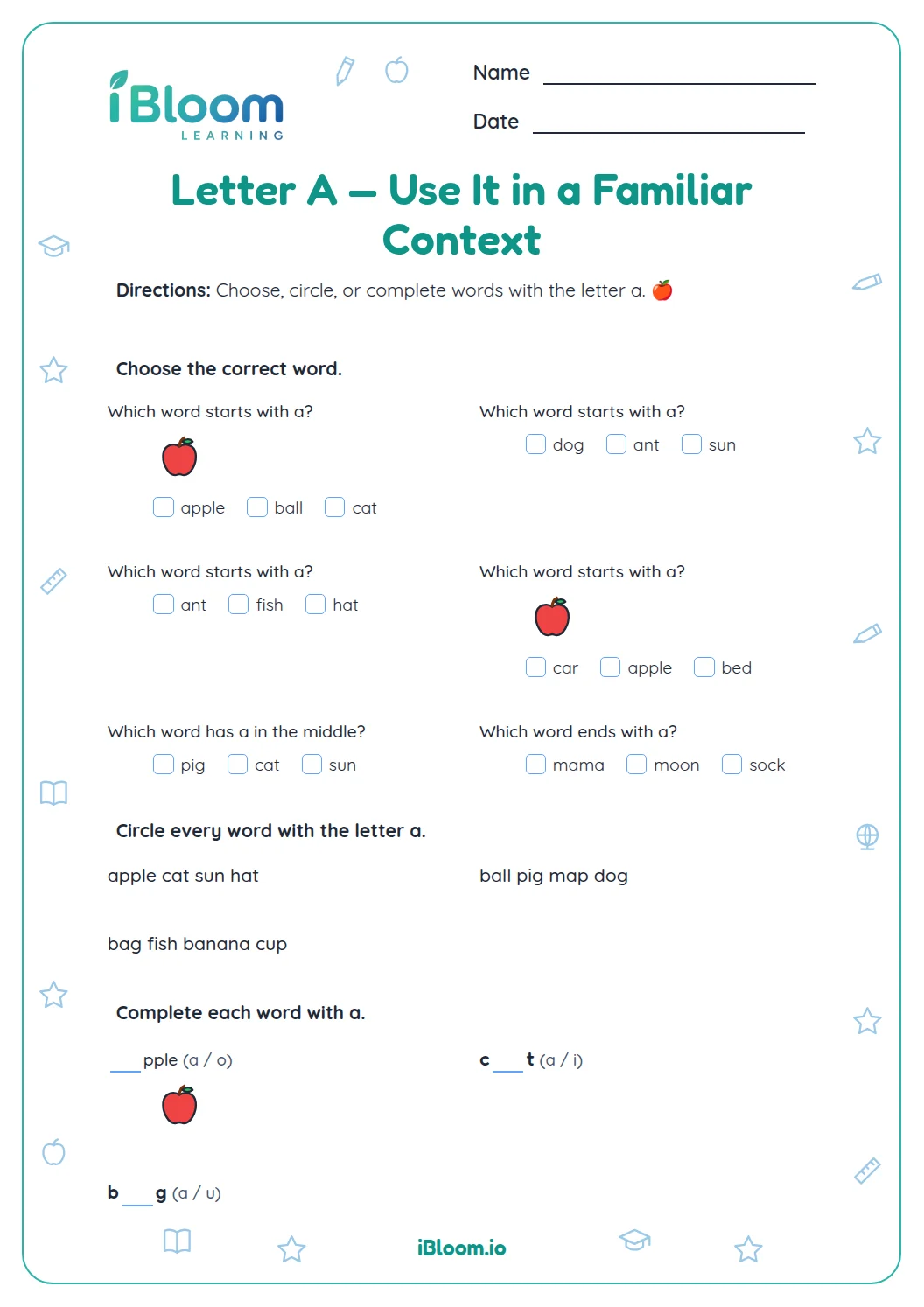
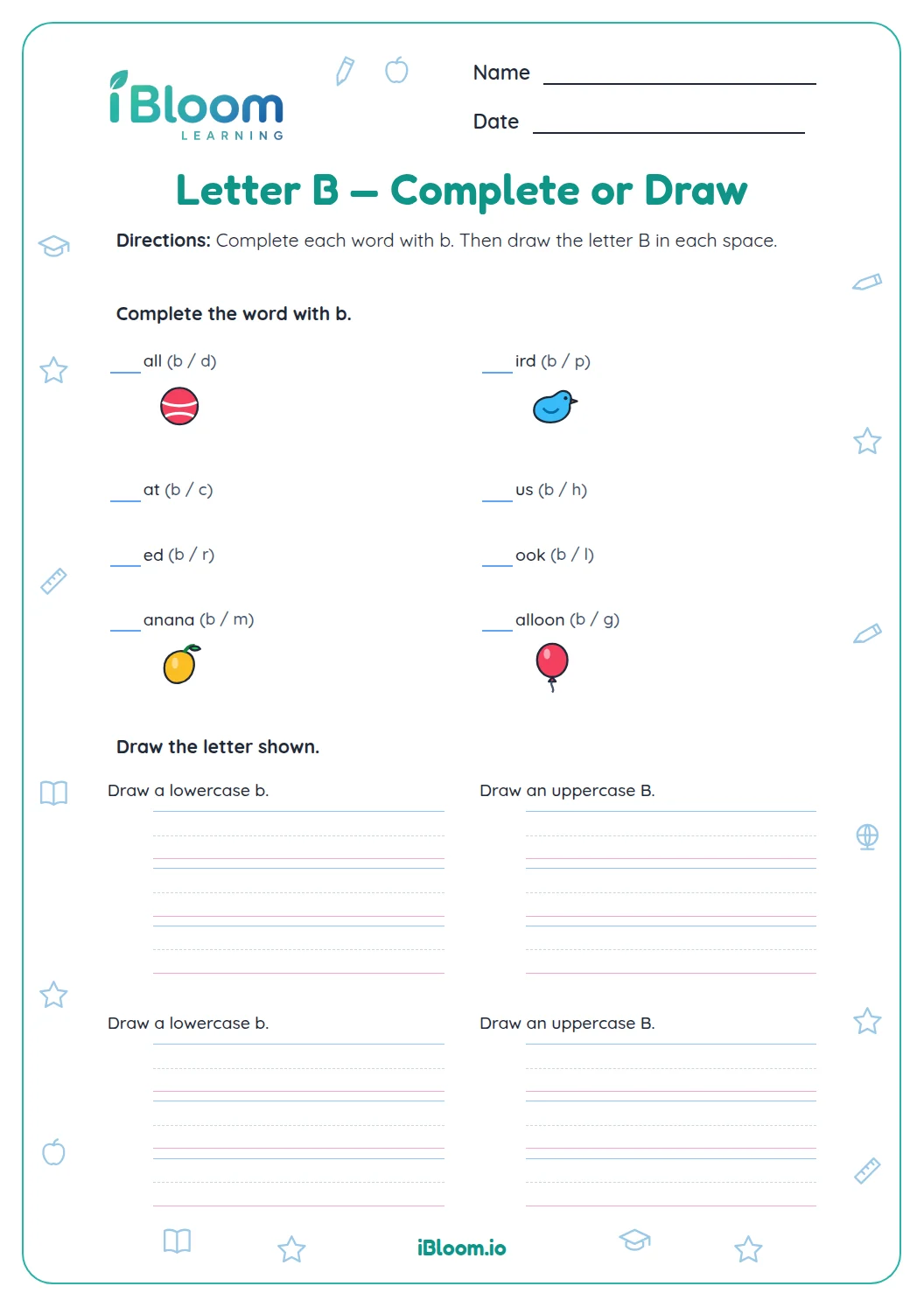
About this worksheet
Children trace uppercase Y, lowercase y, and yo-yo, then identify familiar words that begin with Y in picture choices and short sentences. The practice includes yo-yo, yes, yam, yard, and a Y word in context. The 16 questions include tracing and sound recognition, with a separate answer key.
What skill does this worksheet build?
Children trace uppercase Y and lowercase y together, then listen for the beginning sound in familiar Y words such as yo-yo, yes, yam, yard, and yak. Picture choices and short sentences connect the letter forms to spoken words.
How can a learner solve one?
Say each word aloud and listen to its first sound.
- 1Name the pictures apple, yo-yo, and cat.
- 2Listen for the first sound in each name.
- 3Choose yo-yo because it begins with Y.
What is included on the pages?
The 14 questions fit on two worksheet pages, with a two-page answer key. The practice moves from tracing to choosing familiar Y words.
How to use this worksheet
- 1Trace uppercase Y, lowercase y, and yo-yo along the models.
- 2Say each picture or word aloud.
- 3Listen for the first sound in each word.
- 4Choose the items that begin with the Y sound.
Common mistakes and quick fixes
The mistake
Reversing the two arms of uppercase Y.
The fix
Start at the top, draw both slanting arms, and bring them to one stem.
The mistake
Choosing a word because it contains Y anywhere.
The fix
Listen to the first sound; the target Y sound comes at the beginning.
The mistake
Confusing uppercase Y with lowercase y.
The fix
Notice that lowercase y has a long tail below the line.
What to practice next
Make more practice
Questions parents and teachers ask
What letter forms does the sheet practice?
It practices uppercase Y and lowercase y together in a tracing row. Children also identify each form in answer choices, then connect the letter to familiar spoken words that begin with its sound. The worksheet returns to both forms in the final practice.
Which Y words appear?
The questions use yo-yo, yes, yam, yard, and yak. Picture choices and short sentences help learners notice the beginning sound in different settings. An adult can say each word aloud and let the child listen before choosing. These are short, familiar examples that children can say aloud.
How many questions are included?
There are 14 questions across tracing, picture choices, and familiar word recognition. Each answer appears in the two-page key, which gives adults a quick way to check the completed work and talk through any missed sound. The key follows the worksheet order so each response is easy to locate.
How should an adult help with the sound?
Say each word clearly and pause at its beginning sound. Ask the learner to repeat the word, then listen for /y/. The goal is to connect the sound heard at the start with the printed letter Y in familiar words.
How many pages will I print?
The worksheet is two pages, and its answer key is also two pages. Print both parts of the worksheet for all 14 questions, then use the matching key to review the responses with the learner. The page count includes the complete answer key for the adult.