




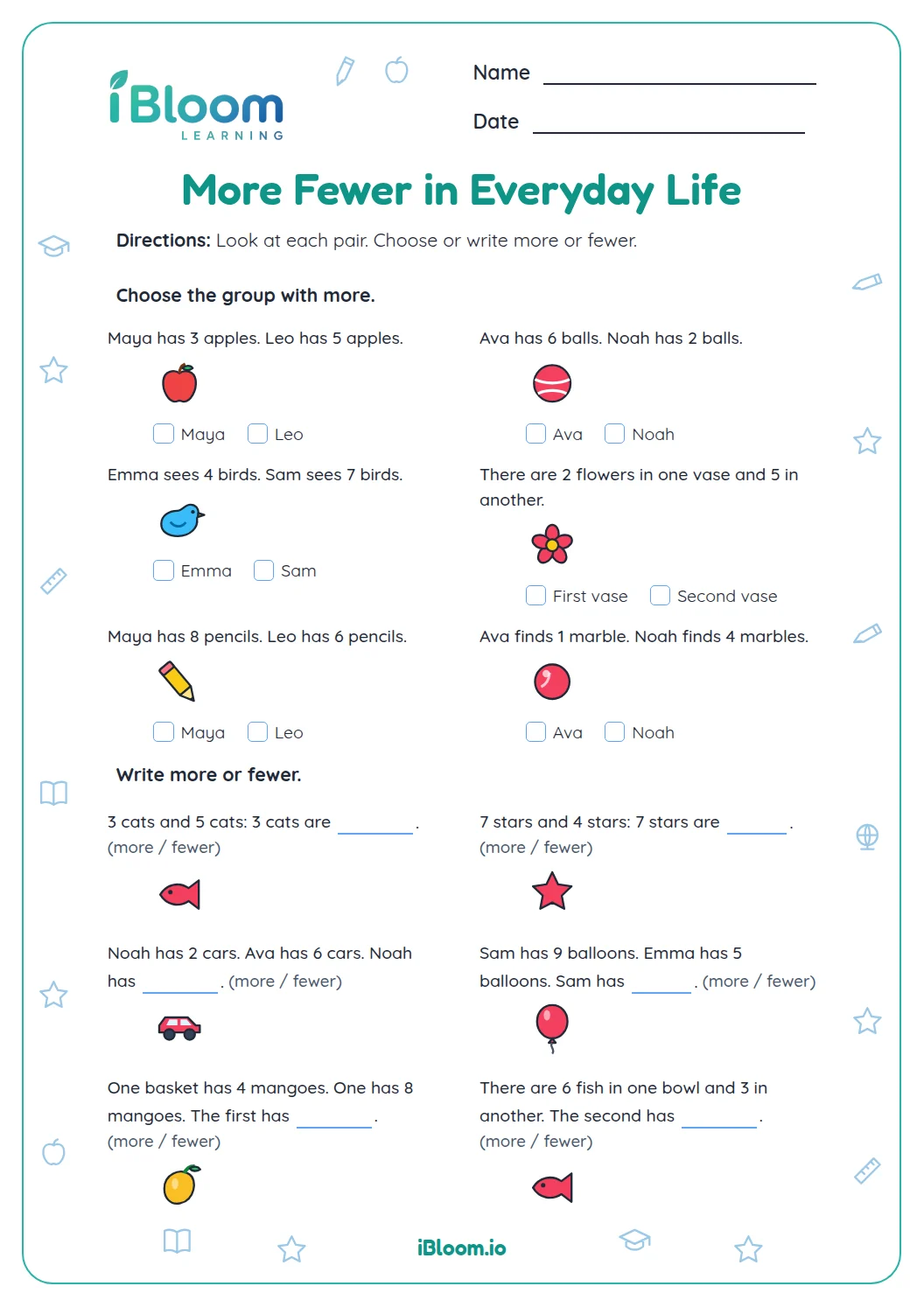
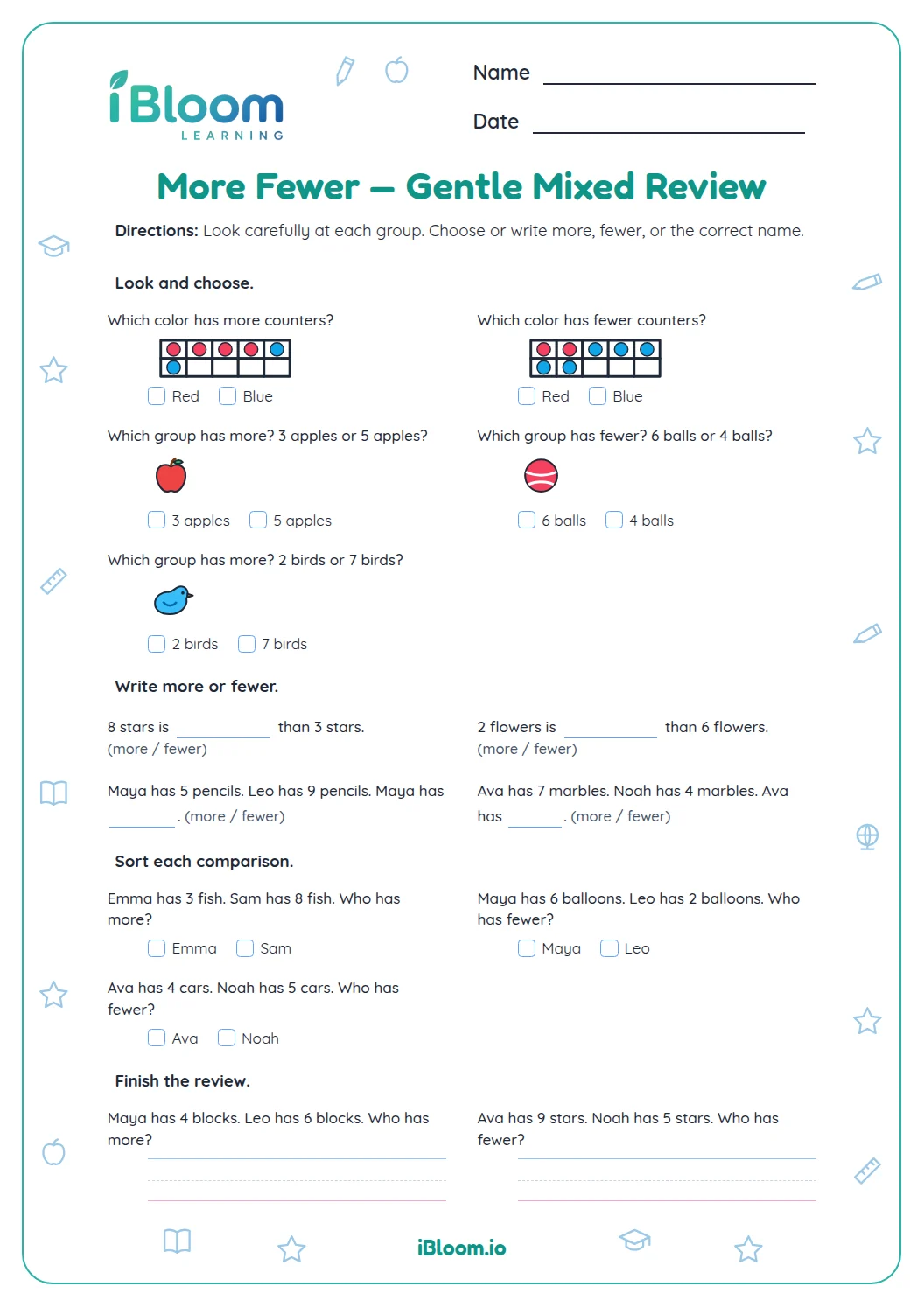
About this worksheet
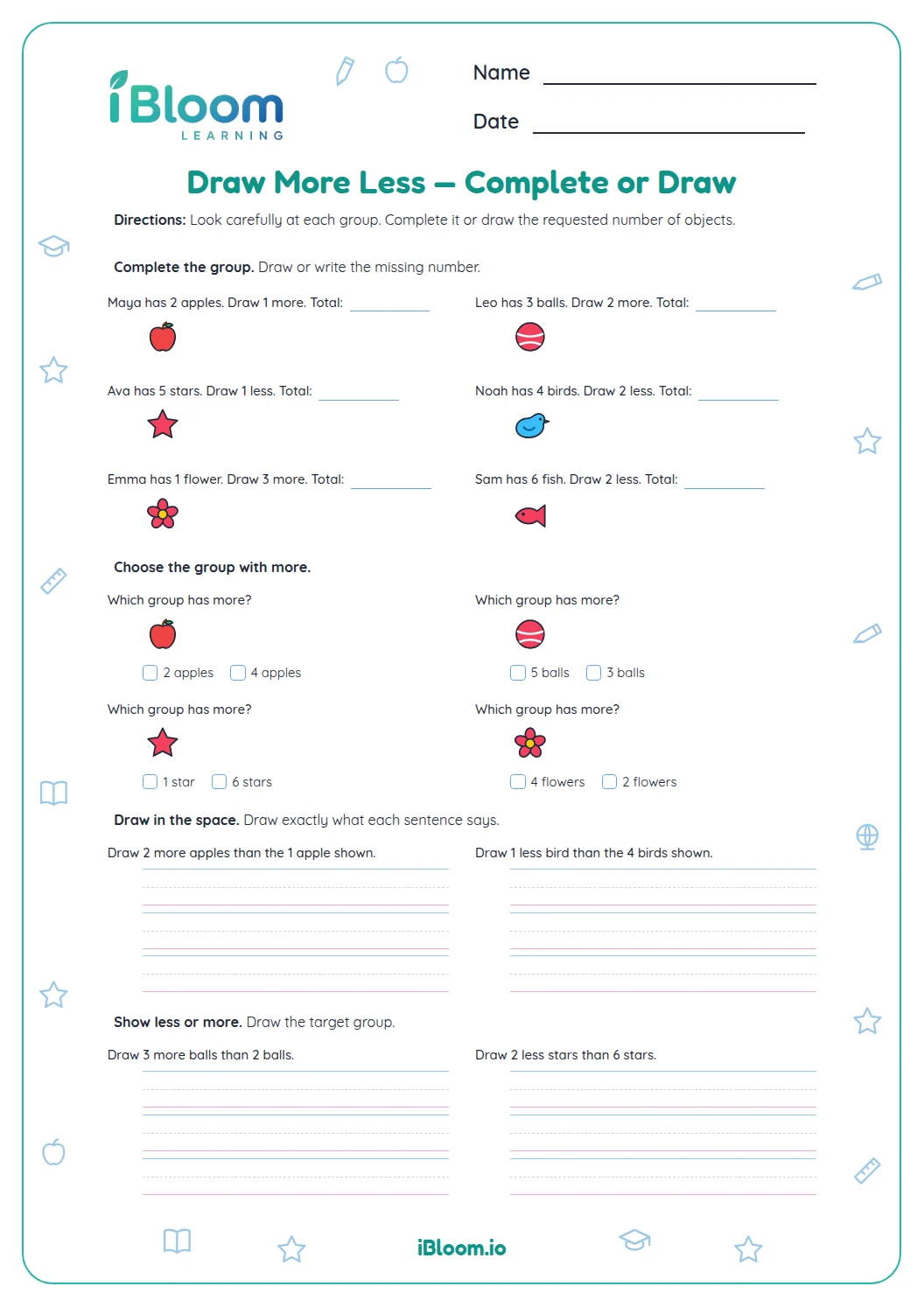
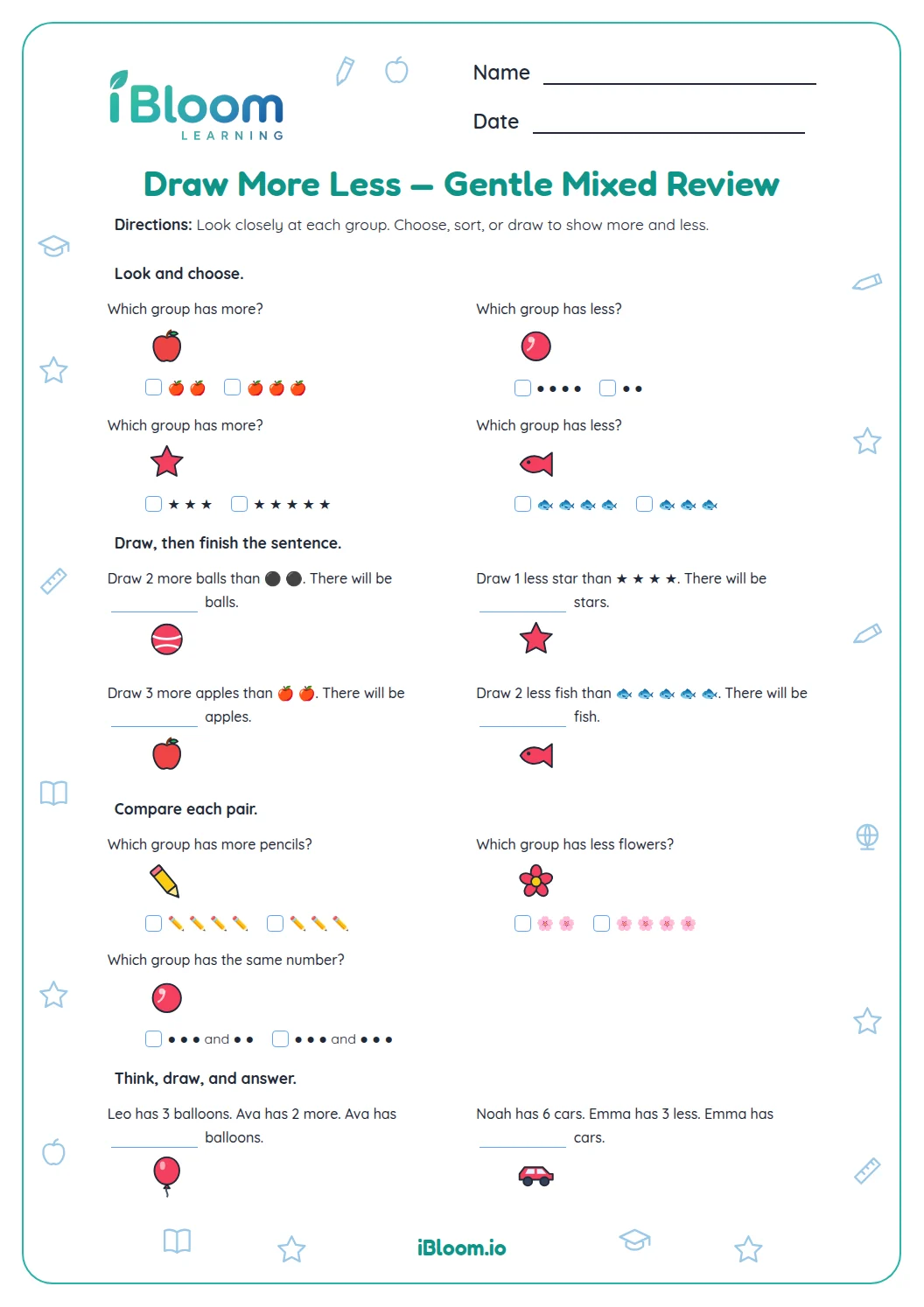
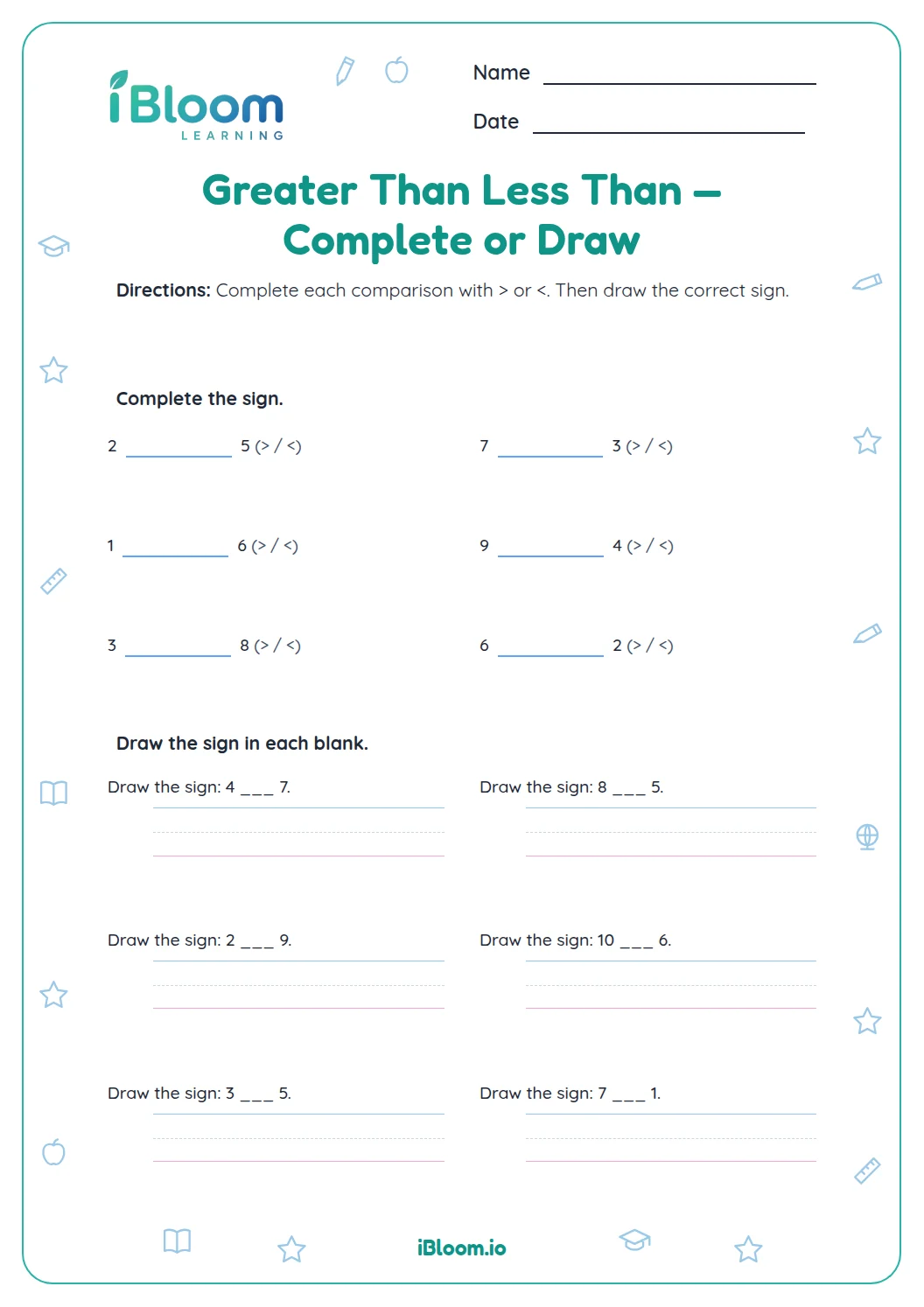
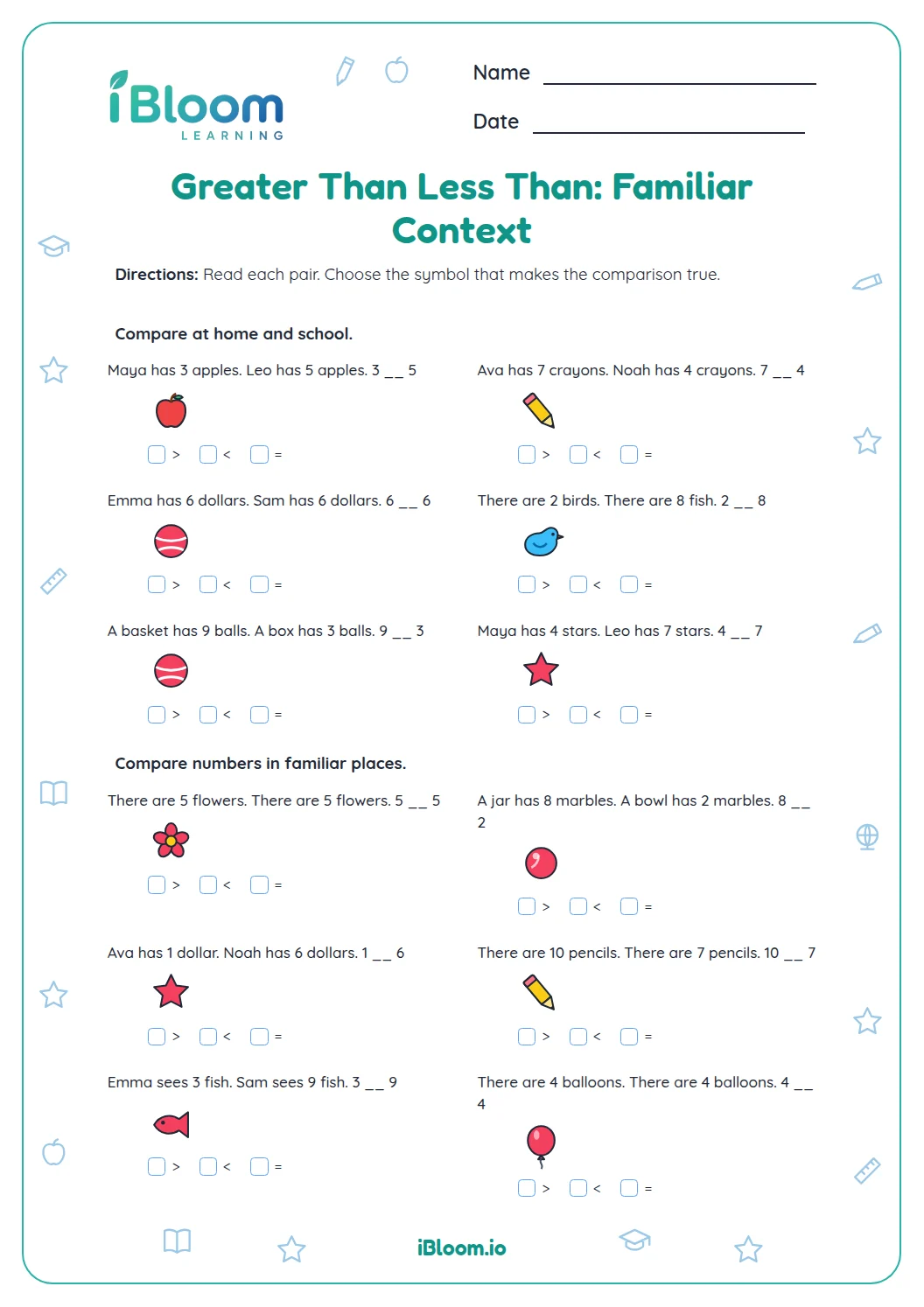
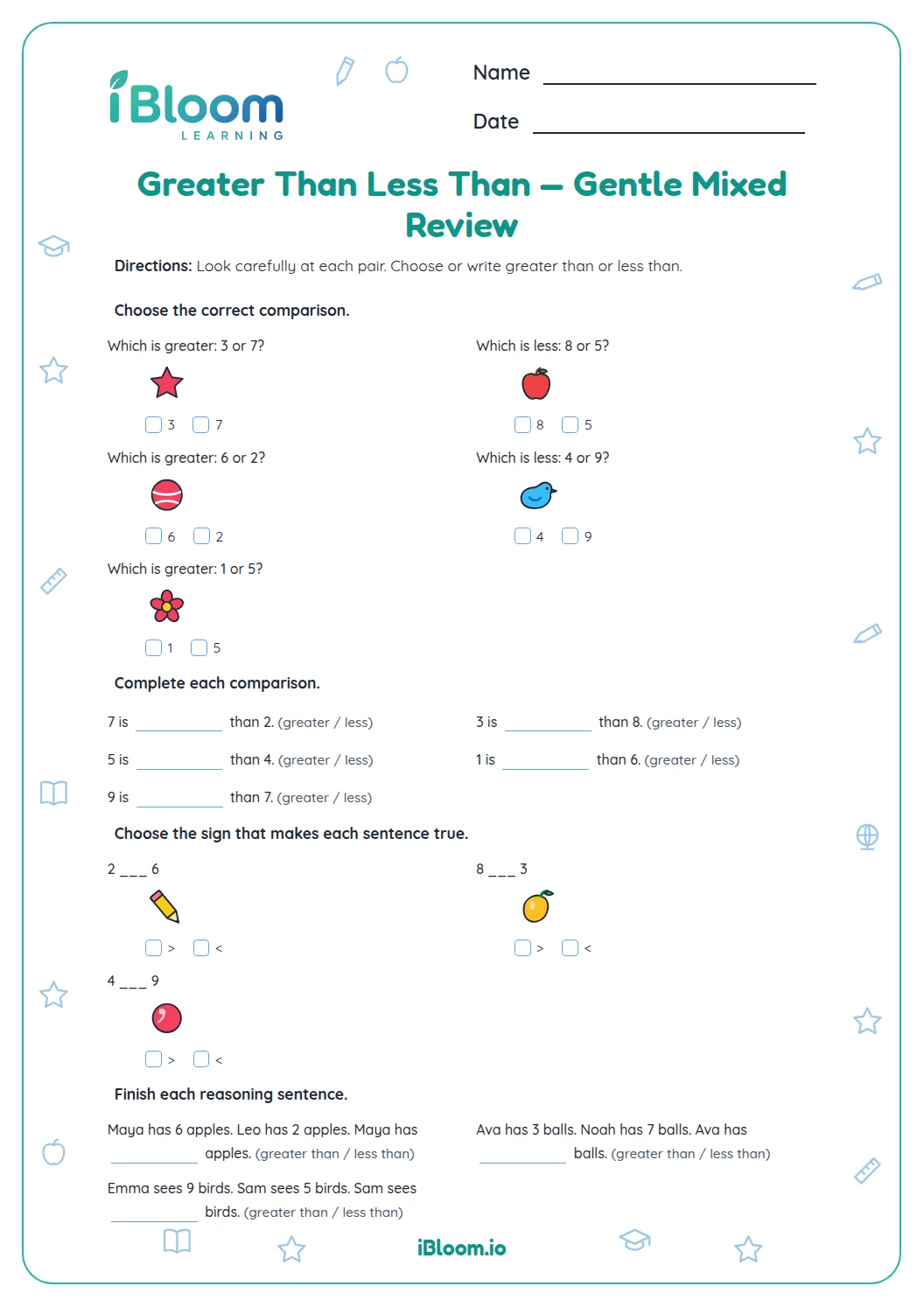
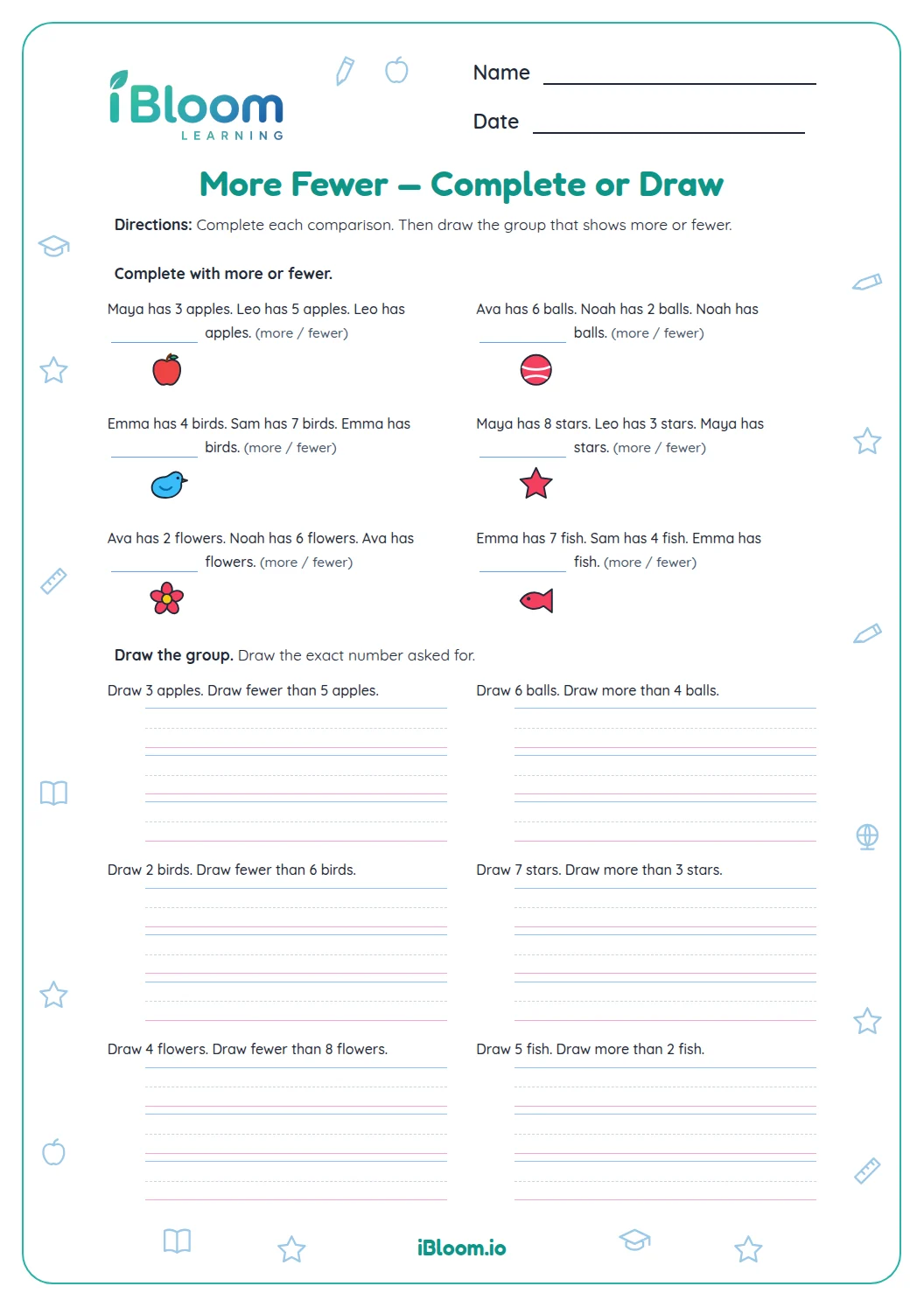
This free printable is for preschool and kindergarten learners practicing more and fewer with familiar objects. Children compare groups, choose an amount to add, and find what remains after objects are taken away. The 15 questions include picture clues, short number stories, and a separate answer key. The comparison work aligns with K.CC.C.6.
Aligned to K.CC.C.6
How can children tell which group has more?
Count each group or match objects one by one. If one group has objects left after matching, it has more; the other has fewer.
How does a draw-more question work?
Start with the amount already named, then count forward as you add objects. Use the same idea in reverse when the prompt asks for fewer.
- 1There are 4 apples. Draw 2 more to make 6.
- 2Count on from four: five, six.
- 3The new group has 6 apples.
What is on this worksheet?
The 15 questions begin with picture-supported group comparisons. Other items ask how many objects to draw or take away, complete short number stories, and use more-or-fewer language. The key shows the target amounts.
How can an adult support the activity?
Read prompts aloud and invite the child to point to or draw each object being added or taken away. Have the child recount the finished group to check the result.
How to use this worksheet
- 1Read the direction and name each pictured object.
- 2Count both groups, touching one object at a time.
- 3For an add-more story, count on from the starting group.
- 4For a take-away story, count what remains after the change.
- 5Check each response with the answer key and recount any uncertain group.
Common mistakes and quick fixes
The mistake
Comparing groups by how spread out they look.
The fix
Count the objects or match them one by one.
The mistake
Counting the starting group again after adding objects.
The fix
Keep the starting total and count on with each new object.
The mistake
Giving the number taken away instead of the number left.
The fix
Count the objects that remain after the change.
Common Core alignment
The worksheet practices comparing quantities through counted groups and familiar examples.
Compare groups by deciding which has more or fewer objects.
On this sheet: Questions compare counted groups and use more/fewer language in simple situations.
Show the official wordingHide the official wording
Identify whether the number of objects in one group is greater than, less than, or equal to the number of objects in another group, e.g., by using matching and counting strategies.
What to practice next
Make more practice
Further reading
Questions parents and teachers ask
What does “more” mean?
More means one group has a greater number of objects than another group. Children can count both groups or match one object from each group. Any objects left unmatched belong to the group with more. Ask the learner to point to the clue in the question before answering.
What is on this preschool and kindergarten worksheet?
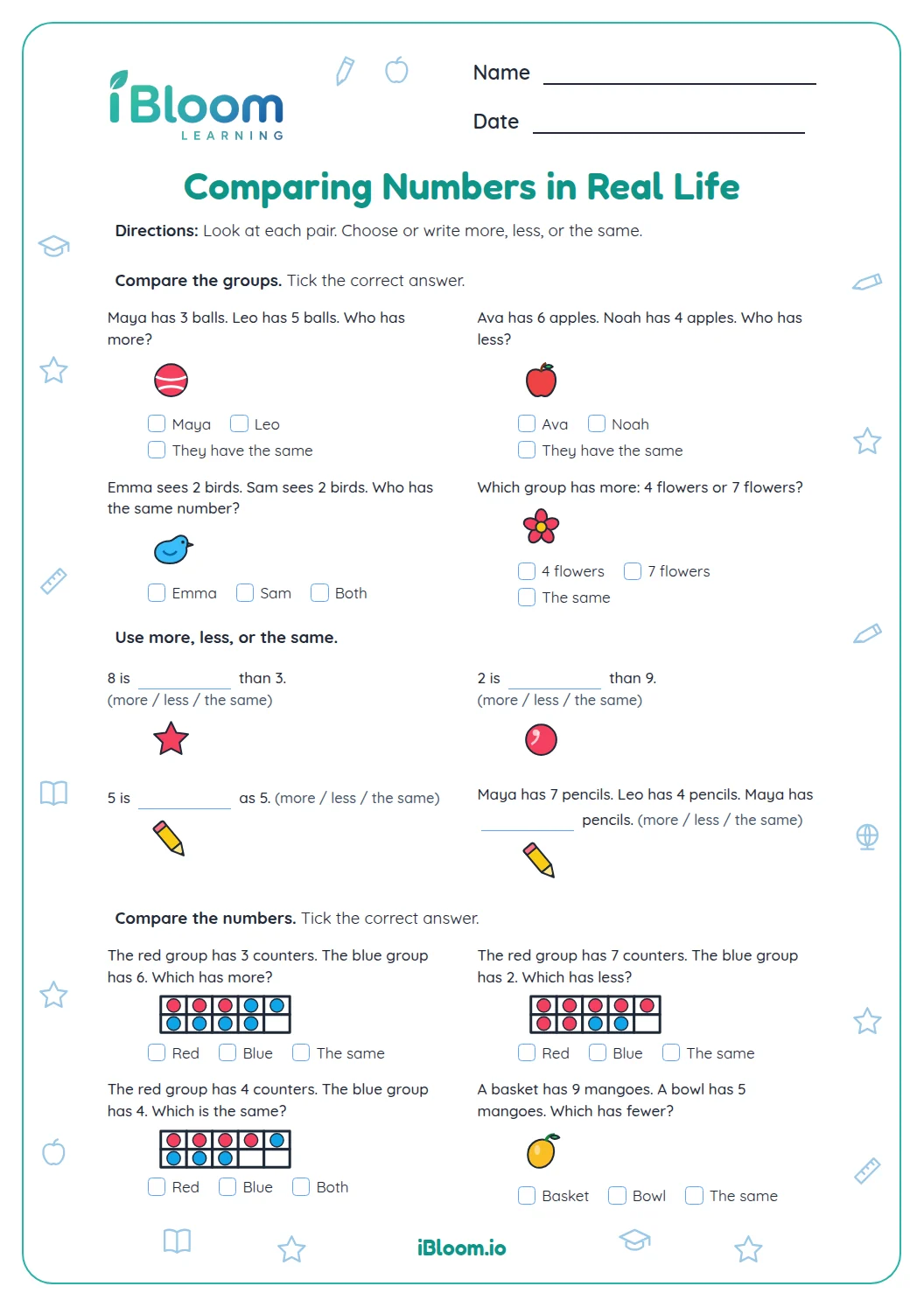
The printable has 15 questions across two worksheet pages, followed by a two-page answer key. Children compare pictured groups, choose an amount to add, and solve short stories about adding or taking away familiar objects. Ask the learner to point to the clue in the question before answering.
How does a child solve a draw-more question?
First count the objects already named. Then add the requested number by drawing one object at a time and count on to find the new total. The key gives the target amount, while the child’s drawing can look different. Ask the learner to point to the clue in the question before answering.
Can I read the questions aloud?
Yes. Read each short prompt while the child points, counts, or marks an answer. This lets the child focus on comparing quantities and following the change in a group without needing to read every sentence independently. Ask the learner to point to the clue in the question before answering.
Does the worksheet include an answer key?
Yes. A separate answer key is included after the two worksheet pages. It lists the comparison words and target numbers. For drawing prompts, accept any clear group with the correct amount and object type. Ask the learner to point to the clue in the question before answering.