








About this worksheet
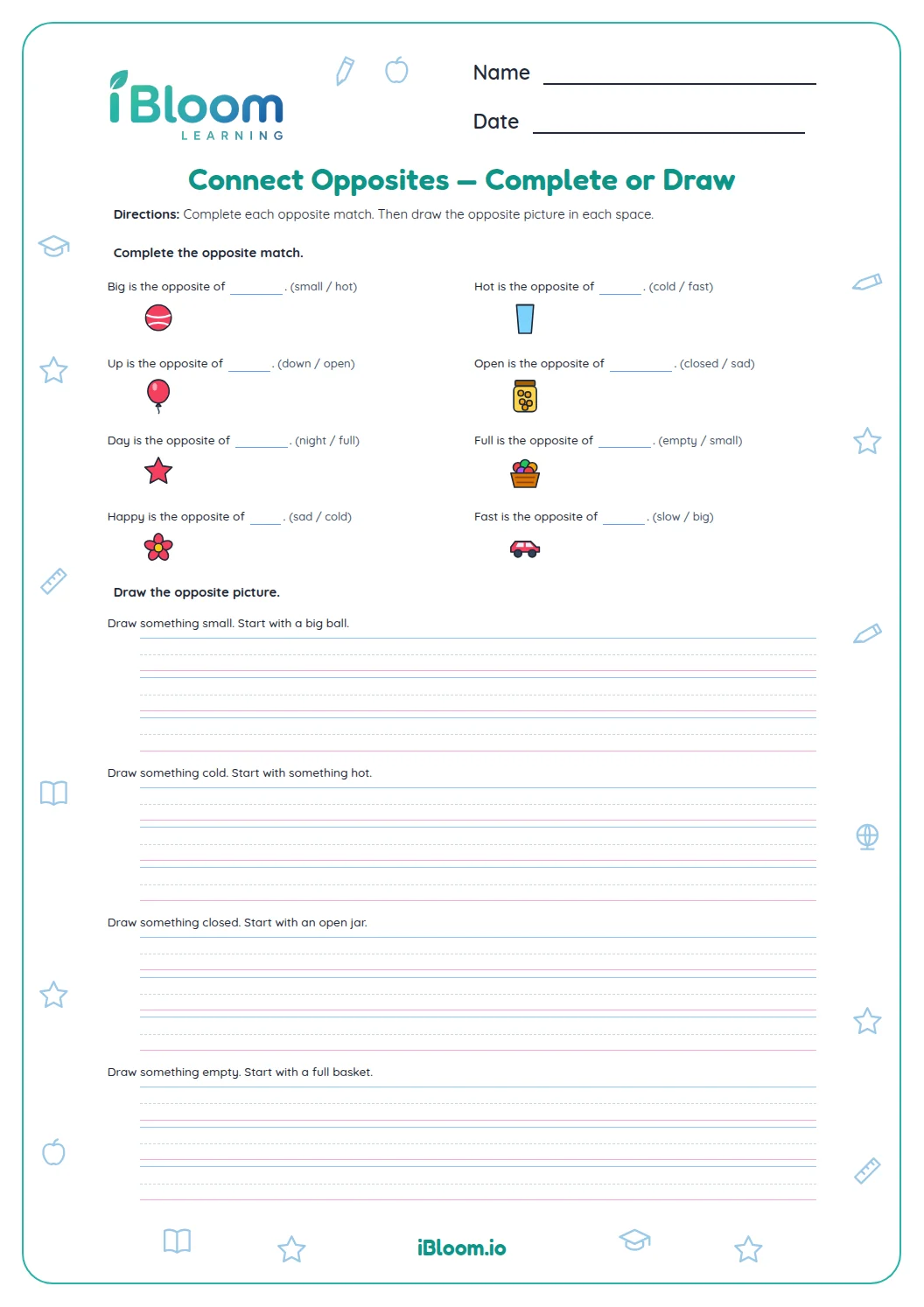
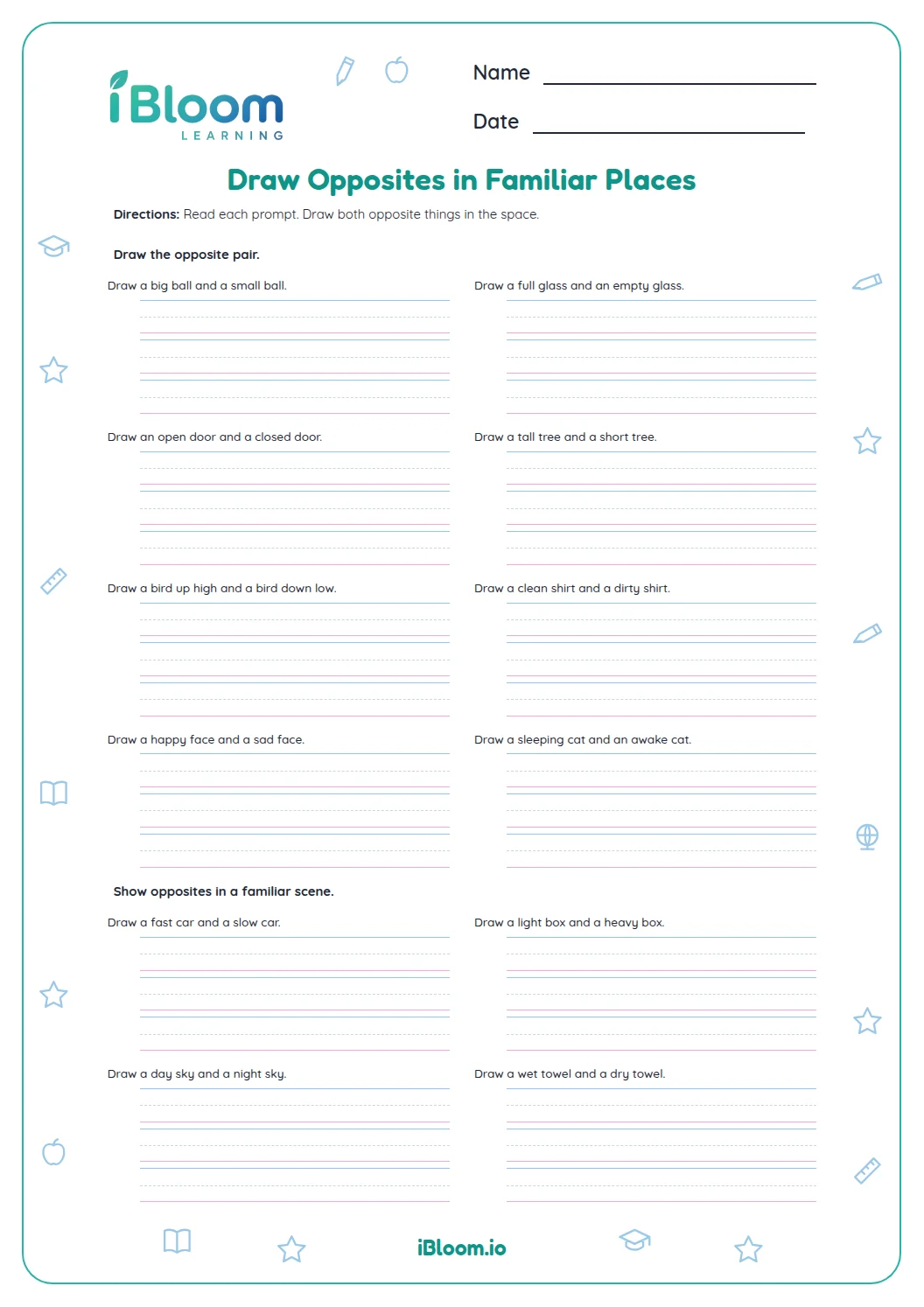
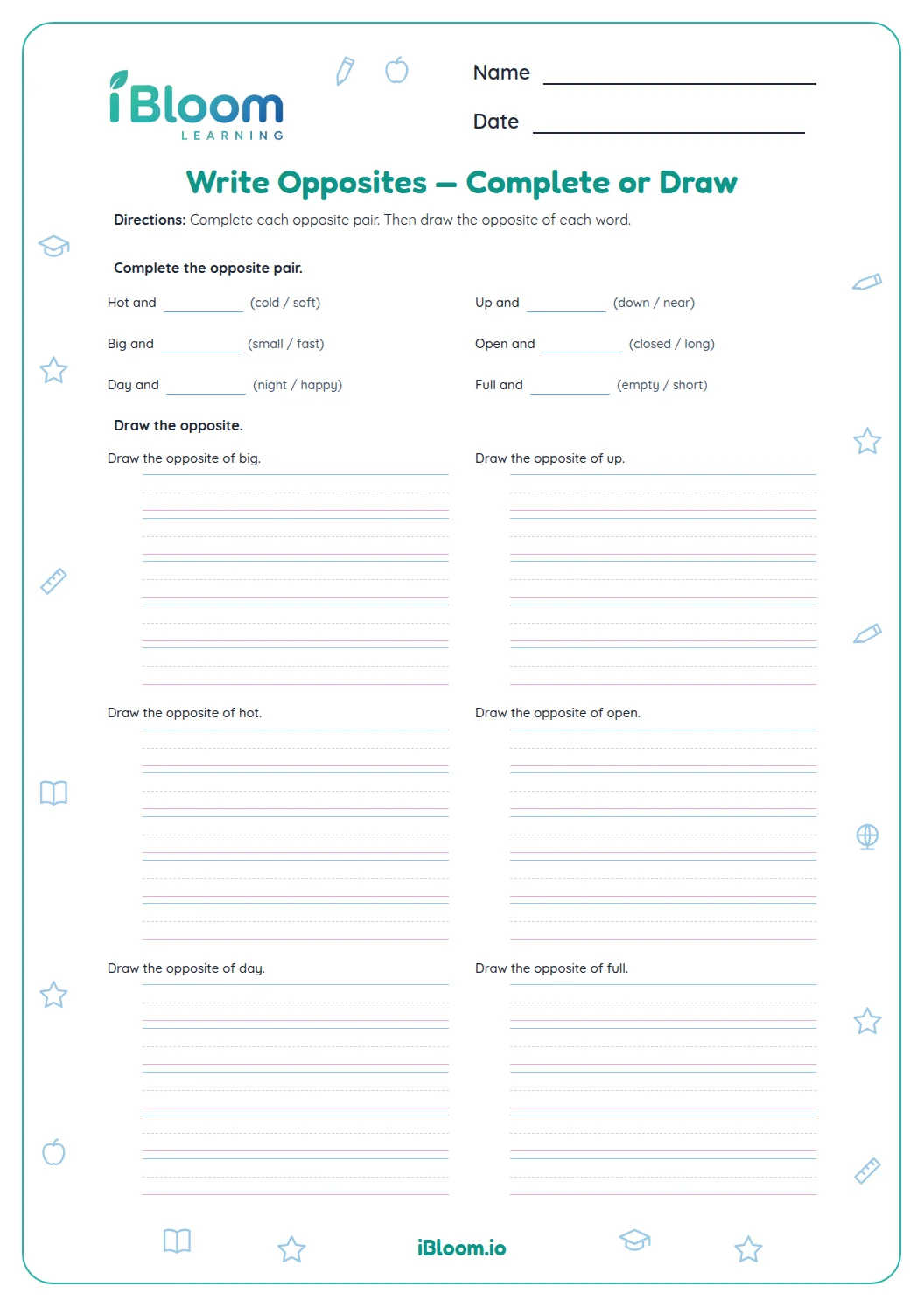
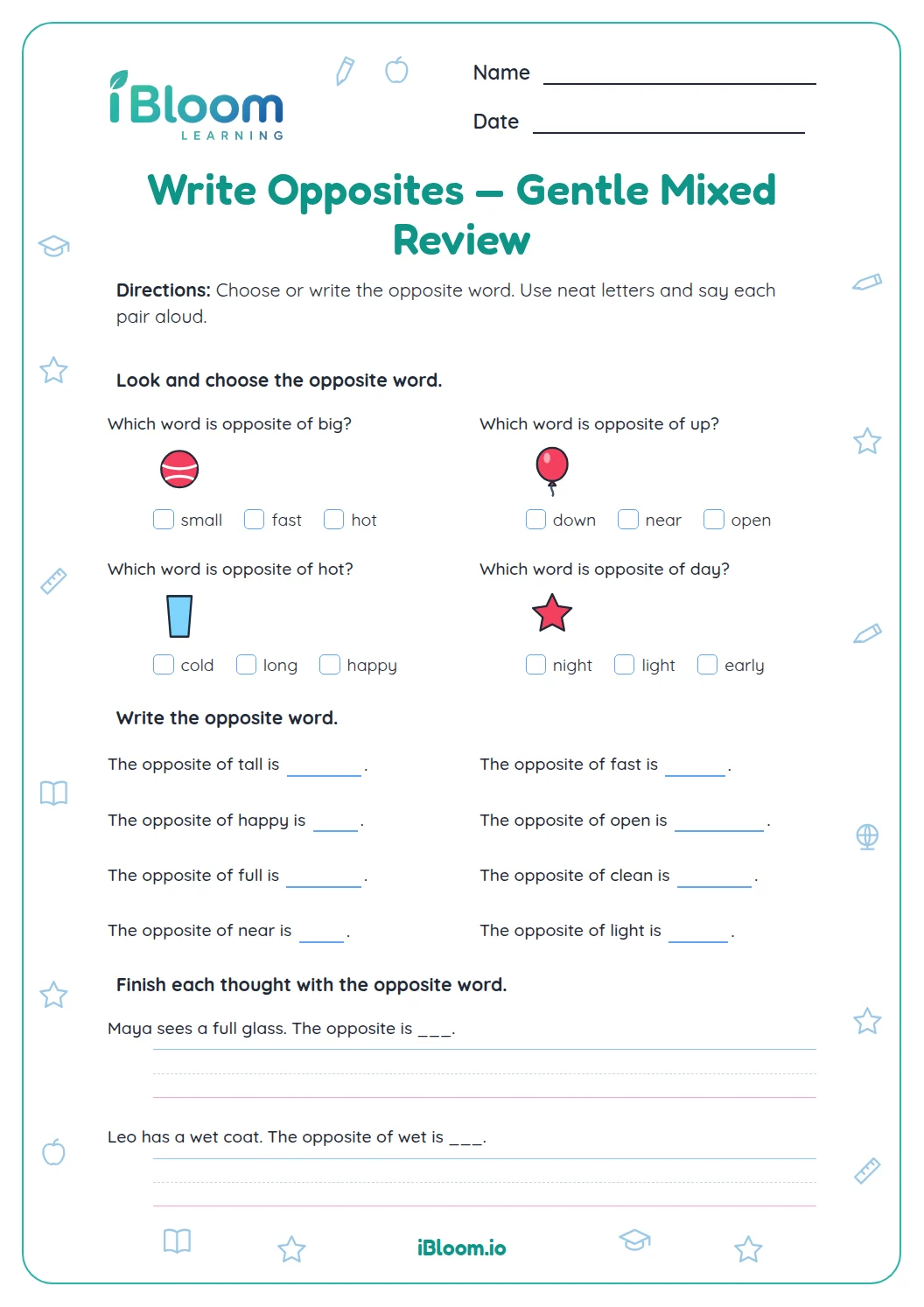
This Preschool and Kindergarten opposites worksheet uses picture choices to help children connect familiar meanings. In 16 questions, learners choose the opposite of ideas such as hot, up, big, day, fast, and open. Picture choices keep the task accessible to beginning readers, while an answer key gives adults a quick reference for talking through each pair.
Aligned to L.K.5.b
How do picture clues help with opposites?
Children name what they see, then compare that meaning with the word in the prompt. A sun and a moon can help show the difference between day and night.
- 1Question 4 asks for the opposite of day.
- 2Choose the moon picture for night.
Why say both words in an opposite pair?
Saying both words makes the contrast easier to remember. Invite the child to repeat “fast, slow” or “big, small” and point to the matching picture for each word.
How can I use this worksheet?
- 1Read the key word aloud.
- 2Name each picture choice together.
- 3Ask which choice means the opposite.
- 4Say the pair aloud and point to each picture.
- 5Check the answer key and revisit any confusing pair.
What mistakes should learners check?
The mistake
Choosing a picture that is related but not opposite.
The fix
Say what the picture means, then compare it with the target word.
The mistake
Guessing from color or decoration instead of meaning.
The fix
Name the object or action shown in each choice.
The mistake
Mixing up the order of a familiar pair.
The fix
Repeat both meanings aloud and point to the picture for each one.
Curriculum alignment
Relate familiar action and describing words to their opposites.
On this sheet: The picture choices ask children to connect familiar meanings such as hot and cold, big and small, and day and night.
Show the official wordingHide the official wording
Demonstrate understanding of frequently occurring verbs and adjectives by relating them to their opposites (antonyms).
What to practice next
Make more practice
Further reading
Questions parents and teachers ask
What does it mean when two words are opposites?
Opposites have meanings that are different, such as hot and cold or up and down. On this page, children use picture choices to connect a familiar word or idea with its opposite. Try saying both words aloud, such as hot and cold, before choosing.
Why does the worksheet use pictures?
Pictures make the choices concrete for preschool and kindergarten learners. A child can look at the objects, name what each one means, and select the image that best matches the opposite idea in the question. Name the objects together, then connect each picture to a familiar meaning.
Should my child say both opposite words?
Yes. Naming both words helps make the relationship clear: “hot, cold” or “fast, slow.” If a picture is unfamiliar, name it together before deciding which meaning it represents. Repeat the pair, such as hot and cold or fast and slow, while pointing.
Can more than one picture seem like an opposite?
Some pictures can suggest more than one idea, so use the question wording and answer key together. The intended choices represent familiar contrasts such as hot and cold, day and night, fast and slow, and big and small. The key records the intended choice for each picture question.
How many picture questions are included?
There are 16 multiple-choice questions. They practice opposite ideas such as hot and cold, up and down, big and small, day and night, and fast and slow. Sixteen picture-choice items cover familiar contrasts such as hot/cold and fast/slow.
How can I help a child who is unsure?
Say the target word aloud and act it out when possible, such as raising a hand for up. Then look at each picture and describe what it represents before choosing its opposite. Act out the word when possible, then name the picture that suggests its opposite.