





About this worksheet
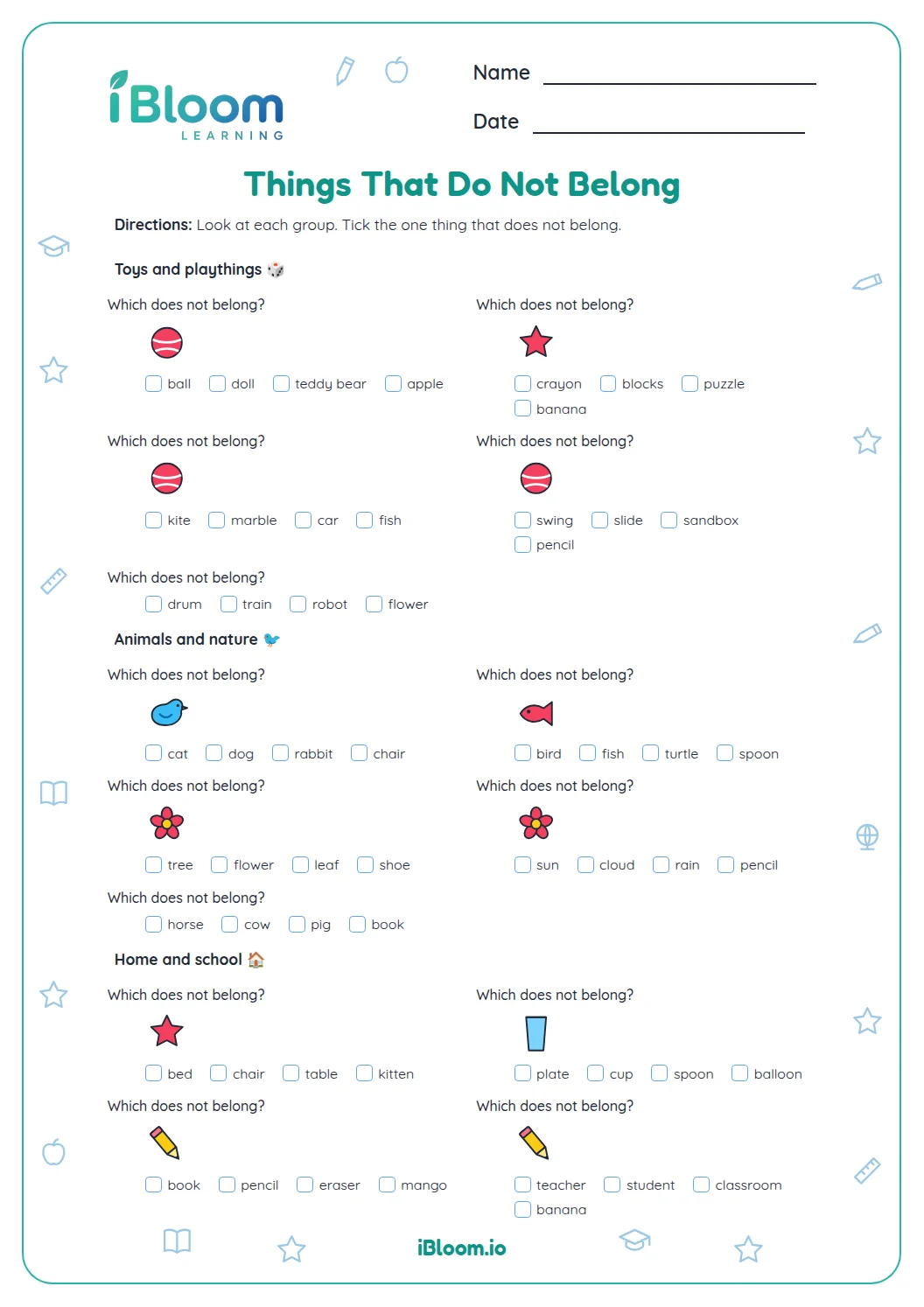
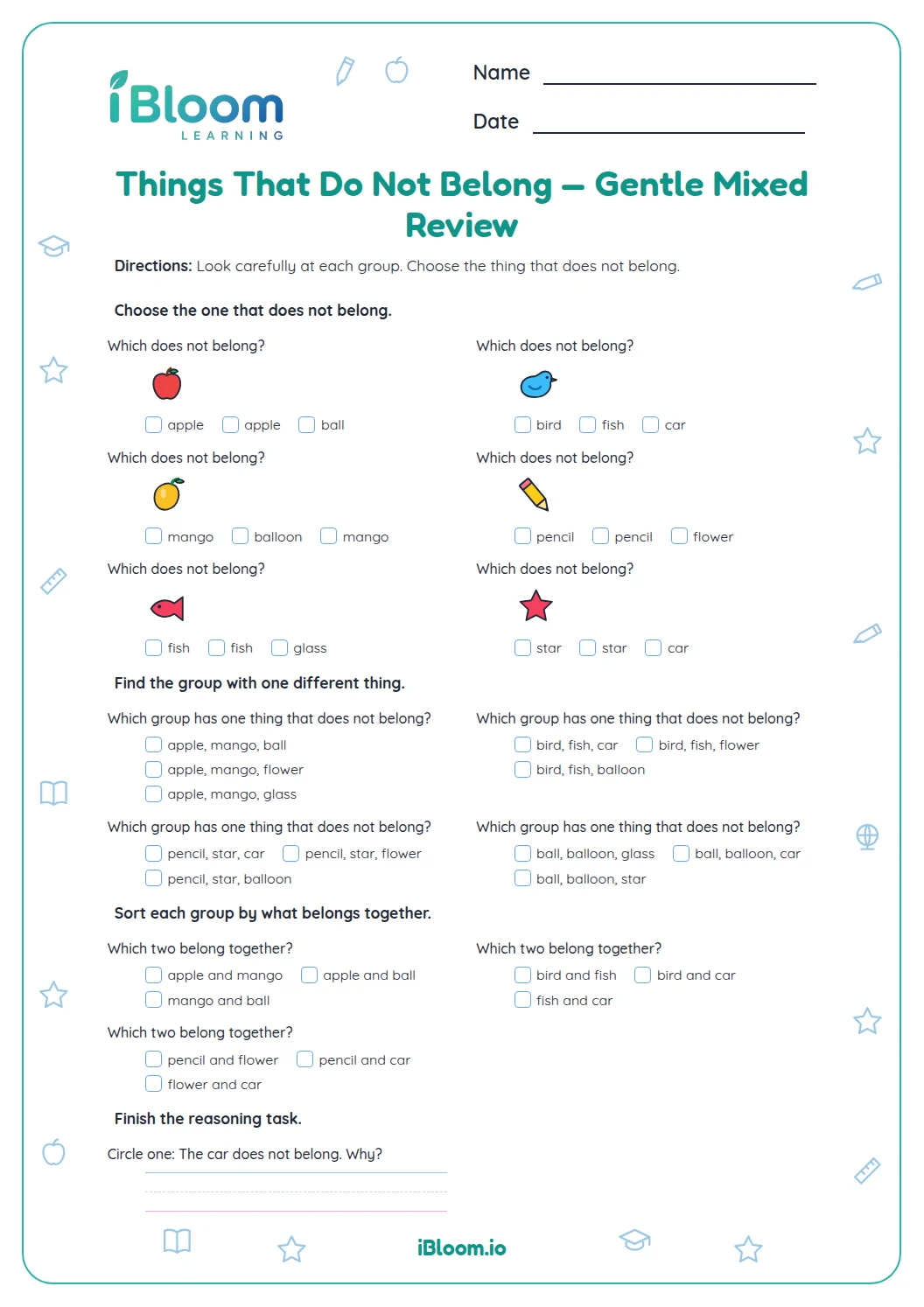
This printable preschool and kindergarten page asks children to find the word that does not fit a group. The first set uses familiar categories such as fruit, pets, clothes, vehicles, and table items. Four short shape questions follow, then three named-category questions and one drawing prompt. The key gives the intended outlier and a sample drawing response.
How do children find the item that differs?
Part A lists familiar groups of foods, animals, objects, and colors. Children circle the one word that does not fit.
- 1Apple, banana, car: car is not a fruit.
What happens in the shape questions?
Part B includes shape sequences and named groups such as pets or fruit. Children choose the shape or word that does not belong, then Part C invites them to draw a group of their own.
What can children draw?
The last prompt asks for three things that belong together. The key gives one sample group, and another clear group is also fine.
How to use this page
- 1Name each picture before sorting.
- 2Say what most items have in common.
- 3Choose the outlier and tell why it differs.
- 4Compare how often each shape appears in the shape questions.
- 5Draw three items with one shared feature and name the group.
Helpful reminders
The mistake
Choosing a familiar object without checking the group.
The fix
Name the other items and identify their shared category.
The mistake
Assuming the drawing prompt has one required answer.
The fix
Accept a group with a clear shared feature.
The mistake
Picking a shape that appears more than once.
The fix
Check the sequence and choose the shape seen only once.
What to practice next
Make more practice
Questions parents and teachers ask
How does a child decide what does not belong?
Ask the child to name each picture and describe what most of the group shares. Then choose the item that does not share that feature. For example, three fruit pictures and a car make a clear group because the car is not fruit.
Can a child give a different answer?
Some objects can fit more than one category, but the worksheet uses familiar groups with a clear intended category. Ask the child to name the rule they used. For the final drawing prompt, accept any group of three with a clear shared feature.
What does the final drawing prompt ask for?
The child draws three things that belong together, such as three fruits or three pets. The answer key shows one sample group. Invite the child to name the feature that connects the three items, such as being food or being animals.
How do the shape questions differ from the picture groups?
The shape questions show short sequences with two copies of one shape and one copy of another. Children choose the shape that appears once. Earlier word rows use familiar categories such as food, animals, clothing, and transportation. Invite the child to say what the other words share.
Should I expect a written explanation for every answer?
No. Children can answer the choice questions by pointing to a word or saying it aloud. You can invite them to explain the shared feature, while the final drawing task offers one chance to make and describe a group of their own.