








About this worksheet
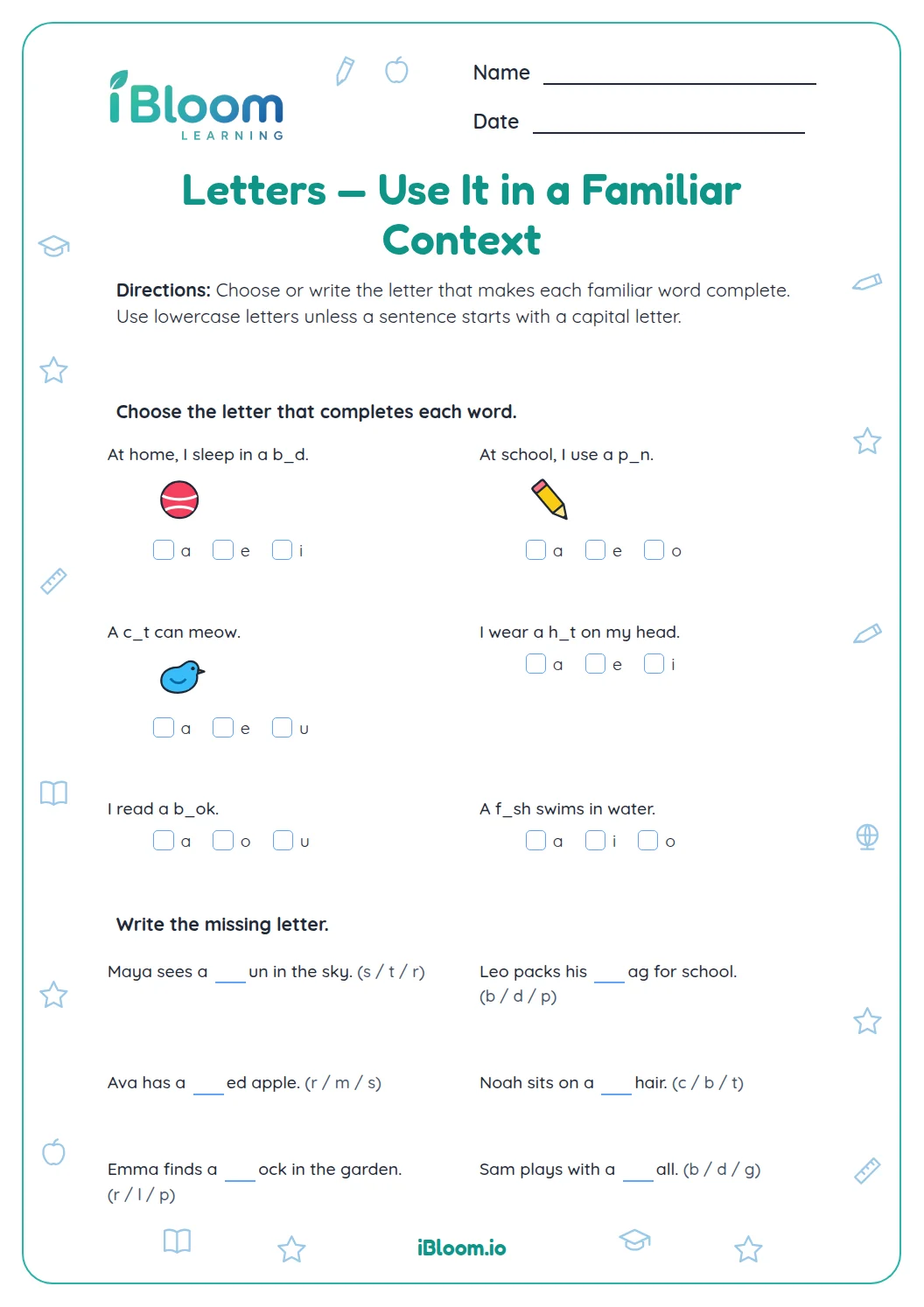
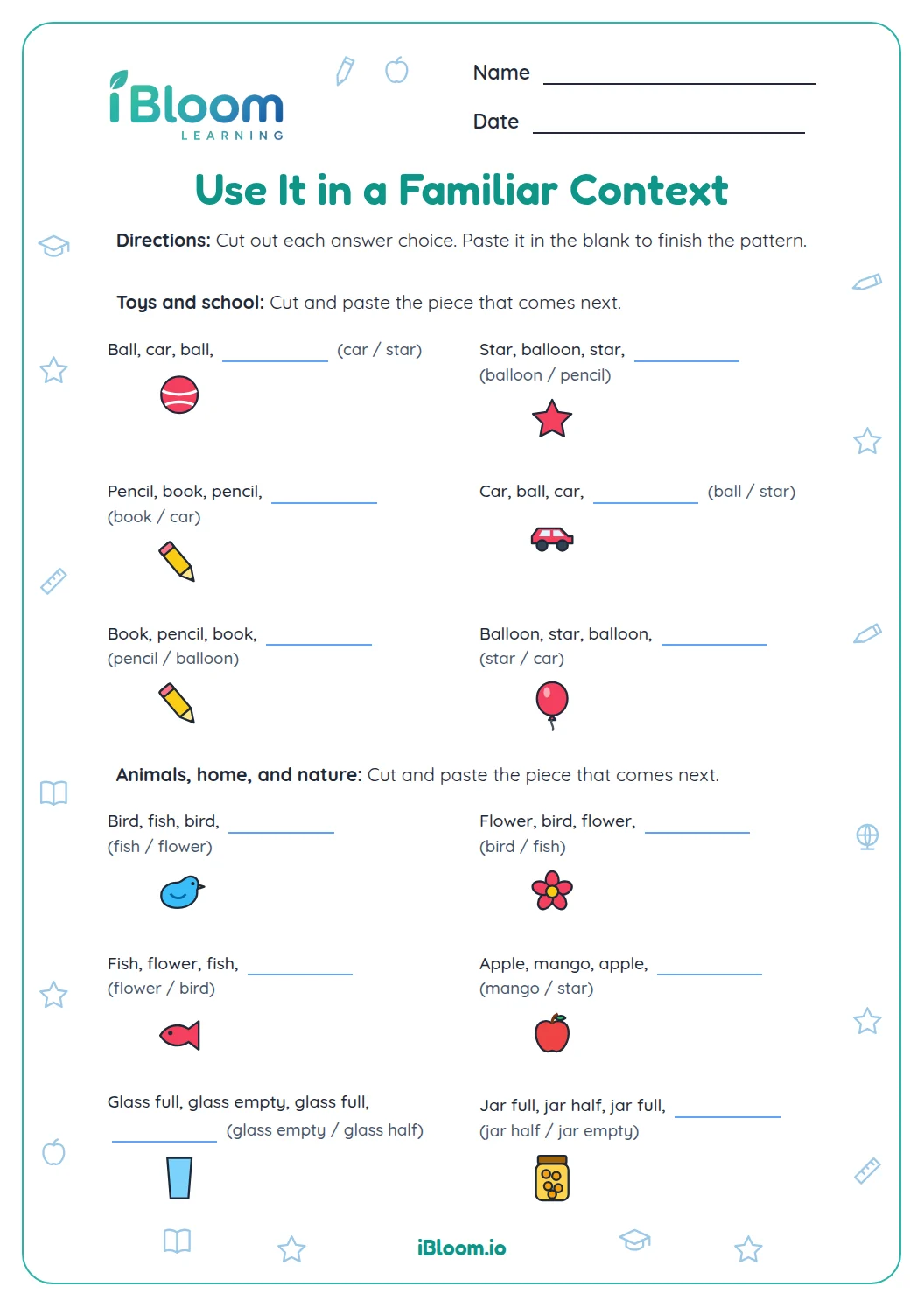
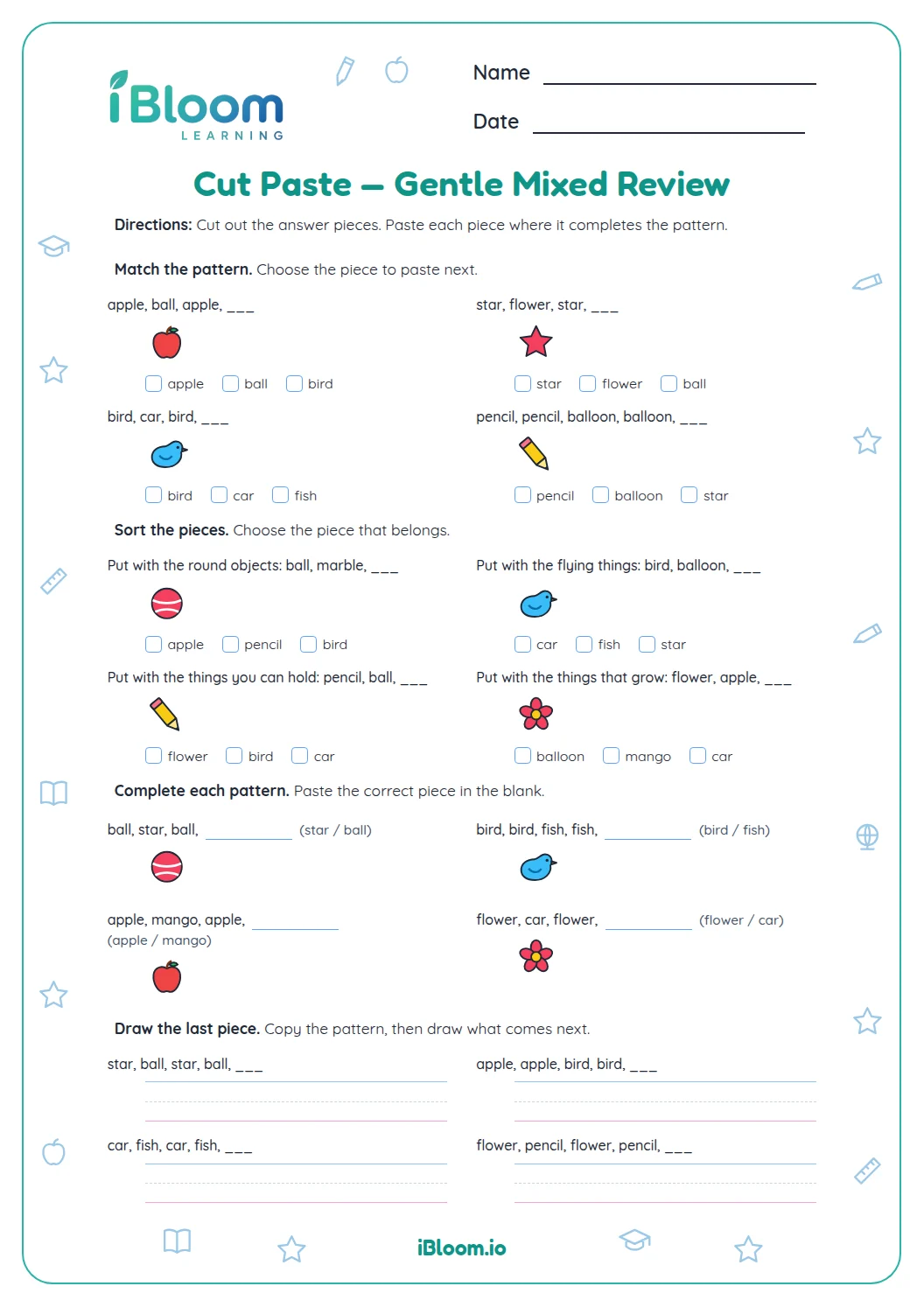
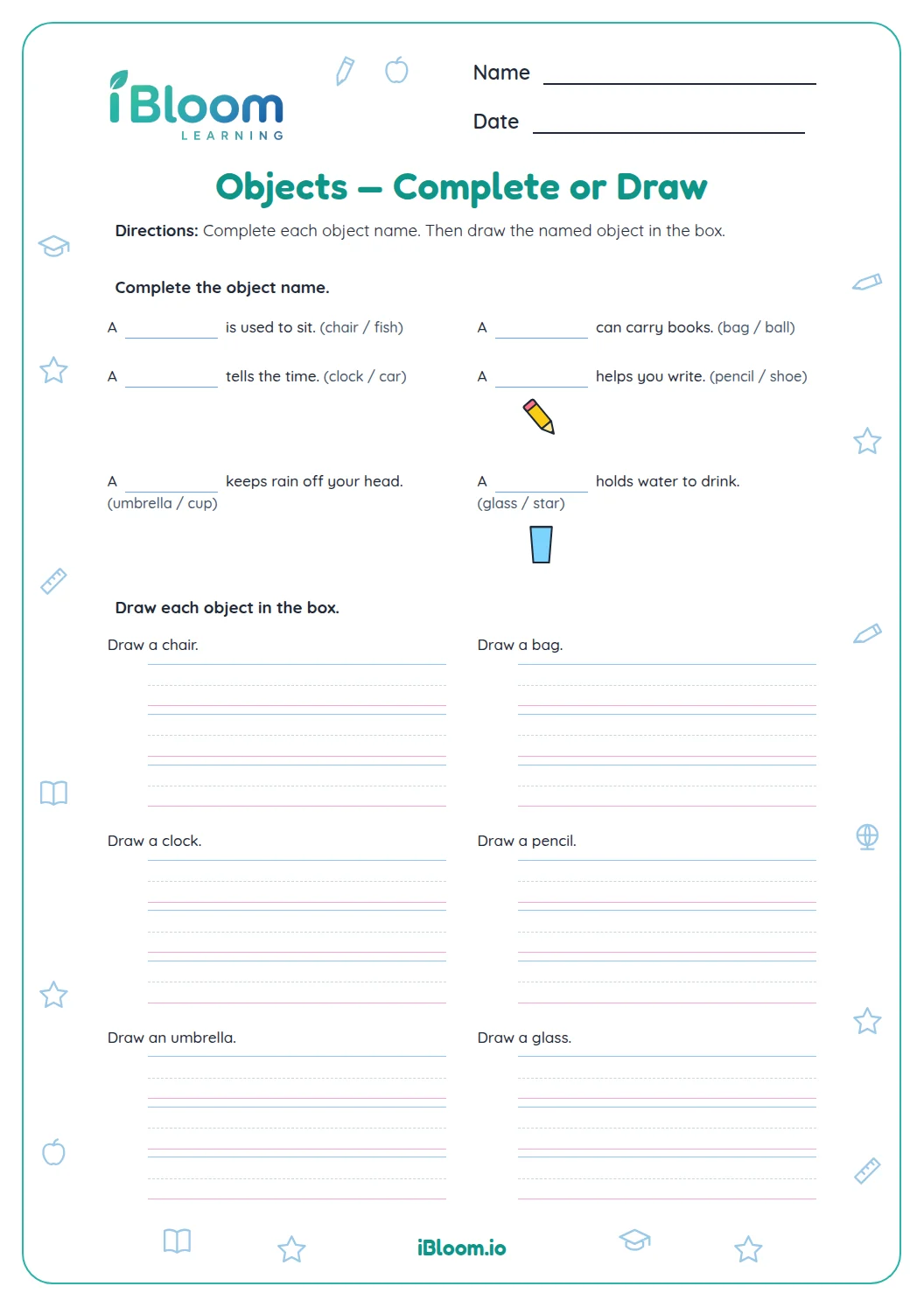
This gentle mixed review gives preschool and kindergarten children several ways to work with letters. They match uppercase and lowercase forms, say the names of pictured objects to hear their first sounds, and continue familiar alphabet sequences. The 18 questions move from recognition to simple letter order, with picture clues included for beginning sounds.
Aligned to L.K.1.A and RF.K.3.A
What will children do?
Part A matches uppercase and lowercase forms. Part B uses picture names to listen for beginning sounds. Part C completes alphabet sequences, and Part D sorts letter forms and order.
- Part A: 6 letter-form matches
- Part B: 4 picture beginning-sound questions
- Part C: 4 alphabet sequences
- Part D: 4 letter-form and order choices
How can a grown-up support practice?
Invite the child to name each pictured object before choosing its first letter. For letter patterns, say the alphabet together from the starting point, then pause at the missing letter.
How to use the worksheet
- 1Name the letter in the question.
- 2Compare its uppercase and lowercase forms.
- 3For picture clues, say the object name aloud and listen for its first sound.
- 4For a pattern, recite the alphabet from the letter shown.
Common mix-ups
The mistake
Mixing up lowercase b and d. Check which side the tall line is on.
The fix
The mistake
Choosing a picture answer from its meaning instead of its first sound. Say the object name slowly.
The fix
The mistake
Skipping a letter in the alphabet sequence. Say the sequence aloud from the first letter.
The fix
Curriculum alignment
The questions practice letter recognition and matching consonant sounds to their letters.
Identify and distinguish uppercase and lowercase letter forms.
On this sheet: Letter matching questions ask children to distinguish uppercase and lowercase forms.
Show the official wordingHide the official wording
Print many upper- and lowercase letters.
Match pictured words that begin with familiar consonant sounds.
On this sheet: The ball, cat, and dog clues ask children to match a word’s first consonant sound to its letter.
Show the official wordingHide the official wording
Demonstrate basic knowledge of one-to-one letter-sound correspondences by producing the primary sound or many of the most frequent sounds for each consonant.
What to practice next
Make more practice
Further reading
Questions parents and teachers ask
What skills are on this letter worksheet?
Children match uppercase and lowercase forms, listen for the first sound in pictured words, and continue alphabet sequences. The questions move between recognition and simple order so an adult can see which kind of letter practice needs another turn.
Should children say the letter name or sound?
Both can help. This page asks children to name pictured objects and listen for the first sound, then match that sound to a letter. Other items focus on recognizing uppercase and lowercase forms or saying letters in alphabet order.
Which picture words are included?
The beginning-sound items show an apple, ball, cat, and dog. Each picture’s name starts with the target letter, so children can say the word aloud and listen to its first sound before choosing the matching letter. The pictured objects are familiar words.
How long does the review take?
About 15 minutes is a reasonable starting point, with breaks as needed. The page has 18 short questions. An adult can say the directions aloud and let the child point to or name choices when writing is still developing.
What does the answer key include?
The key marks the expected matching letter, beginning sound, or next letter in each sequence. For the picture items, it identifies the letter that matches the pictured word’s first sound, so children can review by saying the word aloud.