





About this worksheet
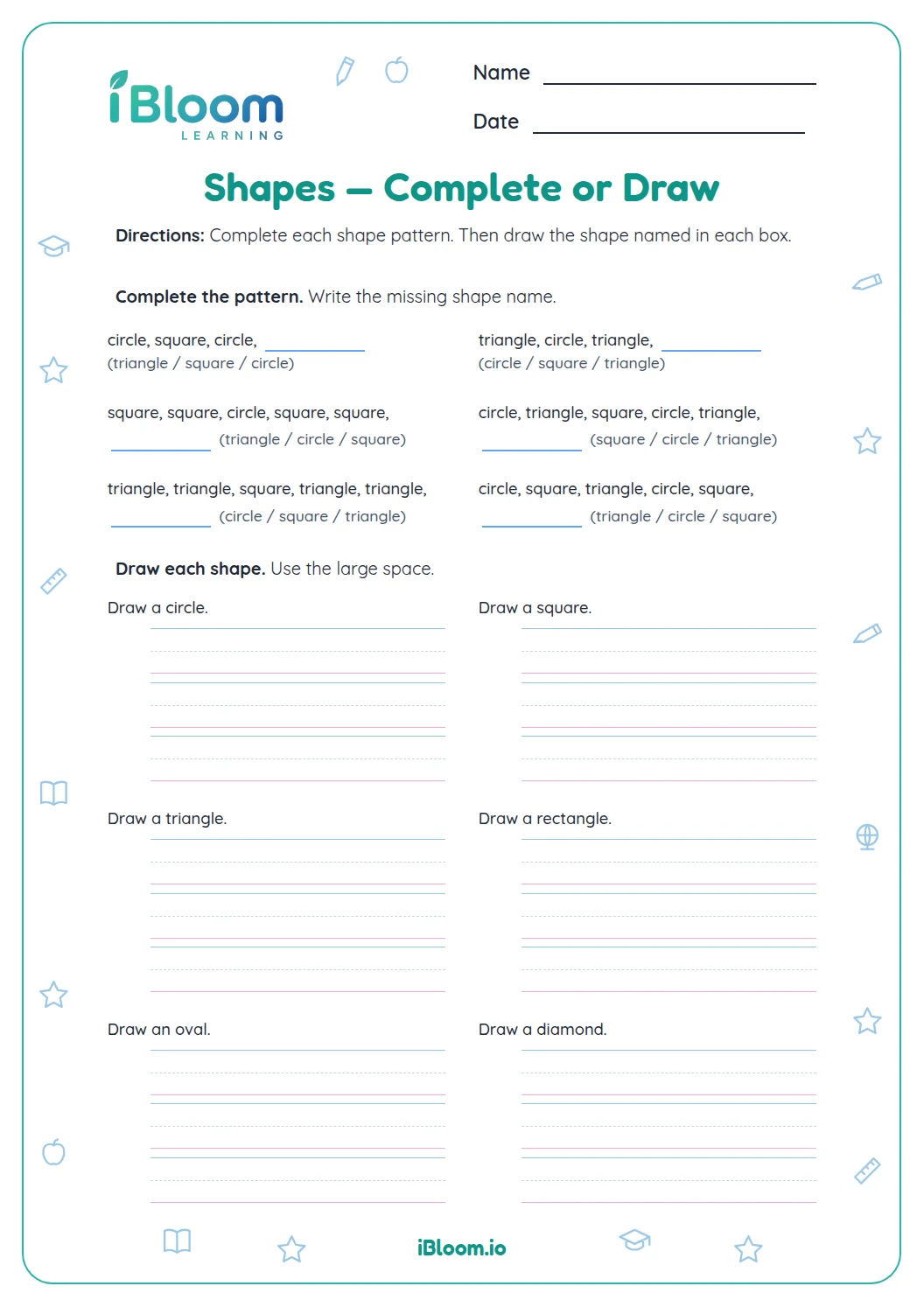
Children identify circles, squares, triangles, and rectangles in familiar objects and pictured groups. The activities practice shape names and simple features with picture support.
Aligned to K.G.A.2
Where can children find shapes in familiar objects?
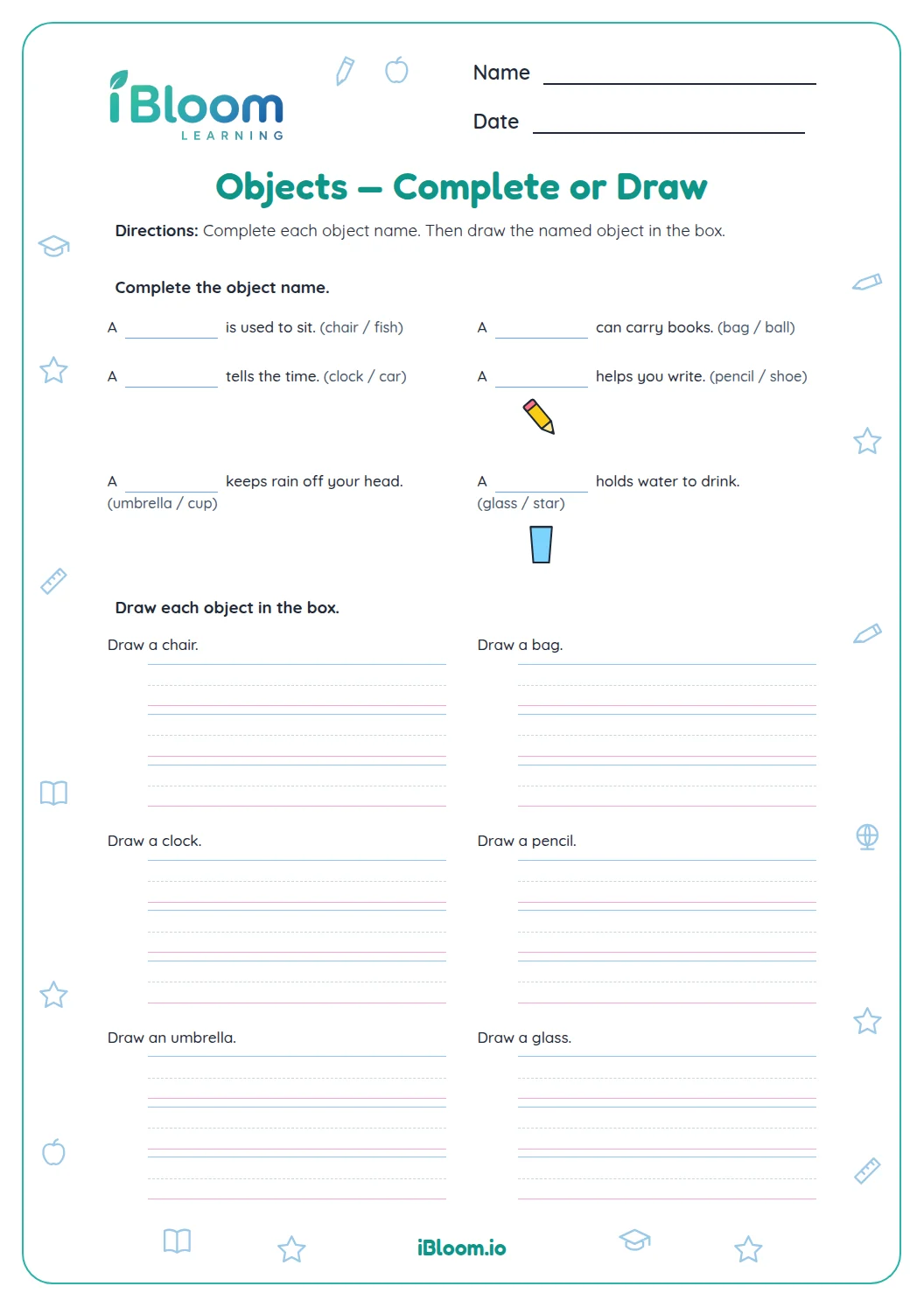
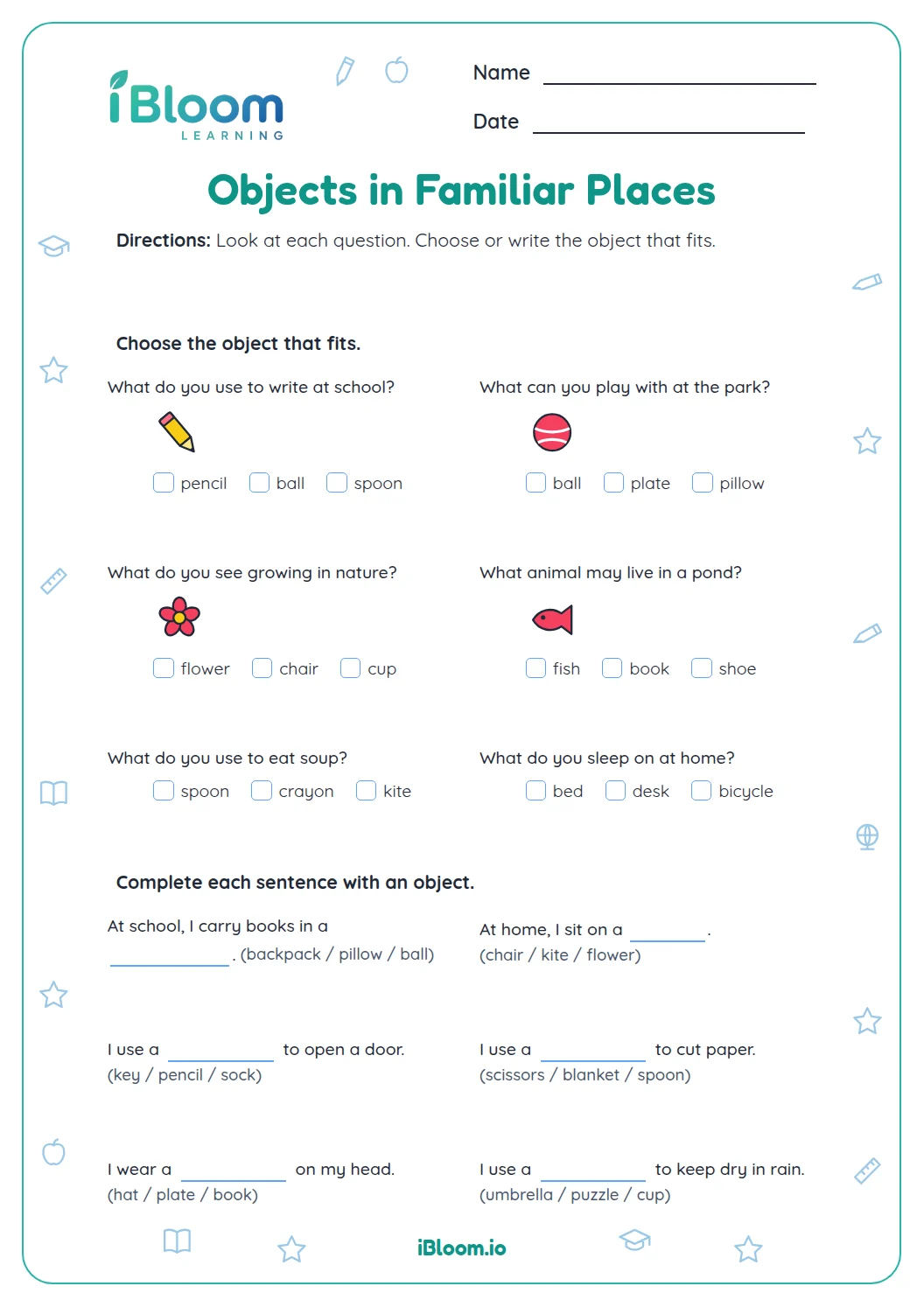
A round plate can match a circle, and a book cover can match a rectangle. The picture questions invite children to look at an object’s outline and choose the basic shape it resembles.
How do sides and corners help name a shape?
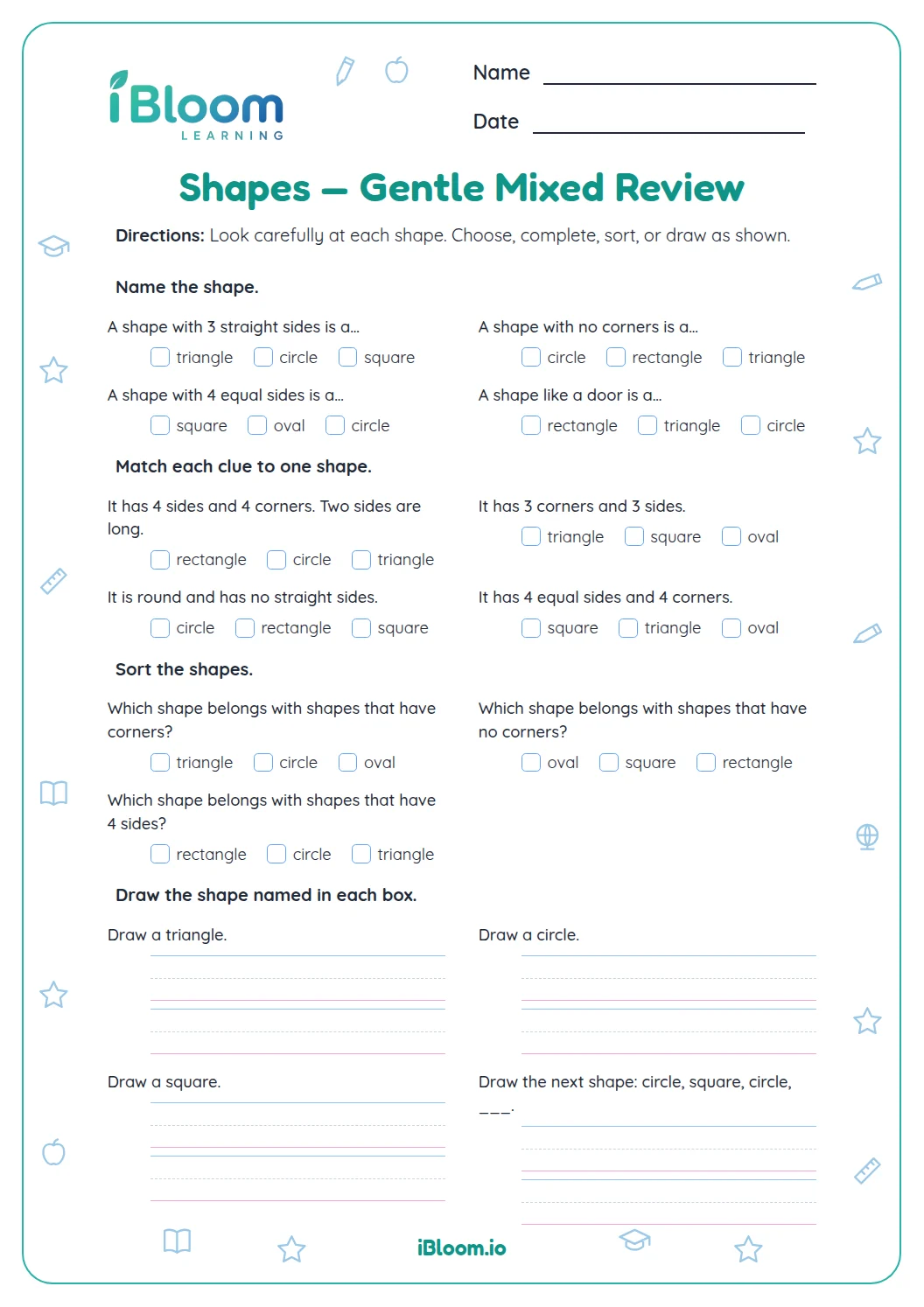
A triangle has three straight sides and three corners. A square has four straight sides and four corners. A circle has a curved outline and no corners. The worksheet includes labeled shape drawings for looking closely.
How can children use shapes to make something?
After matching objects and naming shape parts, children identify a circle, square, and triangle, then choose shapes for a house. They can also point to a familiar object and name the shape it resembles.
How to use this worksheet
- 1Name the shape in each picture row.
- 2Compare an object outline with a familiar shape.
- 3Count straight sides and corners when asked.
- 4Choose shapes that can make a simple house.
- 5Point to a familiar object and name the shape it resembles.
Common mistakes and quick fixes
The mistake
Calling a circle a shape with one corner.
The fix
Trace the curved edge with a finger; it has no corners.
The mistake
Mixing up a square and rectangle.
The fix
Count corners, then compare side lengths: a square has four equal sides.
The mistake
Naming an object by color instead of its outline.
The fix
Ignore color and compare the object’s outside shape.
Common Core alignment
Children name basic shapes in everyday objects and compare shape outlines.
Name familiar shapes even when their size or orientation changes.
On this sheet: Children identify circles, squares, triangles, and rectangles in different objects and drawings.
Show the official wordingHide the official wording
Correctly name shapes regardless of their orientations or overall size.
What to practice next
Make more practice
Questions parents and teachers ask
Which shapes appear on the worksheet?
Children work with circles, squares, triangles, and rectangles. Picture prompts connect those shapes with a plate, window, pizza slice, door, clock, and book. Later questions ask children to count sides or corners, identify simple shape features and use shapes for a house.
Are there pictures for children who are not reading yet?
Yes. Object questions include simple pictures, and shape questions use drawn outlines. An adult can read each prompt aloud while the child points to an object or shape. Activities include matching objects, naming sides and corners, identifying shapes in a row, and answering familiar-object questions.
How many activities are included?
There are 15 activities. Children identify shape matches, compare familiar objects, count sides and corners, identify shapes in a row, choose shapes for a house, and name an object at home. The answer key shows selected answers and sample ideas for open responses.
How can a child tell a square from a rectangle?
Both have four straight sides and four corners. A square has four equal sides, while a rectangle has two long sides and two shorter sides in the drawing used here. Children can compare the outlines and count the corners before choosing.
Can children answer the open questions aloud?
Yes. A child can point to an object and say its name and the shape it resembles while an adult records the response. The answer key shows a book as one rectangle example; a different familiar object can also work when its outline matches.
What supplies are useful?
A pencil is useful for recording the two open responses, but no special supplies are needed. A child can look around the room for a plate, book, door, or window and compare its outline with the shapes on the page. An adult can read the picture prompts aloud.