





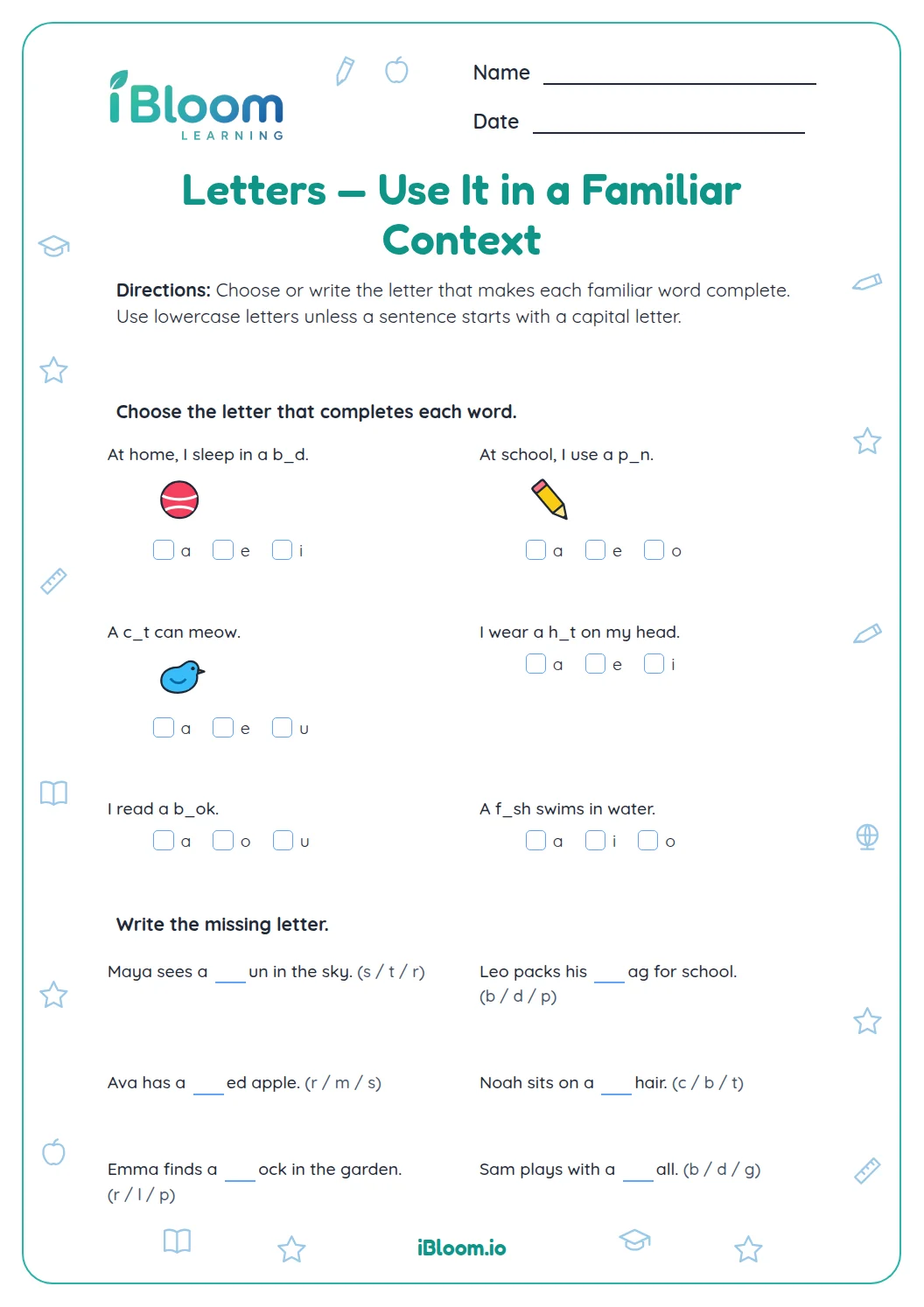

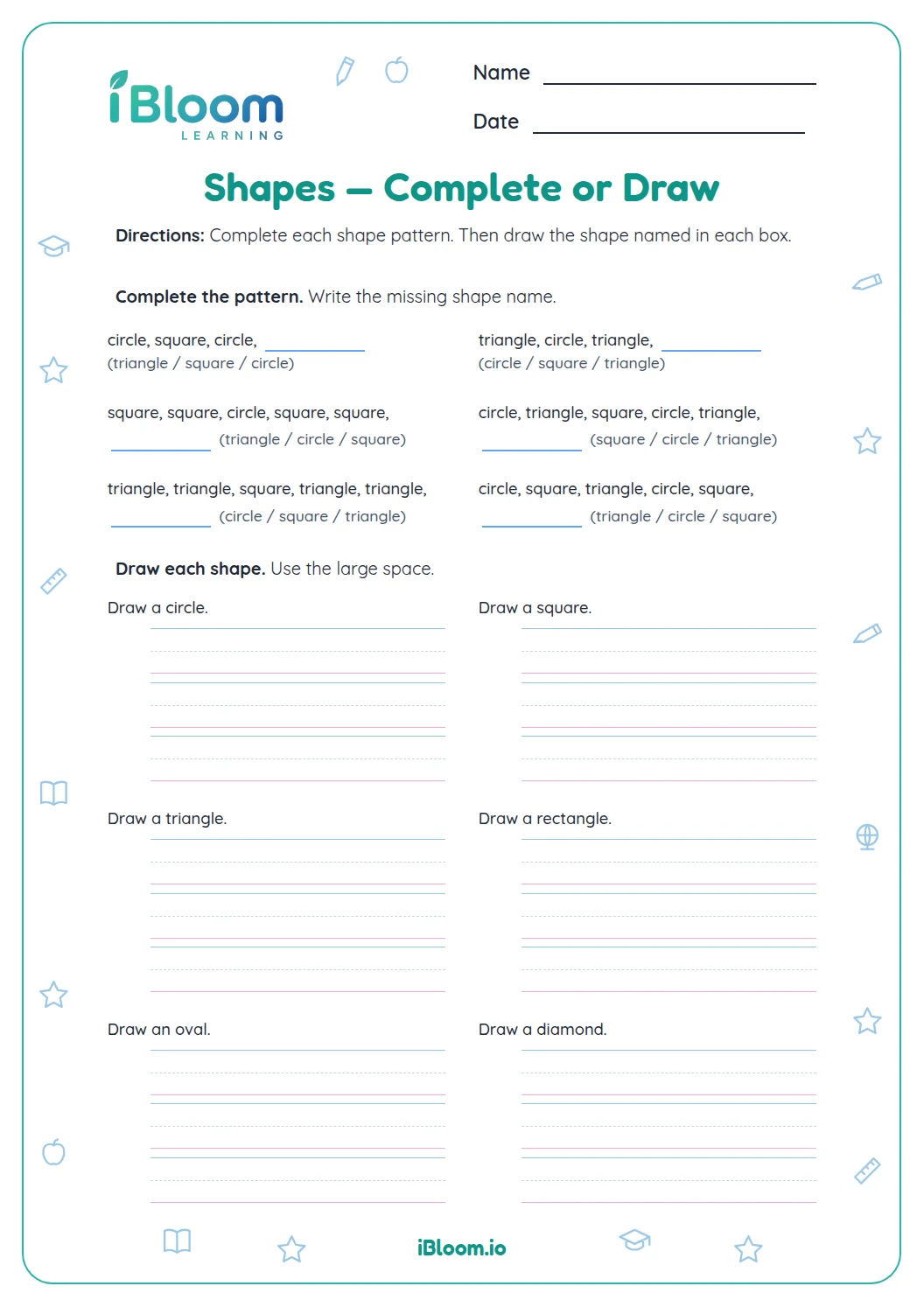


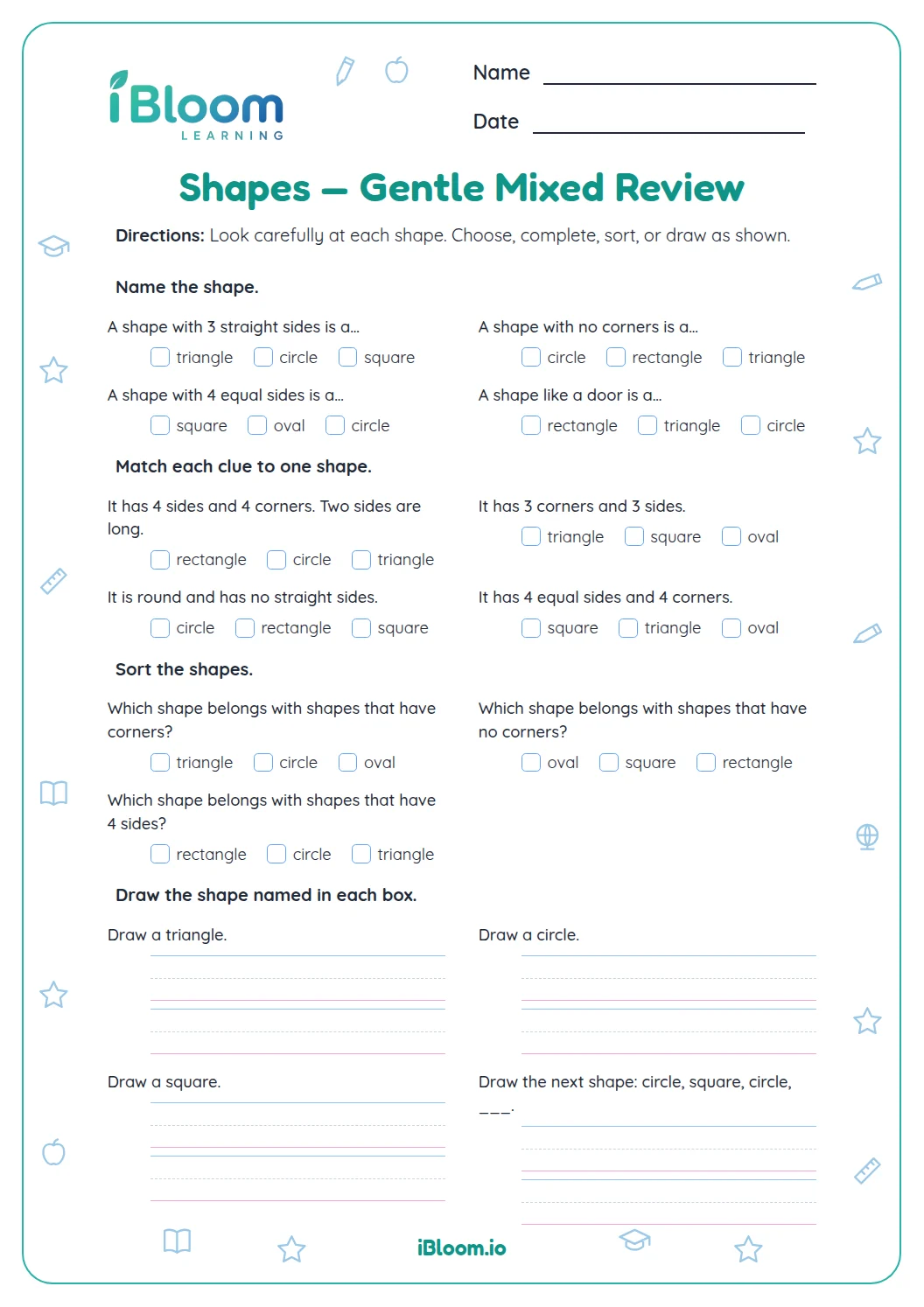
About this worksheet
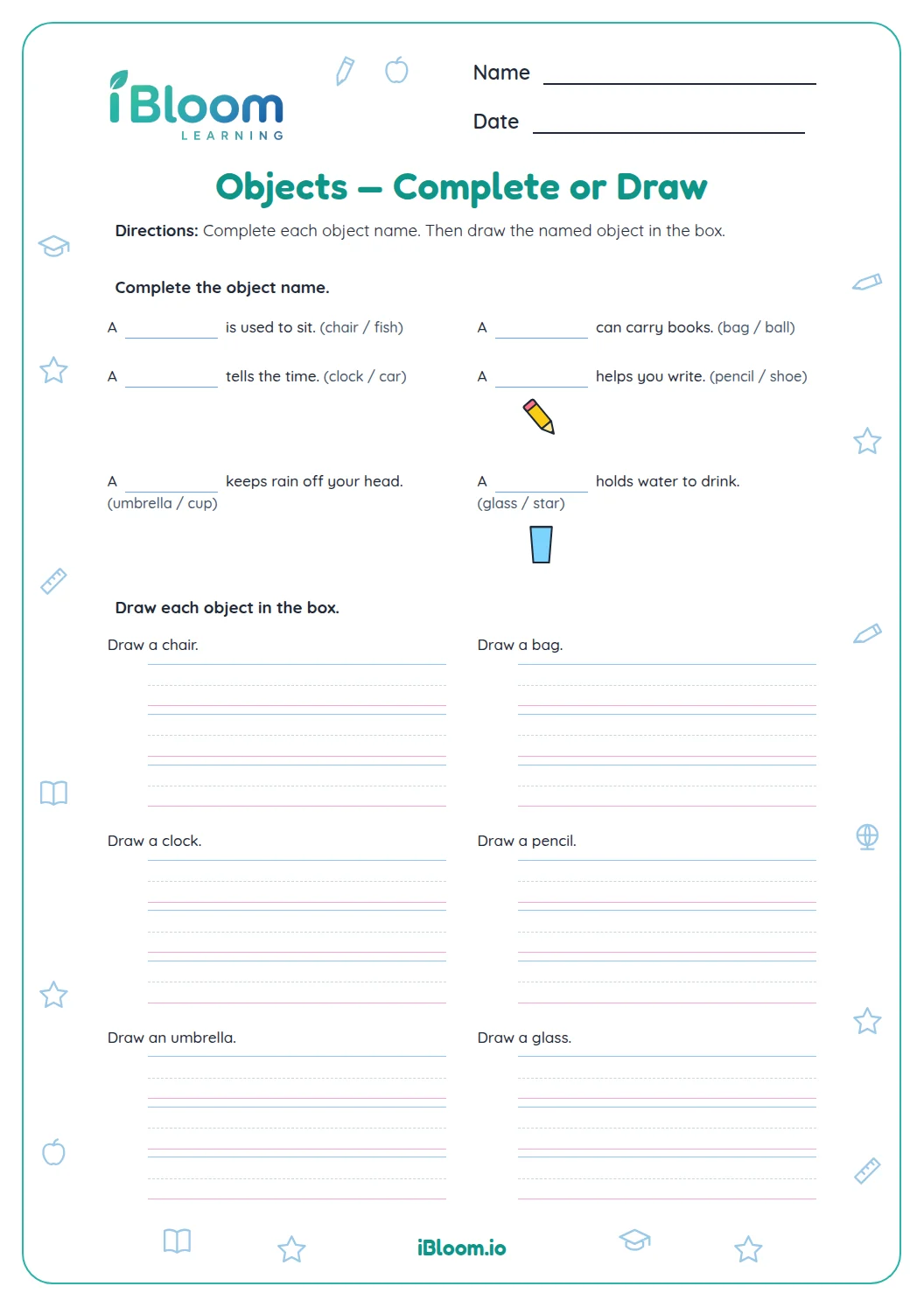
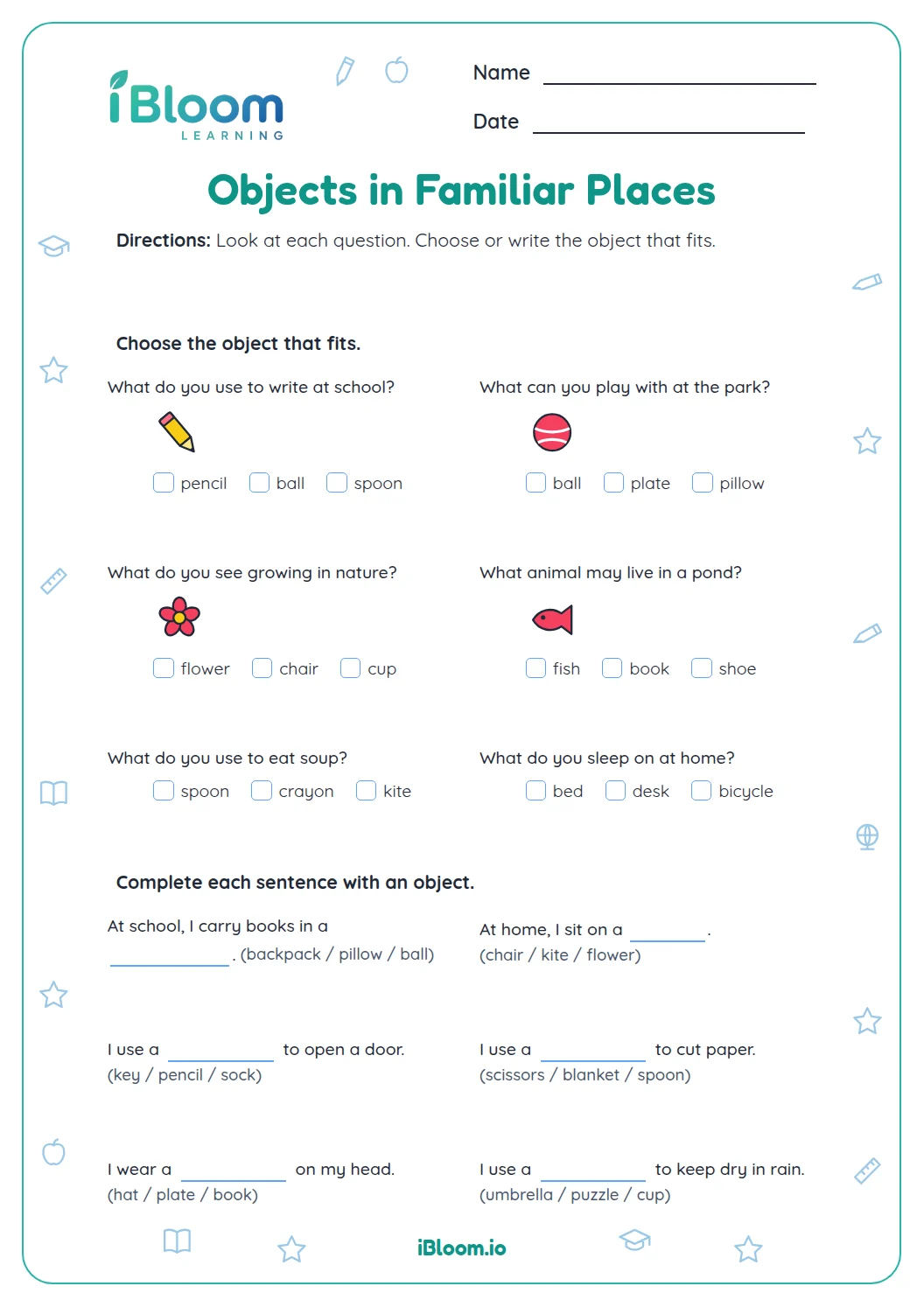
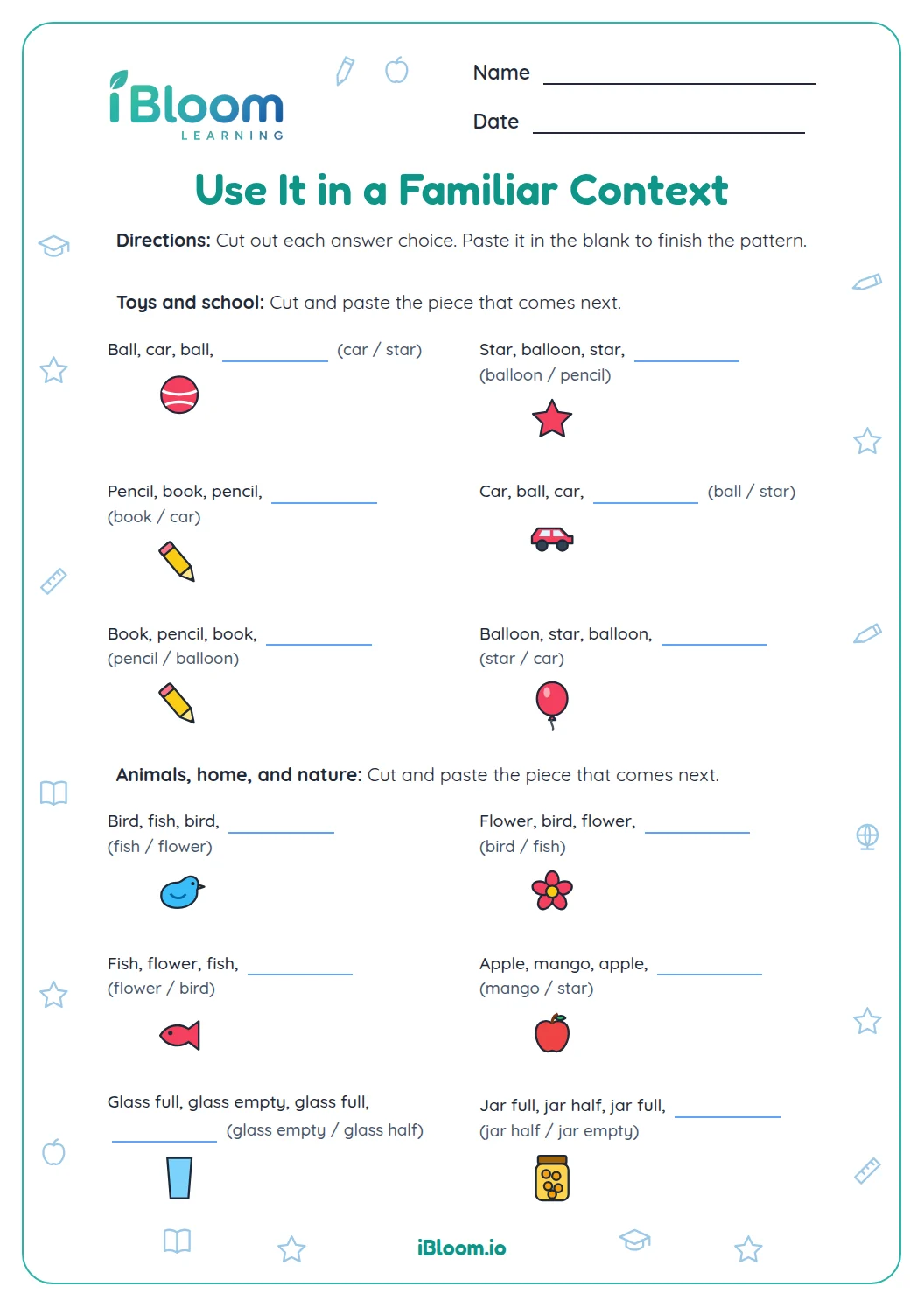
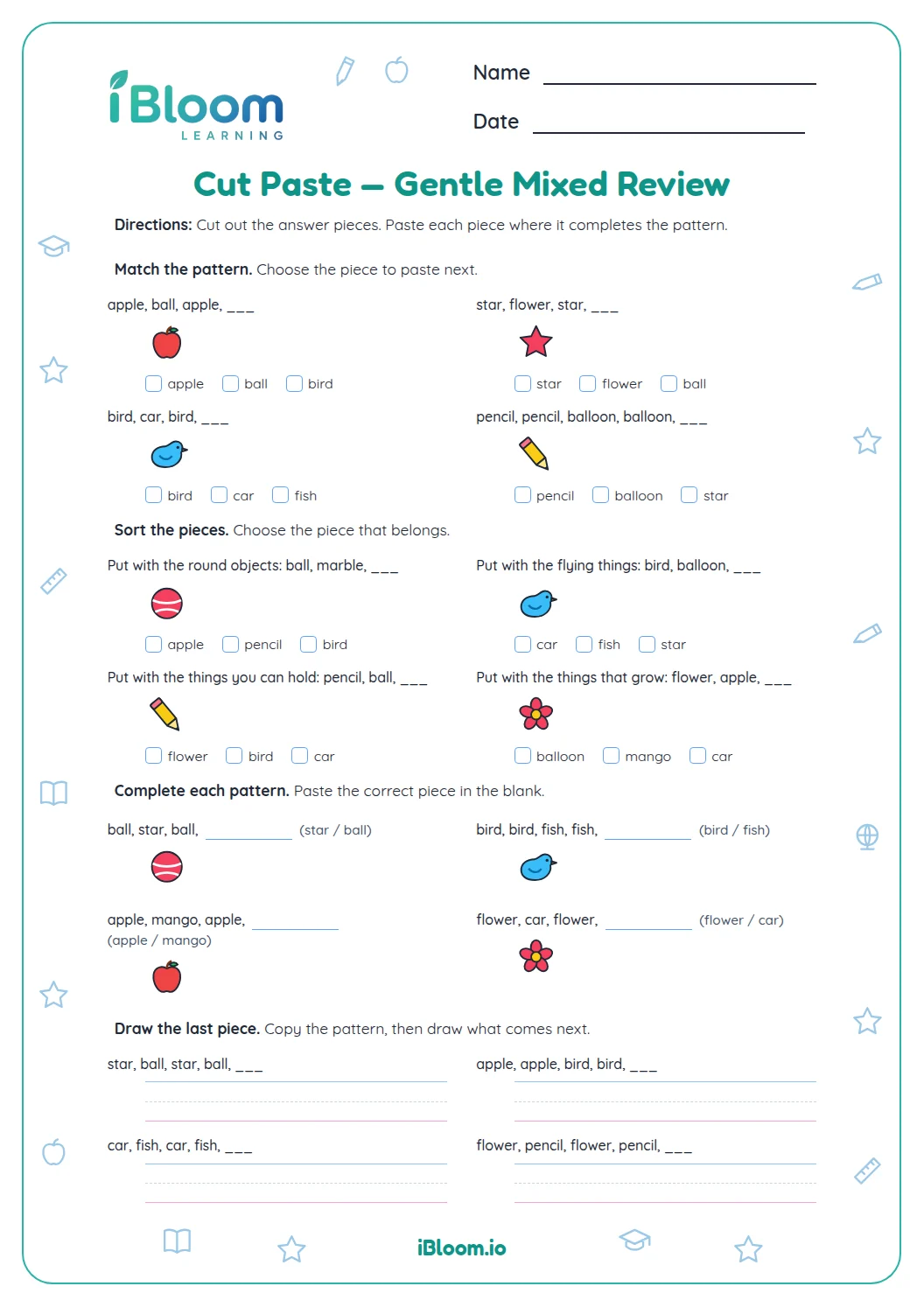
This gentle review gives preschool and kindergarten learners 14 object questions. Children match six picture choices, complete four short sentences with a familiar object, and find an object word in four brief sentences. Picture choices keep the matching task concrete, while a separate answer key makes each item easy to check. Families can read the clues aloud and invite children to explain their choices.
What will children do on the page?
The page begins with six picture-supported clues about objects that go together or share a familiar use, such as a fork-and-knife set and a plate. Four short sentences ask children to choose an object that fits. The final four sentences invite students to circle an object word.
- 1Question 1 shows a spoon and asks what belongs with it at a meal.
- 2A fork-and-knife set is a matching object.
How can children match objects by use?
Think about what people do with each item. A pillow goes with a bed because both are used for sleeping. A spoon and a fork-and-knife set can be used at a meal. Naming the familiar use helps children find the matching choice.
How can children spot an object word?
An object word names a person, place, or thing. In “The ball rolls fast,” ball names a thing, while rolls tells what it does. Read each short sentence and look for the word that names the pictured object.
How to use this worksheet
- 1Look at the picture clue and name the object.
- 2For a matching question, think about what the two objects are used for.
- 3For an identification question, compare each choice with the picture or clue.
- 4Read the final short sentence aloud and find the word naming a thing.
- 5Check each choice with the answer key and talk about the object’s use.
Common mix-ups and quick fixes
The mistake
Choosing something that looks similar but has a different use.
The fix
Say what each object does, then choose the one with a matching everyday use.
The mistake
Naming an action word instead of an object word.
The fix
Ask whether the word names a thing or tells what the thing does.
The mistake
Picking a familiar item that does not fit the clue.
The fix
Read or hear the whole clue again and check that the choice works in that situation.
What to practice next
Make more practice
Further reading
Questions parents and teachers ask
What kinds of objects appear on the worksheet?
The picture clues use familiar things such as a spoon, pencil, bed, sock, and plate. Children match items by everyday use, identify several objects by name, and spot object words in short sentences. The pictures make each activity easier to talk through together.
Do children need to read the questions independently?
No. An adult can read each clue aloud and name the choices while the child studies the pictures. The final four items use short sentences, so an adult can read those too and invite the child to point to the word that names the pictured thing.
How many activities are included?
There are 14 questions across two worksheet pages and a separate two-page answer key. Six questions use picture-supported choices for matching objects, four ask children to complete an object sentence, and four short sentences ask them to circle an object word.
How can I explain what an object word is?
An object word names a thing, such as a ball or a cup. An action word tells what happens, such as rolls or sits. In “The ball rolls fast,” ball is the object word because it names the thing in the picture.
What should I do if a child picks a different matching object?
Invite the child to explain how the two objects could be used together. The choices focus on a familiar connection, such as a plate and a fork-and-knife set. If the child suggests another sensible use, talk through the clue and name what makes the printed choice fit best.