






About this worksheet
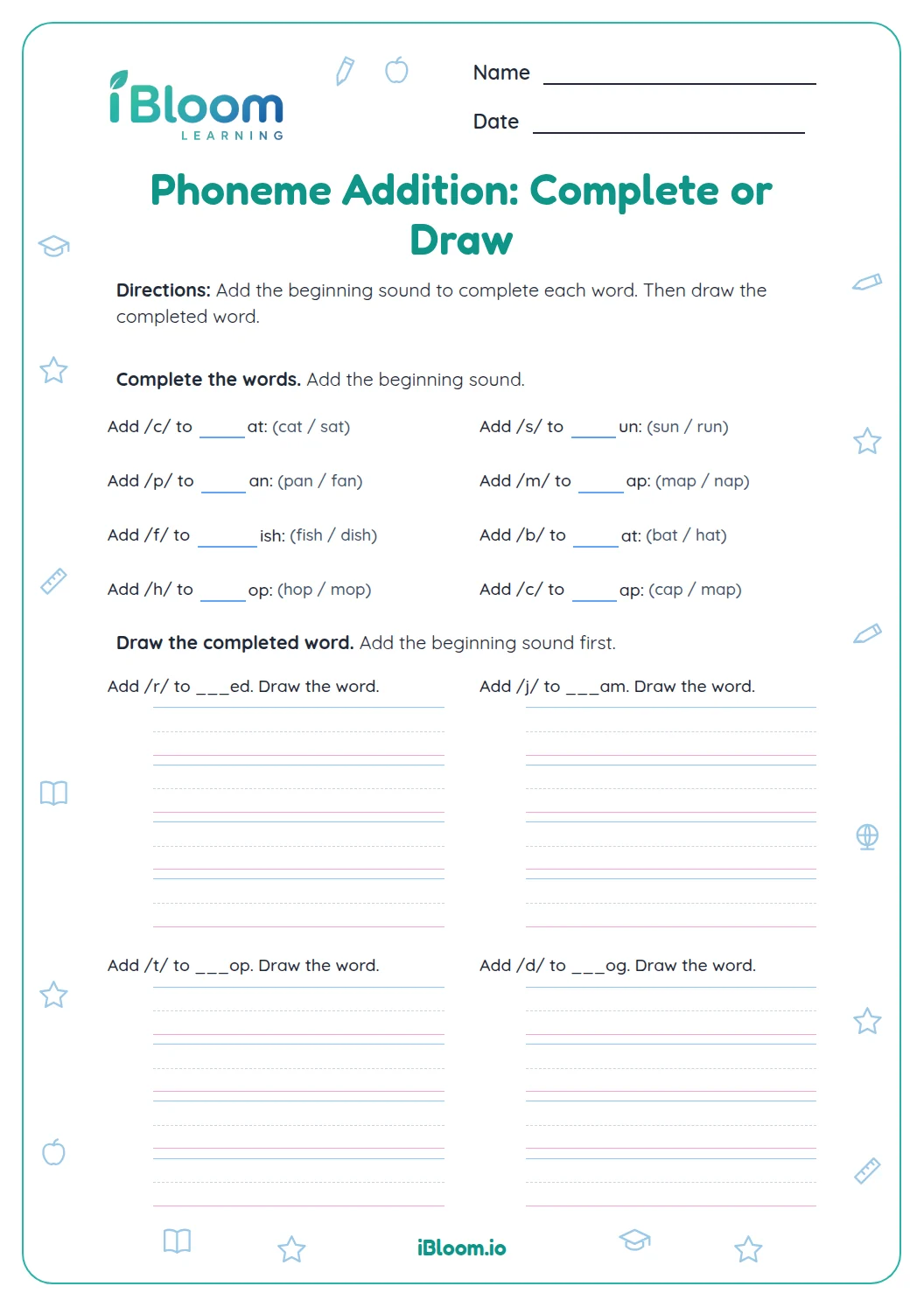
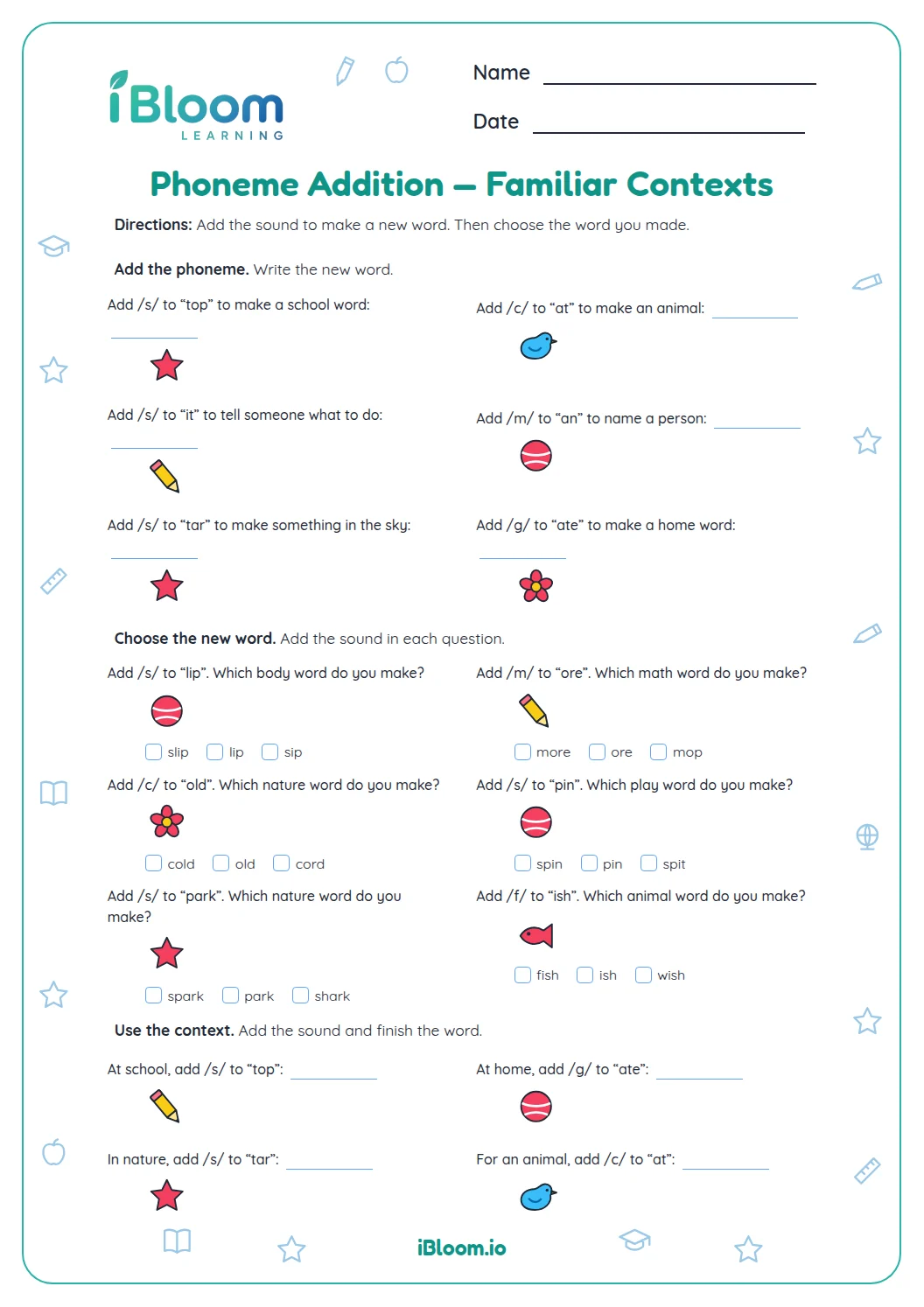
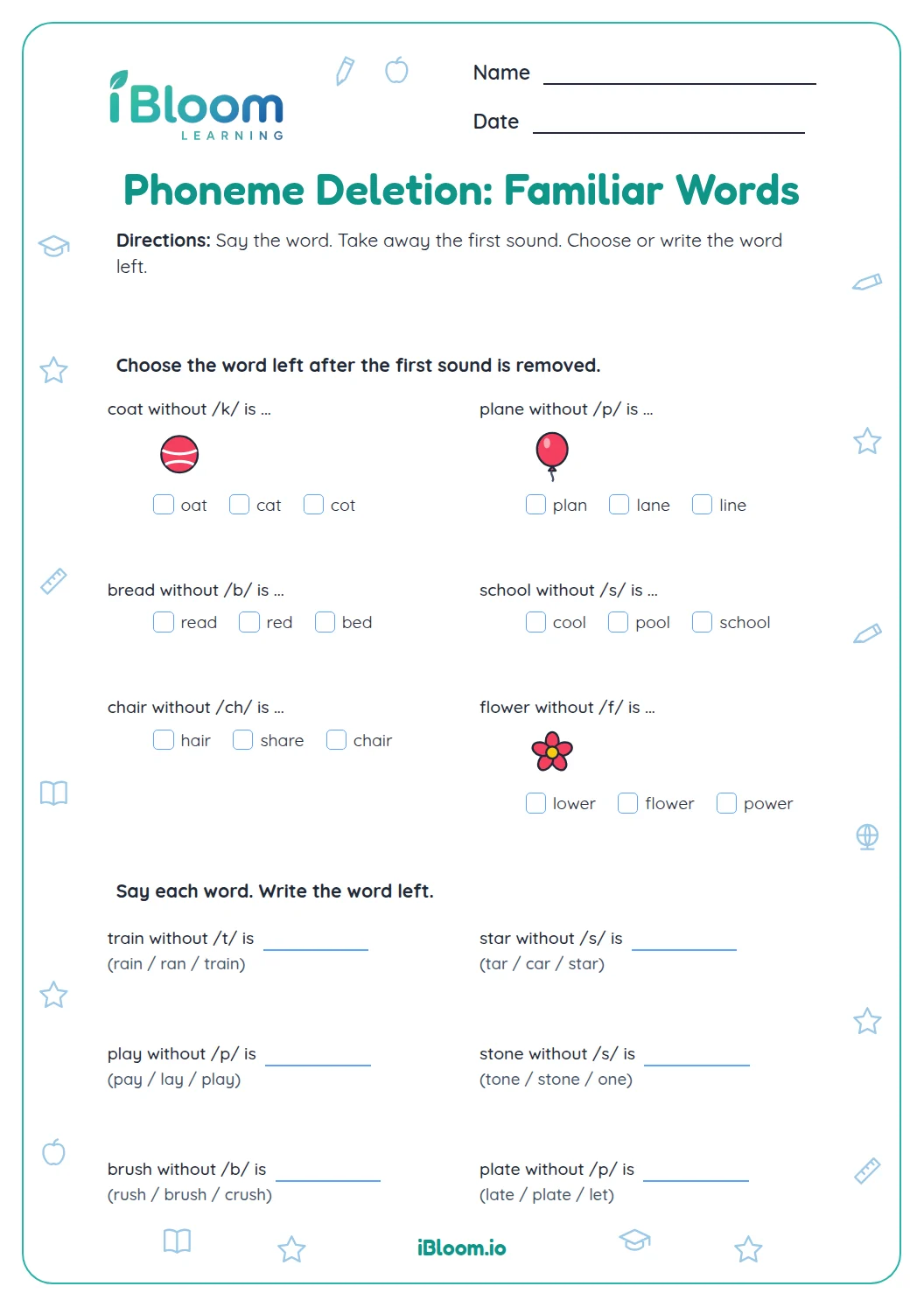
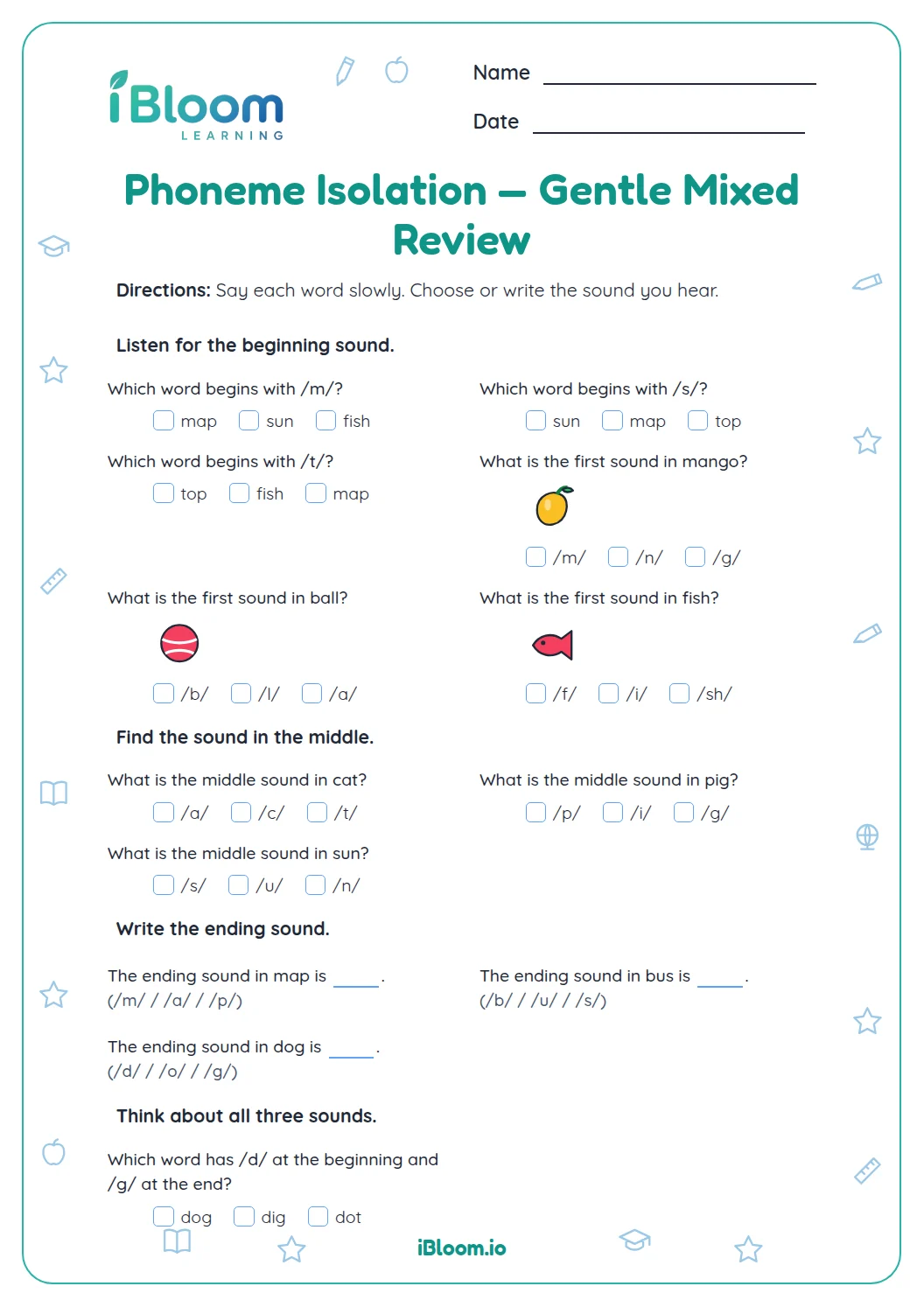
An adult or child names the picture, says the added sound, and blends the sounds to hear a new word. Questions move from simple beginning sounds to final sounds and a few blends.
Aligned to RF.K.2
Add a sound to the beginning
Part A asks the child to name each picture, add one sound before the word, and blend the sounds into a new word. For example, adding /p/ to ant makes pant.
Add a sound to the end
Part B keeps the picture clue but adds /s/ or /z/ at the end. In question 5, adding /s/ to cat makes cats. Say the base word and final sound separately, then blend them.
What happens when a sound is added at the end?
Part C gives more ending-sound practice with picture words. Children say the base word, add the final phoneme, and choose or write the resulting word.
Try this out loud together
- 1Name the picture clearly.
- 2Say the added sound on its own.
- 3Blend the base word and added sound.
- 4Say the new word aloud before choosing.
- 5Repeat slowly if the first blend is hard to hear.
Sound practice tips
The mistake
Naming letters instead of saying their sounds.
The fix
Model the spoken sound, such as /m/, without adding “uh.”
The mistake
Guessing from the picture without blending.
The fix
Say the base word, add the new sound, and stretch the sounds together.
Curriculum alignment
Add a spoken phoneme to a base word and say the new word.
On this sheet:
Show the official wordingHide the official wording
Demonstrate understanding of spoken words, syllables, and sounds (phonemes).
What to practice next
Make more practice
Further reading
Questions parents and teachers ask
Should the child say a letter name or sound?
Say the sound, such as /s/, rather than the letter name “ess.” The activity asks the child to add a spoken phoneme to the picture word. An adult can model the sound clearly, without adding an extra “uh” after it.
Why are picture words included?
The picture is a cue for the spoken base word. Ask the child to name it before adding the sound. If the picture name is unfamiliar, say the word together first so the child can focus on hearing how the added phoneme changes it.
What if a new word is unfamiliar?
Say the new word together and briefly explain what it means. The goal is to hear the sound change as a phoneme is added. The answer choices and key provide the intended word for each picture and sound combination.
What does adding a sound at the beginning mean?
It means saying one phoneme before the spoken base word. In question 1, adding /p/ before ant creates pant. Have the learner say the sound, say the base word, and then blend the whole word before choosing an answer from the choices.
How can I help with ending sounds?
Ask the child to listen to the base word and identify its final sound, then add the new phoneme. Questions 5–16 focus on endings such as /s/ and /z/. Saying the base word and new word aloud makes the sound change easier to hear.