




About this worksheet
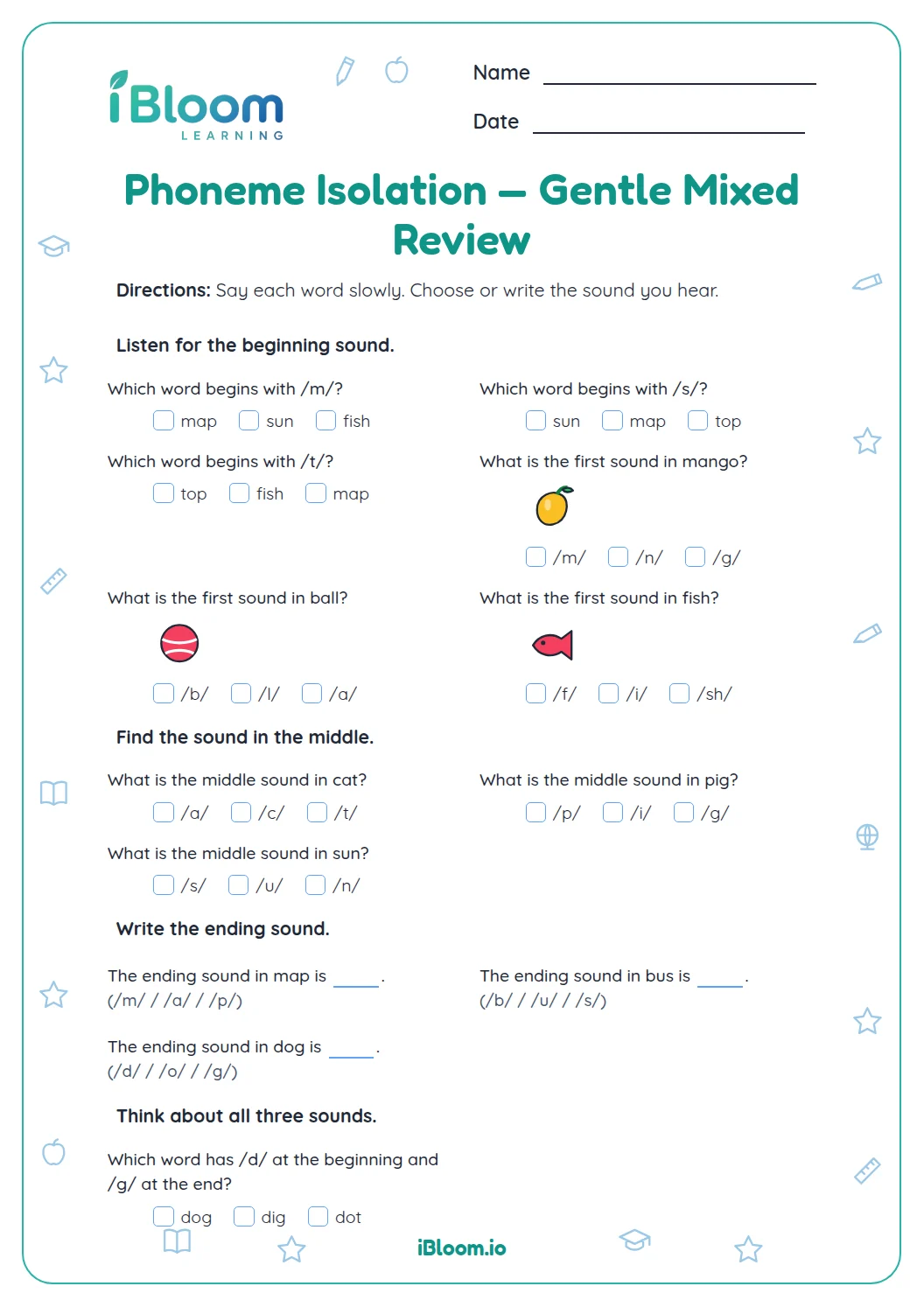
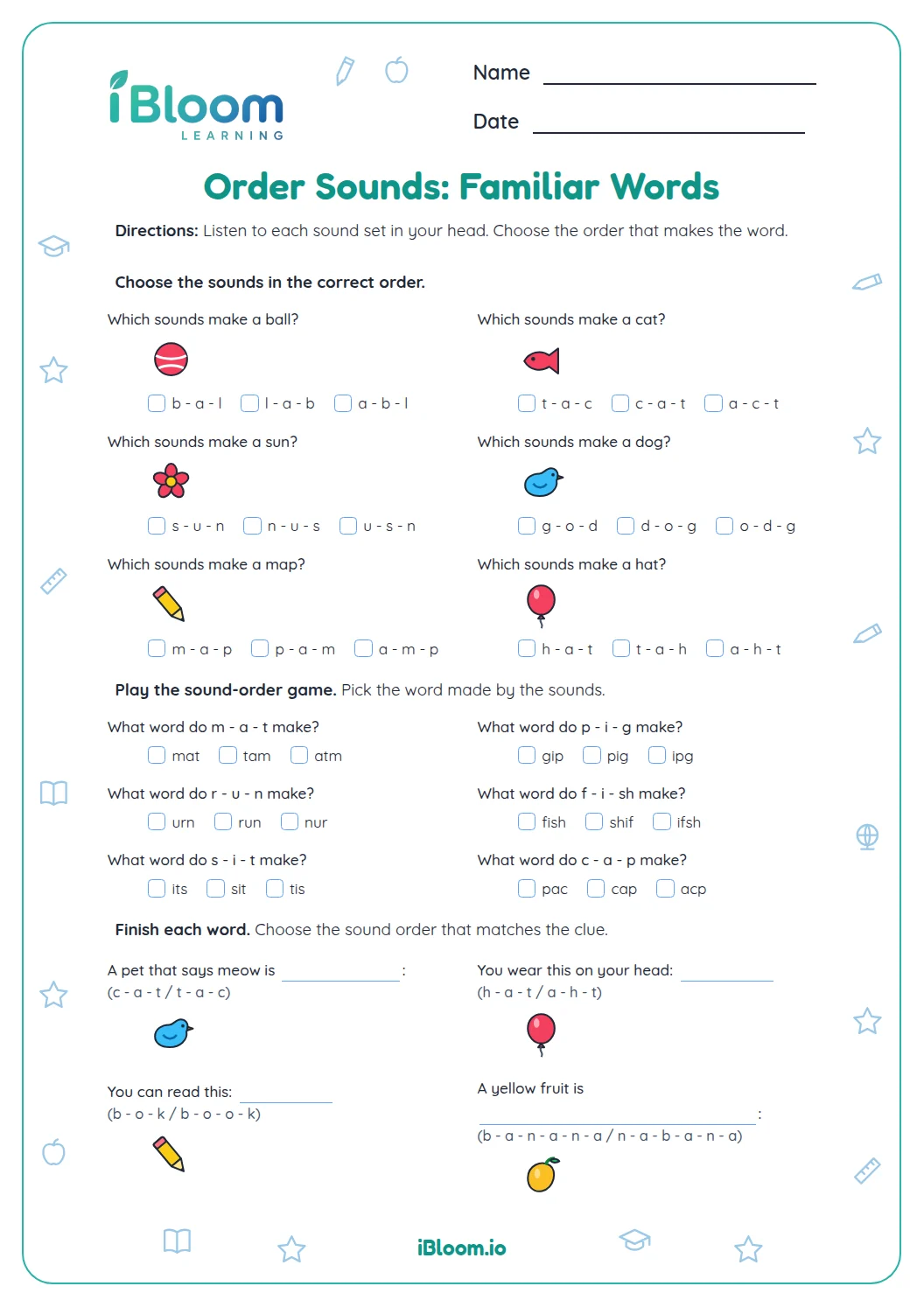
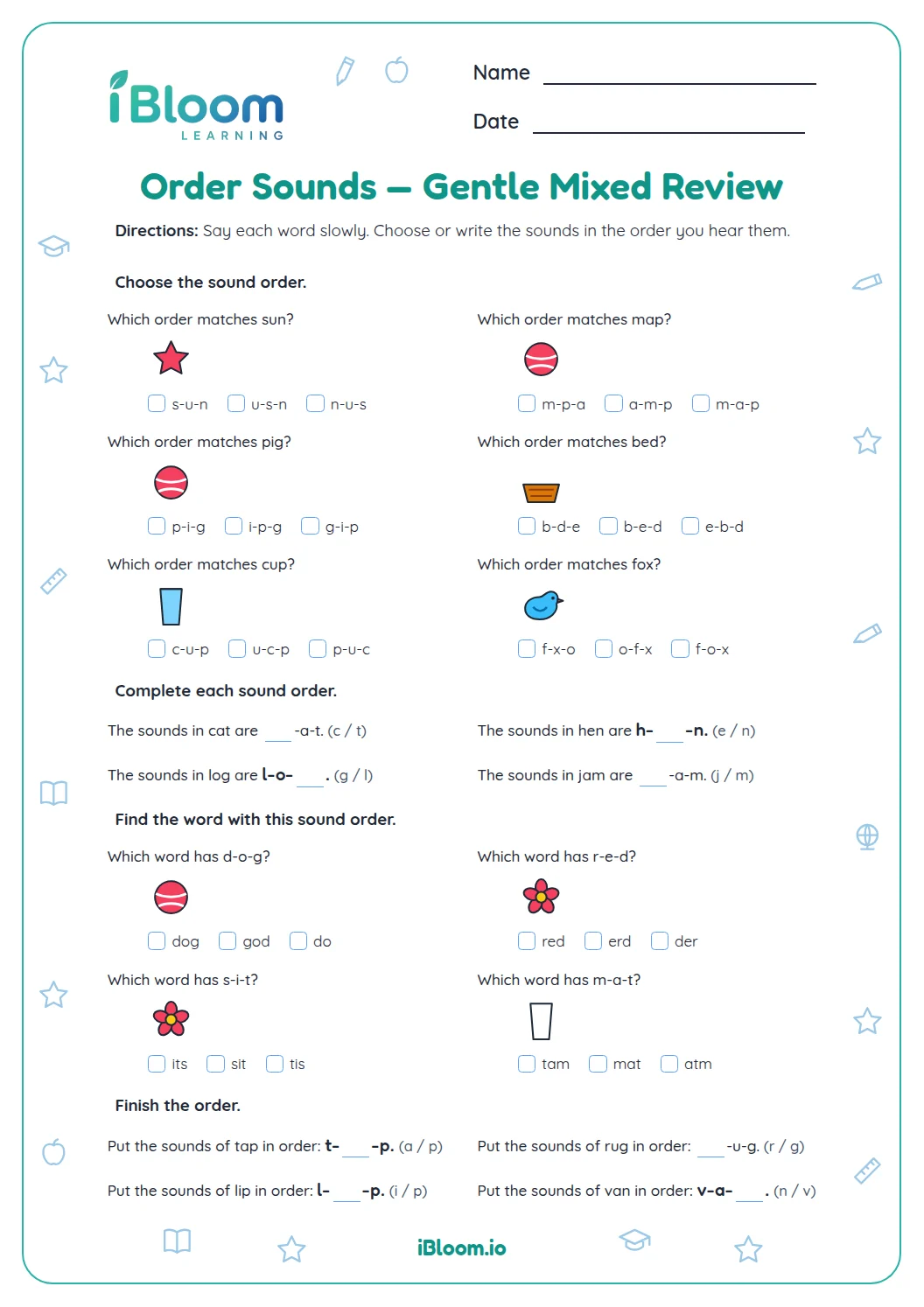
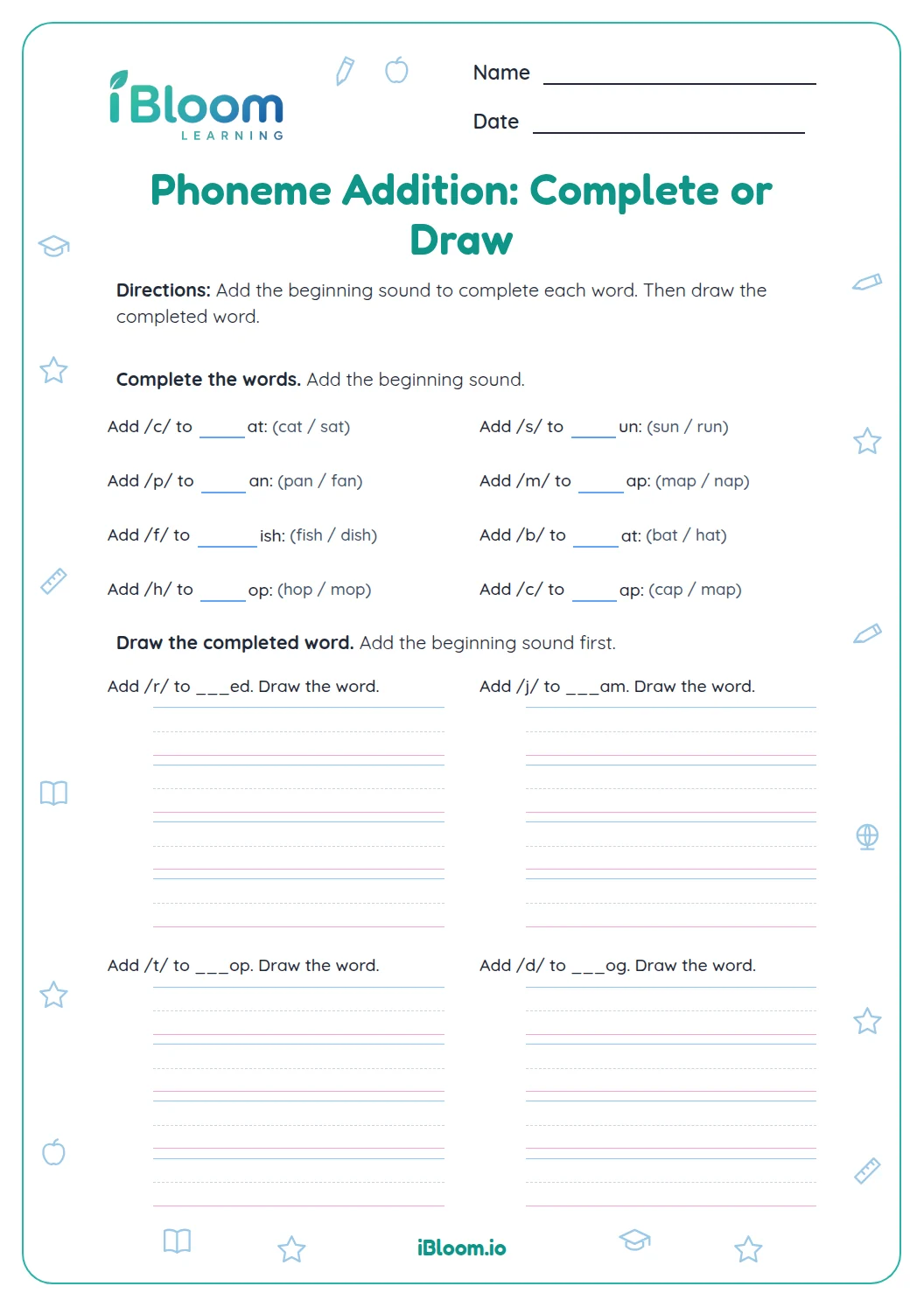
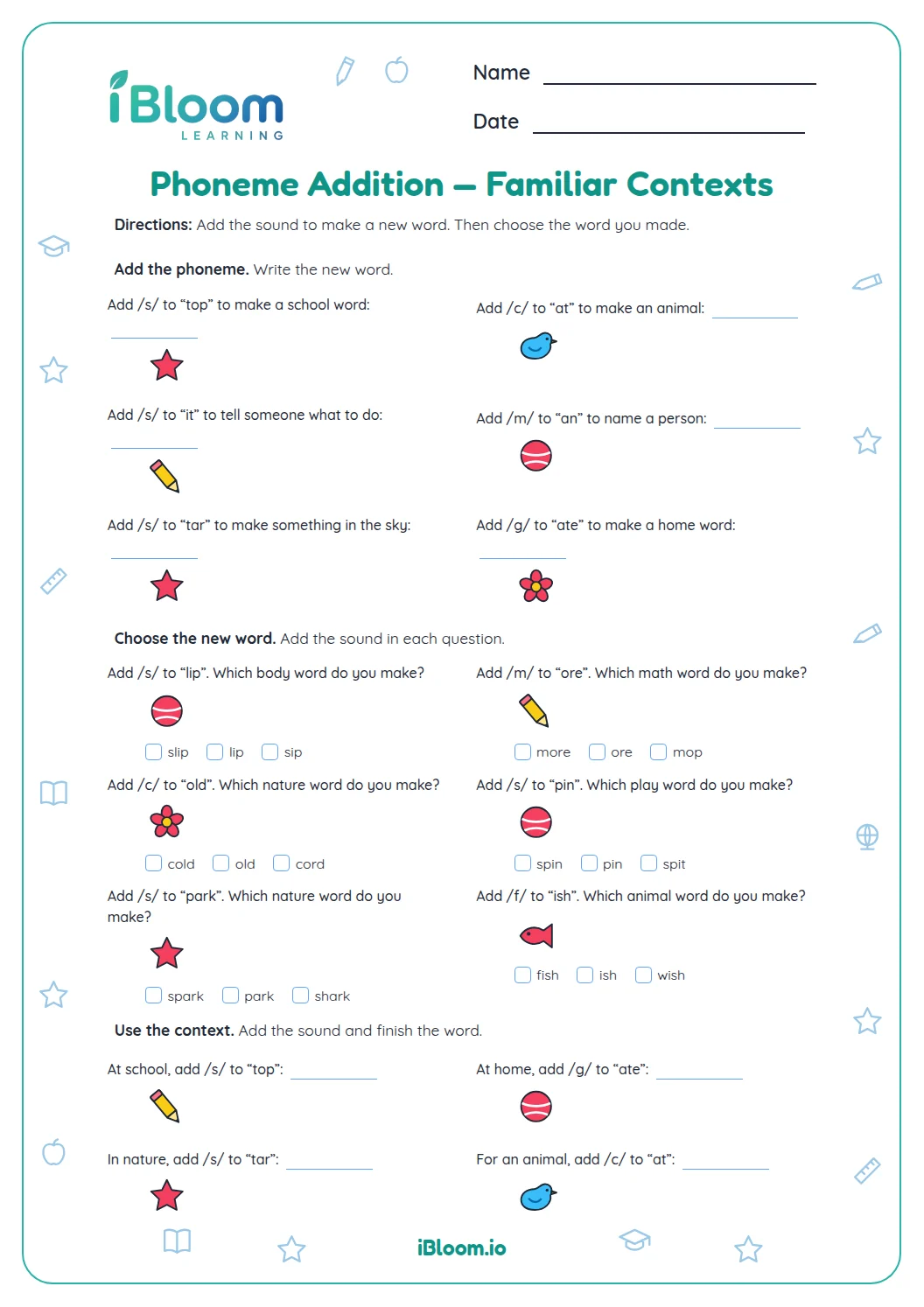
This kindergarten phonics worksheet uses familiar picture clues to practice hearing first and last sounds in spoken words. Children say each pictured word, then choose the sound at the named end. The 16 questions move from beginning sounds to ending sounds, with a separate answer key for an adult to check the choices.
Aligned to RF.K.2d
How do children find a first sound?
Say the picture name aloud, then listen to the sound at the beginning. The first part uses familiar picture words and asks children to choose that initial sound.
How do children find a last sound?
Say the word slowly and listen for its final sound. The second part uses short familiar words such as cat, bed, and bus to focus attention on the sound at the end.
What is one sound example?
In cat, /k/ is the first sound and /t/ is the last sound. The worksheet asks children to focus on one end at a time.
- 1Picture word: cat
- 2Listen at the end: /t/
How to use this worksheet
- 1Name the pictured object aloud.
- 2Repeat the whole word clearly.
- 3Notice whether the direction asks for the first or last sound.
- 4Say the sound you hear at that end.
- 5Choose that sound and check the answer key afterward.
Mistakes to watch for
The mistake
Naming a letter instead of saying its sound.
The fix
Model the speech sound without adding an extra vowel, such as /m/, not “muh.”
The mistake
Listening to the last sound.
The fix
Say the word from the beginning and pause after its first sound.
The mistake
Confusing /s/ with /sh/.
The fix
Compare sun and ship aloud and notice how the mouth sound changes.
Common Core alignment
Children listen to familiar picture names and notice their first speech sound.
Name the first sound heard in a familiar spoken word.
On this sheet: Each item asks children to say a pictured familiar word and identify its initial phoneme.
Show the official wordingHide the official wording
Isolate and pronounce the initial, medial vowel, and final sounds (phonemes) in three-phoneme (consonant-vowel-consonant, or CVC) words.
What to practice next
Make more practice
Questions parents and teachers ask
Should an adult say the picture names aloud?
Yes. This activity asks children to hear a speech sound, so an adult can say each familiar picture name or invite the child to name it. Say the whole word clearly, then ask which sound comes first or last. The picture keeps the word connected to a familiar object.
What does phoneme isolation mean?
A phoneme is one speech sound. Isolating a sound means listening to a word and naming one sound in it, such as /s/ at the start of sun or /t/ at the end of cat. Each item asks children to focus on either the beginning or ending sound.
Why are there sound choices instead of spelling?
Sound choices let children show what they hear without having to spell the pictured word. An adult can ask the child to say the sound before pointing to it. This keeps attention on listening for a sound rather than writing letters.
Does the worksheet practice both first and last sounds?
Yes. The first part focuses on the beginning sound in each pictured word. The second part asks children to listen for the ending sound, using short familiar words such as cat, bed, cup, and bus. Children can say each sound aloud before choosing.
How many items are on the printable?
There are 16 picture-supported questions, arranged in two parts. The first eight ask for beginning sounds, and the next eight ask for ending sounds. The answer key lists the target sound for every picture so an adult can review the choices.
Does the printable include an answer key?
Yes. A separate answer-key page lists the correct beginning or ending sound for all 16 pictures. Use it to check the child’s choices after the activity, and invite the child to say the word and sound aloud again when reviewing.