






About this worksheet
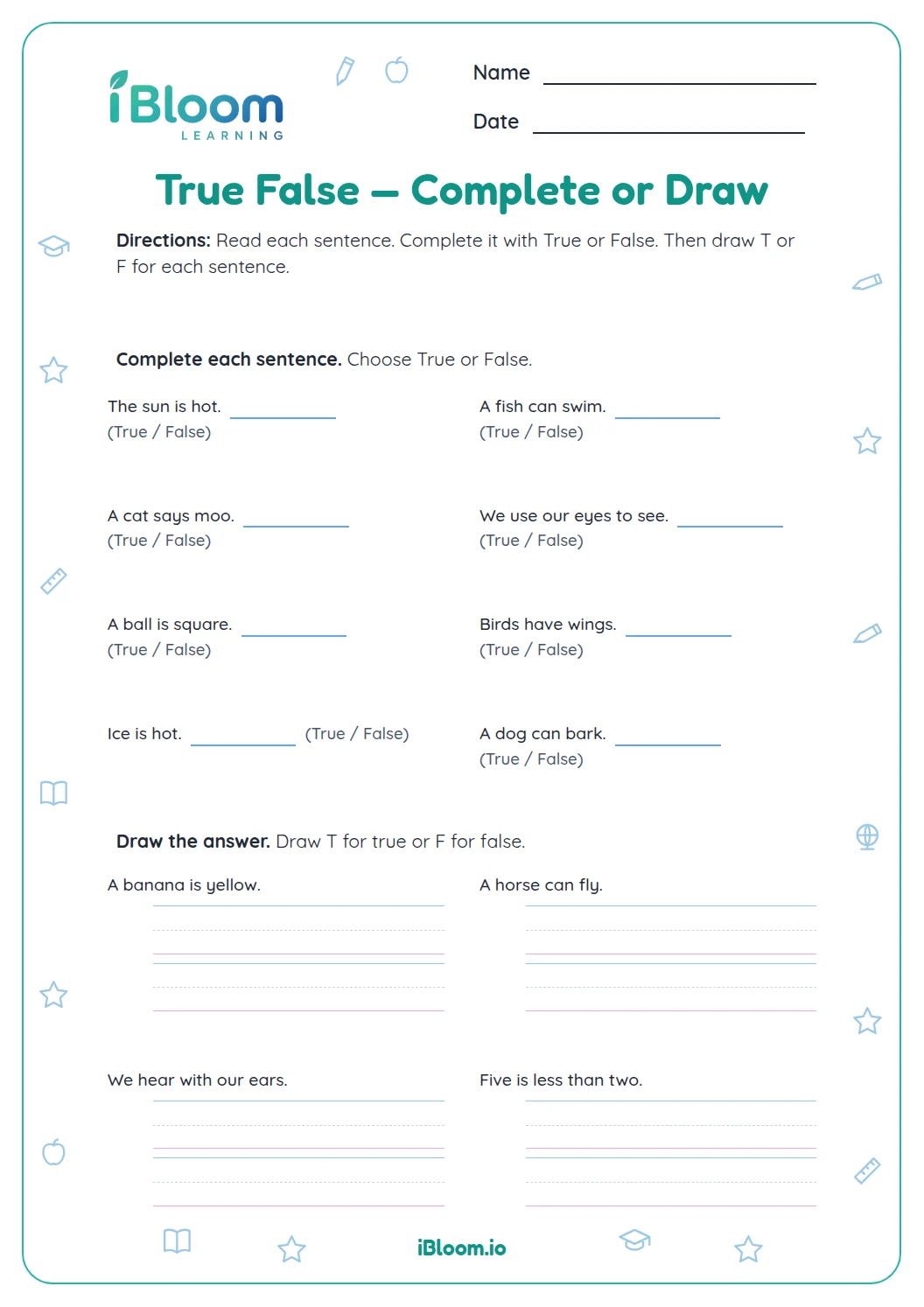
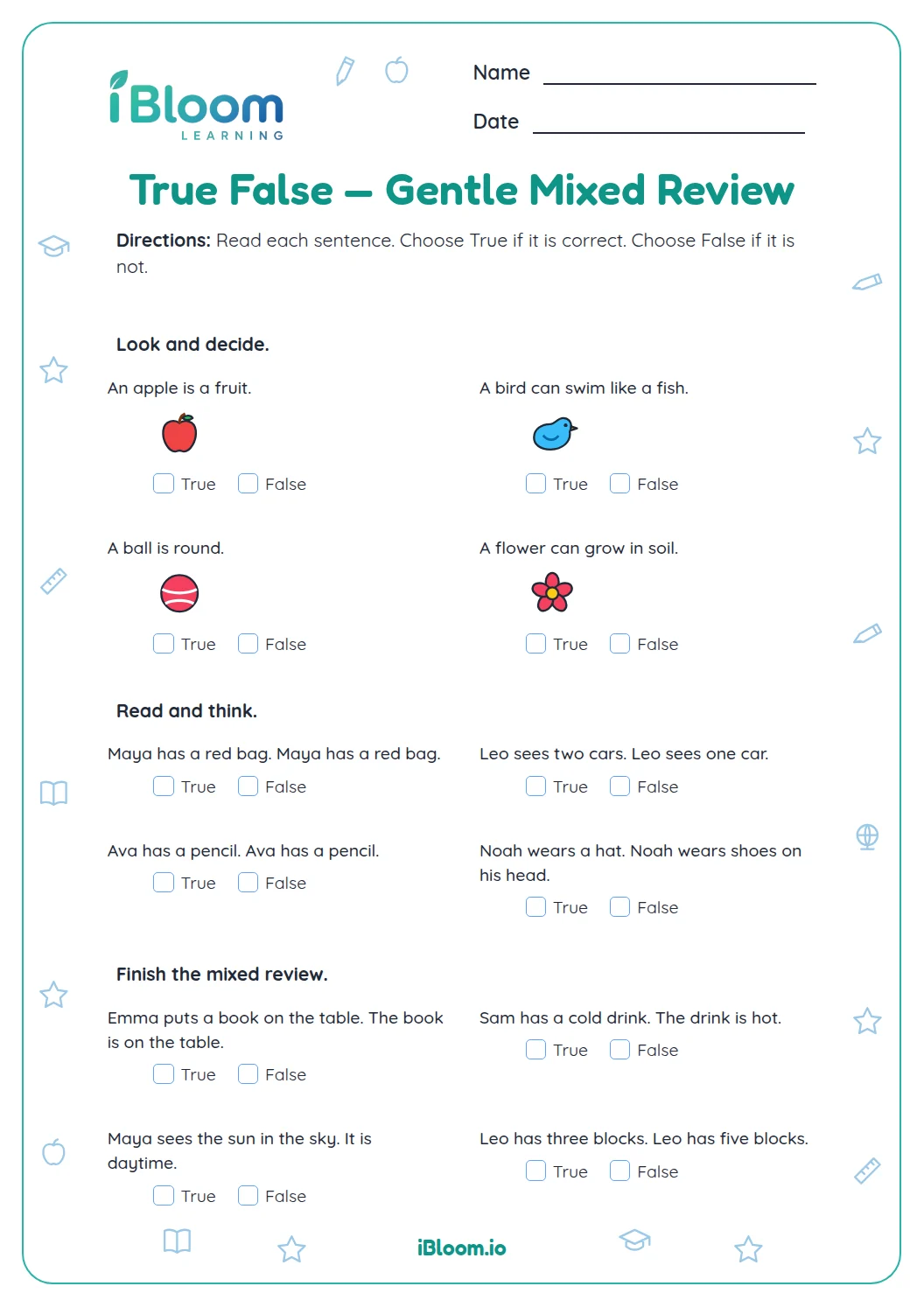
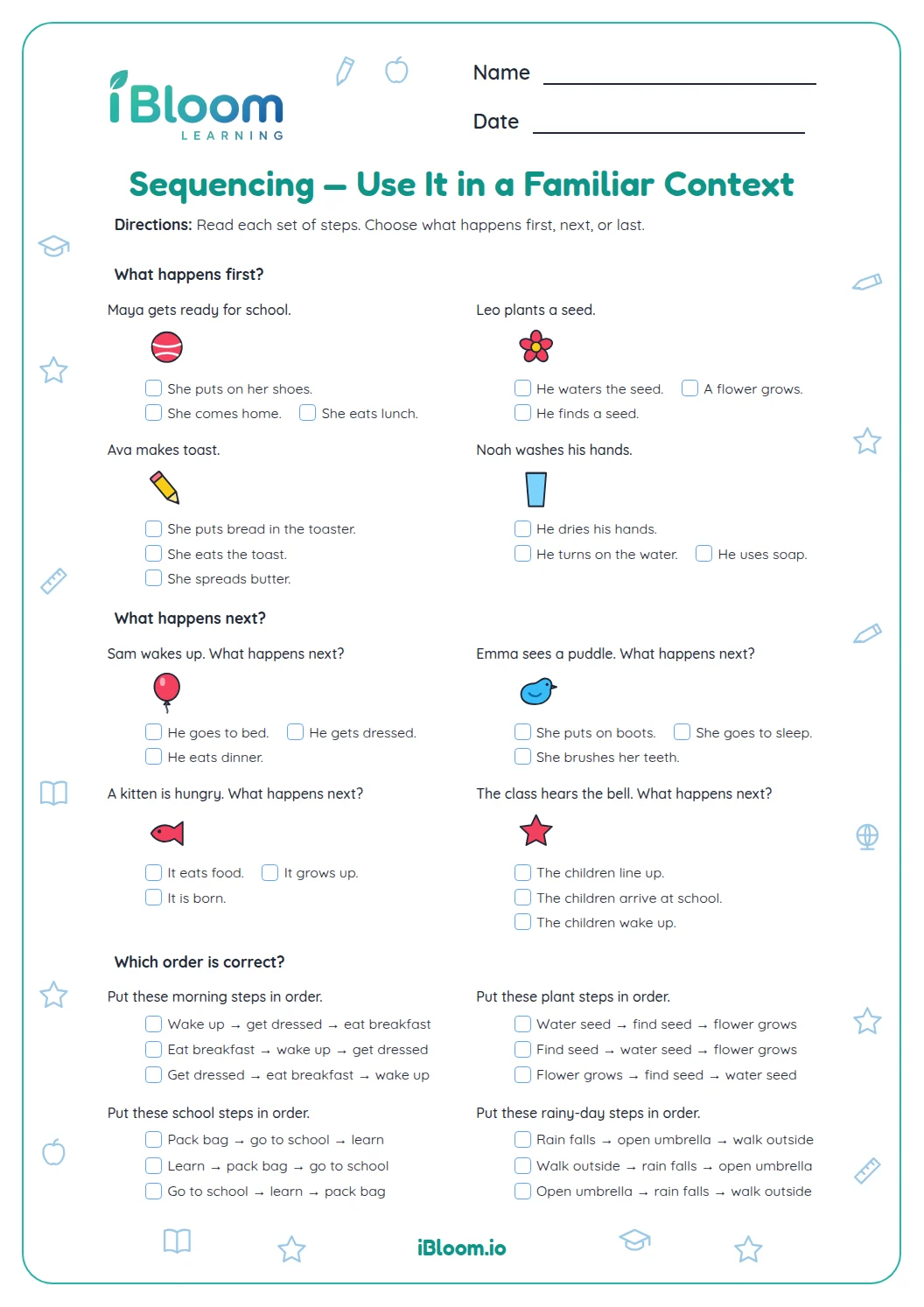
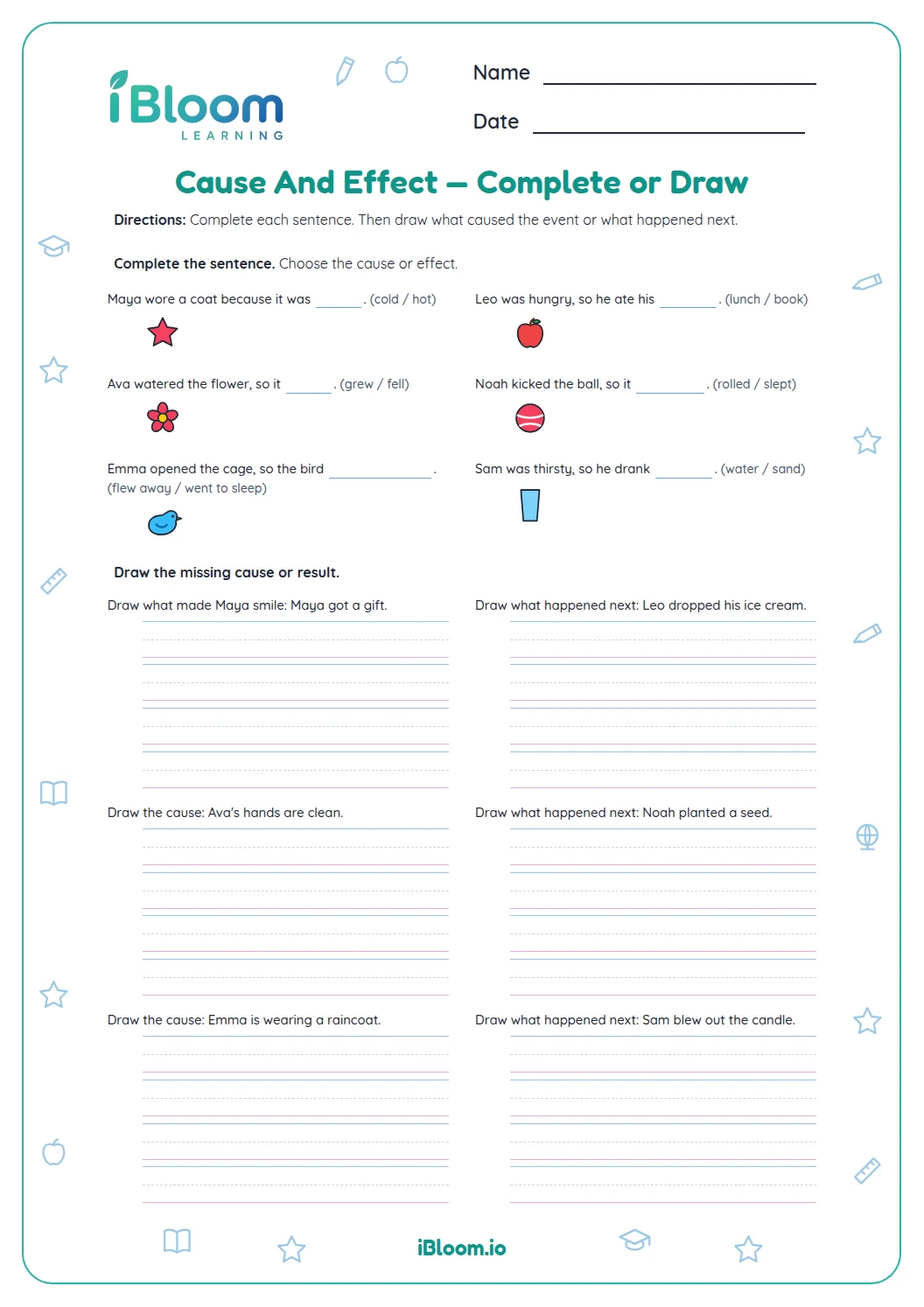
This printable supports preschool and kindergarten learners as they connect short statements with familiar objects. Each of 16 items includes a picture clue and two choices, True or False. Students read or listen to a sentence, then decide whether it makes sense for the pictured object. The worksheet practices answering questions about key details and includes a separate answer key.
How should a child decide if a sentence is true?
Look at the picture clue, listen to or read the whole sentence, and think about what is known about the object. In question 1, the cat and the word “meow” fit together.
- 1A cat says “meow.”
- 2Think about the familiar sound.
- 3Choose: True
What makes a sentence false?
A sentence is false when its detail does not fit. A banana is not a shoe, so that statement is false. Children can point to the object, then explain what it really is.
Can an adult read the sentence aloud?
Yes. Read the sentence slowly and invite the child to look at the picture clue. The child can point to True or False, then tell what made the choice clear.
Read, think, choose
- 1Name the pictured object.
- 2Listen to or read the complete sentence.
- 3Think about whether the detail fits the object.
- 4Choose True or False.
- 5Say one reason for the choice.
Early comprehension slips
The mistake
Choosing before hearing the whole sentence.
The fix
Wait for the complete idea, then decide.
The mistake
Picking an answer by looking only at the picture.
The fix
Match the sentence detail to what the picture shows.
The mistake
Changing a false statement without explaining why.
The fix
Name the object’s real feature in a few words.
What to practice next
Make more practice
Further reading
Questions parents and teachers ask
How many items are on the worksheet?
There are 16 short statements, each paired with a familiar picture clue and True or False choices. The worksheet takes two pages, and its separate two-page key gives the correct choice for every item so an adult can check and discuss the child’s responses.
Can this be used with preschool children?
Yes. An adult can read each sentence aloud and let the child point to True or False. The familiar picture clue and short statement make the activity usable with preschool learners and children who are beginning to read.
Should children explain their choices?
A short oral reason can help a child explain a choice, especially for a false statement. For example, a child might say a banana is fruit, not a shoe. The printed task still asks only for a True or False choice.
What does the picture clue do?
The picture clue helps children identify the object named in the sentence. They still need to consider the full statement: a picture of a hat does not show whether the sentence says it belongs on a foot or on a head.
Is an answer key included?
Yes. The answer key is a separate two-page printable with the correct True or False response for each of the 16 picture-supported sentences. Use it to check choices and talk through any item the child found confusing, one sentence at a time.